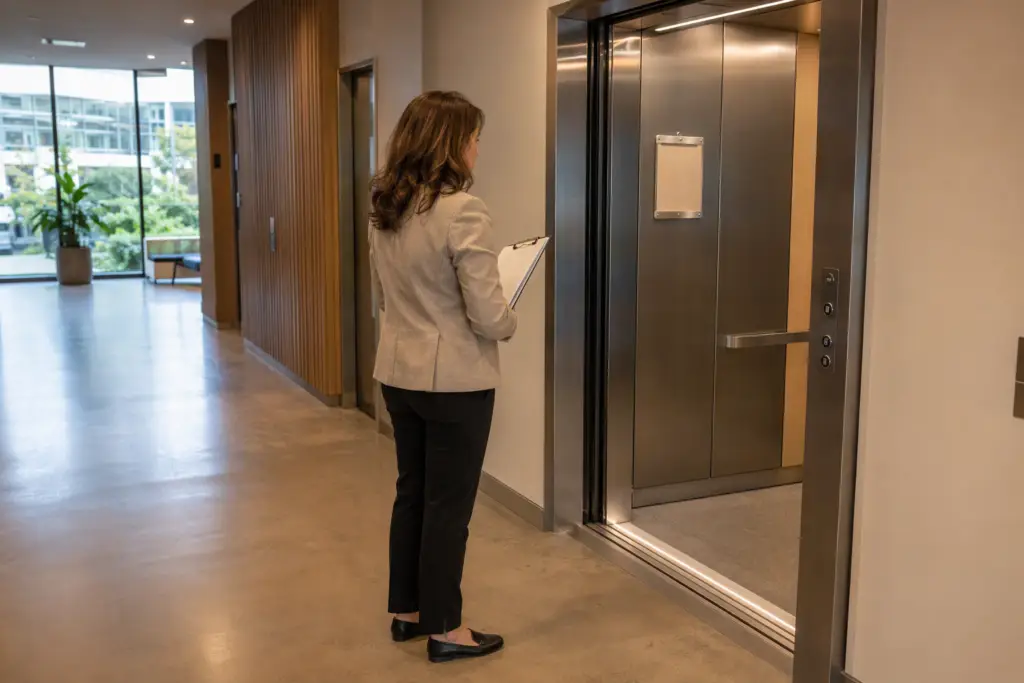
24 Hour Emergency Elevator Services: Data, Compliance & What California Building Owners Must Know
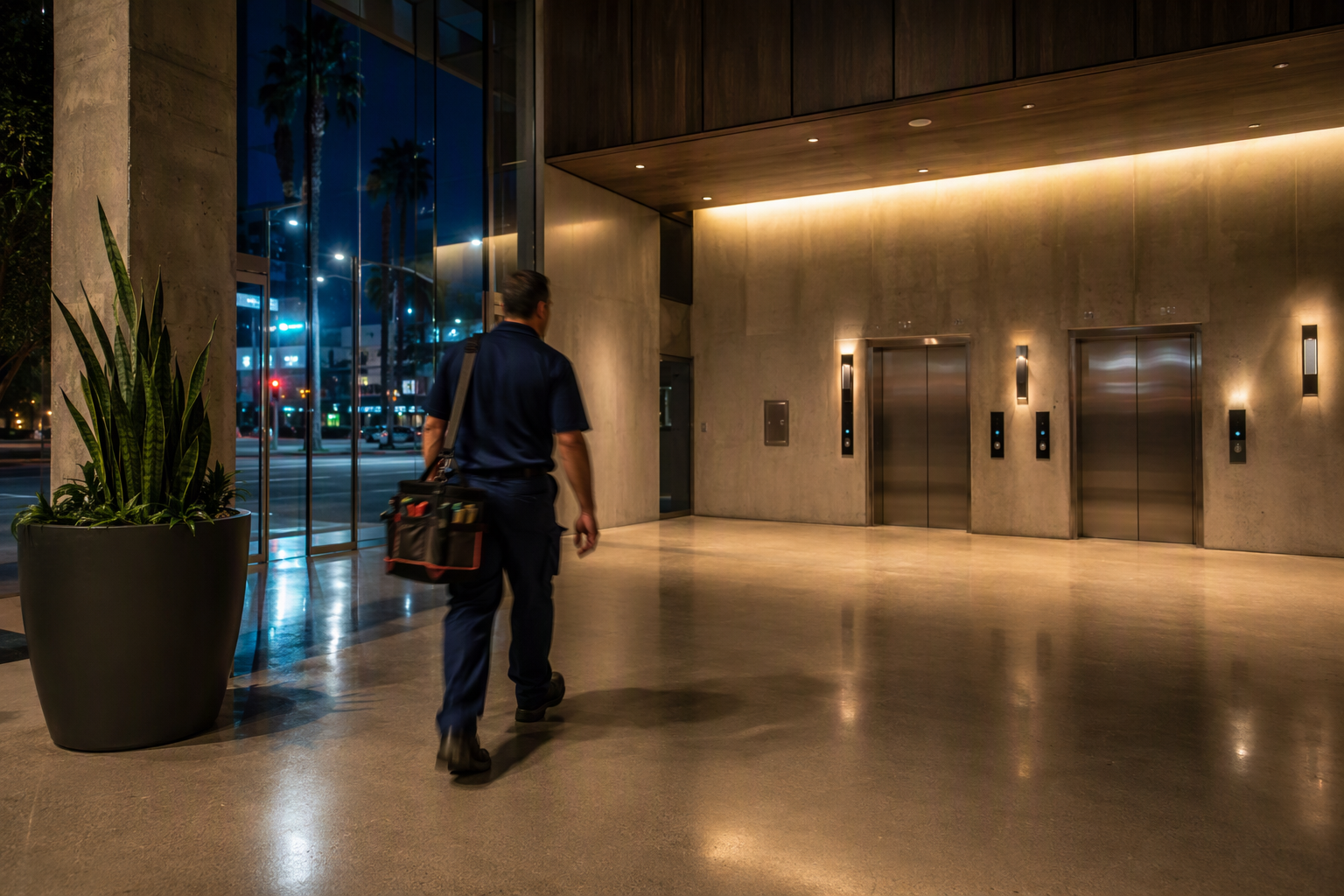
Elevator failures do not observe business hours. Whether a residential high-rise in Los Angeles experiences a cab entrapment at 2 a.m. or a commercial building in the Bay Area loses lift service on a Saturday afternoon, the consequences — tenant safety, ADA access obligations, regulatory status, and liability — are immediate. This authority page compiles verified regulatory requirements, explains what drives emergency service decisions, and outlines what California property owners, facility managers, and HOAs need to know when selecting a 24-hour emergency elevator service provider.
What Does 24 Hour Emergency Elevator Service Actually Cover?
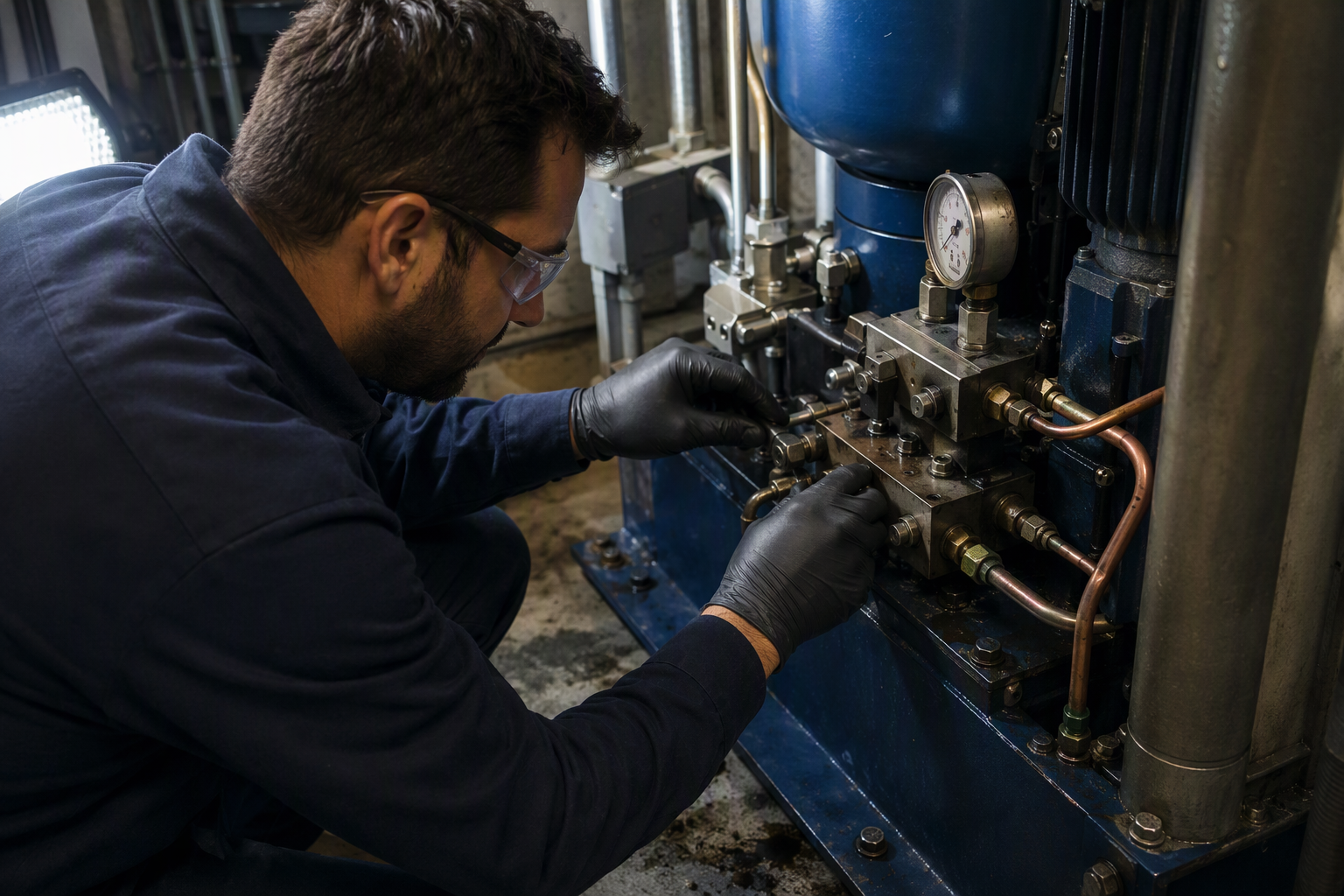
Around-the-clock elevator emergency service refers to the availability of certified technicians to respond to unplanned elevator failures, passenger entrapments, safety system activations, and other out-of-service conditions at any hour of any day — including weekends and public holidays. It is distinct from scheduled maintenance, annual inspections, or planned modernization work.
Emergency calls typically involve one or more of the following scenarios:
- Passenger entrapment requiring safe evacuation
- Door system failures preventing safe operation
- Hydraulic system leaks or pressure loss
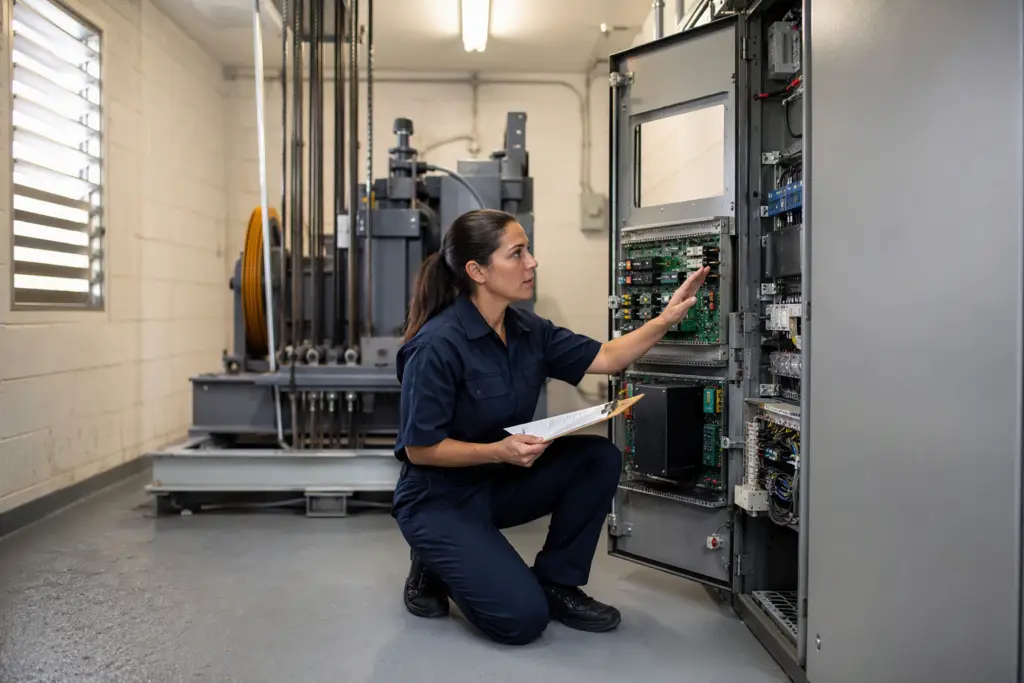
- Drive or motor control failures
- Safety device activations (governor, buffer, safeties) that require reset and inspection before return to service
- Communication system failures that may affect compliance with applicable codes
- Power-related faults including phase loss and brownout recovery
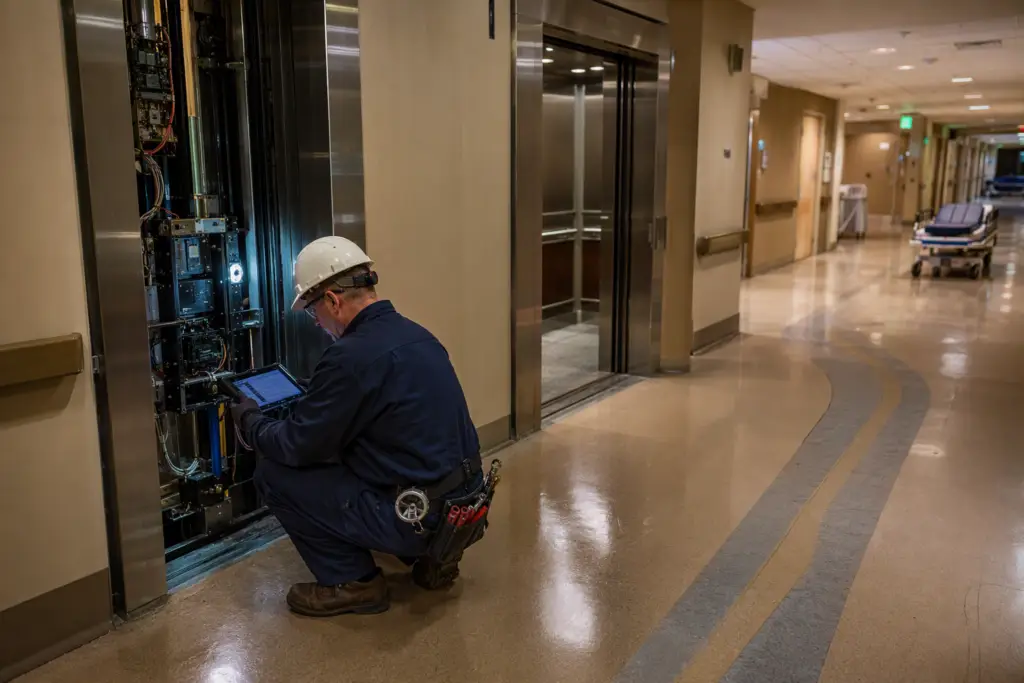
In California, any elevator removed from service due to a malfunction cannot legally be returned to service without confirmation that the condition causing the shutdown has been corrected, consistent with the requirements of the California Division of Occupational Safety and Health (Cal/OSHA), Elevator Unit and the California Code of Regulations, Title 8, Elevator Safety Orders. Only a Certified Competent Conveyance Mechanic (CCCM) working for a Certified Qualified Conveyance Company (CQCC) may legally perform that corrective work.
Why Is 24 Hour Elevator Emergency Service Critical for Compliance in California?
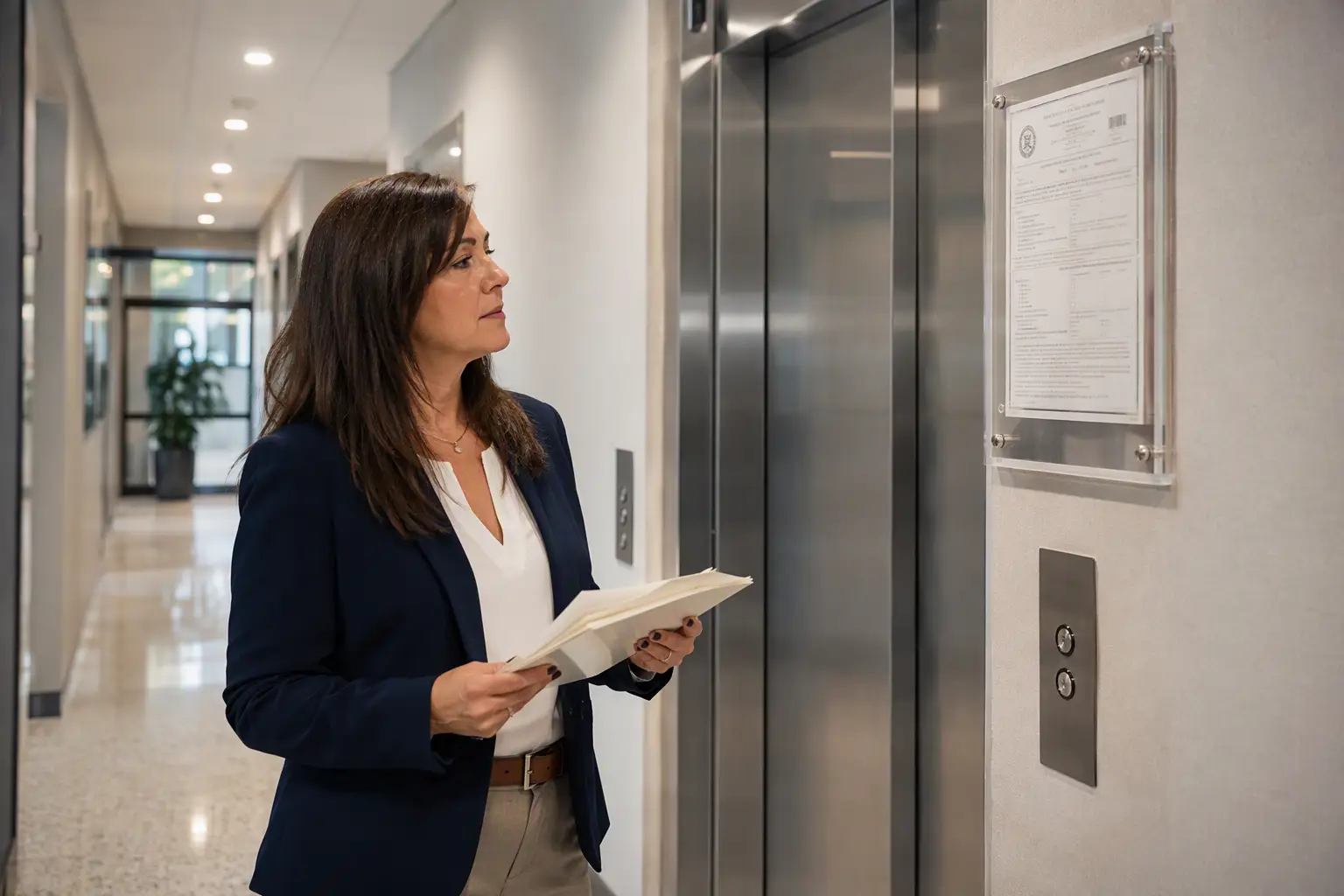
California regulates elevators under California Labor Code Sections 7300–7324.2 and the California Code of Regulations, Title 8, Elevator Safety Orders (Sections 3000–3146). These rules establish several compliance realities that make around-the-clock service not merely convenient but operationally essential:
- Permit to operate: No elevator may be operated in California without a valid, current permit to operate issued by Cal/OSHA. That permit must be posted conspicuously inside the elevator car. When a safety fault arises, the elevator may need to be taken out of service until the fault is corrected — a delay caused by waiting until Monday morning for service can mean prolonged non-operation and potential enforcement action.
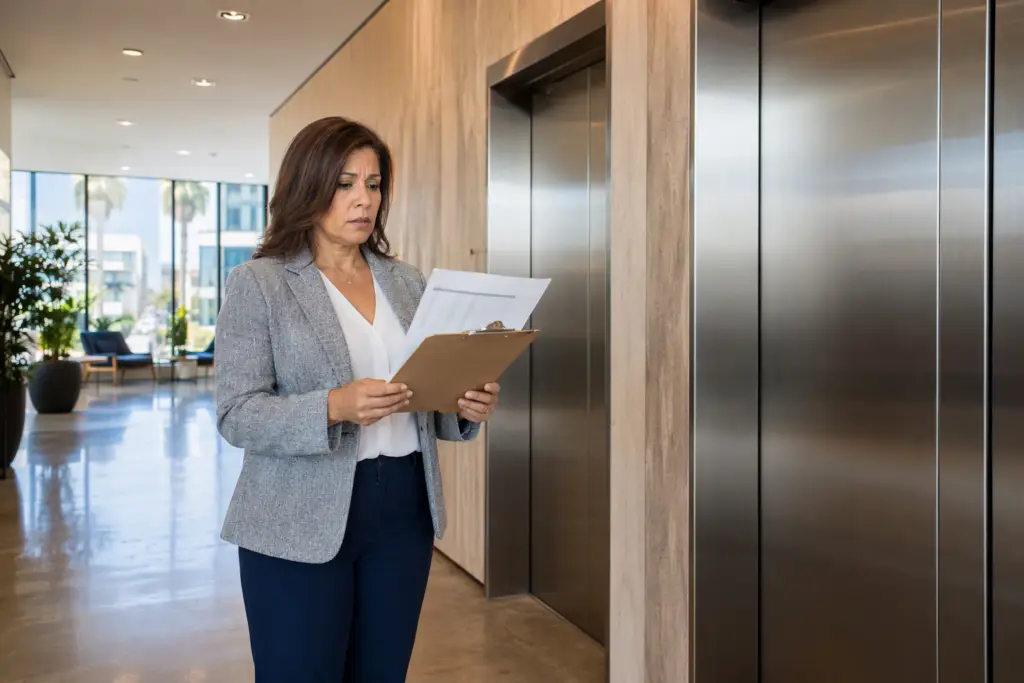
- Owner responsibility: Under California law, arranging the annual reinspection is the elevator owner’s responsibility. By extension, ensuring that emergency repairs are handled promptly and by qualified contractors is also an owner obligation. Delegating that to an unqualified party — or simply waiting — does not shield the building owner from liability.
- CQCC requirement: Companies that install, alter, test, maintain, repair, or service elevators in California must be certified by Cal/OSHA as a Certified Qualified Conveyance Company (CQCC). Applicants must hold a current C-11 Elevator Contractor license issued by the California Contractors State License Board (CSLB) and carry required insurance. A 24-hour emergency provider that cannot demonstrate CQCC status is not legally permitted to perform the work, regardless of the hour.
- CCCM requirement: Anyone who works on an elevator in California without supervision must be certified by Cal/OSHA as a Certified Competent Conveyance Mechanic (CCCM). Certificates last two years and require continuing education for renewal. Building owners should confirm that emergency technicians dispatched to their property hold valid CCCM credentials.
- ADA implications: The Americans with Disabilities Act (ADA) requires that elevators in covered buildings remain accessible to individuals with disabilities. An extended elevator outage in a multi-story building with no other accessible route can create ADA exposure that compounds the cost of delayed repair.
What Are the Verified Regulatory Bodies Governing Elevator Safety in California?
| Authority / Code | Role | Source |
|---|---|---|
| Cal/OSHA Elevator Unit, California Department of Industrial Relations | Issues permits to operate, CQCC/CCCM/inspector certifications, conducts inspections | dir.ca.gov |
| California Labor Code §§ 7300–7324.2 | Governing statute for elevator safety in California | dir.ca.gov |
| California Code of Regulations, Title 8, Elevator Safety Orders (§§ 3000–3146) | Detailed technical and procedural requirements for conveyances | dir.ca.gov |
| ASME A17.1/CSA B44 (2004 edition, adopted effective May 1, 2008) | Technical safety code adopted by California for installations on or after May 1, 2008 | asme.org |
| California Contractors State License Board (CSLB) | Issues the C-11 Elevator Contractor license required for CQCC applicants | dir.ca.gov |
| City of Los Angeles Department of Building and Safety (LADBS) | Los Angeles operates its own elevator and conveyance inspection program | dir.ca.gov |
| ADA — U.S. Department of Justice | Federal accessibility requirements for elevators in covered buildings | ada.gov |
| OSHA — U.S. Department of Labor | Federal worker safety requirements applicable during elevator work | osha.gov |
Note: California has proposed a Group V update to its Elevator Safety Orders that would incorporate elements of ASME A17.1-2019. The California Standards Board held a public hearing on June 18, 2026; no effective date has been posted as of the publication date of this page.
What Should You Do Immediately When an Elevator Emergency Occurs?
- Confirm whether anyone is entrapped. Communicate with the cab through the in-car telephone or intercom before taking any other action. If someone is entrapped, notify emergency services (911) if the situation presents a medical or safety risk.
- Secure the elevator landing. Place visible signage at each landing to prevent other building occupants from attempting to use the elevator. If the cab is accessible and the doors can be held safely, keep them from closing on individuals near the threshold.
- Do not attempt a DIY rescue. Under California law, only a CCCM working for a CQCC may work on elevator components. Unauthorized personnel attempting to manually move a car, release brakes, or reset safety devices can cause serious injury and invalidate permit compliance.
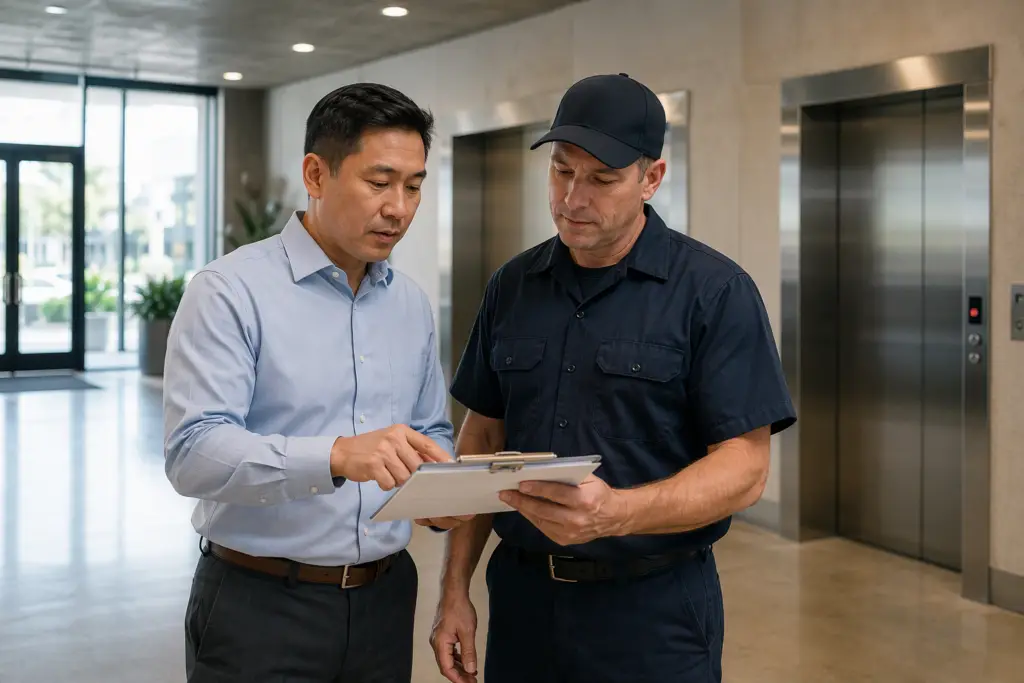
- Contact your certified 24-hour emergency elevator service provider. Have your service agreement, elevator ID numbers, and building address ready. Confirm the nature of the fault as accurately as possible to help dispatch the right technician with appropriate parts.
- Document the incident. Note the time, the nature of the failure, any error codes displayed, and the names of anyone involved. This record supports both regulatory reporting if required and insurance claims.
- Notify your building management and insurance carrier. An elevator outage affecting accessibility or involving an entrapment may require notification under your property management contract and insurance policy.
- Do not return the elevator to service until cleared by a CCCM. The technician must verify the fault is resolved before operation resumes. Returning an elevator to service prematurely risks further damage, safety incidents, and potential permit jeopardy under Cal/OSHA rules.
- Retain all documentation of the repair. Maintenance records and repair logs may be reviewed during Cal/OSHA annual inspections or following an incident investigation.
What Drives the Cost of 24 Hour Emergency Elevator Service?
Emergency elevator service pricing is influenced by a range of qualitative factors. Because rates vary significantly by contract type, equipment age, and market conditions, specific figures are not presented here — building owners should request itemized estimates from CQCC-certified providers. Key cost drivers include:
- Time of call: Calls placed during nights, weekends, or holidays typically carry premium labor rates compared to standard business hours. This differential reflects technician overtime obligations and on-call staffing structures.
- Fault complexity: A door sensor reset is resolved far faster and at lower cost than a hydraulic pump failure or a drive controller replacement. The technician’s diagnostic time plus parts and labor determines the total.
- Parts availability: Older or proprietary elevator systems may require parts that are not stocked locally. Emergency sourcing — including courier fees — adds cost and may extend the outage window.
- Contract vs. non-contract rate: Buildings covered by a full maintenance contract with a CQCC-certified provider typically receive emergency calls under more favorable terms than buildings without a service agreement. California law also recognizes the full maintenance contract as a basis for Cal/OSHA to issue a permit to operate for up to two years rather than the standard one year.
- Travel and jurisdiction: Properties in dense urban corridors versus rural service areas may see different mobilization costs. In Los Angeles, note that the City of Los Angeles Department of Building and Safety (LADBS) operates its own elevator program alongside Cal/OSHA, which can affect inspection coordination and permitting timelines.
- CCCM certification overhead: Legitimate California elevator companies must maintain CQCC certification, C-11 licensing, workers’ compensation, and liability insurance — all of which are factored into service pricing. Bids that appear significantly below market warrant scrutiny regarding regulatory compliance.
How Do You Verify That an Emergency Elevator Company Is Legally Qualified in California?
Before signing an emergency service agreement, California building owners should conduct due diligence on any prospective elevator service provider. The following verification steps apply:
- Confirm the company holds a valid Certified Qualified Conveyance Company (CQCC) certificate issued by Cal/OSHA. This is a legal prerequisite for performing any elevator maintenance, repair, or alteration in California.
- Confirm the company holds a current C-11 Elevator Contractor license issued by the California Contractors State License Board (CSLB). CSLB license status is publicly searchable.
- Verify that the technicians dispatched for emergency work hold valid Certified Competent Conveyance Mechanic (CCCM) certificates from Cal/OSHA. Certificates are valid for two years and require continuing education for renewal.
- Request current certificates of workers’ compensation and liability insurance. These are required as part of CQCC certification and protect building owners from exposure during on-site work.
- For buildings in Los Angeles, be aware that the City of Los Angeles operates its own elevator inspection program through LADBS, which may involve separate coordination for permit-related matters.
Liftech Elevator is a data-driven service provider operating in California. Building owners working with Liftech can verify applicable credentials directly through the official Cal/OSHA Elevator Unit and the CSLB.
What Does an Annual Elevator Inspection Involve and How Does Emergency Service Connect to It?
California law requires every conveyance to be inspected at least once a year. Only State of California safety engineers and Certified Competent Conveyance Inspectors (CCCI) may perform elevator inspections in California. A conveyance found safe receives a permit to operate for up to one year; if the elevator is covered by a full maintenance contract with a C-11 licensed elevator company, Cal/OSHA may issue a permit for up to two years.
Emergency service history is directly relevant to the annual inspection process. A well-maintained elevator with documented emergency repairs demonstrates that faults have been addressed promptly and correctly. Inspectors reviewing an elevator that has had recurring faults — or that shows evidence of deferred maintenance — may flag conditions that delay permit issuance. Building owners who treat emergency service as one part of a broader preventive maintenance program are better positioned for smooth annual inspections.
Arranging the annual reinspection is the elevator owner’s responsibility. Emergency service providers that keep detailed service records — fault descriptions, parts replaced, technician CCCM credentials, dates and times — provide documentation that directly supports annual inspection readiness.
What Are the 2025–2026 Industry Trends in Emergency Elevator Services?
The elevator service industry is undergoing meaningful shifts that are shaping how 24-hour emergency services are structured and delivered heading into 2026 and beyond. These trends are described qualitatively, as verified industry-wide figures specific to emergency elevator service are not available for attribution:
- Remote monitoring and predictive diagnostics: An increasing number of elevator systems are being equipped with IoT-connected monitoring platforms that transmit real-time data on door cycles, motor temperatures, drive conditions, and fault codes. These systems can alert service providers — and building managers — to developing faults before they become full failures, potentially converting emergency calls into scheduled maintenance interventions. California building owners modernizing older equipment increasingly evaluate these features as part of their service contracts.
- Regulatory evolution: California’s proposed Group V Elevator Safety Orders, which would incorporate elements of the more current ASME A17.1-2019 Safety Code for Elevators and Escalators, signal that technical requirements for both new and existing installations may change. Emergency service providers must track these developments to ensure that repairs remain code-compliant. No effective date has been posted as of this writing.
- Emergency communication system scrutiny: Requirements for in-car emergency communication — including the potential for visual and audible two-way communication — are an area of regulatory attention in California, as the 2025 California Building Code may add requirements that differ from those in the currently adopted ASME A17.1-2004. Building owners and service providers should monitor official Cal/OSHA guidance on this point rather than assuming the status quo will persist.
- Workforce certification demand: The two-year renewal cycle for CCCM and CQCC certificates, combined with continuing education requirements, creates ongoing credentialing pressure across the California elevator workforce. As the installed base of elevators ages, demand for qualified emergency technicians continues to be a key service quality differentiator.
- ADA enforcement awareness: Heightened attention to ADA compliance in multi-story commercial and residential buildings has made elevator downtime a more visible risk management issue. Facility managers increasingly treat emergency elevator service agreements as part of ADA risk mitigation, not merely equipment maintenance.
Frequently Asked Questions: 24 Hour Emergency Elevator Services in California
Who is legally allowed to perform emergency elevator repairs in California?
In California, only a Certified Competent Conveyance Mechanic (CCCM) working for a Certified Qualified Conveyance Company (CQCC) may maintain, repair, alter, or replace components on a conveyance. Both certifications are issued by Cal/OSHA’s Elevator Unit. The contracting company must also hold a C-11 Elevator Contractor license from the CSLB.
Can a building owner return an elevator to service after a fault without calling a technician?
No. California’s regulatory framework requires that faults be corrected by qualified personnel before an elevator may resume operation. Resetting an elevator without identifying and correcting the underlying fault risks repeated failure, potential safety incidents, and exposure to permit violations under Cal/OSHA rules.
What happens to a California elevator’s permit to operate during an extended outage?
A permit to operate is tied to the elevator being in safe operating condition. If an elevator is taken out of service due to a fault or failed inspection finding, it must not be operated until the fault is corrected and — depending on the nature of the issue — until the correction is verified. Building owners should consult with their CQCC-certified service provider and, where required, coordinate with Cal/OSHA regarding permit status.
How often must elevators be inspected in California?
California law requires every conveyance to be inspected at least once a year. Elevators covered by a full maintenance contract with a C-11 licensed elevator company may be eligible for a permit to operate for up to two years, at Cal/OSHA’s discretion following an inspection finding the elevator safe.
Does ADA require elevator access to be restored within a specific timeframe after a failure?
The ADA does not prescribe a specific repair deadline for elevator outages in statutory text, but it does require that covered buildings provide accessible routes to people with disabilities. An extended elevator outage in a building where the elevator is part of the only accessible route can constitute an ADA barrier. Legal counsel familiar with ADA Title III (commercial) or Title II (government) requirements should be consulted for guidance specific to a given building’s situation.
What is a CQCC and why does it matter for emergency service?
A Certified Qualified Conveyance Company (CQCC) is a company certified by Cal/OSHA to install, alter, test, maintain, repair, or service elevators in California. Hiring an emergency service provider that is not CQCC-certified means that any work performed on the elevator is not legally compliant — regardless of the technician’s skill level — and could expose the building owner to regulatory and liability consequences.
How does the City of Los Angeles handle elevator emergencies differently from the rest of California?
Los Angeles operates its own elevator and conveyance inspection program through the City of Los Angeles Department of Building and Safety (LADBS). Building owners in Los Angeles should be aware that permitting and inspection coordination may involve LADBS in addition to Cal/OSHA. Service providers experienced in Los Angeles can navigate both programs.
What documentation should a building owner receive after an emergency elevator repair?
After any emergency repair, building owners should receive written documentation that includes a description of the fault identified, the corrective action taken, any parts replaced (with part identification), the name and CCCM certificate number of the technician who performed the work, the CQCC company name and certification, and the date and time of service. This record supports annual inspection readiness and insurance documentation.
Is there a difference between preventive maintenance and emergency service for California compliance purposes?
Yes. Preventive maintenance — performed on a scheduled basis under a maintenance contract — is a proactive activity designed to reduce failure rates and support permit renewals. Emergency service is reactive, addressing unplanned failures. Both must be performed by CCCM-certified technicians working for a CQCC. Under California rules, a full maintenance contract with a qualifying company may support a two-year permit to operate rather than the standard annual permit.
What should I ask an emergency elevator service provider before signing a contract?
Key questions include: Can you provide your current CQCC certificate number for verification with Cal/OSHA? Can you provide your C-11 contractor license number for verification with CSLB? Are all dispatched technicians CCCM-certified? What documentation will I receive after each emergency service call? How is parts sourcing handled for older or proprietary elevator systems? For Los Angeles buildings: are you experienced coordinating with LADBS as well as Cal/OSHA?
How Does Liftech Elevator Approach 24 Hour Emergency Service?
Liftech Elevator is a California-based elevator service provider operating within the state’s regulatory framework. Liftech approaches emergency elevator service from a data-informed perspective — tracking fault patterns, equipment age, maintenance history, and regulatory requirements to help building owners make better decisions about their elevator assets. All work is performed in accordance with Cal/OSHA’s Elevator Safety Orders and applicable requirements under the ASME A17.1/CSA B44 Safety Code for Elevators and Escalators.
Building owners throughout California working with Liftech Elevator can expect a service partner that understands the compliance stakes of elevator downtime — from permit status and CQCC requirements to ADA exposure and annual inspection readiness. Liftech’s approach treats each emergency call as a data point in the broader story of a building’s elevator health, not simply a one-time service transaction.
Key Takeaways: What Every California Building Owner Should Know
- No elevator may legally operate in California without a valid Cal/OSHA permit to operate — downtime management is a compliance issue, not merely a convenience issue.
- Only CCCM-certified technicians working for CQCC-certified companies may legally perform emergency elevator repairs in California.
- ADA accessibility obligations do not pause for elevator outages — extended downtime in buildings where elevators are required for accessible access carries federal risk.
- Full maintenance contracts with qualifying C-11 licensed companies may support two-year permit renewals versus annual renewals, creating a direct financial incentive for proactive service relationships.
- Documentation of emergency repairs is an operational and regulatory asset — retain all service records.
- Los Angeles building owners face a dual-agency environment (Cal/OSHA plus LADBS) that requires service providers with local program knowledge.
- California’s proposed Group V Elevator Safety Orders may change technical requirements; building owners should monitor official Cal/OSHA announcements for updates.
Schedule Your Free Elevator Assessment
Elevator emergencies are preventable — and when they do occur, having the right certified service partner in place determines how quickly and safely your building recovers. Liftech Elevator serves California building owners with compliance-focused elevator maintenance, repair, and emergency service.
Contact Liftech Elevator for a free elevator assessment: 562-997-3639
Verify our credentials through the Cal/OSHA Elevator Unit and the California Contractors State License Board before your next elevator emergency — not after.
Need elevator service you can rely on? Liftech Elevator is ready to help.