What Should I Do If My Elevator Permit Tags Have Expired? A Complete FAQ Guide for California Building Owners
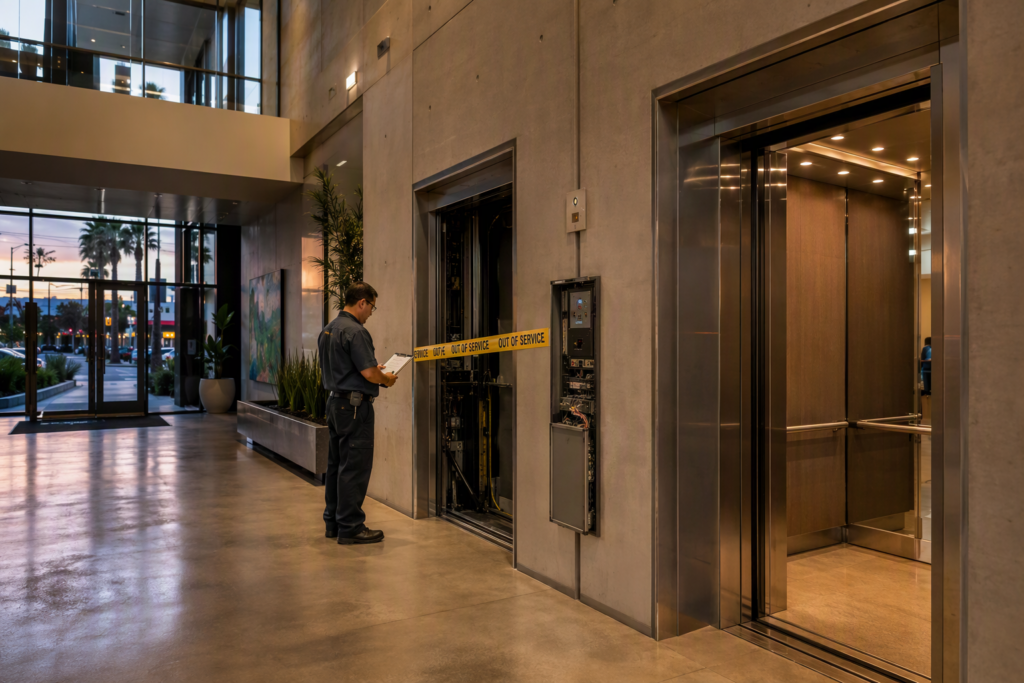
When elevator permit tags have expired in California, the building owner must act without delay. Under Cal/OSHA’s Elevator Unit, no elevator may be operated without a valid, current permit to operate. Arranging reinspection is the elevator owner’s legal responsibility, not the state’s. A CQCC-certified elevator company must be engaged immediately to coordinate inspection scheduling, address any deficiencies, and restore compliant operation before the elevator is returned to service.
What exactly is an elevator permit to operate in California?
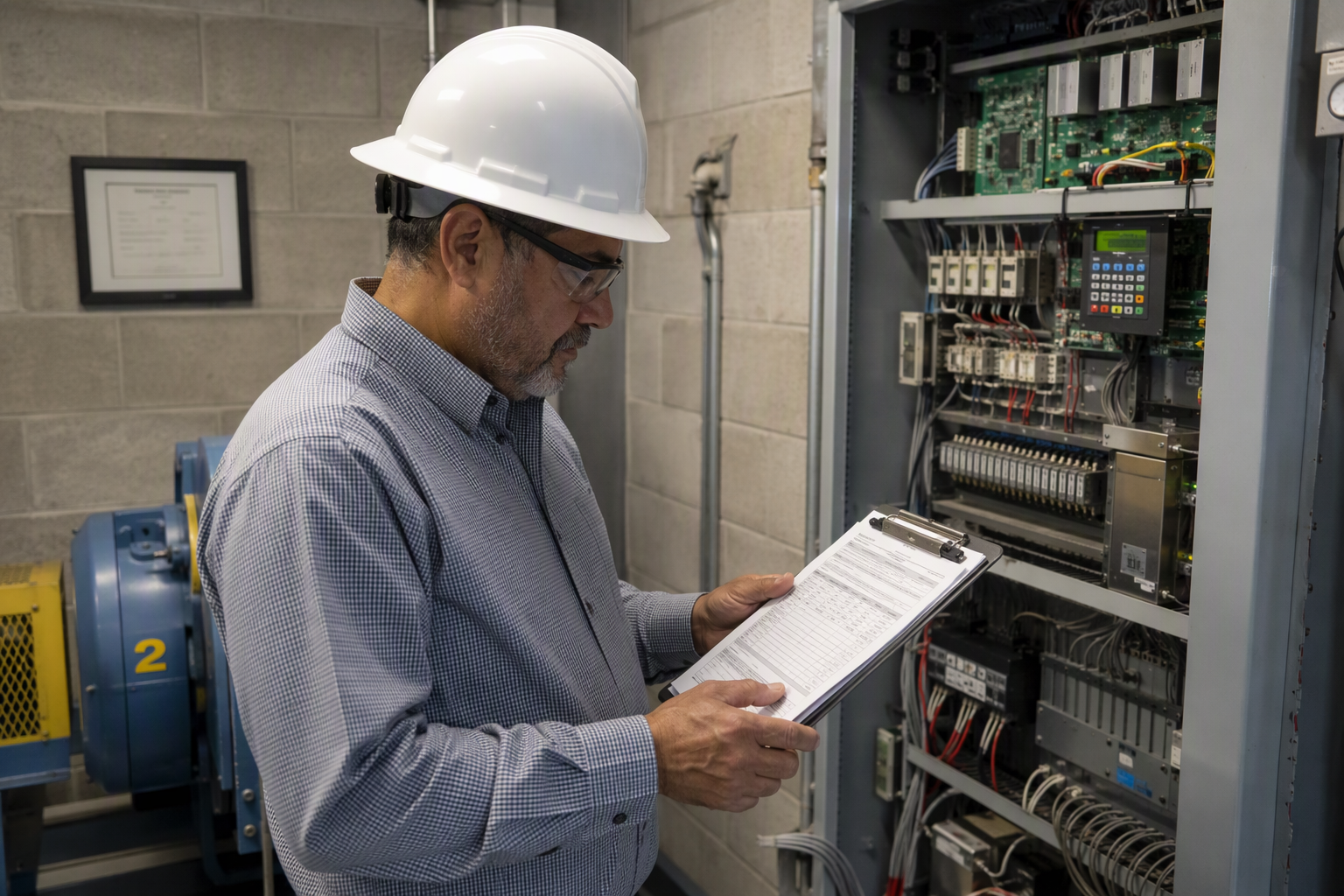
An elevator permit to operate is the official authorization issued by Cal/OSHA that legally allows a conveyance to be used by passengers or for freight in California.
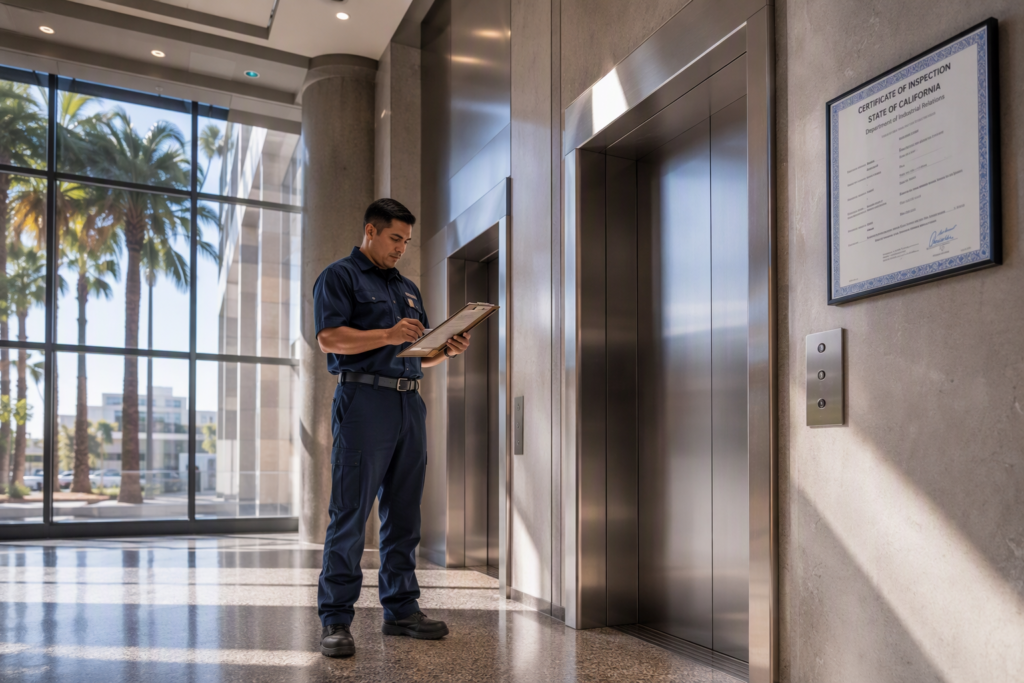
Under California Labor Code Sections 7300–7324.2, no elevator — whether passenger, freight, or inclined — may be operated without this permit. The permit is not a formality; it represents Cal/OSHA’s documented finding that the elevator was inspected by a qualified State safety engineer or Certified Competent Conveyance Inspector (CCCI) and found to be in safe condition. California law requires that the permit to operate be posted conspicuously inside the elevator car at all times, which is why the physical tag is so visible and its expiration so easily noticed by occupants, tenants, and inspectors alike. The permit is regulated through the California Code of Regulations, Title 8, Elevator Safety Orders (Sections 3000–3146).
How long is a California elevator permit to operate valid?

California law requires every conveyance to be inspected at least once a year, and a permit found to be in safe condition is issued for up to one year — but Cal/OSHA may extend that to two years under a specific condition.
The two-year permit is available only when an elevator is in safe condition and is covered by a full maintenance contract with a C-11 licensed elevator company that also holds Certified Qualified Conveyance Company (CQCC) status from Cal/OSHA. This distinction matters: a building owner without a qualifying full maintenance contract can generally expect annual reinspections. Building owners should track the expiration date printed on the permit tag and schedule inspections proactively, not reactively. Waiting until the tag has already expired creates compliance gaps and legal exposure.
What are the legal consequences of operating an elevator with an expired permit in California?
Operating an elevator with an expired permit to operate in California violates California Labor Code Sections 7300–7324.2 and the California Code of Regulations, Title 8, Elevator Safety Orders, exposing the building owner to enforcement action by Cal/OSHA, stop-use orders, and potential civil liability if an injury occurs.
Cal/OSHA’s Elevator Unit has authority to order an elevator out of service. If an incident occurs while an elevator is operating with an expired permit, the property owner’s legal position in any resulting litigation is severely compromised. Beyond regulatory penalties, insurance carriers may deny coverage for incidents involving unpermitted equipment. The liability exposure extends not only to the elevator owner but potentially to property management companies and employers who knowingly allow workers or the public to use an elevator in this condition. Compliance is not optional — it is a foundational obligation of elevator ownership in California.
What are the immediate steps a building owner should take when elevator permit tags have expired?
When a building owner discovers expired elevator permit tags, a clear, prioritized sequence of actions is required to restore compliance as quickly as possible.
- Assess whether a stop-use order has been issued. Check whether Cal/OSHA has already issued a formal order requiring the elevator to be taken out of service. If so, the elevator must not be operated under any circumstances until reinspection and a new permit are secured.
- Contact a CQCC-certified elevator company immediately. Only companies certified by Cal/OSHA as a Certified Qualified Conveyance Company — and employing Certified Competent Conveyance Mechanics (CCCMs) — are legally authorized to maintain, repair, or prepare the elevator for reinspection in California.
- Request a maintenance evaluation. Have the CQCC company perform a thorough evaluation of the elevator’s current condition to identify any deficiencies that would prevent the unit from passing inspection.
- Remediate all deficiencies before scheduling the inspection. Cal/OSHA inspections are conducted by State safety engineers or CCCIs. Addressing all known issues before inspection avoids failed inspections and additional scheduling delays.
- Coordinate the reinspection with Cal/OSHA or the local authority. In most of California, inspection scheduling goes through Cal/OSHA’s Elevator Unit. In the City of Los Angeles, LADBS runs its own elevator inspection program — contact that office directly if the elevator is within Los Angeles city limits.
- Post the new permit to operate. Once issued, the permit must be posted conspicuously in the elevator car before the elevator is returned to service.
- Establish a proactive inspection tracking system. Implement a calendar-based reminder system so that the next reinspection is scheduled well before the permit expiration date.
Who is responsible for scheduling the elevator reinspection in California?
California law places the responsibility for arranging the annual reinspection squarely on the elevator owner — not on Cal/OSHA, the building’s maintenance contractor, or any other party.
This is a critical point that many property owners misunderstand. Cal/OSHA does not proactively schedule inspections or send reminders when permits are approaching expiration. The building owner — whether a private property owner, a corporation, an HOA, or a government agency — must track permit expiration dates and initiate the process. Property management companies can assist with this administratively, but the legal obligation rests with ownership. Engaging a CQCC-certified elevator company under a full maintenance contract is the most practical way to ensure this responsibility is met consistently and without gaps.
Who is legally authorized to inspect an elevator in California?
Only State of California safety engineers employed by Cal/OSHA and individuals holding the Certified Competent Conveyance Inspector (CCCI) credential may perform elevator inspections for permitting purposes in California.
This means that a general building inspector, a fire marshal, or even a qualified elevator mechanic cannot conduct the official safety inspection that leads to issuance of a permit to operate — that authority belongs exclusively to Cal/OSHA safety engineers and CCCIs. Understanding this distinction helps building owners set realistic expectations about who they need to coordinate with and what timelines are involved. Elevator companies like Liftech Elevator can prepare the equipment for inspection and facilitate the scheduling process, but the inspection itself is conducted by the authorized state personnel.
What is a CQCC and why does it matter when choosing an elevator company?
A Certified Qualified Conveyance Company (CQCC) is a company certified by Cal/OSHA as legally authorized to install, alter, test, maintain, repair, or service elevators in California — and only a CQCC may legally perform this work.
California law is explicit: only a Certified Competent Conveyance Mechanic (CCCM) working for a CQCC may maintain, repair, alter, or replace components on a conveyance. This dual certification requirement — company-level CQCC status and individual mechanic-level CCCM status — is designed to ensure both organizational accountability and individual technical competence. To obtain CQCC certification, applicants must submit a current C-11 Elevator Contractor license (issued by the California Contractors State License Board) along with certificates of workers’ compensation and liability insurance to Cal/OSHA. Building owners who hire a non-CQCC company not only risk improper work — they risk voiding any path to a valid permit to operate. Liftech Elevator operates as a certified provider serving Signal Hill, Long Beach, Los Angeles, and Orange County.
Does the City of Los Angeles have different elevator permit requirements?
Yes — the City of Los Angeles operates its own elevator and conveyance inspection program through the Los Angeles Department of Building and Safety (LADBS), separate from the statewide Cal/OSHA process.
Building owners with elevators located within Los Angeles city limits should contact LADBS directly to understand the specific procedures for reinspection scheduling, permit issuance, and compliance requirements within that jurisdiction. While California’s statewide Elevator Safety Orders under Cal/OSHA establish the baseline legal framework, Los Angeles exercises local authority over its own program. Property owners in Long Beach, Signal Hill, and Orange County communities outside city-specific programs generally work directly through Cal/OSHA’s Elevator Unit.
Can a building continue to operate its elevator while waiting for reinspection after permit expiration?
Whether an elevator may continue to operate after permit expiration depends on whether Cal/OSHA has issued a stop-use order and on the specific circumstances of the expiration — and this determination must be made carefully with legal and regulatory guidance, not assumed.
Building owners should not assume that a recently expired permit automatically permits continued use while reinspection is being arranged. Cal/OSHA has authority to order immediate cessation of elevator operation, and the consequences of operating out of compliance — particularly if an injury occurs — are severe. The safest course of action is to contact a CQCC-certified company immediately upon discovering expiration and seek guidance on the specific situation. In multi-tenant buildings, the practical and reputational costs of taking an elevator out of service are real, but they are far less significant than the legal and financial consequences of a compliance violation or an injury on unpermitted equipment.
What types of elevator deficiencies most commonly prevent permit renewal?
Inspectors evaluating elevators for permit renewal commonly identify issues with door safety devices, emergency lighting, communication systems, leveling accuracy, and mechanical wear components — all areas addressed under the applicable ASME A17.1 safety code.
| Deficiency Category | Examples | Typical Severity for Permit | Addressed By |
|---|---|---|---|
| Door Safety Devices | Worn door edges, malfunctioning reopening devices | High — can result in failed inspection | CCCM repair prior to inspection |
| Emergency Lighting | Non-functional battery backup lighting | High — safety-critical deficiency | CCCM replacement/repair |
| Floor Leveling | Elevator stopping above or below floor level | High — trip hazard, ADA concern | CCCM calibration and adjustment |
| Safety Chain/Circuit | Bypassed or degraded safety contacts | Critical — immediate stop-use risk | CCCM repair; may require Cal/OSHA notification |
| Lubrication and Wear | Worn cables, dry guide rails | Moderate to High | Full maintenance contract coverage |
| Documentation / Posted Permit | Missing or illegible permit in car | Administrative — correctable | Owner coordination with Cal/OSHA |
| ADA Accessibility Features | Non-functioning call buttons, missing braille | Moderate — separate ADA compliance track | CCCM repair; ADA compliance review |
California’s adopted code — the ASME A17.1/CSA B44, 2004 edition as adopted under California’s Group IV Elevator Safety Orders effective May 1, 2008 — governs the technical safety requirements that inspectors apply. Building owners with elevators that have not received regular maintenance are far more likely to encounter multiple deficiencies at inspection, making pre-inspection maintenance evaluations a sound investment.
How does ADA compliance relate to elevator permit renewal?
ADA compliance is a separate federal obligation from the California state elevator permit process, but deficiencies affecting accessibility are commonly identified during inspections and must be addressed to avoid compounding legal exposure.
Under the Americans with Disabilities Act, elevators serving buildings covered by the ADA must meet specific accessibility requirements, including operational controls at accessible heights, audible and visual floor indicators, and door reopening devices. While ADA compliance is enforced through federal civil rights law rather than the Cal/OSHA permitting process, an elevator with significant ADA deficiencies may also present code violations under the applicable ASME standard. Building owners are advised to treat ADA compliance and safety permit compliance as integrated rather than separate concerns.
What happens if Cal/OSHA issues a stop-use order for an elevator?
A Cal/OSHA stop-use order legally prohibits operation of the elevator immediately and remains in effect until the deficiencies cited in the order are corrected, reinspection is completed, and a new permit to operate is issued.
Stop-use orders are serious enforcement actions. They typically arise when an elevator presents an imminent hazard — either discovered during inspection or reported through a complaint. Once a stop-use order is issued, the elevator must be physically secured against use. The remediation path requires engaging a CQCC-certified elevator company to address the cited deficiencies, followed by a reinspection by a Cal/OSHA safety engineer or CCCI confirming the deficiencies have been resolved. Building owners should maintain documentation of all corrective actions taken, as this record supports the reinspection process. Liftech Elevator assists building owners throughout the Long Beach, Signal Hill, Los Angeles, and Orange County area in responding to stop-use orders with urgency and technical accuracy.
What is the difference between a full maintenance contract and a basic service agreement for elevator permit purposes?
A full maintenance contract — as defined under California’s elevator regulations — covers all parts, labor, and adjustments needed to keep the elevator in safe operating condition, while a basic or “oil and grease” agreement typically excludes major components, and only the full maintenance contract qualifies an elevator for the potential two-year permit.
This distinction has direct regulatory consequences. Building owners who wish to qualify for Cal/OSHA’s two-year permit to operate must ensure their maintenance agreement meets the definition of a full maintenance contract with a C-11 licensed, CQCC-certified elevator company. A contract that excludes major components — such as door operators, controllers, or safety devices — does not qualify. Building owners reviewing existing service agreements should evaluate them carefully against this standard and consult their elevator service company about whether the current contract qualifies.
How often should a building owner verify that elevator permit tags are current?
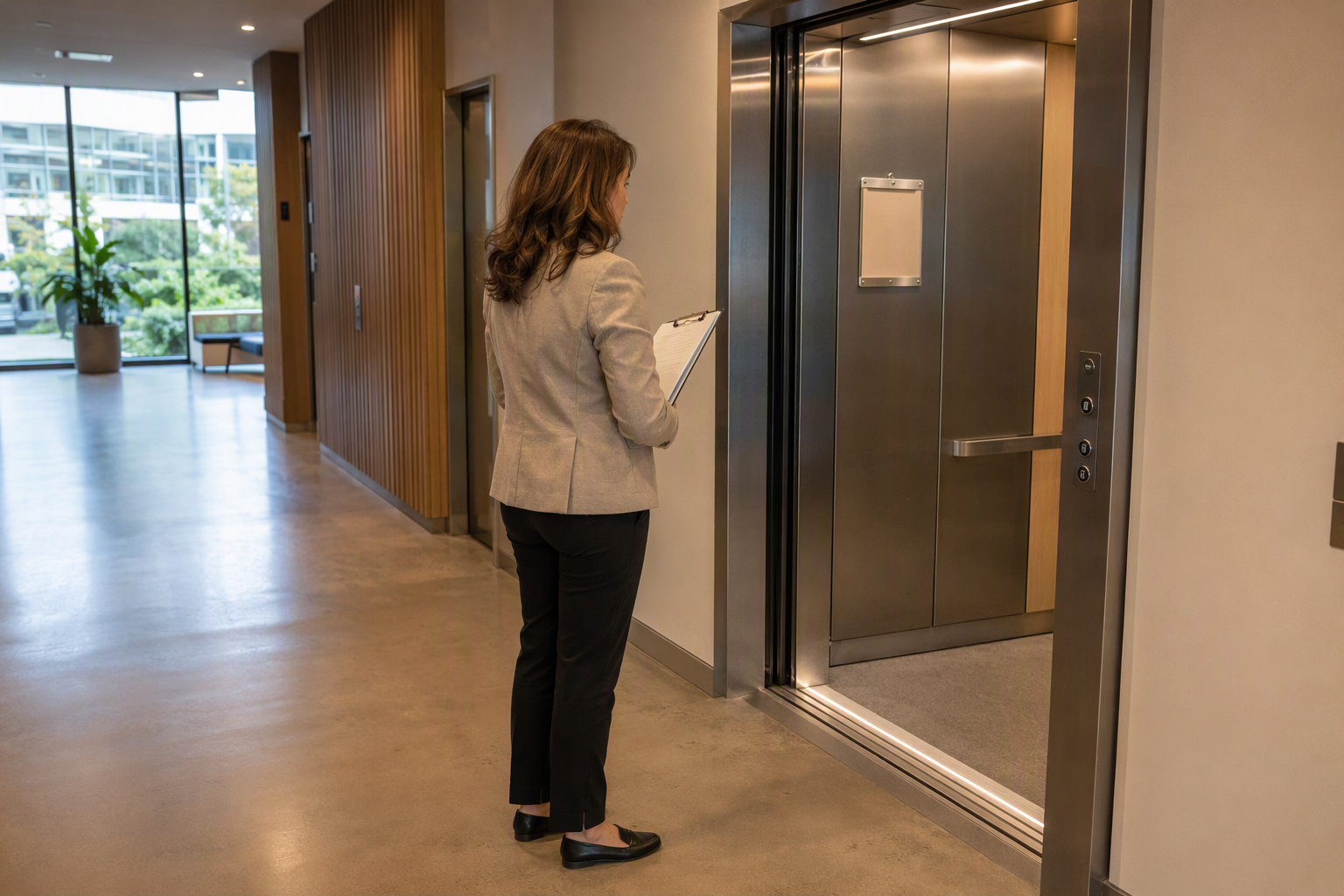
Building owners and property managers should verify the posted permit expiration date at least quarterly, and should initiate the reinspection scheduling process no less than 60 to 90 days before the permit expiration date to account for scheduling availability and potential remediation time.
Cal/OSHA does not issue automatic reminders. The permit expiration date is printed on the permit tag posted in the car — a simple, regular visual check by building management is the most basic form of oversight. For multi-elevator buildings, a tracking spreadsheet or property management software with expiration-date alerts is a practical administrative tool. Many CQCC-certified elevator companies build permit tracking into their full maintenance agreements as a service feature — building owners should confirm whether their current contract includes this.
What code governs elevator safety requirements in California as of 2026?
California’s Elevator Safety Orders in Title 8 of the California Code of Regulations adopt the ASME A17.1/CSA B44, 2004 edition for installation contracts signed on or after May 1, 2008, and this remains the operative standard for Group IV installations as of 2026.
It is worth noting that California has proposed a Group V update to its Elevator Safety Orders that would incorporate portions of ASME A17.1-2019. The California Standards Board held a public hearing on this proposal on June 18, 2026, but no effective date has been posted as of the time this content was published. Building owners and elevator companies should monitor the Cal/OSHA Elevator Unit website for updates on when and how the Group V Safety Orders take effect, as adoption will trigger new compliance requirements for certain installations. Older elevators installed before May 1, 2008, are governed by the edition of ASME A17.1 that was in effect at the time of their installation contract.
Are there any California elevator exemptions that building owners should know about?
California’s elevator law exempts conveyances under federal jurisdiction and conveyances in single-unit private homes that are not accessible to the public — all other commercial, multi-tenant, and publicly accessible elevators are subject to the full permitting and inspection requirements.
The private home exemption is narrow: it applies only to single-unit private residences with elevators that are not accessible to the public. A residential elevator in a condominium building, apartment complex, or any property with public or tenant access does not qualify for this exemption. Federal jurisdiction exemptions apply to conveyances in facilities where federal oversight supersedes state authority. Building owners who believe their elevator may fall under an exemption should seek formal guidance from Cal/OSHA rather than assuming exemption status — operating under an assumed exemption that does not apply creates exactly the same liability as operating without a permit.
How do CQCC and CCCM certifications affect who can work on my elevator after permit expiration?
Only a Certified Competent Conveyance Mechanic (CCCM) working for a Certified Qualified Conveyance Company (CQCC) may legally maintain, repair, alter, or replace components on an elevator in California — any work performed by non-certified personnel is unlawful and voids the path to a valid permit.
California CQCC, CCCM, and conveyance inspector certificates last two years and require at least eight hours of continuing education for renewal — a requirement that ensures ongoing technical competency. This means building owners should periodically confirm that their elevator service company’s CQCC certification is current and that the mechanics assigned to their elevators hold valid CCCM credentials. When an elevator’s permit has expired and repairs are needed, engaging a non-certified contractor — even temporarily — creates additional legal complications and does not advance the path to reinspection. Liftech Elevator serves building owners across Signal Hill, Long Beach, Los Angeles, and Orange County as a certified elevator service provider, ensuring that all work is performed by personnel meeting California’s certification requirements.
What should a building owner document after an elevator permit has expired?
Building owners should create and preserve a complete compliance record including the date of permit expiration discovery, all communications with the elevator service company and Cal/OSHA, inspection reports, work orders for repairs, and the date the new permit was issued and posted.
This documentation serves multiple purposes. In the event of an enforcement action by Cal/OSHA, it demonstrates that the building owner acted promptly and in good faith upon discovering the expiration. In the event of a tenant complaint or personal injury claim, it provides evidence of the remediation timeline and corrective actions taken. For insurance purposes, it supports a claim that the owner maintained appropriate oversight. Maintaining organized records — ideally in a digital format accessible to both property management and ownership — is a basic best practice for any building with elevator equipment.
How can building owners in Long Beach, Signal Hill, Los Angeles, and Orange County find a qualified elevator company?
Building owners in these markets should verify that any elevator company they engage holds both a current C-11 Elevator Contractor license from the California Contractors State License Board and a current CQCC certification from Cal/OSHA before authorizing any work on their elevator.
These two credentials are not interchangeable and both are required. The C-11 license is issued by the CSLB and governs contractor licensing; CQCC certification is issued by Cal/OSHA and governs the company’s authority to work on conveyances in California. Building owners can verify CSLB license status through the CSLB’s public database and should request current CQCC certification documentation from any elevator company before engaging them. Liftech Elevator provides elevator maintenance, repair, and compliance support services to property owners and managers across Signal Hill, Long Beach, Los Angeles, and Orange County, operating within California’s regulatory framework for conveyance work.
What proactive steps can building owners take to prevent elevator permit tags from expiring?
The most effective prevention strategy combines a full maintenance contract with a CQCC-certified elevator company, a documented permit expiration tracking system, and proactive reinspection scheduling initiated at least 60 to 90 days before the permit expiration date.
Prevention is significantly less costly — in time, money, and risk — than remediation after expiration. Key proactive measures include: confirming the maintenance contract qualifies as a full maintenance contract under California regulations; confirming the service company’s CQCC and CCCM certifications are current; logging permit expiration dates in property management systems with advance alerts; and maintaining a relationship with a CQCC-certified elevator company that actively supports permit tracking. Buildings with multiple elevators benefit from consolidated permit management, ensuring that no individual unit’s expiration date is overlooked. Addressing minor deficiencies continuously through a full maintenance contract — rather than allowing them to accumulate until inspection — is the single most effective way to ensure smooth permit renewals year after year.
Contact Liftech Elevator for a Free Elevator Assessment
If your elevator permit tags have expired — or are approaching expiration — do not wait. Liftech Elevator serves property owners and managers throughout Signal Hill, Long Beach, Los Angeles, and Orange County, providing certified elevator maintenance, compliance support, and pre-inspection evaluations performed by qualified personnel operating under California’s CQCC and CCCM framework.
Restore your elevator’s compliance status, protect your tenants, and eliminate your legal exposure. Call Liftech Elevator today at 562-997-3639 to schedule your free elevator assessment.
Need elevator service you can rely on? Liftech Elevator is ready to help.