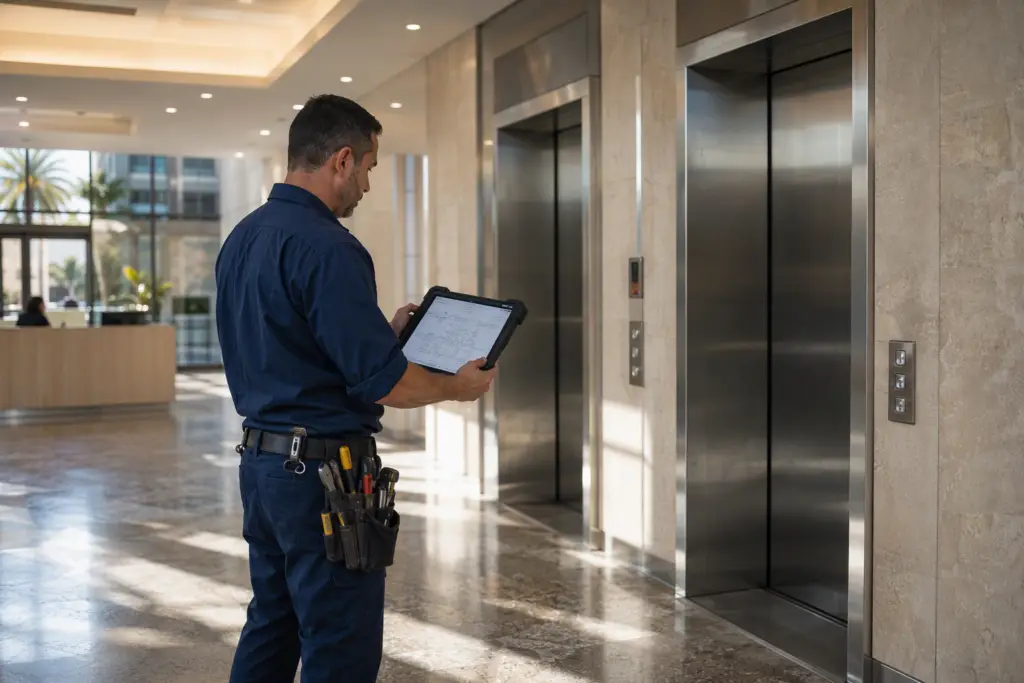
Lift Tech: The Complete Data & Industry Authority Guide for California
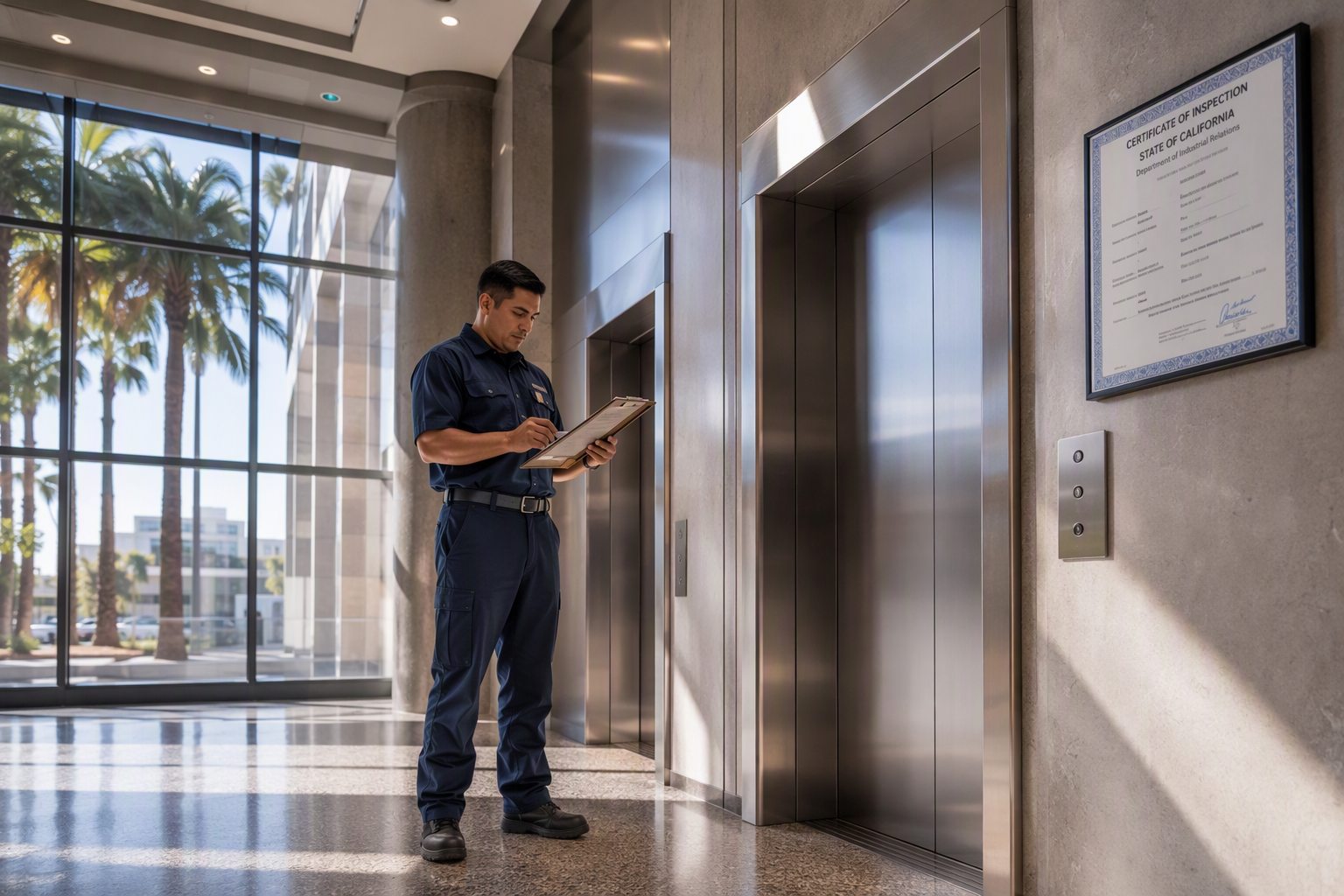
Elevator technology — commonly called lift tech — sits at the intersection of precision engineering, public safety regulation, and building infrastructure. Whether a property owner is evaluating a new installation, planning a modernization, or ensuring a building remains compliant, understanding lift tech means understanding the codes, certifications, inspection cycles, and performance factors that govern every conveyance operating in California. This authority page compiles the verified regulatory facts, sourced standards, and qualified industry insight needed to make informed decisions in 2026 and beyond.
What Does “Lift Tech” Mean in the Elevator Industry?
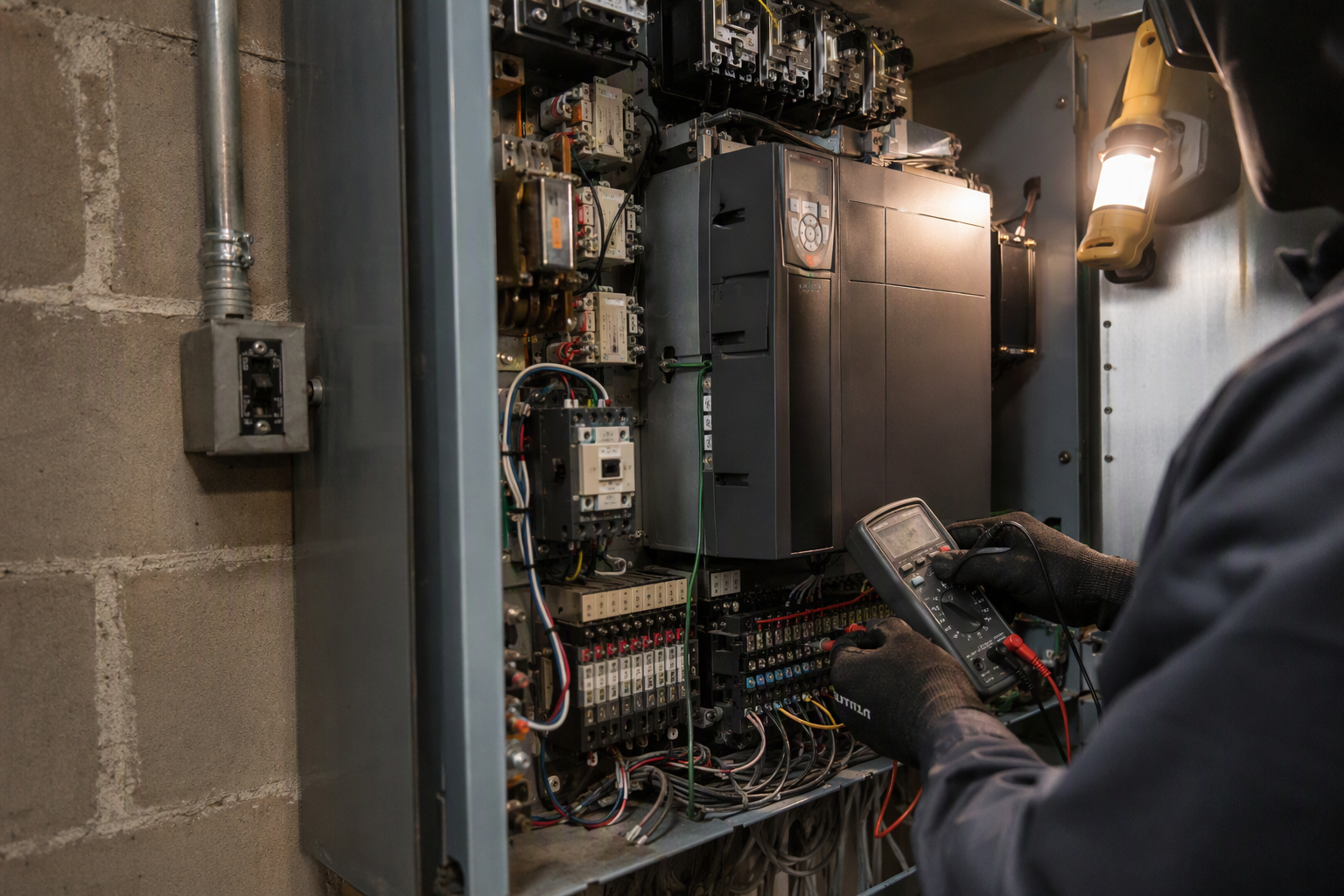
The term “lift tech” broadly describes the technical disciplines, personnel, and systems involved in elevator and conveyance operation. It encompasses the mechanical, electrical, hydraulic, and digital systems within a conveyance, as well as the licensed professionals who design, install, maintain, and inspect those systems. In a regulatory context, lift tech refers to the body of codes and certifications that ensure elevators operate safely for the riding public.
In California, lift tech is regulated by the Division of Occupational Safety and Health (Cal/OSHA), Elevator Unit, California Department of Industrial Relations, which administers the state’s elevator safety program under California Labor Code Sections 7300–7324.2 and the California Code of Regulations, Title 8, Elevator Safety Orders (Sections 3000–3146).
The underlying technical standard California has adopted is the ASME A17.1/CSA B44 Safety Code for Elevators and Escalators, 2004 edition, which became effective for installation contracts signed on or after May 1, 2008. This code defines the engineering parameters — from cab dimensions and door timing to safety device requirements — that lift tech professionals work within on every California project.
Who Is Legally Authorized to Perform Lift Tech Work in California?
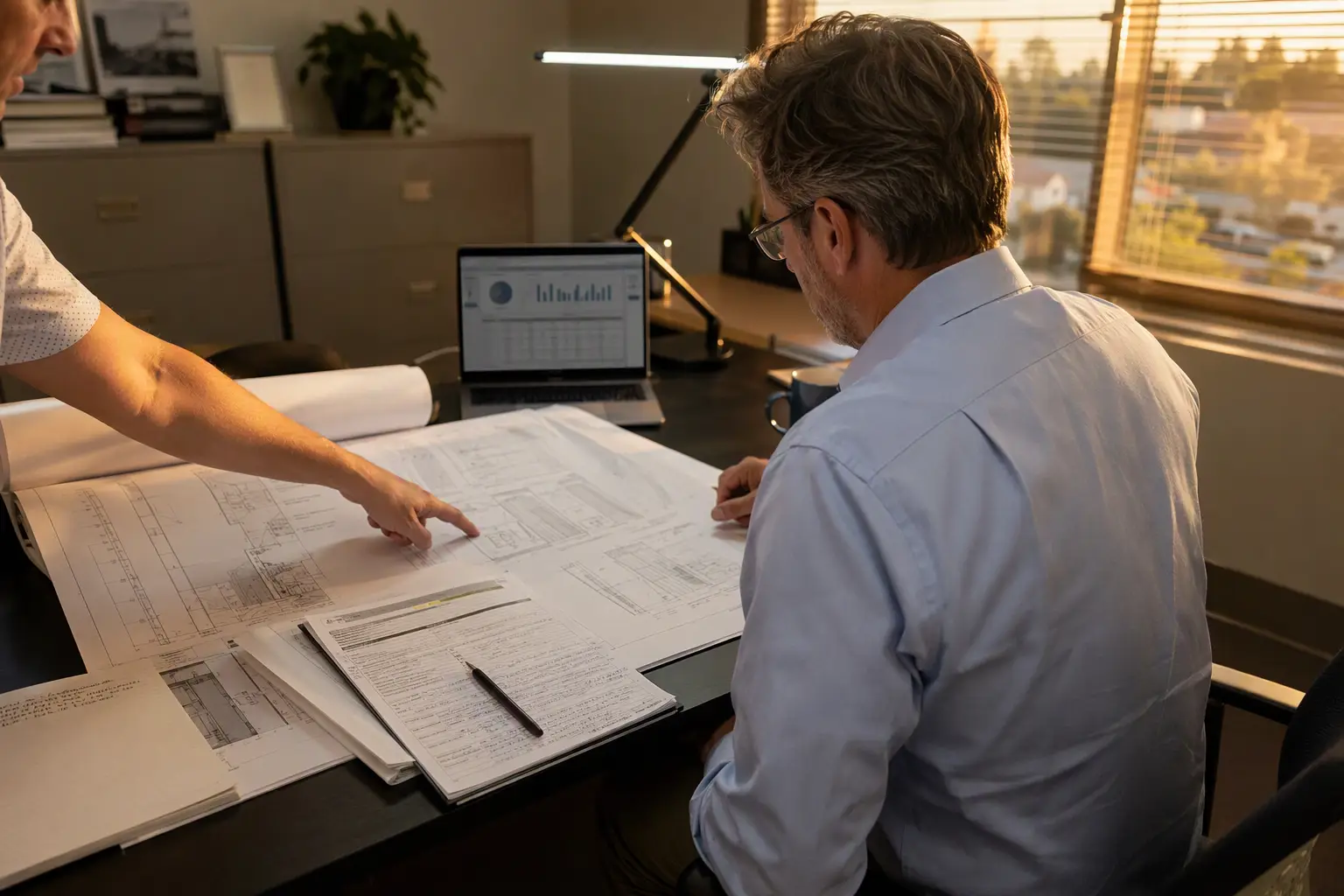
California maintains one of the most structured lift tech licensing regimes in the United States. Two distinct certifications govern who may legally touch a conveyance:
- Certified Qualified Conveyance Company (CQCC): Any company that installs, alters, tests, maintains, repairs, or services elevators in California must hold a CQCC certificate issued by Cal/OSHA. To qualify, applicants must submit a current C-11 Elevator Contractor license — issued by the California Contractors State License Board (CSLB) — along with certificates of workers’ compensation and liability insurance.
- Certified Competent Conveyance Mechanic (CCCM): Any individual who works on an elevator in California without direct supervision must hold a CCCM certificate from Cal/OSHA. Only a CCCM employed by a CQCC may maintain, repair, alter, or replace components on a conveyance.
Both CQCC and CCCM certificates are valid for two years. Renewal requires at least eight hours of continuing education, ensuring that lift tech professionals stay current with evolving codes and equipment technologies.
Inspection authority is equally restricted. Only State of California safety engineers and Certified Competent Conveyance Inspectors (CCCIs) may perform elevator inspections in California.
Liftech Elevator operates as a data-driven lift tech service provider in California, supporting property owners and facility managers in navigating these certification and compliance requirements with accuracy and accountability.
What Are the Inspection and Permitting Requirements for Lift Tech in California?
California’s lift tech regulatory framework requires several distinct permit and inspection touchpoints across the life of a conveyance:
- Pre-installation permit: A permit from Cal/OSHA is required before a conveyance is erected, installed, or materially altered.
- Pre-operation inspection: Each new elevator must be inspected by Cal/OSHA and receive a permit to operate before it is placed in service.
- Annual inspection: California law requires every conveyance to be inspected at least once a year. A conveyance found safe receives a permit to operate for up to one year.
- Two-year permit option: Cal/OSHA may issue a permit to operate for up to two years for an elevator in safe condition that is covered by a full maintenance contract with a C-11 licensed elevator company.
- Permit posting: The permit to operate for a passenger, freight, or inclined elevator must be posted conspicuously in the elevator car.
- Owner responsibility: Arranging the annual reinspection is the elevator owner’s responsibility — not the contractor’s or the regulatory agency’s.
No elevator may be operated in California without a valid, current permit to operate issued by Cal/OSHA.
Property owners in Los Angeles should also be aware that the City of Los Angeles, Department of Building and Safety (LADBS), runs its own elevator and conveyance inspection program. Property managers in Los Angeles should confirm which jurisdiction’s program applies to their specific building with a qualified lift tech provider.
What Are the Core Technical Systems Within Modern Lift Tech?
Modern lift technology integrates multiple engineering disciplines. Understanding these systems helps building owners evaluate maintenance proposals, modernization scopes, and capital planning timelines:
- Traction systems: Electric traction elevators use sheaves, counterweights, and steel ropes or synthetic belts to move the cab. Machine-room-less (MRL) configurations have become increasingly prevalent in mid-rise construction, moving the drive machinery into the hoistway or overhead space.
- Hydraulic systems: Hydraulic elevators use a fluid-driven piston to raise and lower the cab. These are common in low-rise buildings. Environmental requirements around underground hydraulic cylinders and fluid containment are an ongoing maintenance consideration.
- Control systems: Microprocessor-based dispatching and destination control systems have replaced older relay-logic panels, improving energy efficiency and traffic management. Older relay-based controls represent a significant modernization opportunity in legacy California buildings.
- Safety devices: The ASME A17.1 Safety Code for Elevators and Escalators defines the safety devices — governors, safeties, buffers, door interlocks — that must function correctly for a conveyance to receive a permit to operate.
- Accessibility systems: The Americans with Disabilities Act (ADA) establishes federal accessibility requirements for elevators in public accommodations and commercial facilities, covering door timing, cab dimensions, control height, and tactile signage.
- Emergency communication: ASME A17.1 establishes requirements for emergency two-way communication in elevator cars. California building code may impose additional visual and audible requirements; property owners should consult a qualified lift tech provider for current guidance, as this area is actively evolving.
What Drives the Cost of Lift Tech Services?
Lift tech service costs vary considerably based on scope, equipment type, building age, and regulatory complexity. Rather than providing figures that could become outdated or misapplied, the following factors are the key cost drivers property owners should evaluate when requesting proposals:
- Equipment age and parts availability: Older relay-logic and electromechanical systems typically require more labor-intensive diagnostics and may involve sourcing obsolete components, which affects both lead times and pricing.
- Scope of work: Routine maintenance, full modernization, partial component replacement, and compliance remediation each carry distinct labor and materials profiles. A full modernization replacing the controller, drive, fixtures, and cab interior is a substantially larger scope than a safety device inspection.
- Permit and inspection fees: Cal/OSHA charges fees for installation permits and annual inspections. These are set by regulation and vary by conveyance type; current fee schedules are published by the Cal/OSHA Elevator Unit.
- C-11 and CQCC compliance overhead: Legitimate lift tech providers carry the insurance, licensing, and certified workforce required by California law. This compliance overhead is reflected in pricing and distinguishes licensed providers from unlicensed operators.
- Building access and logistics: High-rise buildings, occupied commercial facilities, and properties with limited hoistway access require additional planning, after-hours scheduling, and safety coordination.
- Modernization scope and code upgrades: When a material alteration triggers a Cal/OSHA permit, portions of the installation may need to meet current ASME A17.1/CSA B44 requirements, which can expand scope beyond the originally planned work.
What Is the Lift Tech Modernization Process in California?
When a building owner decides to modernize an existing elevator, the process in California follows a defined sequence. The steps below reflect California’s regulatory requirements as administered by Cal/OSHA:
- Conduct a condition assessment. A CQCC-certified provider evaluates the existing conveyance — controls, drive, safety devices, cab, door systems — and documents deficiencies relative to current code requirements.
- Define the modernization scope. Based on the assessment, the owner and contractor agree on which systems will be replaced or upgraded. Scope decisions affect both project cost and which code provisions are triggered.
- Obtain a Cal/OSHA alteration permit. Before any material alteration begins, the contractor must obtain a permit from Cal/OSHA. Work performed without this permit is a violation of California Labor Code Sections 7300–7324.2.
- Execute the modernization. All work must be performed by CCCMs employed by a CQCC. Only licensed C-11 contractors may hold the prime contract for this work.
- Schedule the Cal/OSHA acceptance inspection. Upon completion, the elevator must pass a Cal/OSHA inspection before it is returned to service. Only State safety engineers or CCCIs may perform this inspection.
- Receive the new permit to operate. Once the elevator passes inspection, Cal/OSHA issues a new permit to operate. The elevator may not run passengers until this permit is issued and posted in the cab.
- Establish or update the maintenance contract. A full maintenance contract with a C-11 licensed CQCC makes the elevator eligible for a two-year permit to operate on subsequent annual inspections.
How Does the ADA Apply to Lift Tech in California?
The Americans with Disabilities Act imposes federal accessibility requirements on elevators in public accommodations, commercial facilities, and state and local government buildings. These requirements are separate from — and in addition to — California’s elevator safety regulations.
Key ADA lift tech considerations include door reopening devices, minimum cab dimensions, control panel reach ranges, tactile and Braille markings on controls and jambs, and leveling accuracy requirements. When a modernization project involves cab interiors or control fixtures, the scope typically triggers a review of ADA compliance for those elements.
California’s own accessibility standards, administered under the California Building Code, may incorporate or exceed federal ADA requirements for specific elements. Property owners should have a qualified lift tech provider review both federal and state accessibility requirements as part of any modernization planning.
What Workplace Safety Standards Govern Lift Tech Workers in California?
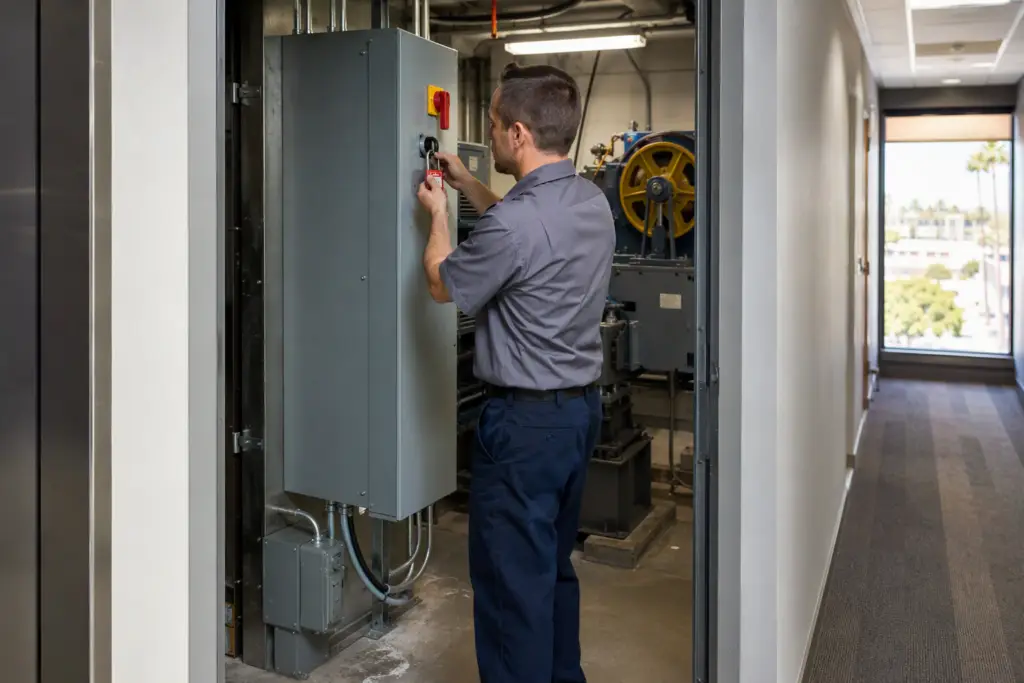
Lift tech work involves significant occupational hazards: work in hoistways, on top of cars, in machine rooms, and around high-voltage electrical equipment. OSHA federal standards establish baseline requirements for lockout/tagout procedures, fall protection, electrical safety, and confined space entry that apply to elevator construction and maintenance work.
In California, Cal/OSHA — the same agency that administers the elevator permitting program — also enforces occupational safety requirements for workers in the construction and maintenance trades. CQCC-certified companies are expected to maintain safety programs consistent with these requirements as a condition of operating in the state.
What Are the 2025–2026 Trends Shaping Lift Tech?
Several qualitative trends are reshaping lift tech practice and investment priorities as the industry moves through 2025 and 2026:
- Predictive maintenance and IoT integration: Remote monitoring systems that collect real-time data on door performance, drive parameters, and safety device status are increasingly available on modernized and new installations. These systems aim to identify developing faults before they cause outages, shifting maintenance from reactive to predictive models.
- Energy efficiency focus: Regenerative drives that return braking energy to the building’s electrical grid are becoming more common in traction elevator modernizations. Building owners pursuing LEED certification or energy benchmarking requirements are increasingly factoring elevator energy performance into capital planning.
- California code update: California has proposed a Group V update to its Elevator Safety Orders that would incorporate portions of ASME A17.1-2019. The Standards Board held a public hearing on June 18, 2026, and no effective date has been posted as of the publication of this page. When this update takes effect, it will expand the technical baseline for new installations and material alterations in California.
- Modernization pipeline growth: A large portion of California’s installed elevator base was constructed during mid-to-late twentieth century building booms. As this equipment ages past its economic service life, demand for full modernization — particularly controller and drive replacement — is expected to remain strong.
- Workforce certification pressure: The two-year renewal cycle for CCCM and CQCC certifications, combined with the eight-hour continuing education requirement, creates ongoing workforce development demands for lift tech companies operating in California.
Lift Tech Q&A: The Most-Asked Questions Answered
What Is a CQCC and Why Does It Matter for Lift Tech?
A Certified Qualified Conveyance Company (CQCC) is a company certified by Cal/OSHA to install, alter, maintain, repair, or service elevators in California. Hiring a CQCC-certified provider is not optional — California law prohibits any uncertified company from performing lift tech work on conveyances in the state. Verification of a provider’s CQCC status protects building owners from regulatory liability.
How Often Does a California Elevator Need to Be Inspected?
California law requires every conveyance to be inspected at least once per year. However, an elevator in safe condition that is covered by a full maintenance contract with a C-11 licensed elevator company may receive a permit to operate for up to two years from Cal/OSHA. Arranging the annual reinspection is the elevator owner’s responsibility.
What Code Governs Lift Tech Installations in California?
California has adopted the ASME A17.1/CSA B44 Safety Code for Elevators and Escalators, 2004 edition, for installation contracts signed on or after May 1, 2008. A proposed Group V update incorporating portions of the 2019 edition was the subject of a public hearing on June 18, 2026; no effective date has been published as of this page’s publication.
Can Any Contractor Perform Elevator Maintenance in California?
No. Only a Certified Competent Conveyance Mechanic (CCCM) working for a Certified Qualified Conveyance Company (CQCC) may maintain, repair, alter, or replace components on a conveyance in California. Both certifications are issued by Cal/OSHA. Engaging an uncertified technician or company exposes the building owner to regulatory action and potential liability.
What Happens If a California Elevator Operates Without a Valid Permit?
Operating an elevator without a valid, current permit to operate issued by Cal/OSHA is a violation of California Labor Code Sections 7300–7324.2. Cal/OSHA has the authority to order the elevator taken out of service. Building owners are responsible for ensuring their permits remain current and that the permit is posted conspicuously in the elevator car.
What Is a CCCM and What Lift Tech Work Requires One?
A Certified Competent Conveyance Mechanic (CCCM) is an individual certified by Cal/OSHA to work on elevators in California without direct supervision. Any maintenance, repair, alteration, or component replacement on a conveyance requires a CCCM. Certificates are valid for two years and require at least eight hours of continuing education for renewal.
Does the ADA Apply to Elevators in Private Commercial Buildings in California?
Yes. The Americans with Disabilities Act applies to elevators in public accommodations and commercial facilities, which includes most private commercial buildings open to the public or employees. ADA requirements govern door reopening devices, cab dimensions, control reach ranges, tactile and Braille markings, and leveling accuracy. These federal requirements apply alongside California’s elevator safety regulations.
What Triggers a Cal/OSHA Permit for a Material Alteration?
A permit from Cal/OSHA is required before a conveyance is materially altered. While the specific definition of “material alteration” is governed by the California Code of Regulations, Title 8, Elevator Safety Orders, common examples include controller replacement, drive replacement, safety device modifications, and structural changes to the hoistway. Property owners should confirm with a CQCC-certified provider whether a planned scope constitutes a material alteration before work begins.
How Does Lift Tech Modernization Affect a Building’s Insurance and Liability?
Modernized elevators that meet current ASME A17.1 requirements and hold valid Cal/OSHA permits to operate are generally viewed more favorably by insurers than aging, non-compliant equipment. While specific premium impacts vary by insurer and policy, documented compliance with California’s lift tech regulatory framework — including current permits and maintenance contracts with a CQCC — strengthens a building owner’s risk management posture. Owners should consult their insurance carrier directly regarding the impact of specific modernization scopes on coverage terms.
How Should a Building Owner Evaluate a Lift Tech Service Provider in California?
When evaluating a lift tech service provider in California, building owners should verify the following before signing any contract:
- Confirm the company holds a current CQCC certificate from Cal/OSHA.
- Confirm the company holds a current C-11 Elevator Contractor license from the California Contractors State License Board (CSLB).
- Verify that mechanics assigned to the project hold current CCCM certificates.
- Request documentation showing current workers’ compensation and liability insurance.
- Confirm the provider has experience with the specific equipment type (traction, hydraulic, MRL) relevant to the building.
- Ask how the provider handles Cal/OSHA permit applications for new work and alterations.
- Confirm the provider’s process for scheduling and documenting annual inspections, given that this is the owner’s legal responsibility.
What Is the Difference Between Lift Tech Maintenance and Modernization?
Maintenance refers to the ongoing, scheduled servicing of an elevator’s existing components — lubrication, adjustment, safety device testing, and parts replacement within the existing system architecture. Modernization involves replacing major systems or assemblies — controllers, drives, cab interiors, door operators — typically to improve performance, reliability, energy efficiency, or code compliance. Modernization that constitutes a material alteration requires a Cal/OSHA permit and acceptance inspection before the elevator returns to service.
Sourced Regulatory Data Table
| Regulatory Fact | Source |
|---|---|
| Adopted technical code for installations (contracts signed on or after May 1, 2008): ASME A17.1/CSA B44, 2004 edition | Cal/OSHA Elevator Unit, California DIR |
| Minimum inspection frequency: at least once per year for every conveyance | Cal/OSHA Elevator Unit, California DIR |
| Maximum permit to operate with full maintenance contract: up to two years | Cal/OSHA Elevator Unit, California DIR |
| CQCC / CCCM certificate validity: two years; renewal requires minimum eight hours continuing education | Cal/OSHA Elevator Unit, California DIR |
| Governing statute: California Labor Code Sections 7300–7324.2 | Cal/OSHA Elevator Unit, California DIR |
| Technical standard reference: ASME A17.1 Safety Code for Elevators and Escalators | ASME Codes & Standards |
| Federal accessibility standard: Americans with Disabilities Act | ADA.gov |
| Federal worker safety standard: OSHA regulations | OSHA.gov |
Why Lift Tech Compliance Is a Property Owner’s Responsibility
A common misconception in California building management is that compliance responsibility for elevator safety rests entirely with the service contractor. Under California Labor Code Sections 7300–7324.2 and the California Code of Regulations, Title 8, Elevator Safety Orders, it is the building owner who is responsible for ensuring that a valid permit to operate is in effect, that the annual reinspection is arranged, and that no conveyance is operated without proper authorization from Cal/OSHA.
This places the burden of vendor verification squarely on the owner. Engaging a non-CQCC-certified company or an uncertified mechanic — even unknowingly — does not transfer liability away from the property owner. A data-driven lift tech partner like Liftech Elevator helps building owners maintain documentation of compliance touchpoints: permit status, inspection records, maintenance contract coverage, and mechanic certifications.
Exemptions to California Elevator Law
California’s elevator law does provide limited exemptions. Conveyances under federal jurisdiction and conveyances in single-unit private homes that are not accessible to the public are exempt from the state’s elevator safety program. Property owners who believe an exemption may apply to their equipment should confirm this directly with Cal/OSHA’s Elevator Unit before assuming the conveyance falls outside the permitting and inspection framework.
How Liftech Elevator Supports Lift Tech Compliance in California
Liftech Elevator operates as a data-driven lift tech service provider in California, supporting property owners, facility managers, and real estate operators across the full compliance and service lifecycle. From pre-installation permitting through annual inspections, maintenance programs, and full modernization projects, Liftech Elevator’s approach is grounded in the verified regulatory requirements administered by Cal/OSHA, the technical standards of the ASME A17.1 Safety Code for Elevators and Escalators, and the accessibility requirements of the Americans with Disabilities Act.
Liftech Elevator’s service model prioritizes documentation and accountability — because in California’s lift tech regulatory environment, undocumented compliance is the same as no compliance. Property owners who work with Liftech Elevator receive structured support for Cal/OSHA permit applications, inspection coordination, and maintenance contract management that meets the full maintenance standard required for two-year permit eligibility.
Get a Free Elevator Assessment from Liftech Elevator
Whether a building’s conveyance is due for inspection, overdue for modernization, or simply needs a compliance review, Liftech Elevator provides qualified, data-driven assessments grounded in California’s actual lift tech regulatory requirements.
Contact Liftech Elevator for a free elevator assessment: 562-997-3639
Need elevator service you can rely on? Liftech Elevator is ready to help.