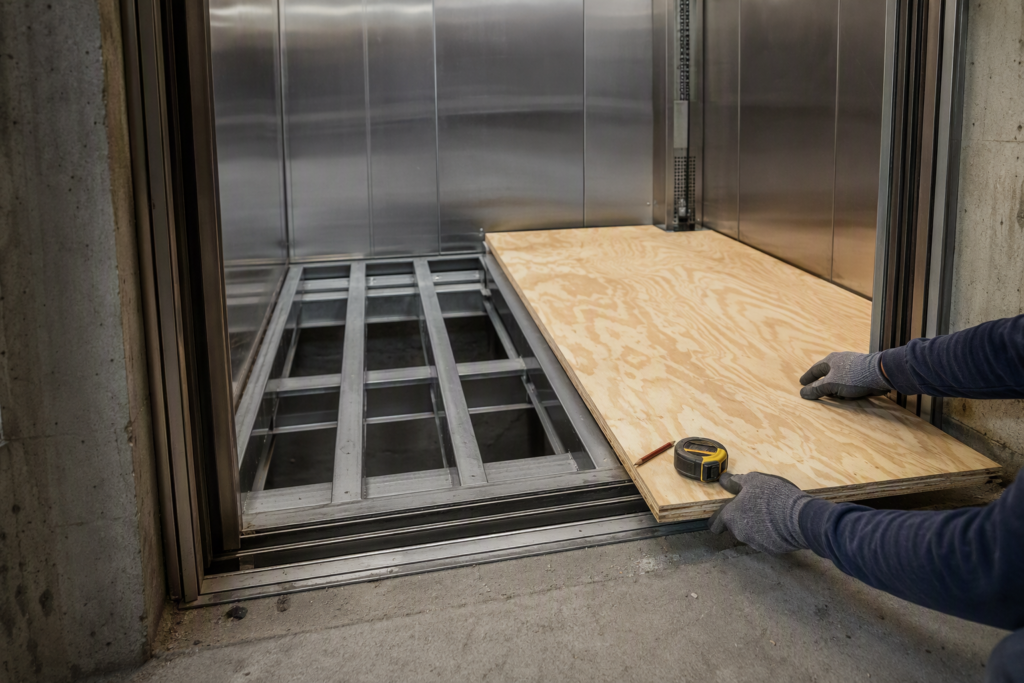
Commercial Elevator Maintenance for Healthcare Facilities in Los Angeles, Long Beach, Signal Hill & Orange County
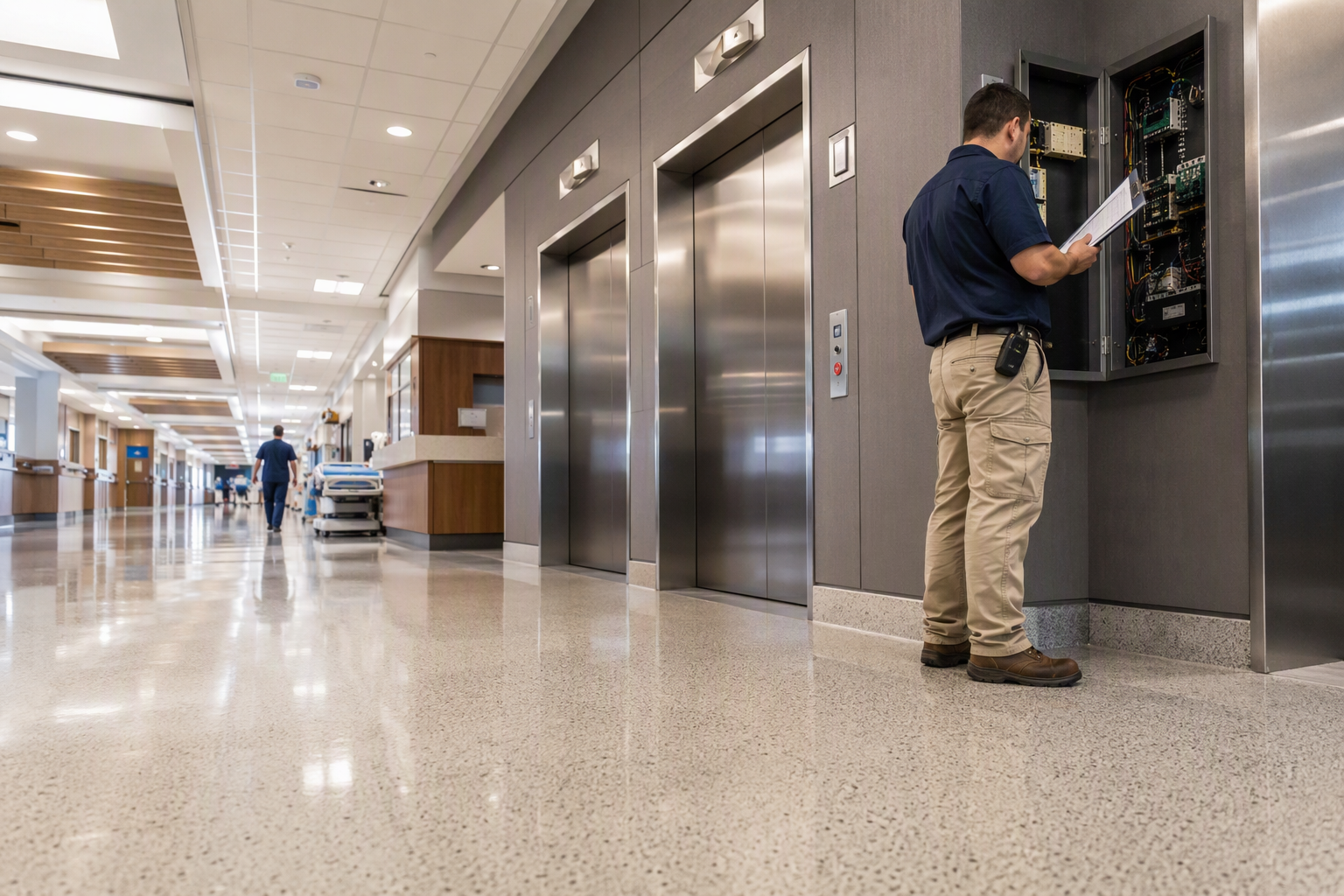
Elevators in healthcare environments carry patients on gurneys, medical staff transporting critical equipment, and visitors navigating multi-story hospitals every hour of every day. A maintenance lapse is not merely an inconvenience — it can delay emergency response, trigger regulatory citations, and expose facility operators to significant liability. This guide covers the compliance requirements, inspection protocols, and maintenance best practices that healthcare facilities across Signal Hill, Long Beach, Los Angeles, and Orange County need to know in 2026.
What Does Commercial Elevator Maintenance in a Healthcare Facility Actually Require?
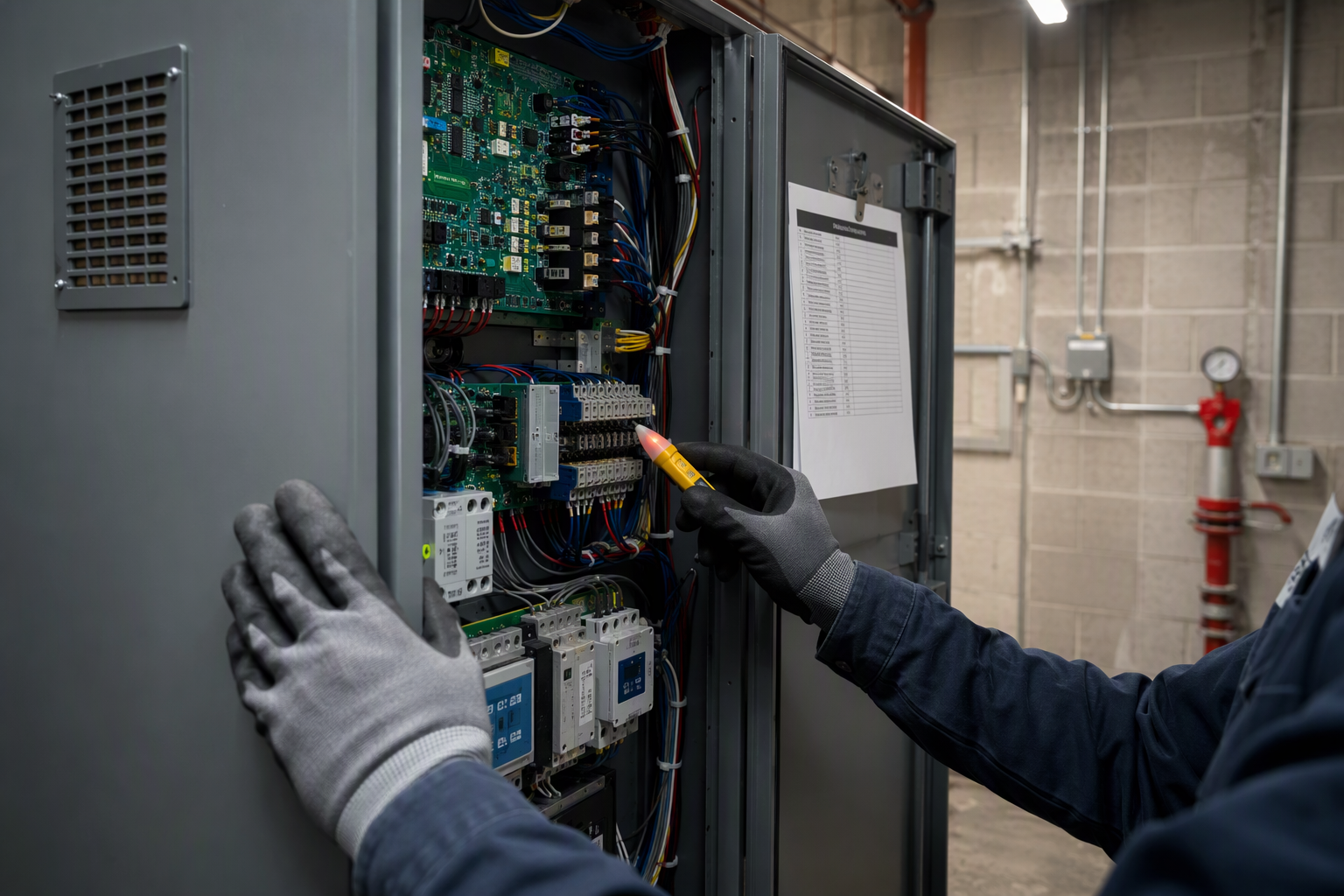
Commercial elevator maintenance in a healthcare facility means more than oiling door tracks. It encompasses a structured program that satisfies California’s elevator safety statutes, federal accessibility law, and the unique operational demands of medical environments. Under California Labor Code Sections 7300–7324.2 and the California Code of Regulations, Title 8, Elevator Safety Orders (Sections 3000–3146), every conveyance must be maintained by a Certified Qualified Conveyance Company (CQCC) using mechanics who hold Certified Competent Conveyance Mechanic (CCCM) certification from Cal/OSHA’s Elevator Unit, California Department of Industrial Relations.
Liftech Elevator operates as a CQCC-certified provider, meaning every technician dispatched to a healthcare facility in Long Beach, Los Angeles, Signal Hill, or Orange County meets California’s certification requirements before touching a single component.
A compliant healthcare elevator maintenance program typically addresses:
- Preventive maintenance on drive systems, door operators, safety circuits, and control panels
- Annual state-required inspections and permit-to-operate renewals through Cal/OSHA
- ADA-mandated accessibility features, including cab dimensions, control height, and leveling accuracy
- Infection control considerations unique to clinical environments (materials, finishes, and cleaning protocols)
- Coordination with facility managers to avoid service disruptions during patient-critical hours
What California Regulations Govern Healthcare Elevator Maintenance?

Healthcare facilities in California operate under a layered regulatory framework. The primary state authority is Cal/OSHA’s Elevator Unit. Key requirements include:
- Annual inspections: California law requires every conveyance to be inspected at least once a year. A conveyance found safe receives a permit to operate for up to one year. Only State of California safety engineers and Certified Competent Conveyance Inspectors (CCCI) may perform these inspections.
- Two-year permit option: Cal/OSHA may issue a permit to operate for up to two years for an elevator in safe condition that is covered by a full maintenance contract with a C-11 licensed elevator company — a meaningful incentive for healthcare facilities that want to reduce administrative burden.
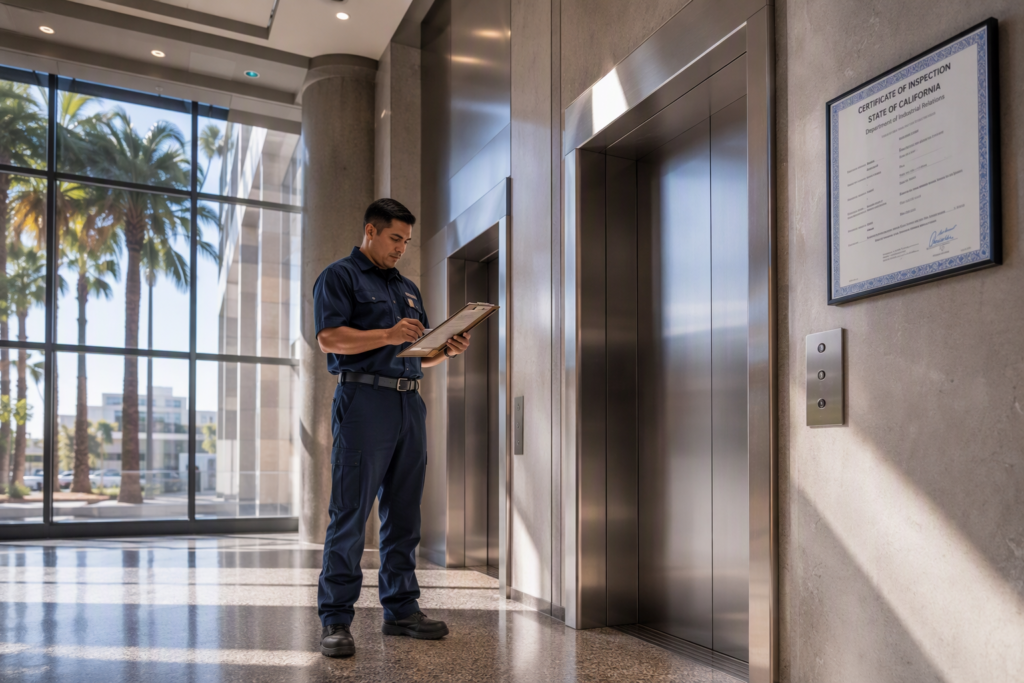
- Posted permit requirement: The permit to operate must be posted conspicuously inside the elevator car at all times.
- Owner responsibility: Arranging the annual reinspection is the elevator owner’s responsibility — not the maintenance contractor’s. Facility managers should calendar this obligation well in advance.
- Alteration permits: A permit from Cal/OSHA is required before any conveyance is erected, installed, or materially altered. This applies to cab renovations common in hospital remodeling projects.
- Los Angeles program: Facilities located within the City of Los Angeles should be aware that Los Angeles runs its own elevator and conveyance inspection program through the Los Angeles Department of Building and Safety (LADBS). Facility managers should confirm current requirements directly with LADBS.
- Adopted code baseline: California’s Elevator Safety Orders adopt the ASME A17.1/CSA B44, 2004 edition for installations governed by Group IV orders (effective May 1, 2008). Note that California has proposed a Group V update that would incorporate portions of ASME A17.1-2019; as of 2026, no effective date has been posted.
How Does ADA Compliance Apply to Hospital and Clinic Elevators?
The Americans with Disabilities Act (ADA) establishes accessibility standards that directly affect commercial elevator maintenance in healthcare settings. Hospitals and medical office buildings serve patients using wheelchairs, mobility aids, and medical transport equipment, making accessibility a clinical necessity — not merely a legal checkbox.
Maintenance teams must verify and preserve compliance with ADA requirements including:
- Door reopening devices that respond to obstruction without requiring contact
- Level landing accuracy so cab floors align flush with corridor floors (critical for gurney and wheelchair movement)
- Properly functioning raised and Braille floor designations on control panels
- Audible and visual signals for floor announcements
- Adequate cab interior dimensions to accommodate mobility equipment
When Liftech Elevator conducts a maintenance visit, accessibility checks are integrated into the standard service protocol — not treated as a separate add-on.
What Are the Unique Elevator Maintenance Challenges in Hospitals and Medical Buildings?
Healthcare facilities present maintenance challenges that differ substantially from commercial office buildings or retail centers:
- High-cycle duty: Hospital elevators often run continuously across three shifts, accelerating wear on door operators, rollers, and drive components faster than in lower-traffic buildings.
- Heavy and oversized loads: Bed-sized cabs and freight configurations designed to carry stretchers, imaging equipment, and supply carts require more frequent review of rated load compliance and buffer conditions.
- Infection control: Maintenance work inside cab interiors must account for clinical cleaning protocols. Technicians should coordinate cab access with facility infection control teams.
- 24/7 operational sensitivity: Scheduling maintenance windows requires coordination with nursing, facilities, and patient transport departments to avoid interrupting emergency or surgical floor access.
- Emergency power integration: Hospital elevators are commonly tied into emergency generator systems. Maintenance must confirm correct Phase I and Phase II firefighters’ emergency operation per ASME A17.1 requirements.
What Should a Healthcare Facility’s Elevator Maintenance Contract Include?
A maintenance agreement for a hospital, skilled nursing facility, or medical office building should address more than routine lubrication visits. Facilities evaluating providers — including Liftech Elevator — should confirm the contract covers:
- Full-coverage versus examination-only service distinctions (full-coverage contracts also support the two-year permit option under California law)
- Documentation of all maintenance visits with dated work orders suitable for Cal/OSHA review
- Coverage of safety-critical components: governor, safeties, buffers, door interlocks, and emergency lighting
- Coordination of the annual Cal/OSHA inspection process
- Compliance with Title 8 Elevator Safety Orders and applicable ASME A17.1 provisions
- Confirmation that all work is performed by CCCM-certified mechanics employed by a CQCC-certified company
- ADA accessibility verification during each maintenance visit
How Often Should Healthcare Elevators Be Inspected and Serviced?
California law establishes the minimum floor: every conveyance must be inspected at least once a year by a qualified inspector. However, for a high-traffic hospital environment, once-a-year state inspection is the regulatory minimum — not the operational standard.
Preventive maintenance visits are separate from the statutory inspection and should be scheduled based on the elevator’s cycle count, age, configuration, and criticality to patient care operations. Facilities with continuous 24-hour operations generally benefit from more frequent preventive maintenance intervals than low-traffic medical office buildings. Liftech Elevator can assess the appropriate maintenance frequency for a given facility during an on-site evaluation.
What Is the Process for Getting a California Elevator Permit to Operate in a Healthcare Facility?
The process follows these steps under California law:
- Arrange the inspection: The elevator owner (i.e., the healthcare facility or building operator) is responsible for arranging the annual reinspection with Cal/OSHA or an approved CCCI.
- Prepare the equipment: Ensure the elevator is in proper operating condition. A CQCC-certified maintenance company such as Liftech Elevator should perform a pre-inspection check to address any deficiencies before the official inspection date.
- Inspection by a qualified inspector: Only State of California safety engineers or Certified Competent Conveyance Inspectors may conduct the inspection.
- Receive the permit: If found safe, Cal/OSHA issues a permit to operate for up to one year, or up to two years if the elevator is under a full maintenance contract with a C-11 licensed company.
- Post the permit: The permit to operate must be displayed conspicuously inside the elevator car.
- Address any citations: If deficiencies are cited, corrections must be completed and documented before the elevator is returned to full service.
Questions Your Inspector Will Ask
When a Cal/OSHA safety engineer or CCCI arrives to inspect a healthcare facility elevator, they will evaluate documentation and physical conditions. Facility managers should be prepared to answer and demonstrate the following:
- Is the current permit to operate posted inside the cab? The permit must be conspicuously displayed at all times per California law.
- Who is your maintenance contractor, and are they CQCC-certified? Only Certified Qualified Conveyance Companies may legally maintain elevators in California. Inspectors may ask to see the contractor’s certification.
- Are maintenance records available for review? Dated work orders documenting all service visits demonstrate an active maintenance program.
- Has any alteration been performed since the last permit was issued? Material alterations require a Cal/OSHA permit before the work begins.
- Is firefighters’ emergency operation functional and tested? Phase I and Phase II emergency operation per applicable ASME A17.1 provisions must be operational.
- Is the emergency lighting and communication system functional? The inspector will test in-cab emergency lighting and two-way communication.
- Are door safety devices operating correctly? Door reopening devices, interlocks, and closing force will be checked.
- Is the cab leveling within acceptable tolerances? Accurate leveling is critical in healthcare settings for patient transport equipment.
- Are load capacity and last inspection date posted? These must be visible to users inside the cab.
How Does Liftech Elevator Support Healthcare Facilities Across Southern California?
Liftech Elevator serves healthcare facilities in Signal Hill, Long Beach, Los Angeles, and Orange County, providing commercial elevator maintenance programs designed around the operational and regulatory demands of medical environments. As a CQCC-certified company whose mechanics hold CCCM certification from Cal/OSHA, Liftech Elevator meets the legal requirements California imposes on anyone who maintains, repairs, or alters a conveyance.
Healthcare facility managers rely on structured, documented maintenance programs to pass annual inspections, protect patients, and avoid service outages. Liftech Elevator builds maintenance schedules that account for the high-duty cycles typical of hospital and clinic environments, coordinates work around patient care schedules, and provides the documentation required to support Cal/OSHA inspection readiness and the two-year permit option.
What Happens If a Healthcare Elevator Goes Out of Service?
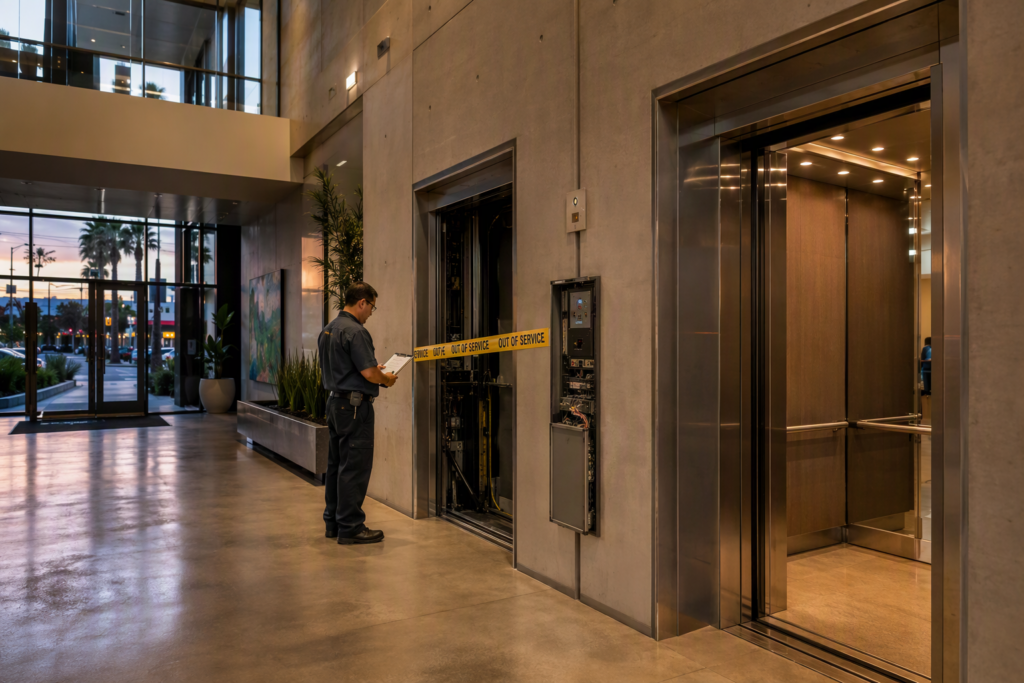
An out-of-service elevator in a hospital or multi-story clinic is a patient safety issue. Facilities should have a documented elevator contingency plan that addresses:
- Immediately notify all affected departments — nursing, patient transport, facilities management, and security — so alternative routing can begin.
- Post clear out-of-service signage at every floor landing to prevent patient and visitor confusion.
- Contact the CQCC-certified maintenance provider to assess and diagnose the problem. Under California law, only a CCCM working for a CQCC may perform repairs.
- Document the outage with timestamps, nature of the failure, and corrective actions taken — this supports Cal/OSHA reporting if required and protects the facility in any liability review.
- Confirm permit status before returning the elevator to service after any repair that could constitute a material alteration, which may require a new Cal/OSHA permit.
- Conduct a post-repair functional test with the maintenance team before reopening the elevator to patient traffic.
How Do I Choose the Right Elevator Maintenance Company for a Healthcare Facility?
Selecting a maintenance partner for a healthcare elevator program involves more than comparing service rates. Facility managers should evaluate:
- CQCC certification: Verify the company holds current Certified Qualified Conveyance Company certification from Cal/OSHA. This is a legal requirement in California, not an optional credential.
- C-11 license: The company must hold a current C-11 Elevator Contractor license issued by the California Contractors State License Board (CSLB), which is required to apply for CQCC status.
- CCCM-certified mechanics: Confirm that the mechanics who will actually service the facility are individually certified as Certified Competent Conveyance Mechanics — not just supervised by one.
- Healthcare-specific experience: Ask whether the provider has serviced hospitals, skilled nursing facilities, or ambulatory surgery centers in the region.
- Documentation practices: Thorough, dated work orders are essential for Cal/OSHA inspection readiness and risk management.
- Full-maintenance contract availability: A full-maintenance contract with a C-11 licensed company is what unlocks the two-year Cal/OSHA permit option — confirm the provider offers this coverage level.
Liftech Elevator serves healthcare operators across Signal Hill, Long Beach, Los Angeles, and Orange County and is structured to meet every one of the criteria above.
Are There Federal Safety Requirements That Apply Beyond California State Law?
Yes. In addition to California’s Elevator Safety Orders, healthcare facilities must observe federal requirements:
- ADA: The Americans with Disabilities Act requires that elevators in facilities open to the public meet accessibility standards. In healthcare settings, this covers hospitals, medical offices, outpatient clinics, and any facility that serves patients or members of the public.
- ASME A17.1: The ASME A17.1 Safety Code for Elevators and Escalators establishes the baseline safety requirements that California’s Elevator Safety Orders adopt. Maintenance programs must align with the edition California has adopted, currently ASME A17.1/CSA B44 2004 for installations under Group IV orders.
- OSHA general duty: OSHA general duty clause requirements apply to worker safety in and around elevator machinery spaces and maintenance activities.
Schedule a Healthcare Elevator Assessment in Southern California
Elevators in hospitals, clinics, and medical office buildings operate under stricter scrutiny than almost any other commercial vertical transportation environment. Regulatory compliance, patient safety, and operational continuity all depend on a structured, documented maintenance program delivered by California-certified professionals.
Contact Liftech Elevator for a free elevator assessment — serving Signal Hill, Long Beach, Los Angeles, and Orange County healthcare facilities with CQCC-certified maintenance programs built for clinical environments.
Contact Liftech Elevator for a free elevator assessment: 562-997-3639
Need elevator service you can rely on? Liftech Elevator is ready to help.