Elevator Repair and Maintenance: Complete FAQ Guide for California Building Owners
Elevator repair and maintenance encompasses all routine servicing, preventive care, diagnostic testing, and corrective repairs needed to keep a conveyance system operating safely and in compliance with California law and federal code. In California, only state-certified mechanics and companies may legally perform this work, and building owners are responsible for scheduling inspections and maintaining a valid Cal/OSHA permit to operate. The sections below answer the most common questions property owners, facility managers, and building operators ask about elevator repair and maintenance in Signal Hill, Long Beach, Los Angeles, and Orange County.
What does elevator maintenance actually include?
Elevator maintenance includes all scheduled inspections, lubrication, adjustment, testing, and component servicing required to keep a conveyance system safe, reliable, and code-compliant.
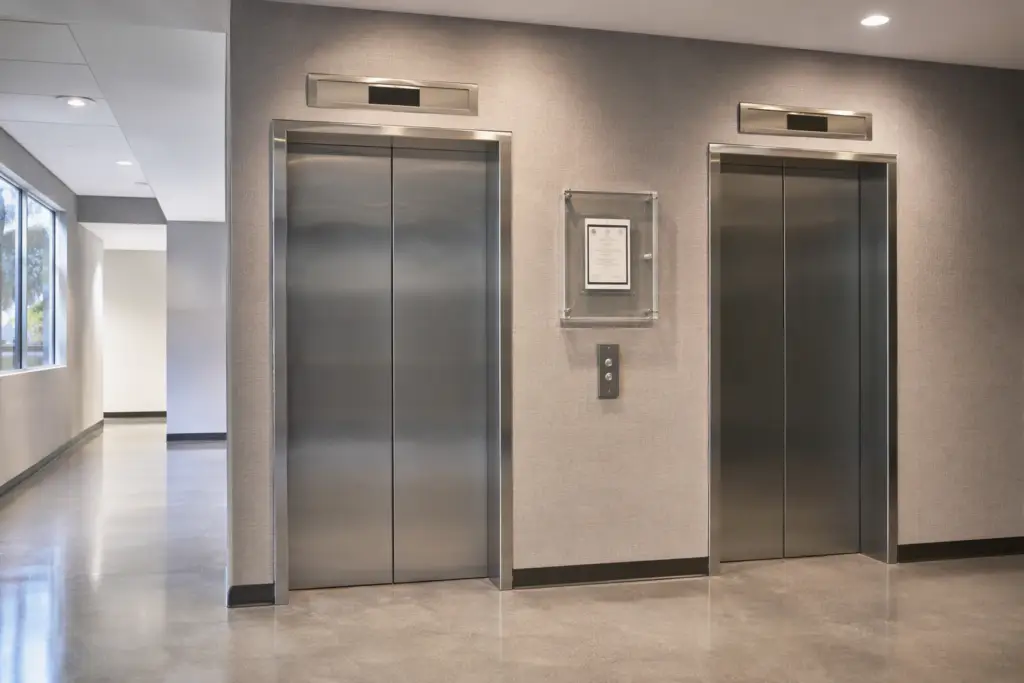
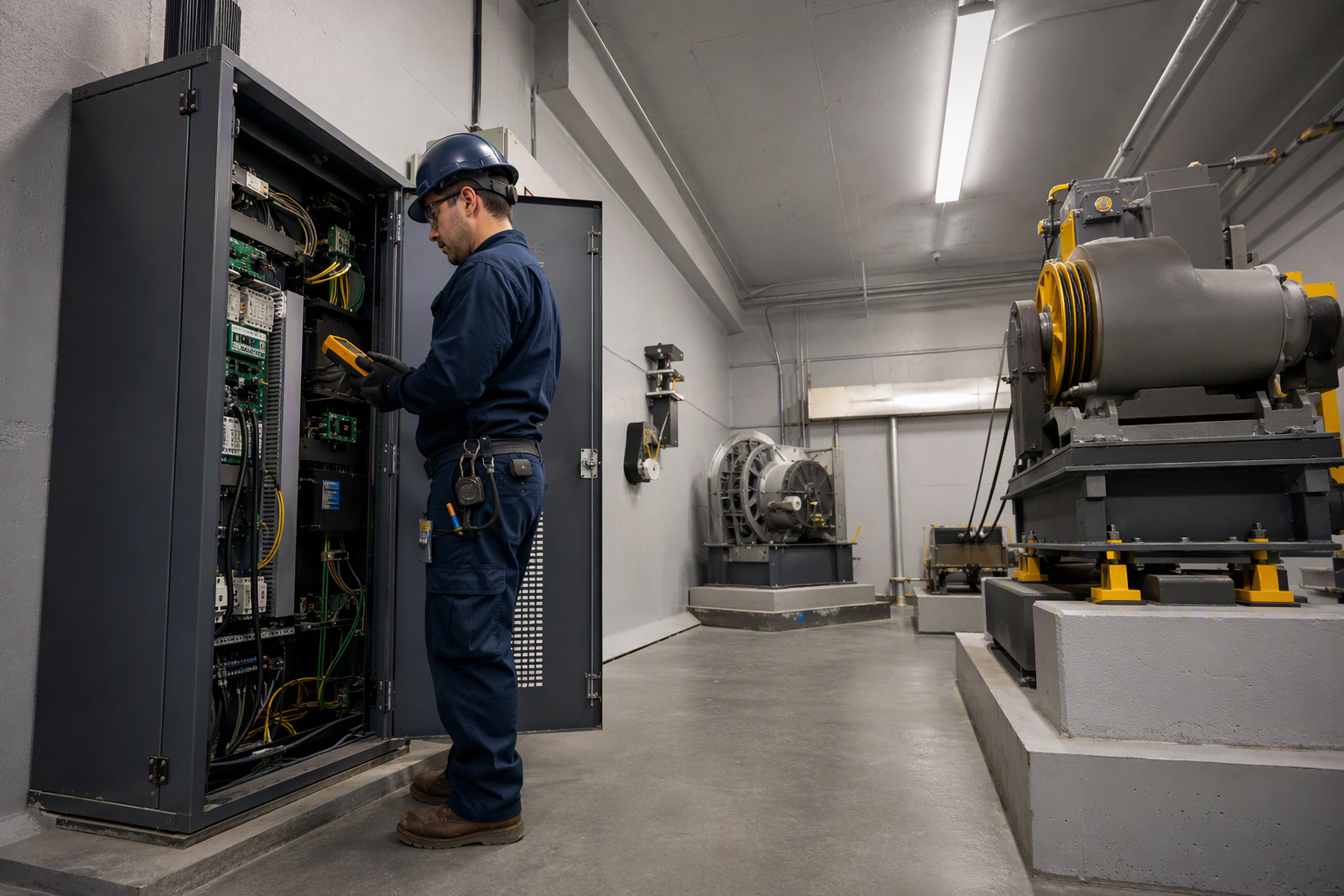
A comprehensive maintenance program covers the machine room (motor, drive controller, sheaves, and governor), the hoistway (guide rails, ropes or hydraulic cylinder, buffers, and interlocks), the car itself (doors, door operators, safety circuits, lighting, and cab finishes), and the pit (pit ladder, pit stop switch, oil levels, and sump pump). Technicians also verify that all safety devices — including the car safety, oil buffers, and overspeed governor — are functional and within adjustment tolerances set by the ASME A17.1 Safety Code for Elevators and Escalators.
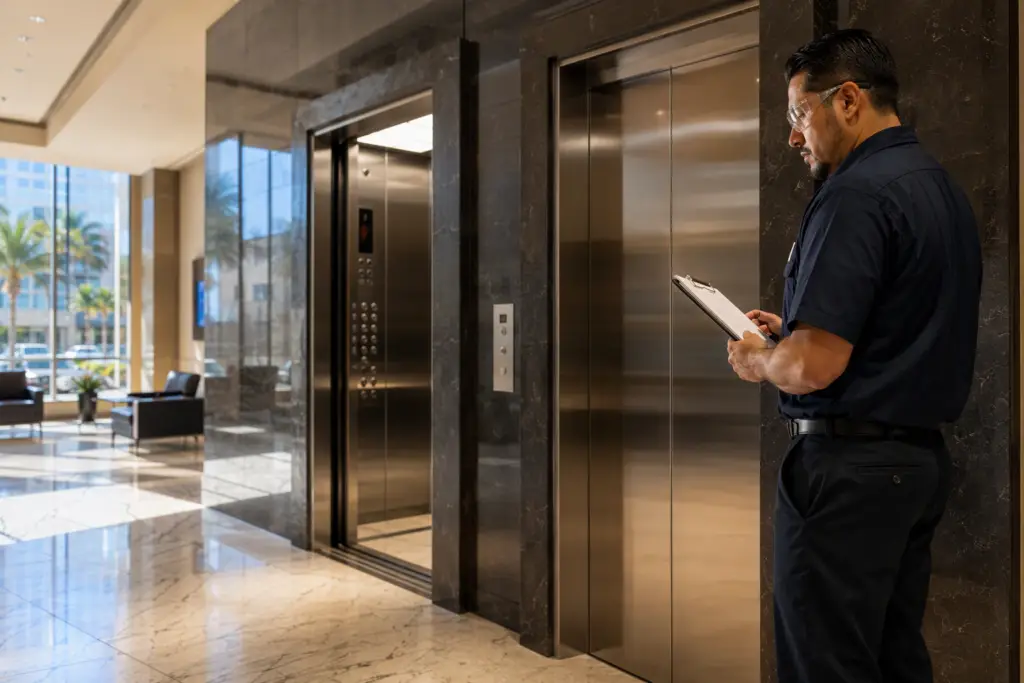
Preventive maintenance is not simply oiling moving parts. It involves reviewing fault logs in the controller, measuring door timing, checking leveling accuracy, testing the emergency lighting and phone circuit, and confirming that the permit to operate issued by Cal/OSHA is current and posted in the car.
Who is legally allowed to repair or maintain an elevator in California?

In California, only a Certified Competent Conveyance Mechanic (CCCM) employed by a Cal/OSHA-certified Certified Qualified Conveyance Company (CQCC) may legally maintain, repair, alter, or replace components on a conveyance.
This requirement is established under California Labor Code Sections 7300–7324.2 and enforced by the Division of Occupational Safety and Health (Cal/OSHA), Elevator Unit, California Department of Industrial Relations. A CQCC applicant must hold a C-11 Elevator Contractor license issued by the California Contractors State License Board (CSLB) and carry current certificates of workers’ compensation and liability insurance. CCCM and CQCC certificates are valid for two years, and renewal requires at least eight hours of continuing education.
Any elevator work performed by an uncertified individual or company is illegal in California and exposes the building owner to liability. When evaluating service providers, property managers should always verify current CQCC status with Cal/OSHA and confirm that mechanics on site hold valid CCCM credentials. Liftech Elevator operates as a Cal/OSHA-certified CQCC serving Signal Hill, Long Beach, Los Angeles, and Orange County.
How often does a California elevator need to be inspected?
California law requires every conveyance to be inspected at least once per year, and a conveyance found to be in safe condition receives a permit to operate for up to one year.
Under the California Code of Regulations, Title 8, Elevator Safety Orders (Sections 3000–3146), Cal/OSHA may extend a permit to operate for up to two years when the elevator is covered by a full maintenance contract with a C-11 licensed elevator company. This two-year permit pathway offers a meaningful compliance incentive for building owners who invest in structured maintenance agreements.
Critically, arranging the annual reinspection is the elevator owner’s responsibility — not the inspector’s and not automatically the service company’s unless the maintenance contract specifies otherwise. Only State of California safety engineers and Certified Competent Conveyance Inspectors (CCCI) may conduct these official inspections. The City of Los Angeles additionally runs its own elevator and conveyance inspection program through the Los Angeles Department of Building and Safety (LADBS), so Los Angeles building owners should confirm requirements with both Cal/OSHA and LADBS.
What happens if my elevator’s permit to operate expires?
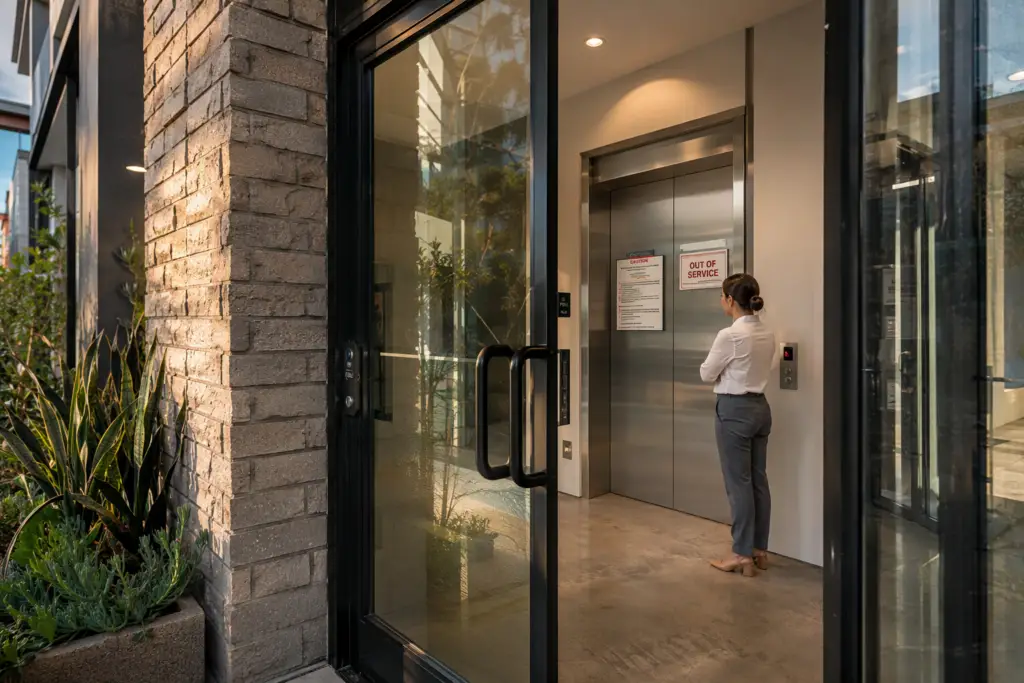
Operating an elevator in California without a valid, current permit to operate issued by Cal/OSHA is unlawful and can result in the conveyance being ordered out of service.
The permit to operate must be posted conspicuously inside the elevator car at all times. If an inspection reveals unsafe conditions, Cal/OSHA may withhold or revoke the permit, forcing the elevator out of service until repairs are made and a follow-up inspection is passed. Beyond the legal exposure, operating a conveyance without a valid permit places building owners at significant liability risk in the event of an incident or injury.
Because reinspection scheduling is the owner’s responsibility, many building operators work with their maintenance provider to track permit expiration dates and schedule inspections proactively. A well-structured maintenance contract will include permit tracking as a standard deliverable.
What permits are required before elevator repair or alteration work begins?
In California, a permit from Cal/OSHA is required before a conveyance is erected, installed, or materially altered — repair work that constitutes a material alteration cannot legally begin without this permit in hand.
Routine maintenance and minor adjustments that do not change the design, capacity, or safety system configuration generally do not require a separate alteration permit. However, replacing a hydraulic cylinder, upgrading a drive system, adding a floor, or modifying safety circuits typically qualifies as a material alteration under the California Code of Regulations, Title 8, and a permit application must be filed with Cal/OSHA before work begins. Similarly, any new elevator installation requires Cal/OSHA inspection and a permit to operate before the elevator is placed in service.
The distinction between routine maintenance and alteration matters because the scope of work determines which edition of the adopted code applies. California adopted ASME A17.1/CSA B44, 2004 edition (Group IV Elevator Safety Orders), effective May 1, 2008, for installation contracts signed on or after that date.
What are the most common elevator repairs building owners should anticipate?
The most frequently needed elevator repairs involve door systems, hydraulic components, control systems, and worn or degraded safety devices — all of which are identified through routine maintenance before they cause service interruptions.
Door-related problems account for a large proportion of elevator service calls. Door operators, rollers, gibs, and interlocks experience high cycle counts and wear predictably over time. Hydraulic elevators require monitoring of the cylinder, packing seals, hydraulic fluid condition, and buried cylinder integrity. Traction elevators require periodic attention to wire rope condition, brake lining wear, sheave grooving, and governor rope tension. Control system components — contactors, relays, printed circuit boards, and solid-state drives — degrade with age and may require modernization when original parts become unavailable.
Safety devices including oil buffers, car safeties, governor mechanisms, and door safety edges must be tested at the intervals required by the ASME A17.1 Safety Code for Elevators and Escalators and verified operable during annual inspections.
What is the difference between a full maintenance contract and a parts-and-labor contract?
A full maintenance contract covers all routine service, adjustments, and parts replacement needed to keep the elevator operational; a parts-and-labor contract typically covers only defined labor activities, leaving the building owner responsible for the cost of parts.
| Contract Type | Routine Labor | Parts Covered | Emergency Calls | Cal/OSHA 2-Year Permit Eligible |
|---|---|---|---|---|
| Full Maintenance (Comprehensive) | Yes | Yes — most or all parts | Typically included | Yes |
| Parts & Labor | Yes | No — owner pays for parts | Billed separately | Verify with Cal/OSHA |
| Examination Only (Lubrication) | Inspection and lubrication only | No | Not included | No |
| Modernization Contract | Upgrade scope defined | New components per scope | Per agreement | Post-project, with new permit |
The full maintenance contract is the only contract type that qualifies a building for Cal/OSHA’s extended two-year permit to operate. For building owners seeking to minimize administrative burden and unplanned repair costs, a full maintenance agreement with a CQCC-certified provider offers the broadest protection. When comparing proposals, verify that the contract explicitly names the CQCC holding the agreement and confirms that all mechanics assigned to the property hold current CCCM credentials.
How should a building owner respond immediately after an elevator malfunction or entrapment?
A structured, calm response to an elevator malfunction or passenger entrapment protects safety, preserves evidence, and supports the repair process.
- Do not attempt to pry doors open or release passengers without trained personnel. Unauthorized rescue attempts can create additional hazards for trapped passengers and rescuers.
- Contact emergency services (911) if the passenger reports a medical emergency, injury, or cannot be reached by the in-car telephone.
- Use the in-car emergency telephone or intercom to communicate with the trapped passenger, reassuring them that help is on the way.
- Contact your certified elevator service company immediately to dispatch a qualified CCCM for passenger release and diagnostic evaluation.
- Secure the elevator lobby at all affected floors to prevent other passengers from attempting to board the malfunctioning unit.
- Document the time of the malfunction, the floor at which the car stopped, any fault codes displayed in the lobby panel, and witness observations — this information assists the responding technician.
- Do not return the elevator to service until the CCCM has inspected the unit, identified and corrected the root cause, and confirmed the elevator is safe to operate.
- If the incident involves an injury, notify Cal/OSHA as required under California Labor Code and follow the agency’s reporting procedures detailed at the Cal/OSHA Elevator Unit.
What ADA requirements apply to elevator repair and upgrades?
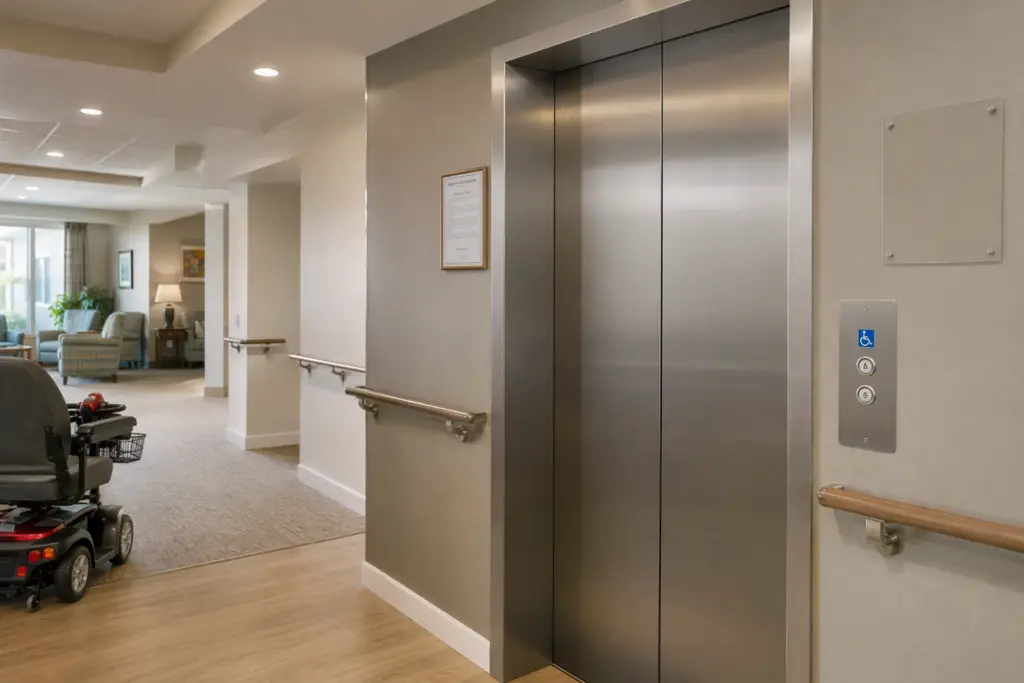
The Americans with Disabilities Act (ADA) requires that elevators serving multiple floors in public accommodations and commercial facilities be accessible, which affects cab dimensions, door width, control panel reach ranges, floor designation signage, and leveling accuracy.
When an elevator undergoes alteration, ADA accessibility requirements are triggered for the path of travel to the altered element. A cab interior modernization, for example, may require updating control panel button heights, adding Braille designations, installing a compliant handrail, and confirming that the car levels within the tolerance required for wheelchair accessibility. The specific ADA Standards for Accessible Design govern these requirements.
Leveling accuracy is a practical maintenance concern with ADA implications: an elevator that drifts and stops more than a half-inch above or below the floor level creates a trip hazard and a barrier for wheelchair users. Consistent leveling requires correctly adjusted brake timing, selector systems, and final landing speed — all elements addressed through preventive maintenance.
How does an elevator modernization differ from routine repair?
Modernization replaces major systems — controllers, drives, door operators, fixtures, or structural cab elements — to extend useful life and bring the conveyance into compliance with current code, while routine repair corrects discrete failures within the existing system.
A modernization project typically requires a Cal/OSHA alteration permit before work begins, and the completed modernization must pass a Cal/OSHA inspection before the elevator returns to service. The scope of code compliance required for the modernized components is governed by the California Code of Regulations, Title 8, Elevator Safety Orders and the edition of ASME A17.1 adopted at the time of the alteration permit.
Building owners considering modernization should weigh the age of the existing equipment, parts availability, energy consumption, ADA compliance status, and the current permit history when deciding between continued repair and a phased or full modernization. Liftech Elevator serves buildings across Signal Hill, Long Beach, Los Angeles, and Orange County with modernization assessments that evaluate existing equipment condition against current code requirements.
What are the consequences of deferred elevator maintenance?
Deferred maintenance accelerates component wear, increases the frequency and severity of breakdowns, raises the risk of a safety incident, and can result in Cal/OSHA ordering the elevator out of service if deficiencies are identified at inspection.
From a practical standpoint, neglected lubrication causes premature rail, guide shoe, and rope wear. Dirty or improperly adjusted door systems are the leading source of entrapments and service calls. Hydraulic systems with aging seals or contaminated fluid risk slow descent or cylinder leakage. Control system components that are not monitored can fail without warning, stranding passengers between floors.
From a compliance standpoint, Cal/OSHA inspectors evaluate the physical condition of the conveyance during annual inspections. Deficiencies that indicate a lack of ongoing maintenance can result in conditions of use restrictions, required repairs before permit renewal, or permit denial. The cost of emergency repairs performed under a reactive model consistently exceeds the cost of equivalent work performed proactively under a maintenance schedule.
What should building owners look for when selecting an elevator maintenance company in California?
Building owners should verify that any prospective elevator company holds current Cal/OSHA Certified Qualified Conveyance Company (CQCC) status, employs Certified Competent Conveyance Mechanics (CCCM), and carries a valid C-11 Elevator Contractor license from the California Contractors State License Board (CSLB).
Beyond credentials, evaluation criteria should include the provider’s familiarity with the specific elevator make and model on the property, the clarity and scope of the maintenance contract, the company’s ability to obtain proprietary parts for the installed controller, and experience serving the local jurisdiction — including knowledge of LADBS requirements for properties in Los Angeles. Liftech Elevator holds the credentials required to operate as a CQCC in California and serves commercial and residential properties throughout Signal Hill, Long Beach, Los Angeles, and Orange County.
How long does a typical elevator repair take?
Repair duration varies significantly by the nature of the failure — a door adjustment or minor electrical repair may be completed within hours, while a hydraulic cylinder replacement or control modernization can require days to weeks depending on parts availability and permit requirements.
Parts lead time is a primary variable. Legacy elevator systems with discontinued controllers may require fabricated or sourced components, which can extend downtime considerably. This is one practical reason building owners benefit from maintaining a relationship with a service provider who tracks component availability and can advise on parts obsolescence before a failure occurs. For buildings with a single elevator serving populations with limited mobility, repair urgency is heightened, and selecting a provider with access to common parts inventory is especially important.
What role does the hydraulic elevator cylinder play, and when does it need replacement?
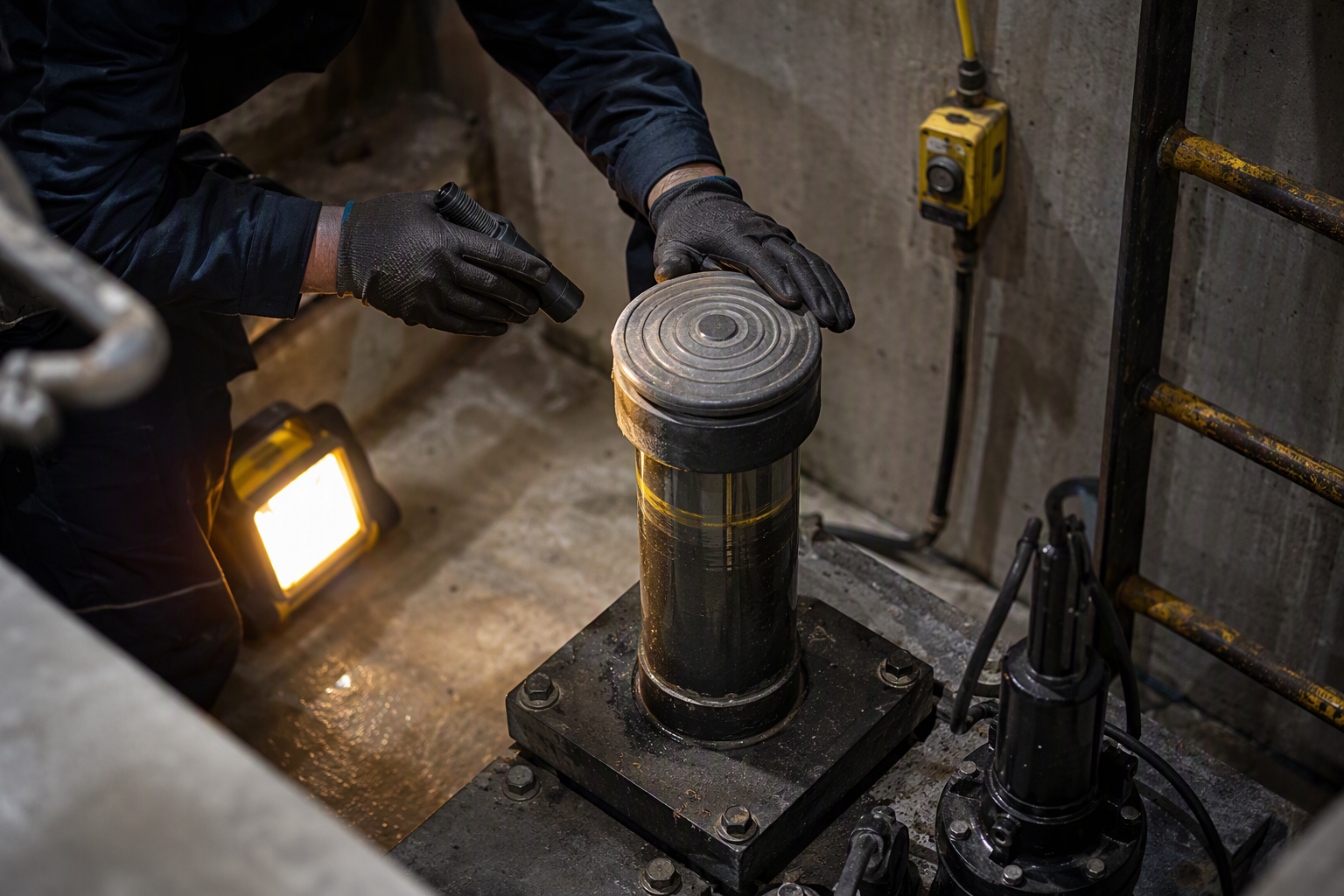
The hydraulic cylinder is the primary lifting component of a hydraulic elevator, and its condition — including the integrity of the casing, packing seals, and buried section — directly affects both operational performance and environmental compliance.
Single-bottom cylinders installed before modern double-bottom standards may require evaluation for leakage risk. California environmental regulations govern hydraulic fluid containment, and a leaking cylinder can create both a regulatory and environmental liability for the property owner. Signs that cylinder evaluation is warranted include slow descent under load, oil seepage in the pit, or unexplained fluid loss. Cylinder replacement requires a Cal/OSHA alteration permit and a post-completion inspection before the elevator returns to service.
What is governor rope testing, and why does it matter for safety?
The governor rope connects the car to the overspeed governor and activates the car safety device if the car exceeds safe descent speed — testing this system confirms that the primary fall-arrest mechanism will function in an emergency.
The ASME A17.1 Safety Code for Elevators and Escalators specifies testing intervals and acceptance criteria for governor rope and safety device performance. During annual Cal/OSHA inspections, inspectors verify that the governor, governor rope, and car safety are in proper adjustment and within required tolerances. Deferred testing or out-of-tolerance conditions are grounds for permit denial. A maintenance program that includes periodic safety device testing — not just during the annual inspection — provides the most reliable protection against safety device failure.
How does California’s proposed Group V update affect current maintenance requirements?
California has proposed a Group V update to its Elevator Safety Orders that would incorporate portions of ASME A17.1-2019; as of 2026, the Standards Board held a public hearing on June 18, 2026, and no effective date has been posted.
Until Group V takes effect, the governing code for California elevators subject to the state safety orders remains the ASME A17.1/CSA B44, 2004 edition, adopted under the Group IV Elevator Safety Orders effective May 1, 2008, for installation contracts signed on or after that date. Building owners planning significant modernization projects in 2026 should consult with their CQCC-certified service provider and monitor Cal/OSHA communications at the Cal/OSHA Elevator Unit for updates on the Group V effective date, as the adopted code edition may affect the technical requirements applicable to permitted alteration work.
What maintenance tasks should building staff perform between professional service visits?
Building staff — who are not CCCM-certified — should limit their role to observation and reporting rather than any hands-on adjustment or repair of elevator components.
Appropriate non-mechanical tasks for building staff include: confirming the permit to operate is posted and current inside the car; noting and logging any unusual sounds, door hesitations, leveling discrepancies, or error codes on lobby panels; verifying that the machine room door is secured and that pit access is controlled; checking that the machine room is free of unauthorized storage that could obstruct service access; and confirming that the in-car emergency telephone registers a call correctly by performing the periodic communication test. Any observed anomaly should be logged with the date and time and communicated promptly to the certified elevator service provider. Hands-on adjustments, reset attempts, or component handling by uncertified building staff are prohibited under California law.
What energy efficiency considerations apply to elevator maintenance and modernization?
Motor and drive system condition, lighting, and standby power consumption are the primary energy variables in elevator systems, and a well-maintained system operates more efficiently than a neglected one.
Variable voltage variable frequency (VVVF) drive systems used in modern traction elevators consume substantially less energy than older single-speed or two-speed AC motor systems. LED cab lighting and machine room lighting reduce continuous electrical load. Hydraulic power units with variable speed pump drives reduce the energy demand of hydraulic elevator systems compared to fixed-speed units. When evaluating modernization proposals, building owners in Los Angeles and Orange County — where utility rates influence operating costs — should request a discussion of drive and motor options as part of the scope review.
How do maintenance requirements differ for traction versus hydraulic elevators?
Traction elevators and hydraulic elevators share common maintenance requirements for safety devices, door systems, and controls, but each type has distinct mechanical systems that require type-specific expertise.
Traction elevators require attention to hoist ropes, counterweight systems, brake mechanisms, the machine brake, sheave grooving, and the overhead machine room or machine-room-less (MRL) drive system. Wire rope inspection involves checking for broken wires, corrosion, and lubrication condition. Hydraulic elevators require monitoring of fluid level, fluid condition, cylinder integrity, packing seals, power unit components, and buried cylinder status. Both types require annual safety device testing, door system service, controller inspection, and the Cal/OSHA annual inspection to maintain a valid permit to operate. A CQCC with technicians experienced in both system types is best positioned to serve a mixed portfolio of elevators within a single building or across multiple properties.
What questions should a building owner ask before signing an elevator maintenance contract?
Before signing any elevator maintenance agreement, building owners should obtain clear answers to a defined set of questions that reveal the true scope and quality of the proposed service.
Key questions include: Is your company currently certified as a CQCC by Cal/OSHA, and are the mechanics assigned to this property currently certified as CCCMs? Does the contract qualify this building for Cal/OSHA’s extended two-year permit to operate? What specific components and tasks are included in each scheduled maintenance visit? How are emergency service calls handled, and what is the escalation process if a part must be sourced? Does the contract include permit tracking and coordination with the annual Cal/OSHA inspection? What documentation — service logs, fault reports, parts replaced — is provided to the building owner after each visit? What is the process for permit alteration work that requires a Cal/OSHA permit before commencement?
Reviewing the answers to these questions against the written contract terms protects building owners from ambiguous scope language and ensures compliance accountability is clearly allocated. Liftech Elevator provides maintenance services to commercial and residential properties across Signal Hill, Long Beach, Los Angeles, and Orange County and welcomes direct questions about contract terms and compliance documentation.
Get a Free Elevator Assessment from Liftech Elevator
Whether a building needs a routine maintenance plan, a repair evaluation, or guidance on California compliance requirements, Liftech Elevator — a Cal/OSHA-certified Certified Qualified Conveyance Company serving Signal Hill, Long Beach, Los Angeles, and Orange County — is the qualified resource for property owners and facility managers throughout Southern California.
Contact Liftech Elevator for a free elevator assessment: 562-609-3478
Need elevator service you can rely on? Liftech Elevator is ready to help.