Elevator Maintenance Services: Complete FAQ Guide
Elevator maintenance services include every scheduled, preventive, and corrective activity required to keep a conveyance safe, code-compliant, and in continuous operation. For building owners and facility managers in Signal Hill, Long Beach, Los Angeles, and Orange County, understanding what these services cover — and what California law requires — is essential to protecting occupants and avoiding costly shutdowns. The 20 questions below address the full scope of elevator maintenance, from inspection intervals and contractor qualifications to emergency procedures and modernization triggers.
What are elevator maintenance services?
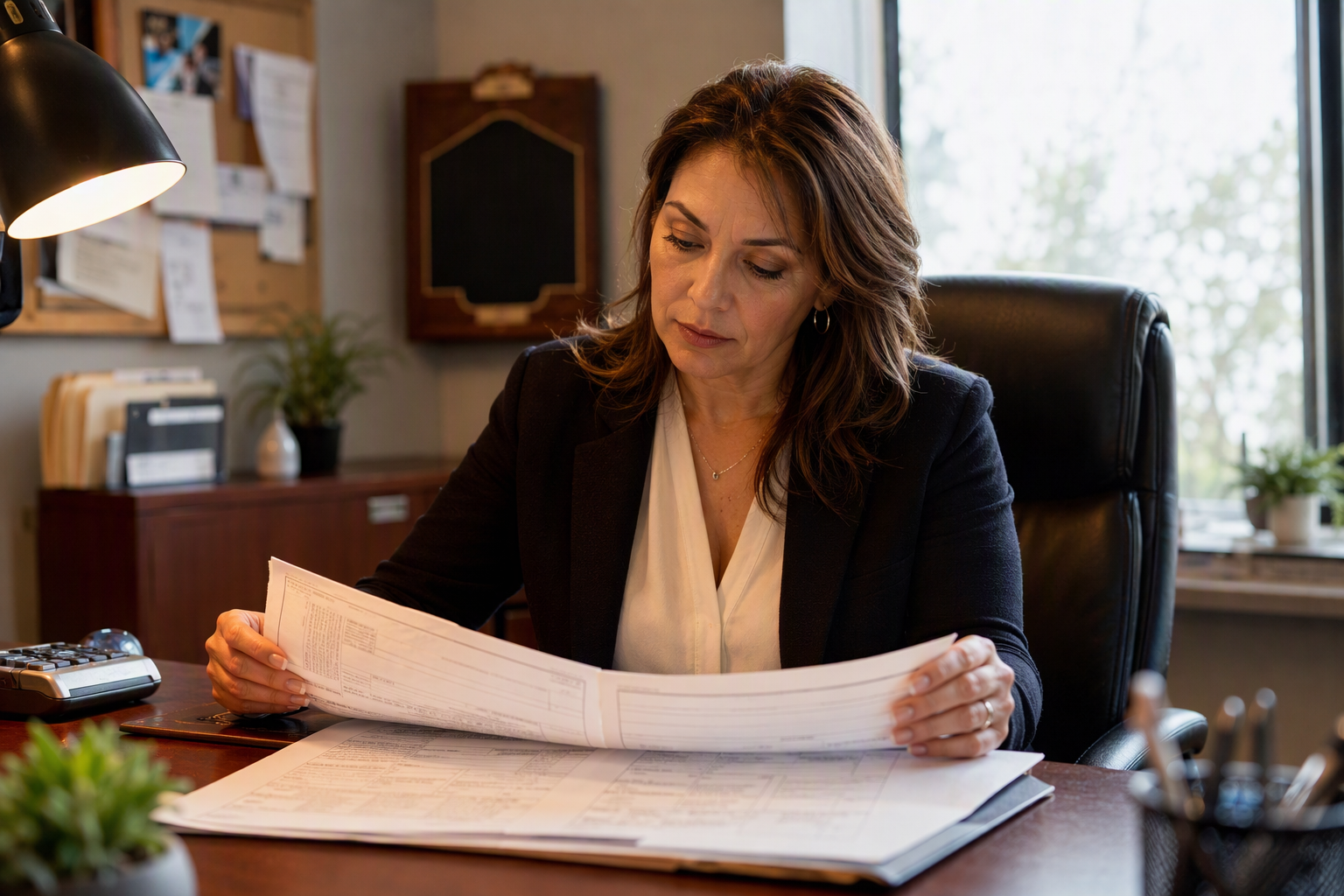
Elevator maintenance services are the full set of scheduled, preventive, and corrective activities — inspections, lubrication, adjustments, parts replacement, safety tests, and code compliance audits — performed by certified technicians to keep a conveyance safe and legally operational.
Maintenance is not a single event but an ongoing program. A properly structured maintenance plan addresses mechanical systems (drive machine, ropes, sheaves, buffers), electrical systems (controllers, wiring, lighting), safety devices (governors, safeties, interlocks), and the cab interior. Each category degrades at a different rate, which is why periodic visits — rather than reactive calls — are the professional standard.
In California, this work must be performed by a Cal/OSHA-certified Certified Qualified Conveyance Company (CQCC) whose field technicians hold Certified Competent Conveyance Mechanic (CCCM) credentials. Using an uncertified contractor exposes building owners to liability and can result in permit revocation.
How often does California law require elevator inspections?
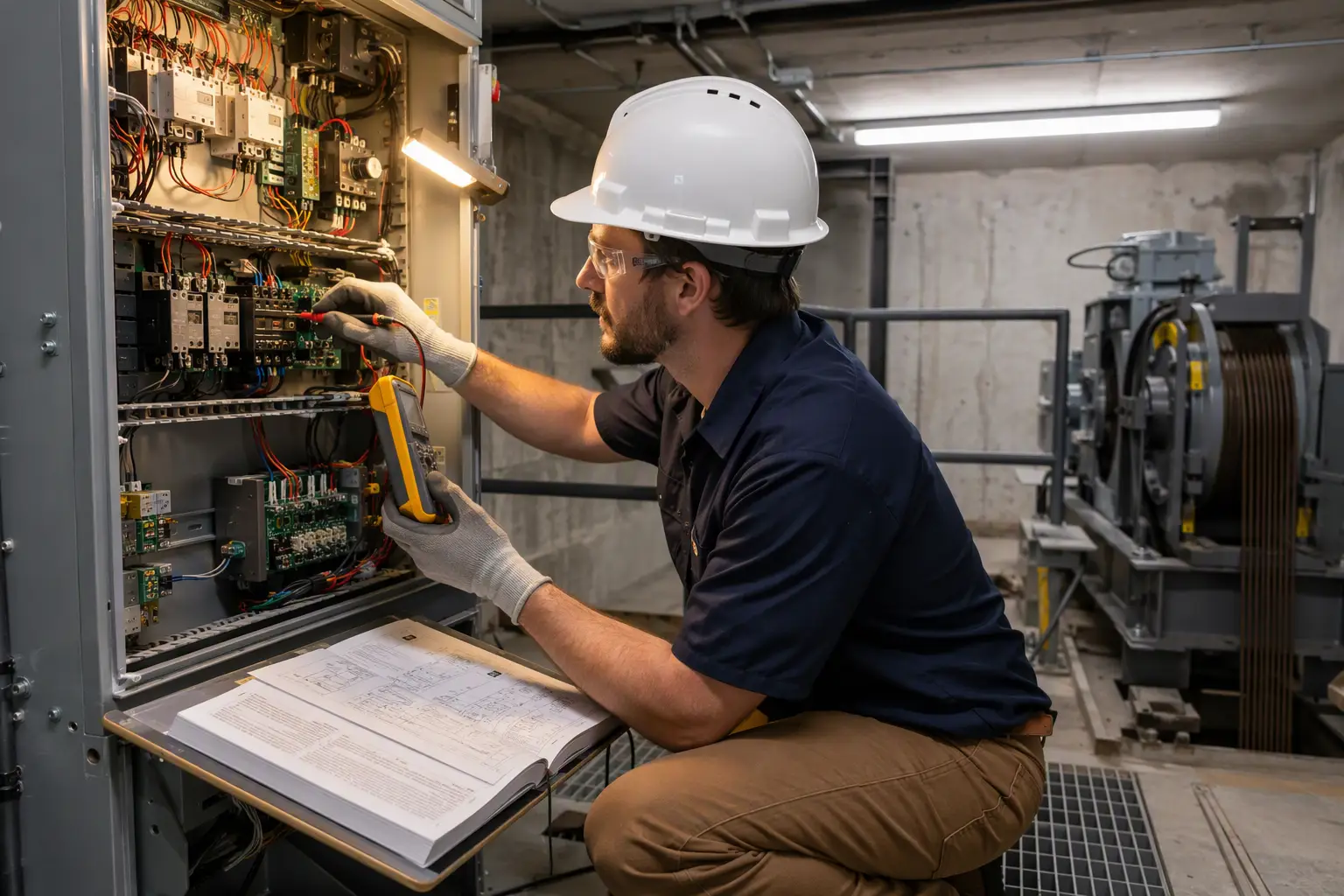
California law requires every conveyance to be inspected at least once per year, and a unit found safe receives a permit to operate for up to one year — extended to up to two years when the elevator is covered by a full maintenance contract with a C-11 licensed elevator company.
These requirements flow directly from California Labor Code Sections 7300–7324.2 and the California Code of Regulations, Title 8, Elevator Safety Orders. The annual inspection must be conducted by a State of California safety engineer or a Certified Competent Conveyance Inspector (CCCI) — no other person is legally authorized to perform it in California.
Importantly, California law places the responsibility for arranging the annual reinspection on the elevator owner, not the maintenance contractor. Building owners should track permit expiration dates and coordinate with their CQCC provider well in advance to avoid lapses.
Who is legally authorized to maintain elevators in California?
In California, only a Certified Qualified Conveyance Company (CQCC) certified by Cal/OSHA, employing technicians who hold Certified Competent Conveyance Mechanic (CCCM) credentials, may maintain, repair, alter, or replace components on a conveyance.
CQCC certification requires, at minimum, a current C-11 Elevator Contractor license issued by the California Contractors State License Board (CSLB), plus certificates of workers’ compensation and liability insurance on file with Cal/OSHA. CCCM credentials ensure that every individual working unsupervised on a conveyance has demonstrated the technical competency California’s safety orders demand.
CQCC, CCCM, and conveyance inspector certificates are valid for two years. Renewal requires at least eight hours of continuing education, ensuring that certified personnel stay current with code updates and evolving safety standards. Liftech Elevator maintains full CQCC certification and employs CCCM-credentialed mechanics throughout its service territory in Signal Hill, Long Beach, Los Angeles, and Orange County.
What does a full elevator maintenance contract include?
A full elevator maintenance contract typically covers all scheduled preventive maintenance visits, lubrication, adjustment of safety devices, parts replacement for normal wear items, emergency callback service, and the documentation required to support Cal/OSHA’s annual inspection process.
The distinction between contract tiers matters legally in California: only a full maintenance contract — not a limited or oil-and-grease agreement — qualifies an elevator for Cal/OSHA’s extended two-year permit to operate. Building owners should confirm in writing that their contract meets this threshold.
A comprehensive maintenance program will address the following categories on every scheduled visit:
- Drive system: motor, gearbox, brake, machine room ventilation
- Suspension: hoist ropes or belts, sheaves, compensation ropes
- Safety devices: governor, safeties, oil buffers, door interlocks
- Controls: controller boards, relays, wiring, solid-state components
- Car and hoistway: cab lighting, emergency lighting, sump pump, guide rails
- Code compliance documentation: permit posting, test records, logbook entries
What code standards govern elevator maintenance in California?
Elevator maintenance in California is governed by the California Code of Regulations, Title 8, Elevator Safety Orders, which adopt the ASME A17.1/CSA B44 Safety Code for Elevators and Escalators (2004 edition for installations contracted on or after May 1, 2008) as the baseline technical standard.
Federal overlays include ADA accessibility requirements for public-use elevators and OSHA regulations for elevator machine room and hoistway worker safety. As of 2026, California has proposed a Group V update to its Elevator Safety Orders that would incorporate ASME A17.1-2019 in part; the Standards Board held a public hearing on June 18, 2026, and no effective date has been posted.
For installations in the City of Los Angeles specifically, LADBS (Los Angeles Department of Building and Safety) administers its own elevator and conveyance inspection program. Building owners in that jurisdiction should confirm current requirements directly with LADBS, in addition to Cal/OSHA obligations.
What is the difference between preventive maintenance and corrective maintenance?
Preventive maintenance consists of scheduled, proactive activities — lubrication, adjustments, testing, and parts replacement based on time or usage cycles — while corrective maintenance addresses defects, failures, or code violations discovered during inspections or reported by building staff.
Both are components of a sound maintenance program, but the ratio between them is a reliable quality indicator. Elevators that receive consistent preventive attention accumulate fewer corrective events over time, reducing both downtime and total lifecycle cost. Deferred preventive maintenance is one of the most common precursors to major component failure.
Corrective maintenance that involves material alterations — replacing the controller, changing the machine, modifying the hoistway — triggers additional Cal/OSHA requirements: a permit must be obtained from Cal/OSHA before a conveyance is materially altered, and the altered unit must pass inspection before returning to service.
What happens if an elevator operates without a valid permit in California?
Operating an elevator in California without a valid, current permit to operate is a violation of California Labor Code Sections 7300–7324.2 and Cal/OSHA’s Elevator Safety Orders, and can result in immediate shutdown orders, civil penalties, and potential liability for any injuries that occur.
The permit to operate must be posted conspicuously inside the elevator car. Cal/OSHA inspectors check for permit posting during routine inspections and complaint investigations. A permit that has lapsed — even by a short period — makes the elevator legally non-operational until a new inspection and permit issuance occur.
Building owners in Long Beach, Signal Hill, Los Angeles, and Orange County can avoid permit lapses by partnering with a CQCC like Liftech Elevator that tracks permit expiration dates and coordinates reinspection scheduling proactively.
What safety tests are required during elevator maintenance?
Required safety tests under the California Elevator Safety Orders and the underlying ASME A17.1 Safety Code include governor and safety device tests, buffer tests, brake tests, door reopening device tests, emergency lighting and communication tests, and load tests at specified intervals.
Test frequency and methodology depend on elevator type and installation date. The ASME A17.3 code — the retroactive safety standard for existing installations — provides the framework for periodic tests on older equipment. Maintenance contractors maintain test records that become part of the inspection package reviewed by the CCCI or Cal/OSHA safety engineer at the annual inspection.
Failure to complete required periodic tests is a code violation that can prevent permit renewal. A full maintenance contract should specify which tests are included and at what intervals they will be performed.
How should building owners prepare for a Cal/OSHA elevator inspection?
Preparing for a Cal/OSHA elevator inspection requires ensuring that the permit to operate is current and posted in the car, that all maintenance logbooks and test records are available, that the machine room is clean and accessible, and that any deficiencies noted at the prior inspection have been corrected.
Follow these steps in the period leading up to an annual inspection:
- Confirm the current permit to operate expiration date and schedule the reinspection before it lapses.
- Review the previous inspection report and verify that all cited deficiencies have been corrected by a CCCM.
- Ensure maintenance logbooks are complete, legible, and available in the machine room.
- Verify that machine room lighting, ventilation, and access are compliant with the Elevator Safety Orders.
- Confirm that emergency contacts and building contact information are current with the inspection agency.
- Check that the permit to operate is conspicuously posted inside the elevator car.
- Coordinate with the CQCC to conduct a pre-inspection walkthrough and resolve any items before the official visit.
What are the ADA requirements that affect elevator maintenance?
The Americans with Disabilities Act (ADA) requires that elevators serving public accommodations and commercial facilities remain accessible, with functional controls at required heights, braille and raised character markings, audible floor signals, and doors that operate at code-compliant speeds.
ADA compliance is not a one-time installation issue — it is a maintenance obligation. Control buttons wear out and lose tactile markings; audible signals fail; door sensors degrade and cause doors to close too quickly for passengers with mobility impairments. Maintenance programs should include a specific ADA compliance checklist that addresses these items at every visit.
Non-functional ADA features in a public-use building can expose owners to federal complaints and civil litigation, independent of any Cal/OSHA permit status. Building owners in Los Angeles, Long Beach, Signal Hill, and Orange County should verify that their maintenance contract explicitly covers ADA-related components.
What is a maintenance benchmark comparison for different elevator types?
Maintenance frequency, complexity, and focus areas vary significantly by elevator type. The table below summarizes general benchmarks based on ASME A17.1 requirements and standard industry maintenance practice.
| Elevator Type | Typical Maintenance Visit Frequency | Primary Maintenance Focus Areas | Cal/OSHA Permit Interval | Key Code Reference |
|---|---|---|---|---|
| Hydraulic (low-rise, ≤5 stops) | Quarterly to semi-annual | Jack unit, fluid level, pump/valve, pit, door systems | Up to 1 year (up to 2 years with full maintenance contract) | ASME A17.1 |
| Traction (geared, mid-rise) | Monthly to quarterly | Machine, gearbox, ropes, sheaves, governor, safeties, controller | Up to 1 year (up to 2 years with full maintenance contract) | ASME A17.1 |
| Traction (gearless, high-rise) | Monthly | Machine, ropes/belts, solid-state controls, buffers, door operators | Up to 1 year (up to 2 years with full maintenance contract) | ASME A17.1 |
| Machine Room-Less (MRL) | Monthly to quarterly | In-hoistway machine, controller, ropes, door systems, emergency lowering | Up to 1 year (up to 2 years with full maintenance contract) | ASME A17.1 |
| Freight Elevator | Monthly to quarterly | Gate/door interlocks, load capacity markings, buffers, structural components | Up to 1 year (up to 2 years with full maintenance contract) | ASME A17.1 |
| Inclined/Limited Use (LU/LA) | Semi-annual | Track, drive system, safety devices, enclosure, door interlocks | Up to 1 year (up to 2 years with full maintenance contract) | ASME A17.1 |
Note: Visit frequencies above represent general professional practice benchmarks and should be confirmed against the specific unit’s age, usage volume, and manufacturer recommendations. Only the permit interval figures are drawn from stated California regulatory requirements.
What are the signs that an elevator needs immediate service?
An elevator that exhibits any of the following conditions requires the building owner to take it out of service and contact a CQCC immediately: doors that fail to open or close properly, unusual noises during travel, leveling errors at floor landings, abnormal vibration, tripped circuit breakers in the machine room, or activation of any safety device.
These symptoms can indicate failures in door operator systems, worn rope or drive components, contaminated hydraulic fluid, failing safety circuits, or controller faults. Continued operation of a compromised elevator exposes occupants to entrapment or injury and exposes building owners to significant liability under California Labor Code requirements.
When an elevator is taken out of service, the appropriate notice must be posted at each landing. Reinstatement requires that the deficiency be corrected by a CCCM and, if a material alteration was involved, that a Cal/OSHA permit be obtained before returning the unit to service.
What should a building owner do immediately when passengers are trapped in an elevator?
When passengers are trapped, the immediate priority is communication, calm reassurance, and professional extraction — never attempt self-rescue or encourage passengers to force doors or exit without a qualified technician present.
- Establish two-way communication with trapped passengers using the in-car emergency telephone or intercom.
- Reassure passengers that help has been contacted and that they are not in danger if the car is stationary.
- Call the elevator maintenance contractor’s emergency line to dispatch a CCCM to the site.
- If there is any indication of injury, smoke, or fire, contact emergency services (911) immediately and follow local fire department protocols.
- Do not attempt to manually open hoistway doors from the landing without a qualified technician present — improper entry into the hoistway is a leading cause of entrapment-related fatalities.
- Keep a written record of the time of the incident, the floor location, the number of passengers, and the sequence of events for the incident report and any Cal/OSHA notification that may be required.
- After release, the elevator should be taken out of service for inspection by a CCCM before resuming normal operation.
How does elevator maintenance affect property insurance and liability?
Documented, consistent elevator maintenance by a CQCC directly supports a building owner’s defense in the event of a premises liability claim, and many commercial property and general liability insurers require proof of current permits and maintenance contracts as a condition of coverage.
Insurance underwriters assess elevator risk based on the age of the equipment, the maintenance history, the currency of Cal/OSHA permits, and whether a full maintenance contract is in place. Gaps in any of these areas can trigger coverage exclusions, premium increases, or policy non-renewal. The permit to operate, logbook records, and inspection reports collectively constitute the paper trail that demonstrates diligent care of the equipment.
Building owners should retain maintenance records for a period sufficient to cover applicable California statutes of limitations for personal injury claims. Engaging a provider like Liftech Elevator — which maintains organized documentation as part of its service — simplifies the records management burden on property managers.
When does an elevator require modernization rather than routine maintenance?
Modernization is warranted when an elevator’s components are no longer available, when repair costs consistently exceed the cost of replacement, when the unit cannot be brought into compliance with current safety codes through maintenance alone, or when recurring downtime is affecting building operations.
California’s Elevator Safety Orders require that material alterations — including controller replacement, machine replacement, or hoistway modifications — comply with the applicable code edition and receive a Cal/OSHA permit before work begins and before the unit returns to service. A modernization project thus triggers the same permitting and inspection cycle as a new installation.
Common modernization triggers include obsolete relay logic controllers that can no longer be serviced, worn or undersized hoist ropes, hydraulic jacks that fail environmental containment requirements, and door systems that cannot reliably meet ADA door timing standards. A qualified CQCC can perform a condition assessment to help building owners make a data-driven modernization decision.
What questions should a building owner ask when selecting an elevator maintenance company?
The most critical questions address regulatory standing, credential verification, contract terms, and local service capacity — all of which directly affect legal compliance and operational continuity.
- Is the company a Cal/OSHA-certified CQCC? Ask for the certification number and verify it at the Cal/OSHA Elevator Unit.
- Do the field technicians hold current CCCM credentials? Only CCCM-certified mechanics may work unsupervised on conveyances in California.
- Does the company hold a C-11 Elevator Contractor license? This is a prerequisite for CQCC certification and indicates the company has met CSLB standards.
- Is the proposed contract a “full maintenance contract” as defined by Cal/OSHA? Only a full contract supports a two-year permit to operate.
- Does the company serve the specific jurisdiction? For Los Angeles buildings, does the company have experience with the LADBS program?
- How does the company document maintenance activities and track permit expiration? Ask to see a sample logbook entry and permit tracking process.
- What is the company’s process for emergency calls? Verify that CCCM-credentialed personnel respond to after-hours calls.
Liftech Elevator serves building owners throughout Signal Hill, Long Beach, Los Angeles, and Orange County and is structured to answer each of these questions with verifiable documentation.
How does the City of Los Angeles elevator inspection program differ from Cal/OSHA?
Los Angeles operates its own elevator and conveyance inspection program through the Los Angeles Department of Building and Safety (LADBS), which functions independently from the statewide Cal/OSHA Elevator Unit program.
Building owners with elevators in the City of Los Angeles should contact LADBS directly for current inspection scheduling, permit requirements, and fee structures specific to that jurisdiction. The existence of a local program does not eliminate an owner’s obligations under California Labor Code Sections 7300–7324.2; rather, it means that compliance in Los Angeles requires coordinating with both the city program and state requirements as applicable.
Property managers in Los Angeles who work with a maintenance provider familiar with LADBS procedures — such as Liftech Elevator — can reduce the administrative complexity of managing compliance across both programs.
What records are elevator owners required to keep in California?
California’s Elevator Safety Orders require that maintenance records, test reports, and the current permit to operate be maintained and available for inspection by Cal/OSHA safety engineers or Certified Competent Conveyance Inspectors at any time.
The permit to operate must be posted conspicuously inside the elevator car at all times. Maintenance logbooks are typically kept in the machine room, and their completeness is reviewed as part of the annual inspection process. Test records — including the results of required periodic safety tests — must be retained and presented to the inspector on request.
Gaps in the maintenance log are a red flag that inspectors note in their reports. A CQCC with a systematic documentation process will ensure that every service visit is recorded with the date, the work performed, the CCCM’s name and credential number, and any deficiencies identified and corrected.
What is the process for obtaining a new permit to operate in California?
For new elevators, the unit must be inspected by Cal/OSHA or a CCCI and found safe before it is placed in service; for existing elevators, the annual reinspection leads to permit issuance if the unit passes — and the building owner is responsible for arranging that reinspection.
The complete process for a new installation proceeds as follows:
- Obtain a Cal/OSHA permit before the conveyance is erected or installed — this permit authorizes the installation work itself.
- Complete installation using a CQCC with CCCM-credentialed mechanics in compliance with the applicable ASME A17.1 code edition and California Elevator Safety Orders.
- Submit for inspection by a Cal/OSHA safety engineer or CCCI.
- Correct any deficiencies identified during the inspection.
- Receive the permit to operate from Cal/OSHA.
- Post the permit conspicuously inside the elevator car before placing the unit in service.
For existing elevators, step one is replaced by the owner arranging the annual reinspection before the current permit lapses. The CQCC maintenance contractor typically facilitates coordination between the building owner and the inspection agency.
How does deferred elevator maintenance create compounding risk?
Deferred elevator maintenance creates compounding risk because individual component degradation accelerates system-wide wear — a worn governor rope increases stress on the safety device, a contaminated hydraulic fluid degrades valve performance, and an improperly adjusted brake accelerates motor wear, each failure making the next more likely and more costly.
Beyond mechanical compounding, deferred maintenance creates regulatory risk. Cal/OSHA inspectors who find evidence of maintenance gaps may issue correction orders that require work to be completed before the permit to operate is renewed. Extended permit lapses force elevator shutdowns, which in multi-tenant commercial and residential buildings can create legal exposure to tenants and visitors who rely on accessible vertical transportation under the ADA.
The total cost of a well-maintained elevator over its service life is consistently lower than the total cost of reactive, breakdown-driven maintenance — a principle recognized in the ASME A17.1 framework’s emphasis on periodic testing and documented preventive care rather than run-to-failure operation.
How can building owners in Southern California find a qualified elevator maintenance provider?
Building owners in Southern California should begin by verifying CQCC certification status at the Cal/OSHA Elevator Unit and C-11 licensure through the California Contractors State License Board, then evaluate providers based on demonstrated familiarity with the specific jurisdiction, elevator types in the portfolio, and the scope of their maintenance contract.
Local market knowledge matters in Southern California because the building stock — ranging from mid-century hydraulic units in Long Beach residential buildings to high-rise traction systems in downtown Los Angeles and Orange County office towers — requires a maintenance provider with experience across multiple equipment generations and code editions. Proximity also affects the practical responsiveness of emergency callback service.
Liftech Elevator provides elevator maintenance services across Signal Hill, Long Beach, Los Angeles, and Orange County, with CQCC certification and CCCM-credentialed mechanics as required by California law. Property managers seeking a qualified, locally based maintenance partner are encouraged to reach out for a facility assessment.
Ready to Protect Your Building and Your Occupants?
Elevator maintenance is not optional in California — it is a legal requirement enforced by Cal/OSHA, and the consequences of non-compliance range from permit revocation to civil liability. Whether a building has a single hydraulic elevator or a multi-car traction system, a properly structured maintenance program is the foundation of safe, compliant, and reliable vertical transportation.
Contact Liftech Elevator for a free elevator assessment. Liftech Elevator serves building owners and property managers in Signal Hill CA, Long Beach CA, Los Angeles CA, and Orange County CA — with CQCC-certified services, CCCM-credentialed mechanics, and the local knowledge to keep elevators compliant and running.
Call today: 562-609-3478