California OSHA Elevator Audit Compliance: The Complete FAQ Guide for Building Owners
Getting a building elevator ready for a Cal/OSHA Elevator Unit audit requires five core actions: confirm the permit to operate is current and posted in the cab, gather at least one full year of maintenance and repair records, verify every contractor who touched the elevator holds a current CQCC certification and employs CCCMs, confirm the equipment meets the applicable edition of the ASME A17.1/CSA B44 Safety Code for Elevators and Escalators, and correct any open deficiencies before the inspector arrives.
What California agency regulates elevators, and who actually conducts audits?

California elevators are regulated by the Division of Occupational Safety and Health (Cal/OSHA), Elevator Unit, California Department of Industrial Relations, and only State of California safety engineers or Certified Competent Conveyance Inspectors (CCCIs) may legally perform elevator inspections in the state.
The statutory basis is California Labor Code Sections 7300–7324.2, with detailed technical requirements codified in the California Code of Regulations, Title 8, Elevator Safety Orders (Sections 3000–3146). No private inspector, building department official, or contractor can substitute for a state-authorized CCCI when it comes to issuing or renewing a permit to operate. Building owners in Los Angeles should also be aware that Los Angeles maintains its own elevator and conveyance inspection program administered by the Los Angeles Department of Building and Safety (LADBS), which operates alongside the state program.
What is the single most important document an elevator owner must have posted at all times?
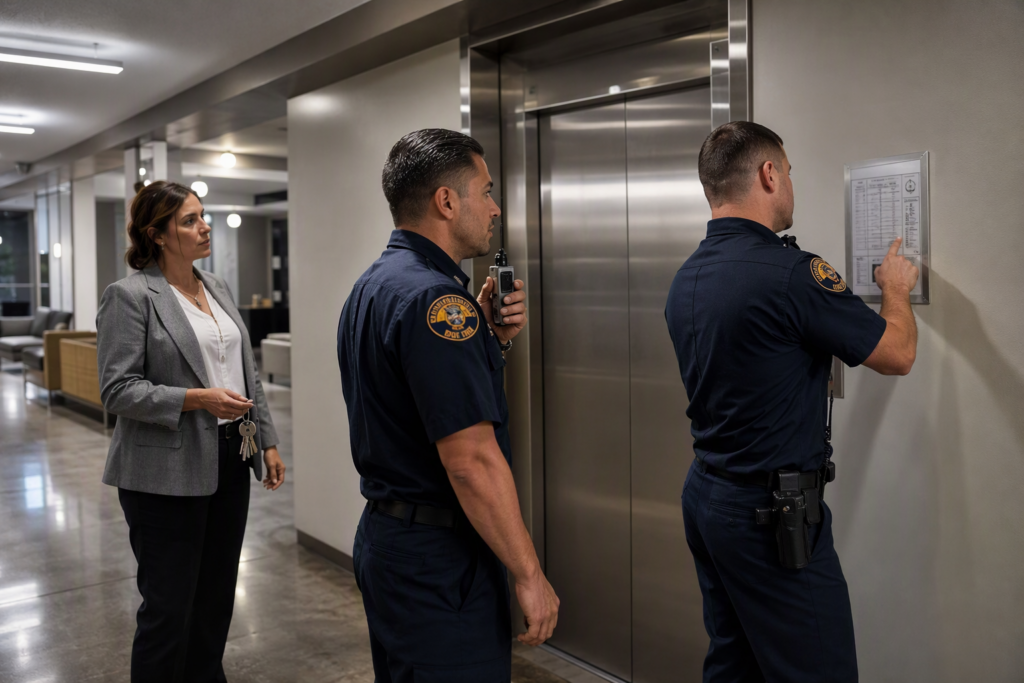
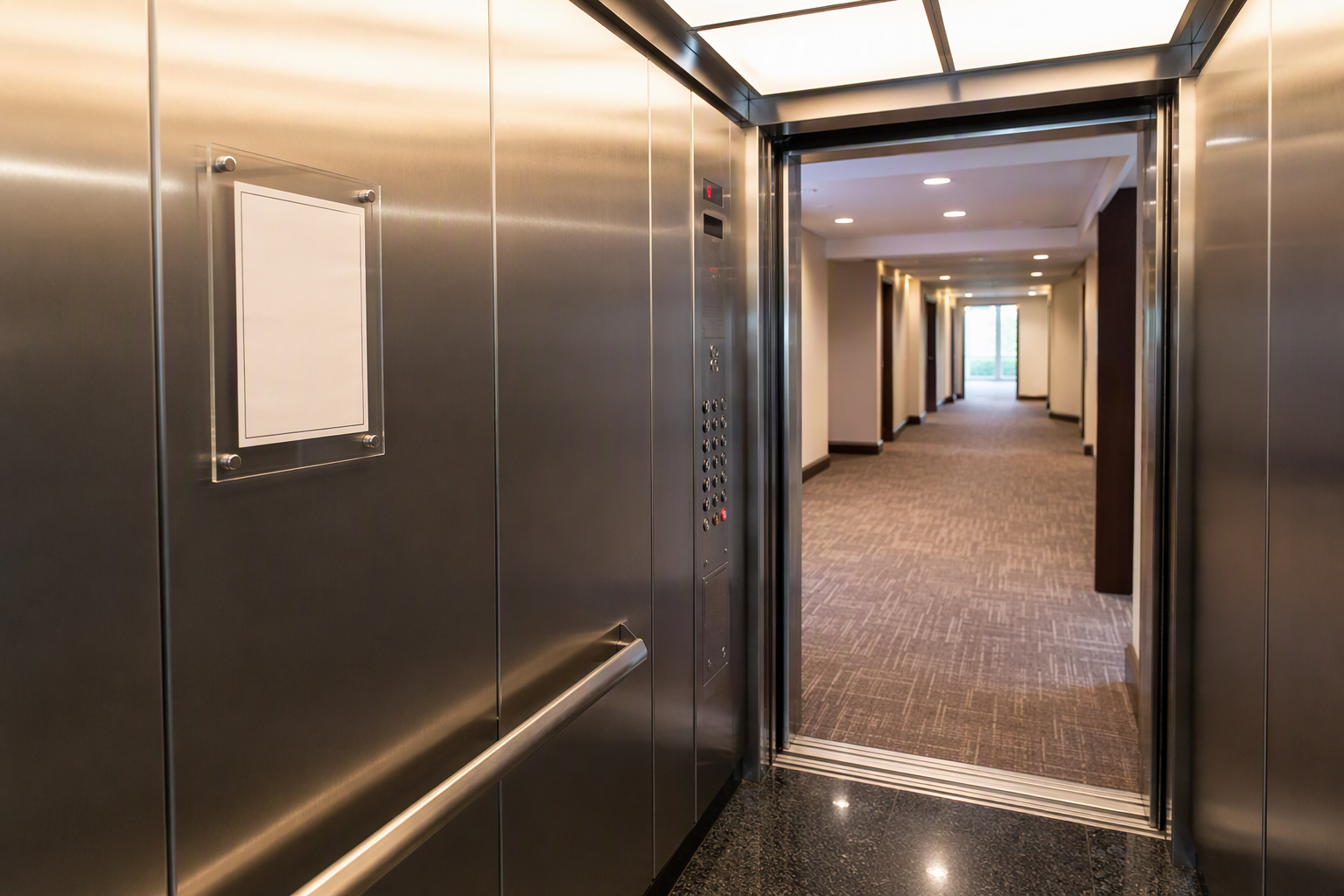
The permit to operate, issued by Cal/OSHA, must be posted conspicuously inside the elevator car at all times — its absence alone can trigger a violation during an audit.
Under California law, no elevator may be operated without a valid, current permit to operate. This applies to passenger elevators, freight elevators, and inclined elevators. If the permit has lapsed, the elevator must be taken out of service until a new inspection is completed and a new permit is issued. Building managers should check the expiration date on the posted permit as a first step in any pre-audit review. A missing or expired permit is among the most commonly cited deficiencies, and it is entirely preventable with a basic calendar reminder tied to the permit’s expiration date.
How often must California building elevators be inspected?
California law requires every conveyance to be inspected at least once a year, and a conveyance found to be in safe condition receives a permit to operate for up to one year.
There is one important exception: Cal/OSHA may issue a permit to operate for up to two years for an elevator that is in safe condition and is covered by a full maintenance contract with a California C-11 licensed elevator company that holds CQCC certification. This two-year permit option provides a meaningful operational benefit for building owners who invest in ongoing full-maintenance agreements rather than minimal service contracts. Regardless of permit duration, arranging the annual reinspection is the elevator owner’s responsibility — the agency does not automatically schedule it.
What records must be physically on hand for a Cal/OSHA elevator audit?
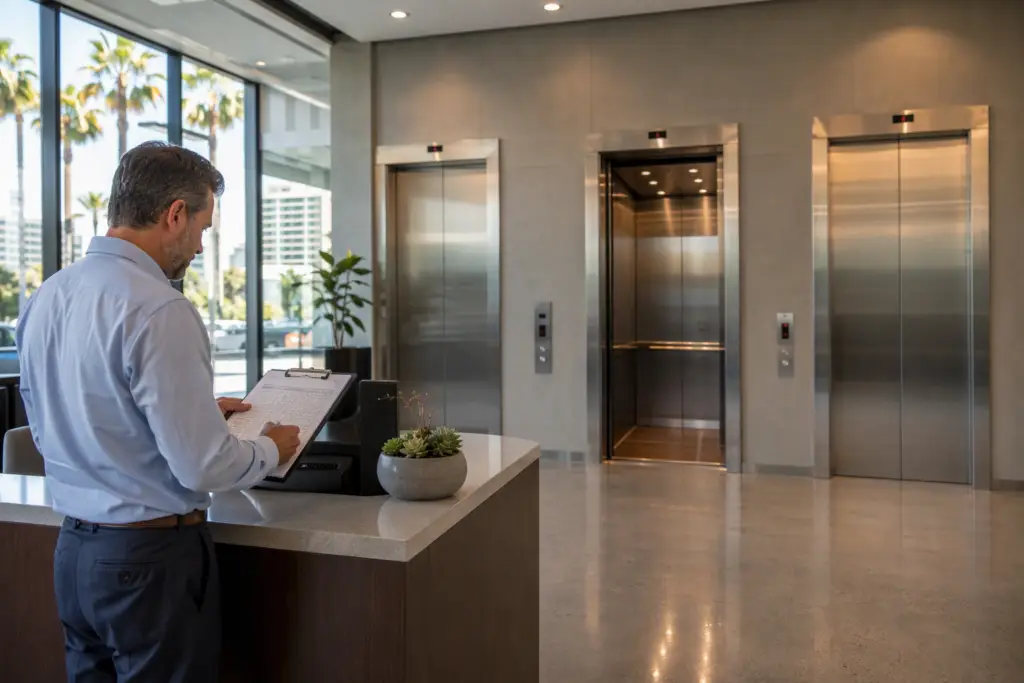
Auditors typically expect to review the posted permit to operate, a complete maintenance log for the current permit period, records of any repairs or alterations made during that period, and documentation confirming that all work was performed by a CQCC using CCCMs.
The following records checklist reflects what California’s Elevator Safety Orders and ASME A17.1/CSA B44 documentation requirements call for:
| Record Type | Minimum Retention Guidance | Who Generates It | Why Auditors Request It |
|---|---|---|---|
| Permit to operate | Current; posted in cab | Cal/OSHA | Confirms legal authority to operate |
| Annual inspection report | Current permit cycle | CCCI / Cal/OSHA engineer | Establishes baseline equipment condition |
| Maintenance log / service records | At minimum, current permit period | CQCC / CCCM | Demonstrates ongoing code-compliant maintenance |
| Repair work orders | Current permit period and prior | CQCC / CCCM | Tracks corrective actions taken |
| Alteration permit (if applicable) | Life of alteration | Cal/OSHA | Required before any material alteration |
| Contractor CQCC certification | Current (2-year cycle) | Cal/OSHA | Confirms only authorized companies did the work |
| Mechanic CCCM certification | Current (2-year cycle) | Cal/OSHA | Confirms only certified mechanics performed work |
| Original installation permit | Life of equipment | Cal/OSHA | Establishes code edition governing the installation |
What ASME code edition applies to my California elevator?
For installation contracts signed on or after May 1, 2008, California’s Group IV Elevator Safety Orders adopt the ASME A17.1/CSA B44, 2004 edition as the governing technical standard.
This means the specific technical requirements for safeties, buffers, hoistway construction, electrical equipment, and operating controls are measured against that edition of the ASME A17.1 Safety Code for Elevators and Escalators. Older equipment installed under earlier contracts is governed by the code edition in effect at the time of installation. Building owners should confirm with their elevator contractor which code edition governs their specific unit, because alteration work can trigger compliance with current requirements. As of 2026, California has proposed a Group V update that would incorporate portions of ASME A17.1-2019; a public hearing was held on June 18, 2026, and no effective date has been posted.
Who is legally allowed to maintain, repair, or alter a California elevator?
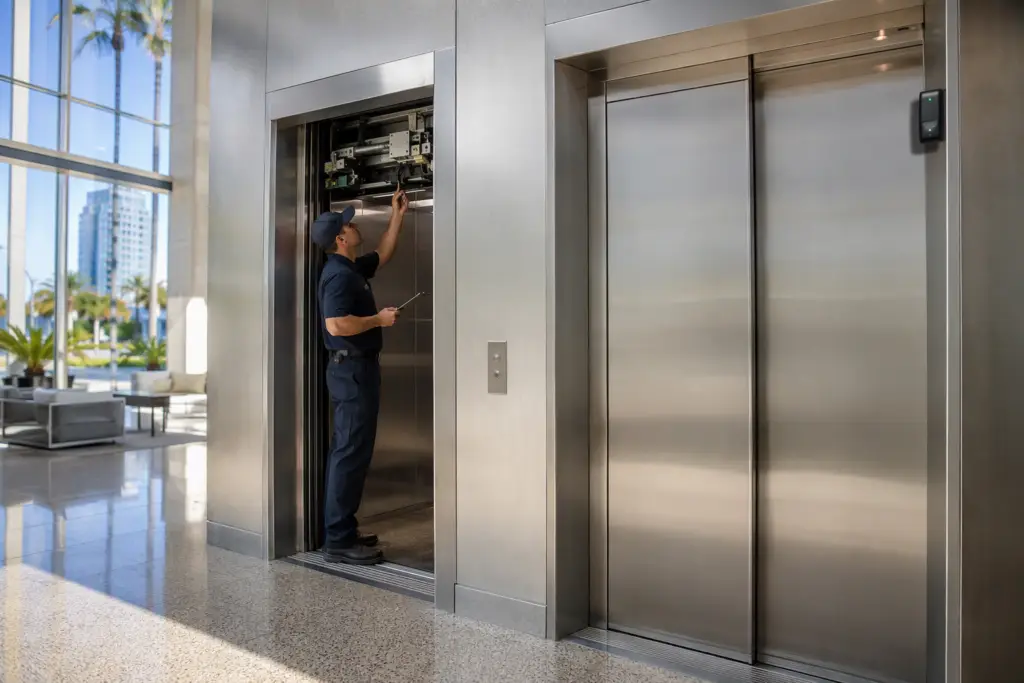
Only a Certified Competent Conveyance Mechanic (CCCM) working for a Certified Qualified Conveyance Company (CQCC) may maintain, repair, alter, or replace components on a conveyance in California.
This dual-certification requirement is foundational to California elevator law. A mechanic cannot work unsupervised on California conveyances without a Cal/OSHA-issued CCCM certificate. A company cannot offer elevator services without Cal/OSHA CQCC certification, which in turn requires holding a current C-11 Elevator Contractor license issued by the California Contractors State License Board (CSLB), along with active certificates of workers’ compensation and liability insurance. Both CQCC and CCCM certificates last two years, and renewal requires at least eight hours of continuing education. Building owners who allow uncertified contractors to work on their elevators face serious liability exposure and will fail an audit. Liftech Elevator maintains CQCC certification and employs CCCMs, making it a compliant service choice for properties in Signal Hill, Long Beach, Los Angeles, and Orange County.
Does a building owner need a permit before altering or installing an elevator?
Yes — California law requires a Cal/OSHA permit before any elevator is erected, installed, or materially altered, and a new elevator may not be placed in service until Cal/OSHA has inspected it and issued a permit to operate.
This requirement applies even to modernization projects that might appear cosmetic but touch safety-critical components. Examples of work that typically constitutes a material alteration include replacing the control system, upgrading safeties or buffers, changing the rated speed or capacity, or modifying the hoistway dimensions. Building owners who proceed with alterations without obtaining the required permit will face compliance problems at their next audit and may be required to have the work re-inspected under full alteration review. Liftech Elevator routinely assists property managers in Signal Hill, Long Beach, and throughout Southern California with navigating the permit process before modernization projects begin.
What is the step-by-step process to prepare for a Cal/OSHA elevator audit?
A structured pre-audit preparation sequence is the most reliable way to avoid citations and pass inspection on the first attempt.
- Pull the current permit to operate from the cab and confirm the expiration date. If expired, contact a CQCC immediately to schedule an inspection and halt operation if required.
- Compile all maintenance and service logs from the current permit period into a single organized binder or digital folder accessible to the building manager.
- Collect all repair work orders and parts receipts from any work performed since the last inspection, and verify each work order names a CCCM and a CQCC.
- Verify contractor certifications by confirming that every company that performed work holds a current CQCC certificate and that mechanics who performed unsupervised work hold current CCCM certificates.
- Conduct a visual walk-through of the elevator noting any deficiencies: unusual noises, door timing problems, leveling issues, illumination failures, or visible damage to cab finishes, emergency lighting, or the phone system.
- Test the emergency phone or communication system to confirm it reaches a live party or monitored system as required.
- Verify the cab lighting and emergency lighting are functional.
- Confirm all required signage is posted, including the permit to operate and rated capacity placard.
- Review the original installation permit and confirm no alterations were made without a Cal/OSHA alteration permit.
- Schedule a pre-audit service call with a CQCC to perform any corrective work before the official inspection date.
What are the most common deficiencies that cause elevators to fail a Cal/OSHA inspection?
The most frequently cited deficiencies involve expired or missing permits to operate, inadequate or missing maintenance records, door operator malfunctions, and work performed by uncertified contractors or mechanics.
Beyond documentation, common equipment deficiencies include worn or misadjusted door gibs and sills, improper cab leveling, malfunctioning door reopening devices, inoperative emergency lighting, and non-functional emergency communication systems. Hydraulic elevators may be cited for oil contamination, leaking cylinders, or missing pressure relief valve documentation. Traction elevators may have issues with governor rope condition, buffer oil levels, or pit lighting. Any of these findings can delay permit issuance or result in a shutdown order until corrections are made and a re-inspection is completed.
How do ADA requirements relate to a Cal/OSHA elevator audit?
ADA compliance is governed by federal law under the Americans with Disabilities Act and is enforced separately from Cal/OSHA’s safety inspection, but deficiencies in call button height, control panel layout, audible and visual floor indicators, and door timing can overlap with both regulatory frameworks.
Cal/OSHA inspectors focus on equipment safety under Title 8 and ASME A17.1, not ADA accessibility. However, building owners should understand that ADA accessibility requirements for elevators are enforceable by the U.S. Department of Justice and through private litigation, and a building that passes a Cal/OSHA inspection may still face ADA complaints. Proactive owners address both sets of requirements simultaneously. Liftech Elevator can identify potential ADA-related elevator concerns during a service visit, helping owners understand what may need attention beyond the Cal/OSHA scope.
What happens if an elevator fails a Cal/OSHA inspection?
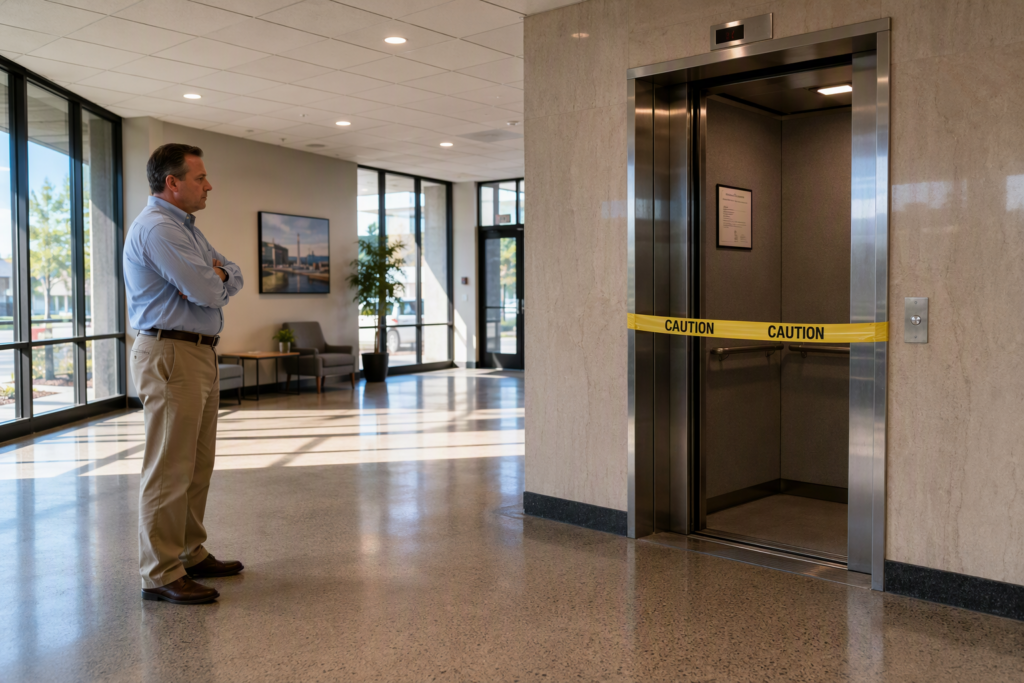
If an elevator is found to be unsafe, Cal/OSHA will not issue a permit to operate and the elevator must be taken out of service until the deficiencies are corrected and the unit passes reinspection.
The severity of the outcome depends on the nature of the deficiency. Minor documentation issues may result in a conditional notice requiring correction within a specified period. Structural or mechanical deficiencies that pose an imminent hazard can result in immediate shutdown and a formal order prohibiting operation. Once corrections are made by a CQCC using CCCMs, the building owner must arrange reinspection through Cal/OSHA. Continuing to operate an elevator after a shutdown order is a serious legal violation under California Labor Code Sections 7300–7324.2.
Does California require a full maintenance contract, or is a basic service agreement sufficient?
California law does not require a full maintenance contract as a condition of operating an elevator, but a full maintenance contract with a C-11 licensed, CQCC-certified elevator company is the only pathway to qualifying for a two-year permit to operate rather than the standard one-year permit.
From a practical audit-readiness standpoint, a full maintenance contract also produces the most complete and defensible maintenance records. A minimal or as-needed service arrangement may leave gaps in the log that an auditor will scrutinize. Building owners evaluating their service contracts should weigh not only the operational benefits of a full maintenance agreement but also the audit-readiness advantages of comprehensive, dated maintenance records that demonstrate continuous code-compliant care of the equipment.
How do elevator certifications for contractors and mechanics work in California?
Cal/OSHA issues CQCC certification to companies and CCCM certification to individual mechanics, both on a two-year cycle with an eight-hour continuing education renewal requirement.
Building owners should request and retain copies of their elevator contractor’s current CQCC certificate and should periodically confirm that mechanics assigned to their equipment hold current CCCM certificates. These certificates are issued by Cal/OSHA, not the CSLB. The CSLB issues the underlying C-11 Elevator Contractor license, which is a prerequisite for CQCC certification, but the two credentials come from different state bodies. Asking for both the CSLB C-11 license number and the Cal/OSHA CQCC certificate number from any contractor before authorizing work is a sound practice for building managers who want to be fully prepared for an audit.
What special rules apply to elevator installations in the City of Los Angeles?
The City of Los Angeles runs its own elevator and conveyance inspection program through the Los Angeles Department of Building and Safety (LADBS), which operates alongside and in coordination with the state Cal/OSHA program.
Building owners with elevators in the City of Los Angeles should confirm their compliance obligations with both LADBS and the Cal/OSHA Elevator Unit, as requirements and processes may differ from other California jurisdictions. Owners of properties in other parts of Liftech Elevator’s service area — including Long Beach, Signal Hill, and Orange County — generally work directly with the Cal/OSHA Elevator Unit for inspections and permits, without a separate city-level overlay comparable to Los Angeles.
Are any elevators in California exempt from Cal/OSHA elevator requirements?
California’s elevator law exempts conveyances that are under federal jurisdiction and conveyances located in single-unit private homes that are not accessible to the public.
This means that elevators in most residential condominiums, apartment buildings, office buildings, retail properties, and mixed-use developments are fully subject to Cal/OSHA oversight and the permit-to-operate requirement. A private home elevator that is genuinely not accessible to the public is exempt, but any residential elevator in a building with multiple units or public access is not. Building owners should not assume a residential setting creates an exemption — the determining factor is accessibility to the public, not the residential nature of the occupancy.
What documentation is required before and after an elevator alteration in California?
Before any material alteration, the building owner or their CQCC contractor must obtain a Cal/OSHA alteration permit; after the work is completed, Cal/OSHA must inspect the altered elevator and issue a new permit to operate before it is returned to service.
Documentation for an alteration project should include the alteration permit application and approval, all engineering or shop drawings submitted to Cal/OSHA, work orders detailing the scope of work performed, parts certifications for safety-critical components, and the post-alteration inspection report. These records become part of the permanent compliance file for the elevator and should be retained for the life of the equipment. Any alteration that changes the elevator’s rated capacity, speed, or safety system typically triggers a full review against the code edition applicable to that alteration.
How should building owners handle emergency communication system requirements for elevators?
Building owners should confirm their elevator’s emergency communication system connects to a live monitored party and that the system is tested and documented regularly, given that both Cal/OSHA’s adopted ASME A17.1/CSA B44 standard and broader building code requirements address in-cab emergency communication.
The specific requirements for visual versus audio-only communication in California elevators involve an area where the adopted ASME A17.1-2004 standard and the California Building Code may interact in ways that are not fully settled as of 2026. Building owners should not attempt to interpret these requirements independently. A CQCC-certified contractor such as Liftech Elevator can assess the current state of an elevator’s emergency communication system and advise on what is present, what may need attention, and how to document the system for an audit.
What role does OSHA federal law play in California elevator oversight?
Federal OSHA elevator requirements apply primarily to elevators in federally operated buildings or under federal jurisdiction, while the vast majority of commercial and residential building elevators in California fall under Cal/OSHA’s state program.
California operates under an OSHA-approved State Plan, which means Cal/OSHA has authority over most private-sector workplaces and enforces standards that are at least as effective as federal OSHA standards. For elevator-specific requirements, California’s program is considerably more detailed than federal OSHA’s general industry standards, operating through the dedicated Elevator Unit and the Title 8 Elevator Safety Orders rather than relying on general industry standards. Building owners in Signal Hill, Long Beach, Los Angeles, and Orange County should direct audit-preparation questions to the Cal/OSHA Elevator Unit rather than federal OSHA.
How far in advance should a building owner begin preparing for an elevator inspection?
A building owner should begin audit preparation at least 60 to 90 days before the permit’s expiration date, allowing enough time to schedule a pre-inspection service call, address any deficiencies, and confirm the Cal/OSHA inspection appointment without risking permit lapse.
Because arranging the annual reinspection is the building owner’s responsibility — not Cal/OSHA’s — owners who wait until close to permit expiration risk scheduling delays that leave the elevator operating on an expired permit or being taken out of service. A practical calendar management approach is to set a reminder 90 days before permit expiration, engage the elevator’s CQCC contractor for a pre-audit service call at 60 days, and confirm the Cal/OSHA inspection appointment no later than 30 days before expiration. Liftech Elevator assists building owners throughout Southern California with pre-audit service visits designed to identify and correct deficiencies before the official inspection.
What is the difference between a CQCC and a C-11 license, and why does it matter for audit compliance?
A C-11 Elevator Contractor license is issued by the California Contractors State License Board (CSLB) and authorizes a company to contract for elevator work, while CQCC certification is issued by Cal/OSHA and specifically authorizes a company to perform elevator maintenance, repair, alteration, and service work on California conveyances — both are required, and they come from different agencies.
For audit compliance, this distinction matters because building owners must verify that their elevator contractor holds both credentials. A company with only a C-11 license but without current CQCC certification from Cal/OSHA is not authorized to perform maintenance or repair work. Conversely, no company can obtain CQCC certification without first holding a C-11 license and proving current workers’ compensation and liability insurance. When reviewing contractor credentials before an audit, building owners should ask for both the CSLB C-11 license number and the Cal/OSHA CQCC certificate number and verify both are current.
Ready to Pass Your Next Cal/OSHA Elevator Audit?
Elevator audit compliance in California requires current permits, complete records, certified contractors, and equipment maintained to the applicable ASME A17.1 standard — and every one of those requirements must be in place before an inspector arrives, not after. Building owners in Signal Hill, Long Beach, Los Angeles, and Orange County who want a comprehensive pre-audit review from a Cal/OSHA-recognized CQCC can rely on Liftech Elevator for professional guidance tailored to California’s regulatory requirements.
Contact Liftech Elevator for a free elevator assessment: 562-997-3639
Need elevator service you can rely on? Liftech Elevator is ready to help.