How Many Elevator Breakdowns or Service Calls Per Year Is Normal for a Commercial Building?
For a well-maintained commercial elevator operating in a typical mid-rise building, most experienced elevator professionals consider one to three unplanned service calls per elevator per year to be within a normal range. High-traffic installations, older equipment, and deferred maintenance programs can produce far more frequent disruptions. California law, administered by the Cal/OSHA Elevator Unit, requires at least one formal inspection per elevator per year, and buildings covered by a full maintenance contract with a certified elevator company may qualify for a two-year permit to operate — but neither provision eliminates the need to track and respond to unplanned service events.
What counts as a “service call” versus a “breakdown” for a commercial elevator?
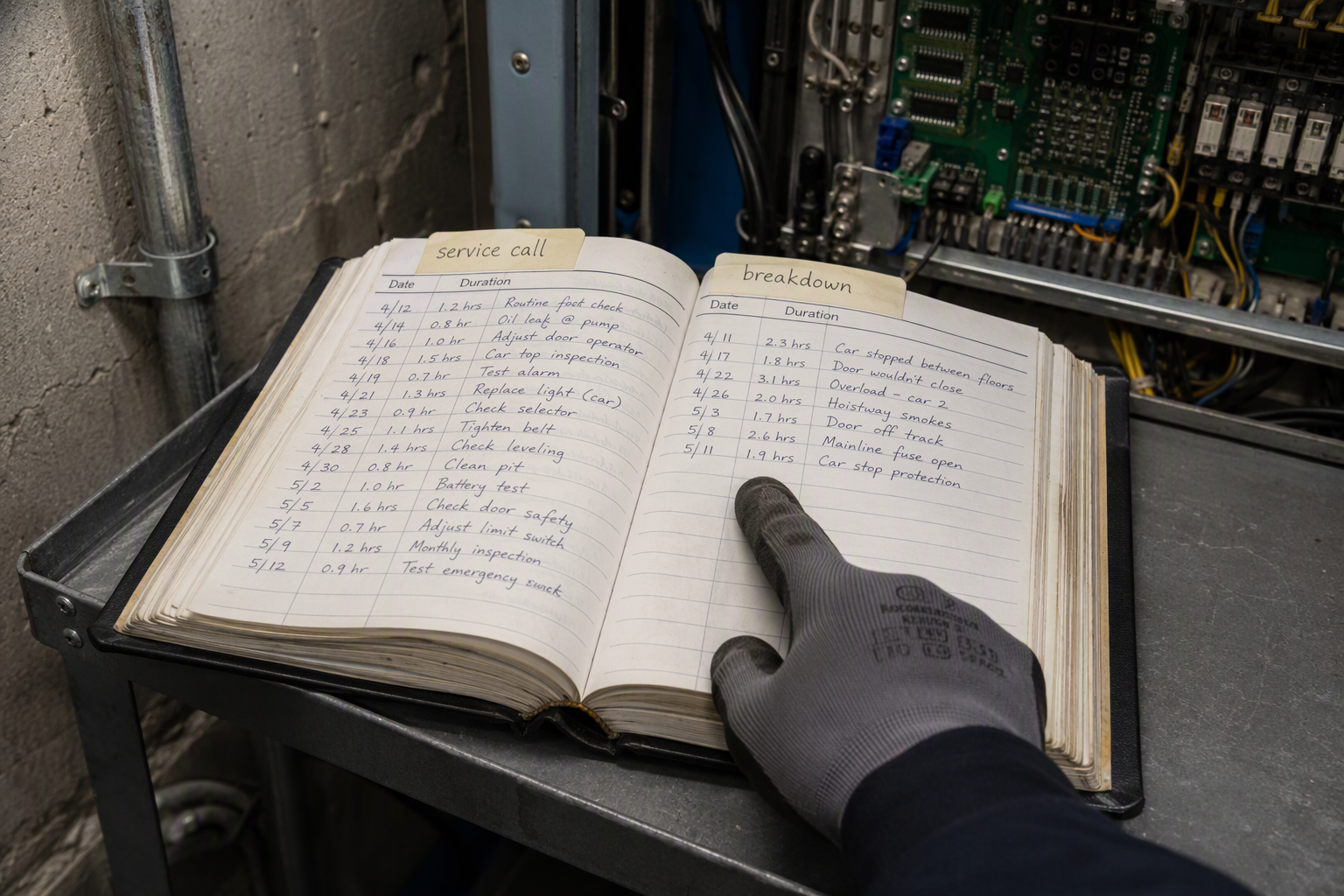
A service call is any dispatched visit by an elevator technician, whether for a mechanical failure, a nuisance fault, a trapped passenger, or a routine callback — while a breakdown specifically refers to an unplanned event that takes the elevator out of service.
Distinguishing between these two categories matters for building managers because nuisance calls — door re-openings triggered by sensor debris, momentary loss of leveling, or intermittent control faults — can inflate raw service-call counts without indicating a systemic maintenance problem. True breakdowns, by contrast, involve mechanical or electrical failures that require parts replacement or significant labor and that take the elevator out of service for a measurable period. Tracking both categories separately gives a more accurate picture of equipment health than counting all technician visits together.
In California, any repair that constitutes a material alteration to a conveyance requires a permit from Cal/OSHA before work begins, so building owners should ensure their service provider distinguishes clearly between routine repairs and permit-required alterations when logging service events.
What does available data say about average elevator breakdowns per year in commercial buildings?
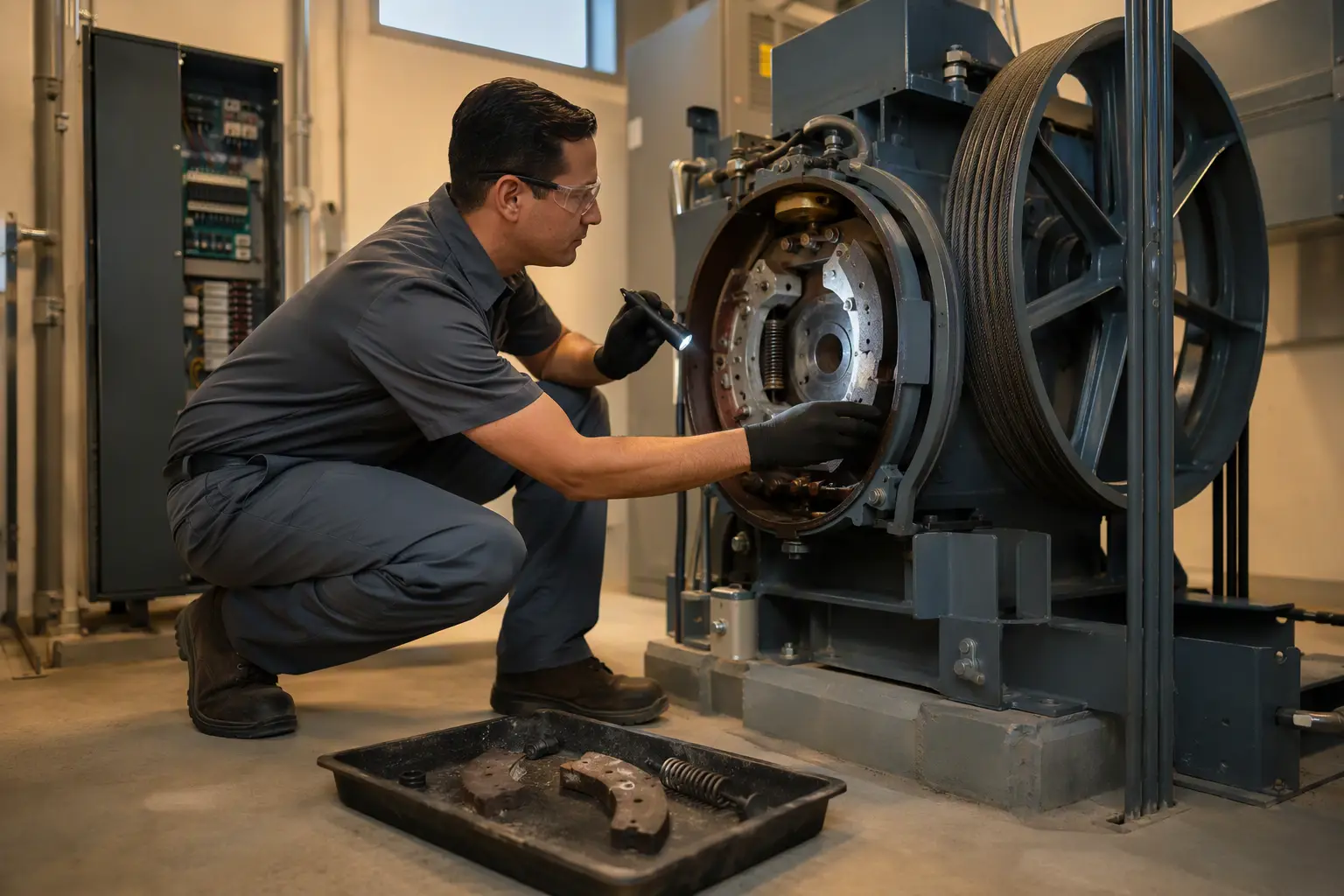
Published, attributable datasets on per-elevator breakdown rates across the commercial sector are limited, so practitioners typically rely on qualitative benchmarks from trade groups, maintenance contract experience, and equipment age curves rather than a single authoritative figure.
What the available professional consensus suggests is that newer elevators — generally those installed within the last decade — tend to produce fewer unplanned service events than older units, and that buildings with comprehensive, proactive maintenance contracts experience fewer breakdowns than those on minimal or reactive service agreements. The relationship between maintenance intensity and breakdown frequency is well established in the elevator trade, even when precise statistical datasets are not publicly available.
Building owners seeking benchmarks should request service-event logs from their current provider broken out by event type, duration, and parts consumed. That internal record, compared against the equipment’s age and traffic classification, is more reliable than any industry average because it reflects actual operating conditions.
How does elevator age affect breakdown frequency in commercial buildings?
Elevator age is one of the strongest predictors of unplanned service events, with older equipment typically requiring more frequent intervention due to worn mechanical components, obsolete control systems, and parts scarcity.
Hydraulic and traction elevators that have operated for more than twenty years without a major modernization often see accelerating breakdown rates because multiple systems — valve assemblies, rope and sheave sets, relay-based controllers — approach or exceed their design service life simultaneously. When one component fails, the stress redistribution can trigger secondary failures in adjacent systems. Building owners managing older equipment should treat breakdown frequency not as a fixed baseline but as a trend line: if service calls are increasing year over year, that is a meaningful signal that a modernization assessment is warranted.
The ASME A17.3 Safety Code for Existing Elevators and Escalators provides the technical framework for evaluating existing installations and identifying retroactive safety requirements that apply when equipment reaches certain age thresholds or undergoes alteration.
What are the most common causes of commercial elevator service calls?
Door system malfunctions are consistently cited by elevator professionals as the leading cause of unplanned service calls in commercial buildings, followed by hydraulic system issues, control system faults, and leveling problems.
Door-related events — including worn door operators, misaligned gibs, failing safety edges, and cam wear — are particularly common in high-traffic lobbies where doors cycle hundreds of times per day. Hydraulic elevators face additional risk from fluid leaks, valve wear, and pump motor deterioration, especially in older units that use petroleum-based hydraulic fluid rather than biodegradable formulations. Electronic control system faults, including software glitches and relay failures, have become more prominent as older relay-based systems age and as newer microprocessor controls encounter voltage anomalies.
Understanding the cause distribution for a specific building’s elevator portfolio helps prioritize preventive maintenance tasks and budget for parts inventory, which in turn reduces the frequency and duration of unplanned outages.
How does traffic volume influence how many service calls to expect per year?
Traffic volume directly correlates with mechanical wear rates, meaning a high-traffic commercial elevator — such as one serving a hospital, hotel, or large office lobby — should be expected to require more frequent maintenance intervention than a low-use elevator in a small office building.
Elevator systems are designed and classified by duty cycle. A unit rated for moderate commercial use operating in a high-rise with hundreds of starts per hour is being stressed beyond its design parameters, which accelerates component wear across door systems, rope and sheave assemblies, and braking mechanisms. Building owners should verify that their installed equipment’s traffic classification matches actual usage; mismatches between rated duty and actual demand are a frequently overlooked source of premature wear and elevated service-call frequency.
What is a reasonable benchmark table for commercial elevator service call frequency?
The table below consolidates qualitative benchmarks drawn from elevator industry professional practice and does not represent a single statistical study; it is intended as a planning reference, not a guarantee of any specific outcome.
| Equipment Profile | Approximate Age | Maintenance Level | Qualitative Service Call Expectation (per elevator/year) | Key Risk Factors |
|---|---|---|---|---|
| New traction or hydraulic, low-to-moderate traffic | 0–10 years | Full maintenance contract | Low (generally fewer calls expected) | Commissioning defects, software updates |
| Mid-age traction, moderate traffic | 10–20 years | Full maintenance contract | Moderate (within typical professional norms) | Door component wear, rope stretch |
| Mid-age hydraulic, moderate traffic | 10–20 years | Full maintenance contract | Moderate to elevated | Valve wear, seal degradation, fluid condition |
| Aging traction or hydraulic, high traffic | 20–30+ years | Full maintenance contract | Elevated (modernization may be advisable) | Control obsolescence, parts scarcity, rope/sheave wear |
| Any age, reactive maintenance only | Any | Minimal / reactive | Significantly elevated | Deferred wear, compliance gaps |
| Post-modernization, any traffic | Any (modernized) | Full maintenance contract | Typically reduced relative to pre-modernization baseline | Integration issues during break-in period |
What does California law require regarding elevator inspections and permits to operate?
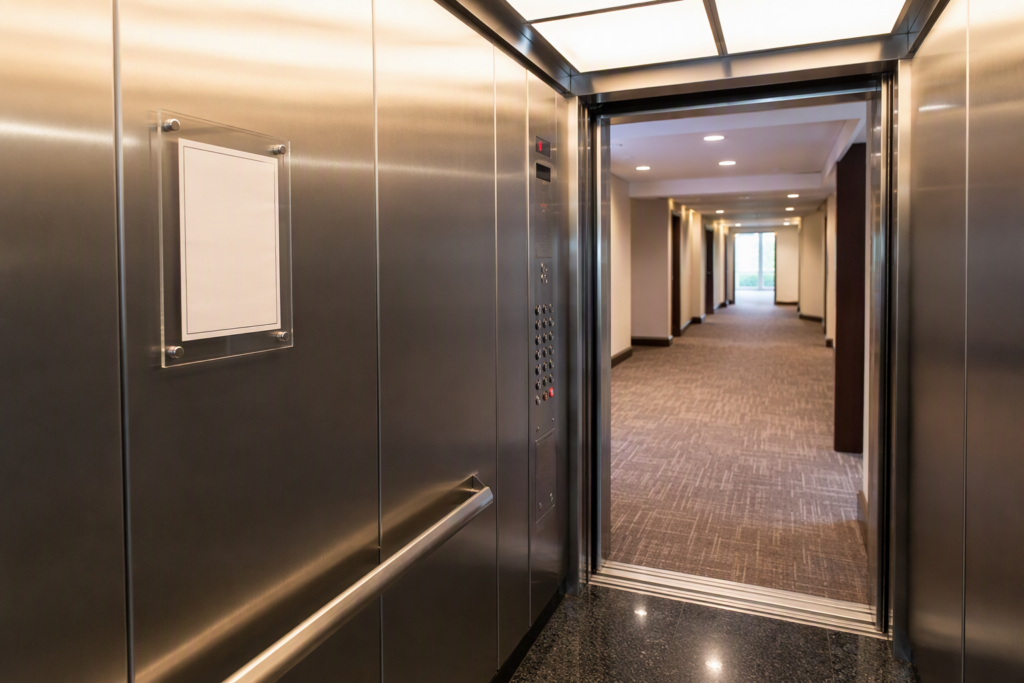
California law requires every commercial conveyance to be inspected at least once a year, and no elevator may operate without a valid permit to operate issued by the Cal/OSHA Elevator Unit and posted conspicuously inside the elevator car.
Under California Labor Code Sections 7300–7324.2 and the California Code of Regulations, Title 8, Elevator Safety Orders (Sections 3000–3146), arranging the annual reinspection is the building owner’s responsibility — not the elevator company’s. A permit to operate is valid for up to one year for elevators found in safe condition; Cal/OSHA may issue a permit valid for up to two years when the elevator is in safe condition and is covered by a full maintenance contract with a Certified Qualified Conveyance Company (CQCC).
Only State of California safety engineers and Certified Competent Conveyance Inspectors (CCCI) may perform these inspections. Building owners in Los Angeles should also be aware that the City of Los Angeles has its own elevator and conveyance inspection program administered through the Los Angeles Department of Building and Safety (LADBS), which may impose additional local requirements.
Liftech Elevator is a Certified Qualified Conveyance Company (CQCC), meaning it is authorized under California law to maintain, repair, alter, and service conveyances in California. All mechanics working for Liftech Elevator hold Certified Competent Conveyance Mechanic (CCCM) certification from Cal/OSHA, as required by California law.
What should a commercial building owner do immediately after an elevator breakdown?
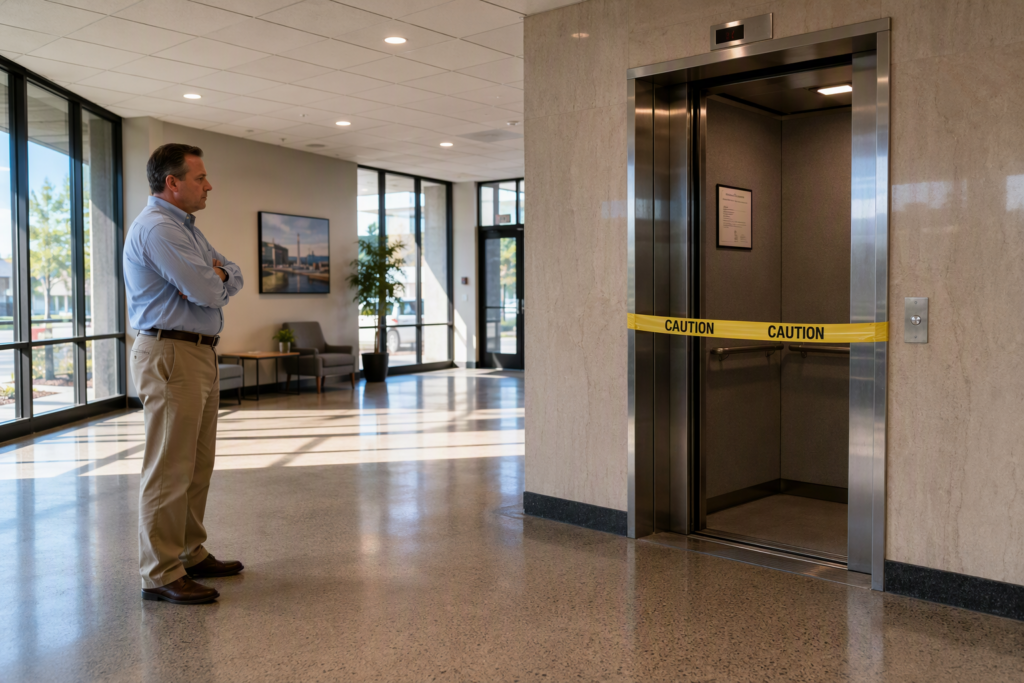
When a commercial elevator breaks down, the building owner or facilities manager should follow a defined response sequence to protect occupant safety, preserve compliance, and minimize liability.
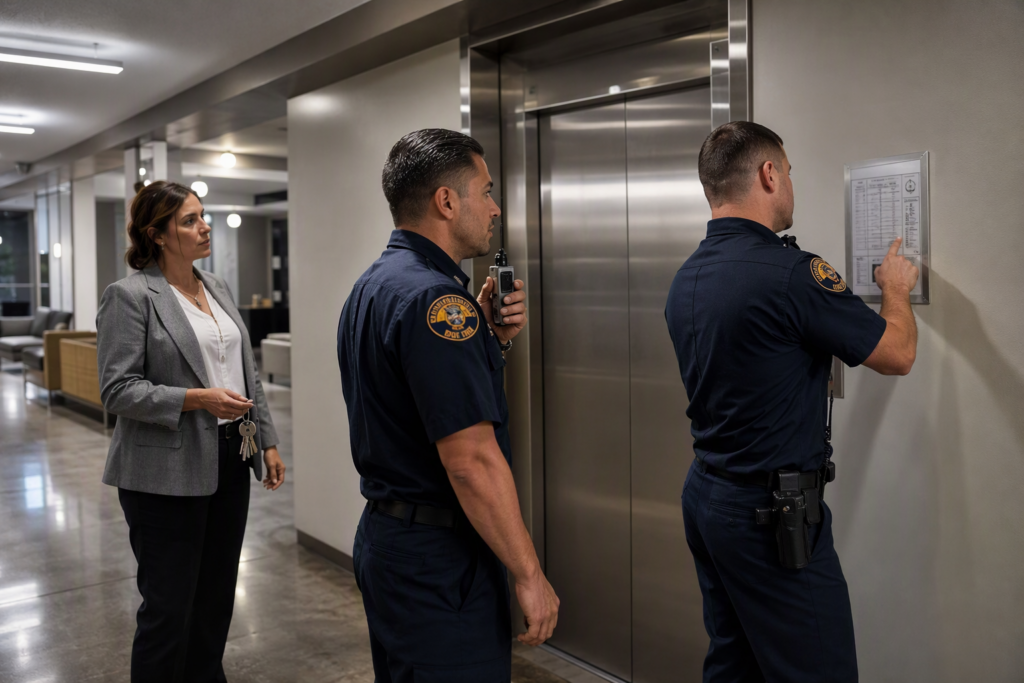
- Verify passenger safety first. If the elevator has stopped between floors or a passenger is trapped, contact emergency services and the elevator service provider simultaneously. Do not attempt to open doors manually without a trained technician unless directed by emergency responders.
- Take the elevator out of service. Post clear “Out of Service” signage at all landings and, if possible, lock out the car at a floor level to prevent further attempts to use it.
- Contact your CQCC-certified elevator service provider. Report the nature of the event, the elevator’s last known condition, any error codes displayed on the controller, and whether any passengers were involved.
- Document the event. Record the date, time, nature of the fault, any passenger involvement, and all communications with the service provider. This documentation is essential for permit compliance and liability purposes.
- Determine if a Cal/OSHA permit is required before returning the elevator to service. If the repair constitutes a material alteration, a permit from Cal/OSHA must be obtained before the elevator operates again.
- Verify the elevator is safe before returning it to service. A qualified technician must confirm the unit is operating within safe parameters. Do not return the elevator to service solely because a fault code has been cleared.
- Update your service log and review the breakdown pattern. If this is a recurring fault, escalate to a full diagnostic review rather than a repeat band-aid repair.
How does a full maintenance contract reduce service calls compared to a basic or oil-and-grease contract?
A full maintenance contract, which covers labor and parts for most repairs in addition to scheduled lubrication and adjustment, consistently produces fewer unplanned service events than a basic “oil and grease” contract that covers only routine lubrication.
Under a basic contract, building owners pay separately for each repair, which creates a financial disincentive to authorize proactive parts replacement before failure occurs. Under a full maintenance agreement, the service provider has an economic incentive to prevent failures because reactive call costs come out of their margin. This alignment of incentives is one reason California law specifically recognizes full maintenance contracts as a basis for the extended two-year permit to operate — the state’s regulatory framework effectively validates the connection between comprehensive maintenance and reduced breakdown risk.
When evaluating maintenance contracts, building owners should verify that the prospective provider is a CQCC-certified company and that all technicians are CCCM-certified, as California law prohibits non-certified companies or individuals from performing maintenance, repair, or alteration work on conveyances.
How do ADA requirements interact with elevator maintenance and breakdown response?
The Americans with Disabilities Act (ADA) requires that elevators serving public and commercial buildings remain accessible, meaning prolonged outages that deprive people with disabilities of vertical access may create legal exposure beyond the immediate safety concern.
The ADA does not set a specific maximum downtime allowance for elevators, but the general obligation to maintain accessible features in operable condition is well established. Building owners who allow known elevator faults to go unaddressed for extended periods — particularly when the elevator is the only accessible means of vertical travel — face the possibility of ADA complaints and Department of Justice enforcement activity. Rapid response to breakdowns is therefore not only a safety and operational priority but also a civil rights compliance matter.
What ASME standards govern commercial elevator maintenance intervals and safety requirements?
The ASME A17.1/CSA B44 Safety Code for Elevators and Escalators establishes minimum maintenance, inspection, and testing requirements for new installations, while ASME A17.3 covers existing installations and retroactive safety requirements.
California has adopted the ASME A17.1/CSA B44 2004 edition (Group IV Elevator Safety Orders), effective May 1, 2008, for installation contracts signed on or after that date, as the technical baseline for its Elevator Safety Orders under Title 8 of the California Code of Regulations. California has also proposed a Group V update that would incorporate portions of ASME A17.1-2019; a public hearing was held on June 18, 2026, and no effective date has been posted as of the time of this writing.
ASME A17.1 includes mandatory periodic testing intervals for safety-critical systems including governors, safeties, buffers, and pressure relief valves on hydraulic units. These tests are distinct from annual inspections and must be performed by qualified personnel on the schedules the code specifies. Building owners should confirm with their service provider that all code-required periodic tests are being completed on schedule and that records are being maintained, since test records are reviewed during Cal/OSHA inspections.
What is the difference between a Cal/OSHA inspection and a routine maintenance visit?
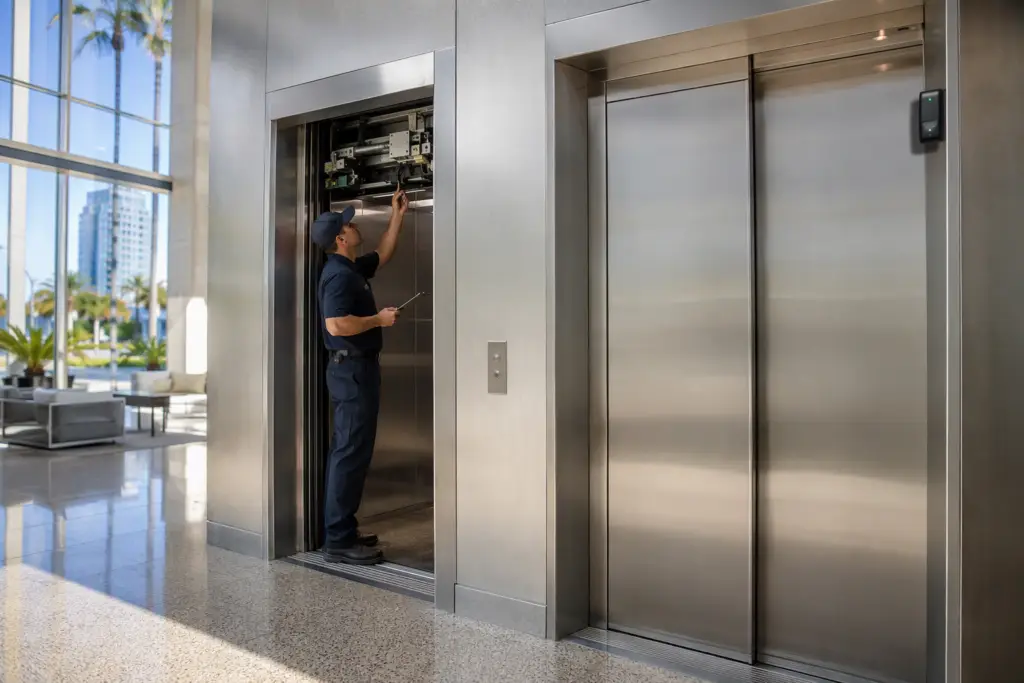
A Cal/OSHA inspection is a formal safety evaluation conducted by a State of California safety engineer or a Certified Competent Conveyance Inspector (CCCI) that results in either a permit to operate or a citation, while a routine maintenance visit is a scheduled service call performed by a CCCM-certified technician to lubricate, adjust, clean, and test elevator components.
Building owners sometimes conflate these two functions, particularly when their maintenance provider offers to “handle” the inspection. In California, only Cal/OSHA-authorized personnel may conduct the formal inspection that results in a permit to operate. A maintenance provider can prepare the equipment for inspection and facilitate the scheduling process, but they cannot substitute their own review for the official inspection. Building owners remain legally responsible for arranging the annual reinspection regardless of what their maintenance contract provides.
How can building owners in Long Beach, Signal Hill, or Orange County track elevator performance effectively?
Building owners in any market — including Long Beach, Signal Hill, Los Angeles, and Orange County — can track elevator performance effectively by maintaining a standardized service log that records every technician visit, categorizes events by type, and tracks mean time between failures for each unit.
A well-structured service log should capture the date and time of each event, the reported symptom, the diagnosis, the corrective action taken, any parts replaced with their ages, and the technician’s CCCM certification number. Reviewing this log quarterly allows facilities managers to identify recurring faults before they become chronic, compare performance across multiple elevators in the same building, and build a documented maintenance history that supports both compliance audits and insurance reviews.
Liftech Elevator serves commercial buildings throughout Signal Hill, Long Beach, Los Angeles, and Orange County and can work with building owners to establish or improve their service-event documentation systems as part of a comprehensive maintenance program.
When does elevated breakdown frequency indicate that modernization is a better investment than continued repair?
When an elevator’s annual repair expenditure approaches or exceeds a significant fraction of a modernization project’s cost, or when recurring breakdowns are causing measurable disruption to tenants, repeated regulatory concerns, or parts availability crises, modernization typically becomes the more cost-effective long-term solution.
The economic inflection point varies by equipment type, building use, and local parts market, but elevator professionals generally flag units that require multiple major component replacements within a short period as candidates for full modernization rather than continued reactive repair. Key indicators include repeated controller failures, hydraulic cylinder replacement on older units, or a pattern of increasing call frequency despite consistent maintenance. A modernization assessment should examine not only repair cost history but also the availability of replacement parts, current code compliance gaps identified under ASME A17.3, and the impact of downtime on building operations and tenant retention.
What role does hydraulic elevator fluid condition play in breakdown frequency?
Hydraulic fluid condition is a significant but often overlooked driver of service call frequency in hydraulic elevator systems, because degraded or contaminated fluid accelerates valve wear, causes erratic leveling, and can trigger safety shutdowns.
Hydraulic elevator systems rely on clean, properly viscosified fluid to maintain consistent pressure and smooth valve operation. Fluid that has been contaminated by water intrusion, oxidized through heat cycling, or diluted through repeated top-offs without a full fluid exchange gradually loses its lubricating properties and can deposit varnish on precision valve components. Regular fluid analysis — testing viscosity, water content, and particulate load — allows technicians to intervene before fluid degradation produces a service event. Building owners should confirm that their maintenance agreement includes fluid condition monitoring, not just visual checks of the fluid level.
What are the compliance consequences of operating an elevator without a valid California permit to operate?
Operating a commercial elevator in California without a valid, current permit to operate issued by Cal/OSHA is a violation of California Labor Code Sections 7300–7324.2 and may result in citations, fines, and mandatory shutdown orders.
Cal/OSHA has authority to order an elevator out of service if it is found operating without a valid permit or if it presents an imminent hazard. Because the permit must be posted conspicuously inside the elevator car, an inspector or tenant can immediately identify a non-compliant installation. Building owners who have allowed their permit to lapse — often because they missed the deadline for scheduling the annual reinspection — should contact a CQCC-certified provider and Cal/OSHA promptly rather than continuing to operate. The cost and disruption of a forced shutdown significantly exceeds the administrative effort of maintaining current permits.
How do building owners in Los Angeles navigate the LADBS elevator inspection program in addition to Cal/OSHA requirements?
Los Angeles operates its own elevator and conveyance inspection program through the Los Angeles Department of Building and Safety (LADBS), which may impose requirements or scheduling processes that differ from the standard Cal/OSHA process applicable elsewhere in California.
Building owners with elevators in the City of Los Angeles should contact LADBS directly to confirm current program requirements, as the details of the local program are subject to change. Working with a service provider that is familiar with both the Cal/OSHA framework and the LADBS program helps building owners avoid situations where they believe they are in compliance with one authority while inadvertently falling out of compliance with the other.
What qualifications must an elevator company hold to legally service commercial elevators in California?
In California, any company that installs, alters, tests, maintains, repairs, or services elevators must be certified by Cal/OSHA as a Certified Qualified Conveyance Company (CQCC), and every mechanic who works on an elevator without supervision must hold Certified Competent Conveyance Mechanic (CCCM) certification from Cal/OSHA.
To obtain CQCC certification, an applicant must submit a current C-11 Elevator Contractor license issued by the California Contractors State License Board (CSLB), along with certificates of workers’ compensation and liability insurance. CQCC, CCCM, and conveyance inspector certificates are valid for two years, and renewal requires at least eight hours of continuing education. Building owners who hire uncertified companies — or companies whose certifications have lapsed — are exposed to significant liability, and any work performed by uncertified personnel may be deemed non-compliant during a Cal/OSHA inspection.
Liftech Elevator holds active CQCC certification and employs CCCM-certified mechanics, satisfying all California legal requirements for commercial elevator service in Signal Hill, Long Beach, Los Angeles, and Orange County.
How should building owners evaluate whether their current elevator service provider is reducing or contributing to breakdown frequency?
Building owners should evaluate their service provider’s performance by reviewing annual service-event trends, confirming that all required periodic tests under the applicable ASME code have been completed on schedule, and verifying that the provider’s CQCC certification and mechanics’ CCCM certifications are current.
A provider that is genuinely reducing breakdown risk will show a declining or stable service-event trend over time, will proactively recommend parts replacement based on condition rather than waiting for failure, will maintain complete and organized records of all maintenance and test activity, and will actively support the building owner’s Cal/OSHA permit renewal process. If breakdown frequency is increasing year over year despite ongoing maintenance, that is a signal worth investigating — either the equipment needs modernization or the maintenance program needs to be restructured.
Liftech Elevator provides commercial building owners throughout the Los Angeles, Long Beach, Signal Hill, and Orange County markets with transparent service reporting and proactive maintenance recommendations designed to extend equipment life and reduce unplanned outages.
What questions should a commercial building owner ask before signing an elevator maintenance contract?
Before signing any elevator maintenance contract, a commercial building owner should ask a defined set of questions to verify legal compliance, understand cost exposure, and set clear performance expectations.
- Is the company a Cal/OSHA-certified CQCC? Ask for the certification number and verify it directly with Cal/OSHA.
- Are all assigned mechanics CCCM-certified? Request certification numbers for the mechanics who will actually service the building’s equipment.
- Does the company hold a current C-11 license from the CSLB? Confirm this independently through the CSLB license lookup.
- Is this a full maintenance contract or an oil-and-grease contract? Understand exactly which components and repair types are included versus billed separately.
- Will the contract support a two-year Cal/OSHA permit to operate? Full maintenance contracts with CQCC-certified companies qualify; confirm the provider will support this process.
- How are service events documented and reported? Confirm that written records of every visit, repair, and test will be provided to the building owner.
- What is the protocol for permit-required repairs? Understand how the provider handles the Cal/OSHA permit process for material alterations.
- What is the process for code-required periodic testing? Confirm that all tests required under the applicable ASME standard are included and scheduled.
Get a Free Elevator Assessment from Liftech Elevator
If your commercial building’s elevators are experiencing more breakdowns than expected, or if you want to benchmark your current maintenance program against California compliance requirements, Liftech Elevator can help. Serving Signal Hill, Long Beach, Los Angeles, and Orange County, Liftech Elevator is a Cal/OSHA-certified CQCC staffed by CCCM-certified mechanics — fully qualified under California law to inspect, maintain, and repair commercial conveyances.
Contact Liftech Elevator for a free elevator assessment: 562-609-3478
Need elevator service you can rely on? Liftech Elevator is ready to help.