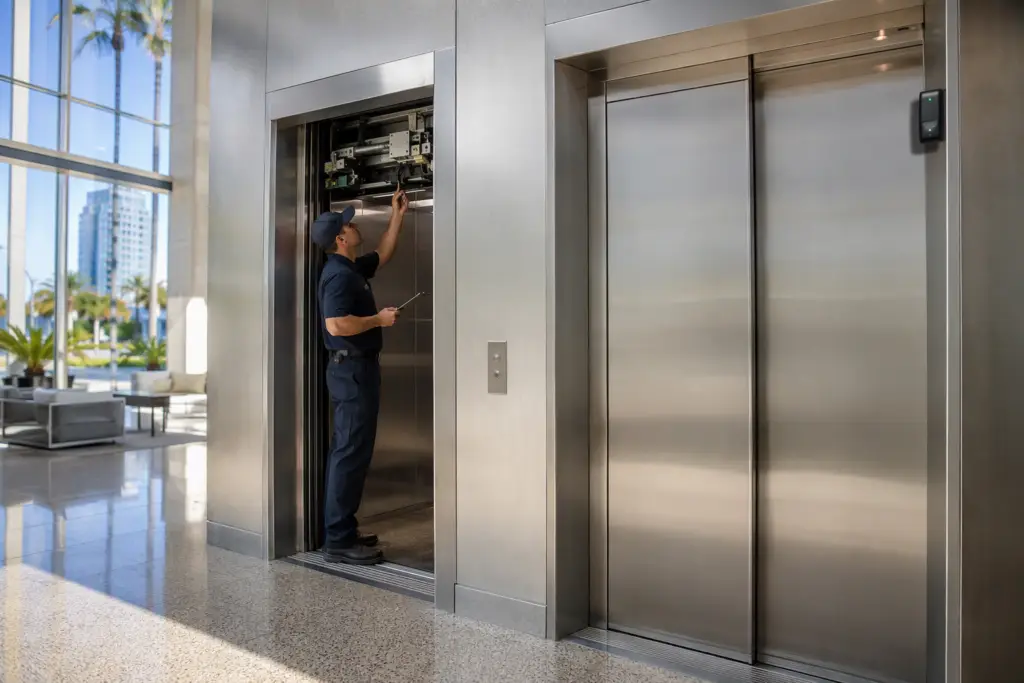
How Elevator Downtime Affects Hospital Operations — and What California Healthcare Facilities Must Know
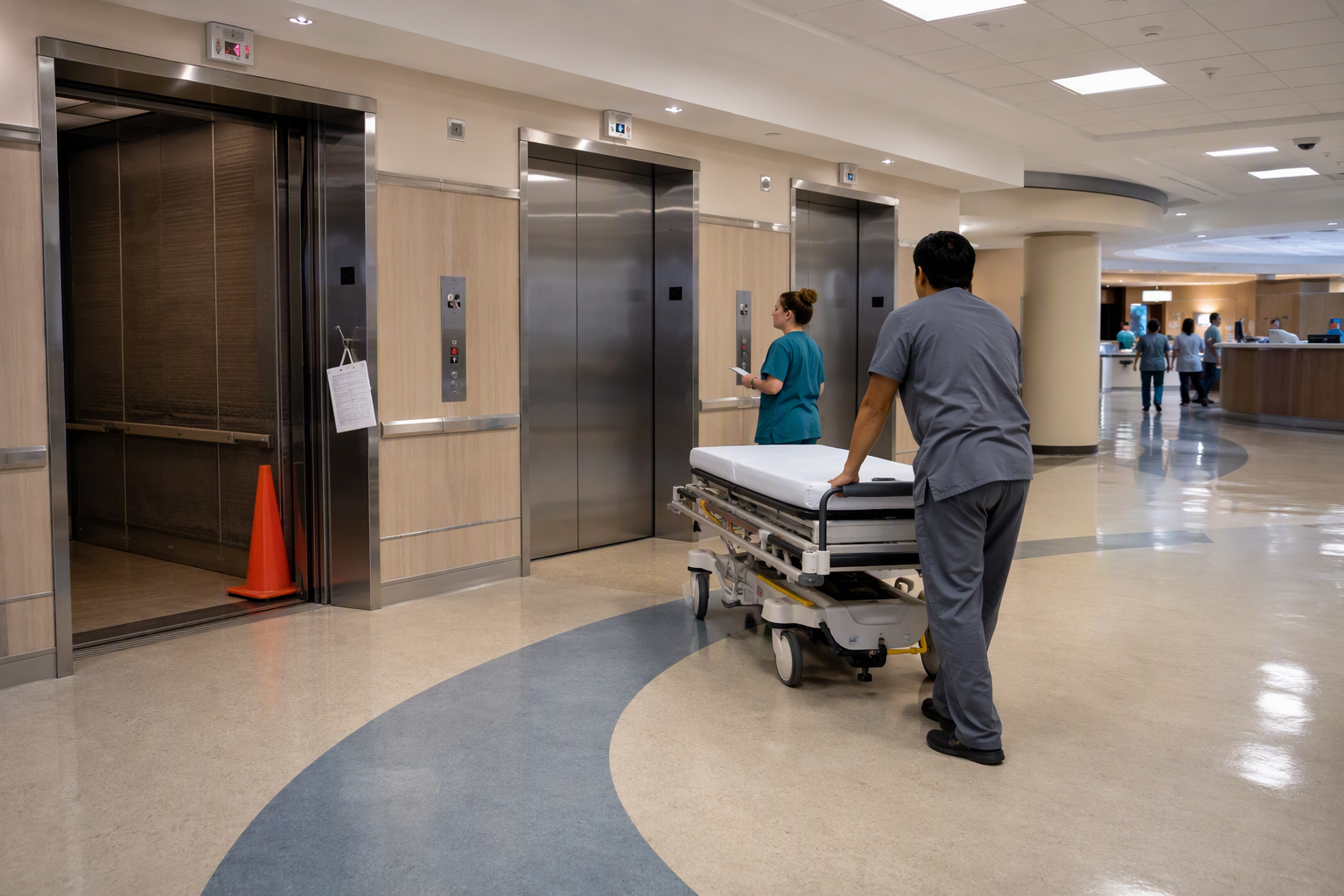
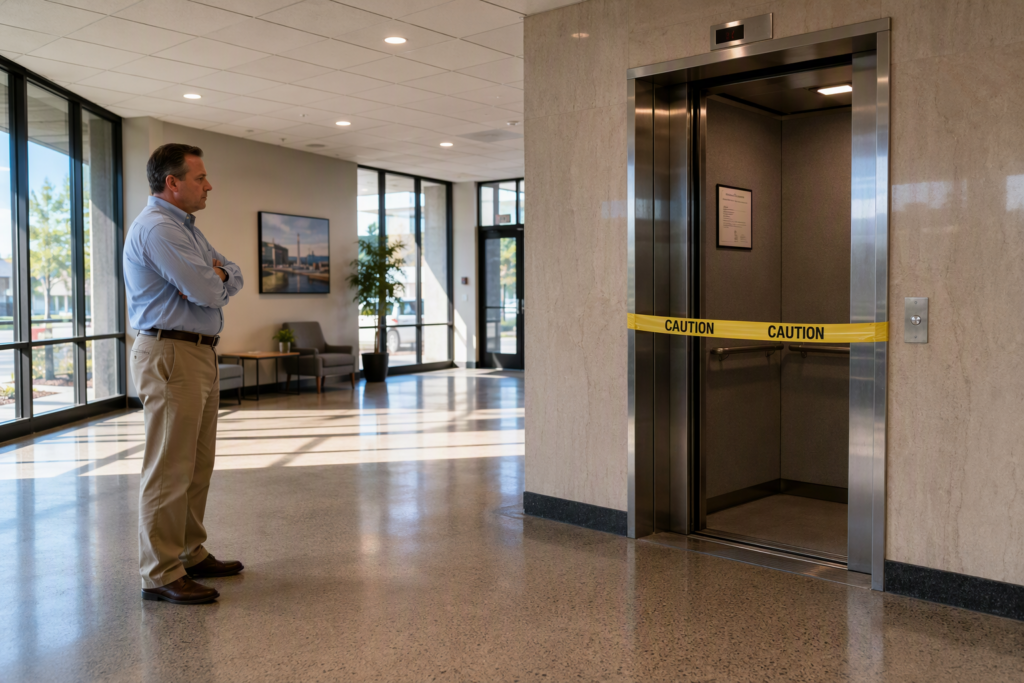
Hospitals, outpatient surgery centers, skilled nursing facilities, and medical office buildings in Signal Hill, Long Beach, Los Angeles, and Orange County depend on elevators every hour of every day. A single elevator outage can cascade into delayed patient discharges, postponed procedures, overwhelmed stairwells, and potential liability under federal accessibility law. Understanding the operational stakes — and the specific compliance obligations that apply under California law — helps healthcare facility managers make informed decisions about maintenance, repair, and vendor selection.
Why Is Elevator Downtime Especially Dangerous in Hospitals?
Healthcare facilities operate differently from commercial office buildings or retail centers. Patient beds cannot use a staircase. Pharmacy carts, surgical equipment trays, and sterile supply runs move on strict schedules. When an elevator fails, the ripple effects touch nearly every department:
- Patient transport delays: Patients moving between radiology, surgery, ICU, and discharge require reliable vertical transport. A single out-of-service cab forces staff to reroute through limited backup lifts, creating bottlenecks that lengthen patient wait times and increase staff fatigue.
- Emergency response disruption: Rapid response teams, crash carts, and trauma equipment depend on elevator availability. Downtime during a code event can have life-safety consequences.
- Supply chain interruption: Sterile processing, linen, medication, and food service all rely on freight and service elevators. Downtime compresses delivery windows and risks supply shortages on patient floors.
- ADA compliance exposure: Federal law under the Americans with Disabilities Act requires accessible routes for patients, visitors, and employees with disabilities. An out-of-service elevator that is the only accessible means of vertical travel may constitute a violation.
- Staff injury risk: When elevators are unavailable, staff manually transport heavy equipment up stairwells, increasing the risk of musculoskeletal injuries and associated workers’ compensation claims.
What California Regulations Apply to Elevators in Healthcare Facilities?
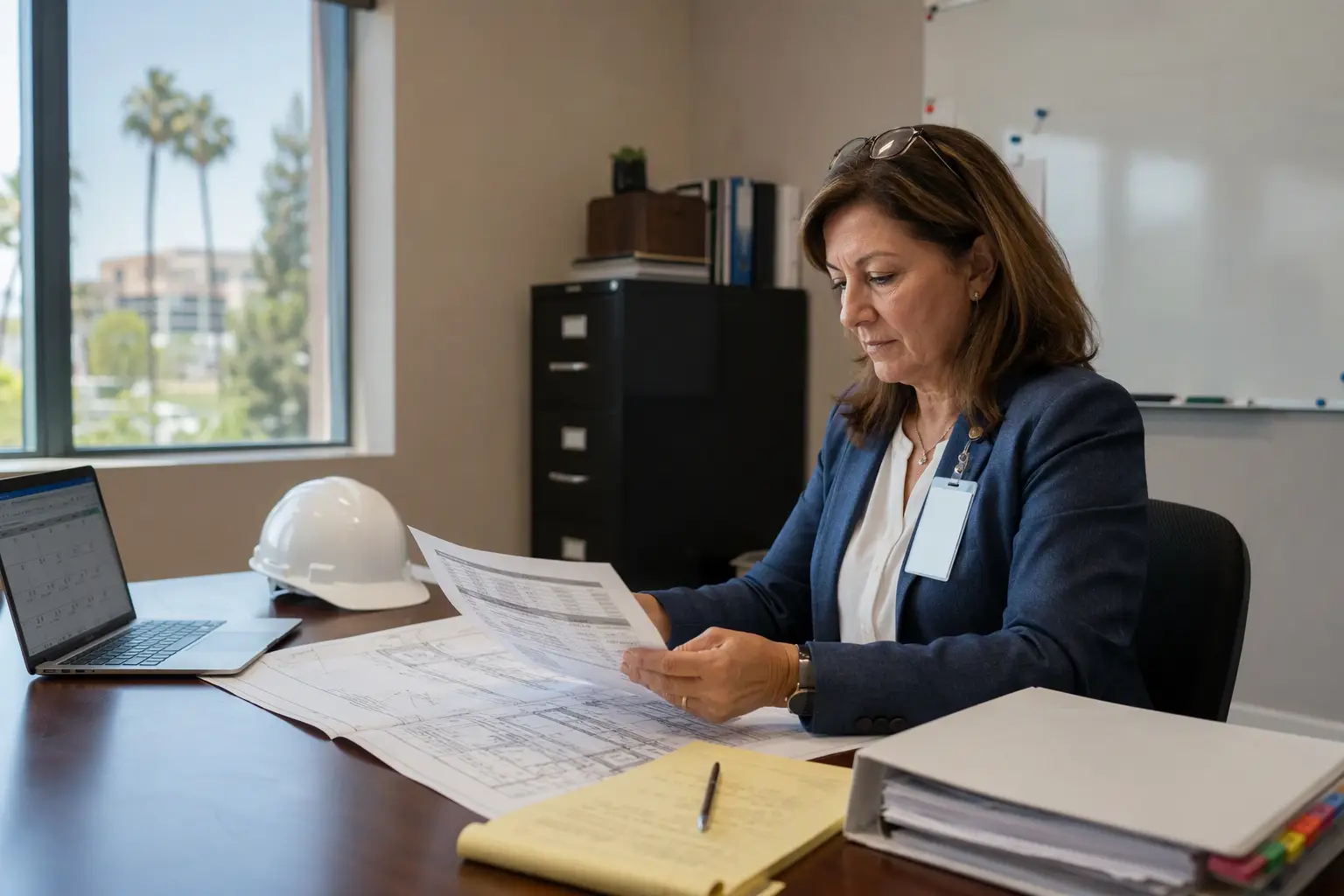
California regulates every conveyance in a healthcare facility — including passenger elevators, freight lifts, and service elevators — through the Division of Occupational Safety and Health (Cal/OSHA), Elevator Unit, California Department of Industrial Relations. The governing statute is the California Labor Code, Sections 7300–7324.2, and the implementing rules are found in the California Code of Regulations, Title 8, Elevator Safety Orders (Sections 3000–3146). The adopted technical standard is the ASME A17.1/CSA B44 Safety Code for Elevators and Escalators, 2004 edition, which applies to installation contracts signed on or after May 1, 2008.
Key compliance obligations for healthcare facility owners and managers include:
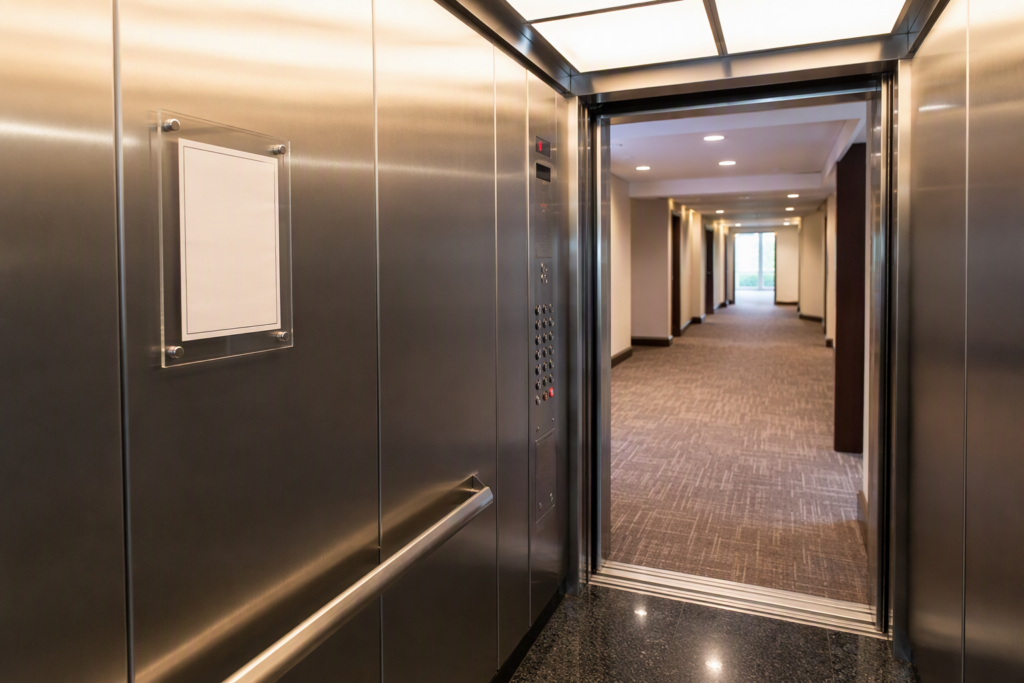
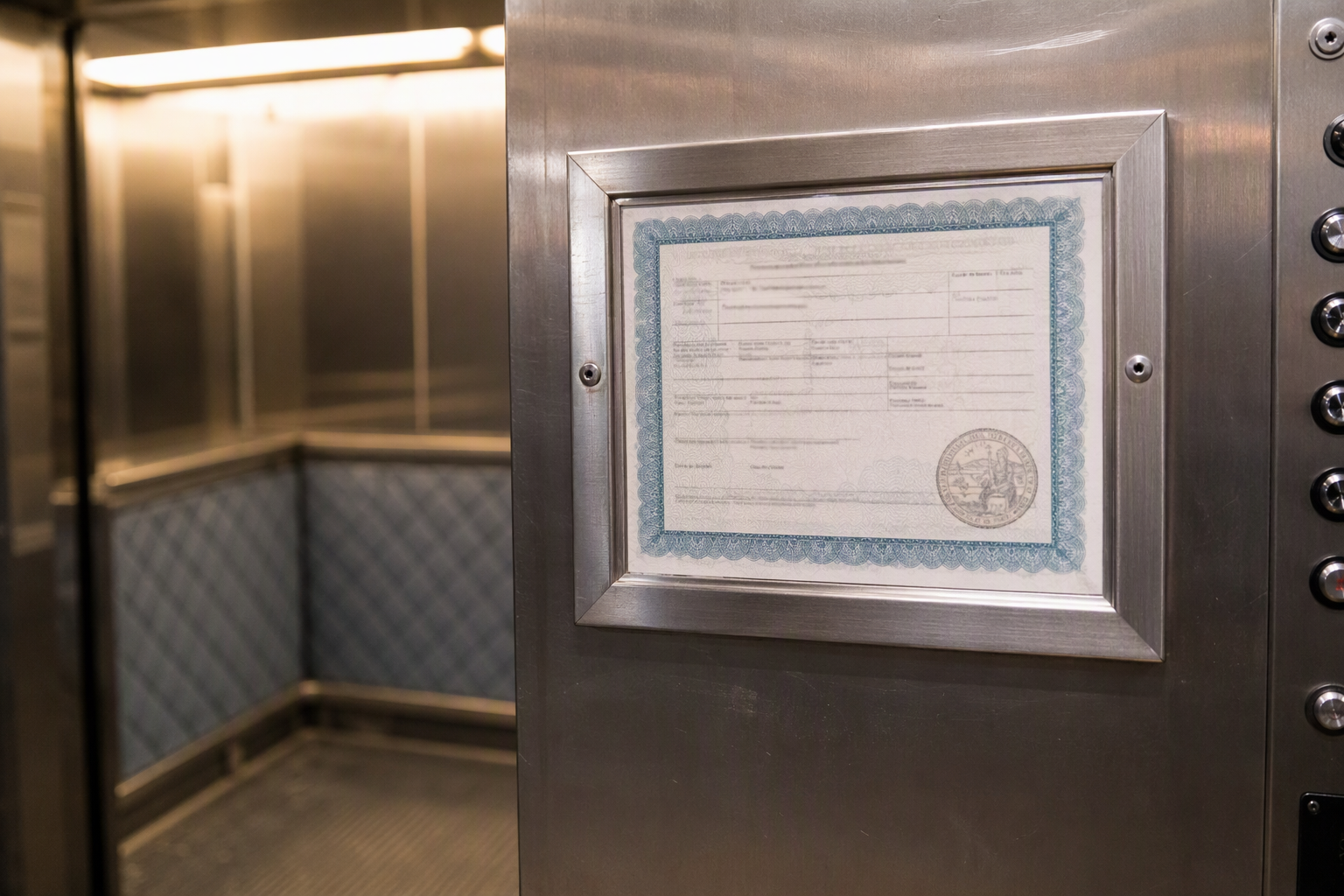
- No operation without a valid permit: No elevator in California may be operated without a current permit to operate issued by Cal/OSHA. The permit must be posted conspicuously inside the elevator car at all times.
- Annual inspection requirement: California law requires every conveyance to be inspected at least once per year. A conveyance found safe receives a permit to operate for up to one year. Under a full maintenance contract with a Cal/OSHA-certified Certified Qualified Conveyance Company (CQCC), Cal/OSHA may issue a permit for up to two years.
- Owner responsibility for reinspection: Arranging the annual reinspection is the elevator owner’s — not the contractor’s — legal responsibility. Facility managers should track permit expiration dates proactively.
- Certified inspectors only: Only State of California safety engineers and Certified Competent Conveyance Inspectors (CCCI) may perform elevator inspections in California.
- Certified mechanics only: Only a Certified Competent Conveyance Mechanic (CCCM) working for a CQCC may maintain, repair, alter, or replace components on any conveyance.
- Los Angeles facilities: Facilities located in the City of Los Angeles should be aware that Los Angeles operates its own elevator and conveyance inspection program administered by the Department of Building and Safety (LADBS), in addition to state requirements.
California has also proposed a Group V update to its Elevator Safety Orders that would incorporate portions of ASME A17.1-2019. A public hearing was held on June 18, 2026, and no effective date has been posted as of this writing. Healthcare facility managers should monitor Cal/OSHA’s Elevator Unit page for updates.
What Federal Standards Also Apply to Hospital Elevators?
Beyond California’s state requirements, hospital elevators are subject to federal standards. The ADA establishes minimum accessibility requirements for elevator cab dimensions, door timing, control panel height, and Braille/tactile signage. OSHA standards address workplace safety conditions that may intersect with elevator mechanical rooms and service pits. The ASME A17.1 Safety Code for Elevators and Escalators establishes the foundational technical requirements for construction, installation, operation, testing, inspection, maintenance, and repair of elevators — and California has adopted it as the baseline technical standard.
What Happens If a Hospital Elevator Fails Inspection in California?
If a Cal/OSHA inspector finds conditions that pose a safety hazard, the conveyance can be ordered out of service until deficiencies are corrected and a re-inspection confirms compliance. For a hospital, an unexpected elevator shutdown ordered by regulators is far more disruptive than a planned maintenance window. Permit revocation or citation under the California Labor Code can also trigger significant penalties and reputational exposure for facility leadership.
Proactive maintenance — scheduled, documented, and performed by a certified CQCC such as Liftech Elevator — reduces the probability of unexpected regulatory action and keeps permit timelines predictable.
What Maintenance Standards Should a Healthcare Facility Demand from Its Elevator Company?
Under California law, only a CQCC holding both a Cal/OSHA certification and a C-11 Elevator Contractor license issued by the California Contractors State License Board (CSLB) may perform maintenance and repairs. CCCM-certified mechanics working for that company must perform all hands-on work without supervision from uncertified personnel.
Healthcare facilities should look for service providers whose maintenance programs include:
- Documented preventive maintenance aligned with ASME A17.1 maintenance requirements
- Detailed maintenance logs for each conveyance — documentation that supports permit renewals and satisfies insurer requirements
- Coordination with the facility’s infection control protocols when working in clinical areas
- Scheduling that minimizes disruption during peak patient transport windows
- Full maintenance contracts, which are eligible for the Cal/OSHA two-year permit-to-operate renewal cycle
Liftech Elevator serves healthcare facilities across Signal Hill, Long Beach, Los Angeles, and Orange County as a certified company holding the qualifications California requires.
What Should a Hospital Facility Manager Do Immediately After an Elevator Failure?
- Secure the elevator: Take the affected cab out of service immediately. Post clear out-of-service signage at every landing.
- Activate your contingency plan: Notify department heads and patient transport, redirect traffic to functioning elevators, and implement manual transport protocols for critical patient movements.
- Contact your CQCC: Notify your certified elevator service company. Do not allow uncertified personnel to attempt repairs — this violates California law and may void your permit to operate.
- Document the failure: Record the time, symptoms, error codes displayed, and any preceding operational issues. This documentation supports the repair process and any required regulatory notification.
- Assess permit status: Confirm that the affected elevator’s permit to operate remains valid and that the failure does not trigger a material alteration requiring a new Cal/OSHA permit before the unit returns to service.
- Schedule reinspection if required: Depending on the nature of the repair, Cal/OSHA may require a reinspection before the elevator returns to operation. Your CQCC should advise on this requirement.
- Conduct an incident debrief: After restoration, review whether a change in maintenance frequency or contract scope would reduce future downtime risk.
How Often Should Hospital Elevators Be Inspected and Maintained?
California law requires at minimum one inspection per year for every conveyance. For high-utilization environments like hospitals — where elevators run continuously across multiple shifts — the inspection interval alone is insufficient to prevent failures. Facility managers should work with their CQCC to establish a preventive maintenance schedule that reflects actual usage patterns, equipment age, and the criticality of each cab to patient care workflows. Under a full maintenance contract with a Cal/OSHA-certified CQCC, a facility may qualify for a two-year permit-to-operate cycle, reducing administrative burden.
Does ADA Apply to Hospital Elevators, and What Are the Key Requirements?
Yes. The Americans with Disabilities Act applies to hospitals, outpatient facilities, and medical office buildings open to the public. Elevators must meet ADA Standards for Accessible Design, which address minimum cab size, door clear width and timing, floor leveling accuracy, control panel height and reach ranges, Braille and raised-character floor designations, and audible and visual floor-passing signals. An elevator that is out of service and represents the only accessible vertical route creates a potential ADA exposure. Healthcare facility ADA compliance should be reviewed in conjunction with elevator maintenance planning.
Can a Hospital Operate With an Expired Elevator Permit in California?
No. Under California Labor Code Sections 7300–7324.2, no elevator may be operated without a valid, current permit to operate issued by Cal/OSHA. Operating a conveyance without a valid permit exposes the facility owner to enforcement action, potential civil liability, and the operational risk of running equipment that has not been confirmed safe by a certified inspector. Permit expiration tracking is a core administrative responsibility for any healthcare facility with vertical conveyances.
What Is a Full Maintenance Contract and Why Does It Matter for Hospitals?
A full maintenance contract is an agreement between a healthcare facility and a CQCC that covers scheduled preventive maintenance, routine adjustments, and repair of components — not merely emergency response. California’s elevator regulations recognize full maintenance contracts specifically: an elevator covered by such a contract with a Cal/OSHA-certified company may receive a permit to operate for up to two years rather than the standard one-year term. For a hospital managing dozens of conveyances across multiple buildings, the administrative and compliance advantage of extended permit periods is meaningful. Liftech Elevator offers full maintenance programs tailored to the operational demands of healthcare facilities in Long Beach, Los Angeles, Orange County, and Signal Hill.
How Does Liftech Elevator Support Healthcare Facilities in Southern California?
Liftech Elevator works with hospitals, medical centers, skilled nursing facilities, and medical office properties across Signal Hill, Long Beach, Los Angeles, and Orange County. As a certified company meeting California’s CQCC requirements, Liftech Elevator provides maintenance, repair, and compliance support performed by CCCM-certified mechanics. Liftech Elevator’s team coordinates scheduling around clinical workflows, maintains the documentation required for Cal/OSHA permit renewals, and helps facility managers understand their obligations under California Labor Code and ASME A17.1 standards.
Questions Your Inspector Will Ask
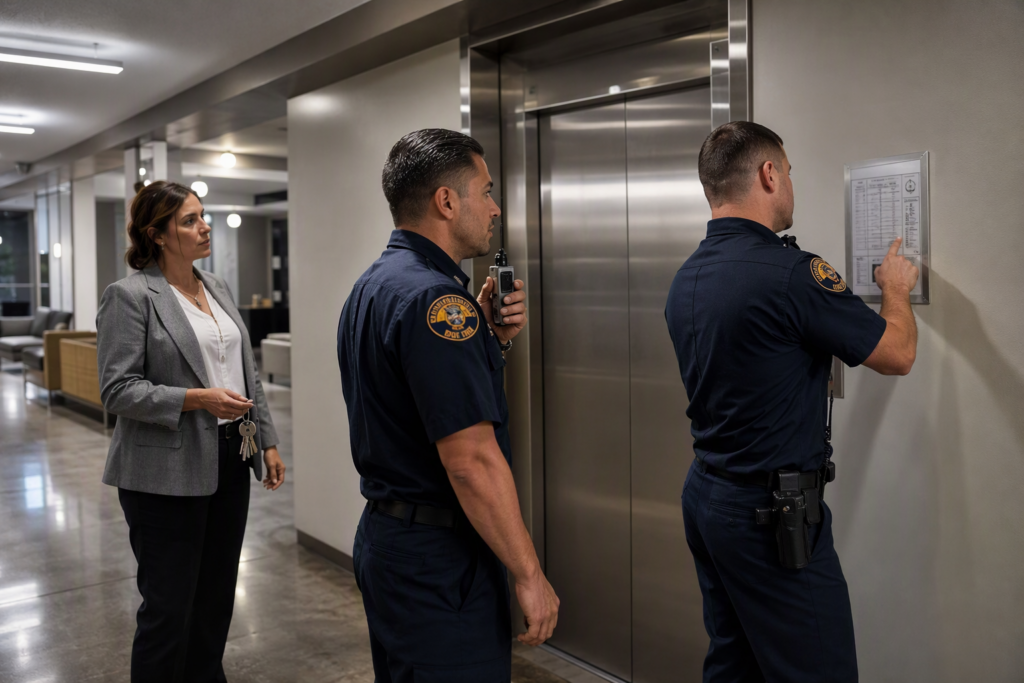
When a Cal/OSHA inspector or Certified Competent Conveyance Inspector arrives at your healthcare facility, be prepared to answer:
- Is the current permit to operate posted inside each elevator car? The permit must be conspicuously displayed in the cab.
- Who is your Certified Qualified Conveyance Company? The inspector will verify that your service provider holds current CQCC certification from Cal/OSHA.
- Where are your maintenance logs? Documented records of all maintenance visits, adjustments, and repairs must be available for review.
- Have any components been replaced or altered since the last inspection? Material alterations require a Cal/OSHA permit before the unit returns to service.
- What is the date of the last full inspection, and who performed it? Only a CCCI or Cal/OSHA safety engineer may have conducted the inspection.
- Have there been any entrapments, emergency stops, or reported malfunctions since the last inspection? Incident history informs the scope of the inspector’s review.
- Is your two-way emergency communication system functional? The inspector will test in-cab emergency communication per applicable ASME A17.1 requirements.
- Are floor-leveling accuracy and door timing within acceptable tolerances? These are common deficiency items, particularly in high-utilization facilities.
Take Action Before Downtime Becomes a Crisis
Elevator failures in healthcare settings are not simply inconveniences — they are operational, regulatory, and patient safety events. California’s compliance framework under Cal/OSHA, the California Labor Code, and ASME A17.1 establishes clear obligations for facility owners, and the consequences of non-compliance are serious. Proactive maintenance with a certified CQCC, current permits to operate, and documented maintenance records are the foundation of a sound elevator program for any Southern California healthcare facility.
Liftech Elevator provides healthcare facilities in Signal Hill, Long Beach, Los Angeles, and Orange County with the certified maintenance and repair services California law requires — and the operational reliability that patient care demands.
Contact Liftech Elevator for a free elevator assessment — call 562-609-3478 today.
Need elevator service you can rely on? Liftech Elevator is ready to help.