Elevator Service in Signal, CA | Liftech Elevator
Elevator inspection in Los Angeles and surrounding communities like Signal, CA is governed by a layered framework of state and local rules. Building owners who understand these requirements can avoid costly violations, keep occupants safe, and maintain continuous operations. Liftech Elevator is a Cal/OSHA-recognized Certified Qualified Conveyance Company (CQCC) serving the greater Los Angeles area, and the information below explains exactly what property owners need to know in 2026.
Who regulates elevator inspections in Los Angeles?
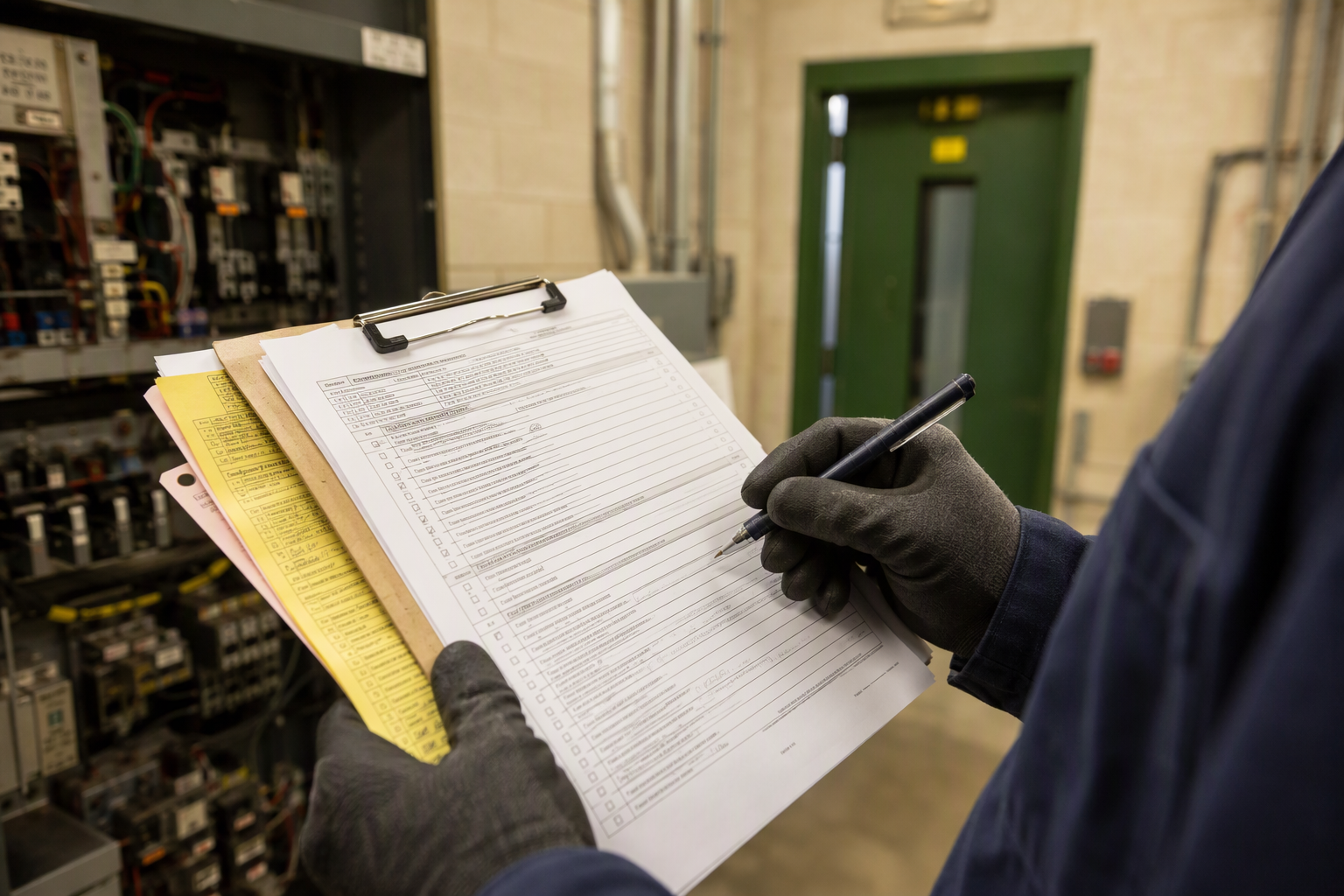
At the state level, elevators in California fall under the authority of the Division of Occupational Safety and Health (Cal/OSHA), Elevator Unit, California Department of Industrial Relations. The governing statute is California Labor Code Sections 7300–7324.2, and the technical requirements are found in the California Code of Regulations, Title 8, Elevator Safety Orders (Sections 3000–3146).
Within the city limits of Los Angeles, the Department of Building and Safety (LADBS) runs its own elevator and conveyance inspection program in addition to the state framework. Property owners in Signal and the broader Los Angeles area should be aware that both layers of oversight may apply to their equipment.
How often is an elevator required to be inspected in California?
California law requires every conveyance to be inspected at least once a year. Following a satisfactory inspection, Cal/OSHA issues a permit to operate for up to one year. However, when an elevator is in safe condition and covered by a full maintenance contract with a C-11 licensed elevator company, Cal/OSHA may extend that permit to operate for up to two years. Arranging the annual reinspection is the elevator owner’s responsibility — not the maintenance company’s.
Only State of California safety engineers and Certified Competent Conveyance Inspectors (CCCI) may perform elevator inspections in California. Because inspection authority is reserved for these credentialed individuals, building owners should confirm that any inspection they arrange is conducted by a qualified party recognized under California law.
What permits are required before an elevator can operate in California?
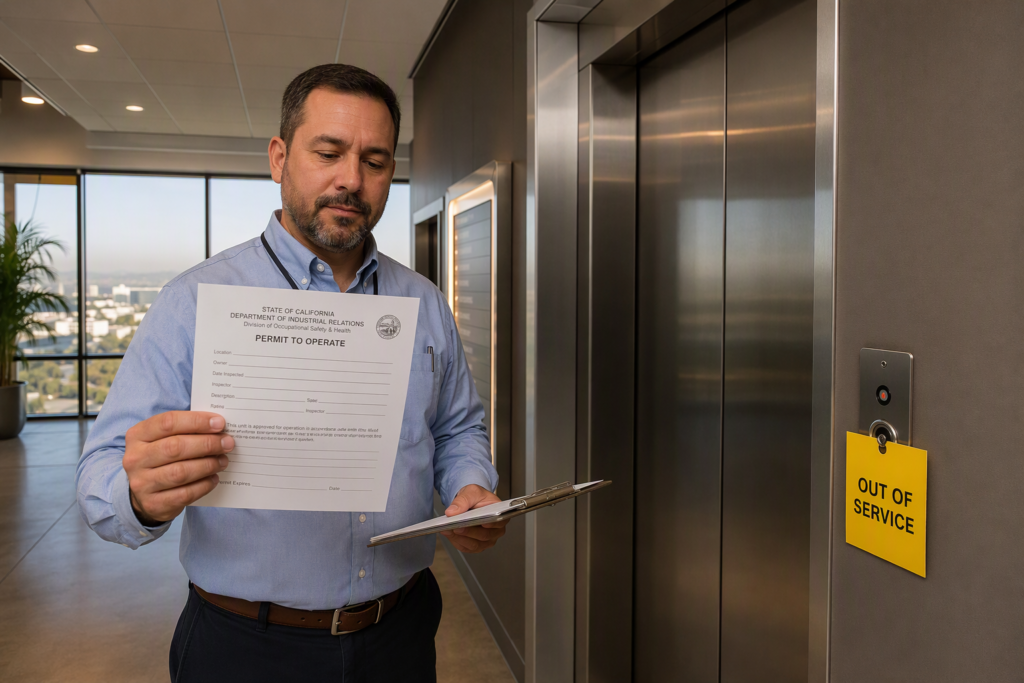
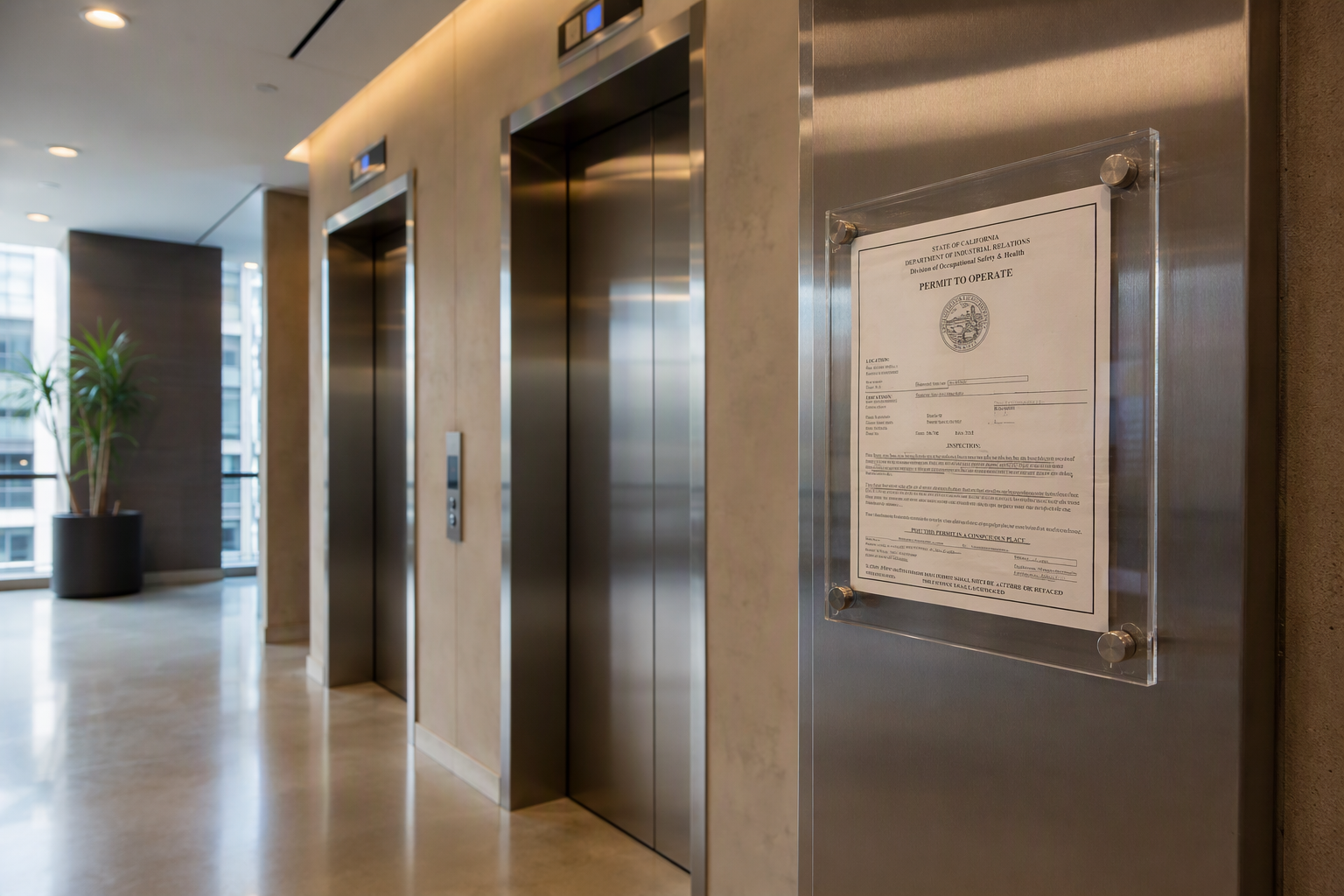
No elevator may be operated in California without a valid, current permit to operate issued by Cal/OSHA. That permit must be posted conspicuously inside the elevator car. Before a new elevator is placed in service, Cal/OSHA must inspect it and issue a permit. Similarly, a Cal/OSHA permit is required before any conveyance is erected, installed, or materially altered. These requirements apply to passenger elevators, freight elevators, inclined elevators, and other covered conveyances throughout Los Angeles and the rest of California.
Who is qualified to maintain or repair an elevator in California?
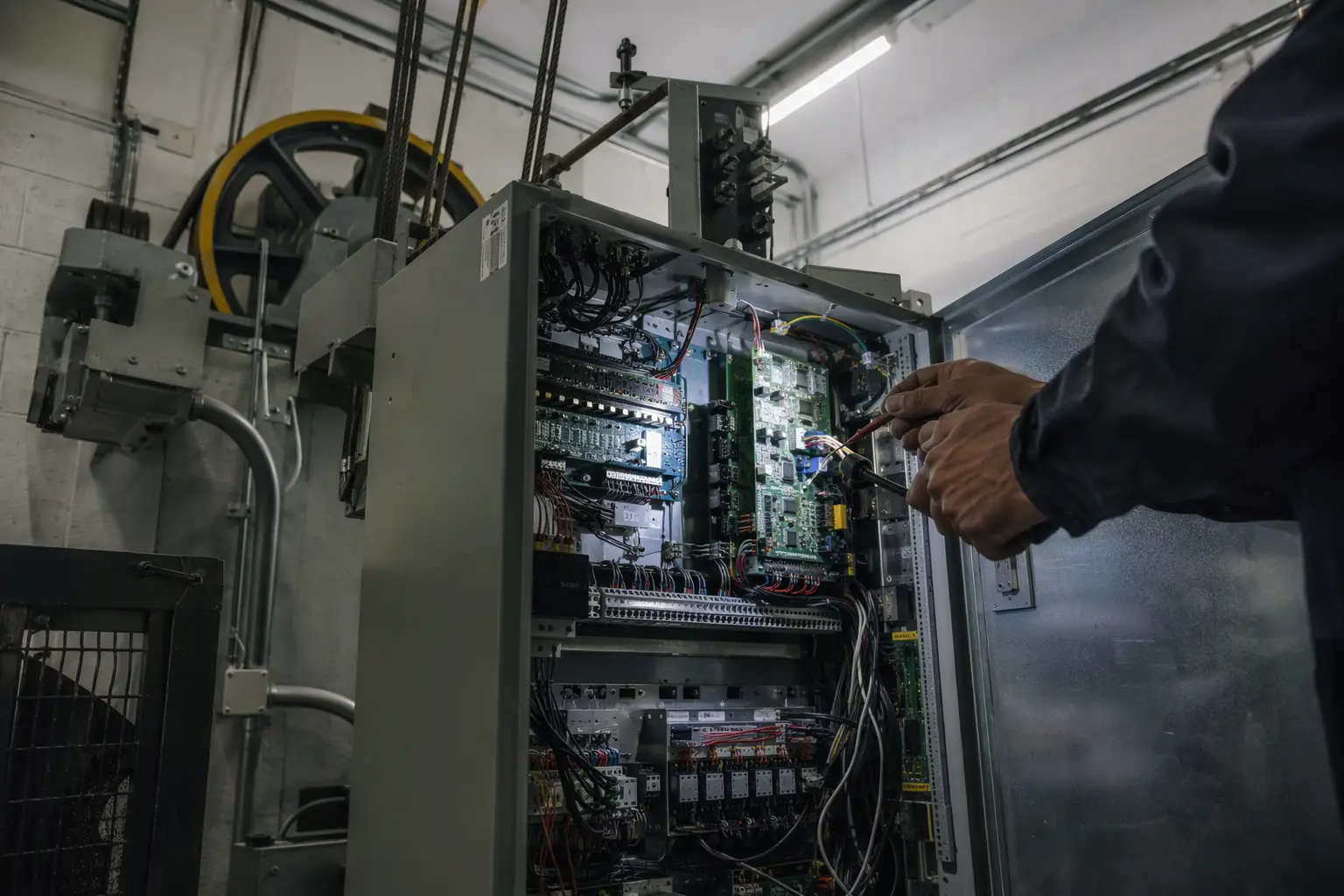
California sets strict credential requirements for companies and individuals who work on elevators. Companies that install, alter, test, maintain, repair, or service elevators must be certified by Cal/OSHA as a Certified Qualified Conveyance Company (CQCC). To obtain CQCC certification, a company must hold a current C-11 Elevator Contractor license issued by the California Contractors State License Board (CSLB) and carry certificates of workers’ compensation and liability insurance.
Individual mechanics must be certified by Cal/OSHA as a Certified Competent Conveyance Mechanic (CCCM) to work on an elevator without supervision. Only a CCCM working for a CQCC may maintain, repair, alter, or replace components on a conveyance. CQCC, CCCM, and conveyance inspector certificates last two years; renewal requires at least eight hours of continuing education. Liftech Elevator holds the required state certifications to operate legally in Signal, CA and throughout the Los Angeles area.
What code standard applies to elevators installed in California?
California has adopted the ASME A17.1/CSA B44 Safety Code for Elevators and Escalators, 2004 edition, under its Group IV Elevator Safety Orders, effective May 1, 2008, for installation contracts signed on or after that date. As of 2026, California has proposed a Group V update that would incorporate portions of ASME A17.1-2019; the Standards Board held a public hearing on June 18, 2026, and no effective date has been posted. Building owners planning new installations or major alterations should consult with Liftech Elevator to understand which edition governs their project.
Federal accessibility requirements under the Americans with Disabilities Act (ADA) also apply to elevators in public accommodations and commercial facilities. Liftech Elevator’s team can assess ADA compliance as part of a broader evaluation of your equipment.
What should a building owner do if an elevator fails inspection or is taken out of service?
- Stop using the elevator immediately and post a clear notice that it is out of service.
- Contact Liftech Elevator to schedule a diagnostic assessment of the equipment.
- Obtain documentation of the deficiencies cited during the inspection or shutdown.
- Coordinate with a CQCC-certified company — such as Liftech Elevator — to perform all required repairs using CCCM-certified mechanics.
- Arrange a follow-up inspection with a CCCI or Cal/OSHA safety engineer to verify that corrections have been made.
- Confirm receipt of an updated permit to operate from Cal/OSHA before returning the elevator to service.
- Post the renewed permit to operate conspicuously inside the elevator car.
Does California require emergency communication inside elevator cabs?
Emergency communication requirements for elevator cabs in California involve overlapping rules. The California Elevator Safety Orders adopt the ASME A17.1/CSA B44 2004 edition, while the 2025 California Building Code appears to introduce additional provisions for visual and audible two-way communication. Because the interaction between these requirements has not been definitively resolved, building owners should consult with Liftech Elevator for a property-specific evaluation rather than relying on a general characterization of what is or is not required.
Regardless of the precise regulatory requirement, functioning two-way emergency communication is a critical safety feature. Liftech Elevator evaluates in-cab communication systems as part of routine maintenance and inspection support services.
What elevator services does Liftech Elevator provide in Signal, CA and the Los Angeles area?
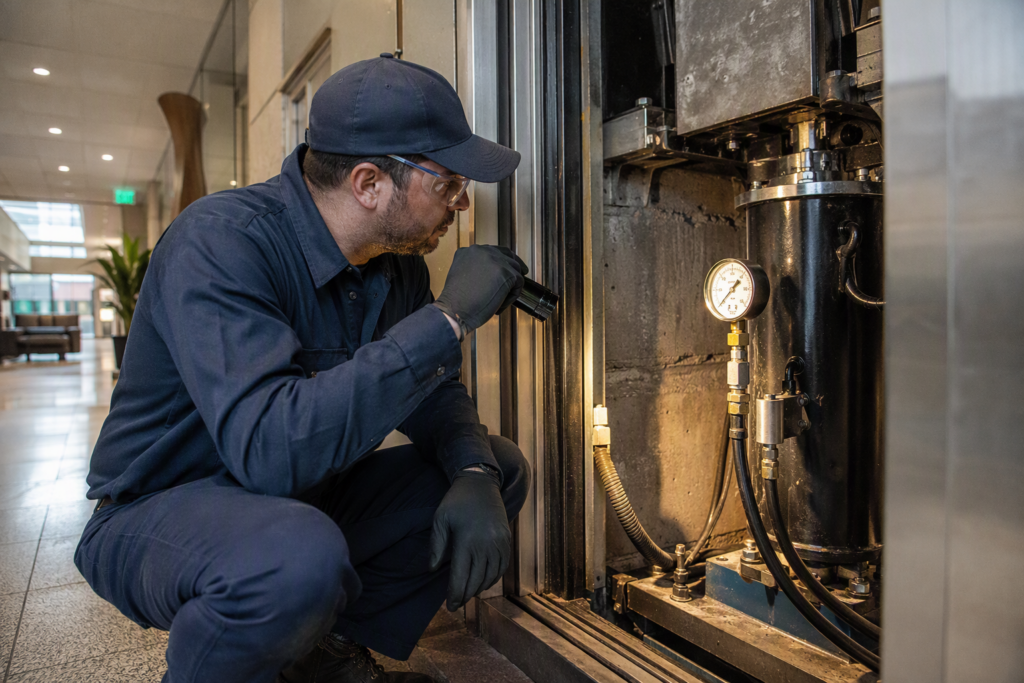
Liftech Elevator provides a full range of elevator services to residential buildings, commercial properties, healthcare facilities, industrial sites, and mixed-use developments throughout Signal, CA and the greater Los Angeles market. Services include new elevator installation, routine maintenance under full maintenance contracts, component repair and replacement, modernization projects, code compliance assessments, and support for the annual reinspection process. Because Liftech Elevator operates as a CQCC-certified company with CCCM-certified mechanics, all work meets California’s regulatory standards.
Liftech Elevator is available for both planned maintenance visits and urgent service calls when equipment malfunctions require prompt attention. Building managers and property owners in the Los Angeles area can contact Liftech Elevator to discuss the service cadence and coverage that fits their equipment and occupancy needs.
Schedule a free consultation with Liftech Elevator at 562-997-3639.
Need elevator service you can rely on? Liftech Elevator is ready to help.