Elevator Service in Signal, CA | Liftech Elevator
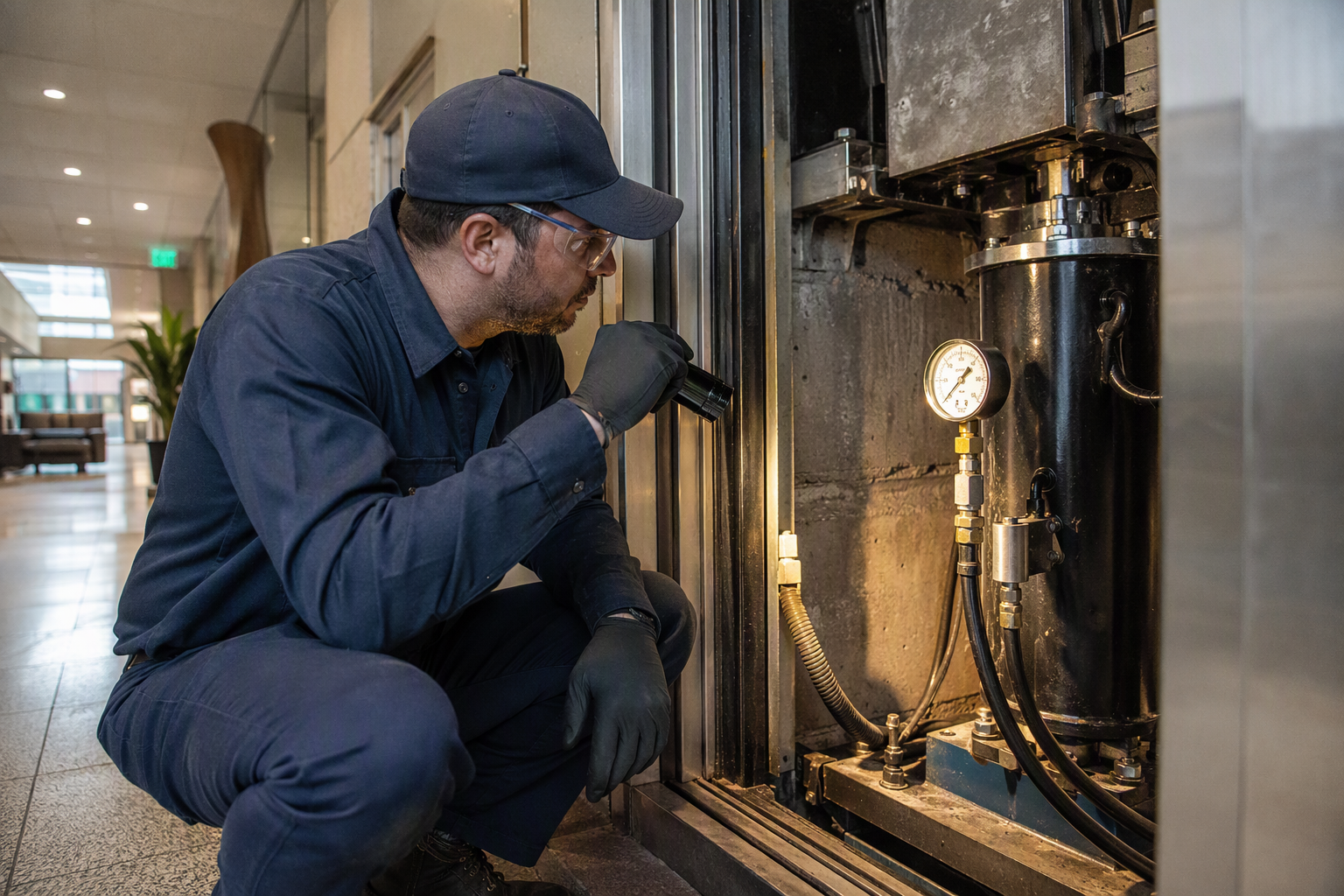
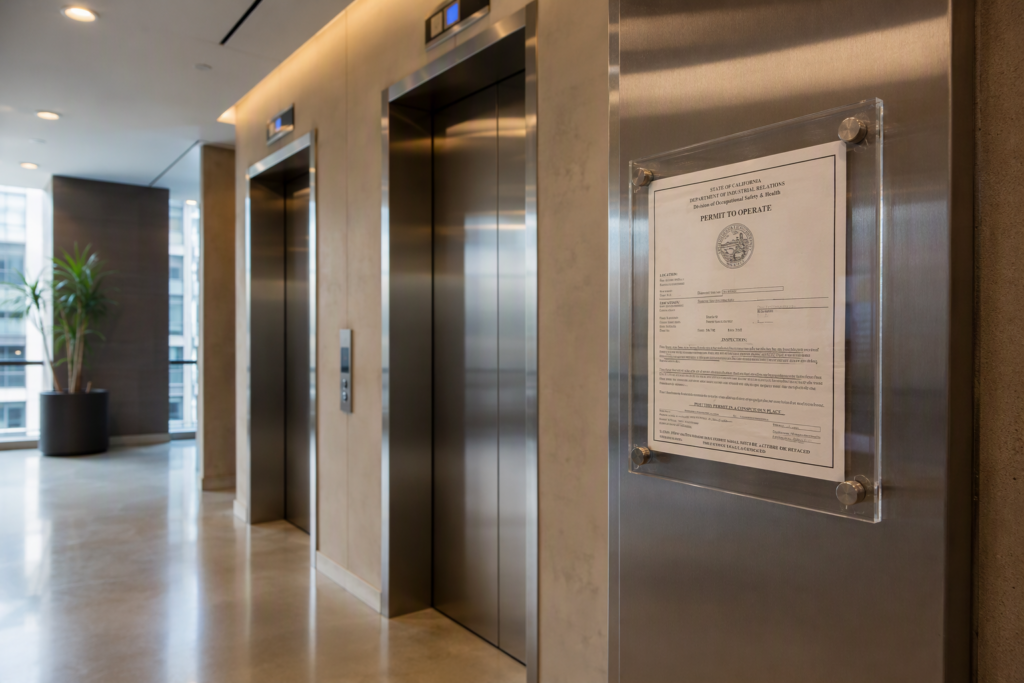
Hydraulic elevator pressure testing is a critical safety procedure for any building in Signal, CA that relies on hydraulic lift equipment. Under California law, no elevator may operate without a valid permit to operate issued by Cal/OSHA’s Elevator Unit, California Department of Industrial Relations. Liftech Elevator is a Certified Qualified Conveyance Company (CQCC) serving Signal, CA and the broader Los Angeles region, providing pressure testing, routine maintenance, code-compliance inspections, and repair services performed exclusively by Certified Competent Conveyance Mechanics (CCCMs).
What Is an Elevator Pressure Test and Why Is It Required in Los Angeles?
A hydraulic elevator pressure test evaluates the integrity of a hydraulic system’s cylinder, seals, and piping by verifying that the system holds pressure within safe operating parameters. This process helps identify slow leaks, weakened components, or deterioration that could lead to an uncontrolled descent or equipment failure.
In Los Angeles, elevator oversight operates under a dual-layer regulatory structure. California’s statewide framework is governed by Cal/OSHA’s Elevator Unit under the California Labor Code Sections 7300–7324.2 and the California Code of Regulations, Title 8, Elevator Safety Orders (Sections 3000–3146). These orders adopt the ASME A17.1/CSA B44 Safety Code for Elevators and Escalators (2004 edition) for installations contracted on or after May 1, 2008. Additionally, the City of Los Angeles operates its own elevator and conveyance inspection program through the Los Angeles Department of Building and Safety (LADBS), which may apply supplemental requirements. Building owners and property managers in Signal, CA should confirm current local requirements with both Cal/OSHA and LADBS.
Who Is Authorized to Perform Elevator Pressure Tests in California?
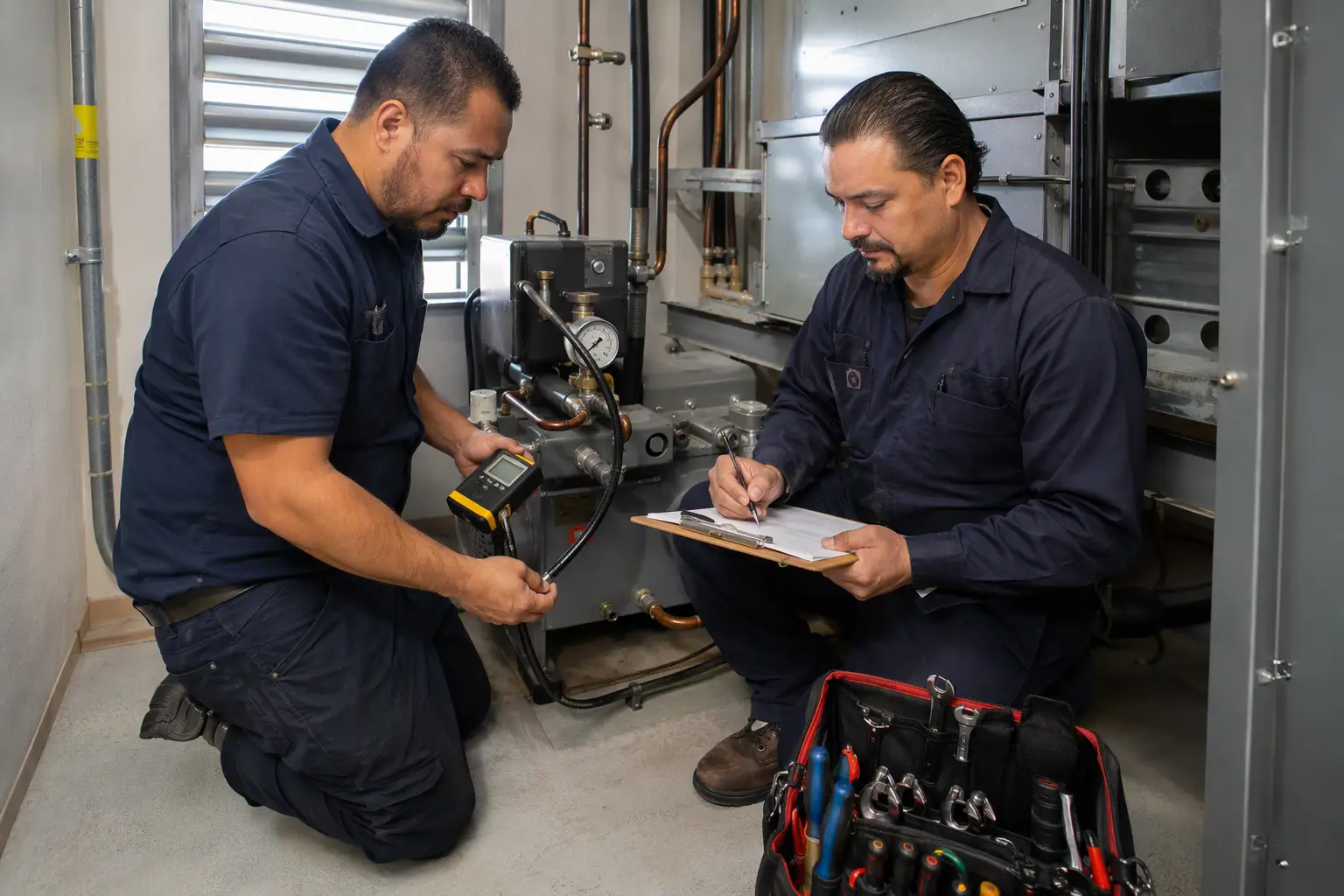
California law strictly limits who may perform work on elevators. Under the California Code of Regulations, Title 8, only a Certified Competent Conveyance Mechanic (CCCM) working for a Certified Qualified Conveyance Company (CQCC) may maintain, repair, alter, or replace components on a conveyance. This means any pressure test involving hands-on work with hydraulic components must be performed by a CCCM employed by a Cal/OSHA-certified company.
CQCC certification requires a current C-11 Elevator Contractor license issued by the California Contractors State License Board (CSLB), along with workers’ compensation and liability insurance certificates submitted to Cal/OSHA. California CQCC and CCCM certificates are valid for two years and require at least eight hours of continuing education for renewal. Liftech Elevator holds the required California certifications and performs all pressure testing and service work through credentialed mechanics.
What Does the Elevator Pressure Test Process Look Like?
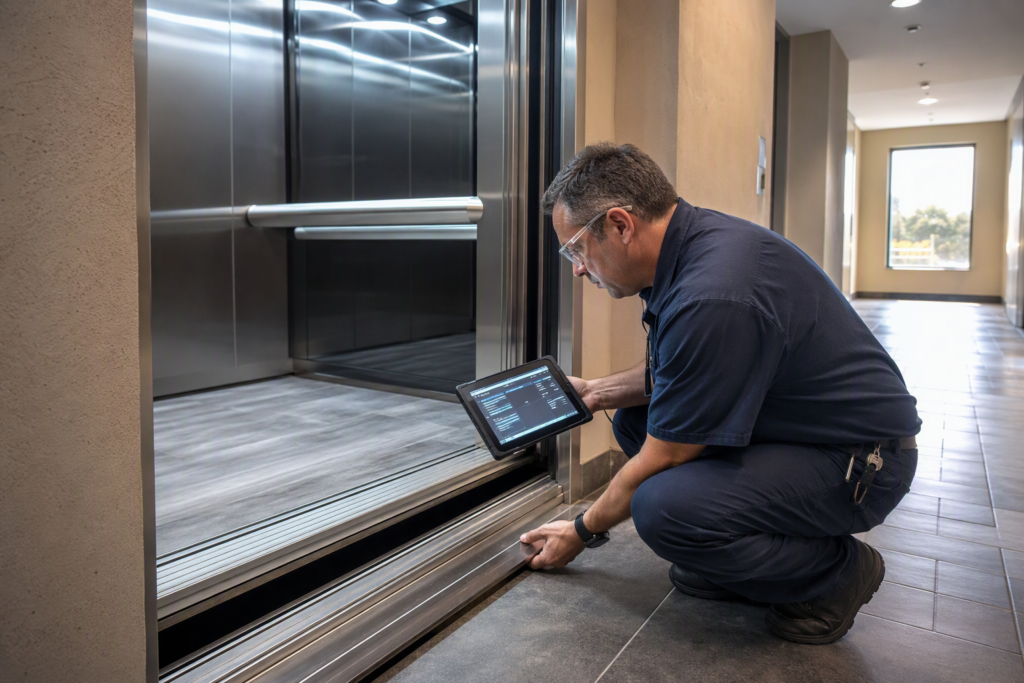
When Liftech Elevator performs a hydraulic elevator pressure test at a property in Signal, CA, the process generally follows this sequence:
- Review the elevator’s maintenance history, permit to operate, and any prior inspection reports to identify known concerns before work begins.
- Isolate the hydraulic system and document the baseline operating pressure of the unit.
- Apply the appropriate test pressure to the hydraulic cylinder and connected piping in accordance with the applicable ASME A17.1/CSA B44 requirements adopted by California’s Elevator Safety Orders.
- Monitor the system over the prescribed hold period to detect pressure loss, seepage at fittings, or cylinder weepage.
- Inspect all accessible seals, valves, piping, and the hydraulic power unit for signs of deterioration or non-conformance.
- Document findings in a written report and communicate any deficiencies requiring repair or further Cal/OSHA attention to the building owner or property manager.
- Coordinate with the building owner on any required follow-up repairs, which must be completed by CCCMs before the elevator returns to service.
How Does California’s Annual Inspection Requirement Relate to Pressure Testing?
California law requires every conveyance to be inspected at least once a year. Only State of California safety engineers and Certified Competent Conveyance Inspectors (CCCIs) may conduct these inspections. A conveyance found to be in safe condition receives a permit to operate valid for up to one year. For elevators covered by a full maintenance contract with a C-11 licensed elevator company, Cal/OSHA may issue a permit to operate for up to two years.
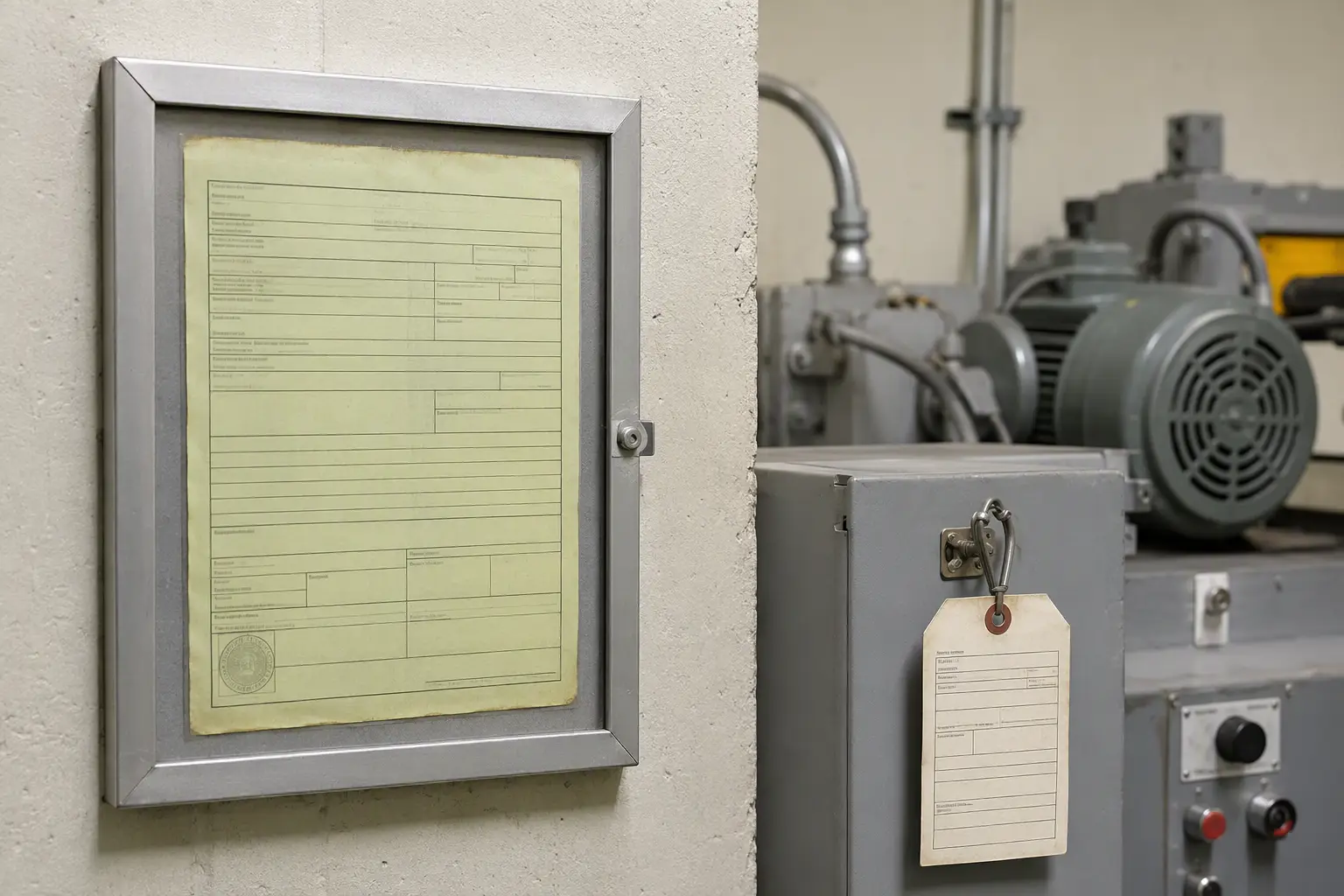
The permit to operate for passenger, freight, and inclined elevators must be posted conspicuously inside the elevator car. Arranging the annual reinspection is the elevator owner’s responsibility — not the service company’s. Liftech Elevator helps Signal, CA property managers track inspection schedules and prepare equipment so it is ready for the Cal/OSHA inspection process, which may include hydraulic pressure verification as part of a full safety review.
What Happens If an Elevator Fails a Pressure Test?
If a hydraulic elevator does not hold pressure within acceptable limits, it presents a safety risk and must be taken out of service until the deficiency is corrected. California law prohibits operating an elevator without a valid, current permit to operate. Any material alteration or repair to correct a pressure failure requires a Cal/OSHA permit before work begins, and the corrected elevator must be reinspected before it is returned to service.
Liftech Elevator supports building owners through the entire remediation process — from diagnosing the source of pressure loss to coordinating required permits and ensuring repairs are completed by certified mechanics before the reinspection is scheduled.
Does ADA Compliance Apply to Hydraulic Elevators in Los Angeles?
Yes. The Americans with Disabilities Act (ADA) sets federal accessibility requirements for elevators in public accommodations and commercial facilities. Hydraulic elevators are subject to ADA provisions regarding cab dimensions, door timing, control height, and related accessibility features. A pressure test alone does not address ADA compliance, but Liftech Elevator can evaluate a hydraulic elevator’s overall condition and identify accessibility-related components that may need attention alongside any safety remediation work.
What Should Signal, CA Property Owners Know About the 2026 Regulatory Landscape?
As of 2026, California’s Elevator Safety Orders continue to operate under the ASME A17.1/CSA B44, 2004 edition (Group IV) as the adopted code for installations contracted on or after May 1, 2008. California has proposed a Group V update that would incorporate portions of ASME A17.1-2019; a public hearing was held on June 18, 2026, but no effective date has been posted. Property owners in Signal, CA should monitor Cal/OSHA communications for updates and consult with a CQCC-certified service company to understand how any future code adoption may affect their equipment.
Los Angeles also maintains its own inspection program through LADBS, which may impose requirements in addition to statewide Cal/OSHA rules. Liftech Elevator stays current with both state and local regulatory developments to help clients in Signal and across Los Angeles County remain in compliance.
When Should a Building Owner Schedule a Hydraulic Elevator Pressure Test?
Several circumstances warrant a hydraulic pressure test beyond routine annual inspections. These include visible oil seepage around the cylinder or piping, a noticeable drop in leveling accuracy, a history of slow descent between floors, prior repair work on hydraulic components, a change in building occupancy or elevator use intensity, or any incident that raises concern about the integrity of the hydraulic system. Pressure testing is also advisable when preparing for a Cal/OSHA reinspection following corrective maintenance or when acquiring a building where elevator maintenance history is incomplete.
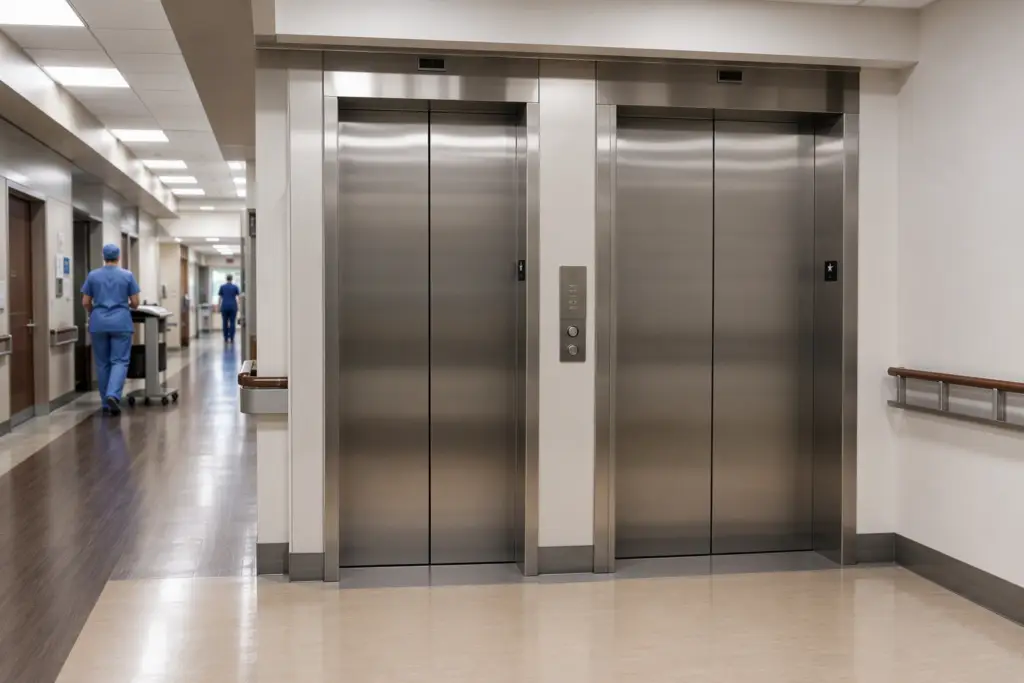
Liftech Elevator serves Signal, CA and surrounding communities throughout the Los Angeles area, working with commercial buildings, multifamily residential properties, healthcare facilities, and mixed-use developments that rely on hydraulic elevator equipment.
Schedule a free consultation with Liftech Elevator at 562-997-3639.
Need elevator service you can rely on? Liftech Elevator is ready to help.