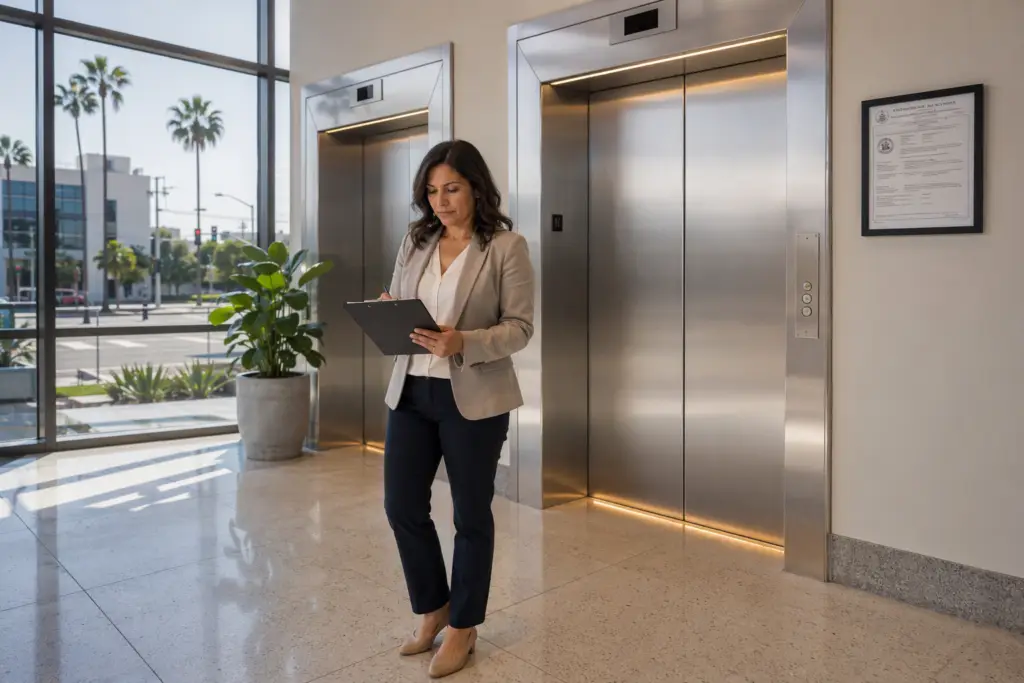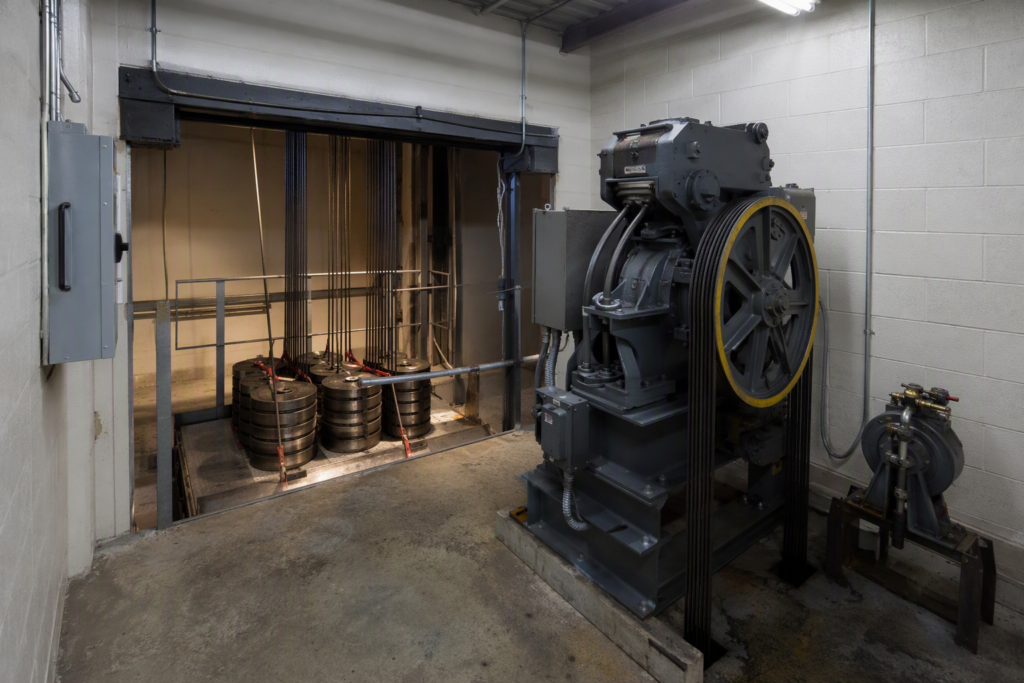
Elevator Repair Services in California: Data, Compliance & What Building Owners Need to Know
In California, every elevator must be inspected at least once per year and may not operate without a valid permit to operate issued by Cal/OSHA — making timely, compliant elevator repair services not just a maintenance decision but a legal requirement under California Labor Code Sections 7300–7324.2.
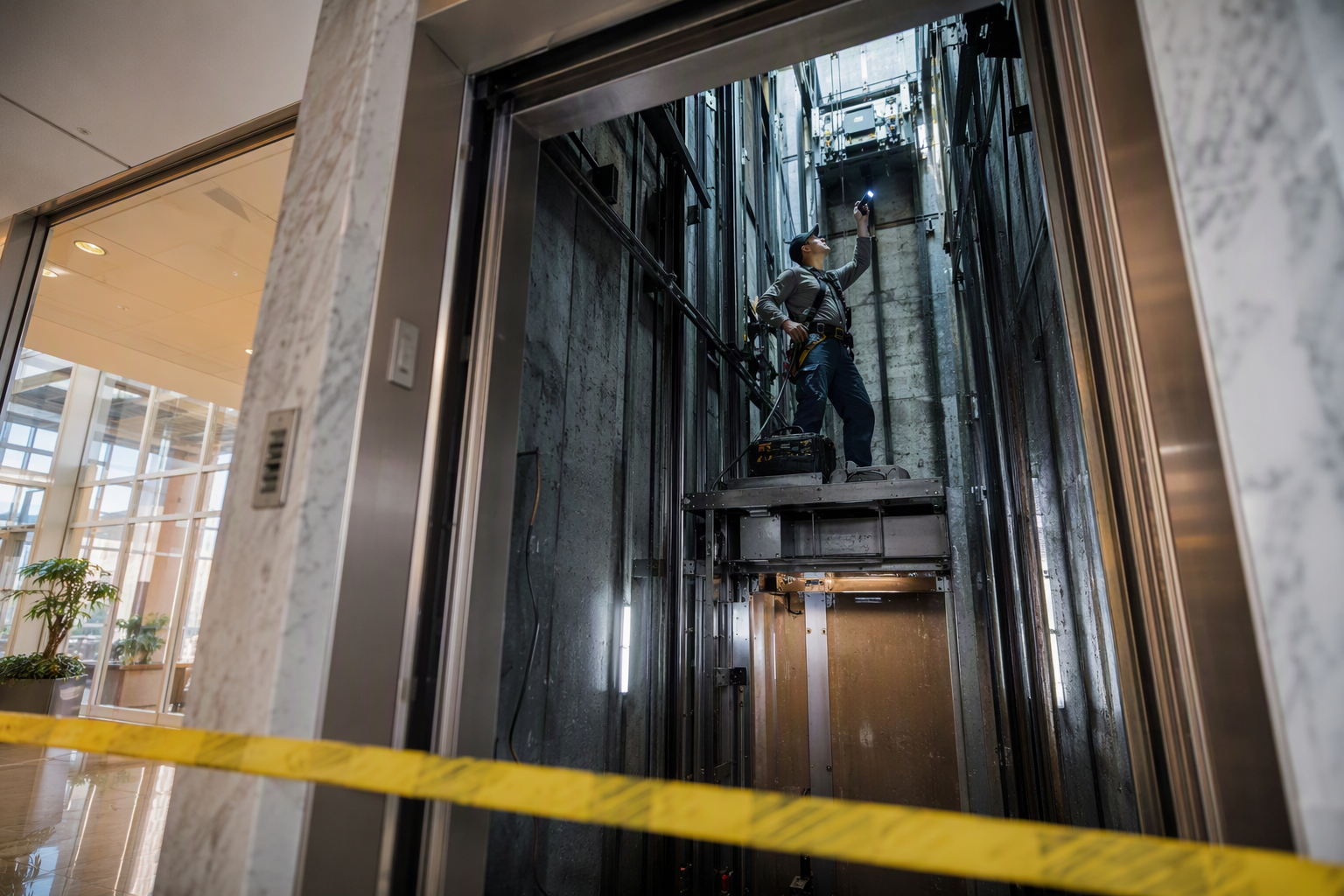
California operates one of the most rigorous elevator safety frameworks in the United States. Building owners, property managers, and facilities directors who rely on elevator repair services must navigate a layered system of state statutes, Cal/OSHA regulations, contractor licensing requirements, and local authority jurisdiction. This page consolidates the verified regulatory facts, compliance requirements, and practical guidance that California elevator owners need in 2026.
What Laws Govern Elevator Repair Services in California?
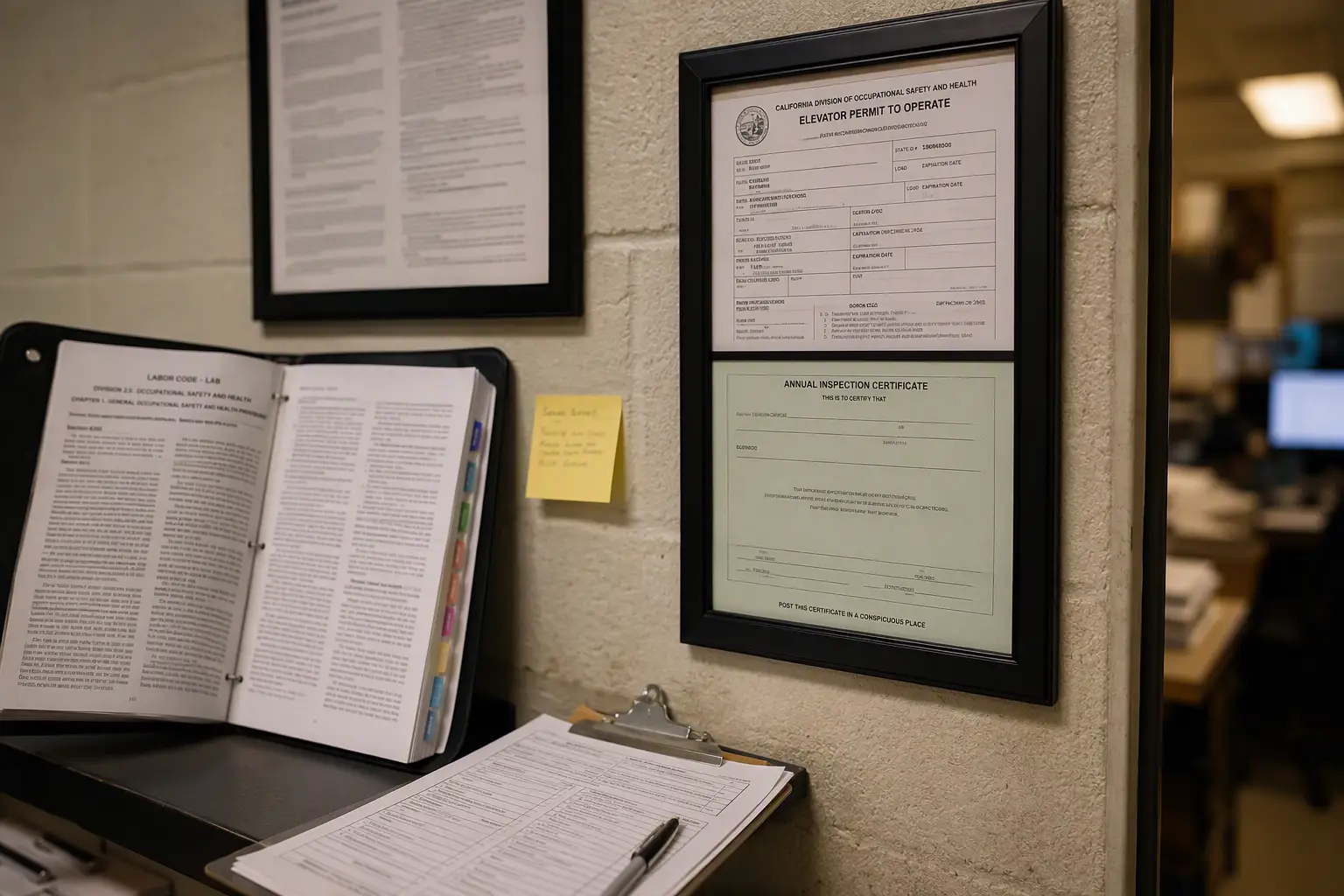
The foundational statute is California Labor Code Sections 7300–7324.2, which establishes the state’s authority over conveyance safety. Enforcement and permitting fall to the Division of Occupational Safety and Health (Cal/OSHA), Elevator Unit, California Department of Industrial Relations.
The technical requirements that repair contractors must follow are codified in the California Code of Regulations, Title 8, Elevator Safety Orders (Sections 3000–3146). For elevator installations with contracts signed on or after May 1, 2008, the adopted design and construction code is ASME A17.1/CSA B44, 2004 edition (Group IV Elevator Safety Orders).
Notably, California has proposed a Group V update to its Elevator Safety Orders that would incorporate portions of ASME A17.1-2019. The California Standards Board held a public hearing on this proposal on June 18, 2026. As of the time this page was written, no effective date has been posted for the updated rules — building owners and repair contractors should monitor the Cal/OSHA Elevator Unit for developments.
Los Angeles building owners should also be aware that the City of Los Angeles, Department of Building and Safety (LADBS), runs its own elevator and conveyance inspection program. Property managers in Los Angeles should confirm current local requirements directly with LADBS in addition to meeting state Cal/OSHA obligations.
Who Is Legally Allowed to Repair Elevators in California?
California law is explicit: only a Certified Competent Conveyance Mechanic (CCCM) working for a Certified Qualified Conveyance Company (CQCC) may maintain, repair, alter, or replace components on a conveyance. Both designations are issued and regulated by Cal/OSHA.
Anyone who works on an elevator in California without supervision must hold a valid CCCM certificate. A mechanic who is not CCCM-certified may work on an elevator only under the direct supervision of a certified mechanic. This is not an optional best practice — it is a statutory requirement.
At the company level, any business that installs, alters, tests, maintains, repairs, or services elevators in California must be certified by Cal/OSHA as a CQCC. To obtain CQCC certification, applicants must submit a current C-11 Elevator Contractor license — issued by the California Contractors State License Board (CSLB) — along with current certificates of workers’ compensation and liability insurance. The CSLB issues the C-11 license; Cal/OSHA handles permits, inspections, and CQCC/CCCM certification separately.
California CQCC, CCCM, and conveyance inspector certificates are valid for two years. Renewal requires a minimum of eight hours of continuing education, ensuring that repair personnel remain current with evolving codes and technology.
Liftech Elevator operates as a data-driven elevator service provider in California and works within this regulatory framework, serving building owners who need documented, compliant repair work.
What Permits Are Required Before Elevator Repair Work Begins?
California law requires a permit from Cal/OSHA before a conveyance is erected, installed, or materially altered. A repair that rises to the level of a material alteration — such as replacing a control system, modernizing drive components, or making structural changes — requires a permit before work begins, not after.
Routine maintenance and repair that does not constitute a material alteration generally does not require a pre-work permit, but all work must still be performed by a CCCM working for a CQCC. If there is any doubt about whether a scope of work triggers the material alteration permit requirement, the conservative and legally safe approach is to confirm with Cal/OSHA before beginning.
Additionally, no elevator may be operated in California without a valid, current permit to operate issued by Cal/OSHA. That permit must be posted conspicuously inside the elevator car at all times. An elevator operating without a posted, valid permit to operate is in violation of California law, regardless of the condition of the equipment.
How Often Must California Elevators Be Inspected?
California law requires every conveyance to be inspected at least once per year. An elevator found to be in safe condition receives a permit to operate valid for up to one year. However, if the elevator is covered by a full maintenance contract with a C-11 licensed elevator company, Cal/OSHA may issue a permit to operate for up to two years.
A critical compliance point: arranging the annual reinspection is the elevator owner’s responsibility — not the contractor’s and not Cal/OSHA’s. Building owners who allow their permit to lapse because they did not schedule an inspection are in violation of California law.
Only State of California safety engineers and Certified Competent Conveyance Inspectors (CCCI) may perform elevator inspections in California. An inspection report from anyone else is not valid for permit purposes.
| Requirement | Detail | Source |
|---|---|---|
| Minimum inspection frequency | At least once per year | Cal/OSHA Elevator Unit |
| Standard permit to operate term | Up to one year | Cal/OSHA Elevator Unit |
| Extended permit term (full maintenance contract) | Up to two years | Cal/OSHA Elevator Unit |
| Who arranges reinspection | Elevator owner | Cal/OSHA Elevator Unit |
| Who may inspect | CA safety engineers or CCCI-certified inspectors | Cal/OSHA Elevator Unit |
| Mechanic certification required for repair | CCCM, issued by Cal/OSHA | Cal/OSHA Elevator Unit |
| Company certification required | CQCC (requires C-11 license from CSLB) | Cal/OSHA Elevator Unit |
| Certificate renewal cycle | Every two years, with 8 hours continuing education | Cal/OSHA Elevator Unit |
What Does ASME A17.1 Require That Affects Repair Decisions?
The ASME A17.1 Safety Code for Elevators and Escalators is the technical standard that governs how elevators must be designed, installed, and maintained. California has adopted the 2004 edition for Group IV elevators. When a repair is performed, the work must conform to the edition of ASME A17.1 that was in effect when the elevator was installed or last materially altered, unless a specific California Elevator Safety Order requires otherwise.
Practically, this means that a repair contractor must evaluate which code edition applies to a specific elevator before specifying replacement parts or methods. Using a component or procedure that was permissible under a newer edition of the code but was not part of the applicable edition can create compliance complications at inspection.
For existing elevators, ASME A17.3, the Safety Code for Existing Elevators and Escalators, provides the retroactive safety standards framework. California’s adoption of ASME A17.3 requirements is reflected in the Elevator Safety Orders; repair contractors must be familiar with which retroactive requirements have been triggered by an alteration.
What Are the ADA Considerations for California Elevator Repairs?
The Americans with Disabilities Act (ADA) applies to public accommodations and commercial facilities throughout California. When elevator repair work involves components that affect accessibility — cab dimensions, door timing, control panel reach ranges, floor signage, or audible signals — the repair must not create a condition that reduces ADA compliance below what existed before the repair.
If a repair project triggers the legal threshold of an “alteration” under ADA, the altered elements and, in some cases, the path of travel to the elevator may need to be brought into current ADA Standards for Accessible Design. Building owners should evaluate the scope of any significant repair or modernization against ADA requirements before finalizing a scope of work.
Emergency communication within the elevator cab is an area where ADA and California building code intersect. The ADA requires a two-way means of communication in elevator cabs serving public or commercial buildings. Whether California’s current Elevator Safety Orders require visual or text-based communication alongside audible communication is an unsettled question — the Elevator Safety Orders adopt ASME A17.1-2004, while the 2025 California Building Code may add visual and audible two-way communication requirements. Building owners planning repairs or modernizations that touch communications equipment should verify current local requirements with their AHJ and legal counsel rather than relying solely on any single source.
What Typically Drives the Cost of Elevator Repairs in California?
Because every elevator system and building condition is different, elevator repair costs in California vary widely. The factors that most commonly influence total repair cost include:
- Scope of work: A routine safety device adjustment costs far less than a full hydraulic power unit replacement or control system modernization.
- Equipment age and parts availability: Older elevators, especially those manufactured before the 1990s, may require parts that are no longer in standard production, increasing lead times and component costs.
- Regulatory compliance requirements: If a repair triggers material alteration status under California’s Elevator Safety Orders, Cal/OSHA permit fees and a post-repair inspection add to total project cost.
- Labor certification requirements: California’s CCCM and CQCC requirements mean that repair labor must be performed by credentialed technicians, which reflects in pricing compared to states with less stringent licensing frameworks.
- Downtime and building type: High-occupancy residential buildings, hospitals, and commercial towers face greater operational pressure to minimize elevator downtime, which can affect scheduling and logistics costs.
- Local jurisdiction: Properties in Los Angeles subject to LADBS jurisdiction may face additional inspection or permitting steps beyond state Cal/OSHA requirements.
Liftech Elevator approaches repair assessments with an emphasis on documenting the regulatory status of each conveyance — including permit validity, inspection history, and code edition applicability — before recommending a repair scope. This data-first approach helps building owners understand not just what is broken, but what the compliance implications of repair or deferral are.
What Should a Building Owner Do When an Elevator Fails or Is Taken Out of Service?
- Secure the elevator immediately. If the elevator has stopped unexpectedly, do not attempt to restart it. Ensure that no passengers are trapped; if passengers are trapped, contact emergency services and a CQCC-certified company to conduct a safe passenger retrieval.
- Contact a CQCC-certified repair company. Only a company with a valid CQCC certification and mechanics holding CCCM credentials may perform diagnostic and repair work. Verify both credentials with Cal/OSHA before authorizing any work.
- Do not return the elevator to service until it has passed inspection. No elevator may legally operate without a current, valid permit to operate. If a failure has voided or suspended the permit status, the elevator must be inspected by a CCCI or Cal/OSHA safety engineer and a new permit obtained before it is used again.
- Determine whether the repair constitutes a material alteration. If it does, a Cal/OSHA permit is required before work begins. The repair contractor and the building owner should align on this determination in writing before the project starts.
- Notify your insurance carrier. An elevator that has failed or been out of service may trigger reporting obligations under property or liability coverage. Review your policy and notify your insurer promptly.
- Update your maintenance records. California’s regulatory framework requires that maintenance and repair records be available to Cal/OSHA inspectors. Document all repair work with dates, scope, parts used, and the CCCM credentials of the mechanic who performed the work.
- Schedule the post-repair inspection. If the repair required a Cal/OSHA permit, an inspection must be conducted before the elevator is returned to service. Even for repairs that do not require a permit, coordinating with a CCCI or Cal/OSHA safety engineer to verify the elevator is in safe condition before reopening it to occupants is a sound practice.
How Do 2025–2026 Industry Trends Affect Elevator Repair Decisions in California?
Several converging trends are shaping how California building owners and elevator repair contractors approach repair versus modernization decisions in 2025 and 2026.
Code evolution pressure: The pending Group V update to California’s Elevator Safety Orders — which would incorporate elements of ASME A17.1-2019 — creates a horizon event for building owners. While no effective date has been set, modernizations undertaken in 2026 may be designed with the forthcoming requirements in mind to avoid near-term re-work.
Aging equipment stock: A significant portion of California’s elevator fleet was installed during commercial construction booms in the 1970s, 1980s, and 1990s. Equipment at the 30-to-50-year mark is increasingly difficult to repair on a component-by-component basis as parts availability shrinks and original manufacturers discontinue support for legacy control systems.
Remote monitoring and predictive maintenance: Building owners and property managers are increasingly adopting remote diagnostic platforms that monitor elevator performance parameters — door operations, motor temperatures, trip counts — in real time. These systems allow maintenance teams to identify developing faults before they become failures, reducing the frequency of emergency repair calls and the associated costs.
Supply chain normalization with pockets of delay: Global component supply chains have stabilized from the acute disruptions of the early 2020s, but specialty elevator components — particularly for older hydraulic systems and legacy relay-logic controllers — remain subject to extended lead times from select manufacturers.
Workforce certification pressure: California’s requirement that every working mechanic hold CCCM certification, combined with two-year renewal cycles and continuing education requirements, creates ongoing workforce management challenges for elevator companies. Building owners evaluating repair vendors should ask about contractor capacity and technician certification status as part of the vendor selection process.
What Is the Difference Between Elevator Repair, Maintenance, and Modernization?
These three service categories are often conflated, but they carry different regulatory and financial implications in California.
Maintenance refers to routine, scheduled work performed to keep a code-compliant elevator in safe operating condition — lubrication, adjustment, safety device testing, and minor part replacement. A full maintenance contract with a C-11 licensed elevator company can qualify a building for Cal/OSHA’s extended two-year permit to operate.
Repair addresses specific failures or deficiencies — replacing a worn door motor, repairing a frayed traveling cable, or restoring a failed hydraulic valve. Repairs must be performed by CCCM-certified mechanics working for a CQCC-certified company. Whether a repair constitutes a material alteration requiring a Cal/OSHA permit before work begins depends on the nature and extent of the work.
Modernization typically involves replacing major systems — controls, drives, cabs, or entire hydraulic power units — and almost always constitutes a material alteration requiring a Cal/OSHA permit, a post-completion inspection, and a new permit to operate before the elevator returns to service. Modernization projects must also be evaluated for ADA compliance implications.
What Exemptions Apply to California’s Elevator Safety Requirements?
California’s elevator law includes two significant exemptions. First, conveyances under federal jurisdiction — such as elevators in federal government buildings — are exempt from state Cal/OSHA oversight and are instead governed by federal authority. Second, conveyances in single-unit private homes that are not accessible to the public are exempt from the permitting and inspection requirements that apply to commercial and multi-tenant residential properties.
These exemptions are narrow. Multi-unit residential buildings, mixed-use properties, commercial buildings, and any property accessible to the public do not qualify. Building owners who believe their property may fall under an exemption should verify that determination with Cal/OSHA before treating their elevator as outside the regulatory framework.
How Should a California Building Owner Evaluate an Elevator Repair Contractor?
Given the legal requirements governing who may perform elevator repair work in California, contractor evaluation should focus on documented compliance credentials, not just price or proximity. Key questions to ask include:
- Is the company certified as a CQCC by Cal/OSHA? (Verify directly at Cal/OSHA’s Elevator Unit.)
- Does the company hold a current C-11 Elevator Contractor license from the CSLB?
- Are the mechanics who will perform work on your elevator CCCM-certified by Cal/OSHA?
- Does the company carry current workers’ compensation and liability insurance?
- Can the company document its experience with the specific type of elevator equipment in your building (hydraulic, traction, MRL, etc.)?
- Will the company manage Cal/OSHA permit applications if the repair constitutes a material alteration?
- Does the company offer full maintenance contracts that qualify the building for Cal/OSHA’s extended two-year permit to operate?
Liftech Elevator maintains the California regulatory credentials required to perform repair, maintenance, and modernization work, and emphasizes transparent documentation of compliance status for each project it manages.
What OSHA Requirements Apply to Elevator Repair Workers in California?
At the federal level, OSHA standards govern workplace safety for the repair technicians performing elevator work. Relevant OSHA standards address confined space entry, electrical safety, lockout/tagout procedures, and fall protection — all of which are directly applicable to elevator machine rooms and hoistways. California’s Cal/OSHA program operates as a state plan under federal OSHA, meaning that California enforces its own occupational safety standards that must be at least as effective as federal OSHA requirements.
Building owners bear some responsibility for ensuring that contractors working in their facilities operate under compliant safety programs. Requesting confirmation that a repair contractor maintains a written safety program, conducts regular safety training, and complies with applicable OSHA standards is a reasonable and prudent step in the contractor selection process.
Contact Liftech Elevator for a free elevator assessment at 562-997-3639.
Need elevator service you can rely on? Liftech Elevator is ready to help.