Elevator Service in Signal, CA | Liftech Elevator
Elevator load testing is a critical safety procedure for any building owner or property manager in Los Angeles and the surrounding communities. In Signal, CA, buildings that rely on passenger or freight elevators must meet California’s strict compliance framework before those units are placed in service and throughout their operational life. Liftech Elevator brings deep local knowledge of Los Angeles area requirements, the city’s own inspection program, and the state regulatory structure that governs every conveyance in California.
What Is Elevator Load Testing and Why Is It Required in Los Angeles?
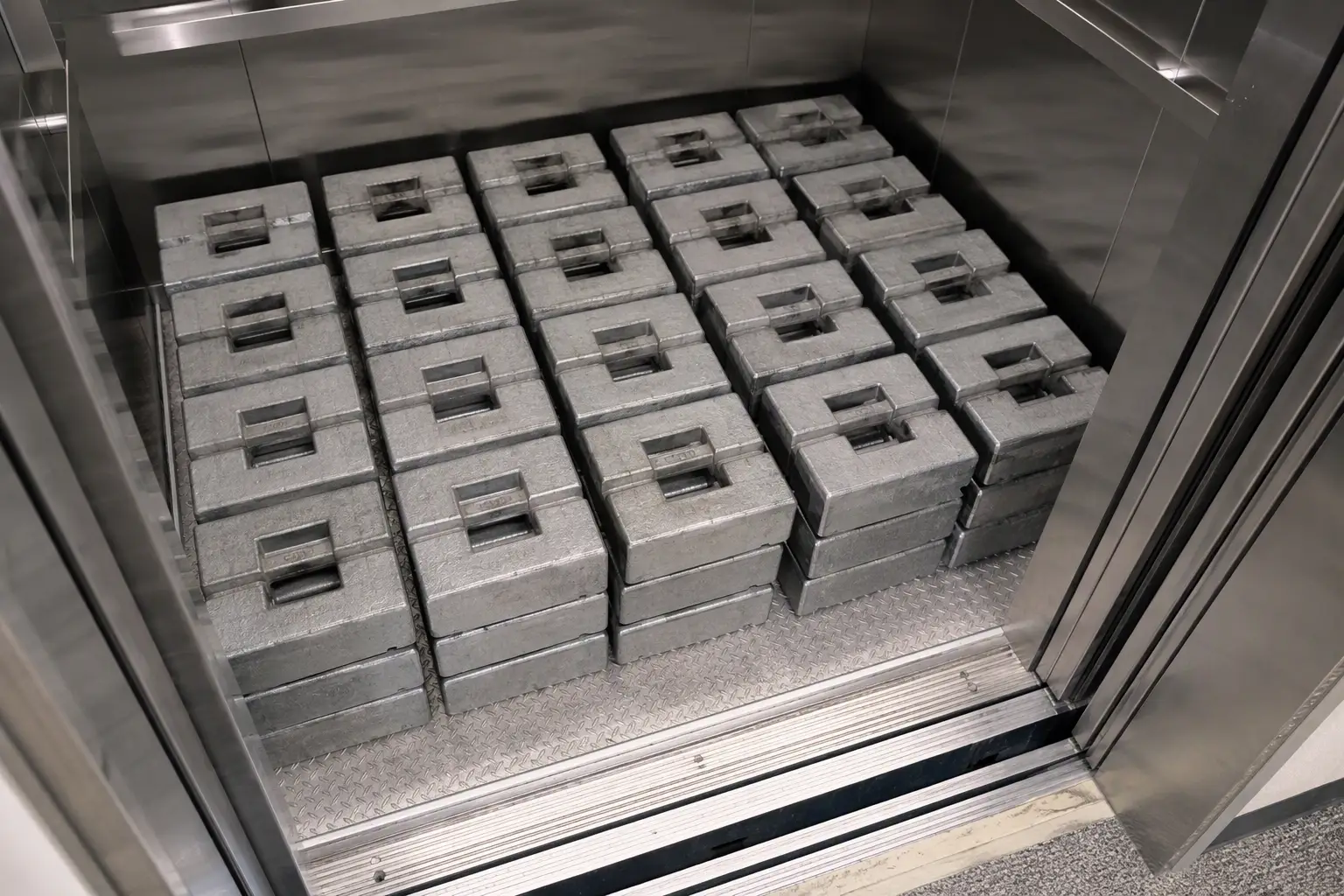
Load testing confirms that an elevator can safely support and move its rated capacity—and typically a percentage above that—without structural failure, brake slip, or safety device malfunction. In California, elevator installations and material alterations require a permit from Cal/OSHA’s Elevator Unit, California Department of Industrial Relations before work begins, and no new elevator may be placed in service until Cal/OSHA has inspected it and issued a permit to operate. Load testing is a standard component of that commissioning process.
Los Angeles operates its own elevator and conveyance inspection program through the City of Los Angeles Department of Building and Safety (LADBS). Building owners in Signal and across the broader Los Angeles area should be prepared to satisfy requirements at both the state and local authority level. Liftech Elevator works within both frameworks to keep clients in full compliance.
What California Law Governs Elevator Load Testing?
California’s elevator safety requirements are established under California Labor Code Sections 7300–7324.2 and implemented through the California Code of Regulations, Title 8, Elevator Safety Orders (Sections 3000–3146). The state adopted the ASME A17.1/CSA B44 Safety Code for Elevators and Escalators, 2004 edition, effective May 1, 2008, for installation contracts signed on or after that date. This edition defines the testing protocols, load requirements, and safety device verification procedures that apply to conveyances in California as of 2026.
California has proposed a Group V update to its Elevator Safety Orders that would incorporate portions of ASME A17.1-2019; the Standards Board held a public hearing on June 18, 2026, but no effective date has been posted. Liftech Elevator monitors regulatory developments so clients in Signal and Los Angeles can plan ahead.
Who Is Legally Permitted to Perform Load Testing in California?
California law is explicit on this point. Only a company certified by Cal/OSHA as a Certified Qualified Conveyance Company (CQCC) may maintain, repair, alter, or test elevators in the state. Every mechanic performing hands-on work without direct supervision must hold a Certified Competent Conveyance Mechanic (CCCM) certification issued by Cal/OSHA. To obtain CQCC status, a company must hold a C-11 Elevator Contractor license issued by the California Contractors State License Board (CSLB) and carry current workers’ compensation and liability insurance. CQCC, CCCM, and inspector certificates are valid for two years and require at least eight hours of continuing education for renewal. Liftech Elevator holds the required California credentials to perform load testing legally and safely in Signal and throughout Los Angeles.
How Does the California Annual Inspection and Permit Process Work?
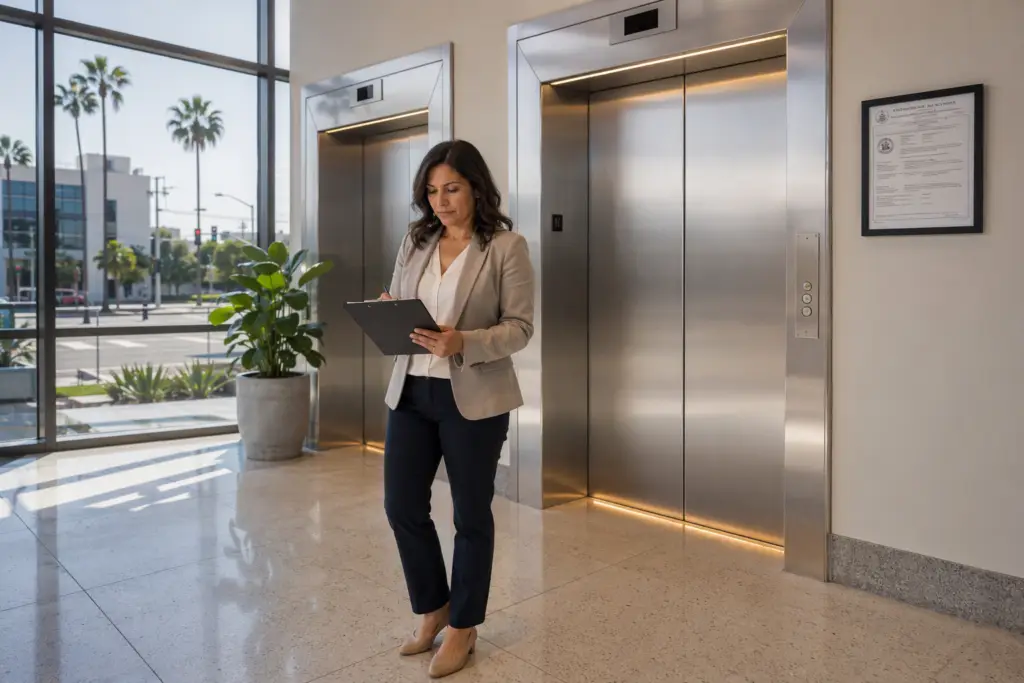
California law requires every conveyance to be inspected at least once per year. Only State of California safety engineers and Certified Competent Conveyance Inspectors (CCCI) may perform these inspections. A conveyance found safe receives a permit to operate for up to one year. Where a building owner has a full maintenance contract in place with a CQCC-certified company holding a C-11 license, Cal/OSHA may issue a permit to operate for up to two years. The permit to operate must be posted conspicuously inside the elevator car, and arranging the annual reinspection is the elevator owner’s responsibility. Liftech Elevator helps property managers in Signal and across Los Angeles track inspection cycles and coordinate with the appropriate authorities to keep permits current.
What Steps Are Involved in an Elevator Load Test?
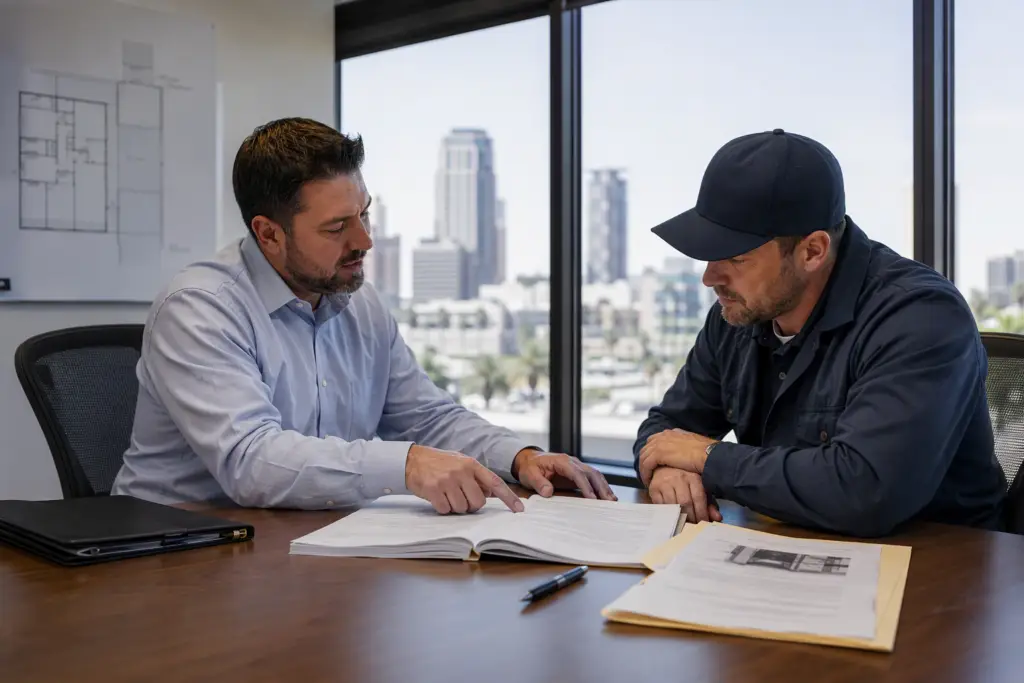
- Pre-test documentation review: Confirm the permit to operate, maintenance records, and any Cal/OSHA or LADBS correspondence are in order before testing begins.
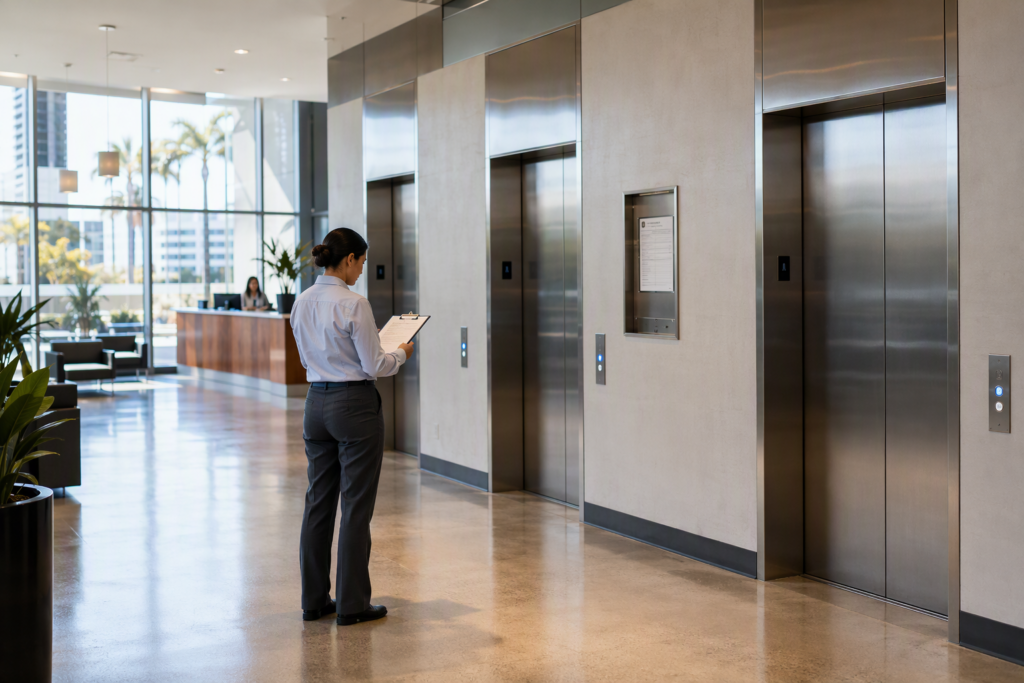
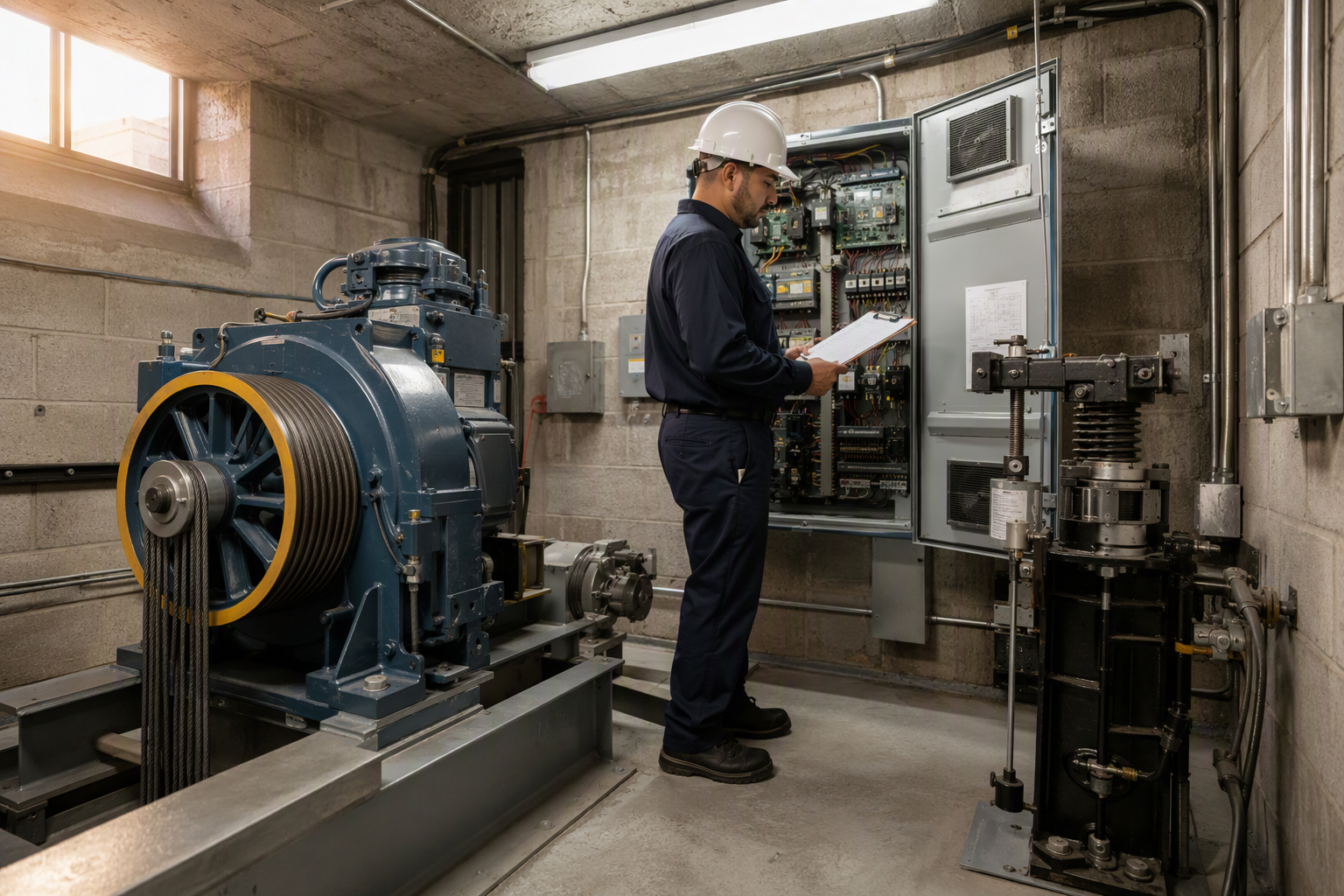
- Visual and mechanical inspection: CCCM-certified mechanics inspect the car, sling, buffers, safeties, governor, brakes, and hoistway equipment for visible defects or wear.
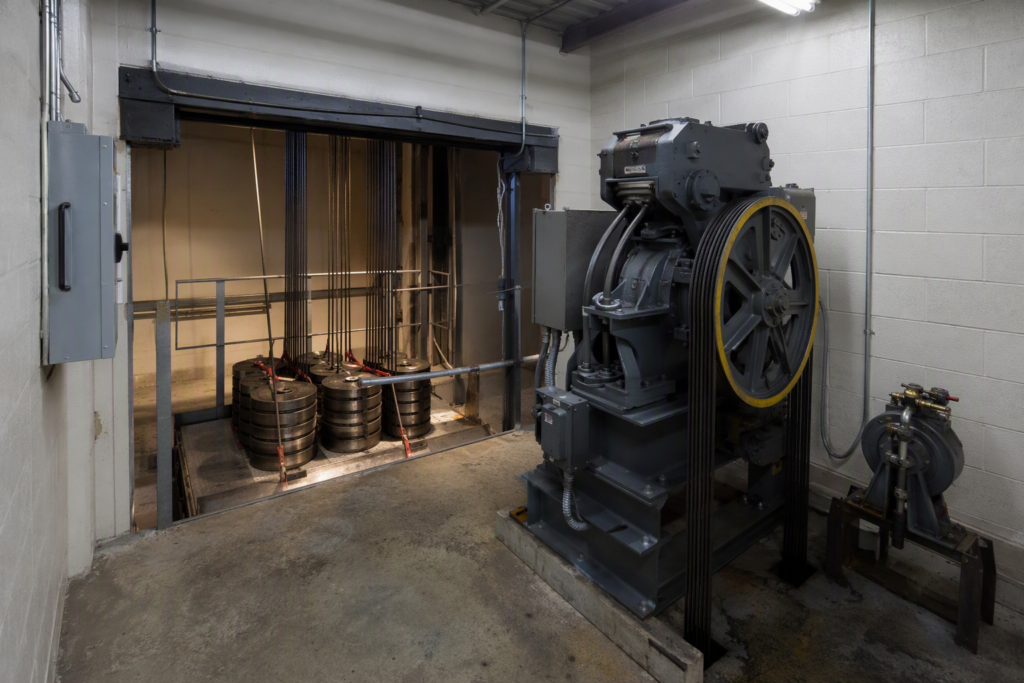
- Loading the car: Calibrated weights are loaded to the rated capacity and, where required by the applicable ASME code, above rated capacity to verify structural and mechanical integrity.
- Brake and safety device testing: The car is run at rated speed and brought to a controlled stop to verify brake holding capacity under load.
- Safety governor and car safety test: The overspeed governor is tested to confirm it trips and engages the car safety at the correct speed.
- Buffer test (where required): Oil or spring buffers are engaged under load to confirm they absorb energy within design limits.
- Documentation and reporting: Results are recorded and submitted as required by Cal/OSHA and, where applicable, LADBS, to support permit issuance or renewal.
How Often Should Elevators in Los Angeles Undergo Load Testing?
California’s annual inspection requirement covers general safety, but certain load and safety device tests are tied to specific intervals defined under the ASME A17.1/CSA B44 code adopted by the state. Full load tests and car safety tests are typically required at periodic intervals or following a material alteration. When a conveyance undergoes a material alteration, a new Cal/OSHA permit must be obtained before the unit returns to service, and a new inspection—including applicable load tests—is part of that process. Building owners in Signal should not wait for a compliance notice; proactive scheduling with a qualified CQCC such as Liftech Elevator helps avoid operational downtime and potential Cal/OSHA violations.
What Happens if an Elevator Fails a Load Test?
If a conveyance does not pass a load test, it must be taken out of service until the deficiency is corrected. Cal/OSHA has authority under California Labor Code Sections 7300–7324.2 to order a unit shut down, and operating an elevator without a valid, current permit to operate is a violation of California law. Liftech Elevator’s CCCM-certified mechanics diagnose the cause of any failure, perform the necessary repairs, and coordinate the follow-up inspection needed to reinstate the permit to operate. Acting quickly limits liability for building owners and minimizes disruption for tenants and visitors in Signal and the greater Los Angeles area.
Does the ADA Affect Elevator Load Testing in Los Angeles?
The Americans with Disabilities Act (ADA) sets accessibility requirements for elevators in public accommodations and commercial facilities, including minimum car dimensions and door timing. While the ADA does not itself prescribe load test procedures, a failed structural or mechanical component discovered during load testing may affect ADA compliance if it prevents the elevator from operating reliably for all users. Liftech Elevator considers accessibility requirements alongside California’s safety codes when advising clients in Signal and Los Angeles on repair or modernization following any test failure.
Why Choose Liftech Elevator for Load Testing in Signal and Los Angeles?
Liftech Elevator serves commercial, residential, healthcare, and industrial clients throughout the Los Angeles area, including Signal, CA. The company holds the California CQCC certification and C-11 license required by state law, and its mechanics carry CCCM certification from Cal/OSHA. Liftech Elevator understands the dual compliance environment created by both Cal/OSHA’s statewide program and the City of Los Angeles’s own conveyance inspection program administered through LADBS. That local knowledge reduces delays, helps property owners coordinate with the right authorities, and keeps elevators in lawful service. Emergency support is available for situations where an elevator must be assessed urgently to restore service or address a safety concern.
Schedule a free consultation with Liftech Elevator at 562-997-3639.
Need elevator service you can rely on? Liftech Elevator is ready to help.