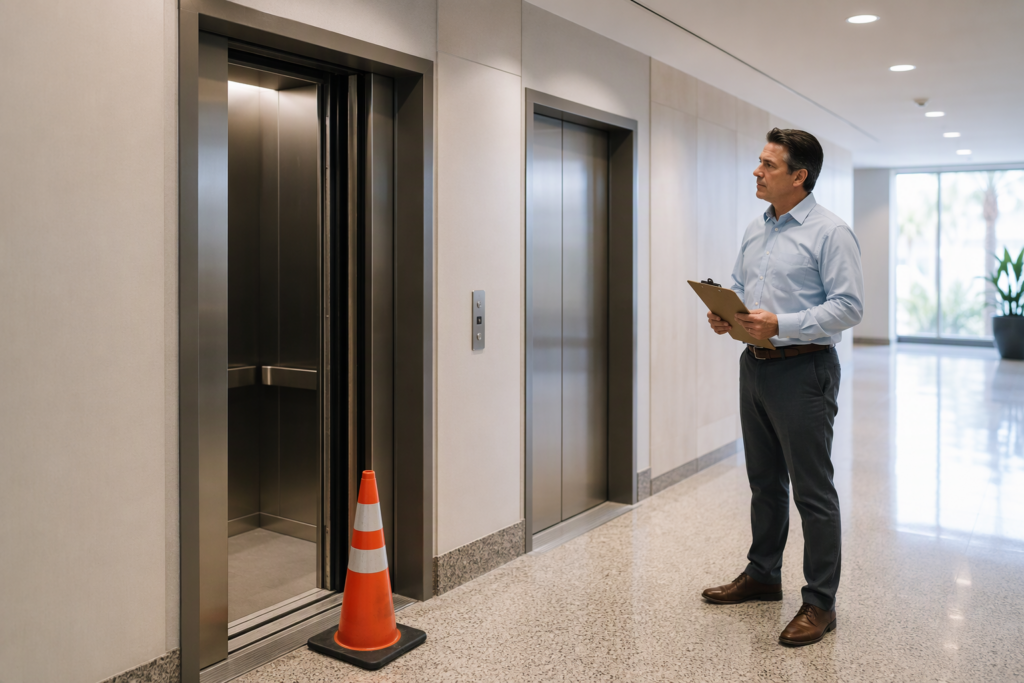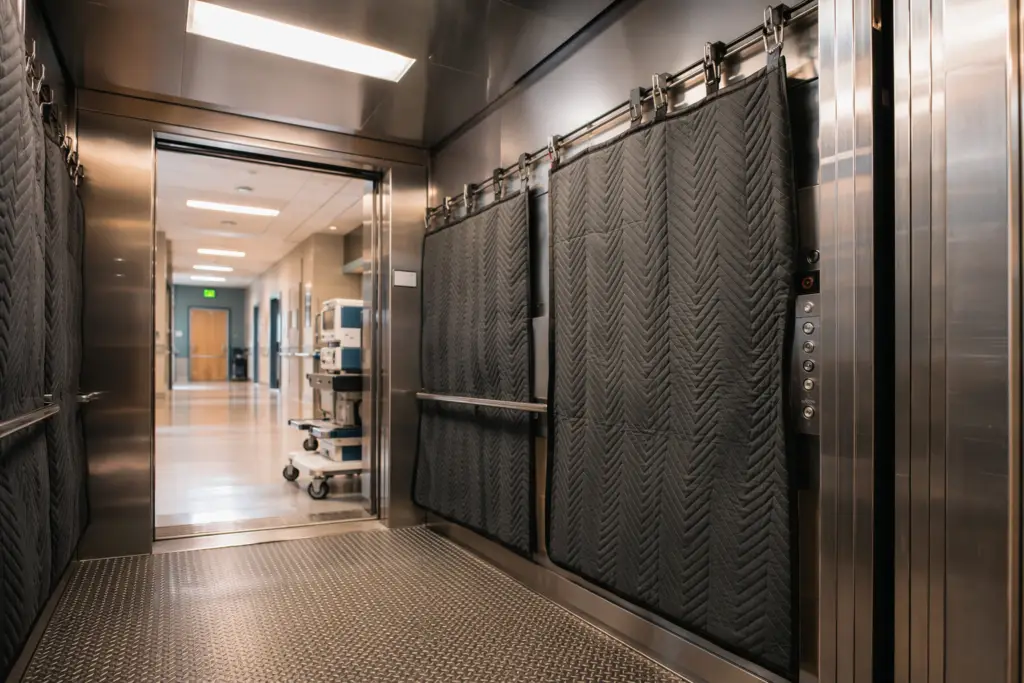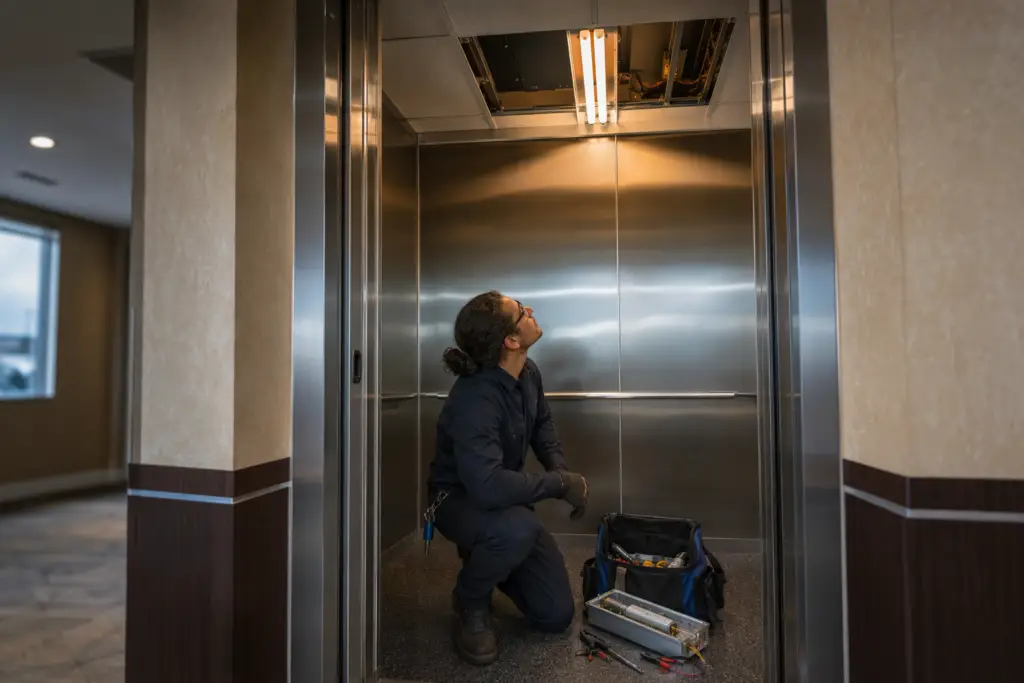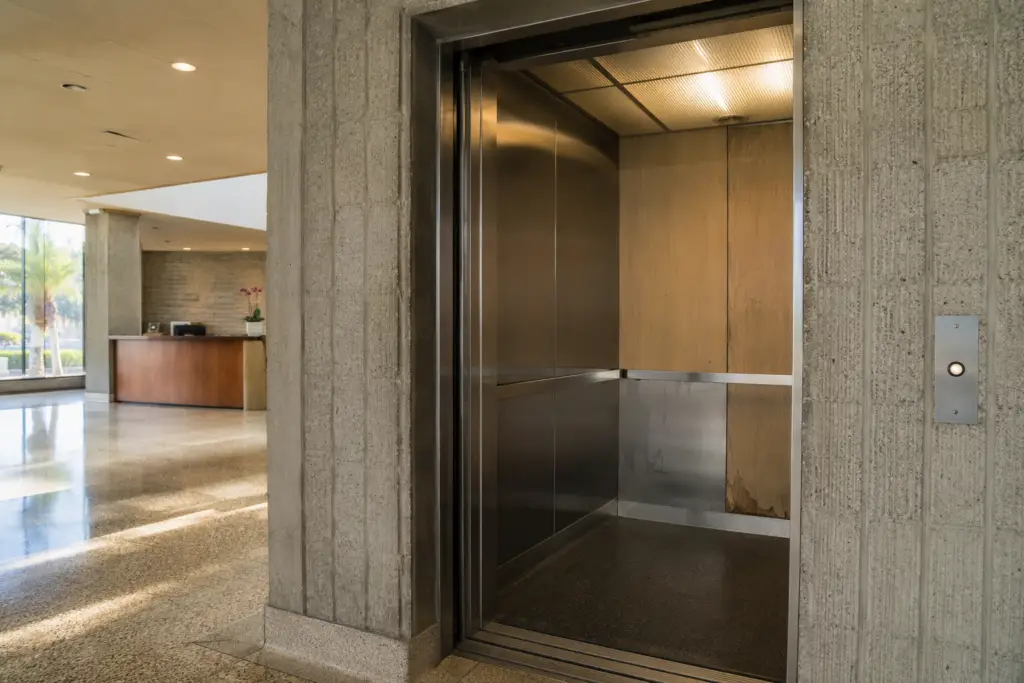
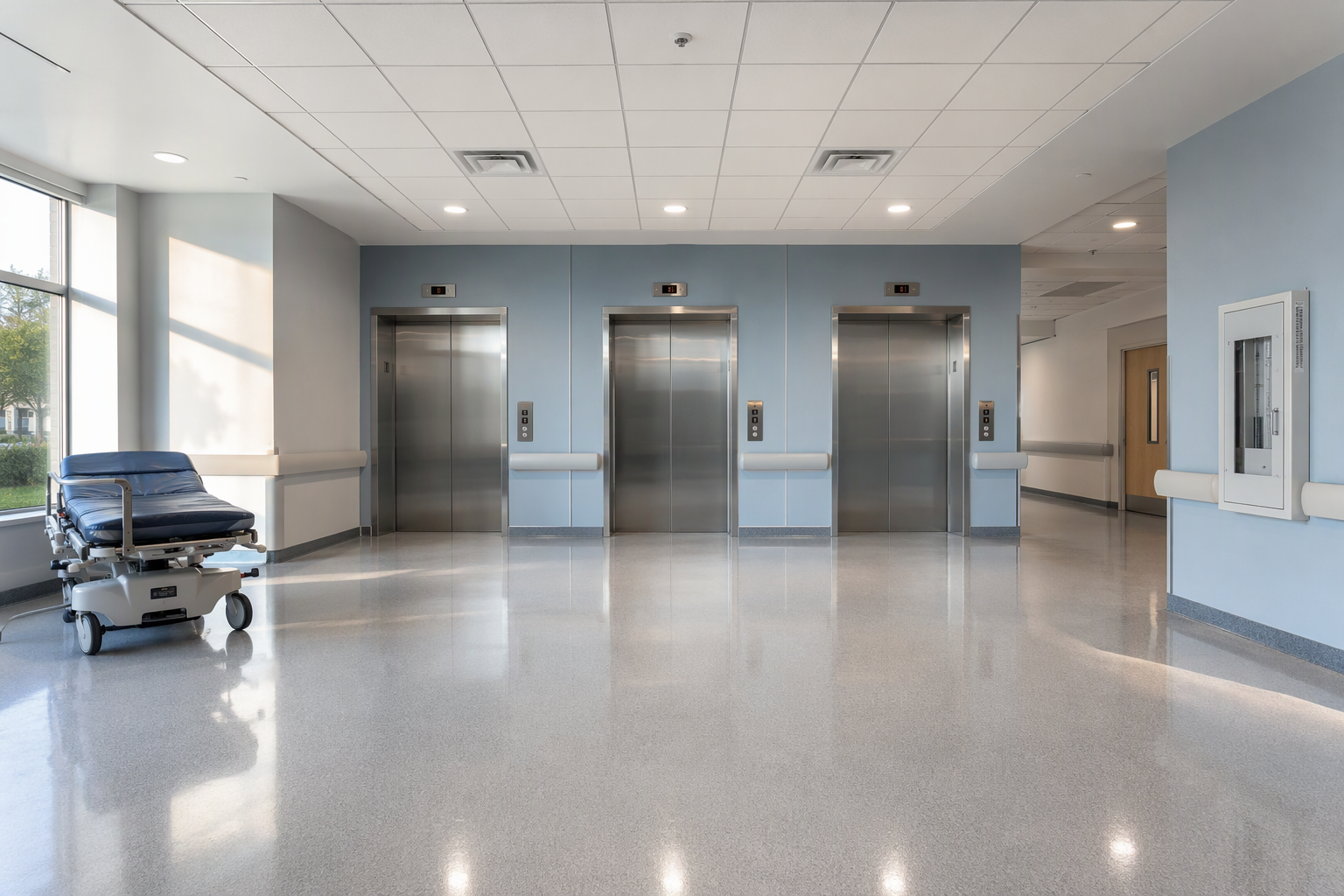
Hospitals operate some of the most heavily trafficked vertical transportation equipment in California. Patient stretchers, medication carts, surgical equipment, and thousands of daily staff and visitor trips place extraordinary demands on elevator systems that, by law, must be inspected and permitted before they remain in service. When a healthcare facility commissions a property condition assessment (PCA), the elevator component is not a checkbox — it is a layered compliance, safety, and capital planning exercise governed by California statute, federal accessibility law, and nationally recognized safety codes.
This page answers the most common questions facilities managers, healthcare real estate teams, and property condition assessors ask about hospital elevator inspections in California in 2026.
What Is a Hospital Elevator Inspection in the Context of a Property Condition Assessment?
A property condition assessment is a systematic review of a building’s physical systems to identify deferred maintenance, code deficiencies, and capital expenditure obligations. For a hospital, the elevator component of a PCA evaluates whether installed conveyances — passenger elevators, service elevators, bed elevators, and dumbwaiters — are legally permitted, mechanically sound, and compliant with applicable codes.
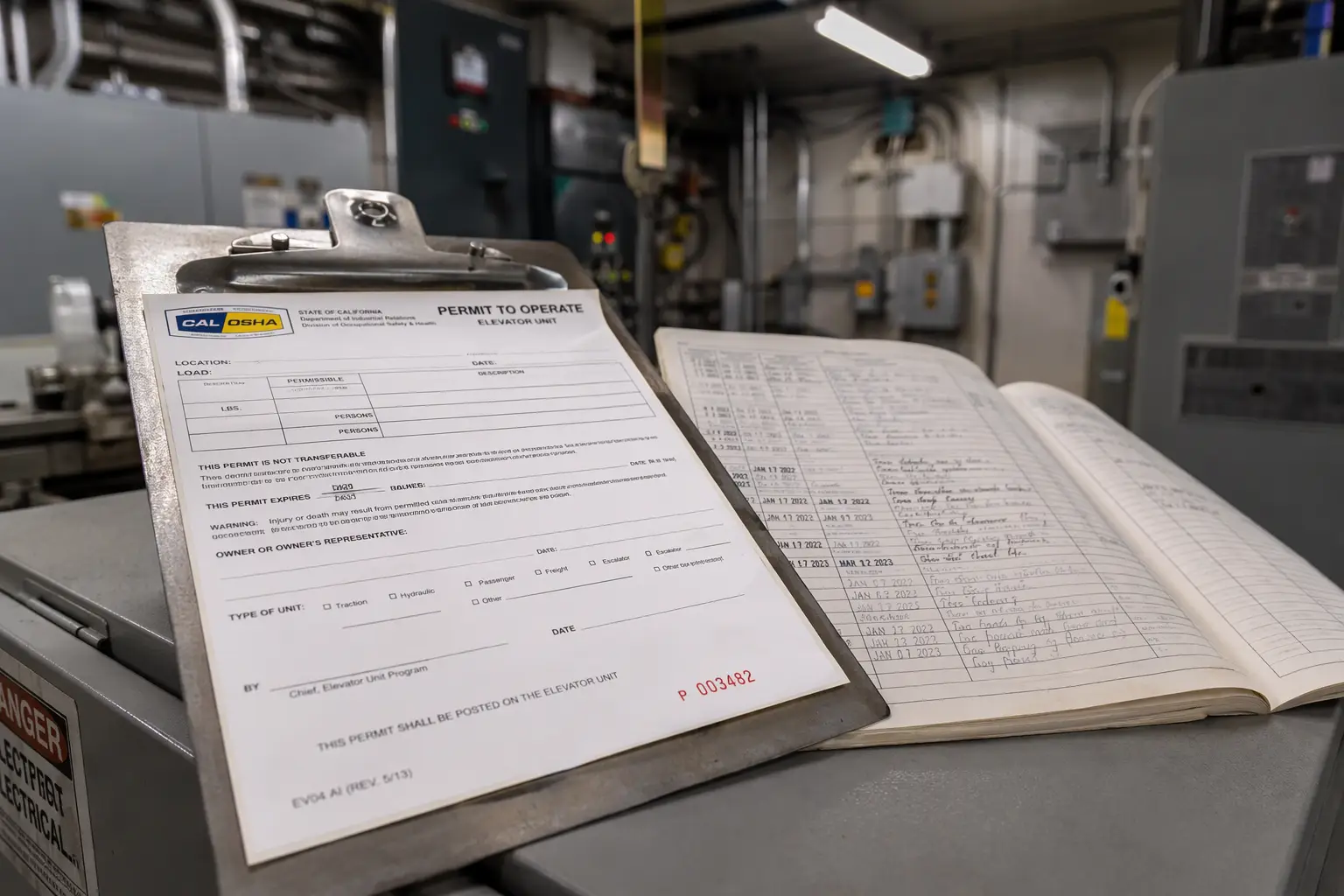
In California, this means verifying compliance with the California Code of Regulations, Title 8, Elevator Safety Orders and the ASME A17.1/CSA B44 Safety Code for Elevators and Escalators, which California adopted in its 2004 edition (effective May 1, 2008, for installations contracted on or after that date). It also involves a review of permit-to-operate documentation, inspection history, and maintenance records.
Liftech Elevator supports hospital PCAs by providing technical documentation reviews, field observations of elevator condition, maintenance contract analysis, and guidance on what a compliant reinspection pathway looks like under California law.
Who Is Legally Authorized to Inspect Elevators in California?

This is one of the most misunderstood aspects of elevator compliance in California. Under California Labor Code Sections 7300–7324.2, only two categories of inspectors may legally perform elevator inspections for the purpose of issuing a permit to operate:
- State of California Safety Engineers employed by the Cal/OSHA Elevator Unit, California Department of Industrial Relations
- Certified Competent Conveyance Inspectors (CCCI) certified by Cal/OSHA
No other individual or company — regardless of their qualifications — may conduct a legally recognized permit inspection in California. This means a hospital cannot simply hire any elevator technician or general contractor to perform the statutory annual inspection. The inspection must be conducted by or under the authority of the Cal/OSHA Elevator Unit or a Cal/OSHA-certified CCCI.
What Liftech Elevator provides is distinct: pre-inspection readiness assessments, technical documentation support, maintenance condition evaluations, and capital planning guidance — work that positions a hospital’s elevator fleet for a successful statutory inspection and permit renewal.
What Are the Annual Inspection and Permit Requirements for Hospital Elevators in California?
California law is explicit on this point. Under the California Elevator Safety Orders:
- Every conveyance must be inspected at least once per year.
- A conveyance found to be in safe condition receives a permit to operate for up to one year.
- If the conveyance is covered by a full maintenance contract with a C-11 licensed elevator company, Cal/OSHA may issue a permit to operate for up to two years.
- The permit to operate must be posted conspicuously inside the elevator car.
- No elevator may be operated in California without a valid, current permit to operate issued by Cal/OSHA.
- Arranging the annual reinspection is the elevator owner’s responsibility — not the state’s and not automatically the maintenance contractor’s.
For a hospital with ten, twenty, or more conveyances, this responsibility creates a significant administrative and compliance management burden. A PCA is an ideal moment to audit whether every unit has a current, posted permit and whether reinspection appointments have been scheduled.
What Credentials Must an Elevator Company Hold to Work on Hospital Elevators in California?
California imposes a dual-credential requirement on elevator companies. Any company that installs, alters, tests, maintains, repairs, or services elevators in California must hold two distinct credentials:
- A C-11 Elevator Contractor license issued by the California Contractors State License Board (CSLB). (Note: while CSLB issues the C-11, permits to operate and company certification are administered by Cal/OSHA.)
- Certification as a Certified Qualified Conveyance Company (CQCC) issued by Cal/OSHA.
Additionally, every technician who works on a California elevator without direct supervision must be certified by Cal/OSHA as a Certified Competent Conveyance Mechanic (CCCM). CQCC, CCCM, and conveyance inspector certificates are valid for two years, and renewal requires at least eight hours of continuing education.
When a hospital property condition assessment evaluates elevator vendors, verifying both the C-11 license and the CQCC certification is a minimum due diligence requirement. Liftech Elevator operates within this California credential framework.
What Does a Hospital Elevator Condition Assessment Actually Examine?
A thorough hospital elevator condition assessment goes beyond permit documentation. The following components are typically examined during a technical field review:
- Permit to operate status — current, expired, or missing for each unit
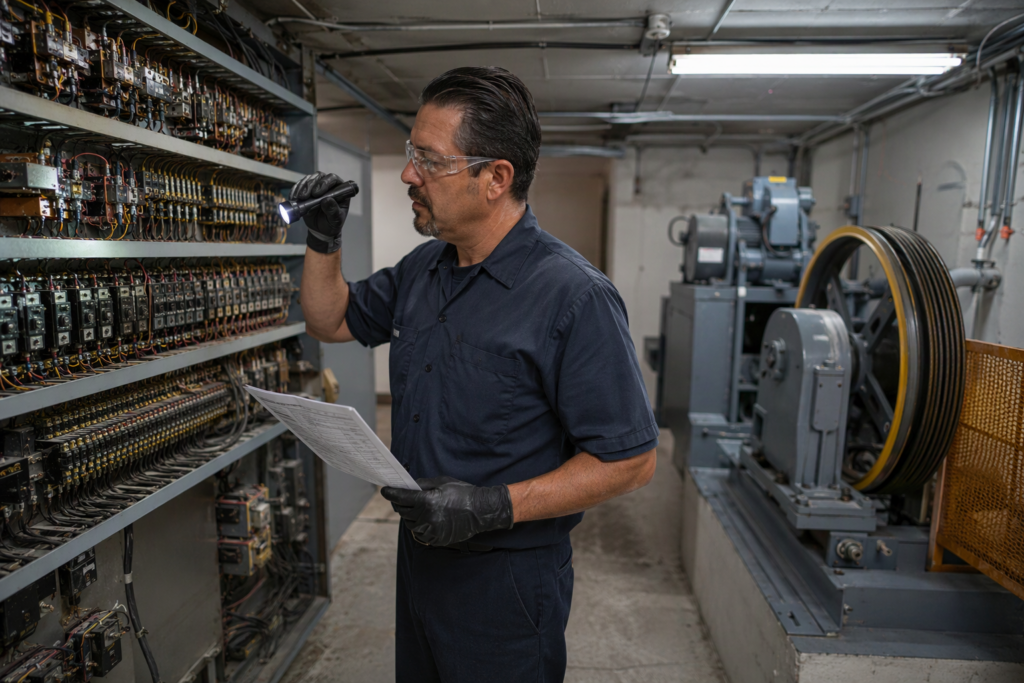
- Machine room and hoistway condition — cleanliness, lighting, structural integrity, temperature controls critical for sensitive hospital environments
- Door systems — closing force, reopening devices, sill condition, and functionality under hospital traffic (beds, carts, IV poles)
- Load capacity and rated speed — suitability for bariatric equipment, stretchers, and service loads
- Emergency communication systems — compliance with applicable accessibility and life safety requirements under the Americans with Disabilities Act
- Leveling accuracy — critical in hospitals where threshold gaps can be a fall hazard for patients in beds or wheelchairs
- Hydraulic systems — oil leaks, cylinder condition, and environmental containment requirements
- Maintenance records and log books — evidence of a full maintenance contract and routine service visits
- Capital expenditure planning — age, component life remaining, and estimated modernization timelines
How Does ADA Compliance Factor Into a Hospital Elevator PCA?
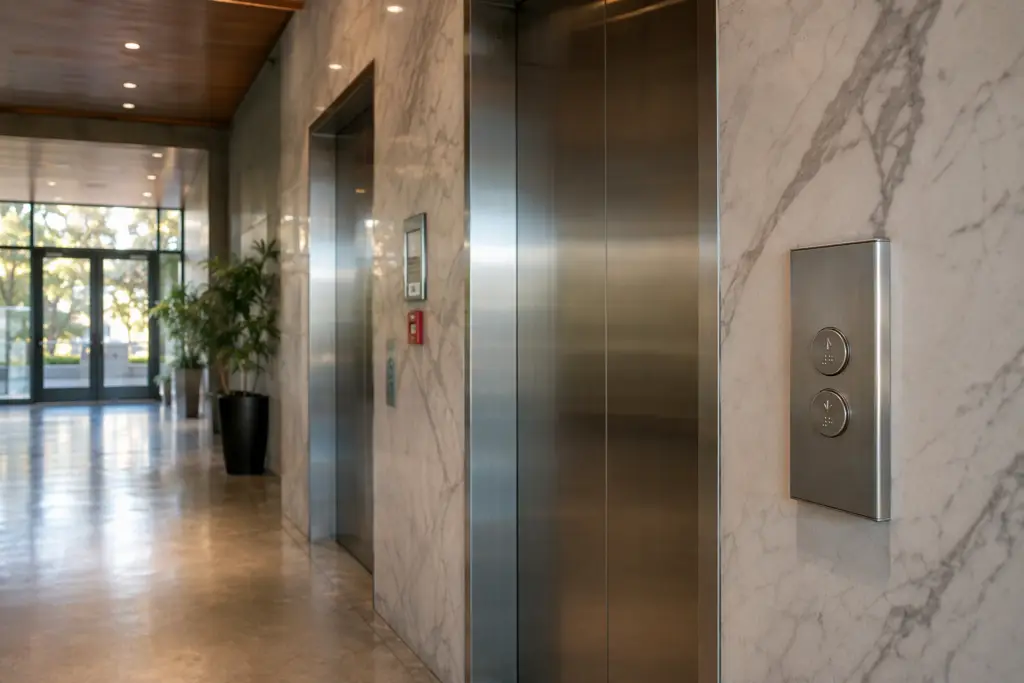
The Americans with Disabilities Act imposes accessibility requirements on elevators in public accommodations and commercial facilities, including hospitals. ADA Standards for Accessible Design address elevator cab dimensions, door widths, control panel reach ranges, Braille and raised character signage, and audible and visual floor indicators.
For hospitals, ADA compliance is not merely a legal obligation — it is a patient safety and care delivery issue. A PCA that identifies ADA deficiencies in elevator controls, cab dimensions, or signage gives the hospital’s facilities team an actionable remediation list with capital cost implications. Liftech Elevator’s assessment support includes identifying observable ADA-related conditions during field review.
It is worth noting that California’s adoption of ASME A17.1-2004 governs the technical safety standards for elevator equipment, while the ADA governs accessibility. Both apply to a hospital elevator fleet, and they address different — though sometimes overlapping — aspects of compliance.
What OSHA Considerations Apply to Hospital Elevators?
The federal Occupational Safety and Health Administration (OSHA) has jurisdiction over workplace safety conditions, which can intersect with elevator operation in hospitals — particularly regarding machine room safety, lockout/tagout procedures for maintenance work, and worker exposure to electrical and mechanical hazards. OSHA standards apply to the work performed on elevators by maintenance personnel, not to the elevator’s operation for passengers.
In California, the Division of Occupational Safety and Health (Cal/OSHA) also administers the state elevator safety program as a distinct function. A hospital PCA that surfaces maintenance deficiencies should consider both the equipment compliance dimension (Cal/OSHA Elevator Unit) and the worker safety dimension (OSHA / Cal/OSHA workplace standards).
How Do Hospital Elevator Requirements Differ From Standard Commercial Elevators?
Hospital elevators face a distinct set of operational demands that influence both condition assessment criteria and capital planning priorities:
- Load and traffic intensity — Hospitals operate elevators continuously, often 24 hours a day, with heavy payloads from beds, medical equipment, and supply carts. This accelerates wear on doors, guide rails, and drive systems at a rate that differs significantly from a typical office building.
- Infection control — Surface materials in hospital elevator cabs must meet hygiene standards. A PCA should note damaged flooring, cab wall condition, and ventilation systems that may harbor pathogens.
- Dedicated service and bed elevators — Many hospitals maintain separate elevators for patient transport and service functions, each with specific capacity and cab dimension requirements. If these units are inadequate for current patient transport equipment, the PCA should flag this.
- Emergency power and life safety integration — Hospital elevators are typically integrated into emergency power systems and fire service recall protocols, the condition and reliability of which are critical PCA items.
- Downtime tolerance — A hospital has near-zero tolerance for elevator downtime, particularly for bed and service elevators. The PCA’s capital planning recommendations should account for modernization scheduling that minimizes operational disruption.
What Is the Process for Scheduling a Hospital Elevator Inspection in California?
- Identify all conveyances on the property — Compile a complete inventory of every elevator, escalator, dumbwaiter, and moving walk, including unit numbers and locations.
- Audit current permit-to-operate status — Verify that each unit has a current, posted permit to operate issued by the Cal/OSHA Elevator Unit. Identify any expired or missing permits.
- Review maintenance contract coverage — Confirm whether a full maintenance contract with a CQCC-certified, C-11-licensed company is in place for each unit, as this affects permit duration eligibility.
- Engage a qualified elevator company for pre-inspection work — A CQCC-certified company such as Liftech Elevator can perform maintenance, repairs, and documentation review to prepare equipment for statutory inspection.
- Contact Cal/OSHA to schedule the annual inspection — The elevator owner is responsible for initiating this appointment. The inspection must be conducted by a Cal/OSHA safety engineer or CCCI.
- Address any deficiencies identified during inspection — All corrective work must be performed by CCCM-certified mechanics employed by a CQCC-certified company.
- Confirm permit issuance and posting — Once issued, the permit to operate must be posted inside each elevator car.
- Integrate findings into the PCA report — Document permit status, identified deficiencies, corrective actions taken, and capital expenditure projections for the hospital’s facilities and finance teams.
What Are the Industry Trends for Hospital Elevator Compliance in 2025–2026?
Several trends are shaping how hospitals and their elevator service partners approach compliance and property condition assessments in 2025 and 2026.
Regulatory modernization in California — California has proposed a Group V update to its Elevator Safety Orders that would incorporate elements of ASME A17.1-2019. The California Standards Board held a public hearing on this proposal on June 18, 2026. No effective date has been posted as of this writing. Hospitals planning capital modernization projects should monitor this rulemaking closely, as changes to the adopted code edition may alter what is required for new installations and alterations.
Aging elevator fleets — Many California hospital campuses were built or significantly expanded in prior decades. Elevator systems installed under earlier code editions may not meet current accessibility or safety expectations, even if they remain technically permitted. PCAs increasingly emphasize remaining useful life and modernization timelines rather than simply pass/fail permit status.
Digital maintenance documentation — Maintenance contractors and hospitals are moving toward digital logbooks and remote monitoring systems that provide real-time data on elevator performance. During a PCA, assessors are increasingly evaluating whether a hospital has access to this documentation, which supports both compliance audits and predictive maintenance planning.
Los Angeles local program — Hospitals located within the City of Los Angeles should be aware that Los Angeles operates its own elevator and conveyance inspection program through the Los Angeles Department of Building and Safety (LADBS). PCA teams working on Los Angeles hospital properties should verify current local requirements directly with LADBS in addition to Cal/OSHA requirements.
Heightened scrutiny on emergency communication — Whether California currently requires visual or text-based elevator emergency communication is an unsettled regulatory question: the Elevator Safety Orders adopt ASME A17.1-2004, while the 2025 California Building Code appears to add visual and audible two-way communication requirements. Hospitals undergoing PCAs should seek current legal guidance on this point rather than relying on a single interpretation.
What Should a Hospital Facilities Manager Expect From Liftech Elevator’s Assessment Support?
Liftech Elevator approaches hospital elevator assessments as a data-driven service provider focused on California regulatory compliance, equipment condition analysis, and capital planning accuracy. The assessment support process typically involves field review of elevator equipment condition, verification of maintenance documentation, review of permit-to-operate status for every unit on the property, identification of deficiencies that require attention before the next statutory inspection, and a written summary suitable for integration into a formal property condition assessment report.
Because Liftech Elevator operates exclusively in California, every recommendation is grounded in the specific requirements of the Cal/OSHA Elevator Unit, California Labor Code Sections 7300–7324.2, and the California Code of Regulations, Title 8, Elevator Safety Orders — not generic national guidance that may not apply in this jurisdiction.
What Happens If a Hospital Elevator Is Found Out of Compliance During a PCA?
When a property condition assessment identifies an elevator that is operating without a current permit, with a permit that cannot be located in the car, or with documented safety deficiencies, the hospital faces both legal and operational exposure. Under California law, no elevator may be operated without a valid, current permit to operate issued by Cal/OSHA. Operating an unpermitted elevator exposes the hospital to enforcement action and potential liability.
The recommended response sequence is:
- Remove the unit from service if the permit has expired or a material safety deficiency is confirmed — do not continue operating the elevator pending resolution.
- Engage a CQCC-certified elevator company immediately to assess the mechanical condition and perform any required maintenance or repairs.
- Document all corrective work with records signed by CCCM-certified mechanics.
- Contact the Cal/OSHA Elevator Unit to schedule inspection and permit reinstatement at the earliest available appointment.
- Update the PCA report to reflect the deficiency, the corrective action taken, and the timeline for permit restoration.
Does California Require a Permit Before an Elevator Is Altered or Modernized at a Hospital?
Yes. Under California law, a permit from Cal/OSHA is required before a conveyance is erected, installed, or materially altered. This applies to hospital elevator modernization projects of any scope that constitute a material alteration. Any such work must be performed by a CQCC-certified company using CCCM-certified mechanics. Following the work, the elevator must be inspected by Cal/OSHA before it is returned to service.
Hospitals planning capital improvements to their elevator systems should factor this inspection and permitting timeline into project scheduling, particularly for units that cannot be taken out of service for extended periods.
Sourced Reference Data
| Requirement | Detail | Source |
|---|---|---|
| Minimum inspection frequency | At least once per year for every conveyance | Cal/OSHA Elevator Unit |
| Standard permit duration | Up to one year after a safe inspection | Cal/OSHA Elevator Unit |
| Extended permit duration | Up to two years with a full maintenance contract from a C-11 licensed company | Cal/OSHA Elevator Unit |
| Certificate renewal cycle | Every two years; minimum 8 hours continuing education required | Cal/OSHA Elevator Unit |
| Adopted safety code (California) | ASME A17.1/CSA B44, 2004 edition, effective May 1, 2008 | ASME A17.1 / Cal/OSHA |
| Proposed code update | Group V update toward ASME A17.1-2019; public hearing held June 18, 2026; no effective date posted | Cal/OSHA Elevator Unit |
Contact Liftech Elevator for a free elevator assessment at 562-997-3639.
Need elevator service you can rely on? Liftech Elevator is ready to help.