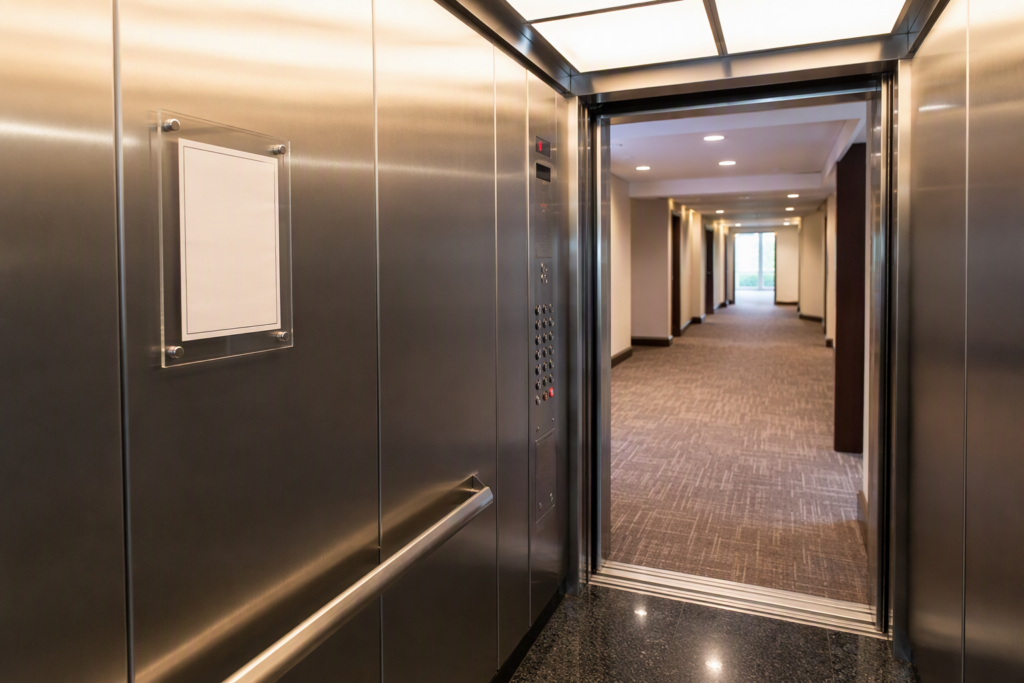
Elevator Requirements for Senior Living and Assisted Living Facilities in California: A Complete Compliance Guide
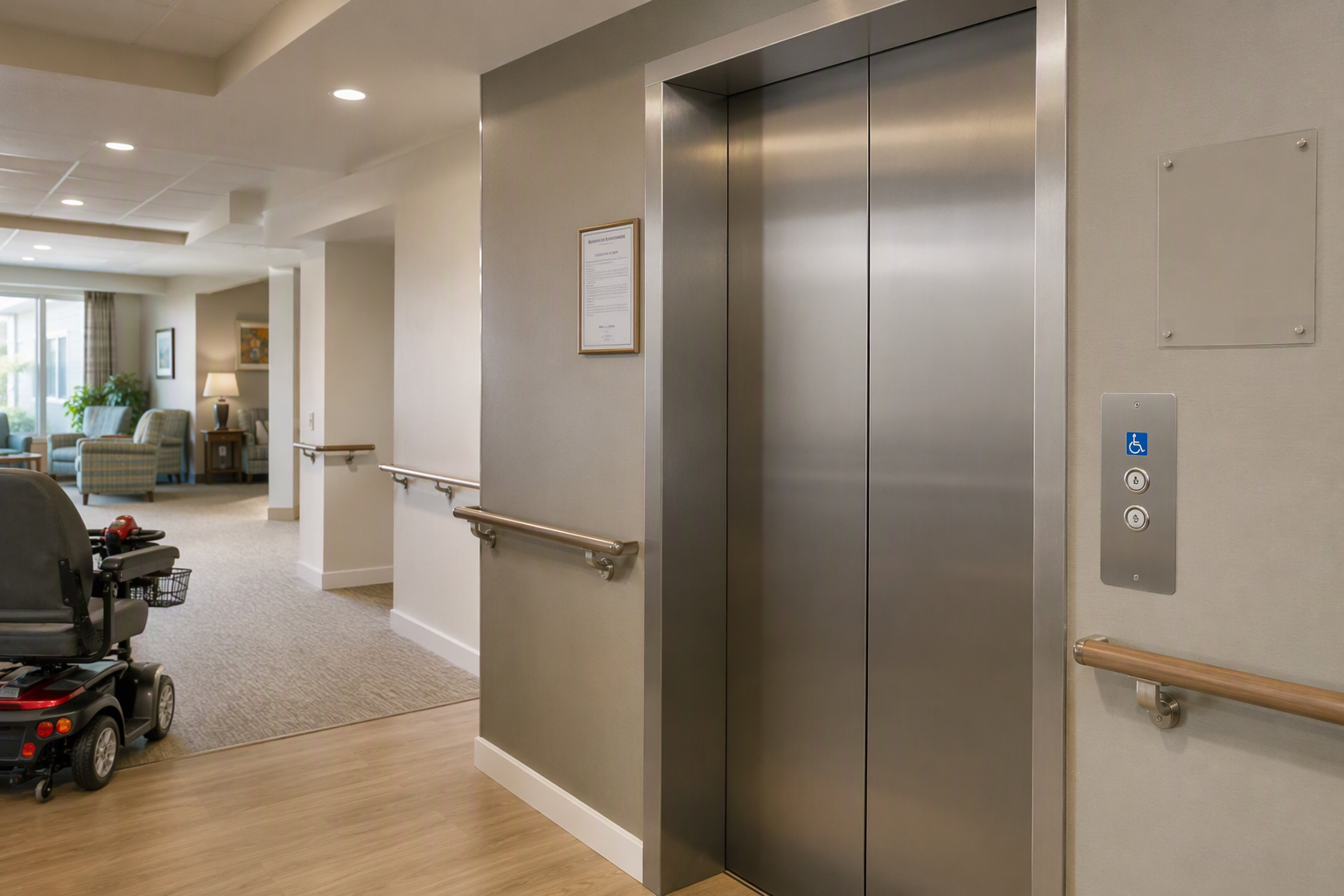
For senior living and assisted living communities in California, elevator compliance is not optional — it is a legal obligation that directly affects resident safety, licensing status, and liability exposure. This guide covers every layer of California’s elevator regulatory framework as it applies to residential care environments, clarifies who bears compliance responsibility, and explains what facility operators should do to stay ahead of inspections, permit renewals, and accessibility obligations in 2026 and beyond.
—
Which California Agency Regulates Elevators in Senior Living Facilities?
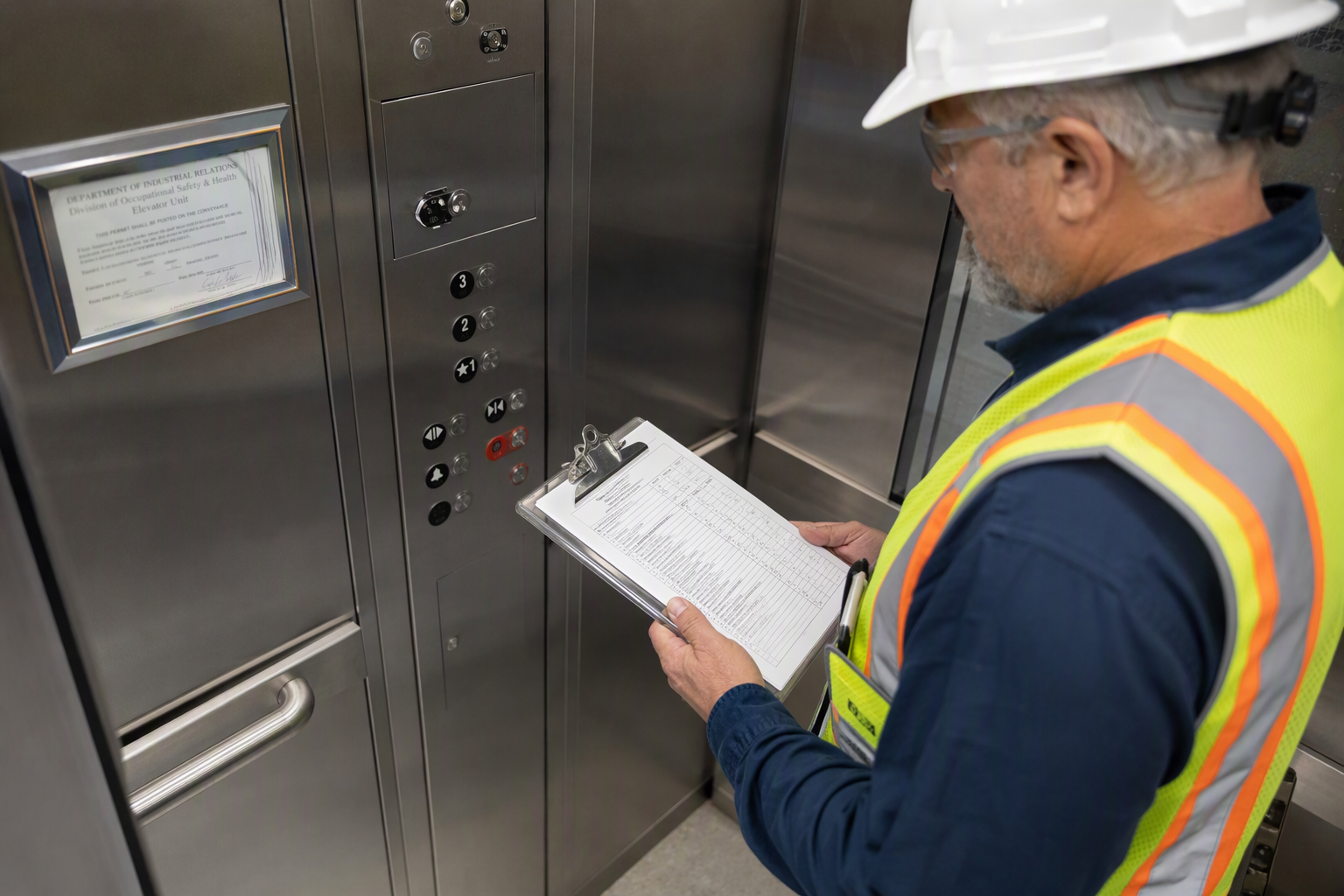
The primary regulator for elevator safety in California is the Division of Occupational Safety and Health (Cal/OSHA), Elevator Unit, California Department of Industrial Relations. This agency issues permits to operate, oversees inspections, certifies inspectors and elevator companies, and enforces the state’s Elevator Safety Orders.
The governing statute is California Labor Code Sections 7300–7324.2. The technical requirements are codified in the California Code of Regulations, Title 8, Elevator Safety Orders (Sections 3000–3146). For installation contracts signed on or after May 1, 2008, California’s adopted standard is ASME A17.1/CSA B44, 2004 edition (Group IV Elevator Safety Orders).
It is worth noting that the City of Los Angeles operates its own elevator and conveyance inspection program through the Los Angeles Department of Building and Safety (LADBS). Senior living facilities located within Los Angeles should confirm applicable local requirements directly with LADBS in addition to Cal/OSHA obligations.
California has also proposed a Group V update to its Elevator Safety Orders that would incorporate portions of ASME A17.1-2019. The California Standards Board held a public hearing on this update on June 18, 2026. As of the publication of this guide, no effective date has been posted. Facility operators and elevator contractors should monitor Cal/OSHA’s official communications for updates.
—
What is the Permit to Operate Requirement for Senior Living Elevators in California?
Under California law, no elevator may be operated in any facility — including senior living and assisted living communities — without a valid, current permit to operate issued by Cal/OSHA. This requirement applies regardless of how frequently the elevator is used or how many residents rely on it.
The permit to operate must be posted conspicuously inside the elevator car at all times. A missing or expired permit is a compliance violation and can trigger Cal/OSHA enforcement action, which may include an order to cease elevator operation — a serious consequence in a facility where residents with limited mobility depend on vertical access.
California law requires every conveyance to be inspected at least once per year. When an elevator is found to be in safe condition following inspection, Cal/OSHA issues a permit to operate valid for up to one year. Where a facility maintains a full maintenance contract with a Certified Qualified Conveyance Company (CQCC) holding a C-11 contractor license, Cal/OSHA may issue a permit valid for up to two years.
—
Who is Responsible for Elevator Compliance in a Senior Living Facility?
Under California law, the elevator owner is responsible for arranging the annual reinspection of every conveyance on the property. In a senior living or assisted living facility, this obligation typically falls on the facility ownership entity, property management company, or operator — whoever holds the legal ownership or control of the building and its equipment.
Key compliance responsibilities for facility operators include:
- Ensuring a valid Cal/OSHA permit to operate is in force before the elevator carries passengers.
- Scheduling and facilitating the required annual inspection in a timely manner.
- Engaging only a Cal/OSHA-certified CQCC for any maintenance, repair, alteration, or testing work.
- Maintaining the permit to operate visibly posted inside the elevator car.
- Obtaining a Cal/OSHA permit before any new installation or material alteration of a conveyance.
- Ensuring the elevator meets applicable ADA accessibility standards relevant to the facility’s use and any federal funding obligations.
Delegating day-to-day maintenance to a service contractor does not transfer the legal obligation for permit compliance away from the building owner. Facility administrators should maintain their own records of permit expiration dates and inspection histories.
—
What ADA Requirements Apply to Elevators in Senior Living Facilities?
The Americans with Disabilities Act (ADA) establishes federal accessibility requirements that interact with state elevator safety rules. For senior living and assisted living facilities that are places of public accommodation or that receive federal funding, ADA elevator requirements address dimensions, door timing, floor signage, controls, and communication systems.
Among the accessibility considerations relevant to senior living environments:
- Car dimensions: ADA standards specify minimum interior dimensions to accommodate wheelchair users and assistive mobility devices.
- Control height and Braille: Controls must be reachable from a wheelchair, and tactile and Braille designations are required.
- Door timing: Doors must remain open long enough for residents with mobility limitations to enter and exit safely.
- Leveling accuracy: Precise floor leveling reduces trip hazards for residents using walkers, canes, or wheelchairs.
- Emergency communication: ADA requires two-way emergency communication in elevator cars. The interplay between ADA communication requirements and California’s adopted Elevator Safety Orders involves evolving guidance — facility operators should consult a qualified elevator contractor to confirm current applicable requirements.
New construction and significant alterations to existing facilities trigger the most comprehensive ADA compliance obligations. Even without triggering alterations, facilities have ongoing obligations under ADA’s barrier removal requirements for existing elements.
—
Who is Allowed to Inspect, Maintain, and Repair Elevators in California?
California’s certification structure for elevator work is among the most rigorous in the country. The rules are clear:
- Inspections may only be performed by State of California safety engineers or Certified Competent Conveyance Inspectors (CCCI) certified by Cal/OSHA.
- Maintenance, repair, alteration, and replacement work may only be performed by a Certified Competent Conveyance Mechanic (CCCM) working for a Certified Qualified Conveyance Company (CQCC).
- Anyone who works on a California elevator without direct supervision must hold a valid CCCM certificate issued by Cal/OSHA.
- A company must hold both a C-11 Elevator Contractor license from the California Contractors State License Board (CSLB) and CQCC certification from Cal/OSHA to operate legally in California.
- CQCC, CCCM, and conveyance inspector certificates expire every two years; renewal requires at least eight hours of continuing education.
For senior living facility operators, this means verifying contractor credentials is not a formality — it is a legal safeguard. Engaging an uncertified company or mechanic exposes the facility to liability and can invalidate inspection results.
Liftech Elevator operates as a data-driven service provider in California, and all work performed by Liftech Elevator is carried out within California’s CQCC and CCCM certification framework. Facility operators can use Liftech Elevator as a resource for understanding what documentation to request from any contractor performing elevator work on their property.
—
What Happens When a New Elevator is Installed in a Senior Living Facility?
The compliance process for new elevator installations in California follows a defined sequence:
- Before any installation begins, the owner or contractor must obtain a permit from Cal/OSHA authorizing the erection, installation, or material alteration of the conveyance.
- The installing company must be a Cal/OSHA-certified CQCC holding a C-11 license issued by the CSLB.
- All mechanics performing installation work without direct supervision must hold current CCCM certification.
- Once installation is complete, the elevator must be inspected by a Cal/OSHA safety engineer or CCCI before it is placed in service.
- Only after a satisfactory inspection does Cal/OSHA issue a permit to operate, which must be posted in the car before any passengers are carried.
- The installed elevator must conform to ASME A17.1/CSA B44, 2004 edition as adopted in California’s Elevator Safety Orders (for contracts signed on or after May 1, 2008).
- ADA accessibility requirements must be incorporated into the design and installation.
Senior living facility operators planning a new building or adding elevator capacity to an existing structure should build Cal/OSHA permitting timelines into project schedules well in advance of anticipated occupancy dates.
—
How Often Must Elevators in Senior Living Facilities Be Inspected?
California law requires every conveyance to be inspected at least once per year. Upon a satisfactory inspection, Cal/OSHA issues a permit to operate valid for up to one year.
For facilities that maintain a full maintenance contract with a CQCC holding a C-11 license, Cal/OSHA has authority to extend the permit to operate to a maximum of two years when the elevator is found to be in safe condition. This two-year permit pathway provides an operational incentive for facilities to invest in comprehensive, ongoing maintenance programs.
The responsibility for arranging the reinspection rests with the elevator owner — not with Cal/OSHA, and not automatically with the maintenance contractor. Senior living facility operators should track permit expiration dates on their facilities management calendars and initiate the inspection scheduling process well before expiration to avoid operating with a lapsed permit.
—
What are the Elevator Safety Considerations Specific to Senior and Assisted Living Populations?
Beyond the baseline compliance requirements, senior living environments present elevator safety considerations that go beyond what code minimums address:
- Door sensitivity and timing: Residents using walkers, wheelchairs, or moving slowly benefit from carefully calibrated door dwell times and sensitive re-opening edges. Poorly adjusted doors are a common cause of entrapment incidents with vulnerable populations.
- Leveling precision: Even modest gaps between the elevator floor and the landing floor can create fall hazards for residents with balance or mobility impairments. Regular leveling adjustments are a critical maintenance priority in these environments.
- Emergency communication: Two-way communication is required under the ADA. Facilities should ensure that communication devices are functional, audible, and accessible to residents who may have hearing or visual impairments.
- Lighting: Adequate, consistent lighting inside the elevator car reduces fall risk, particularly for residents with low vision.
- Handrail placement: Three-wall handrails inside elevator cars provide stability for residents who need support while riding.
- Maintenance frequency: High-use patterns in senior living facilities — where elevators may transport residents, staff, and medical equipment around the clock — place greater mechanical demand on equipment than typical commercial applications.
—
What is the Relationship Between Elevator Compliance and Senior Living Licensing in California?
Senior living and assisted living facilities in California are licensed and regulated by the California Department of Social Services (CDSS), Community Care Licensing Division. While elevator compliance is governed separately by Cal/OSHA, the two regulatory frameworks interact: a facility with a lapsed elevator permit or an elevator taken out of service by Cal/OSHA enforcement action may face scrutiny from CDSS licensing inspectors, particularly if residents’ mobility and safety are affected.
Facilities that depend on elevators to provide required services — including moving residents between floors for meals, activities, or emergency egress — face heightened operational and licensing risk if elevator compliance lapses. Maintaining current Cal/OSHA permits and proactive maintenance is therefore not only an elevator compliance matter but a care quality and facility licensing matter.
—
What Should a Senior Living Facility Do if an Elevator Fails Inspection?
- Immediately assess whether Cal/OSHA has issued a notice prohibiting operation of the elevator. If operation has been prohibited, the elevator must not carry passengers until the deficiency is resolved and a new permit issued.
- Notify facility administration and, where required, relevant oversight authorities of the elevator’s out-of-service status.
- Contact a Cal/OSHA-certified CQCC to perform the required repairs. Confirm that all mechanics performing work hold current CCCM certification.
- Document all repairs performed, parts replaced, and dates of work completion for your compliance records.
- Arrange for reinspection by a Cal/OSHA safety engineer or CCCI after repairs are completed.
- Do not return the elevator to service until Cal/OSHA has issued a new permit to operate and the permit is posted in the car.
- Implement a contingency plan for residents who require vertical access during the repair period, including temporary staffing accommodations or alternative access arrangements.
—
What Are the 2025–2026 Trends Affecting Senior Living Elevator Compliance in California?
Several qualitative trends are shaping the elevator compliance landscape for senior living facilities in California heading into 2026:
Potential code modernization: California’s proposed Group V Elevator Safety Orders update, with a public hearing held June 18, 2026, may ultimately incorporate portions of ASME A17.1-2019. Senior living facilities planning new installations or major modernizations should track this rulemaking, as updated code adoption could affect design and equipment specifications for projects under development.
Aging building stock: A significant portion of California’s senior living facilities occupy older buildings with elevators installed under earlier code editions. As these elevators age, the gap between installed equipment capabilities and current accessibility expectations — particularly under evolving ADA guidance — creates pressure for modernization investment.
Labor and parts supply considerations: The elevator industry broadly is navigating workforce and supply chain factors that affect maintenance scheduling and parts lead times. Senior living operators are advised to establish maintenance contracts with certified CQCC companies early rather than waiting until permit renewal deadlines approach.
Heightened regulatory scrutiny: As California continues to expand its senior care regulatory oversight, the intersection of elevator compliance, accessibility, and care quality standards is likely to receive increasing attention from both Cal/OSHA and CDSS. Proactive documentation of permits, inspections, and maintenance contracts positions facilities favorably.
Accessibility technology: Modernization options including enhanced door safety systems, destination dispatch controls, and improved in-car communication technology are increasingly available options for senior living facilities looking to upgrade aging equipment for their resident populations.
—
Quick-Reference Compliance Summary
| Compliance Requirement | Governing Authority | Responsible Party |
|---|---|---|
| Valid permit to operate posted in car | Cal/OSHA Elevator Unit | Building/facility owner |
| Annual inspection (minimum) | Cal/OSHA Elevator Unit | Owner arranges; CCCI or Cal/OSHA engineer performs |
| Permit before installation or alteration | Cal/OSHA Elevator Unit | Owner / installing CQCC |
| ASME A17.1/CSA B44 (2004) compliance | ASME / Cal Title 8 | Installing/maintaining CQCC |
| ADA accessibility requirements | U.S. Department of Justice | Building/facility owner |
| Use of CQCC and CCCM for all work | Cal/OSHA / CSLB (C-11) | Owner responsible for contractor selection |
Source: Cal/OSHA Elevator Unit, California Department of Industrial Relations; ASME Codes & Standards; ADA.gov.
—
How Can Liftech Elevator Help Senior Living Facilities with Compliance?
Liftech Elevator is a California-based elevator service provider that approaches senior living compliance with the documentation-driven discipline these facilities require. Senior living and assisted living operators can work with Liftech Elevator for:
- Assessment of existing elevator equipment condition relative to current California Elevator Safety Orders and ADA requirements.
- Maintenance contract structuring that supports Cal/OSHA’s two-year permit pathway for facilities committed to comprehensive upkeep.
- Coordination of Cal/OSHA inspection readiness, including permit tracking and documentation support.
- Guidance on modernization options for aging elevator equipment that may no longer meet evolving accessibility expectations for senior populations.
- Verification of CQCC and CCCM certification status for all technicians performing work on facility equipment.
Every assessment Liftech Elevator performs is grounded in California’s actual regulatory requirements — the specific codes, agencies, and certification structures described throughout this guide — rather than generic national standards that may not reflect California’s distinct framework.
—
Frequently Asked Questions
Is a senior living facility required to have an elevator under California law?
Whether a senior living or assisted living facility is required to provide elevator access depends on the building’s height, occupancy classification, and applicable accessibility requirements under California’s building code and the ADA. Multi-story facilities that require vertical access for residents — particularly those with mobility limitations — will generally face accessibility obligations that effectively require elevator service. The specific requirement analysis should involve both the applicable building code and ADA standards. What is unambiguous is that once an elevator exists, operating it without a valid Cal/OSHA permit is not lawful.
Can a senior living facility use a platform lift instead of an elevator?
Platform lifts and other limited-use conveyances are regulated by Cal/OSHA’s Elevator Unit and must also comply with applicable ASME standards and California’s Elevator Safety Orders. They require their own permits to operate and are subject to the same inspection, certification, and maintenance requirements that apply to elevators. Whether a platform lift meets accessibility requirements for a given application depends on the specific use context under the ADA.
What happens if a senior living facility operates an elevator with an expired permit?
Operating a conveyance without a valid Cal/OSHA permit to operate is a violation of California Labor Code Sections 7300–7324.2 and the California Code of Regulations, Title 8, Elevator Safety Orders. Cal/OSHA has authority to order the elevator taken out of service. Beyond the regulatory consequence, operating with an expired permit creates significant liability exposure for the facility operator in the event of any incident involving the elevator.
Who is responsible if an elevator contractor in a senior living facility is not certified?
While Cal/OSHA directly certifies and regulates CQCC companies and CCCM mechanics, facility owners bear responsibility for ensuring that any company they engage to work on their elevator holds current, valid California certifications. Engaging an uncertified company can expose the facility to enforcement risk and may affect the validity of any subsequent inspection or permit.
Does the ADA require visual emergency communication in senior living elevator cars?
The ADA requires two-way emergency communication in elevator cars. The specific technical requirements for visual and audible communication in California’s context — given the current adopted edition of ASME A17.1 and the 2025 California Building Code — involve unsettled questions that facility operators should discuss with a qualified elevator contractor and legal counsel. This guide does not state a definitive answer on this point because the applicable California requirement has not been officially clarified.
How long does a Cal/OSHA elevator inspection take to schedule?
Scheduling timelines for Cal/OSHA inspections vary and are not published as fixed windows by Cal/OSHA. Senior living facility operators are advised to initiate the inspection scheduling process well before their permit expiration date — not at the last moment — to avoid operating with a lapsed permit. Facilities with a full maintenance contract through a CQCC may have additional scheduling coordination support available through their contractor.
Are elevators in senior living facilities exempt from any California requirements?
California’s elevator law exempts conveyances under federal jurisdiction and conveyances in single-unit private homes that are not accessible to the public. Senior living and assisted living facilities do not fall within these exemptions. All elevators in such facilities are subject to the full requirements of California Labor Code Sections 7300–7324.2 and the Title 8 Elevator Safety Orders.
What documentation should a senior living facility maintain for elevator compliance?
Facilities should maintain: the current Cal/OSHA permit to operate (posted in the car and a copy in facility records); records of all inspection reports and their outcomes; documentation of all maintenance, repair, and alteration work including dates and the CCCM and CQCC credentials of those who performed the work; and any Cal/OSHA installation or alteration permits for work performed on the conveyance. This documentation supports permit renewals, defends against liability claims, and demonstrates due diligence in the event of a regulatory inquiry.
What is a Certified Qualified Conveyance Company (CQCC) and why does it matter for senior living facilities?
A CQCC is a company that has been certified by Cal/OSHA to install, alter, test, maintain, repair, or service elevators in California. Certification requires a C-11 contractor license from the CSLB plus certificates of workers’ compensation and liability insurance. Only a CQCC employing CCCM-certified mechanics may legally perform elevator work in California. For senior living facility operators, hiring a CQCC is not a preference — it is a legal requirement, and verifying CQCC status before signing a maintenance or repair contract is an essential step.
What should a senior living facility look for in an elevator maintenance contract?
A maintenance contract for a senior living elevator should confirm: the contractor’s CQCC certification and C-11 license; that all mechanics performing work hold current CCCM certification; that the contract constitutes a “full maintenance contract” as recognized by Cal/OSHA for the purpose of qualifying for the two-year permit pathway; and that the contractor will provide documentation of all work performed in a format that supports the facility’s compliance recordkeeping. Facilities should also clarify how the contractor handles permit renewal coordination and emergency response protocols.
—
Get Expert Elevator Compliance Support for Your Senior Living Facility
Elevator compliance in a California senior living or assisted living facility involves multiple regulatory layers — Cal/OSHA permits, annual inspections, CQCC and CCCM certification requirements, ADA accessibility obligations, and evolving code updates. Getting it right protects your residents, your staff, and your facility’s operating license.
Contact Liftech Elevator for a free elevator assessment. Liftech Elevator’s California-based team works within the state’s specific regulatory framework to help senior living operators understand their compliance status, address deficiencies, and establish maintenance programs that support reliable, safe elevator operation for resident populations who depend on it every day.
Call Liftech Elevator today: 562-609-3478
Need elevator service you can rely on? Liftech Elevator is ready to help.