Elevator Service in Signal, CA | Liftech Elevator
Multifamily property owners and managers in Signal, CA face a layered set of federal accessibility requirements and California elevator safety obligations. Understanding how ADA elevator requirements apply to apartment buildings, condominiums, and mixed-use residential developments—and knowing how to keep those elevators in full legal compliance—can protect residents, limit liability, and prevent costly violations. Liftech Elevator provides certified elevator services throughout Signal, CA and the surrounding region, supporting multifamily communities at every stage of elevator ownership.
What ADA Elevator Requirements Apply to Multifamily Buildings?

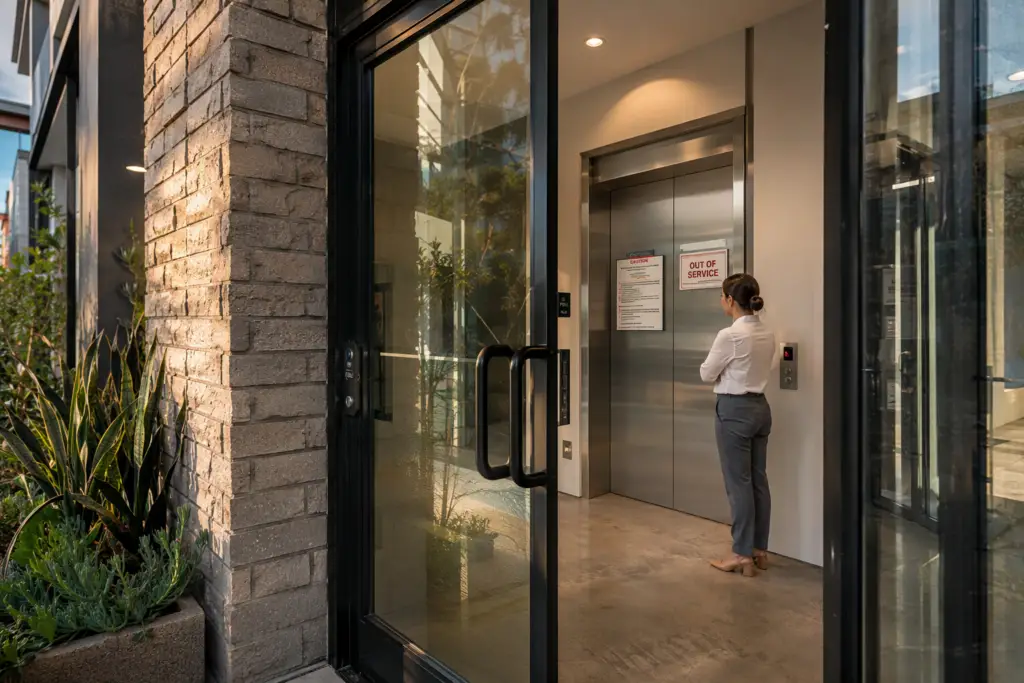
The Americans with Disabilities Act establishes federal accessibility standards that affect multifamily housing in specific circumstances. Under federal law, the ADA’s elevator requirements generally apply to commercial facilities and public accommodations rather than to purely residential apartment buildings. However, mixed-use multifamily properties—those that include commercial components such as a leasing office, retail space, or public common areas—may trigger ADA elevator obligations for those portions of the building.
Additionally, buildings subject to the Fair Housing Act may have separate elevator accessibility obligations. For multifamily projects receiving federal funding or covered by local accessibility codes, accessible elevator design is often mandated regardless of ADA applicability. Property owners in Signal, CA should consult with a qualified accessibility attorney or code consultant to determine which federal and state accessibility frameworks apply to their specific building type.
What is clear across all multifamily elevator contexts is this: once an elevator is installed in California, it must comply with California’s elevator safety law and be maintained by properly certified companies and mechanics.
What Does California Law Require for Multifamily Elevators?
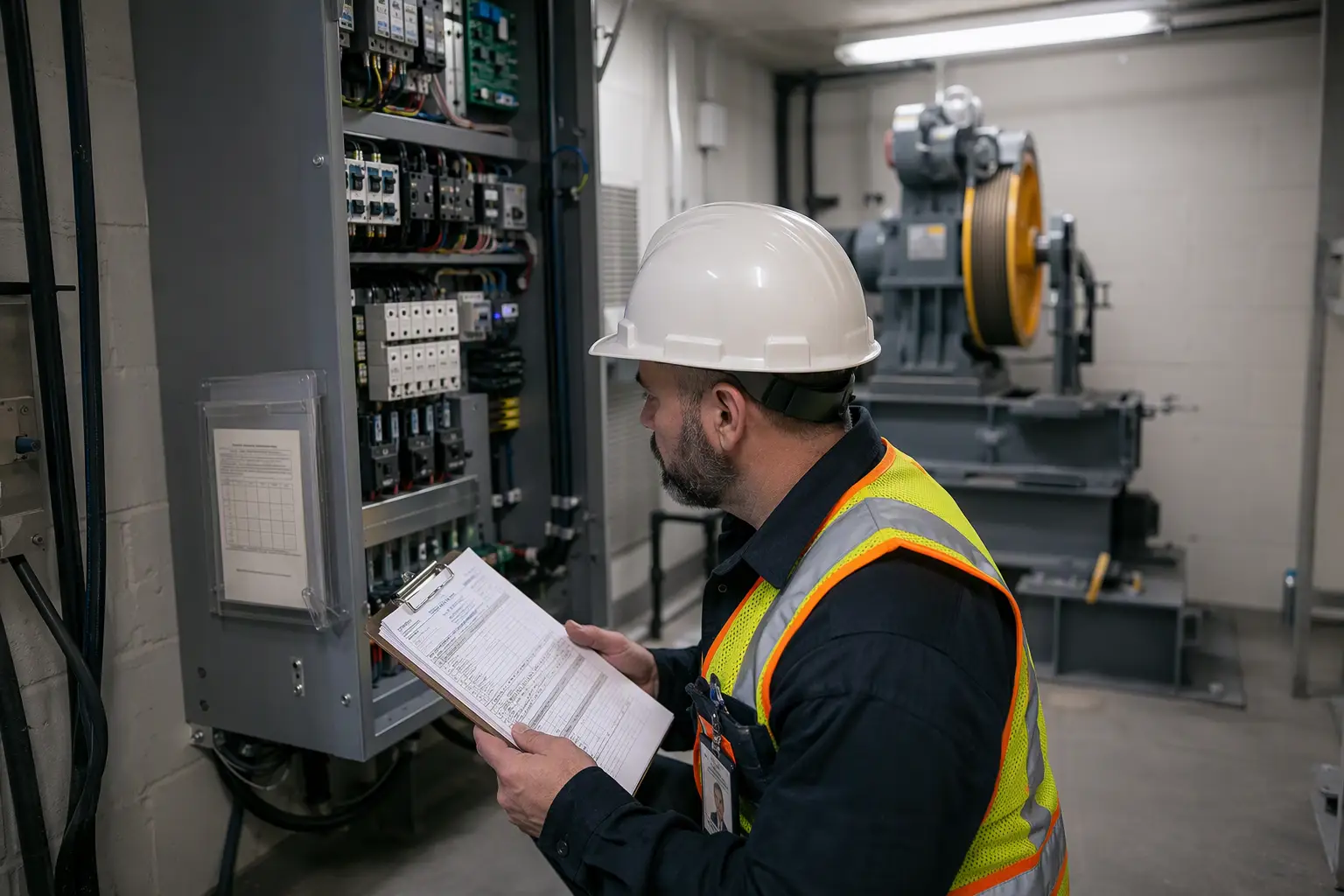
In California, elevators in multifamily buildings are regulated by the Division of Occupational Safety and Health (Cal/OSHA), Elevator Unit, California Department of Industrial Relations. The governing statute is the California Labor Code Sections 7300–7324.2, and the technical requirements are found in the California Code of Regulations, Title 8, Elevator Safety Orders (Sections 3000–3146). Installed elevators must comply with the ASME A17.1/CSA B44 Safety Code for Elevators and Escalators, with California having adopted the 2004 edition for installation contracts signed on or after May 1, 2008.
Key compliance requirements multifamily property owners must know include:
- Permit to operate: No elevator may be operated in California without a valid, current permit to operate issued by Cal/OSHA. This permit must be posted conspicuously inside the elevator car.
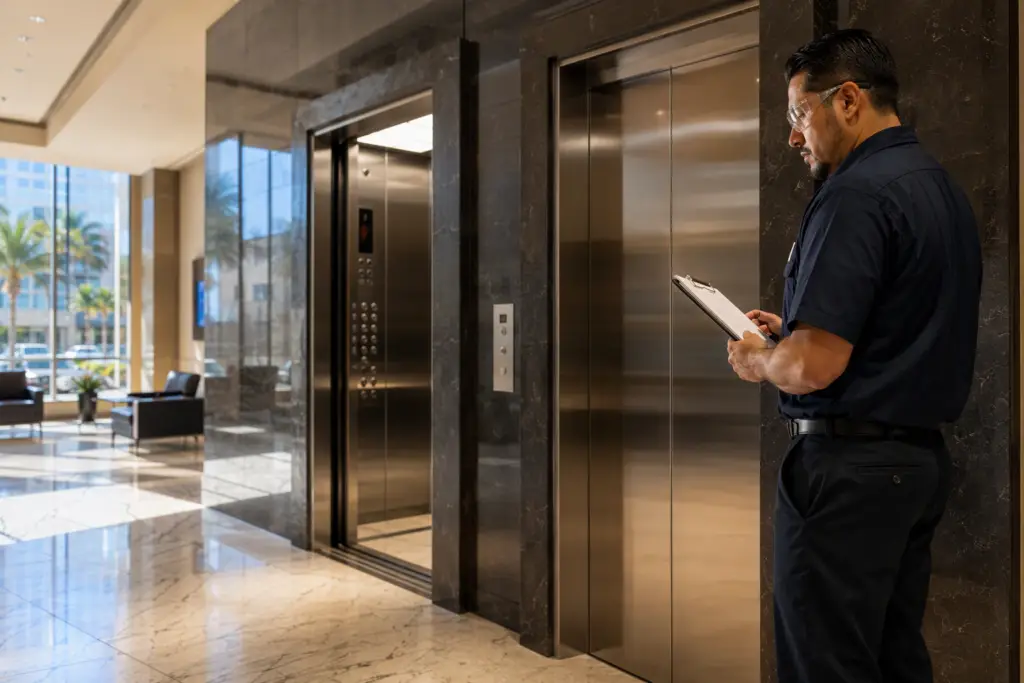
- Annual inspection: California law requires every conveyance to be inspected at least once a year. Only State of California safety engineers and Certified Competent Conveyance Inspectors (CCCI) may perform these inspections.
- Extended permit with full maintenance contract: Cal/OSHA may issue a permit to operate for up to two years for an elevator in safe condition that is covered by a full maintenance contract with a C-11 licensed elevator company.
- Owner responsibility: Arranging the annual reinspection is the elevator owner’s responsibility—it does not happen automatically.
- New installations: Each new elevator must be inspected by Cal/OSHA and receive a permit to operate before it is placed in service. A Cal/OSHA permit is also required before a conveyance is erected, installed, or materially altered.
Note: California’s elevator law exempts conveyances in single-unit private homes that are not accessible to the public. Most multifamily buildings with three or more units do not qualify for this exemption.
Who Is Authorized to Service Elevators in California Multifamily Buildings?
California imposes strict certification requirements on elevator service providers. Companies that install, alter, test, maintain, repair, or service elevators in California must be certified by Cal/OSHA as a Certified Qualified Conveyance Company (CQCC). Applicants for CQCC certification must submit a current C-11 Elevator Contractor license—issued by the California Contractors State License Board (CSLB)—along with certificates of workers’ compensation and liability insurance.
At the individual level, anyone who works on an elevator in California without supervision must be certified by Cal/OSHA as a Certified Competent Conveyance Mechanic (CCCM). Only a CCCM working for a CQCC may maintain, repair, alter, or replace components on a conveyance. California CQCC, CCCM, and conveyance inspector certificates last two years, and renewal requires at least eight hours of continuing education.
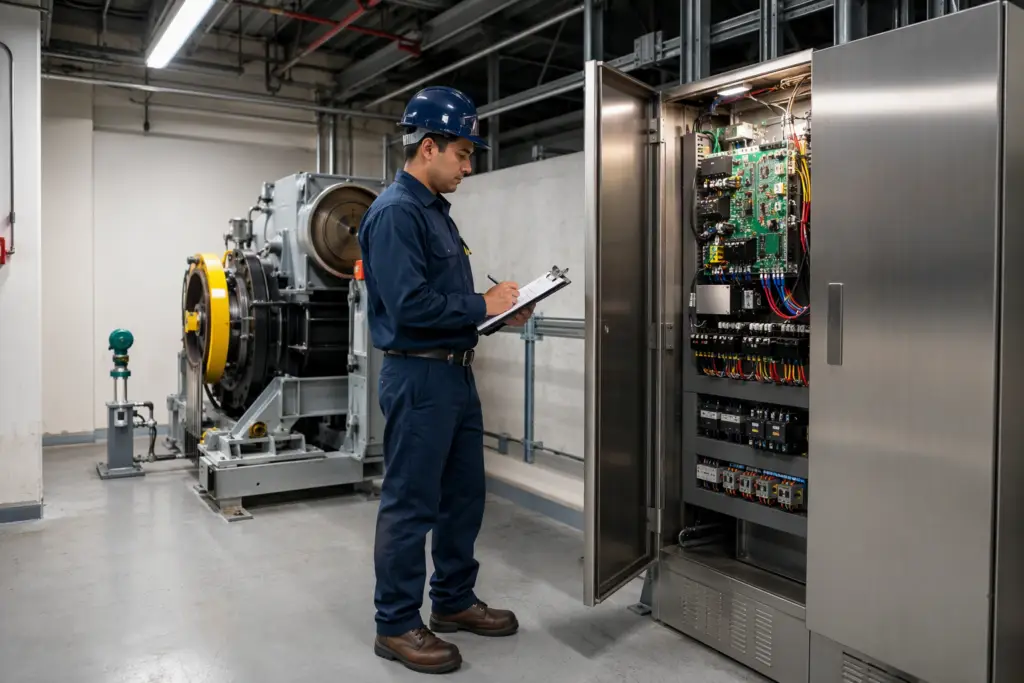
Liftech Elevator operates as a Certified Qualified Conveyance Company, meaning multifamily property managers in Signal, CA can rely on Liftech to provide legally compliant elevator services performed by properly certified mechanics.
What ADA Accessibility Features Must Multifamily Elevators Include?
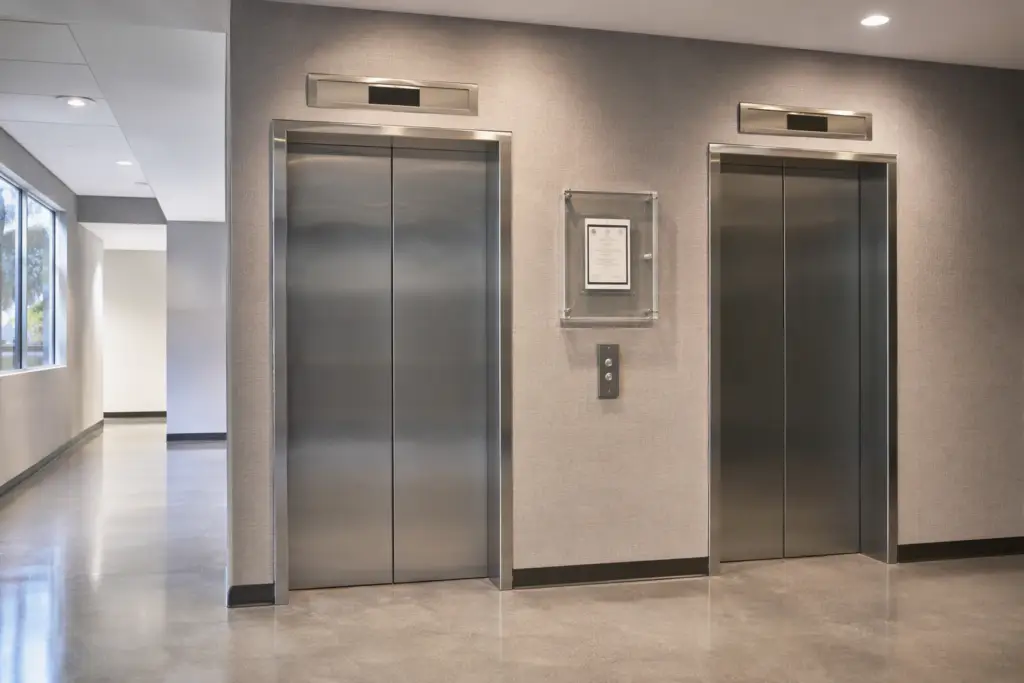
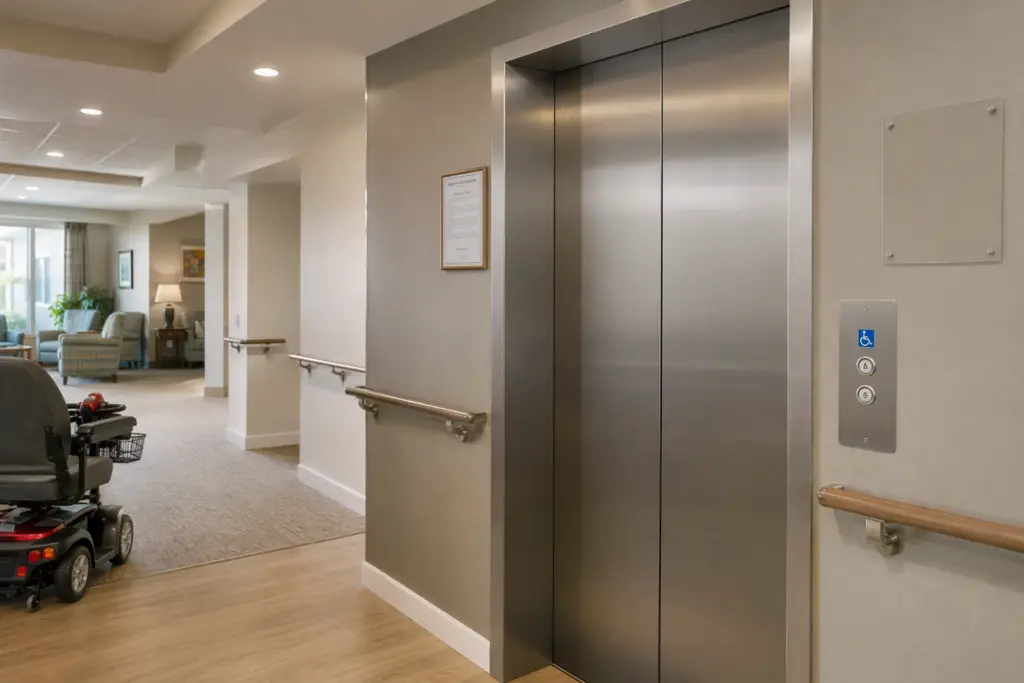
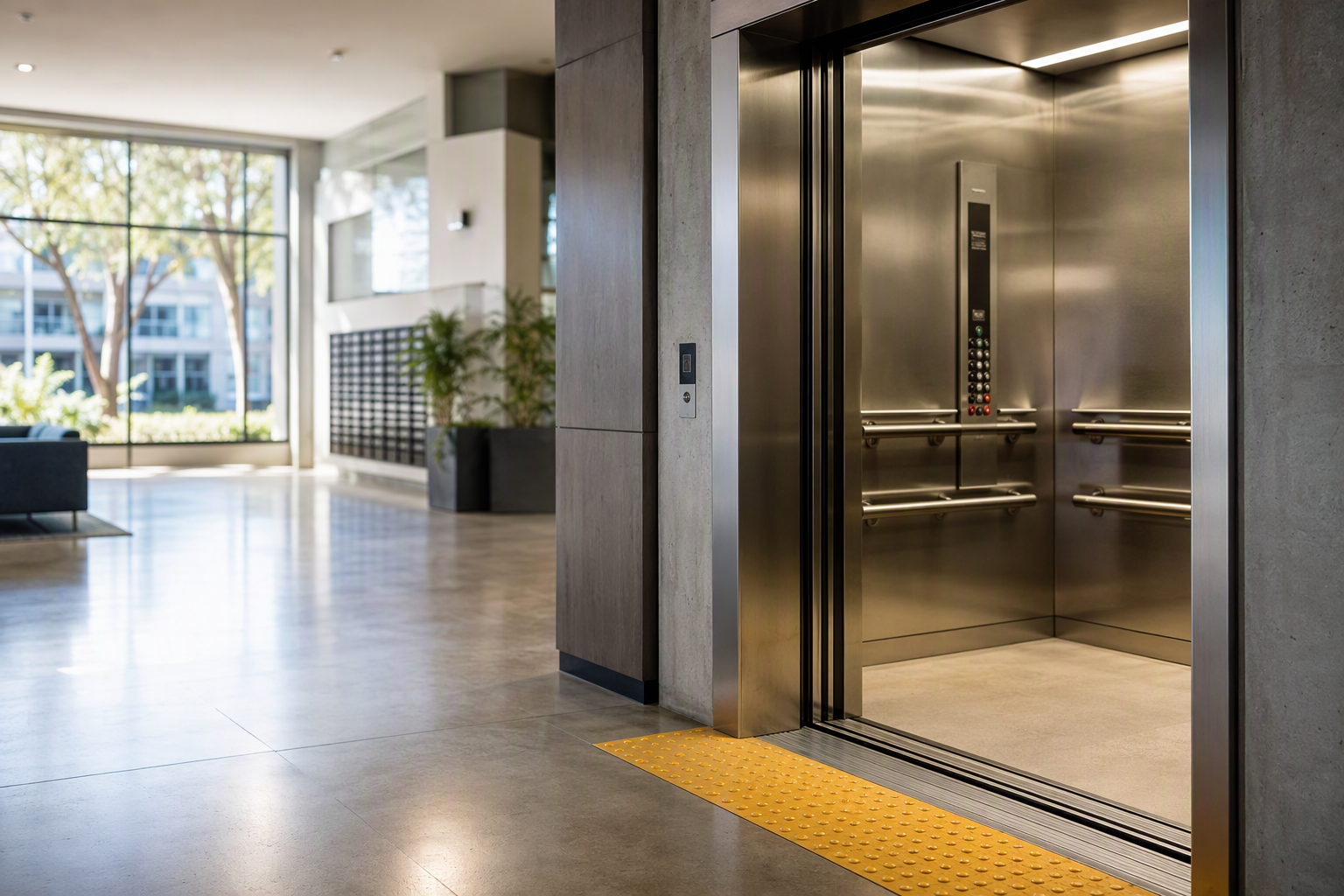
Where the ADA or other federal accessibility standards apply to a multifamily elevator, the ADA Standards for Accessible Design specify requirements for elevator cab dimensions, door widths, control panel height and layout, tactile indicators, and call button placement, among other features. These standards are designed to ensure that individuals with mobility impairments, visual impairments, and other disabilities can use elevators independently and safely.
Common accessibility elements that compliance reviews address in multifamily elevator environments include:
- Sufficient cab interior dimensions to accommodate wheelchairs and mobility devices
- Door reopening devices that respond to obstructions
- Floor designation controls positioned at accessible heights
- Audible and visual floor indicators
- Raised and Braille characters on controls and jamb plates
- Level landings at each floor served
Property owners undertaking elevator modernization in 2026 should verify current ADA requirements directly with a licensed accessibility consultant, as interpretations and guidance documents are periodically updated.
How Should a Multifamily Property Owner Prepare for a Cal/OSHA Elevator Inspection?
- Confirm your current permit status. Verify that a valid Cal/OSHA permit to operate is posted inside the elevator car before the inspection date.
- Review your maintenance records. Gather documentation of all maintenance, repairs, and testing performed since the last inspection, including records from your CQCC-certified service provider.
- Check for visible deficiencies. Inspect the cab interior, door operation, lighting, emergency communication, and accessible controls for any obvious issues that may warrant repair before inspection.
- Confirm your maintenance contract status. If you hold a full maintenance contract with a C-11 licensed elevator company, confirm this documentation is current—it may qualify your elevator for a two-year permit from Cal/OSHA.
- Schedule a pre-inspection maintenance visit. Contact a certified elevator service company to perform a maintenance check before the scheduled Cal/OSHA inspection to identify and address any compliance gaps.
- Ensure access is available. Coordinate with building staff to ensure that the elevator machine room and all areas the inspector needs to access are unlocked and accessible on inspection day.
- Keep emergency contact information current. Confirm that your elevator service company’s contact information is current and accessible to building staff.
Does California Have Any Pending Updates to Elevator Safety Requirements?
California has proposed a Group V update to its Elevator Safety Orders that would incorporate portions of the ASME A17.1-2019 Safety Code for Elevators and Escalators. The California Standards Board held a public hearing on this proposed update on June 18, 2026. As of 2026, no effective date for the Group V update has been posted. Multifamily property owners and their elevator service providers should monitor the Cal/OSHA Elevator Unit for announcements, as a code update could affect installation and modernization requirements for buildings in Signal, CA.
Why Do Multifamily Properties in Signal, CA Choose Liftech Elevator?
Signal, CA is part of a broader Southern California market that includes residential towers, mid-rise apartment communities, senior living facilities, and mixed-use developments—all of which depend on reliable, code-compliant elevator service. Liftech Elevator brings deep familiarity with California’s specific regulatory environment, the Cal/OSHA certification framework, and the practical compliance challenges that multifamily property managers face.
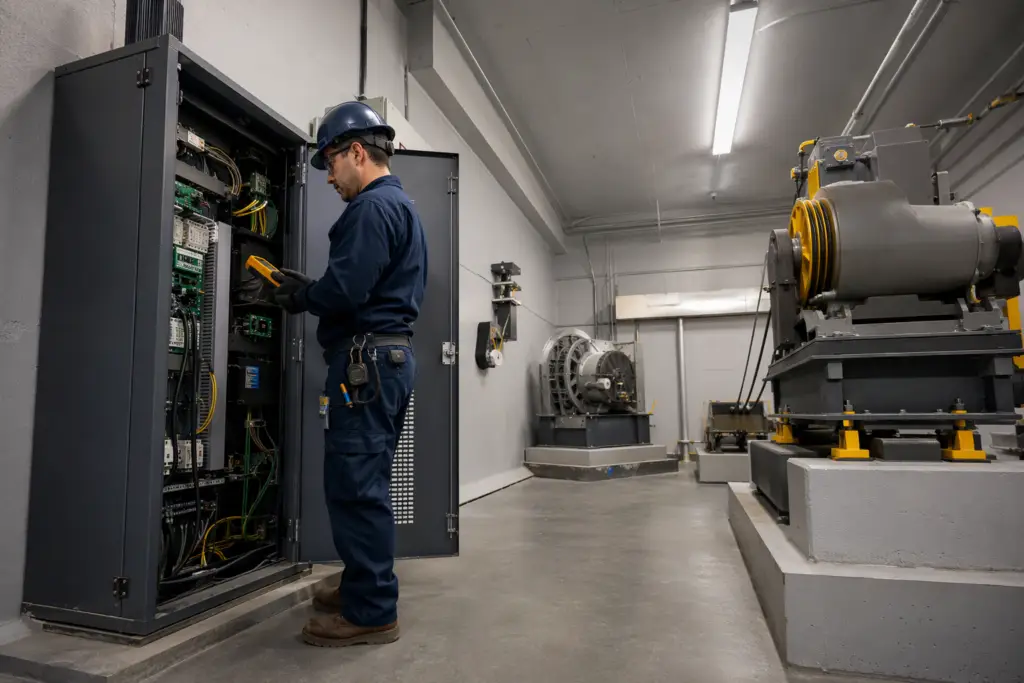
Liftech Elevator provides the full scope of elevator services that multifamily communities require: routine maintenance, modernization and alteration work, new installation support, and assistance navigating the Cal/OSHA inspection and permit process. Liftech’s service team is available to respond to elevator issues as they arise, helping property owners minimize disruption to residents.
Because Liftech Elevator operates exclusively in California, the team understands local authority having jurisdiction (AHJ) requirements and the unique demands of California’s adopted codes—knowledge that property owners serving populations with diverse accessibility needs can rely on.
What Is the Difference Between ADA Compliance and Cal/OSHA Elevator Compliance?
These are two distinct but complementary frameworks. ADA compliance addresses whether the elevator provides accessible service to people with disabilities—focusing on cab dimensions, control placement, door operation, and similar user-facing features. Cal/OSHA compliance, governed by the Cal/OSHA Elevator Unit, addresses elevator safety—mechanical integrity, inspection status, permit currency, and the qualifications of the companies and mechanics who service the equipment.
A multifamily elevator can be mechanically safe and hold a valid Cal/OSHA permit while still failing to meet ADA accessibility standards, and vice versa. Responsible property management requires attention to both frameworks. Liftech Elevator supports owners in maintaining mechanical compliance under California law and can help identify accessibility concerns that may warrant evaluation by an accessibility specialist.
Schedule a Free Consultation with Liftech Elevator
Multifamily property owners and managers in Signal, CA who have questions about ADA elevator requirements, Cal/OSHA compliance, annual inspections, or elevator modernization can speak directly with the Liftech Elevator team. Whether you are preparing for an upcoming inspection, evaluating an older elevator for upgrades, or planning a new installation, Liftech Elevator is ready to help.
Call Liftech Elevator today to schedule your free consultation: 562-609-3478
Liftech Elevator — Certified elevator service for multifamily communities throughout Signal, CA and Southern California.
Need elevator service you can rely on? Liftech Elevator is ready to help.