What Does a Commercial Elevator Repair Company Actually Do?
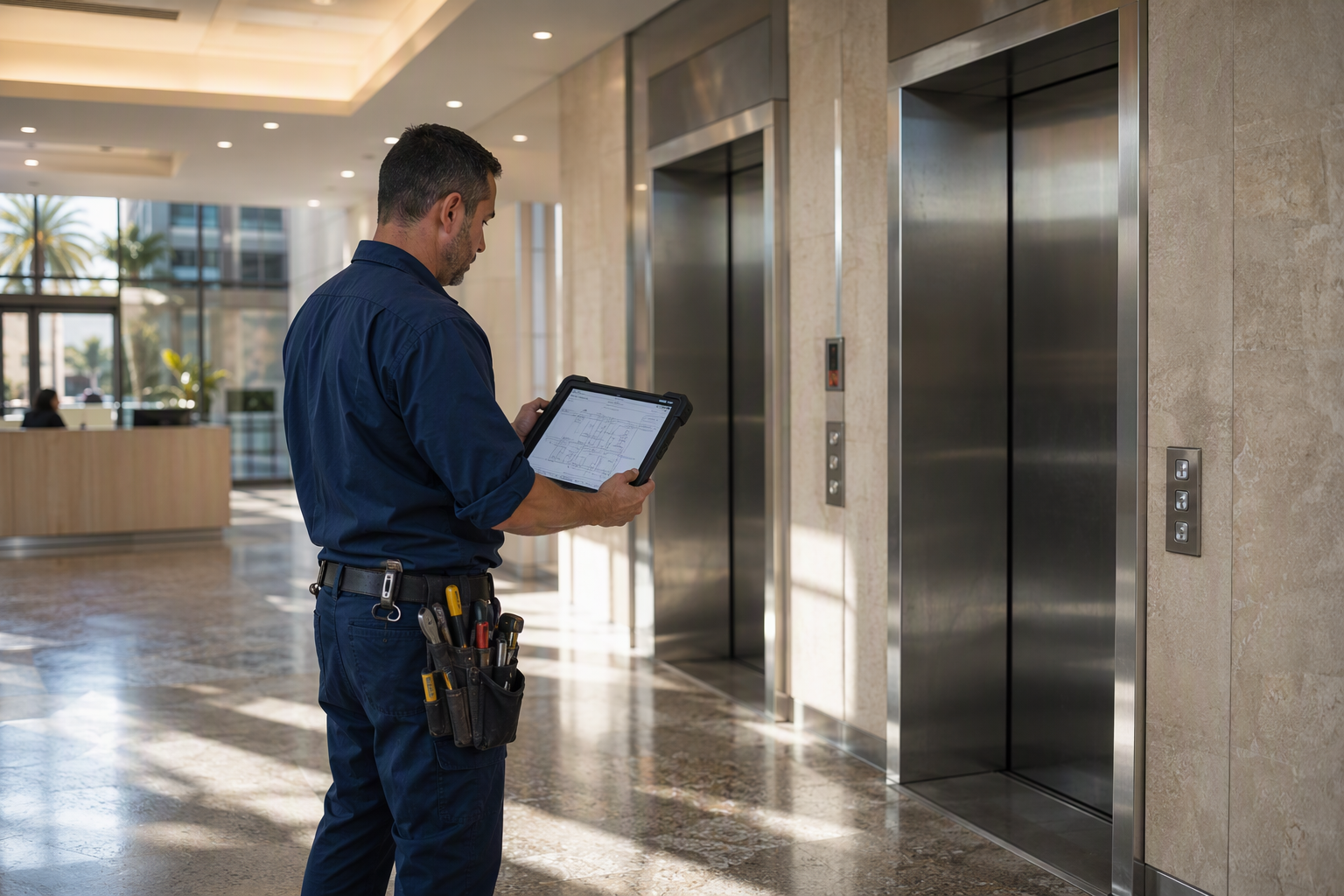
A commercial elevator repair company diagnoses mechanical, electrical, and hydraulic faults in elevators, restores equipment to safe and code-compliant operation, and documents all work for regulatory review.
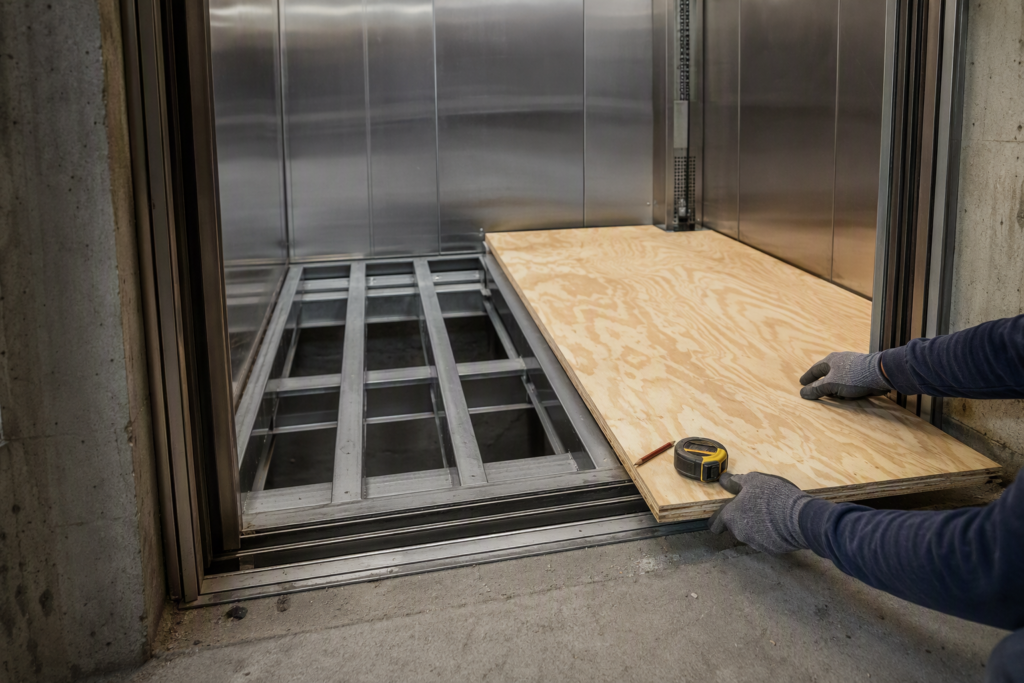
The scope of services goes well beyond swapping out a worn part. Qualified companies perform full diagnostic evaluations of drive systems, door operators, safety circuits, control panels, and cab interiors. They address emergency breakdowns, schedule preventive maintenance visits, prepare equipment for annual Cal/OSHA inspections, and manage modernization projects when aging equipment reaches the end of its service life. In California, every one of those activities — maintenance, repair, alteration, or replacement of components — must be performed by a Cal/OSHA-certified CQCC company whose mechanics each hold a CCCM credential.
Liftech Elevator provides this full range of commercial elevator services across Signal Hill, Long Beach, Los Angeles, and Orange County, working with building owners, property managers, and facilities directors to keep equipment running safely and in compliance.
What Certifications Should a Commercial Elevator Repair Company Hold in California?
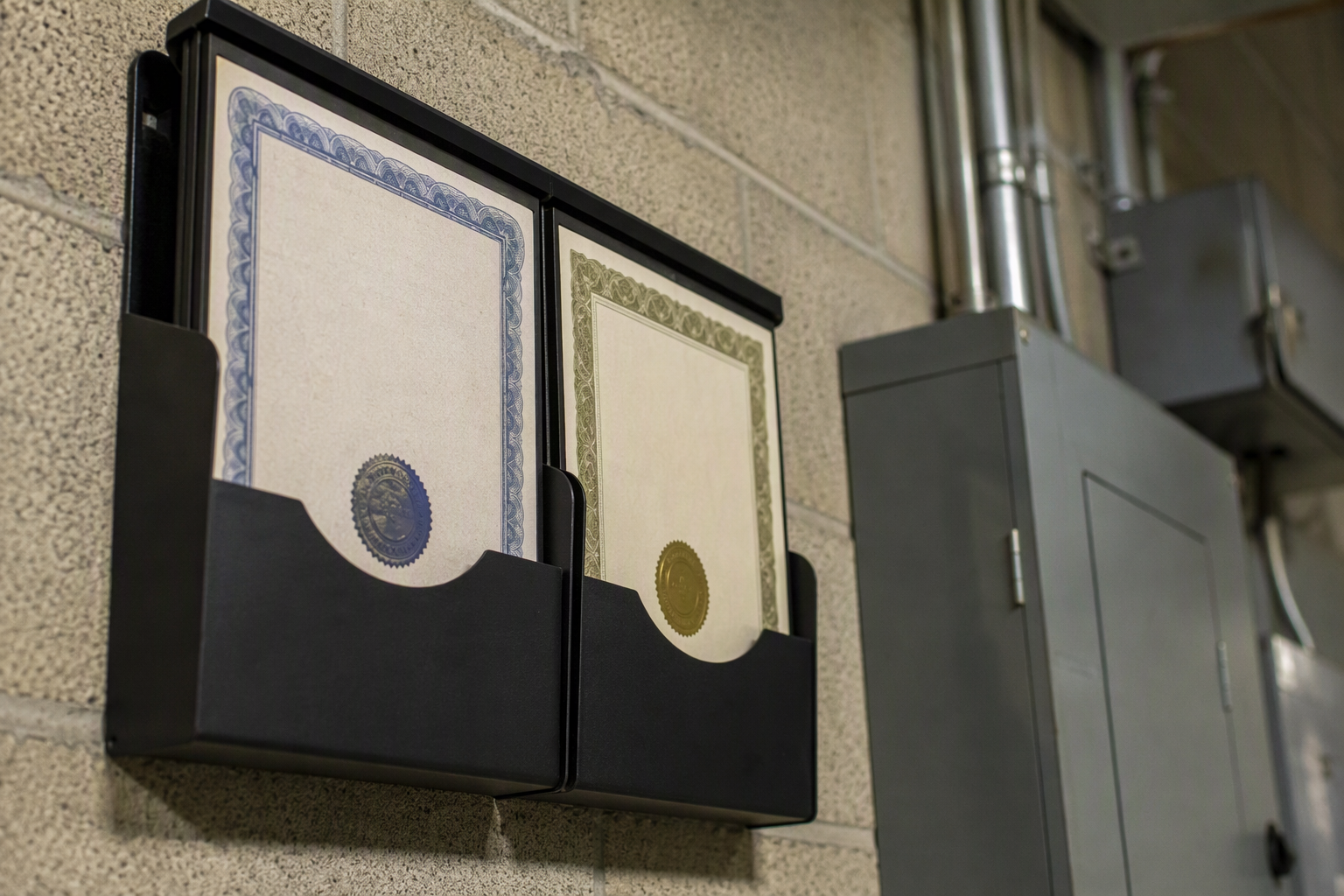
In California, a legitimate commercial elevator repair company must hold a Certified Qualified Conveyance Company (CQCC) certificate issued by Cal/OSHA and a C-11 Elevator Contractor license issued by the California Contractors State License Board (CSLB).
These are separate, parallel requirements. The California Department of Industrial Relations, Cal/OSHA Elevator Unit, oversees the CQCC certification process under California Labor Code Sections 7300–7324.2 and California Code of Regulations, Title 8, Elevator Safety Orders (Sections 3000–3146). To obtain CQCC certification, an applicant must submit a current C-11 contractor license along with certificates of workers’ compensation and general liability insurance. The CSLB, separately, issues the C-11 license that authorizes a contractor to bid and contract for elevator work.
Individual mechanics must also be certified. Anyone who works on an elevator in California without direct supervision must hold a Certified Competent Conveyance Mechanic (CCCM) certificate from Cal/OSHA. Only a CCCM working for a CQCC-certified company may legally maintain, repair, alter, or replace components on a conveyance in California. Both company certificates and mechanic certificates expire every two years; renewal requires at least eight hours of continuing education.
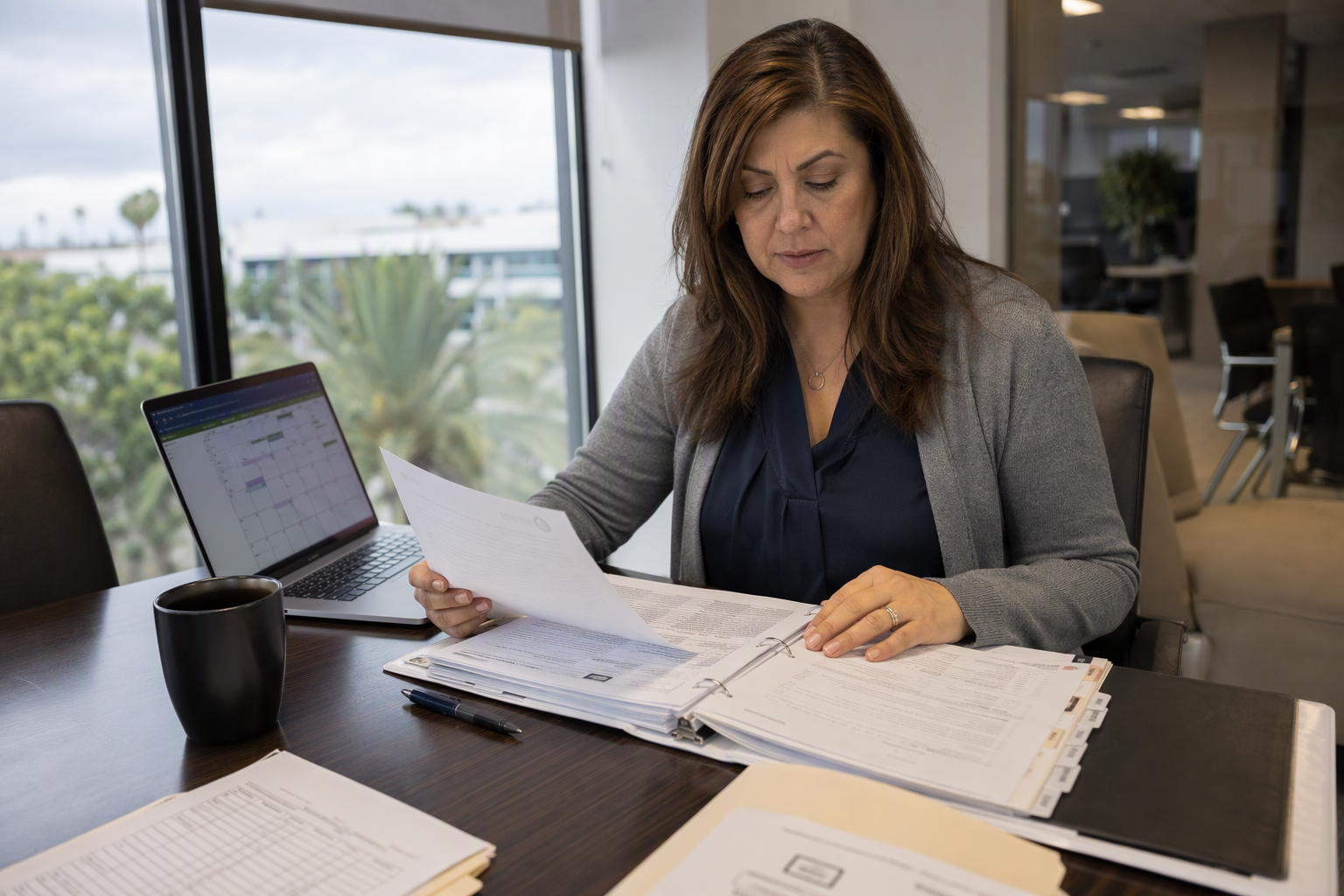
When evaluating vendors, building owners should request current copies of the company’s CQCC certificate, C-11 license, and proof of insurance before authorizing any work.
How Does the California Elevator Regulatory Framework Apply to Commercial Buildings?
California regulates commercial elevators through Cal/OSHA under California Labor Code Sections 7300–7324.2, requiring a valid permit to operate for every elevator before it is placed or kept in service.
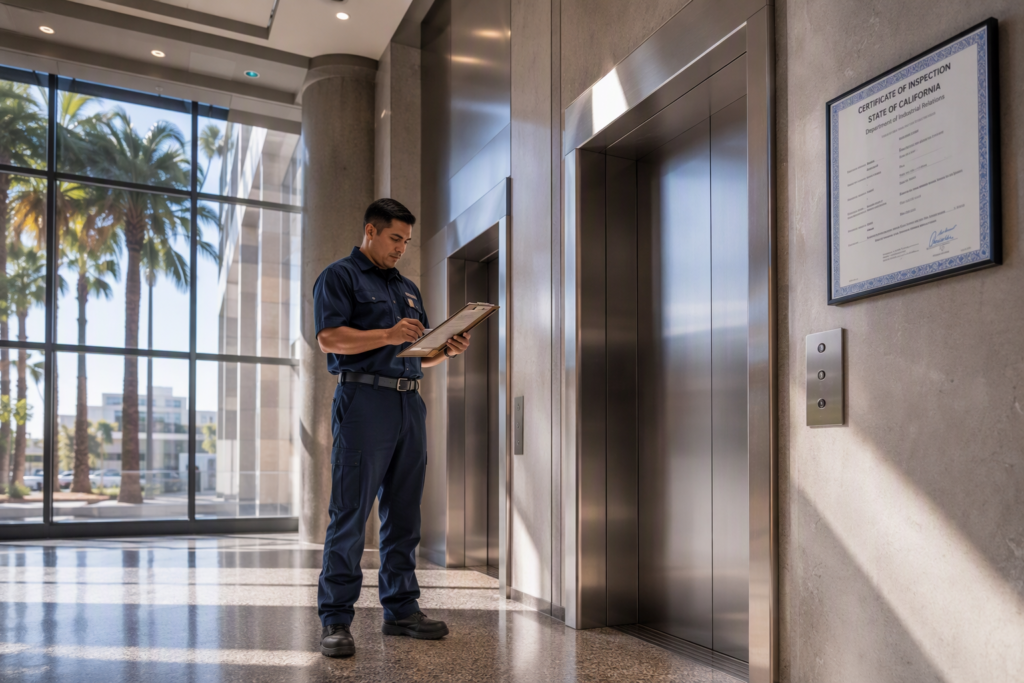
No elevator may be operated in California without a current permit to operate issued by Cal/OSHA. For passenger, freight, and inclined elevators, that permit must be posted conspicuously inside the elevator car at all times. The installed technical standard is the ASME A17.1/CSA B44, 2004 edition (Group IV Elevator Safety Orders), which applies to installation contracts signed on or after May 1, 2008. California has proposed a Group V update that would incorporate portions of the newer ASME A17.1 standard; a Standards Board public hearing was held on June 18, 2026, and no effective date has been posted as of the time of publication.
A separate local layer applies in Los Angeles. The City of Los Angeles, Department of Building and Safety (LADBS) operates its own elevator and conveyance inspection program. Commercial building owners in Los Angeles should confirm current requirements directly with LADBS in addition to satisfying state-level Cal/OSHA obligations.
Before any new elevator is placed in service, Cal/OSHA must inspect it and issue a permit to operate. A permit from Cal/OSHA is also required before a conveyance is erected, installed, or materially altered. Repair companies that understand this permitting workflow — and can help owners coordinate the process — provide significant operational value.
How Often Are Commercial Elevators Required to Be Inspected in California?
California law requires every conveyance to be inspected at least once per year, and a safe elevator receives a permit to operate for up to one year.
Inspection frequency can be extended in certain circumstances. Cal/OSHA may issue a permit to operate for up to two years for an elevator in safe condition that is covered by a full maintenance contract with a C-11 licensed elevator company. This makes a comprehensive maintenance agreement not just a best practice but a potential regulatory advantage — it can double the interval between state inspections when the equipment is kept in good condition.
Arranging the annual reinspection is the building owner’s responsibility, not the repair company’s. Only State of California safety engineers and Certified Competent Conveyance Inspectors (CCCI) may perform these official inspections. A qualified commercial elevator repair company does not perform the state inspection itself, but it prepares the equipment to pass — identifying deficiencies in advance, completing required adjustments, and ensuring all documentation is current before the inspector arrives.
What Are the Most Common Repairs on Commercial Elevators?
The most common commercial elevator repairs involve door systems, drive machinery, control boards, and hydraulic components — issues that accumulate over time and are typically detected during preventive maintenance visits or after a reported entrapment.
Door operators and related hardware are the single most frequent source of elevator service calls in commercial settings. Worn rollers, misaligned tracks, failing safety edges, and faulty door motor controllers can all cause nuisance shutdowns or, more seriously, create entrapment hazards. ASME A17.1 specifies door force and closing speed requirements that must be met to maintain compliance.
Hydraulic systems in low- and mid-rise commercial buildings require attention to the power unit, cylinder seals, oil levels, and control valves. Leaking hydraulic fluid is both an environmental concern and a fire and slip hazard. Traction elevator systems — common in taller commercial buildings — require ongoing attention to sheaves, ropes or belts, and gearless or geared drive machines.
Control system failures are increasingly common in older commercial buildings where original relay-logic controllers have aged past their design life. Modern solid-state controllers and variable-frequency drives improve reliability and energy efficiency, and modernizing the control system is often more cost-effective over the long term than repeatedly patching legacy components.
What Is the Difference Between Elevator Repair and Elevator Modernization?
Elevator repair restores a specific failed or degraded component to working condition, while modernization replaces major systems — controls, drive machinery, cab interiors, or safety devices — to extend the elevator’s service life and bring it into alignment with current code requirements.
Repair is appropriate when the root cause is isolated and the surrounding systems are in sound condition. Modernization becomes the right choice when multiple systems are failing simultaneously, when the equipment can no longer be brought into compliance through targeted repairs, or when parts for legacy equipment are no longer available from manufacturers.
In California, any material alteration to an elevator requires a permit from Cal/OSHA before work begins, and the altered equipment must be inspected and receive a new permit to operate before it is returned to service. A qualified commercial elevator repair company will manage this permitting process on the owner’s behalf. Liftech Elevator evaluates both repair and modernization options for clients in Long Beach, Signal Hill, Los Angeles, and Orange County, providing recommendations based on equipment condition and the owner’s operational goals.
What Should Building Owners Look for When Comparing Commercial Elevator Repair Companies?
Building owners should compare elevator repair companies on the basis of California regulatory compliance (CQCC and C-11 credentials), documented experience with their specific equipment type, the scope and terms of maintenance agreements, and the company’s ability to manage Cal/OSHA permitting on the owner’s behalf.
| Evaluation Factor | What to Verify | Why It Matters |
|---|---|---|
| CQCC Certification | Current Cal/OSHA certificate on file | Legal requirement to work on elevators in California |
| C-11 License | Active CSLB license number | Required to contract for elevator work in California |
| CCCM Mechanics | Individual mechanic credentials | Uncertified mechanics cannot legally perform unsupervised work |
| Equipment Familiarity | References for same brand/type of elevator | Reduces diagnostic time and parts sourcing delays |
| Maintenance Contract Scope | Full vs. partial maintenance terms | Full maintenance contracts may qualify for 2-year Cal/OSHA permit |
| Permitting Support | Company assists with Cal/OSHA permit applications | Owners are responsible for coordinating inspections and permits |
| ADA Compliance Knowledge | Familiarity with ADA requirements | Commercial buildings must comply with federal accessibility law |
| Insurance Documentation | Current workers’ comp and liability certificates | Required for CQCC certification; protects building owner |
| Service Area Coverage | Company services your specific city or county | Local knowledge of AHJ requirements adds value |
How Do ADA Requirements Apply to Commercial Elevator Repairs?
The Americans with Disabilities Act (ADA) requires that elevators serving multiple floors in commercial facilities be accessible to individuals with disabilities, and repairs or alterations that affect usability must maintain or restore that accessibility.
ADA accessibility requirements for elevators include accessible call buttons, visual and audible door signals, cab dimensions that accommodate wheelchairs, accessible floor designation controls with raised characters and Braille, and leveling accuracy that allows wheelchair users to enter and exit safely. When a repair or modernization project modifies any of these features, the altered elements must meet current ADA Standards for Accessible Design.
Control panel replacements, cab renovations, and door system repairs are the most common alterations that trigger an ADA compliance review. A knowledgeable commercial elevator repair company advises building owners on what ADA obligations apply to a planned scope of work before the project begins, avoiding costly after-the-fact corrections.
What Happens If a Commercial Elevator Fails Inspection in California?
If a Cal/OSHA inspection reveals deficiencies, the elevator cannot be legally operated until the deficiencies are corrected and a valid permit to operate is issued — continued operation of a conveyance without a permit violates California Labor Code Sections 7300–7324.2.
The inspection process results in either a permit to operate or a notice of deficiency. When deficiencies are cited, the building owner must arrange for a certified repair company to correct them. After corrections are completed, the equipment must be reinspected before it is returned to service. The timeline depends on the severity of the deficiencies and parts availability.
The practical implication for building owners is significant: an elevator that goes out of service in a multi-floor commercial building can disrupt tenant operations, create ADA accessibility failures, and affect lease obligations. Proactive maintenance is the most effective strategy for avoiding this outcome. Liftech Elevator works with commercial property owners across Los Angeles and Orange County to identify and resolve potential inspection deficiencies before the annual inspection date.
What Should Building Owners Do Immediately After a Commercial Elevator Breakdown?
After a commercial elevator breakdown, the immediate priority is ensuring occupant safety, documenting the failure, and contacting a CQCC-certified repair company — in that order.
- Ensure occupant safety first. Confirm that no persons are trapped in the elevator car. If an entrapment has occurred, contact emergency services (911) before anything else. Do not attempt to manually open doors or intervene with equipment without trained personnel present.
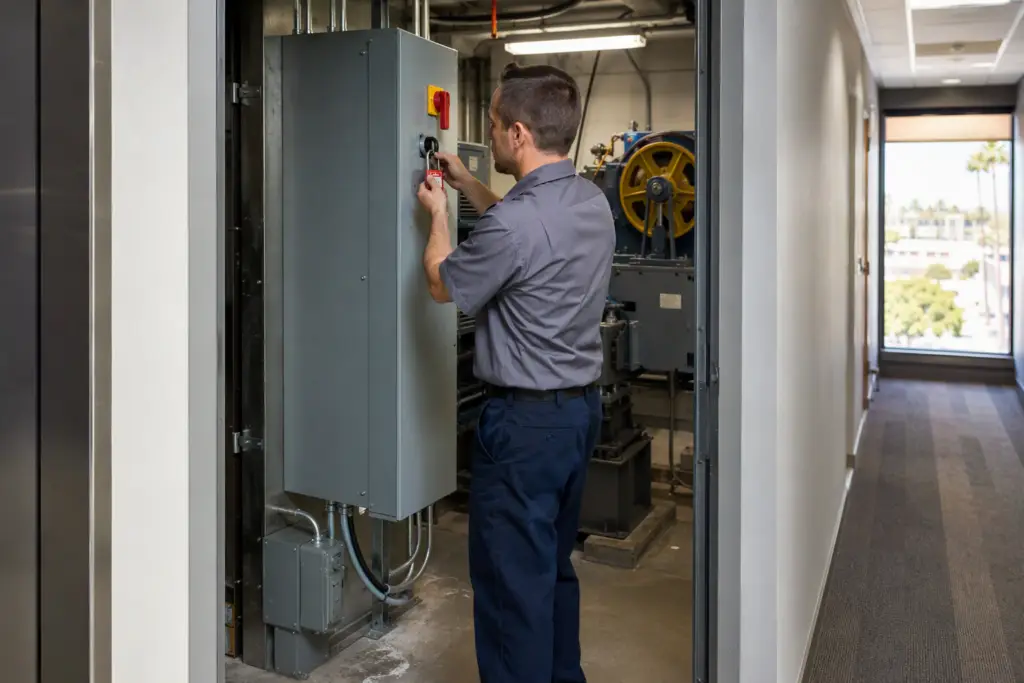
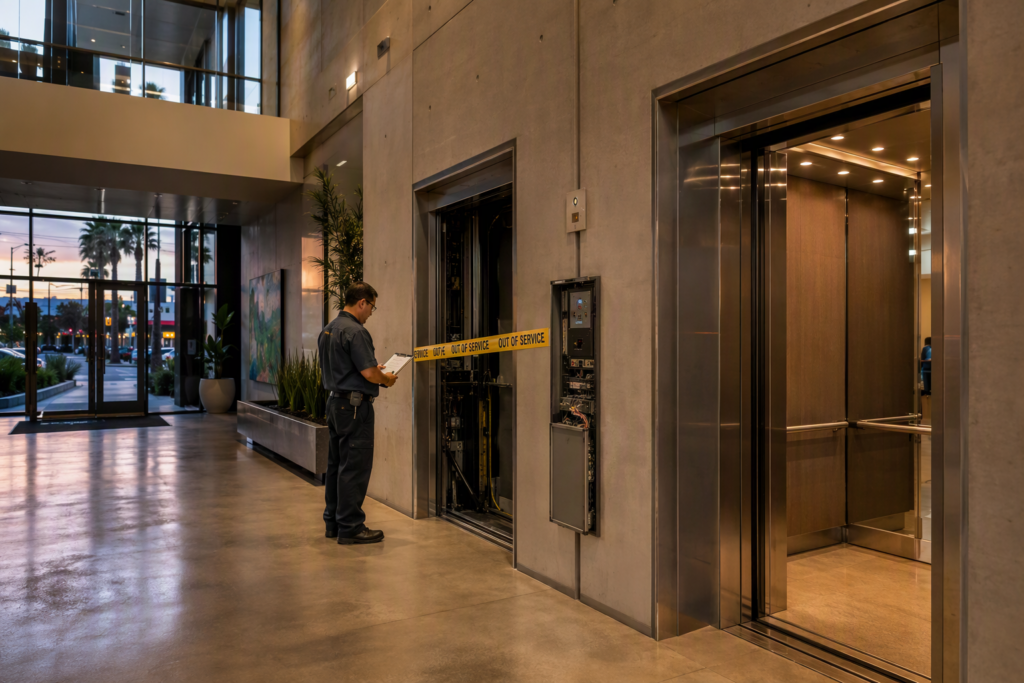
- Take the elevator out of service. Lock out the elevator and post clear signage indicating it is out of service. Do not allow passengers to attempt to use non-functional equipment.
- Document the failure. Note the time, floor, direction of travel, any unusual sounds or smells, error codes displayed on the controller, and the sequence of events reported by any witnesses or passengers.
- Contact a CQCC-certified elevator repair company. Provide the documentation gathered in step 3. Technician diagnosis is far more efficient when failure conditions are accurately described.
- Notify your insurance carrier if warranted. Entrampments, injuries, or property damage may require notification to your commercial liability carrier.
- Coordinate permit requirements with the repair company. If the repair involves a material alteration, a Cal/OSHA permit must be obtained before work begins. Confirm this with the repair company before authorizing the scope.
- Arrange ADA accommodations if the elevator serves as an accessible route. If the building is required to provide accessible access to upper floors, the building owner may need to implement temporary accommodations while the elevator is out of service.
How Long Does a Commercial Elevator Repair Typically Take?
Repair duration depends on the complexity of the failure, parts availability, and whether Cal/OSHA permitting is required — minor repairs may be completed in hours, while control system replacements or major hydraulic work can take days to weeks.
Door operator repairs and minor electrical faults are typically the fastest to resolve, often within a single service visit if parts are in stock. Control board replacements depend on whether the board is a common current-production unit or a legacy component that requires sourcing from specialty suppliers. Hydraulic cylinder replacements involve more extensive work including environmental compliance for oil handling and, in California, permit requirements for the alteration.
Modernization projects — replacing controls, drive systems, or cabs — are planned in phases to minimize elevator downtime in occupied commercial buildings. A detailed project schedule, agreed upon before work begins, is a standard deliverable from qualified commercial elevator repair companies.
What Is a Full Maintenance Contract and Why Does It Matter in California?
A full maintenance contract is a service agreement in which the elevator company assumes responsibility for all labor and covered parts needed to keep the equipment in safe, operational condition — and in California, holding such a contract with a C-11 licensed company may qualify the building for a two-year Cal/OSHA permit to operate rather than the standard one-year permit.
The distinction between a full maintenance contract and a partial (or “oil and grease”) contract is significant. A partial contract typically covers only lubrication and basic adjustments, leaving major component repairs as billable extras. A full maintenance contract covers a defined broader scope and aligns the service company’s interests with the building owner’s: the company benefits from keeping the equipment in good condition rather than billing for repairs that preventive attention would have avoided.
For commercial buildings with high elevator usage — multi-tenant office towers, hospitals, hotels, and large retail centers — the operational and regulatory benefits of a full maintenance contract are substantial. The two-year permit interval available under California regulations reflects the state’s recognition that well-maintained elevators covered by qualified service contracts present lower risk.
What Types of Commercial Elevators Do Repair Companies Service?
Commercial elevator repair companies service traction elevators (geared and gearless), hydraulic elevators (conventional and holeless), machine-room-less (MRL) traction systems, freight elevators, and limited-use/limited-application (LULA) elevators — each with distinct mechanical requirements.
Traction elevators, driven by steel hoist ropes or flat belts running over a drive sheave, are standard in mid- and high-rise commercial buildings. Geared traction systems use a worm-gear drive machine and are common in buildings of moderate height. Gearless traction systems — with the drive machine connected directly to the sheave — are typical in taller buildings and high-speed applications. Both types are governed by ASME A17.1 and require specific tools and diagnostic equipment for proper service.
Hydraulic elevators use a pump, power unit, and cylinder to raise the cab and are common in low-rise commercial buildings of two to five floors. They are simpler mechanically but introduce additional considerations around hydraulic fluid containment, environmental compliance, and the condition of underground cylinders in older installations.
MRL elevators eliminate the dedicated machine room by housing the drive machinery within or above the hoistway, requiring mechanics with specific training in the compact drive systems these configurations use. Freight elevators are designed for higher capacity and more demanding loading cycles, with code requirements under ASME A17.1 that differ in several respects from passenger elevator requirements.
How Does Elevator Modernization Differ From New Installation in Terms of Code Requirements?
Modernization is classified as an alteration under California regulations, meaning it triggers Cal/OSHA permitting and inspection requirements, but the applicable code standard may differ from the code that governs entirely new installations.
California’s Elevator Safety Orders under Title 8 of the California Code of Regulations adopt ASME A17.1/CSA B44, 2004 edition for installations under Group IV rules. Alterations to existing equipment are evaluated under ASME A17.3, the Safety Code for Existing Elevators and Escalators, which provides a framework for bringing older equipment into compliance in a staged manner rather than requiring full conformance with new-installation standards across the board. This distinction can significantly affect the scope and cost of a modernization project.
A commercial elevator repair company with California regulatory expertise will identify which requirements apply to a specific alteration — and which do not — before the project scope is finalized. This prevents both under-engineering (leaving non-compliant conditions in place) and over-engineering (requiring upgrades beyond what the applicable code actually demands).
What Safety Devices on Commercial Elevators Must Be Kept in Working Order?
Commercial elevators must maintain a range of safety devices in operational condition at all times, including overspeed governors, safeties, buffers, door interlocks, emergency lighting, and the emergency communication system — all required under ASME A17.1 and California’s adopted safety orders.
The overspeed governor and car safety system work together to stop the car if it descends faster than its rated speed. Buffers at the pit absorb kinetic energy if the car or counterweight reaches the terminal landing at excessive speed. Door interlocks prevent the elevator from moving unless all hoistway doors are securely closed and locked — a critical life-safety requirement addressed specifically by ASME A17.1.
Emergency lighting and ventilation must function in the event of normal power failure. Emergency communication in the car allows trapped passengers to summon help. Regarding the specific technical requirements for visual or text-based emergency communication in California — including whether visual two-way communication is currently required under the state’s adopted code — building owners should consult directly with a qualified elevator company and their local authority having jurisdiction, as the applicable requirements are not fully settled under California’s current adopted standards.
These safety devices are tested and documented during annual Cal/OSHA inspections, but periodic testing between inspections — part of a comprehensive maintenance program — is the most reliable way to identify failures before they result in an unsafe condition or a permit citation.
What Are the Consequences of Operating a Commercial Elevator Without a Valid California Permit?
Operating a commercial elevator without a valid Cal/OSHA permit to operate violates California Labor Code Sections 7300–7324.2 and exposes building owners to regulatory enforcement, potential liability for injuries, and forced shutdown of the equipment.
The permit to operate must be current and posted conspicuously in the elevator car. An expired permit — even if the elevator appears to be functioning — constitutes a violation. Cal/OSHA has the authority to order an elevator out of service and assess penalties. If an injury occurs while an elevator is operating without a valid permit, the absence of that permit may significantly affect the outcome of any resulting liability claim against the property owner.
Because arranging the annual reinspection is the elevator owner’s responsibility under California law, the risk of an inadvertently lapsed permit falls on the owner, not the service company. Tracking permit expiration dates and proactively scheduling reinspections is one of the most important administrative functions a building owner or property manager must maintain — or delegate to a qualified elevator service provider.
How Can Commercial Building Owners Reduce Elevator Downtime?
Commercial building owners reduce elevator downtime most effectively through scheduled preventive maintenance, keeping a record of recurring faults, and maintaining a current full maintenance contract with a CQCC-certified company.
Preventive maintenance visits allow mechanics to identify worn components, adjust operating parameters within specification, and lubricate moving parts before failure occurs. The difference between a planned parts replacement during a scheduled maintenance visit and an emergency shutdown is significant — both in direct cost and in disruption to building operations.
Maintaining clear records of previous repairs, parts replaced, and recurring issues helps the assigned mechanic build a diagnostic history of the specific equipment. Elevators in high-traffic commercial buildings — office towers, hospitals, and hotels — benefit from more frequent maintenance visit intervals than lightly used residential equipment. Liftech Elevator structures maintenance programs for commercial clients in Long Beach, Signal Hill, Los Angeles, and Orange County based on equipment type, usage patterns, and building operational requirements.
What Questions Should a Building Owner Ask Before Hiring a Commercial Elevator Repair Company?
Before engaging a commercial elevator repair company, building owners should ask for proof of CQCC certification, the C-11 license number, mechanic credentials, the company’s familiarity with the specific elevator brand and model on site, and the terms of any proposed maintenance agreement.
Additional questions worth asking include: How does the company handle Cal/OSHA permit applications for repair work that constitutes a material alteration? Who is the point of contact for permit and inspection coordination? What is the company’s parts sourcing approach for the installed equipment — particularly if it is older or from a manufacturer that has been acquired or discontinued? Does the proposed maintenance agreement qualify the building for Cal/OSHA’s two-year permit interval?
These questions serve two purposes: they reveal the company’s actual depth of California regulatory knowledge, and they establish clear expectations before a contract is signed. A qualified company will answer each question directly and provide documentation on request.
Does the Age of a Commercial Elevator Affect Repair Decisions?
Yes — the age of a commercial elevator directly affects the availability of replacement parts, the applicability of current safety codes to alterations, and the cost-benefit calculation between continued repair and full modernization.
Elevators installed under relay-logic control systems from earlier decades may still be in service in older commercial buildings across Los Angeles and Orange County. While these systems can often be maintained in operating condition, parts availability narrows as manufacturers discontinue support for legacy platforms. When a critical component — a relay, a printed circuit board, or a proprietary controller — becomes unavailable, the choice becomes modernization or extended downtime while sourcing a used or refurbished part.
From a code standpoint, an older elevator that has not been significantly altered may be evaluated under ASME A17.3 for existing elevators rather than the full current installation standard. However, any material alteration — including a control system replacement — triggers a review under current requirements for that scope of work. Understanding how California’s adopted standards apply to a specific alteration on a specific piece of equipment requires a mechanic who is current with both the California Elevator Safety Orders and the applicable ASME standards.
What Geographic Areas Do Commercial Elevator Repair Companies Serve in Southern California?
Reputable commercial elevator repair companies in Southern California typically serve defined geographic territories based on technician deployment logistics — in the greater Los Angeles and Orange County region, service territory matters because local knowledge of authority-having-jurisdiction (AHJ) requirements adds practical value.
In Los Angeles, the City of Los Angeles Department of Building and Safety (LADBS) operates its own elevator inspection program, creating a local regulatory layer that operates alongside Cal/OSHA’s state requirements. Commercial buildings in Los Angeles must navigate both. Orange County commercial buildings are generally subject to Cal/OSHA’s state program, with city-level requirements varying by municipality. Long Beach and Signal Hill, as independent cities within Los Angeles County, follow the applicable AHJ requirements for their jurisdictions.
Liftech Elevator serves commercial clients throughout Signal Hill, Long Beach, Los Angeles, and Orange County — markets where the team has direct familiarity with local inspection programs, permitting timelines, and the specific equipment types common in the regional building stock. For commercial building owners in these markets, selecting a repair company with established local operations simplifies the coordination of inspections, permits, and compliance documentation.
Contact Liftech Elevator for a Free Elevator Assessment
Whether a commercial elevator needs emergency repair, is approaching its annual Cal/OSHA inspection, or the equipment is aging and modernization is under consideration, Liftech Elevator provides comprehensive commercial elevator services for building owners and property managers throughout Signal Hill, Long Beach, Los Angeles, and Orange County.
Liftech Elevator holds the California CQCC certification and C-11 Elevator Contractor license required to legally perform elevator repair, maintenance, and modernization work in California. The team assists clients with Cal/OSHA permit applications, inspection preparation, and ongoing maintenance programs — including full maintenance contracts that may qualify covered equipment for Cal/OSHA’s two-year permit to operate.
Contact Liftech Elevator for a free elevator assessment: 562-997-3639
Need elevator service you can rely on? Liftech Elevator is ready to help.