Elevator Service in Signal, CA | Liftech Elevator
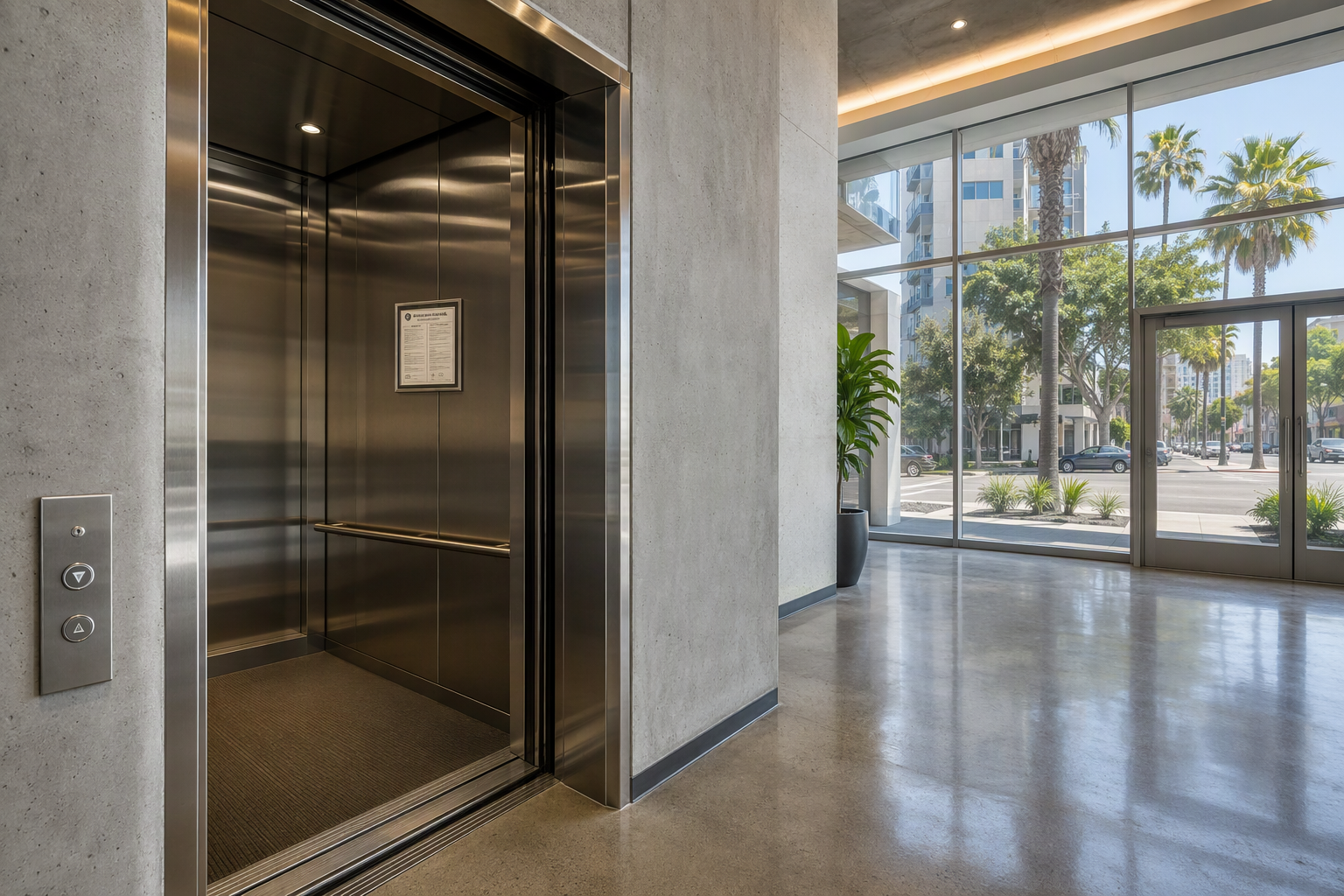
Liftech Elevator provides certified elevator installation, maintenance, repair, and inspection coordination services in Signal, CA and the surrounding Southern California region. Every technician who works on a conveyance unsupervised holds a Certified Competent Conveyance Mechanic (CCCM) credential from Cal/OSHA, and Liftech Elevator operates as a Certified Qualified Conveyance Company (CQCC) — the certifications California law requires before any elevator work may be performed. Building owners, property managers, and facilities teams in Signal rely on Liftech Elevator to keep their conveyances compliant, safe, and in continuous service.
What Is the ASME A17.1 Elevator Code and Why Does It Matter in California?
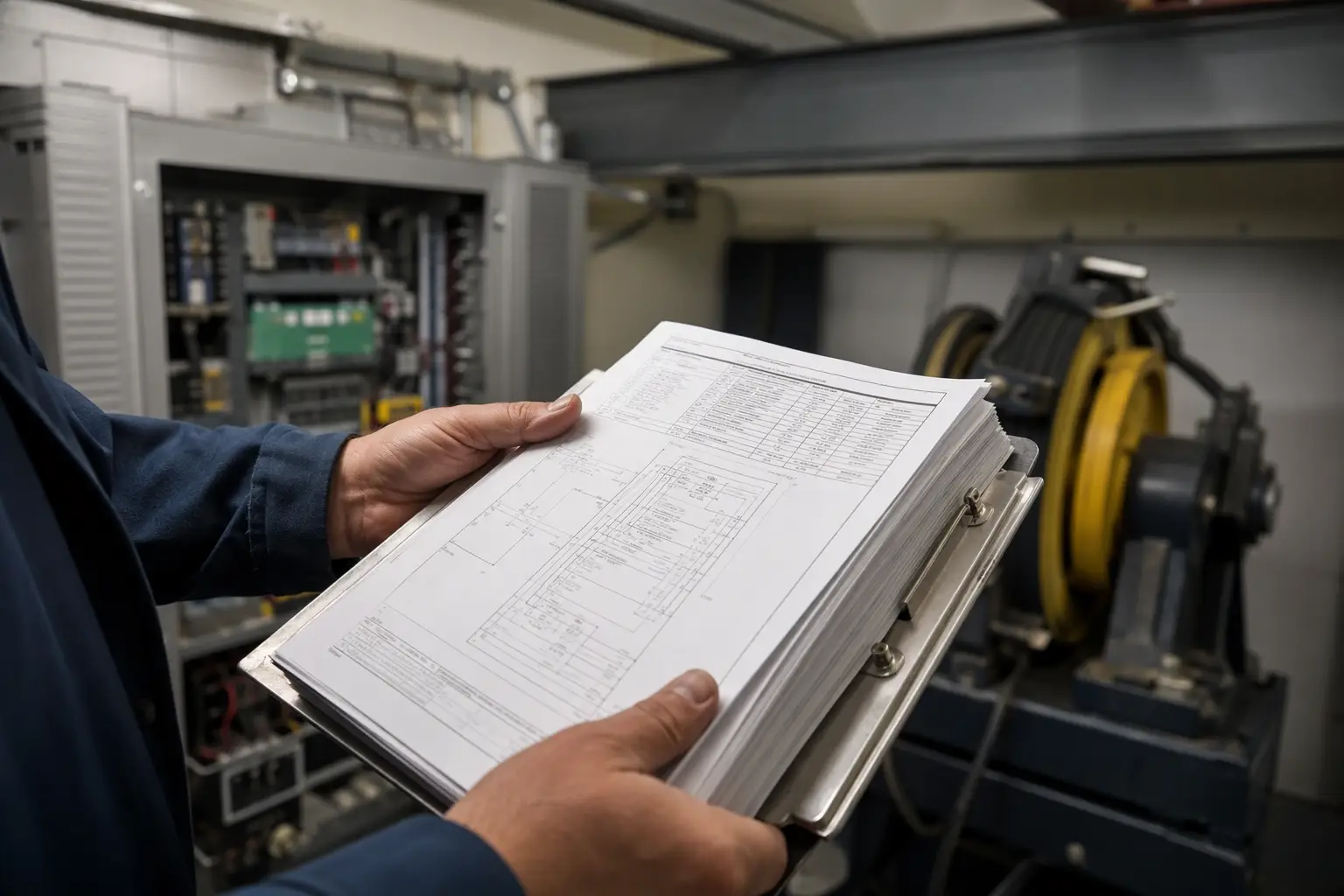
The ASME A17.1 Safety Code for Elevators and Escalators is the primary national standard governing the design, construction, installation, operation, inspection, testing, maintenance, and repair of elevators and related conveyances in the United States. It is published jointly with the Canadian Standards Association as ASME A17.1/CSA B44.
California has adopted the 2004 edition of ASME A17.1/CSA B44 as part of its Group IV Elevator Safety Orders, codified in the California Code of Regulations, Title 8, Sections 3000–3146, with an effective date of May 1, 2008, for installation contracts signed on or after that date. This means that every elevator installed, altered, tested, maintained, or repaired in California must conform to those Safety Orders — which incorporate the 2004 edition of the ASME A17.1 standard as the technical baseline.
As of 2026, California has proposed a Group V update that would incorporate portions of ASME A17.1-2019. A public hearing was held on June 18, 2026, but no effective date has been posted. Building owners in Signal should monitor updates from the Cal/OSHA Elevator Unit and work with a qualified elevator company to understand what any adopted changes may mean for existing equipment.
Who Enforces Elevator Code Compliance in California?
The elevator regulatory authority in California is the Division of Occupational Safety and Health (Cal/OSHA), Elevator Unit, California Department of Industrial Relations. Cal/OSHA administers the state’s elevator program under California Labor Code Sections 7300–7324.2 and the California Code of Regulations, Title 8, Elevator Safety Orders.
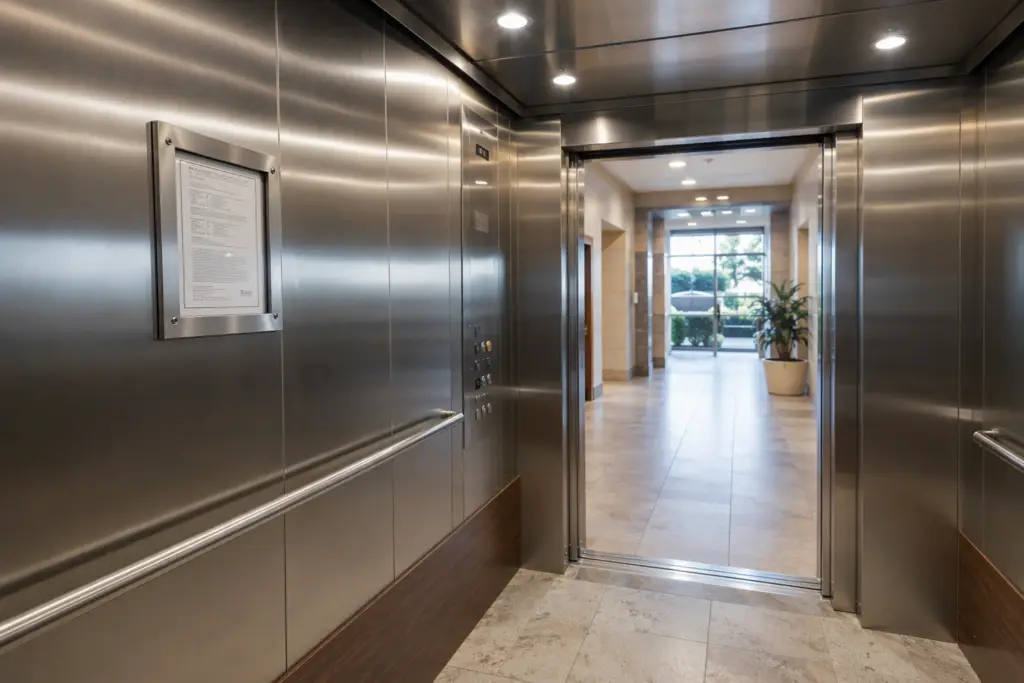
Cal/OSHA issues permits to operate, oversees inspections, and certifies the companies and mechanics who work on conveyances. Only State of California safety engineers and Certified Competent Conveyance Inspectors (CCCI) may perform elevator inspections. No elevator may be operated in California without a valid, current permit to operate issued by Cal/OSHA, and that permit must be posted conspicuously inside the elevator car.
The California Contractors State License Board (CSLB) issues the C-11 Elevator Contractor license separately. Companies must hold a current C-11 license as a prerequisite for CQCC certification — but it is Cal/OSHA, not the CSLB, that issues the CQCC certification and the permit to operate.
Signal, CA falls within the broader Los Angeles area. Note that the City of Los Angeles runs its own elevator and conveyance inspection program through the Department of Building and Safety (LADBS). Property owners should confirm with their local authority having jurisdiction which program applies to their specific address.
What Are the Annual Inspection and Permit Requirements for Elevators in Signal, CA?
California law requires every conveyance to be inspected at least once a year. If an inspection finds the unit to be in safe condition, Cal/OSHA issues a permit to operate for up to one year. When a building owner has a full maintenance contract with a C-11 licensed elevator company, Cal/OSHA may extend that permit for up to two years.
Arranging the annual reinspection is the elevator owner’s responsibility — not the elevator company’s and not Cal/OSHA’s. Missing an inspection cycle can result in an expired permit, which means the elevator must be taken out of service. Liftech Elevator helps property owners and managers in Signal track inspection schedules and coordinate the required documentation to keep permits current.
Before a new elevator is placed in service, it must be inspected by Cal/OSHA and receive a permit to operate. A Cal/OSHA permit is also required before any conveyance is erected, installed, or materially altered. Liftech Elevator manages the permit application and inspection coordination process for new installations and major alterations.
What Certifications Must an Elevator Company Hold to Work in California?
California imposes strict credential requirements on everyone involved in elevator work. Companies that install, alter, test, maintain, repair, or service elevators in California must be certified by Cal/OSHA as a Certified Qualified Conveyance Company (CQCC). Applicants must submit a current C-11 contractor license and certificates of workers’ compensation and liability insurance.
Individual mechanics who work on a conveyance without supervision must be certified by Cal/OSHA as a Certified Competent Conveyance Mechanic (CCCM). Only a CCCM working for a CQCC may maintain, repair, alter, or replace components on a conveyance. California CQCC and CCCM certificates last two years, and renewal requires at least eight hours of continuing education during each cycle.
Liftech Elevator holds all required California certifications, allowing it to legally perform the full range of elevator services — from routine maintenance and repairs to new installations and major alterations — for clients throughout Signal and the surrounding Southern California markets.
What Should a Building Owner Do When an Elevator Fails Inspection or Goes Out of Service?
- Post an out-of-service notice on the elevator immediately and prevent passenger use until the unit is cleared.
- Contact your CQCC-certified elevator service company to assess the deficiency and determine what repairs or adjustments are required under the California Code of Regulations, Title 8, Elevator Safety Orders.
- Document the deficiency and all corrective work performed, as Cal/OSHA may require records during reinspection.
- Coordinate with your elevator company to schedule a reinspection by a State of California safety engineer or a Certified Competent Conveyance Inspector (CCCI).
- Once Cal/OSHA issues an updated permit to operate, post it conspicuously in the elevator car before returning the unit to service.
Liftech Elevator provides emergency repair and troubleshooting services for building owners in Signal, working to restore safe operation as quickly as the inspection and permitting process allows.
Does the ADA Apply to Elevators in California, and How Does It Interact With ASME A17.1?
Yes. The Americans with Disabilities Act (ADA) establishes accessibility requirements for elevators in places of public accommodation and commercial facilities. ADA accessibility standards address cab dimensions, door timing, control height, floor identification, and communication requirements, among other elements. These requirements operate alongside — not in place of — the California Code of Regulations safety requirements derived from ASME A17.1.
Building owners undertaking new construction or alterations must satisfy both sets of requirements. Liftech Elevator evaluates both the safety code requirements and ADA compliance considerations when advising clients on new installations, cab renovations, and modernization projects in Signal.
What Is Elevator Modernization and When Should a Signal, CA Building Owner Consider It?
Elevator modernization refers to the replacement or upgrade of major components — such as controls, motors, door operators, cabs, or safety systems — to extend the operational life of a unit, improve reliability, reduce energy use, or bring an older installation into closer alignment with current standards. Because modernization typically constitutes a material alteration under California law, it requires a Cal/OSHA permit before work begins and a Cal/OSHA inspection before the elevator is returned to service.
Building owners in Signal may consider modernization when equipment reaches the end of its reliable service life, when parts become difficult to source, when energy costs are a concern, or when accessibility improvements are needed. Liftech Elevator assesses existing equipment and helps owners develop a modernization scope that addresses safety, compliance, and operational goals.
How Does Liftech Elevator Serve Signal, CA and the Surrounding Region?
Liftech Elevator serves commercial office buildings, residential high-rises, healthcare facilities, retail centers, industrial properties, and public-sector buildings throughout Signal and the broader Southern California market. The company’s service area includes the range of building types and elevator configurations common to the region — from traction and hydraulic passenger elevators to freight lifts and specialty conveyances.
All work is performed by CCCM-certified mechanics operating under Liftech Elevator’s CQCC certification, ensuring that every service call, maintenance visit, and installation project meets the requirements of California Labor Code Sections 7300–7324.2 and the California Code of Regulations, Title 8, Elevator Safety Orders. Liftech Elevator also monitors regulatory developments — including the proposed Group V update that would partially incorporate ASME A17.1-2019 — so clients are informed of changes that may affect their equipment.
Schedule a free consultation with Liftech Elevator at 562-997-3639.
Need elevator service you can rely on? Liftech Elevator is ready to help.