How to Schedule Elevator Tests Required by a State Inspection Notice: Complete FAQ Guide for California Building Owners
When a California state inspection notice arrives, building owners in Signal Hill, Long Beach, Los Angeles, and Orange County often face the same urgent questions: Who do I call first? What tests must be done? How long will this take? This guide answers all of those questions in plain language, grounded in California Labor Code, Title 8 Elevator Safety Orders, and the ASME A17.1/CSA B44 Safety Code for Elevators and Escalators as adopted by California.
What does a California state inspection notice actually require me to do?
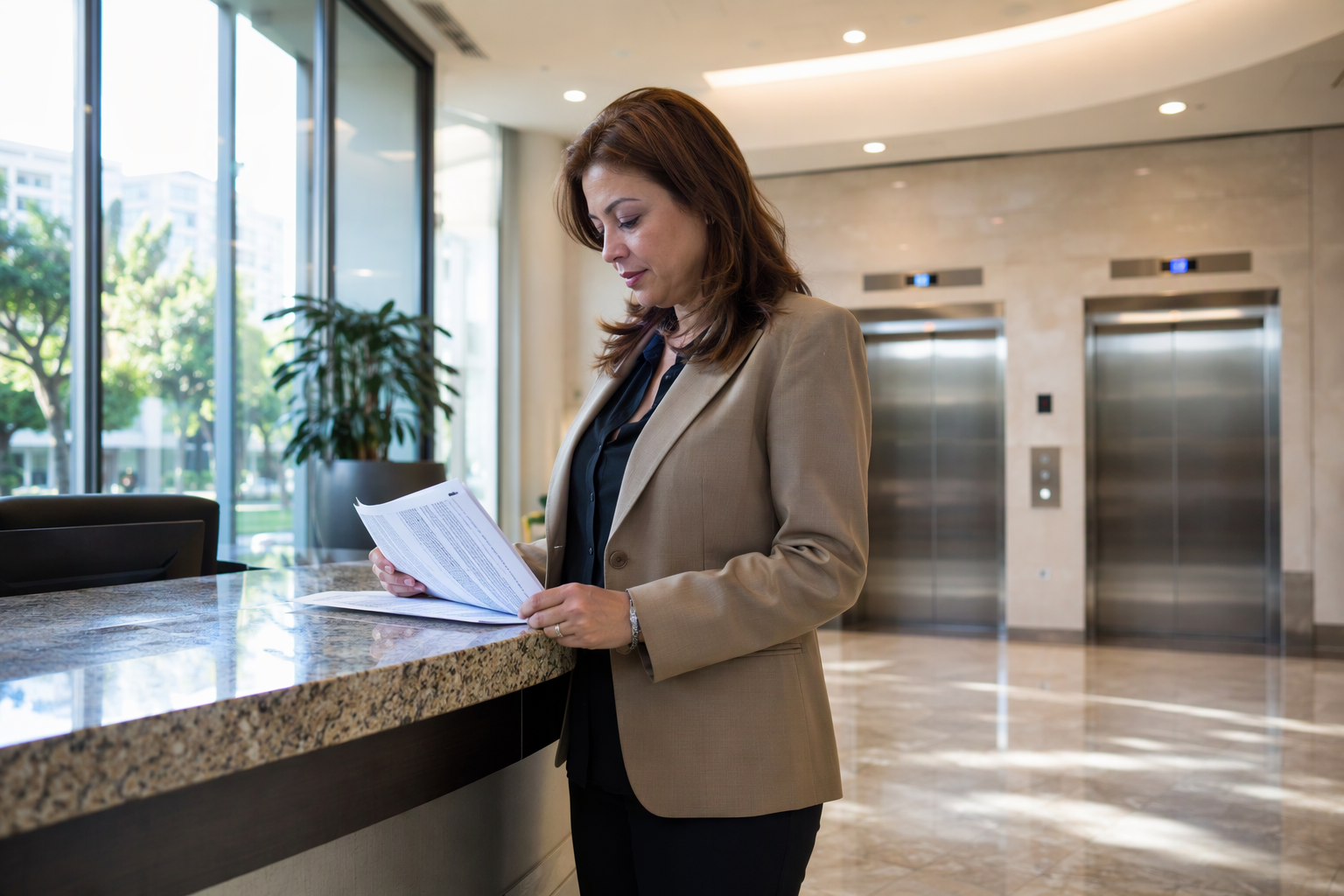
A California state inspection notice is a formal directive from the Cal/OSHA Elevator Unit, California Department of Industrial Relations requiring the building owner to arrange periodic testing and inspection of the conveyance so that a renewed permit to operate can be issued.
Under California Labor Code Sections 7300–7324.2 and the California Code of Regulations, Title 8, Elevator Safety Orders (Sections 3000–3146), no elevator may be operated in California without a valid, current permit to operate issued by Cal/OSHA. When that permit is approaching expiration or when a deficiency notice has been issued, the owner bears legal responsibility for arranging reinspection. The notice typically identifies the conveyance by permit number, specifies any deficiencies found during the previous inspection, and sets a compliance deadline. Reading the notice carefully before making any calls is the essential first step, because it determines which tests are required and which corrections must be completed before the inspection can be scheduled.
Who is legally authorized to perform elevator tests in California?
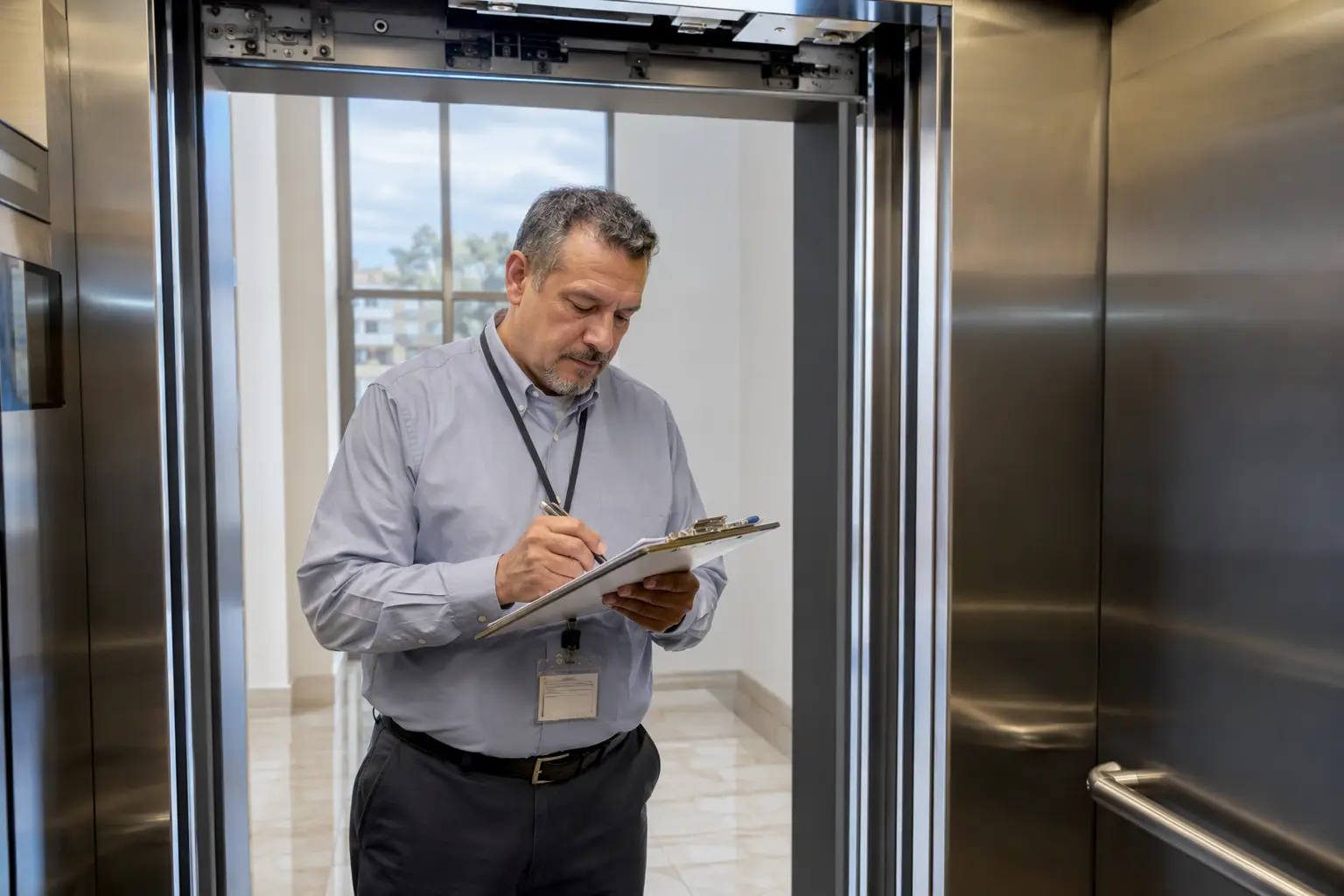
Only a Certified Competent Conveyance Mechanic (CCCM) working for a Certified Qualified Conveyance Company (CQCC) may perform maintenance, repair, alteration, or testing work on an elevator in California.
These certifications are issued by Cal/OSHA, not by a trade association or the elevator manufacturer. A CQCC must hold a current C-11 Elevator Contractor license from the California Contractors State License Board (CSLB) and carry workers’ compensation and liability insurance. The inspection itself — the official witness inspection that results in a permit to operate — must be conducted by either a Cal/OSHA state safety engineer or a Certified Competent Conveyance Inspector (CCCI). Building owners should verify that any company they hire holds active CQCC status before work begins. Liftech Elevator operates as a CQCC serving Signal Hill, Long Beach, Los Angeles, and Orange County, with technicians holding current CCCM certification as required by California law.
What is the step-by-step process for scheduling tests after receiving an inspection notice?
Scheduling elevator tests after a California inspection notice follows a defined sequence that moves from document review through witnessed testing to permit issuance.
- Read the entire notice. Identify the conveyance permit number, the specific deficiencies or test requirements listed, and the compliance deadline.
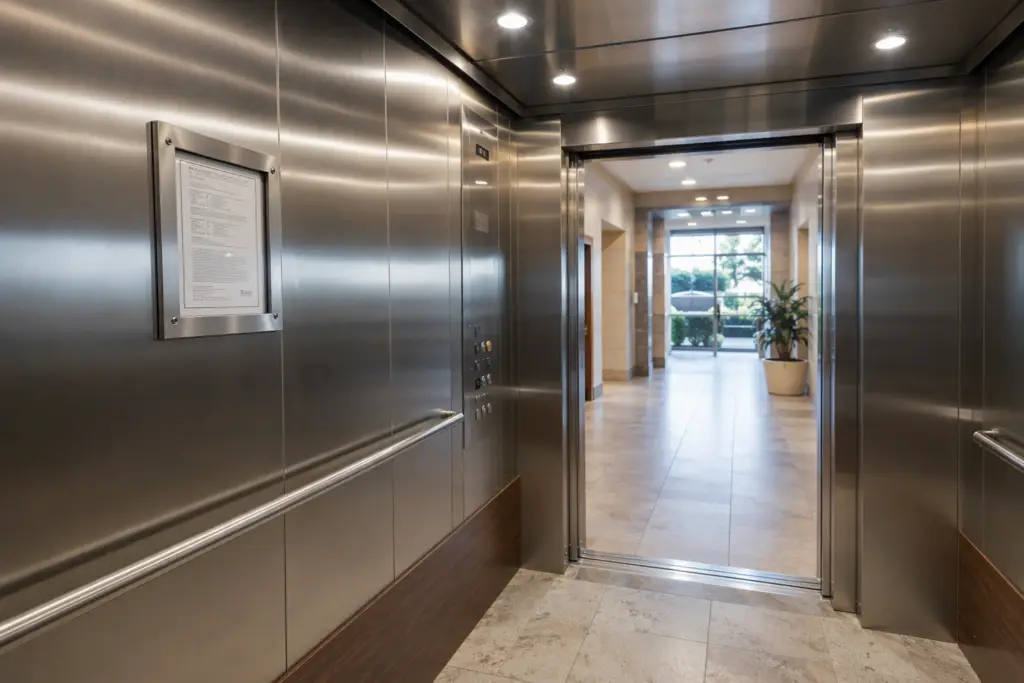
- Locate your current permit to operate. California law requires this to be posted conspicuously in the elevator car. The permit number and expiration date are needed for every subsequent step.
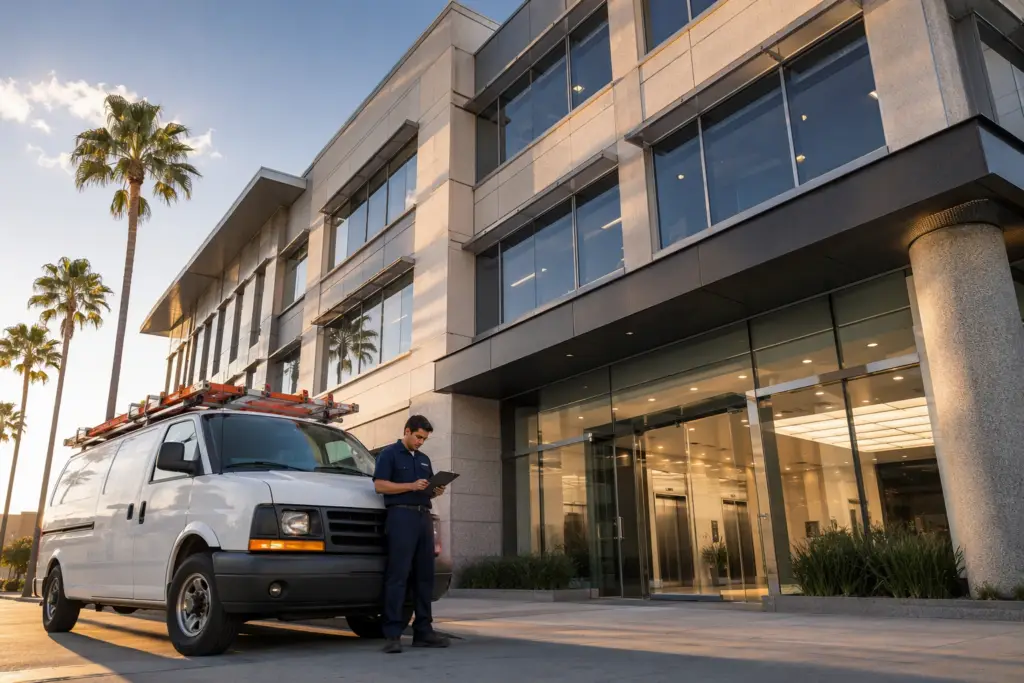
- Contact a CQCC-certified elevator company. Engage a certified company such as Liftech Elevator to review the notice and schedule a pre-inspection service visit to assess the elevator’s current condition.
- Complete all required corrective repairs. Any deficiencies cited in the notice must be corrected by a CCCM before the formal test can be witnessed. Attempting to schedule an inspection before repairs are complete wastes time and may result in a failed inspection.
- Coordinate the test date with the inspecting authority. In most California jurisdictions this is the Cal/OSHA Elevator Unit. In Los Angeles, the Department of Building and Safety (LADBS) runs its own elevator inspection program, so coordination occurs with LADBS instead.
- Conduct the required periodic tests. A CCCM performs the specified tests (load tests, safety tests, governor tests, etc.) under the applicable ASME A17.1 requirements adopted by California.
- Have tests witnessed by a Cal/OSHA safety engineer or CCCI. The witness inspection confirms that the elevator meets code requirements.
- Receive the renewed permit to operate. Once the elevator is found in safe condition, Cal/OSHA issues a permit for up to one year, or up to two years if the elevator is covered by a full maintenance contract with a C-11 licensed company.
- Post the new permit in the elevator car. This is a California legal requirement and must be done immediately upon receipt.
How long does the inspection scheduling and testing process typically take?
The total timeline depends on whether corrective repairs are needed, inspector availability through Cal/OSHA or the local authority, and how quickly the owner engages a certified company after receiving the notice.
When an elevator is in good working condition and no significant repairs are needed, the process from first contact with a CQCC to the witnessed inspection can often be completed within a few weeks, subject to the scheduling calendar of the inspecting authority. When major repairs, parts procurement, or alterations are required, the timeline extends accordingly. Building owners should never wait until the permit expiration date to begin this process. Engaging a certified company as soon as the notice arrives provides maximum scheduling flexibility and reduces the risk of operating without a valid permit, which is a violation of California law.
What specific tests are required under California’s adopted elevator code?
California has adopted the ASME A17.1/CSA B44, 2004 edition under its Group IV Elevator Safety Orders, effective May 1, 2008, for installation contracts signed on or after that date, and this code specifies the periodic tests that must be performed.
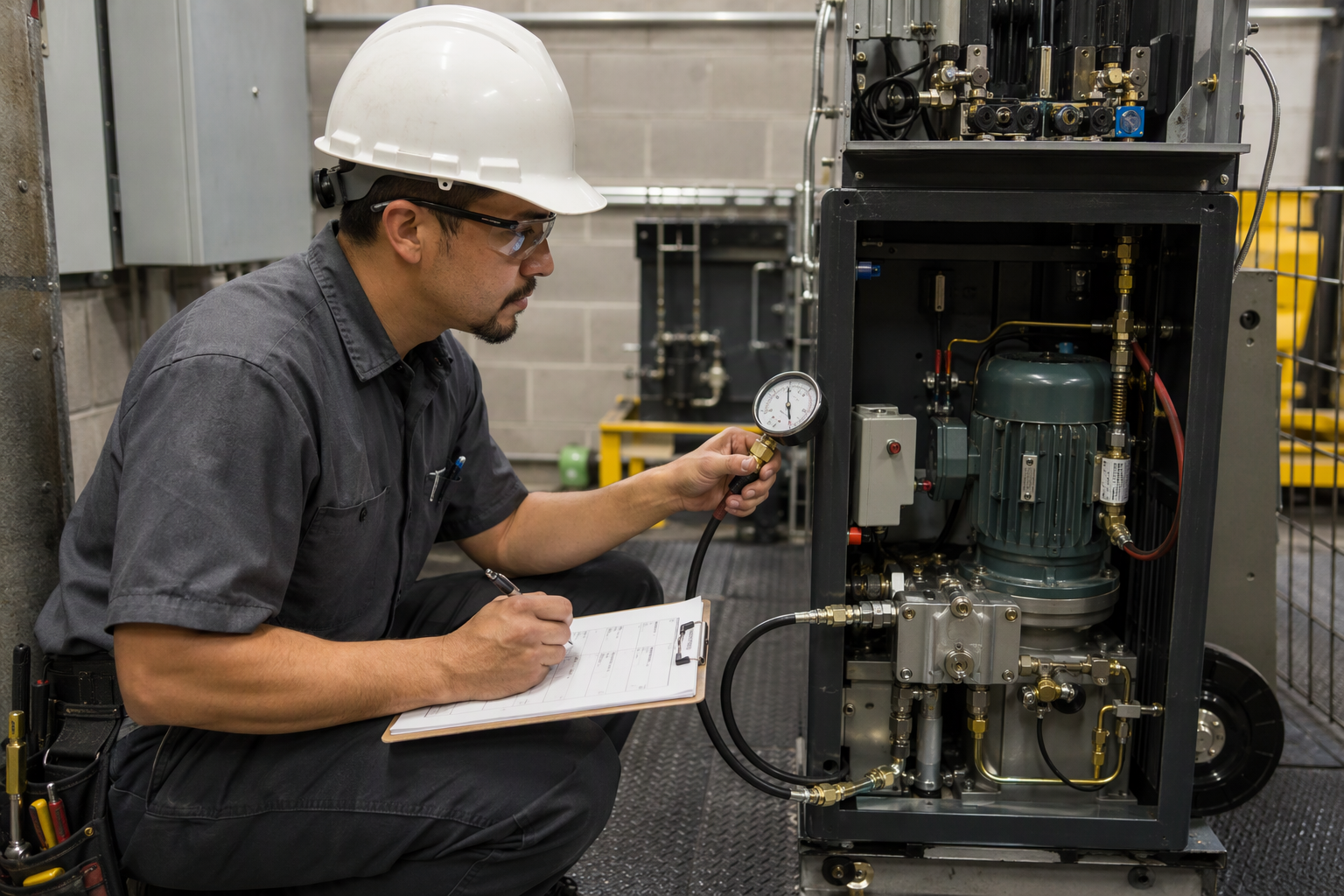
Periodic tests under ASME A17.1 include but are not limited to: governor and safety device tests, oil buffer tests for hydraulic elevators, pressure relief valve tests, car and counterweight safety tests, and driving machine brake tests. The specific intervals and test types depend on the elevator’s drive system (traction vs. hydraulic), its rated speed, and the nature of the safety devices installed. The notice from Cal/OSHA or LADBS will typically reference the applicable test requirement, and the CQCC performing the work is responsible for following the correct test protocol as specified in the adopted ASME A17.1 code. California has proposed a Group V update that would incorporate elements of ASME A17.1-2019; a public hearing was held in June 2026, but no effective date has been posted as of this writing, so the 2004 edition remains controlling for this analysis.
What is the difference between an annual inspection and a periodic test?
An annual inspection is a general safety examination performed by a Cal/OSHA safety engineer or CCCI every year, while periodic tests are specific performance tests of safety-critical components required by ASME A17.1 at defined intervals that may be less frequent than annually.
California law requires every conveyance to be inspected at least once a year. The annual inspection reviews overall elevator condition, code compliance, and documentation. Periodic tests, by contrast, involve active physical testing of components such as safety governors, buffers, and brakes. These tests are often what triggers an inspection notice when they are due or overdue. Both the inspection and the periodic tests may be scheduled together as part of a single compliance visit when the timing aligns, which is a more efficient approach for building owners. A certified company can review the elevator’s test history and advise which periodic tests are coming due so they can be bundled with the annual inspection.
Can the elevator continue operating while I arrange the required tests?
Whether an elevator may continue operating after receiving an inspection notice depends on the type of notice issued and whether the permit to operate remains valid during the compliance period.
If the notice is a standard reinspection notice issued before permit expiration and no immediate safety hazard has been identified, the elevator may generally continue operating until the permit expires, provided all other conditions are met. However, if Cal/OSHA or LADBS has issued an order to take the elevator out of service due to a safety deficiency, operation must cease immediately until the deficiency is corrected and the elevator is reinspected. Operating an elevator without a valid permit or in violation of an out-of-service order is a violation of California Labor Code and exposes building owners to significant legal liability. When in doubt, consult immediately with a CQCC-certified company and the issuing authority before continuing operation.
What is the role of the building owner versus the elevator company in this process?
California law places the obligation for arranging annual reinspection directly on the elevator owner, while the CQCC-certified company is responsible for performing all technical work and ensuring tests are conducted by qualified personnel.
Under the California Code of Regulations, Title 8, Elevator Safety Orders, the owner is the accountable party for maintaining a valid permit to operate, responding to inspection notices, and ensuring the conveyance is kept in safe condition. The elevator company executes the technical work: diagnosing deficiencies, ordering parts, performing repairs, and conducting and documenting the required tests. The owner should maintain a file containing the current permit to operate, the most recent inspection report, service records, and any correspondence with Cal/OSHA or LADBS. This documentation is frequently requested during inspections and enforcement actions.
What happens if I miss the deadline on a California inspection notice?
Failing to meet an inspection notice deadline can result in permit revocation, mandatory elevator shutdown, and potential civil penalties under California Labor Code Sections 7300–7324.2.
Cal/OSHA has authority to order an elevator out of service and to assess penalties for operating without a valid permit. Beyond the regulatory consequences, an elevator shut down by order creates immediate operational hardship for tenants, particularly in multi-story residential or commercial buildings where accessibility depends on the elevator. Buildings with tenants protected under the Americans with Disabilities Act (ADA) face additional legal exposure when elevator access is unavailable. Proactive scheduling — engaging a certified company well before the notice deadline — is the most effective way to avoid these outcomes.
Does a full maintenance contract affect the inspection schedule or permit duration?
Yes — Cal/OSHA may issue a permit to operate for up to two years, rather than the standard one year, for an elevator in safe condition that is covered by a full maintenance contract with a C-11 licensed elevator company.
This two-year permit option is a meaningful benefit for building owners who maintain a qualifying full maintenance agreement. It reduces the frequency of permit renewal cycles and, when combined with proactive maintenance, can lower the likelihood of unexpected failures that trigger emergency service calls. The agreement must be with a company holding a current C-11 license from the CSLB and CQCC certification from Cal/OSHA. Liftech Elevator provides full maintenance contracts for elevator systems throughout Signal Hill, Long Beach, Los Angeles, and Orange County, and can advise building owners on whether their elevator and service agreement qualify for the extended permit term.
What is the difference between Cal/OSHA jurisdiction and LADBS jurisdiction for elevator inspections in Los Angeles?
Los Angeles operates its own elevator and conveyance inspection program through the Department of Building and Safety (LADBS), separate from the Cal/OSHA Elevator Unit that has jurisdiction in most other California cities.
Building owners with elevators in the City of Los Angeles should direct their inspection coordination to LADBS rather than directly to Cal/OSHA for routine permit matters. The underlying substantive requirements — ASME A17.1 as adopted in California’s Title 8 Elevator Safety Orders, the need for CQCC-certified companies, and the CCCM requirement for mechanics — remain the same under state law regardless of which authority conducts the inspection. Building owners outside the City of Los Angeles, including those in Signal Hill, Long Beach, and Orange County, typically coordinate directly with the Cal/OSHA Elevator Unit at dir.ca.gov/dosh/Elevator.html.
What documentation should be ready before the inspector arrives?
Having complete documentation organized and accessible before the inspection visit significantly reduces the risk of delays, re-inspections, or deficiency citations related to recordkeeping.
Inspectors typically expect to review the following: the current permit to operate (posted in the car), the previous inspection report, the maintenance log or service records for the period since the last inspection, records of any repairs or alterations performed, and documentation of any periodic tests previously completed. For new installations or recently altered elevators, the original Cal/OSHA installation permit and approved plans may also be required. Under ASME A17.1 requirements adopted by California, maintenance records must be kept in a standard format that reflects the maintenance control program for the specific elevator. A CQCC-certified company should provide organized copies of all service and test records as part of their standard maintenance service.
What tests are required for hydraulic elevators versus traction elevators?
Hydraulic and traction elevators have different mechanical systems and therefore require different periodic tests under ASME A17.1 as adopted in California’s Elevator Safety Orders.
| Test Type | Hydraulic Elevators | Traction Elevators | Typical Interval |
|---|---|---|---|
| Pressure Relief Valve Test | Required | Not applicable | As specified in ASME A17.1 |
| Cylinder/Plunger Inspection | Required | Not applicable | As specified in ASME A17.1 |
| Governor & Safety Device Test | Required (where applicable) | Required | As specified in ASME A17.1 |
| Oil Buffer Test | Required (where applicable) | Required (where oil buffers used) | As specified in ASME A17.1 |
| Driving Machine Brake Test | Not applicable | Required | As specified in ASME A17.1 |
| Car & Counterweight Safety Test | Limited (where safeties present) | Required | As specified in ASME A17.1 |
| Full Load Test | Required | Required | As specified in ASME A17.1 |
| Emergency Lowering Device Test | Required | Not applicable | As specified in ASME A17.1 |
The exact intervals and pass/fail criteria for each test are defined in the applicable ASME A17.1 sections as adopted by California. The CQCC performing the tests is responsible for applying the correct test protocol for the specific elevator type, drive system, and rated speed. A building owner should request a written test plan from their elevator company before the inspection date to confirm that all required tests are covered.
What qualifications should I look for when choosing an elevator company to handle the tests?
California law sets minimum qualifications — CQCC certification from Cal/OSHA, a current C-11 license from the CSLB, and CCCM-certified mechanics — but building owners should also evaluate a company’s familiarity with local inspection authorities and their history of successful inspections in the relevant jurisdiction.
Practical factors beyond the minimum legal requirements include the company’s experience with the specific elevator type and manufacturer, their ability to source parts promptly to avoid delays in getting the elevator back to full compliance, and whether they maintain organized test and service records that satisfy inspector documentation requirements. Companies that serve specific geographic markets tend to have established working familiarity with local authority processes — an advantage when coordinating inspection dates and resolving documentation questions quickly. Liftech Elevator has built its practice around the Signal Hill, Long Beach, Los Angeles, and Orange County markets specifically, providing localized knowledge of both Cal/OSHA and LADBS processes.
Does ADA compliance factor into a California elevator inspection?
ADA compliance is a separate legal obligation from the Cal/OSHA safety inspection, but deficiencies in elevator accessibility features can be identified during the inspection process and may trigger additional requirements.
The Americans with Disabilities Act requires that elevators in covered facilities meet specific accessibility standards including door width and timing, control height and Braille marking, leveling accuracy, and audible signals. Cal/OSHA inspections focus on mechanical safety rather than ADA compliance per se, but when an elevator’s physical condition raises accessibility concerns, building owners may face parallel obligations under federal law. Building owners undergoing a Cal/OSHA-required inspection should use the opportunity to review ADA compliance simultaneously, since the elevator will already be out of service for testing. A knowledgeable CQCC company can flag observed ADA concerns during the service visit even when they fall outside the strict scope of the state inspection.
What if the inspector finds additional deficiencies during the witness inspection?
If a Cal/OSHA safety engineer or CCCI identifies deficiencies during the witness inspection, the permit to operate will not be issued until those deficiencies are corrected and the relevant items are re-inspected.
This is one of the most common causes of extended downtime for elevators undergoing reinspection. The inspector will document the deficiencies in writing, and the owner must again engage their CQCC to perform the corrective work before scheduling a follow-up inspection. Thorough pre-inspection service by the elevator company — including a detailed review of all components likely to be examined — reduces the probability of unexpected findings. Building owners should request a written pre-inspection report from their CQCC that identifies any items that could fail inspection, so those items can be addressed before the official witness date rather than after.
What is a permit to operate and where must it be displayed?
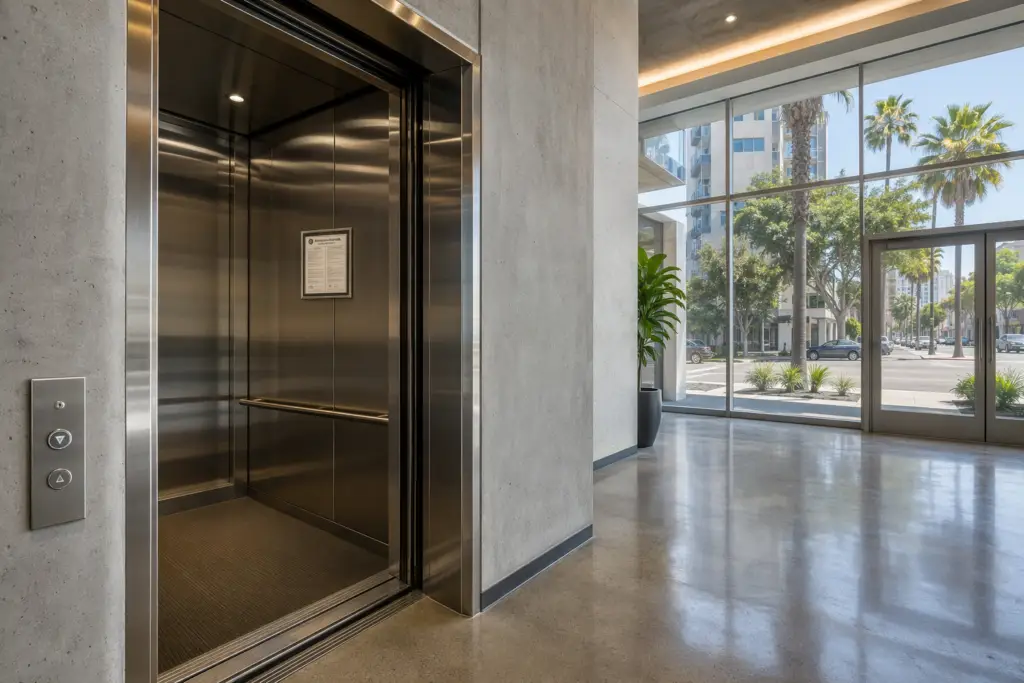
A permit to operate is the official authorization issued by Cal/OSHA confirming that an elevator has been inspected and found safe, and California law requires it to be posted conspicuously in the elevator car at all times.
The permit to operate is the building owner’s primary evidence of legal compliance with California elevator law. It includes the permit number, the conveyance identification, the issuing authority, and the expiration date. When an elevator’s permit expires or is revoked, the elevator may not legally be operated. Building managers and property owners should establish a calendar reminder well in advance of the permit expiration date so that the reinspection process can be initiated in time to avoid a lapse. Under California law, arranging the annual reinspection is explicitly the elevator owner’s responsibility — not the elevator company’s and not the inspector’s.
Are newly installed or recently altered elevators subject to different inspection requirements?
Yes — in California, every new elevator must be inspected by Cal/OSHA and receive a permit to operate before it is placed in service, and a permit from Cal/OSHA is required before any conveyance is erected, installed, or materially altered.
This means that building owners undertaking new construction or major elevator modernization projects must factor inspection and permitting timelines into their project schedules. The installation permit must be obtained before work begins, and the final inspection by Cal/OSHA must occur — and produce a permit to operate — before the elevator can be used by the public or tenants. For modernization projects that constitute a material alteration under California’s Elevator Safety Orders, the same pre-work permit requirement applies. Working with a CQCC that has experience managing both installation and alteration permits through Cal/OSHA streamlines this process considerably.
How do CQCC and CCCM certifications work, and how long are they valid?
California CQCC company certifications and CCCM mechanic certifications are issued by Cal/OSHA, last two years, and require at least eight hours of continuing education for renewal.
This renewal requirement ensures that certified companies and mechanics stay current with code developments and safety standards. Building owners can verify the status of a company’s CQCC certification and a mechanic’s CCCM certification through the Cal/OSHA Elevator Unit. Hiring a company whose certifications have lapsed — even if inadvertently — means that any work performed on the elevator may not be recognized as valid by the inspecting authority, potentially invalidating the inspection and creating additional compliance problems. Verification of current certification status should be part of every building owner’s vendor selection process.
What should I do if I cannot locate the original inspection records for my elevator?
If original inspection records are unavailable, the building owner should contact the Cal/OSHA Elevator Unit (or LADBS for Los Angeles properties) to request a copy of the most recent inspection report on file, then work with a CQCC to reconstruct the maintenance history.
Cal/OSHA maintains records associated with each conveyance permit number, and an official inspection report can typically be obtained through a written request to the Elevator Unit at dir.ca.gov/dosh/Elevator.html. With the official inspection report in hand, a CQCC can assess the elevator’s current condition, identify what periodic tests are overdue, and develop a corrective action plan. Going forward, building owners should maintain a dedicated physical or digital file for all elevator documentation — permits, inspection reports, service records, test reports, and correspondence with the inspecting authority — to prevent this situation from recurring. Liftech Elevator can assist building owners in Signal Hill, Long Beach, Los Angeles, and Orange County with document organization and ongoing recordkeeping as part of a maintenance agreement.
Contact Liftech Elevator for a free elevator assessment at 562-997-3639.
Need elevator service you can rely on? Liftech Elevator is ready to help.