Affordable Elevator Testing in Los Angeles for Healthcare Facilities
Hospitals, outpatient clinics, rehabilitation centers, and long-term care facilities throughout Los Angeles, Long Beach, Signal Hill, and Orange County depend on elevators every hour of every day. A delayed inspection, an expired permit to operate, or a failed compliance test can mean patient transport interruptions, regulatory citations, and costly emergency call-outs. Understanding California’s elevator testing requirements — and finding a certified provider who can keep costs predictable — is a critical operational priority for any healthcare facility manager.
What Does California Law Require for Healthcare Elevator Testing?
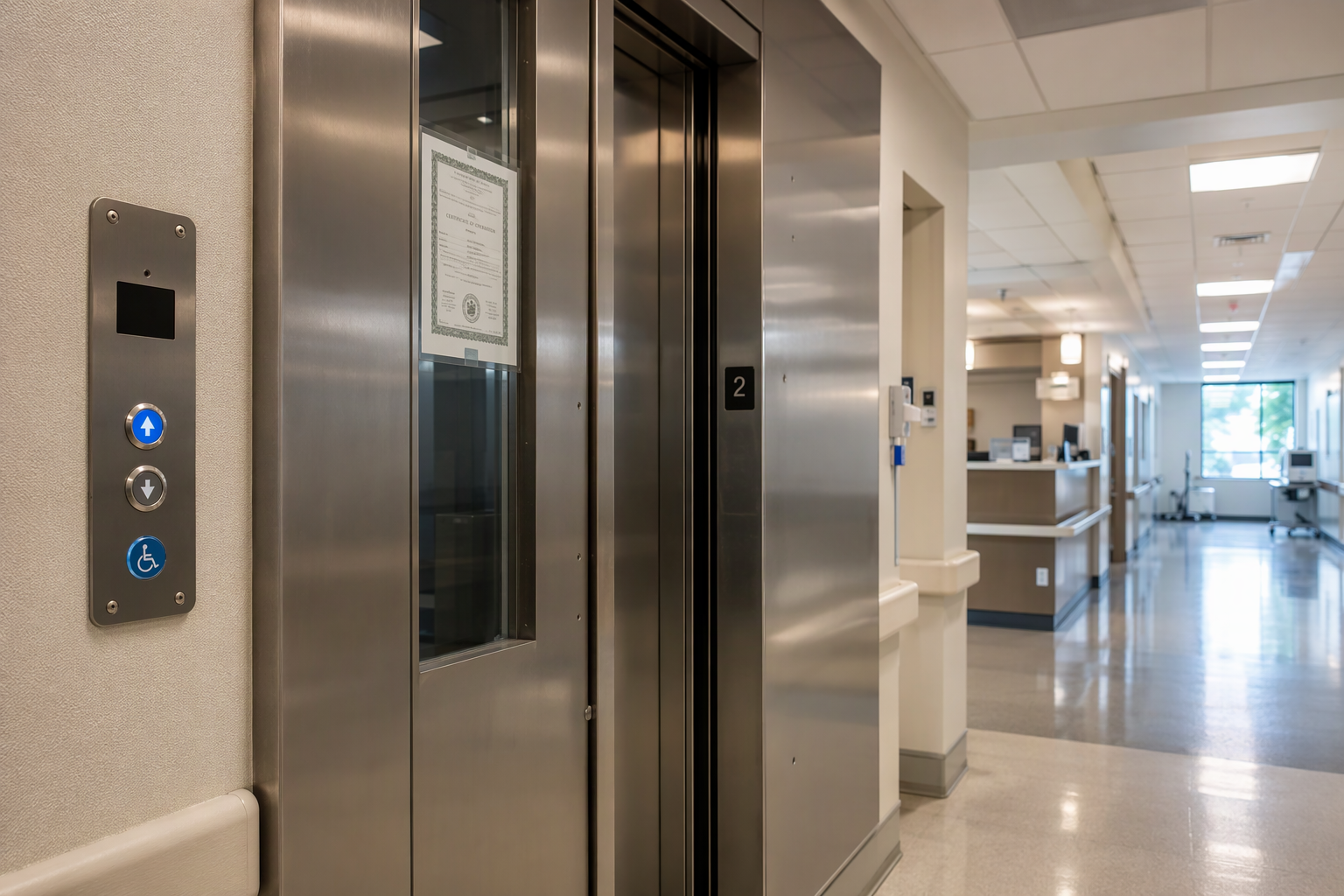
Under California’s elevator safety program, administered by Cal/OSHA’s Elevator Unit within the California Department of Industrial Relations, no elevator may be operated without a valid, current permit to operate. The governing statute is California Labor Code Sections 7300–7324.2, and the technical rules are found in the California Code of Regulations, Title 8, Elevator Safety Orders (Sections 3000–3146).
The adopted technical code is the ASME A17.1/CSA B44 (2004 edition), effective May 1, 2008, for installations signed on or after that date. California has proposed a Group V update that would incorporate elements of ASME A17.1-2019; a public hearing was held on June 18, 2026, but no effective date has been posted as of this writing.
Key statutory requirements that directly affect healthcare facilities include:
- Every conveyance must be inspected at least once per year by a State of California safety engineer or a Certified Competent Conveyance Inspector (CCCI).
- A conveyance found safe receives a permit to operate for up to one year.
- Cal/OSHA may issue a permit for up to two years when the elevator is covered by a full maintenance contract with a Certified Qualified Conveyance Company (CQCC) holding a C-11 license — a meaningful cost and scheduling benefit for large hospital campuses.
- The elevator owner — not the testing company — is responsible for arranging the annual reinspection.
- The permit to operate must be posted conspicuously inside the elevator car at all times.
- Only State of California safety engineers and CCCIs may perform elevator inspections.
- All maintenance, repair, alteration, or replacement work must be performed by a Certified Competent Conveyance Mechanic (CCCM) employed by a CQCC.
- Los Angeles has its own elevator and conveyance inspection program operated through the Los Angeles Department of Building and Safety (LADBS). Healthcare facility managers in the City of Los Angeles should confirm current requirements directly with LADBS in addition to Cal/OSHA obligations.
Why Do Healthcare Elevators Face Stricter Scrutiny Than Other Commercial Elevators?
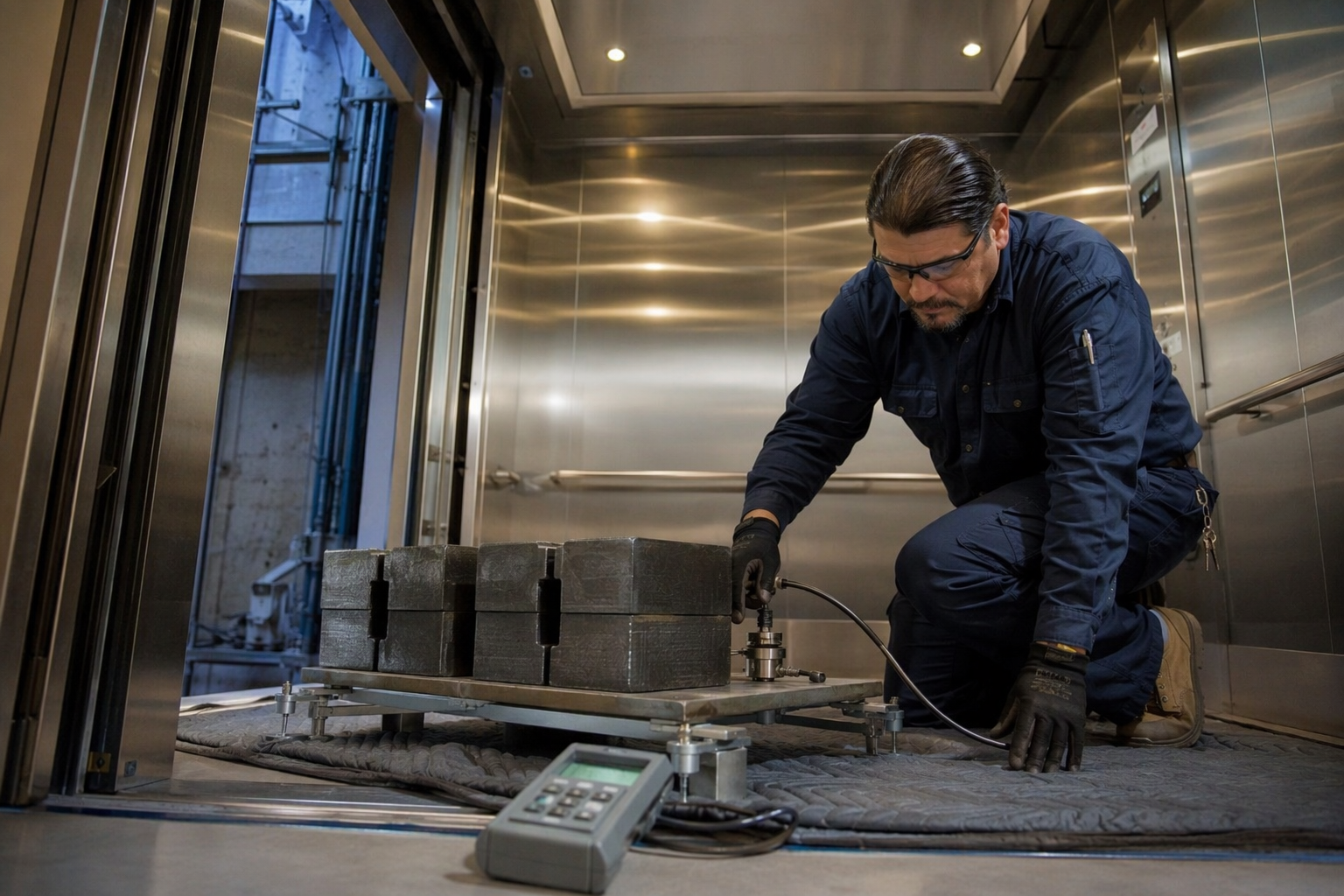
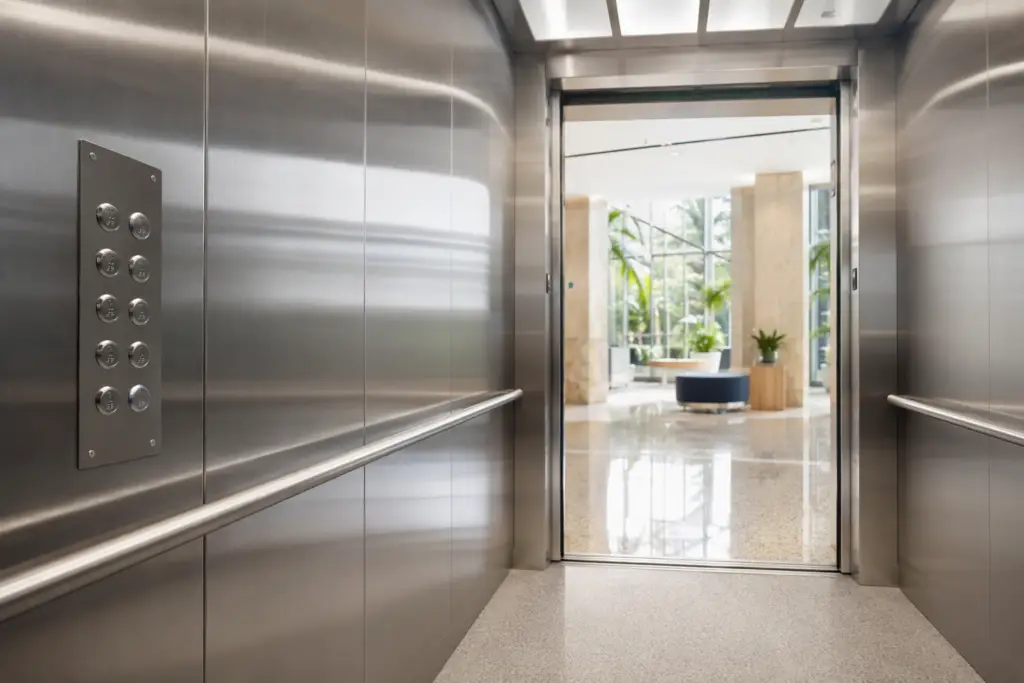
Healthcare elevators carry patients on gurneys and in wheelchairs, medical staff transporting equipment, and visitors — often simultaneously, around the clock. This continuous, high-load use pattern means wear accumulates faster than in a typical office building. Inspectors pay particular attention to:
- Door dwell times and sensitivity, which must accommodate wheelchair users and gurney transport under ADA accessibility standards.
- Leveling accuracy, because even a small floor-to-landing gap creates a trip hazard for IV stands, wheelchairs, and stretchers.
- Emergency communication systems that enable two-way contact between the cab and a staffed monitoring point — essential in a clinical environment where a trapped patient could face a medical emergency.
- Load capacity and rated speed, which must match the facility’s current patient transport demands rather than its original construction load assumptions.
- Firefighters’ emergency operation features required under ASME A17.1, which hospitals must keep fully functional given their role in fire evacuation planning.
Liftech Elevator’s service team is familiar with the inspection priorities that apply to healthcare conveyances in Los Angeles and surrounding service areas, helping facility managers prepare before the official Cal/OSHA inspection takes place.
What Is Included in a Standard Elevator Test for a Hospital or Clinic?
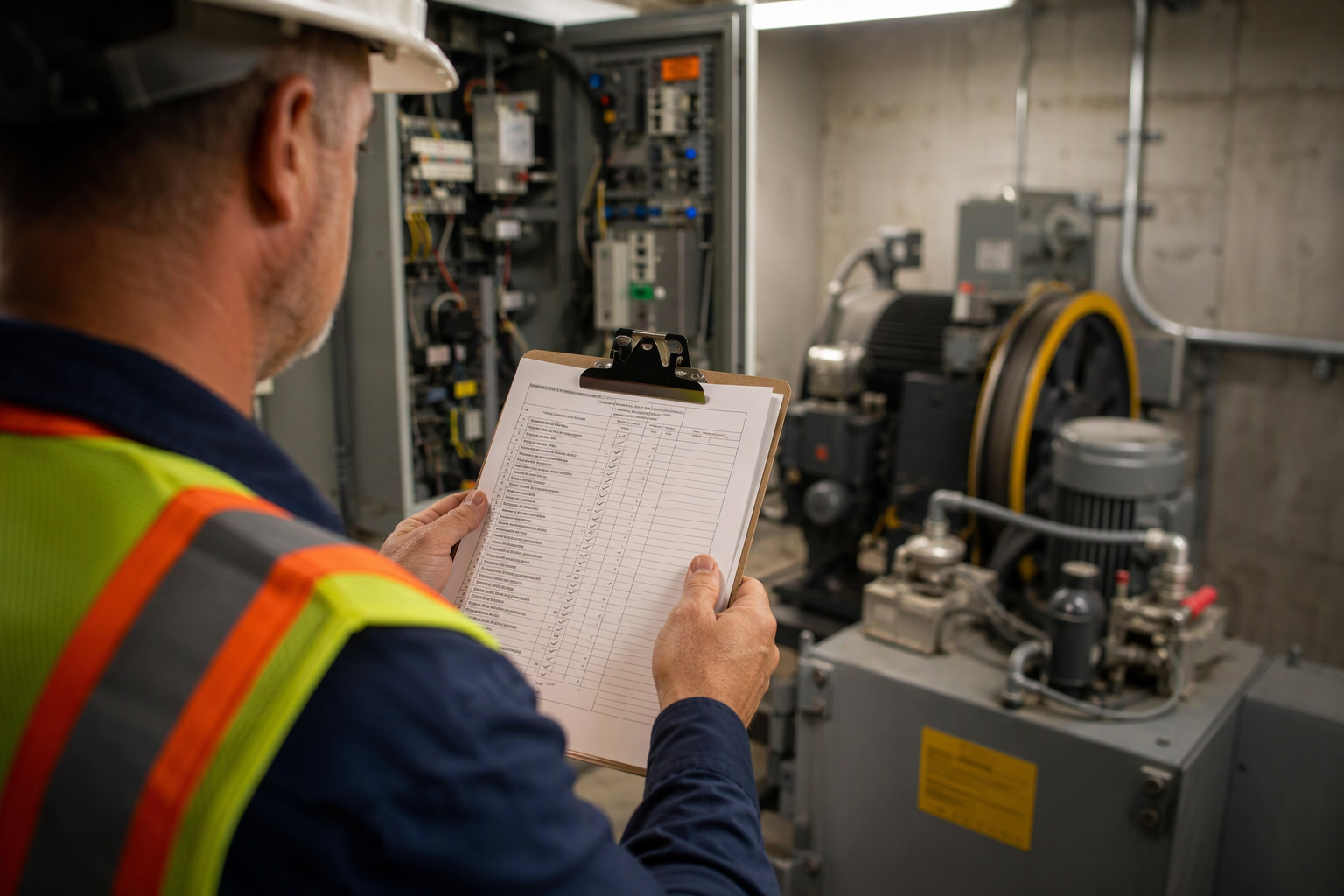
A thorough elevator test at a healthcare facility typically covers the following items in sequence:
- Document review: Verify that the current permit to operate is posted in the cab, that maintenance records are current, and that any prior violation notices have been cleared.
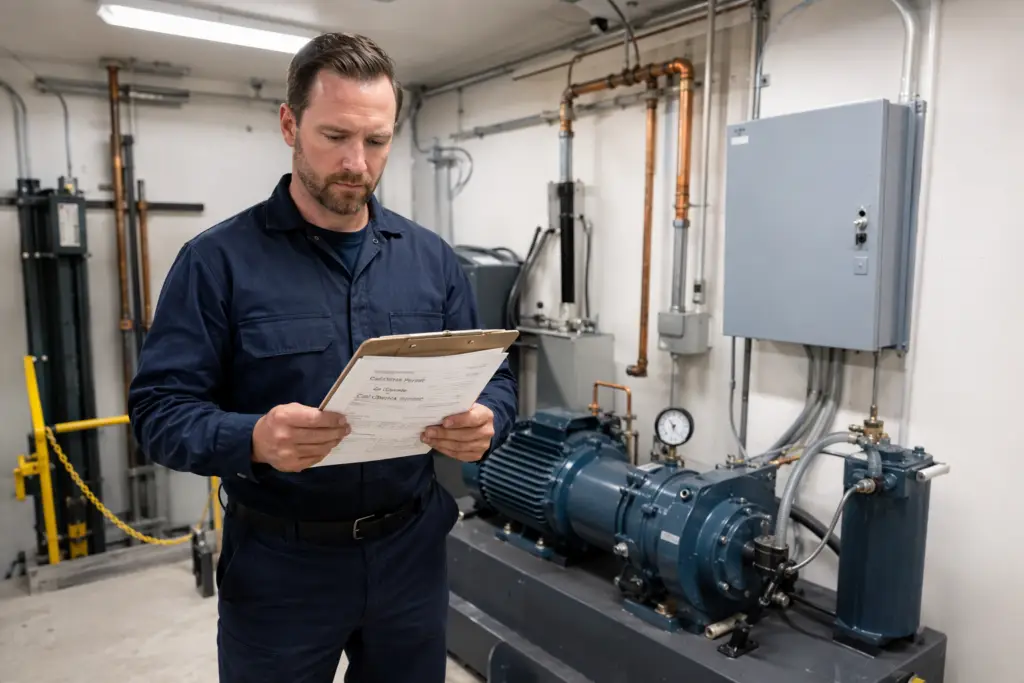
- Visual inspection of the machine room and pit: Check for water intrusion, proper lighting, fire suppression equipment, and compliance with clearance requirements under the Elevator Safety Orders.
- Safety device testing: Verify operation of the governor, safeties, buffers, and pit stop switches.
- Door system testing: Confirm door-closing force limits, reopening device sensitivity, and door-open dwell times that accommodate mobility-assist equipment.
- Leveling test: Measure landing accuracy under no-load and full-load conditions.
- Load test: Confirm the elevator performs within rated capacity.
- Emergency features: Test firefighters’ emergency operation, emergency lighting, and communication systems.
- ADA function check: Verify cab dimensions, control heights, and audible/visual floor indicators against ADA requirements.
- Documentation: Record all findings and prepare any corrective action items prior to the official Cal/OSHA inspection.
How Can a Healthcare Facility Reduce Elevator Testing Costs in Los Angeles?
Keeping testing costs predictable and affordable in a healthcare setting comes down to preparation and scheduling strategy. Consider these practices:
- Full maintenance contracts: California law allows Cal/OSHA to issue a two-year permit to operate — rather than one year — when the conveyance is covered by a full maintenance contract with a CQCC. For a facility with multiple elevators, this can reduce the frequency of formal reinspections and the administrative burden on facilities staff.
- Pre-inspection readiness checks: Having a CQCC like Liftech Elevator perform a readiness review before the official Cal/OSHA inspection allows facilities to identify and correct deficiencies in advance, avoiding re-inspection fees.
- Bundling multiple units: Hospitals and large outpatient campuses often have several elevators and platform lifts. Scheduling testing and maintenance visits together reduces mobilization costs compared with individual call-outs.
- Accurate record-keeping: Maintaining organized maintenance logs reduces inspection time and demonstrates compliance history to Cal/OSHA inspectors — which can smooth the permit renewal process.
What Certifications Must an Elevator Testing Company Hold in California?
California sets specific certification requirements for any company that installs, alters, tests, maintains, repairs, or services elevators. Healthcare facility managers should verify the following before engaging any provider:
- Certified Qualified Conveyance Company (CQCC): The company must hold a current CQCC certificate issued by Cal/OSHA. CQCC certification requires a current C-11 Elevator Contractor license (issued by the California Contractors State License Board) plus certificates of workers’ compensation and liability insurance.
- Certified Competent Conveyance Mechanics (CCCM): Every mechanic who works on a conveyance without supervision must hold a current CCCM certificate from Cal/OSHA. CQCC and CCCM certificates are valid for two years and require at least eight hours of continuing education for renewal.
- Inspection authority: Only State of California safety engineers and Certified Competent Conveyance Inspectors (CCCI) may perform the official annual inspection. A CQCC prepares the elevator and may conduct readiness assessments, but the permit-issuing inspection must be performed by an authorized inspector.
Liftech Elevator holds the certifications required by California law to serve healthcare facilities in Los Angeles, Long Beach, Signal Hill, and Orange County.
Does ADA Compliance Affect Elevator Testing Requirements for Healthcare Facilities?
Yes. The Americans with Disabilities Act establishes accessibility requirements for passenger elevators in facilities open to the public — a category that includes virtually every healthcare setting. ADA considerations that intersect with elevator testing include cab dimensions, door width and timing, control panel height and reach ranges, floor indicators, and emergency communication access for individuals who are deaf or hard of hearing. While ADA compliance is a civil rights matter separate from Cal/OSHA’s permit process, deficiencies identified during elevator testing may also constitute ADA violations, exposing healthcare facilities to federal enforcement action and private litigation. Addressing both regulatory frameworks together during a testing engagement is the most cost-effective approach.
How Often Must Hospital Elevators Be Inspected Under California Law?
California law requires every conveyance to be inspected at least once per year. For facilities with a full maintenance contract with a CQCC, Cal/OSHA may extend the permit to operate for up to two years when the elevator is found to be in safe condition. Because hospitals operate elevators continuously, the annual inspection cadence — combined with routine maintenance visits — is typically the minimum a healthcare facility should plan for. High-use hospital elevators may warrant more frequent maintenance checks to ensure they remain in permit-eligible condition between official inspections.
What Happens If a Healthcare Elevator Fails Its Inspection in Los Angeles?
If Cal/OSHA determines that an elevator presents a safety hazard, it may refuse to issue or renew the permit to operate. Operating an elevator without a valid permit in California violates California Labor Code Sections 7300–7324.2 and the Elevator Safety Orders. For a healthcare facility, an elevator out of service affects patient transport, staff efficiency, and ADA accessibility obligations simultaneously. The corrective action process involves:
- Receiving the written citation or deficiency notice from the inspector.
- Engaging a CQCC — such as Liftech Elevator — to perform required repairs or alterations. Note: any material alteration requires a permit from Cal/OSHA before work begins.
- Scheduling a reinspection by a qualified inspector to verify that deficiencies have been corrected.
- Obtaining an updated permit to operate and posting it in the cab before the elevator returns to service.
Are There Specific Codes That Apply to Elevator Alterations in Healthcare Buildings?
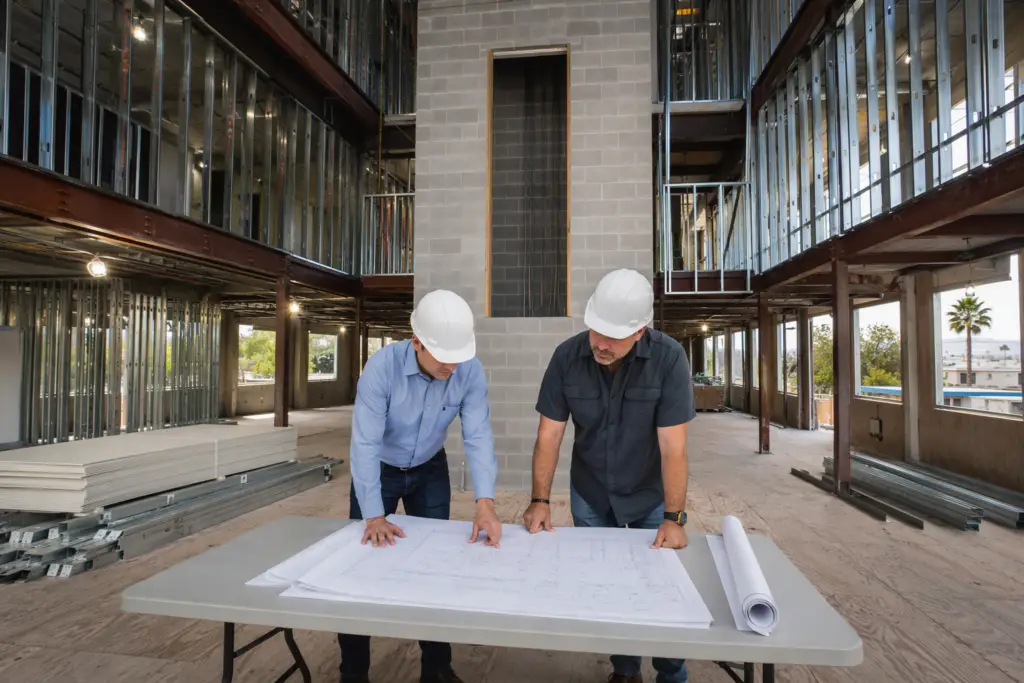
When a California healthcare facility modernizes or alters an existing elevator, California Code of Regulations Title 8 Elevator Safety Orders apply, and Cal/OSHA must issue a permit before erection, installation, or material alteration begins. The technical requirements follow the ASME A17.1/CSA B44 (2004 edition) adopted by California for installations after May 1, 2008. For healthcare facilities planning capital improvements — new tower construction, wing additions, or elevator modernization projects — coordinating with a CQCC early in the design phase helps identify permit requirements, inspection milestones, and ADA compliance needs before construction begins.
Questions Your Inspector Will Ask
Healthcare facility managers and their engineering staff should be prepared to answer the following questions when a Cal/OSHA safety engineer or CCCI arrives for an annual inspection:
- Is the current permit to operate posted in each elevator cab? Inspectors will check this immediately upon entering the car.
- Where are the maintenance records for this conveyance? Complete, organized logs demonstrate that required periodic maintenance has been performed by qualified personnel.
- Has any alteration or repair been performed since the last inspection? Any material alteration requires a Cal/OSHA permit issued before the work begins; inspectors will ask for documentation.
- Who is the CQCC responsible for maintaining this elevator? The inspector will want the company name and contact, and may verify CQCC certification status.
- Has the emergency communication system been tested recently, and by whom? Hospitals are expected to maintain functional two-way communication in every cab.
- When was the firefighters’ emergency operation last tested and documented? This feature is mandatory under ASME A17.1 and inspectors verify test records.
- Are there any known deficiencies or outstanding repair items? Disclosing known issues upfront demonstrates good faith and may influence the inspector’s assessment approach.
- Has the elevator experienced any incidents, entrapments, or emergency service calls since the last inspection? California elevator owners may have reporting obligations for certain incidents; inspectors will review any reported events.
- Is this elevator covered by a full maintenance contract with a CQCC? This determines whether Cal/OSHA can issue a one- or two-year permit to operate.
How Does Liftech Elevator Support Healthcare Clients Across Los Angeles and Orange County?
Liftech Elevator serves healthcare facilities throughout Los Angeles, Long Beach, Signal Hill, and Orange County as a Certified Qualified Conveyance Company. The company’s mechanics hold the CCCM certifications required by Cal/OSHA, and the company carries the C-11 contractor license issued by the California Contractors State License Board. Healthcare clients working with Liftech Elevator benefit from pre-inspection readiness assessments that identify compliance gaps before the official Cal/OSHA inspection, reducing the risk of failed inspections and the costs associated with re-inspection and unplanned downtime. For facilities managing multiple conveyances across a campus, Liftech Elevator can coordinate bundled maintenance and testing schedules to minimize operational disruption to patient care areas.
What Should a Healthcare Facility Do Right Now to Prepare for Elevator Testing?
- Locate and review the permit to operate for every elevator on the property — confirm it is current and posted in each cab.
- Pull the maintenance log for each conveyance and verify that all scheduled maintenance visits have been completed by a CCCM employed by a CQCC.
- Note the permit expiration date and schedule the reinspection well in advance — California law places this responsibility on the elevator owner, not the testing company.
- Confirm whether the facility is in the City of Los Angeles; if so, contact LADBS to understand local program requirements in addition to Cal/OSHA obligations.
- Contact a CQCC to schedule a pre-inspection readiness review, identify any deficiencies, and arrange corrective repairs before the official inspection date.
- Review ADA accessibility features in each cab — door timing, control heights, cab dimensions — and document findings.
- Brief facilities staff on what inspectors will ask and where documentation is stored.
Contact Liftech Elevator for a free elevator assessment at 562-997-3639.
Need elevator service you can rely on? Liftech Elevator is ready to help.