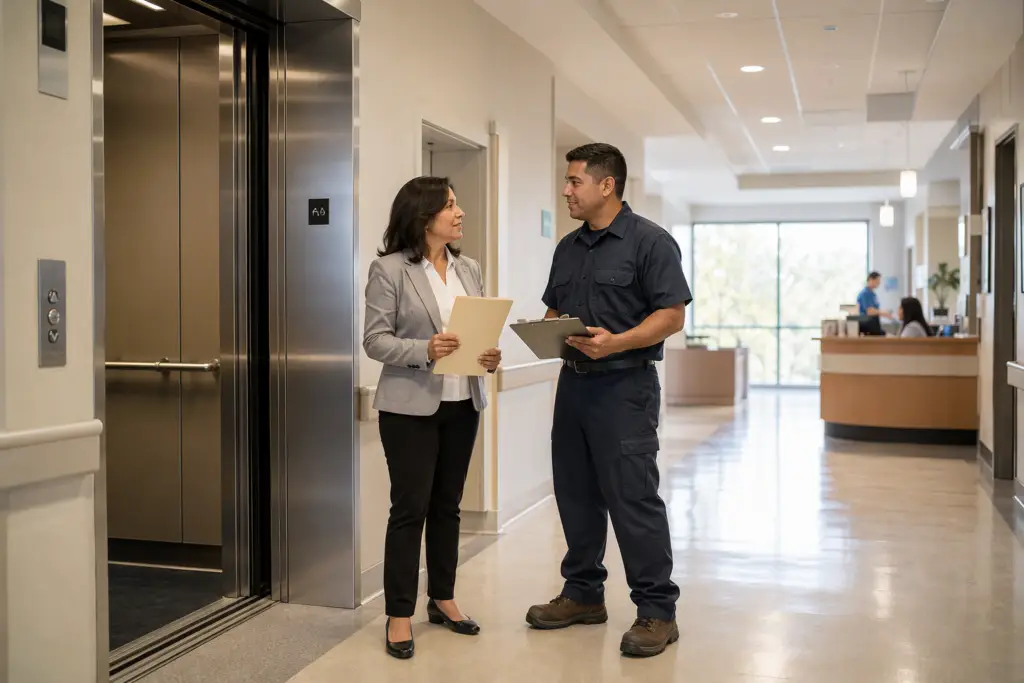
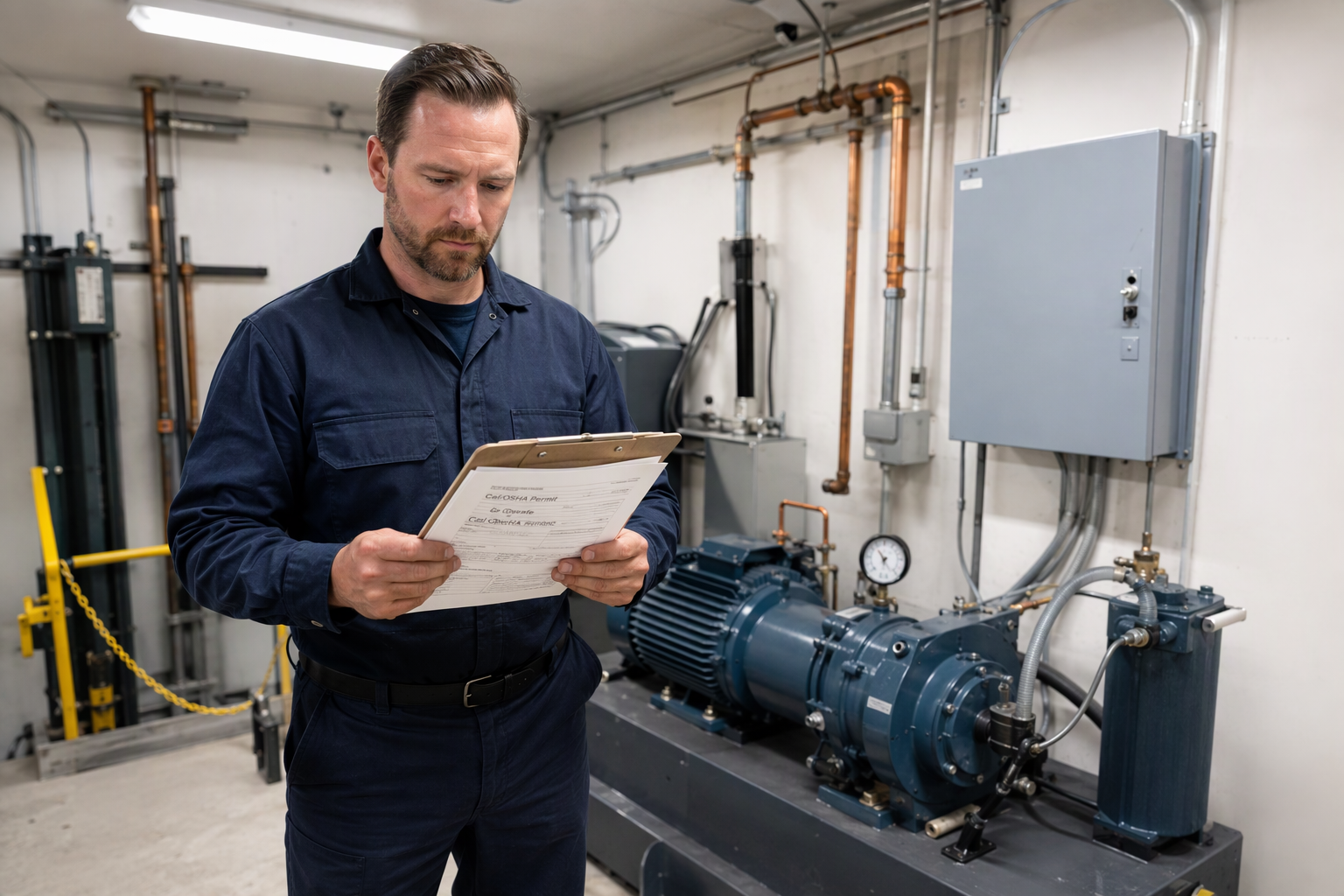
What state compliance steps are required after replacing a hydraulic pump in a skilled nursing facility elevator in California?
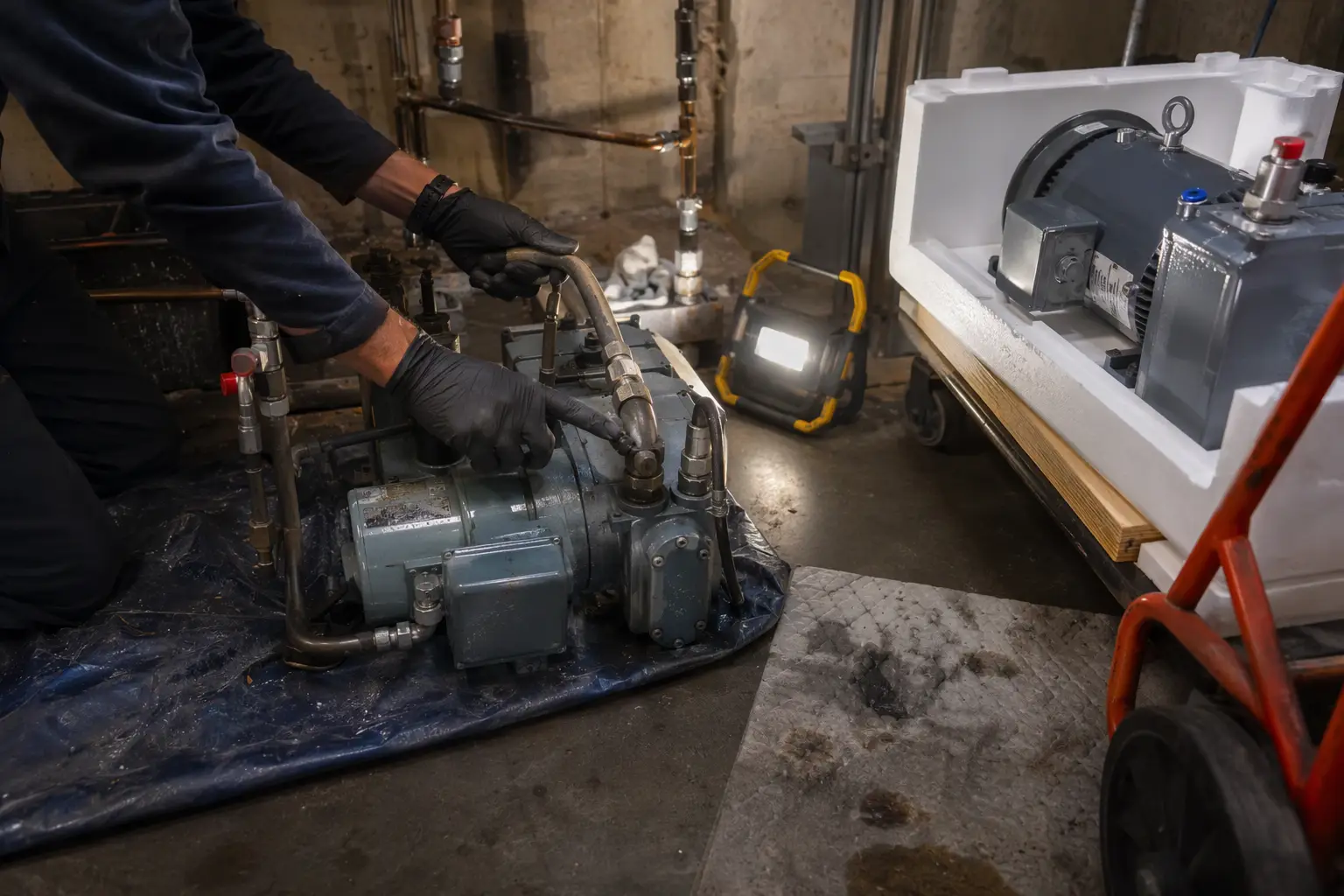
California law requires that any company replacing a hydraulic pump in an elevator first obtain a permit from Cal/OSHA before work begins, perform the work using only a Cal/OSHA-certified Certified Qualified Conveyance Company (CQCC) employing Certified Competent Conveyance Mechanics (CCCM), pass a post-replacement inspection conducted by a State safety engineer or Certified Competent Conveyance Inspector (CCCI), and receive a valid new permit to operate before the elevator is returned to passenger use. Because skilled nursing facilities are licensed healthcare environments subject to continuous-occupancy requirements, the compliance sequence must be tightly coordinated so that the facility never operates an elevator without a current, posted permit.
The full compliance sequence—permit application, certified repair, post-work inspection, and permit issuance—is governed by California Labor Code Sections 7300–7324.2 and the California Code of Regulations, Title 8, Elevator Safety Orders (Sections 3000–3146). The adopted technical standard for elevator installations and alterations is the ASME A17.1/CSA B44, 2004 edition (Group IV Elevator Safety Orders), effective May 1, 2008, for contracts signed on or after that date. Facilities in Los Angeles should also note that the City of Los Angeles Department of Building and Safety (LADBS) runs its own conveyance inspection program, which may impose additional local coordination steps.
Why is a hydraulic pump replacement considered a “material alteration” under California law?
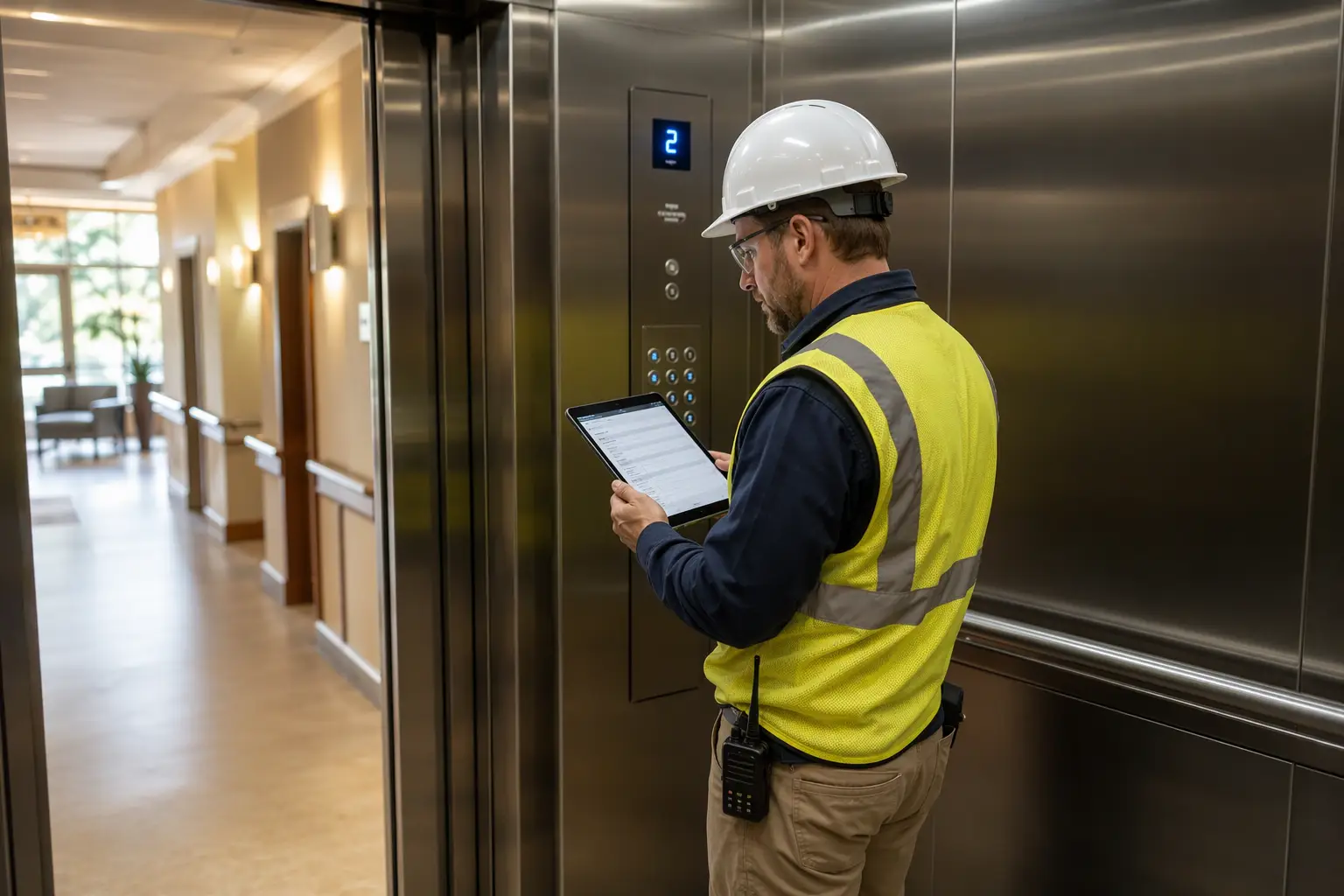
California’s Elevator Safety Orders treat the replacement of a major hydraulic component such as a pump unit as a material alteration, which triggers the full permit and inspection cycle rather than a routine maintenance close-out.
Under California Code of Regulations, Title 8, Elevator Safety Orders, a material alteration is any modification that changes the performance, design, or safety of a conveyance. Replacing the hydraulic pump—the component responsible for generating and directing fluid pressure to raise and lower the car—changes the mechanical performance of the system. This is not an in-kind, like-for-like swap in the regulatory sense; it is a repair significant enough to require a new permit from Cal/OSHA’s Elevator Unit before the work is performed. Facilities and contractors that begin pump replacement work without an alteration permit risk stop-work orders, fines, and loss of the existing permit to operate.
Distinguishing routine maintenance from material alteration matters because the two paths carry different pre-work notification requirements, different inspection scopes, and different documentation obligations. Pump seal replacement or minor hydraulic fluid service is typically maintenance; swapping the entire pump unit or power unit assembly crosses into alteration territory. When in doubt, contacting Cal/OSHA for a determination before work begins is the safest approach.
What permit must be obtained before hydraulic pump replacement work begins?
California law requires the building owner or their authorized contractor to obtain a permit from Cal/OSHA before any conveyance is erected, installed, or materially altered.
The permit application is submitted to the Cal/OSHA Elevator Unit, California Department of Industrial Relations. The application must describe the scope of the alteration, the equipment to be installed, and the contractor performing the work. Only a CQCC—a company holding both a California C-11 Elevator Contractor license from the California Contractors State License Board (CSLB) and Cal/OSHA certification—may apply for and perform work under an alteration permit. No work may lawfully begin until the permit is in hand. Facilities managers should build permit lead time into the project schedule, particularly for facilities in Los Angeles where LADBS may have its own parallel notification requirements.
Who is legally authorized to perform hydraulic pump replacement work in California?
Only a Certified Qualified Conveyance Company, using Certified Competent Conveyance Mechanics working without direct supervision, may perform hydraulic pump replacement on a California elevator.
The two license credentials are distinct. The CQCC certification is issued by Cal/OSHA to the company and requires a current C-11 contractor license from the CSLB plus certificates of workers’ compensation and liability insurance. The CCCM certification is issued by Cal/OSHA to the individual mechanic. A CCCM may perform work unsupervised; workers without that certification must be directly supervised by a CCCM at all times. Both credentials renew every two years and require at least eight hours of continuing education per renewal cycle.
Skilled nursing facility administrators should request and retain copies of the contractor’s current CQCC certificate and confirm that the mechanics assigned to the job hold valid CCCM credentials before allowing any work to proceed. Hiring an uncertified contractor could void the facility’s permit to operate and trigger regulatory action by Cal/OSHA. Liftech Elevator operates as a CQCC serving Signal Hill, Long Beach, Los Angeles, and Orange County, making it a natural fit for facilities seeking a fully credentialed service partner in Southern California.
What inspection is required after the hydraulic pump replacement is complete?
After hydraulic pump replacement, California law requires a post-alteration inspection by a Cal/OSHA State safety engineer or a Certified Competent Conveyance Inspector before the elevator may be returned to service.
The inspection scope for a hydraulic alteration typically includes verification that the new pump unit meets the performance requirements of the ASME A17.1/CSA B44 Safety Code for Elevators and Escalators as adopted by California, testing of pressure relief valves and hydraulic fluid integrity, review of wiring and control interface changes (if any), and confirmation that all safety devices are functional. Only State of California safety engineers and Certified Competent Conveyance Inspectors may perform this inspection; a CCCM technician performing the work cannot self-certify the inspection. The elevator must remain out of service until the inspector clears it.
How is a new permit to operate issued after a hydraulic alteration inspection?
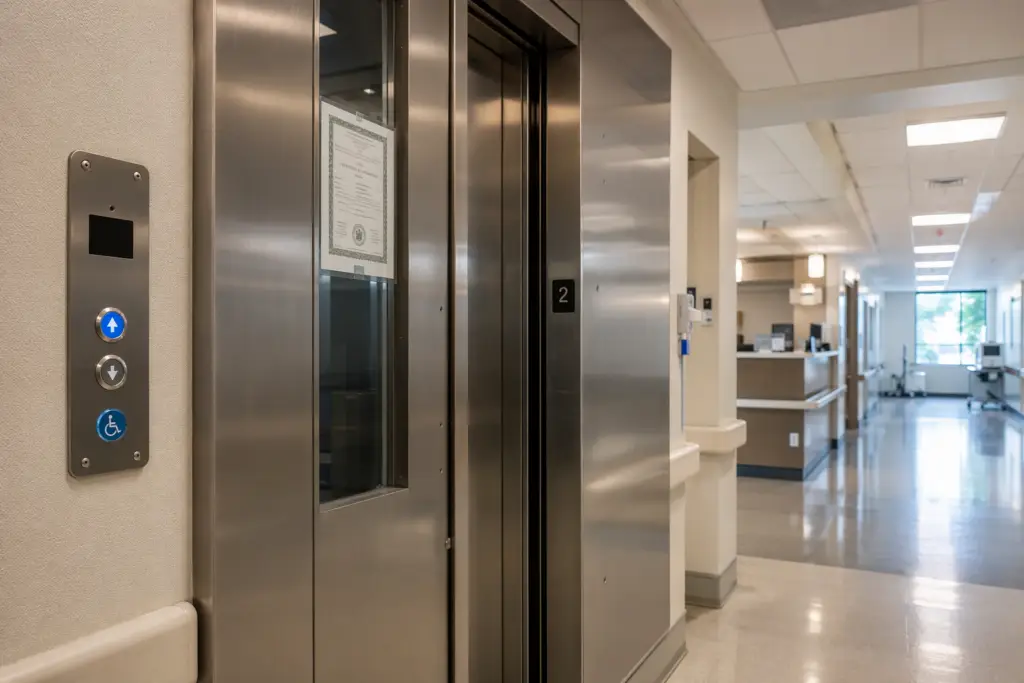
Once the post-alteration inspection passes, Cal/OSHA issues a new permit to operate, which must be posted conspicuously in the elevator car before the elevator is returned to service.
The permit to operate is the legal authorization for a conveyance to carry passengers or freight in California. After a material alteration, the prior permit is superseded and a new one is issued based on the inspection outcome. The permit is valid for up to one year under standard conditions, or up to two years if the elevator is covered by a full maintenance contract with a C-11 licensed elevator company. The elevator owner—not the contractor—bears responsibility for ensuring the permit is current and properly posted at all times. In a skilled nursing facility, where state health licensing surveys may review elevator compliance records, a lapsed or missing permit to operate can create dual liability under both Cal/OSHA and health facility regulations.
What is the step-by-step compliance sequence for hydraulic pump replacement in a California skilled nursing facility?
The complete compliance process follows a defined sequence that must not be reordered; skipping the pre-work permit step is the most common compliance failure.
- Identify the scope of work and confirm that hydraulic pump replacement constitutes a material alteration requiring an alteration permit under California Code of Regulations, Title 8, Elevator Safety Orders.
- Engage a Cal/OSHA-certified CQCC holding a valid C-11 license from the CSLB to serve as the contractor of record.
- Have the CQCC submit an alteration permit application to the Cal/OSHA Elevator Unit with equipment specifications and project scope before any work begins.
- Receive the Cal/OSHA alteration permit; confirm that LADBS has been notified if the facility is located within the City of Los Angeles.
- Schedule the pump replacement outage in coordination with facility operations to minimize disruption to residents and care workflows; post advance notice to residents and staff per facility policy.
- Have CCCM-certified mechanics perform the hydraulic pump replacement in accordance with the ASME A17.1/CSA B44, 2004 edition requirements adopted by California.
- Complete all post-installation tests including pressure testing, safety device verification, and load testing as applicable.
- Contact Cal/OSHA to schedule the post-alteration inspection with a State safety engineer or CCCI; keep the elevator out of service until the inspection is performed.
- Provide the inspector access to all equipment, documentation, and test records; address any deficiencies identified during inspection before the permit is issued.
- Receive the new Cal/OSHA permit to operate; post it conspicuously inside the elevator car before returning the elevator to service.
- File all alteration permits, inspection records, and the new permit to operate in the facility’s elevator compliance file for review during state health licensing surveys.
What ASME A17.1 requirements apply to hydraulic elevator pump replacements?
The ASME A17.1 Safety Code for Elevators and Escalators governs the design, installation, operation, and maintenance standards for hydraulic elevator systems, including pump unit specifications.
California has adopted the ASME A17.1/CSA B44, 2004 edition under its Group IV Elevator Safety Orders, effective May 1, 2008, for installations and alterations under contracts signed on or after that date. The ASME code addresses hydraulic elevator performance including pump capacity, pressure relief valve settings, rupture valve requirements, and fluid containment. When a pump unit is replaced, the replacement unit must meet or exceed the performance parameters specified in the code for the original installation class. If the replacement pump changes system pressure, flow rate, or control interface characteristics, those changes must be reflected in the alteration permit documentation submitted to Cal/OSHA.
California has proposed a Group V update that would incorporate elements of ASME A17.1-2019; a public hearing was held on June 18, 2026, but no effective date has been posted as of the date of this content. Facilities planning future capital projects should monitor the Cal/OSHA Elevator Unit for rulemaking updates.
What ADA considerations arise when a hydraulic pump is replaced in a healthcare facility?
While pump replacement itself does not alter the cab dimensions or door timing, any associated control or hardware changes must maintain compliance with ADA accessibility standards for elevator operation.
The ADA requires that elevators serving public and common-use areas of healthcare facilities be accessible, with specific requirements for door timing, leveling accuracy, and cab dimensions. A hydraulic pump replacement that affects car leveling accuracy—the precision with which the car floor aligns with the landing floor—can directly affect wheelchair accessibility. If the new pump or its control interface changes leveling tolerances, the facility should verify that the elevator still meets ADA floor-to-landing leveling requirements before returning the unit to service. This is particularly critical in skilled nursing facilities where wheelchair and gurney transport is routine. Documentation of the ADA-compliant leveling test results should be retained alongside the Cal/OSHA inspection records.
How long does the hydraulic pump replacement and compliance process typically take?
The timeline varies based on equipment lead times, Cal/OSHA permit processing, and inspection scheduling, but facilities should plan for the elevator to be out of service for a period that may span several days to several weeks.
The major time variables are: permit application processing by Cal/OSHA, delivery lead time for the replacement pump unit (which can be extended for proprietary or legacy hydraulic systems), the duration of the physical replacement work itself, and Cal/OSHA inspection scheduling. Facilities should not assume the elevator will be available on a specific date until the new permit to operate is in hand. Skilled nursing facilities with a single elevator serving multiple floors face the greatest operational risk during outages and should work with the contractor to stage materials in advance and compress the active out-of-service window as much as possible. Liftech Elevator works with skilled nursing and healthcare facility clients throughout Long Beach, Signal Hill, Los Angeles, and Orange County to coordinate outage schedules that minimize resident impact.
What documentation must a skilled nursing facility retain after a hydraulic pump replacement?
California elevator owners must maintain records sufficient to demonstrate continuous compliance, including alteration permits, inspection reports, and the current permit to operate.
At minimum, the facility’s elevator compliance file should contain: the Cal/OSHA alteration permit, the contractor’s work order and equipment specifications for the replacement pump, test records generated during and after installation, the post-alteration inspection report from the State safety engineer or CCCI, the current permit to operate, and any correspondence with LADBS if the facility is in Los Angeles. Because California health facility licensing surveys may review elevator records as part of environment-of-care compliance, disorganized or incomplete documentation can create findings even when the physical elevator is in full compliance. Maintaining a chronological binder or digital record for each elevator is a recognized best practice for facilities with multiple units.
What is the facility’s ongoing annual inspection obligation after the pump replacement?
California law requires every conveyance to be inspected at least once per year, and responsibility for arranging that inspection rests with the elevator owner, not the contractor.
After the post-alteration inspection and permit issuance, the clock resets on the annual inspection cycle. The facility must arrange for the next inspection before the permit to operate expires. If the elevator is covered by a full maintenance contract with a C-11 licensed elevator company, Cal/OSHA may issue a permit to operate for up to two years. Facilities that allow permits to lapse are operating the elevator unlawfully under California Labor Code Sections 7300–7324.2 and risk Cal/OSHA enforcement action as well as liability exposure if an incident occurs on an elevator without a valid permit. Scheduling the annual inspection well before the permit expiration date—rather than waiting for a renewal notice—is a sound compliance practice.
How does the City of Los Angeles LADBS program affect compliance for facilities in Los Angeles?
Facilities in the City of Los Angeles must coordinate with the Los Angeles Department of Building and Safety, which operates its own elevator and conveyance inspection program in addition to Cal/OSHA oversight.
Los Angeles has its own conveyance inspection program administered by LADBS. Skilled nursing facilities located within City of Los Angeles boundaries should confirm with their contractor whether LADBS notification or inspection is required as part of the pump replacement alteration process, in addition to the Cal/OSHA permit and inspection requirements. Facilities in Long Beach, Signal Hill, and Orange County are not subject to LADBS and follow the standard Cal/OSHA statewide process. Liftech Elevator serves clients across all these markets and is familiar with the local program requirements that apply in each jurisdiction.
What are the consequences of operating a skilled nursing facility elevator without a valid permit after pump replacement?
Operating an elevator in California without a valid, current permit to operate is a violation of California Labor Code Sections 7300–7324.2 and subjects the facility to Cal/OSHA enforcement, fines, and potential closure of the elevator.
Beyond Cal/OSHA enforcement, a skilled nursing facility operating an elevator without a valid permit faces compounded risk. State health licensing authorities inspect environment-of-care compliance, and an elevator without a posted permit to operate is a documentable deficiency. If a resident or staff member is injured on an elevator that lacks a valid permit, the facility’s liability exposure is significantly greater than it would be for an incident on a fully compliant unit. Additionally, if the facility’s insurance carrier learns the elevator was operated without a valid permit, coverage disputes may arise. These risks make prompt post-replacement inspection and permit issuance a business-critical priority, not merely a regulatory formality.
What should a skilled nursing facility look for when selecting an elevator contractor for hydraulic pump replacement?
The contractor must hold both a valid Cal/OSHA CQCC certification and a current C-11 Elevator Contractor license from the CSLB, and must employ CCCM-certified mechanics who will perform the work.
Beyond the minimum legal credentials, facilities should evaluate the contractor’s experience with hydraulic elevator systems in healthcare environments, their familiarity with Cal/OSHA’s alteration permit process, their ability to manage equipment procurement and scheduling to minimize outage duration, and their track record of post-alteration inspections passing on the first attempt. Requesting references from other skilled nursing or healthcare facility clients in California is a reasonable due-diligence step. Facilities in Southern California frequently work with Liftech Elevator, which serves the Signal Hill, Long Beach, Los Angeles, and Orange County markets and understands the operational constraints unique to healthcare environments.
Does a full maintenance contract affect the compliance obligations after pump replacement?
A full maintenance contract with a C-11 licensed elevator company can extend the permit to operate period from one year to up to two years, but it does not change the pre-work permit or post-alteration inspection requirements.
California law provides that Cal/OSHA may issue a permit to operate for up to two years for an elevator in safe condition that is covered by a full maintenance contract with a C-11 licensed elevator company. This benefit applies after the post-alteration inspection and permit issuance; it does not waive or shorten any step in the alteration compliance sequence. Facilities evaluating maintenance contract options should understand that the two-year permit is a potential benefit, not a guarantee, and that Cal/OSHA retains discretion in issuing multi-year permits based on the elevator’s condition. A well-structured maintenance contract also supports consistent documentation and readiness for annual or biennial inspection.
What OSHA considerations apply during the hydraulic pump replacement work itself?
Federal OSHA standards govern worker safety during the pump replacement work, including lockout/tagout procedures, confined space entry if applicable, and hydraulic fluid handling.
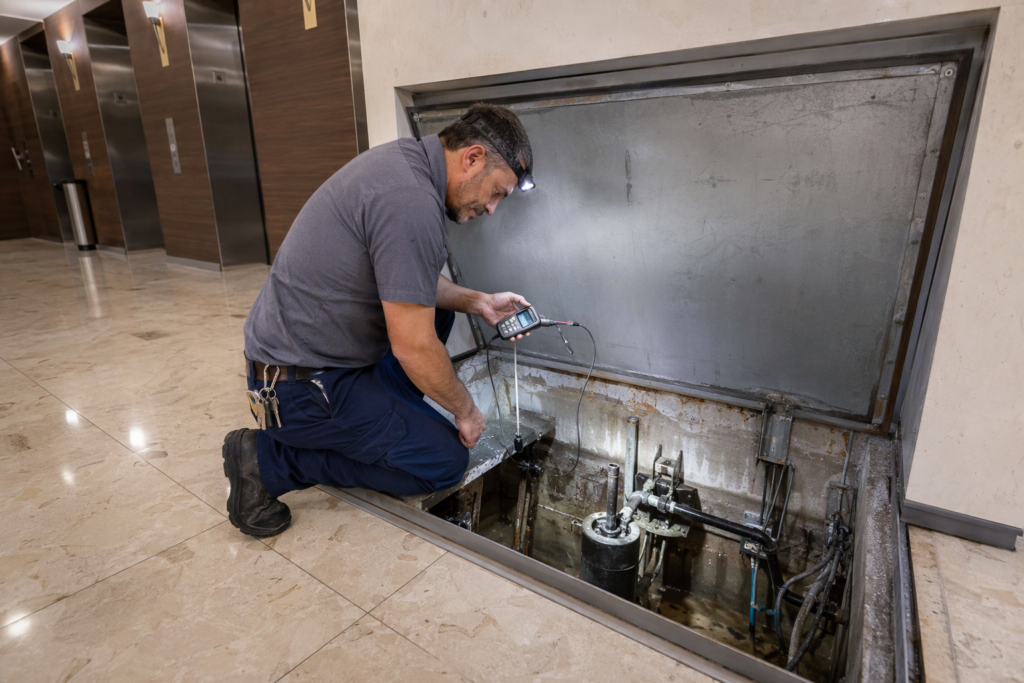
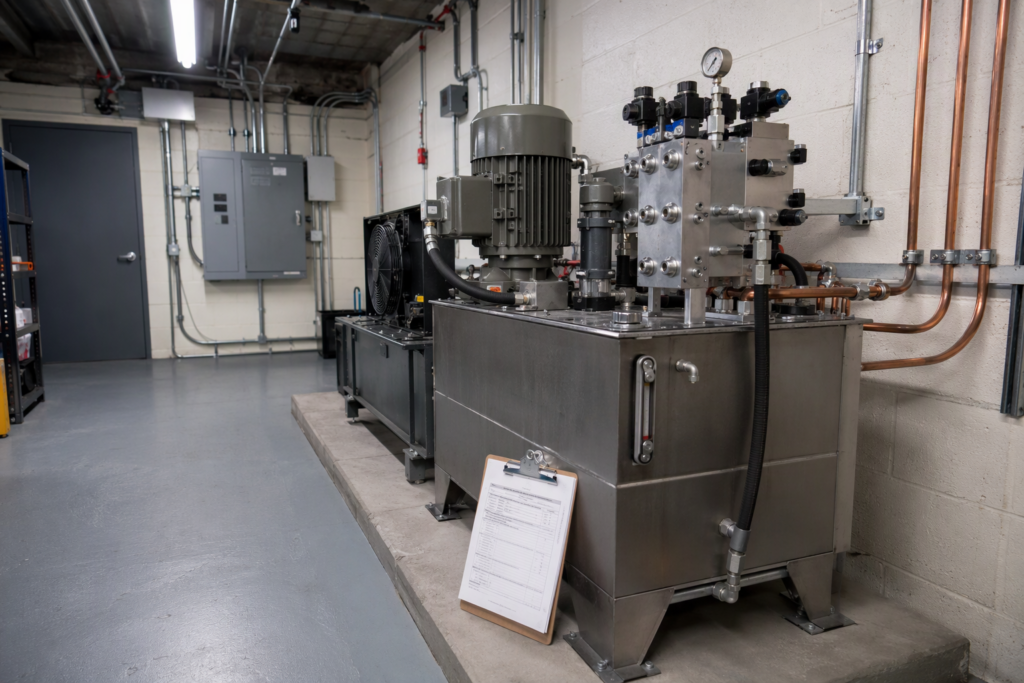
Hydraulic elevator pump replacement involves working with pressurized fluid systems and electrical power sources. Federal OSHA lockout/tagout (LOTO) requirements apply to the de-energization of the hydraulic power unit before work begins. If the pump unit is located in a pit or machine room with restricted access and limited ventilation, applicable OSHA standards for confined or limited spaces may also apply. Hydraulic fluid spill containment and disposal must follow applicable environmental handling requirements. Skilled nursing facilities should verify that the contractor’s safety plan addresses these OSHA requirements, particularly because healthcare facilities have additional obligations under the Joint Commission and CMS to control contractor safety risks in occupied buildings.
How does hydraulic pump replacement interact with oil containment requirements?
When a hydraulic pump is replaced, the hydraulic fluid system is opened, creating an obligation to inspect and maintain the oil containment provisions required for in-ground hydraulic cylinders under California’s environmental and elevator safety requirements.
In-ground hydraulic elevator cylinders present a risk of hydraulic fluid leakage into soil and groundwater if secondary containment systems fail. While the specific environmental permit requirements are outside the Elevator Safety Orders, Cal/OSHA inspectors and best-practice hydraulic elevator maintenance both include verification that containment systems are intact after any work that opens the hydraulic circuit. When a pump unit is replaced, the contractor should inspect all hydraulic fittings, the flexible hose assembly, and any secondary containment or leak detection components as part of the alteration scope. Facilities with older in-ground cylinders that have not been recently inspected should discuss cylinder condition assessment with their contractor at the time of pump replacement, as combining inspections can reduce outage time and total project cost.
What benchmark timeline and compliance milestones should facility planners use for a hydraulic pump replacement project?
The table below outlines the typical compliance milestones and their sequence; actual durations depend on Cal/OSHA permit processing, equipment availability, and inspection scheduling.
| Milestone | Responsible Party | Typical Sequence | Regulatory Basis |
|---|---|---|---|
| Confirm scope as material alteration | CQCC contractor / facility | Before any work begins | California Code of Regulations, Title 8, Elevator Safety Orders |
| Submit Cal/OSHA alteration permit application | CQCC contractor | Before work begins | California Labor Code §§ 7300–7324.2; Cal/OSHA Elevator Unit |
| Receive Cal/OSHA alteration permit | Cal/OSHA Elevator Unit | Before work begins | California Labor Code §§ 7300–7324.2 |
| Notify LADBS (Los Angeles facilities only) | CQCC contractor / facility | Before or concurrent with Cal/OSHA permit | LADBS conveyance program |
| Perform hydraulic pump replacement | CCCM mechanics (CQCC firm) | After permit issued; elevator out of service | ASME A17.1/CSA B44, 2004 edition |
| Complete post-installation testing | CCCM mechanics (CQCC firm) | Immediately after replacement | ASME A17.1/CSA B44, 2004 edition |
| Cal/OSHA post-alteration inspection | State safety engineer or CCCI | After work complete; elevator remains out of service | California Labor Code §§ 7300–7324.2; Cal/OSHA Elevator Unit |
| Receive new permit to operate | Cal/OSHA Elevator Unit | After passing inspection | California Labor Code §§ 7300–7324.2 |
| Post permit to operate in elevator car | Facility owner | Before returning elevator to service | California Labor Code §§ 7300–7324.2 |
| File compliance records | Facility owner | Immediately after permit receipt | Facility licensing and Cal/OSHA documentation requirements |
| Schedule next annual inspection | Facility owner | Before current permit expires (annual or biennial) | California Labor Code §§ 7300–7324.2; Cal/OSHA Elevator Unit |
What questions should a skilled nursing facility administrator ask a hydraulic elevator contractor before signing a contract?
Before signing a contract for hydraulic pump replacement, facility administrators should verify credentials, confirm the compliance process the contractor will follow, and understand how the contractor will manage the outage to protect resident care continuity.
Key questions to ask include: Can you provide your current Cal/OSHA CQCC certificate and C-11 license number for verification? Will you manage the alteration permit application to Cal/OSHA, or is that our responsibility? Who are the CCCM-certified mechanics assigned to this project, and can we see their credentials? What is your process if the post-alteration inspection identifies deficiencies? How do you handle hydraulic fluid containment and disposal during the pump swap? What is your realistic estimate for the out-of-service window, and what factors could extend it? Do you have experience working in occupied healthcare facilities where elevator downtime directly affects patient care and life safety? Thorough answers to these questions will distinguish experienced, compliant contractors from those who may create more compliance problems than they solve. Liftech Elevator regularly supports skilled nursing facilities in Southern California through exactly this kind of project, providing clear documentation at each compliance milestone.
Contact Liftech Elevator for a free elevator assessment at 562-997-3639.
Need elevator service you can rely on? Liftech Elevator is ready to help.