A hydraulic elevator repair estimate of $17,000 can represent genuine value or a significant overpayment depending on what is included, who is doing the work, and what local compliance obligations apply. Building owners and property managers in Signal Hill, Long Beach, Los Angeles, and Orange County need a structured way to evaluate any major hydraulic repair quote. The 20 questions and answers below cover cost benchmarks, scope verification, code compliance, and practical negotiation guidance so owners can make an informed decision before signing any contract.
What Does a Typical Hydraulic Pump, Control Valve, and System Purge Scope Include?

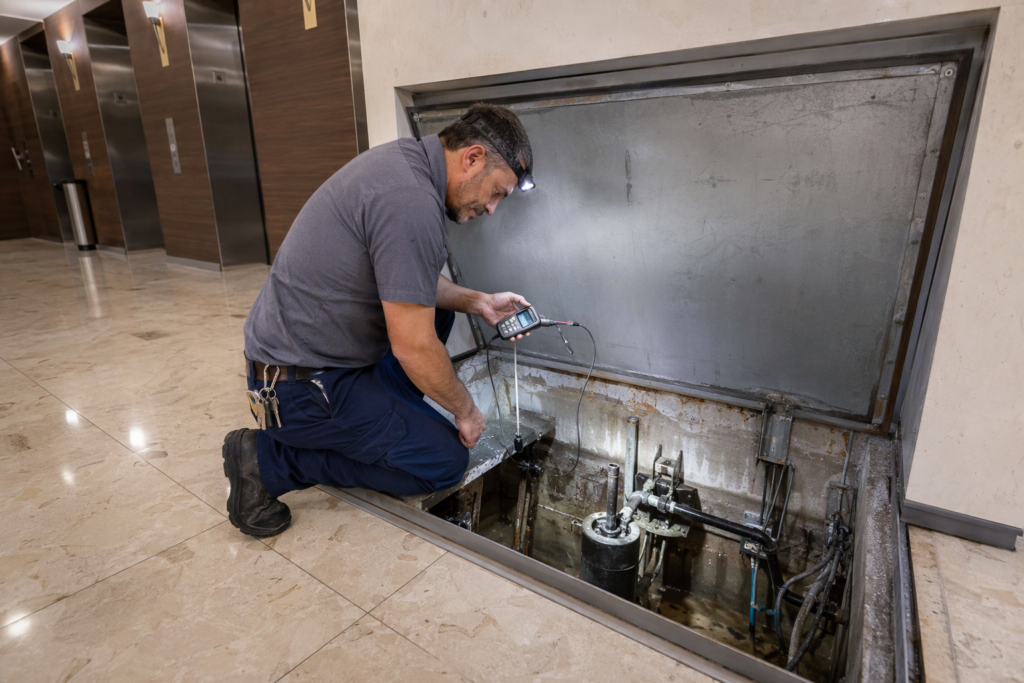
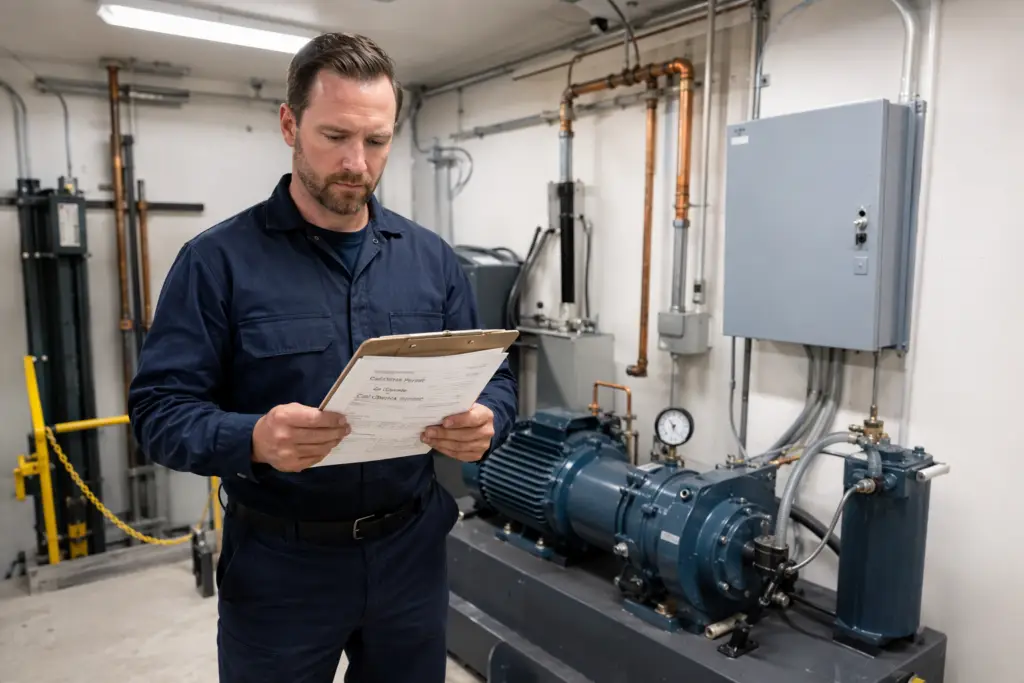
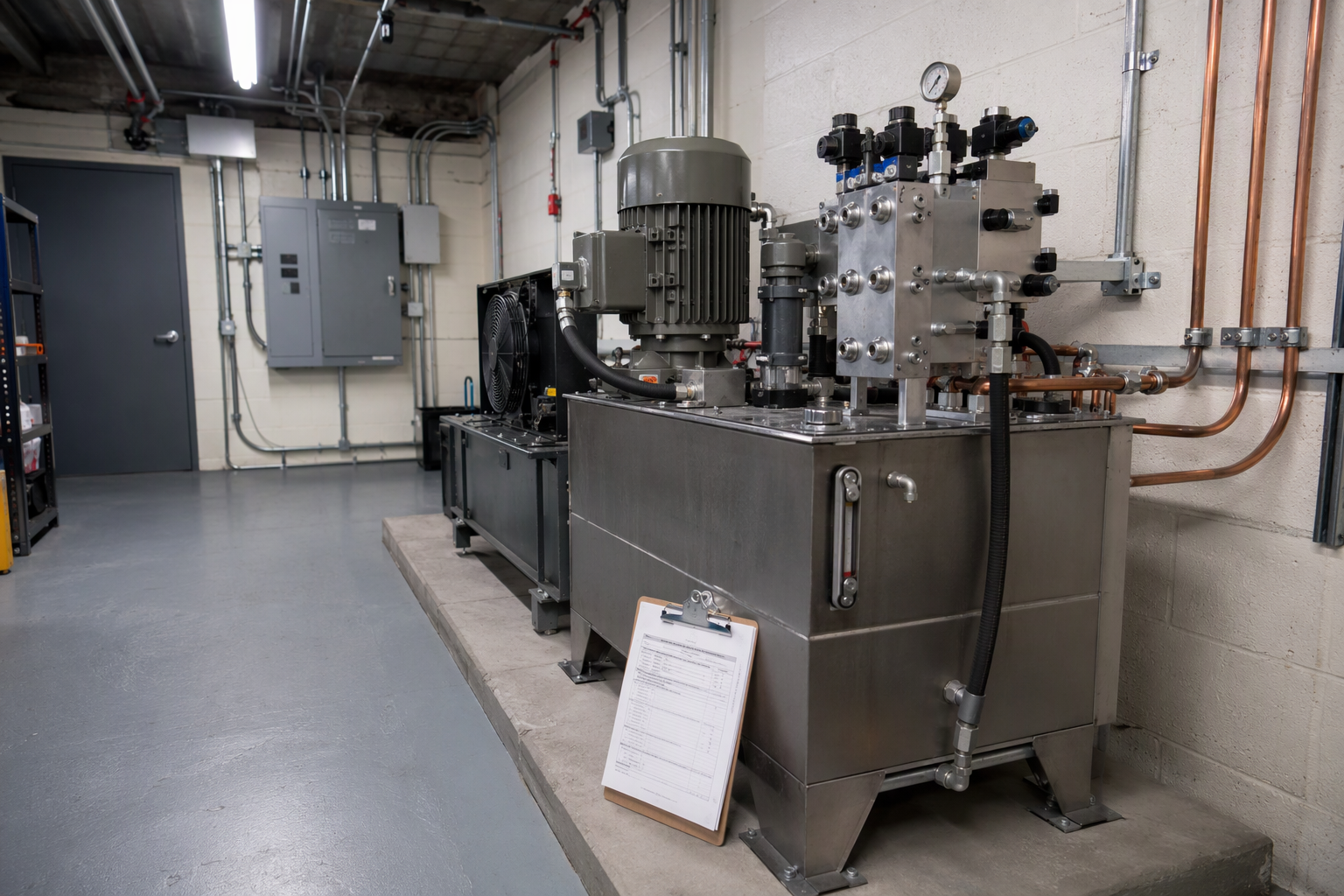
A complete hydraulic power unit replacement and purge typically encompasses removal of the failed pump and motor assembly, installation of a new or remanufactured unit, replacement of the control valve manifold, flushing or purging the hydraulic line and cylinder of degraded oil, refilling with fresh hydraulic fluid, and functional testing to code.
Each of those line items carries its own material and labor cost. The pump-motor assembly is the single most expensive component, often accounting for a substantial share of total cost. The control valve, which governs leveling, speed, and pressure relief, is a precision component with variable pricing depending on manufacturer and whether it is a simple single-speed valve or a more complex variable-speed unit. The system purge addresses oil degradation, contamination, or petroleum odor compliance and requires proper disposal of used hydraulic fluid under applicable environmental rules. Labor hours can range significantly depending on machine room access, pit conditions, and system age.
Is $17,000 Within the Normal Range for This Scope of Work?
For a mid-sized commercial hydraulic elevator in California, a combined pump replacement, control valve replacement, and system purge can reasonably fall anywhere from roughly $10,000 on the low end for a straightforward job with a remanufactured unit to $20,000 or more for a large-capacity system, premium OEM parts, or a complex machine room configuration.
A $17,000 estimate is not automatically inflated, but it is toward the upper tier of an average scope. That price becomes more defensible when it includes new OEM components rather than remanufactured ones, a properly licensed disposal certificate for used hydraulic fluid, all Cal/OSHA permit fees for a material alteration if applicable, and a post-repair inspection coordination cost. If the estimate bundles those items, the number is more credible. If it is a bare-parts-and-labor quote with no itemization, further scrutiny is warranted.
What Should Every Line-Item in a Hydraulic Repair Estimate Specify?
A professionally prepared hydraulic elevator repair estimate should itemize every major cost category to allow meaningful comparison between competing bids.
Owners should expect to see separate line items for: the pump-motor assembly (with manufacturer name and model), the control valve (OEM or aftermarket, single-speed or variable), hydraulic fluid (type, viscosity, volume in gallons), fluid disposal fee, labor hours broken down by task, any required machine room seismic or accessibility upgrades triggered by the repair, Cal/OSHA permit fees if the scope constitutes a material alteration, and post-repair testing and inspection coordination. A vague “hydraulic system repair — $17,000” with no breakdown is a red flag regardless of the total amount.
How Do New OEM Parts Compare to Remanufactured Units in Cost and Reliability?
New OEM hydraulic pump-motor assemblies carry a higher upfront cost than remanufactured units but typically come with manufacturer warranties and documented performance specifications, while remanufactured units can offer meaningful savings but require verification of rebuild standards and warranty terms.
| Component Option | Relative Cost | Typical Warranty | Best For |
|---|---|---|---|
| New OEM Pump-Motor Assembly | Higher | Manufacturer warranty (varies by brand) | High-use, high-rise, or passenger elevators |
| Remanufactured Pump-Motor Assembly | Moderate | Rebuilder warranty (verify terms) | Low-to-moderate duty, budget-constrained owners |
| New OEM Control Valve | Higher | Manufacturer warranty (varies) | Precision leveling requirements, variable speed |
| Aftermarket Control Valve | Lower | Varies widely | Older systems with discontinued OEM parts |
| System Purge (flush and refill) | Included or separate line | N/A — service item | All hydraulic systems with aged or contaminated fluid |
When a $17,000 estimate specifies new OEM components across the board, the pricing logic is more defensible than if remanufactured units are priced at OEM levels. Owners should request written documentation of the part numbers and manufacturer for every major component before signing.
Does California Law Require a Permit Before This Repair Can Be Performed?
Yes. Under California’s elevator law administered by Cal/OSHA, a permit from Cal/OSHA is required before a conveyance is materially altered, and replacing a hydraulic pump, control valve, or purging and refilling the hydraulic system may qualify as a material alteration depending on the scope and components involved.
California Labor Code Sections 7300–7324.2 and the California Code of Regulations, Title 8, Elevator Safety Orders (Sections 3000–3146) govern these requirements. Building owners should confirm with their contractor whether the planned scope triggers a permit obligation. If it does, the permit fee and any required Cal/OSHA inspection should appear as a line item in the estimate. A contractor who does not mention permitting on a repair of this scale is either uninformed or attempting to cut corners — both of which expose the building owner to liability and potential shutdown of the elevator.
Who Is Legally Allowed to Perform Hydraulic Elevator Repairs in California?
Only a Certified Competent Conveyance Mechanic (CCCM) working for a Certified Qualified Conveyance Company (CQCC) may maintain, repair, alter, or replace components on a conveyance in California.
These certifications are issued by Cal/OSHA’s Elevator Unit. The contracting company must also hold a C-11 Elevator Contractor license issued by the California Contractors State License Board (CSLB). California CQCC and CCCM certificates last two years, and renewal requires at least eight hours of continuing education. Before accepting any estimate, owners should verify that the contractor’s CQCC certification, C-11 license, and workers’ compensation and liability insurance are all current. Unlicensed hydraulic work not only violates California law but can void the elevator’s permit to operate, leaving the owner exposed to Cal/OSHA enforcement action.
What Does the System Purge Component Involve and Why Does It Add Cost?
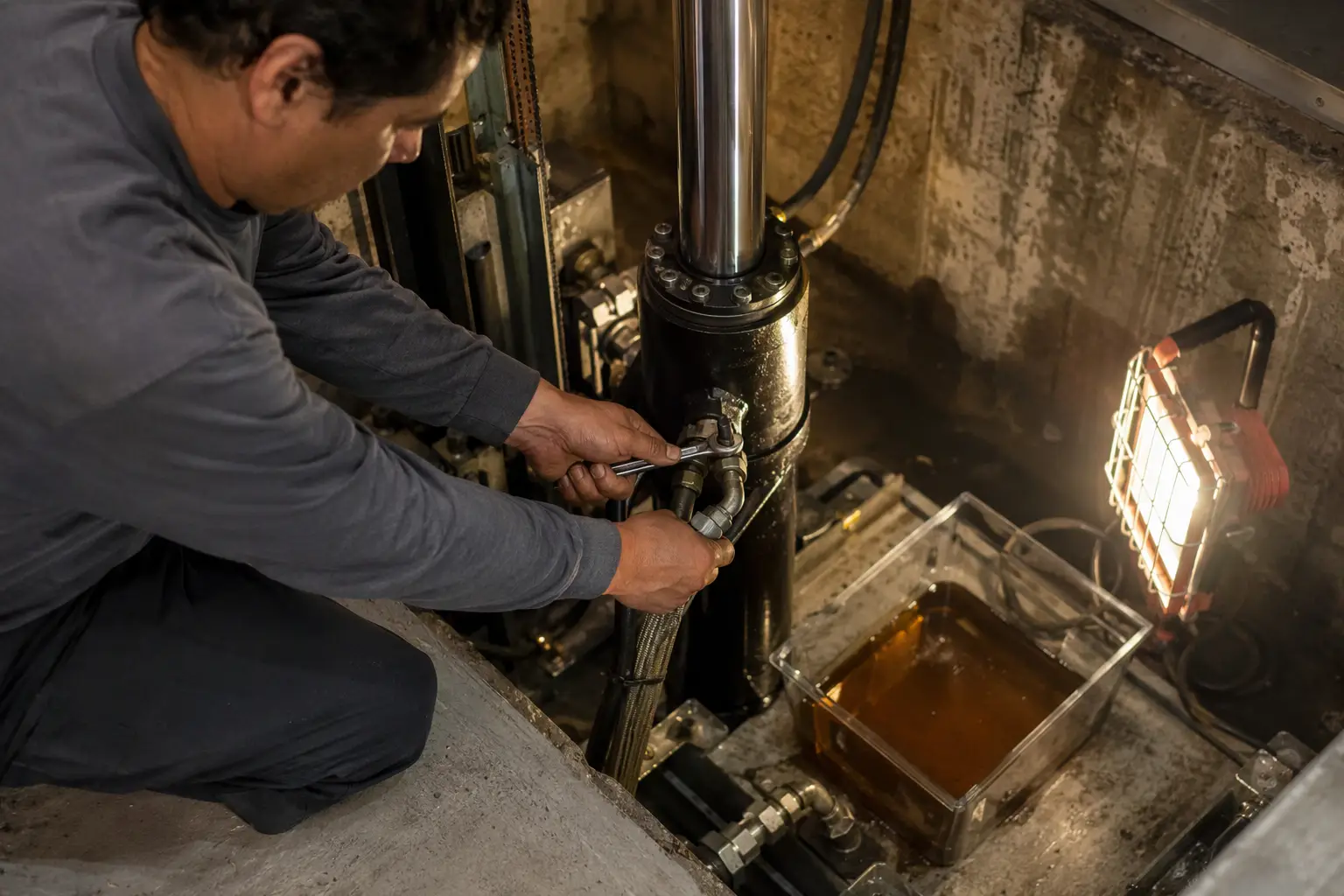
A hydraulic elevator system purge involves draining degraded or contaminated hydraulic fluid from the jack, underground piping, and power unit tank, flushing residual contaminants, and refilling the system with fresh fluid — a process that requires skilled labor, proper equipment, and licensed fluid disposal.
Used hydraulic oil is a regulated waste in California and must be collected, transported, and disposed of by a licensed waste hauler or recycled through an approved program. This disposal cost is real and should appear in any honest estimate. Additionally, the purge process requires the system to be re-bled of air and pressure-tested before returning to service. Labor for a thorough purge on a standard commercial hydraulic elevator typically requires several hours beyond the pump and valve replacement itself. If a $17,000 estimate includes all of this, the purge component is a legitimate cost driver.
How Should Owners Evaluate Whether the Control Valve Replacement Is Necessary?
A control valve replacement is warranted when diagnostic testing reveals issues such as erratic leveling, rough or jerky ride quality, slow or fast descent, or valve internal leakage confirmed by pressure testing — not simply because the pump has failed.
Pump failure does not automatically mean the control valve is damaged. A reputable elevator contractor will perform a valve pressure test and ride quality evaluation before recommending valve replacement. Owners should ask the estimating contractor to provide diagnostic documentation that specifically justifies valve replacement. If the contractor cannot provide a written diagnostic rationale, the valve line item deserves additional scrutiny. Including a valve replacement that is not diagnostically indicated is one of the most common ways hydraulic repair estimates become inflated.
What Questions Should a Building Owner Ask Before Accepting Any Estimate?
Owners should ask a structured set of questions to verify scope, qualifications, and compliance before accepting any estimate for hydraulic elevator work.
- Is your company a Cal/OSHA Certified Qualified Conveyance Company (CQCC), and can you provide your current certificate number?
- Does your company hold a current C-11 Elevator Contractor license from the California Contractors State License Board?
- Will the technicians performing this repair hold current Certified Competent Conveyance Mechanic (CCCM) certification?
- Does this scope of work require a Cal/OSHA permit for material alteration, and if so, is the permit fee included in this estimate?
- Are the pump and control valve new OEM components or remanufactured, and what warranty applies to each?
- Does this estimate include hydraulic fluid disposal by a licensed waste handler?
- What diagnostic testing justifies the control valve replacement specifically?
- What is the estimated downtime for the elevator, and how will tenant communication be managed?
- Will you coordinate the post-repair inspection with Cal/OSHA or the applicable authority having jurisdiction?
- Does this estimate include restoring the elevator’s current permit to operate?
How Does the Age and Model of the Elevator Affect the Fairness of This Estimate?
Older hydraulic elevators often require more expensive or hard-to-source components, additional labor for corrosion remediation, or upgrades to bring systems into compliance with current code — all of which can legitimately push repair costs higher than a straightforward replacement on a newer system.
California’s adopted elevator code is based on the ASME A17.1/CSA B44, 2004 edition, effective May 1, 2008, for installation contracts signed on or after that date, as incorporated into the California Code of Regulations, Title 8, Elevator Safety Orders. Elevators installed before that date may be governed by earlier editions. When a repair triggers a material alteration, Cal/OSHA may require that associated systems be brought up to current Elevator Safety Order requirements — a compliance cost that should be disclosed upfront. A 1980s hydraulic elevator with discontinued pump models and aging underground piping may legitimately cost more to repair correctly than a 2010-era system with readily available parts.
Are There Any Red Flags That Suggest a $17,000 Estimate Is Inflated?
Several specific warning signs indicate that a hydraulic repair estimate may be inflated or structurally problematic, regardless of the total dollar amount.
Red flags include: no itemized breakdown of parts versus labor; no mention of Cal/OSHA permitting when the scope likely constitutes a material alteration; a control valve replacement with no diagnostic justification; vague descriptions such as “hydraulic system overhaul” with no part numbers; refusal to provide CQCC certification or C-11 license numbers; no written warranty on parts or labor; bundling of unrelated items such as cab renovation or door operator work without separate pricing; and pressure tactics demanding same-day signature. Any one of these warrants requesting a revised, itemized estimate or obtaining a competing bid before proceeding.
What Is the Process for Getting a Second Opinion on a Hydraulic Elevator Repair Estimate?
Obtaining a second opinion on a major hydraulic elevator repair estimate is a reasonable and prudent step that any responsible building owner should take for work at this price level.
- Request a fully itemized copy of the original estimate with part numbers, labor hours, and compliance costs clearly separated.
- Contact at least two additional Cal/OSHA certified CQCC companies and provide them with the same scope description and elevator make, model, and year.
- Ask each competing contractor to provide their CQCC certificate number and C-11 license number before the site visit.
- Request that each contractor perform an independent diagnostic evaluation rather than simply repricing the original scope.
- Compare not only the total price but the specific components specified, warranty terms, and permitting approach.
- Evaluate each contractor’s written explanation for why the control valve replacement is or is not necessary based on their own diagnostic findings.
- Select the contractor who provides the most transparent documentation, not necessarily the lowest bid.
Liftech Elevator provides assessments for building owners in Long Beach, Signal Hill, Los Angeles, and Orange County who need an independent evaluation of existing hydraulic repair estimates.
How Does Hydraulic Fluid Type Affect Repair Cost and Compliance?
The choice of hydraulic fluid affects both material cost and regulatory compliance, particularly for older systems with underground piping where a biodegradable or fire-resistant fluid may be specified or required.
Standard petroleum-based hydraulic oil is the most common and least expensive option for above-ground systems. Biodegradable hydraulic fluids cost more per gallon but are increasingly specified for systems with underground piping due to environmental protection considerations. Fire-resistant hydraulic fluids carry a higher per-gallon cost and may be required depending on building type and local fire code. A system purge that specifies a premium fluid type will legitimately cost more than one using standard petroleum oil. Owners should verify which fluid type is currently in the system and whether the new fluid specified in the estimate is compatible with existing seals, hoses, and cylinder materials.
What Happens If the Elevator Remains Out of Service During This Repair?
California law prohibits operating an elevator without a valid, current permit to operate issued by Cal/OSHA, and a building owner whose elevator is out of service for a major repair must also comply with any applicable ADA accessibility obligations during the downtime period.
Under the Americans with Disabilities Act, building owners are generally required to provide accessible routes and may need to implement temporary accommodation measures when an elevator serving a required accessible route is out of service. The duration of a hydraulic pump, control valve, and purge repair typically spans multiple days depending on parts availability, permit processing time, and inspection scheduling. Owners should factor downtime planning, tenant notification, and any ADA accommodation costs into their overall evaluation of the repair — these are real project costs even if they do not appear on the elevator contractor’s invoice.
Can This Repair Extend the Life of an Aging Hydraulic Elevator?
A properly executed pump, valve, and system purge can meaningfully extend the operational life of a hydraulic elevator, but only if the underground jack, piping, and electrical control system are also in serviceable condition.
Investing $17,000 in a hydraulic power unit on an elevator with a failing underground single-bottom jack or aging solid-state controller may produce diminishing returns if those components fail within a few years. A thorough pre-repair evaluation should assess the full system, not just the components being replaced. Liftech Elevator recommends that building owners in Los Angeles, Long Beach, and Orange County request a written condition assessment of the underground piping, jack, and control system before authorizing any major hydraulic repair, to ensure the investment is proportionate to the remaining service life of the entire elevator system.
How Does This Estimate Compare If a Maintenance Contract Is Already in Place?
Building owners with a full maintenance contract in place should carefully review whether the hydraulic pump, control valve, and system purge are covered under the contract’s included scope or whether they fall into an excluded category, as this distinction can dramatically affect the net out-of-pocket cost.
Many elevator maintenance contracts distinguish between routine maintenance items and major component replacements. Pump-motor assemblies and control valves are frequently listed as excluded components even on “full maintenance” contracts, meaning owners pay for them separately. However, some premium full-service contracts do include these components. Owners should cross-reference the estimate against their maintenance contract language before paying out of pocket. Additionally, Cal/OSHA may issue a permit to operate for up to two years — rather than the standard one year — for an elevator in safe condition covered by a full maintenance contract with a C-11 licensed elevator company, which represents additional long-term value from a comprehensive maintenance relationship.
What Role Does the Authority Having Jurisdiction Play in This Repair?
The authority having jurisdiction (AHJ) for elevator inspections and permits in California is Cal/OSHA’s Elevator Unit for most of the state, while Los Angeles has its own elevator and conveyance inspection program administered through the Los Angeles Department of Building and Safety (LADBS).
For building owners in Los Angeles, the LADBS program may impose its own permitting, inspection, and fee requirements in addition to or in place of Cal/OSHA’s standard process. Owners in Signal Hill, Long Beach, and unincorporated Orange County areas should work directly with Cal/OSHA’s Elevator Unit. The AHJ determines whether the planned hydraulic repair scope triggers a material alteration permit, what inspection must occur before the elevator returns to service, and what documentation the owner must retain. Any estimate that does not account for AHJ coordination in its scope is incomplete.
What Should Owners Know About Post-Repair Inspection Requirements?
After a material alteration such as a hydraulic pump or control valve replacement, California law requires that the conveyance be inspected before it is returned to service, and only State of California safety engineers or Certified Competent Conveyance Inspectors (CCCI) may perform those inspections.
The post-repair inspection is not optional and cannot be waived by the contractor or the building owner. The contractor must coordinate with the applicable AHJ to schedule the inspection, and the elevator may not be returned to full passenger service until the inspection is passed and a permit to operate is issued or reissued. In California, the permit to operate must be posted conspicuously in the elevator car. Owners should confirm that their estimate accounts for the scheduling lead time associated with Cal/OSHA inspections, as delays in inspection availability can extend downtime beyond the repair itself.
How Should Building Owners in Los Angeles, Long Beach, Signal Hill, and Orange County Approach Vendor Selection?
Selecting the right vendor for a $17,000 hydraulic repair requires verifying California-specific credentials, evaluating the quality and transparency of the diagnostic process, and confirming that the contractor’s compliance approach is current and complete.
Owners across Southern California should prioritize contractors who proactively disclose their CQCC certificate, C-11 license number, and workers’ compensation and liability insurance before beginning any site evaluation. A contractor who provides a detailed written diagnostic report justifying each repair component — and who explains the permitting and inspection pathway — is demonstrating the professional standard appropriate for work at this price point. Liftech Elevator serves building owners and property managers throughout Signal Hill, Long Beach, Los Angeles, and Orange County and brings the full California compliance framework to every hydraulic repair evaluation.
What Is the Best Way to Protect Against Cost Overruns on a Major Hydraulic Repair?
The most effective protection against cost overruns on a hydraulic elevator repair is a fixed-price, fully itemized contract with clearly defined scope boundaries, written change-order procedures, and documented warranty terms before any work begins.
Owners should insist on a written contract — not just an email estimate — that specifies the exact components to be installed with manufacturer and model, the labor hours allocated to each major task, the inclusion of fluid disposal, the permit and inspection coordination process, the warranty period for parts and labor separately, and the conditions under which a change order can be issued. Any unknown condition discovered during the repair — such as corroded fittings, damaged underground piping, or electrical faults — should trigger a written change order with owner approval before additional work proceeds. Time-and-materials agreements on a job of this scope create cost uncertainty and are generally less favorable to building owners than a fixed-price contract with a defined scope. Liftech Elevator provides detailed, itemized proposals for hydraulic repair work in its service areas so that owners can make fully informed decisions before authorizing any expenditure.
Contact Liftech Elevator for a free elevator assessment at 562-997-3639.
Need elevator service you can rely on? Liftech Elevator is ready to help.