What Questions Should I Ask an Elevator Maintenance Company Before Signing a Contract?

Choosing an elevator maintenance company is one of the most consequential facility management decisions a building owner or property manager can make. A poorly chosen vendor can expose a property to regulatory fines, liability claims, equipment downtime, and unsafe conditions. The questions below represent the full spectrum of what any informed buyer should ask before committing to a service agreement — covering compliance, cost structure, technical capability, vendor accountability, and local service coverage in markets like Signal Hill, Long Beach, Los Angeles, and Orange County.
Is the Elevator Maintenance Company Licensed and Insured in California?
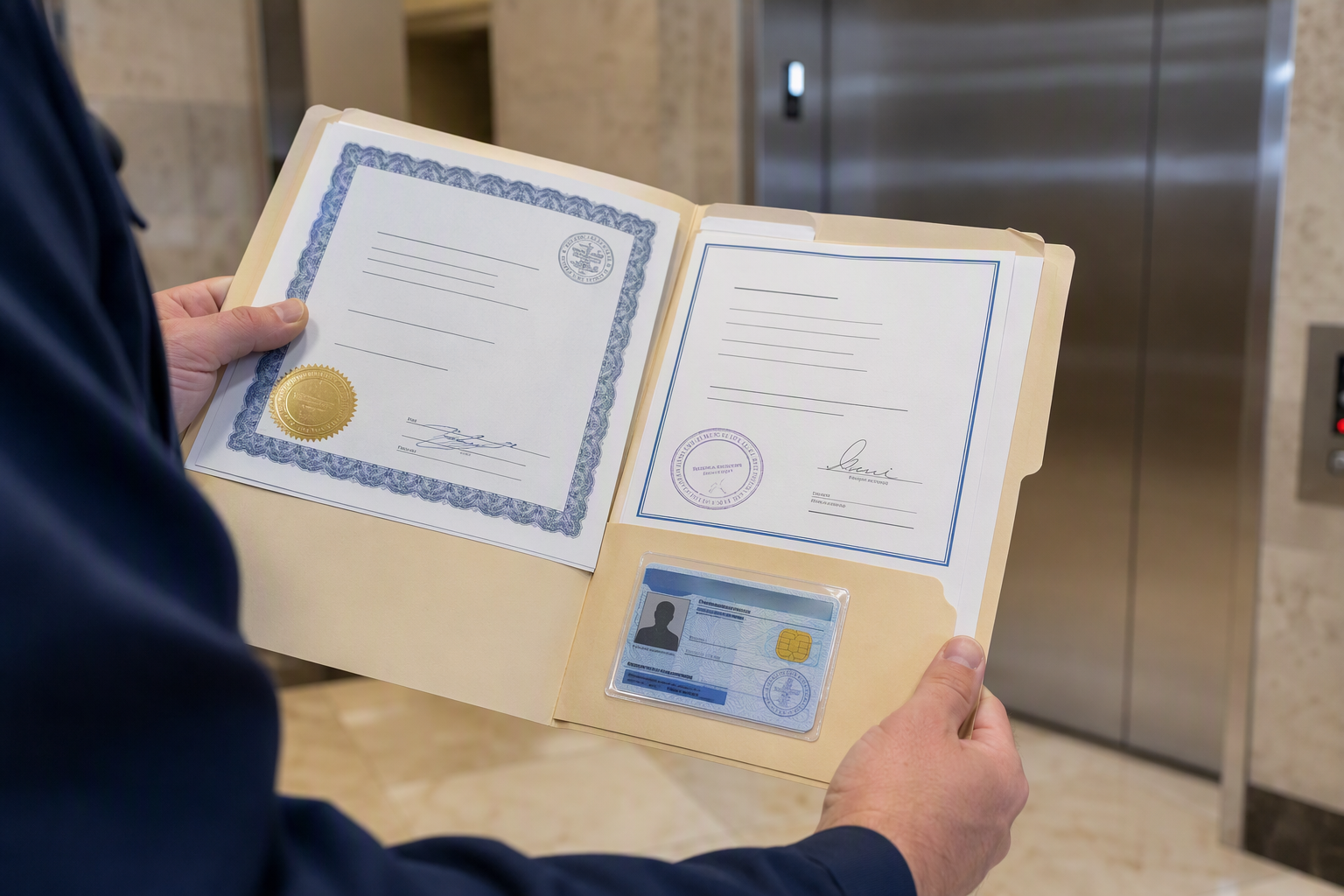
Any elevator maintenance company operating in California must hold a valid Certified Competent Conveyance Mechanic (CCCM) certification issued by the California Department of Industrial Relations (DIR), and the company itself must carry adequate general liability and workers’ compensation insurance.
California regulates elevator work under the Elevator Safety Labor Code, administered through the Division of Occupational Safety and Health (Cal/OSHA). Before signing any contract, request a current copy of the company’s license numbers, insurance certificates, and proof that technicians dispatched to your property hold valid CCCM credentials. A reputable company will provide these documents without hesitation. Unlicensed work can void manufacturer warranties, disqualify equipment from passing state inspections, and expose building owners to significant legal liability.
Liftech Elevator operates as a certified elevator service company throughout Signal Hill, Long Beach, Los Angeles, and Orange County, maintaining all required state credentials for the work performed in these markets.
Which Safety Codes and Standards Does the Company Follow?
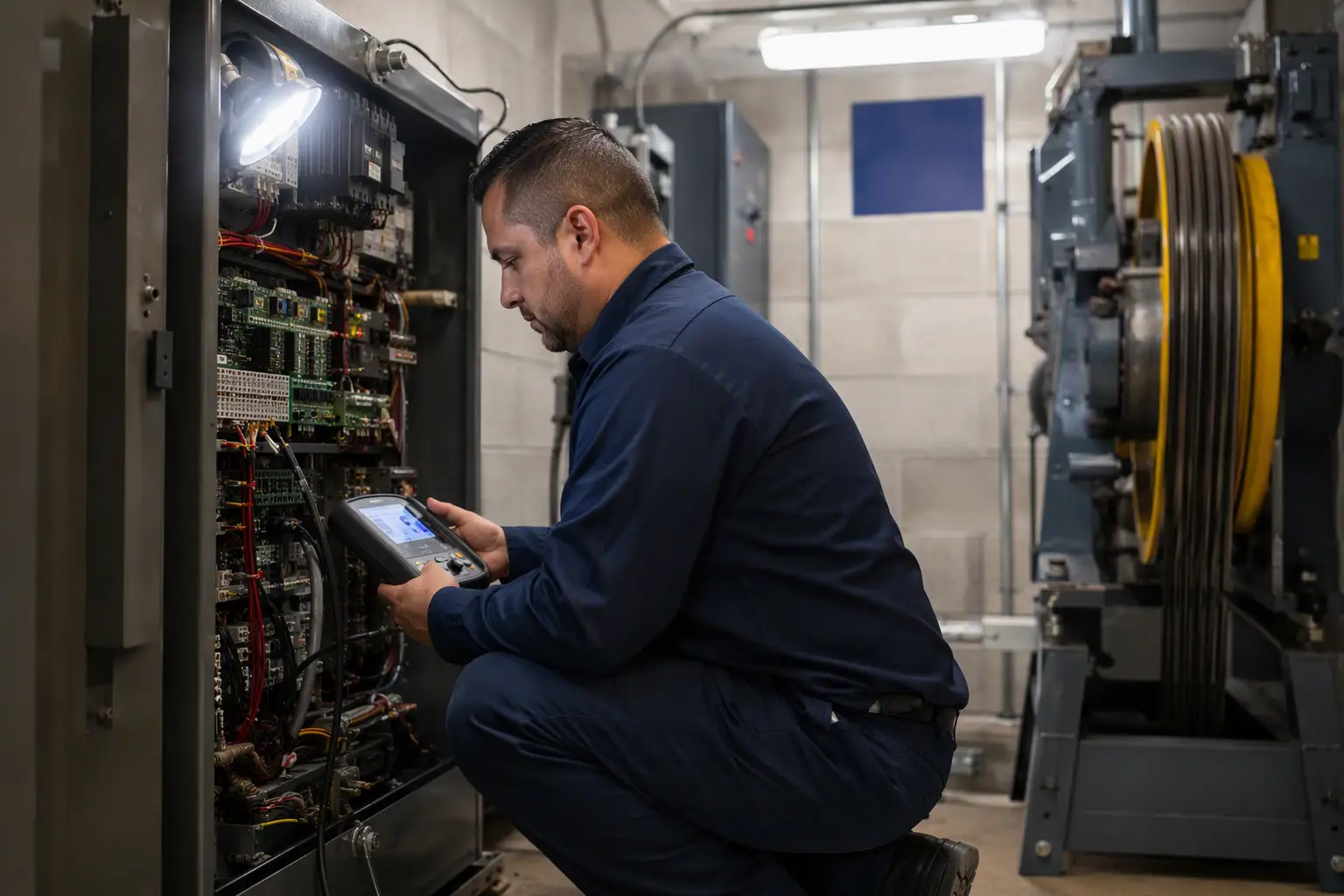
A qualified elevator maintenance company must demonstrate active adherence to the ASME A17.1 Safety Code for Elevators and Escalators, California’s Title 8 elevator regulations, and applicable ADA accessibility standards.
The ASME A17.1 code is the foundational safety standard governing elevator design, installation, inspection, testing, and maintenance across North America. California adopts and enforces this code through Cal/OSHA’s Elevator Unit. Ask specifically which edition of ASME A17.1 the company’s maintenance procedures are aligned with — as of 2026, companies should be working with current code editions and be aware of any California-specific amendments.
ADA compliance is separately required for elevators serving the public or multi-tenant properties. Ask whether the company’s technicians are familiar with ADA requirements for cab dimensions, door timing, control panel height, and tactile signage — because maintenance work that inadvertently compromises ADA-compliant features can trigger federal complaints and remediation costs.
How Frequently Will Preventive Maintenance Be Performed?
The maintenance schedule should be spelled out explicitly in the contract, with visit frequency calibrated to the elevator type, usage intensity, and any manufacturer-specified intervals.
California law and ASME A17.1 establish minimum inspection and maintenance standards, but “minimum” rarely equals “optimal” for high-traffic equipment. A commercial elevator in a busy Los Angeles office building will typically require more frequent attention than a low-use residential elevator. Ask the company to document exactly how many scheduled maintenance visits are included per year, what tasks are performed at each visit, and how those visits are logged and reported to the building owner.
Preventive maintenance visits should at minimum cover lubrication of moving components, inspection of safety devices, brake testing, door operation adjustment, controller inspection, and pit and machine room housekeeping. Request a sample maintenance checklist so there is no ambiguity about what is included.
What Does the Maintenance Contract Include — and Exclude?
Every elevator maintenance contract has a scope of work section, and the fine print defining exclusions is often where building owners are most surprised when repair bills arrive.
Common contract structures include full-coverage agreements (covering parts and labor for most repairs), oil-and-grease agreements (covering only routine lubrication and adjustment), and hybrid plans with tiered coverage. Ask for a written list of every component category that is excluded from the base contract, and what the billing rate is for excluded work. Key questions to ask include:
- Are major components like controllers, motors, and door operators covered or excluded?
- Are vandalism repairs covered?
- Is cab interior damage excluded?
- Are regulatory testing fees included or billed separately?
- Is the annual state inspection a billable item?
Understanding inclusions and exclusions before signing prevents billing disputes and ensures budgets are accurate.
How Does the Company Handle Emergency Calls and Entrapments?
The contract should define the company’s emergency callback protocol, including how entrapment calls are triaged and dispatched.
Elevator entrapments are a life-safety matter. Ask specifically how emergency calls are received (dedicated 24/7 line vs. shared answering service), how technicians are dispatched, and what the protocol is when a passenger is trapped between floors. California law and OSHA standards both address worker and public safety in entrapment situations. Building owners should also understand their own obligations — posting emergency contact information in the cab, maintaining working phones or intercoms, and coordinating with local emergency services when appropriate.
Ask whether the company’s emergency service protocol is documented in the contract or in an attached service level addendum, and ensure any commitments made verbally are reflected in writing before the agreement is signed.
What Are the Contract Length and Termination Terms?
Elevator maintenance contracts commonly run one to five years, and the termination clauses, auto-renewal provisions, and early exit penalties deserve careful review before any signature is applied.
Ask specifically: Does the contract auto-renew, and if so, with what notice period required to cancel? What penalties apply if the building is sold, demolished, or if the elevator is taken out of service? Are price escalation clauses included, and if so, are they capped? A well-structured contract should protect both parties fairly and give the building owner a reasonable exit mechanism if service quality declines. Be cautious of contracts with aggressive auto-renewal windows shorter than 60 days, or those that impose substantial early termination penalties without corresponding service guarantees.
Does the Company Have Experience With Your Specific Elevator Brand and Type?
Elevator maintenance is not brand-agnostic — proprietary control systems, hydraulic configurations, and legacy components require specific technical knowledge to service correctly.
The elevator industry includes equipment from manufacturers such as Otis, KONE, Schindler, ThyssenKrupp, Mitsubishi, and many others, along with a large installed base of older equipment that may no longer be in production. Ask the maintenance company to confirm that its technicians have hands-on experience with your specific elevator make, model, and control system. Ask how they handle proprietary diagnostic equipment or software that may be required to service newer controller systems. Companies that service a broad range of equipment types and vintages — from traction to hydraulic to MRL (machine room-less) — are better positioned to handle the full lifecycle of a property’s elevator fleet.
How Are Parts Sourced, and What Is Parts Availability Like?
Parts availability directly affects how quickly an out-of-service elevator can be returned to operation, and the answer to this question reveals a great deal about a company’s operational depth.
Ask whether the company maintains a local parts inventory, and if so, what categories of parts are stocked. Ask how they source parts for older or discontinued equipment, and what happens if a part has an extended lead time. For buildings in Los Angeles or Orange County with high tenant populations, extended elevator downtime is a significant operational and liability issue. A maintenance company with established supplier relationships and local inventory is better equipped to minimize outages compared to one that sources all parts on an order-by-order basis.
What Reporting and Documentation Will Be Provided After Each Service Visit?
Professional elevator maintenance companies provide written service reports after every visit, and those records are a critical component of regulatory compliance and liability protection.
California’s Title 8 regulations require maintenance records to be available for inspection by Cal/OSHA elevator inspectors. Ask the company how service records are documented — paper forms, digital portals, or both. Ask whether you will receive a copy of each service report, how long records are retained, and whether maintenance logs are accessible on demand. Building owners who cannot produce maintenance records during a Cal/OSHA inspection face compliance citations regardless of how well the elevator was actually maintained. Good documentation is not optional.
How Does the Company Approach Annual State Inspections?
California requires periodic inspections of elevators by a Certified Competent Conveyance Inspector (CCCI), and a proactive maintenance company will prepare the equipment systematically before each inspection.
Ask whether the company coordinates the scheduling of the state inspection, what pre-inspection maintenance steps they take to prepare the equipment, and how they handle items that fail inspection. Ask specifically whether the cost of re-inspection (if an elevator fails and requires a follow-up inspection) is covered under the contract or billed separately. A maintenance company that views the annual inspection as a surprise rather than a planned event is not managing the equipment proactively.
What Is the Billing Structure for Repairs Outside the Contract Scope?
Even full-coverage contracts have exclusions, and understanding the out-of-scope repair billing structure prevents unexpected invoices from becoming contentious disputes.
Ask for the labor rate charged for repair work that falls outside the contract coverage, whether that rate differs for regular business hours versus after-hours or emergency work, and whether parts are billed at cost or with a markup. Request a sample repair invoice from a previous job (with client information redacted) so the billing format is transparent before any work is needed. Building owners who understand the out-of-scope billing structure are better positioned to budget for capital repairs and to evaluate whether a quoted repair price is reasonable.
Does the Company Offer Modernization and Upgrade Consulting?
A full-service elevator maintenance company should be able to advise building owners on when modernization makes more financial and safety sense than continued repair of aging equipment.
Elevators have a functional lifespan, and older equipment becomes increasingly expensive to maintain as parts become scarce and repair frequency grows. Ask whether the company offers modernization assessments, and whether those assessments are independent or tied to a sales quota. Ask specifically about controller modernization, cab and door operator upgrades, and code-compliance upgrades triggered by the ASME A17.1 requirements that apply when significant modifications are made. A trustworthy maintenance partner will give honest advice about when to repair versus when to modernize, rather than defaulting to one answer for all situations.
How Does the Company Handle Compliance With ADA Requirements?
Elevator maintenance directly intersects with ADA compliance, and maintenance work that inadvertently alters ADA-required features must be corrected before the elevator returns to service.
Ask the company how its technicians are trained to identify and preserve ADA-compliant features during routine maintenance — including door dwell times, audible signals, Braille and raised-character signage, leveling accuracy, and handrail conditions. Ask what the company’s protocol is when a component replacement would alter an ADA-required function. Buildings serving the public in Los Angeles and Orange County have faced ADA complaints stemming from elevator features that were altered or not restored during maintenance. This is a preventable risk with informed, properly trained service personnel.
What Qualifications and Training Do the Company’s Technicians Hold?
The technical competence of the field technicians who actually service the equipment determines the real-world quality of maintenance, regardless of what any contract document promises.
Ask what certifications are required of technicians before they are dispatched to service elevators independently, how ongoing training is conducted as code editions and equipment technologies evolve, and whether apprentices work unsupervised or always under a journeyman-level CCCM. In California, only CCCM-certified mechanics are legally authorized to perform elevator work. Ask for confirmation that every technician assigned to your property holds this credential. Companies that invest in ongoing technical training and code education are better positioned to keep equipment in compliance as standards evolve.
How Does the Company Manage Subcontractors?
Some elevator maintenance companies subcontract specialized work — such as hydraulic system service, controller upgrades, or cab interior work — and building owners should understand when and how subcontractors are used.
Ask whether all work performed under the contract will be completed by the company’s own employees or whether subcontractors may be used, and if so, under what circumstances. Ask whether subcontractors are required to hold the same licensing and insurance requirements as the primary contractor, and whether the building owner is notified when a subcontractor performs work. Subcontracting is not inherently problematic, but undisclosed or unqualified subcontractors introduce accountability gaps that can complicate warranty claims and liability questions.
What Is the Company’s Process If Elevator Performance Declines Between Scheduled Visits?
An elevator that begins exhibiting problems between scheduled maintenance visits requires a clear escalation and callback process that is defined in the contract before an issue arises.
Ask specifically how callback requests are submitted, how they are prioritized relative to other service calls, and whether callbacks for issues that arise from the company’s own maintenance work are billed or covered. Ask for the difference in treatment between a nuisance callback (minor door adjustment) versus a safety-related callback (erratic leveling, braking irregularity). A well-structured maintenance agreement makes these distinctions explicit so there is no ambiguity about cost or priority when a real-world situation arises.
What Happens to the Contract if the Property Is Sold?
Elevator maintenance contracts typically run with the equipment, not the owner, and understanding transferability is essential for property sellers and buyers alike.
Ask whether the contract is assignable to a new building owner and under what conditions, whether the new owner can renegotiate terms at the time of assignment, and whether there are fees associated with contract transfer. For commercial real estate transactions in Los Angeles and Orange County — where elevator-equipped properties change hands regularly — this clause can affect the negotiation of a property purchase. Buyers inheriting an unfavorable maintenance contract should understand their options before closing.
How Should a Building Owner Prepare Before Signing an Elevator Maintenance Contract?
A structured preparation process ensures that building owners enter contract negotiations with the information needed to evaluate proposals objectively and avoid common pitfalls.
- Compile the elevator equipment list, including make, model, installation date, and last inspection report for every unit on the property.
- Gather all existing maintenance records, repair invoices, and any outstanding Cal/OSHA citations or inspection deficiencies.
- Define the building’s operational requirements — hours of use, tenant mix, accessibility obligations, and acceptable maximum downtime.
- Request written proposals from at least three qualified elevator maintenance companies, using the same scope-of-work description so proposals are directly comparable.
- Verify licensing, insurance, and CCCM credentials for each company before evaluating price.
- Ask each vendor the questions outlined on this page and document their answers in writing.
- Have a qualified attorney or facilities consultant review any multi-year contract before signing.
- Confirm that the contract references applicable codes (ASME A17.1, California Title 8) and specifies the company’s obligations when code-related deficiencies are found.
How Do Elevator Maintenance Contract Structures Compare?
Understanding how different contract types compare across key variables helps building owners select the structure best aligned with their equipment age, budget, and risk tolerance.
| Contract Type | What Is Typically Covered | What Is Typically Excluded | Best Suited For | Cost Structure |
|---|---|---|---|---|
| Oil & Grease (Basic) | Lubrication, minor adjustments, routine inspections | Parts, major repairs, callbacks, testing fees | New equipment under manufacturer warranty | Lowest monthly cost; high repair exposure |
| Examination & Lubrication | All of the above plus safety device checks, door adjustments | Parts, major components, controller work | Lightly used equipment in good condition | Low-moderate monthly cost |
| Partial Coverage | Routine maintenance plus coverage for specified parts categories | Major components, vandalism, cab interior | Mid-age equipment with predictable needs | Moderate monthly cost; defined repair exposure |
| Full Coverage | Routine maintenance plus most parts and labor for covered repairs | Vandalism, cab interior cosmetics, major modernization | High-use or aging equipment in active buildings | Higher monthly cost; lower unplanned repair exposure |
| Comprehensive / All-In | All of the above plus callbacks, testing fees, and some modernization components | Full cab replacement, seismic upgrades (varies) | High-traffic commercial or multi-family properties | Highest monthly cost; greatest budget predictability |
Note: Contract structures and inclusions vary significantly between service providers. Always obtain a written scope of work and exclusion list regardless of how a contract tier is labeled by the vendor.
Why Does Choosing a Local Elevator Maintenance Company Matter in California?
Local service presence — defined as technicians, parts inventory, and management accountability located within the service area — directly affects equipment uptime and regulatory responsiveness for California building owners.
A company with deep roots in specific markets understands the particular building stock, regulatory enforcement environment, and logistical conditions of those areas. For property owners in Signal Hill, Long Beach, Los Angeles, and Orange County, working with a company that has established local operations means faster site access, familiarity with local Cal/OSHA inspection personnel and processes, and accountability that a remote or national vendor may not provide at the same level. Liftech Elevator focuses its operations across these Southern California markets, providing certified elevator maintenance services with local operational knowledge built into the service model.
When evaluating any elevator maintenance company, ask directly: Where are your technicians based? Where is your parts inventory located? Who is the local point of contact for escalated service issues? These questions separate companies with genuine local infrastructure from those who claim a geographic market on a website but dispatch from distant locations.
Liftech Elevator encourages every building owner and property manager to use this FAQ as a working checklist during the vendor evaluation process. The questions that are hardest for a company to answer clearly are often the most important ones to press on before any agreement is signed.
Get a Free Elevator Assessment Before Signing Any Contract
Building owners and property managers in Signal Hill, Long Beach, Los Angeles, and Orange County are encouraged to contact Liftech Elevator for a free elevator assessment. A qualified review of your equipment condition, current maintenance records, and compliance status gives you an independent baseline before any service agreement is negotiated — and ensures you enter that negotiation with full information.
Contact Liftech Elevator for a free elevator assessment: 562-609-3478