Elevator Service in Signal, CA | Liftech Elevator
In California, elevator inspection requirements are among the most rigorous in the nation. For property owners and facility managers in Signal, CA, understanding who bears inspection responsibility — and what the state code actually requires — is essential for staying compliant, protecting occupants, and avoiding costly penalties. Liftech Elevator provides certified elevator inspection, maintenance, and repair services to the Signal area and the broader Southern California region, helping building owners navigate California’s conveyance regulations with confidence.
How Often Do Elevators Need to Be Inspected in California?
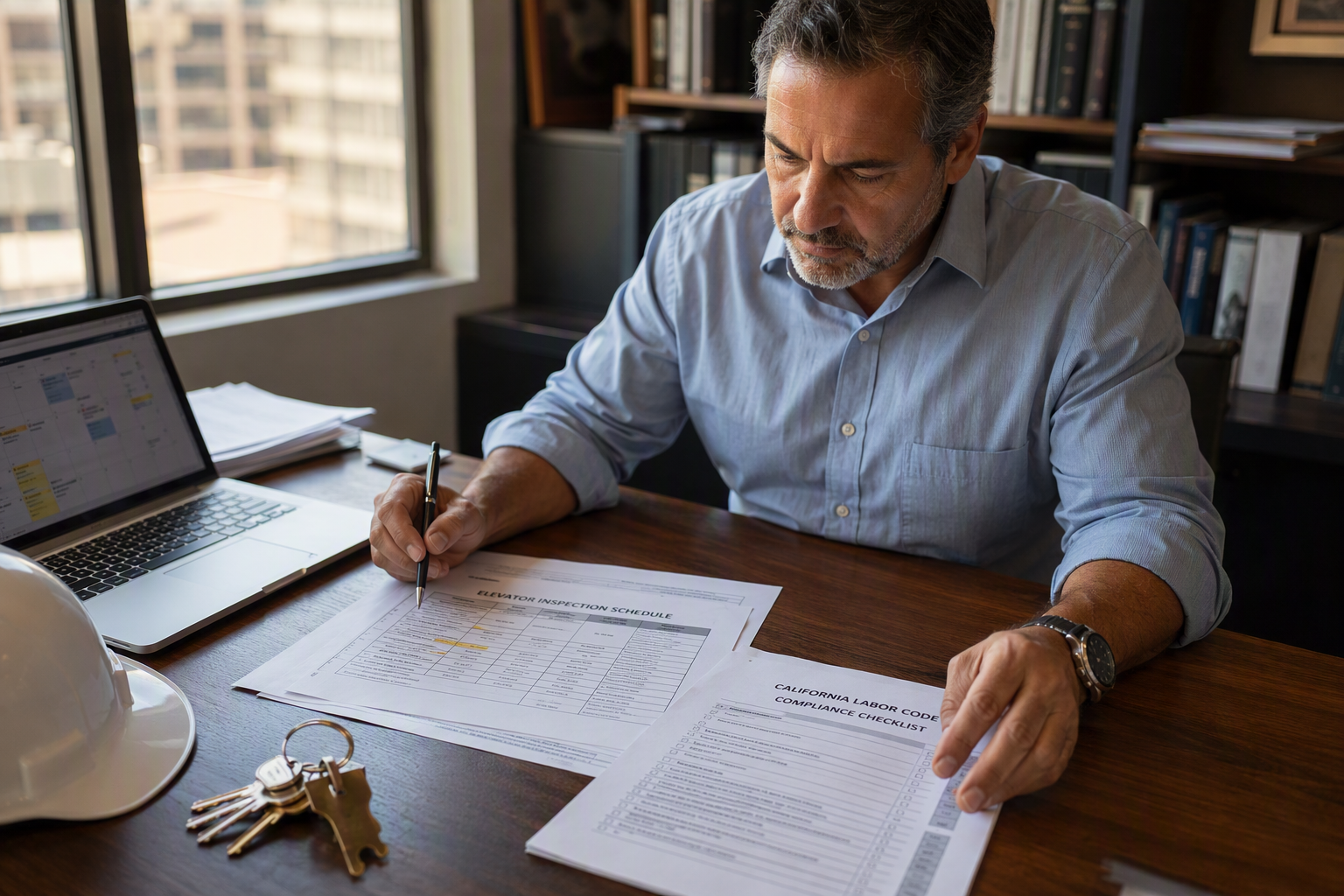
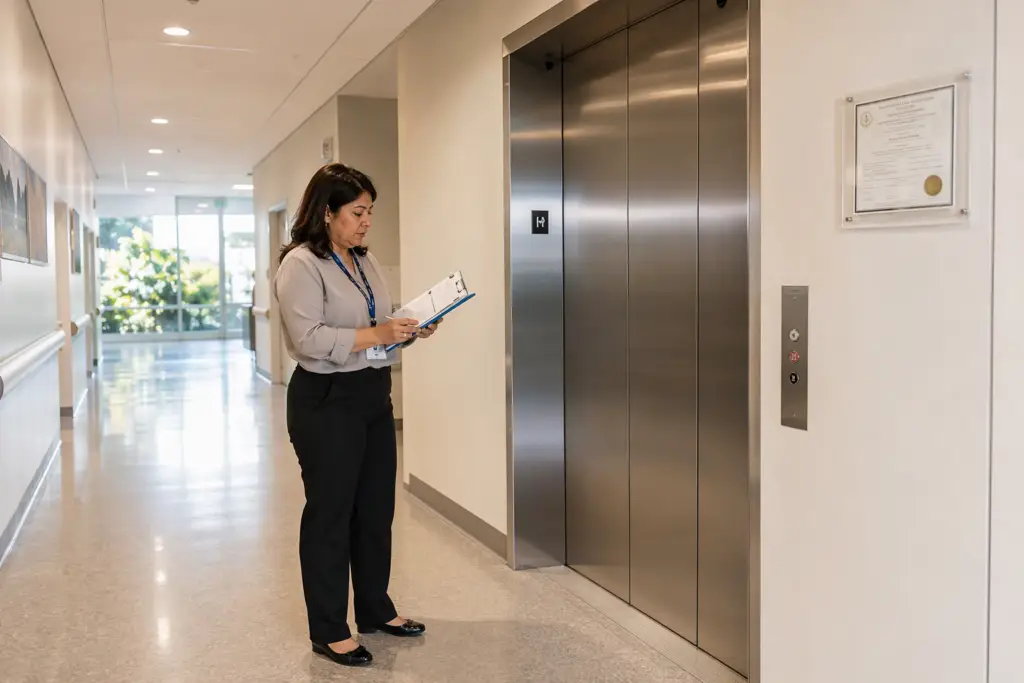
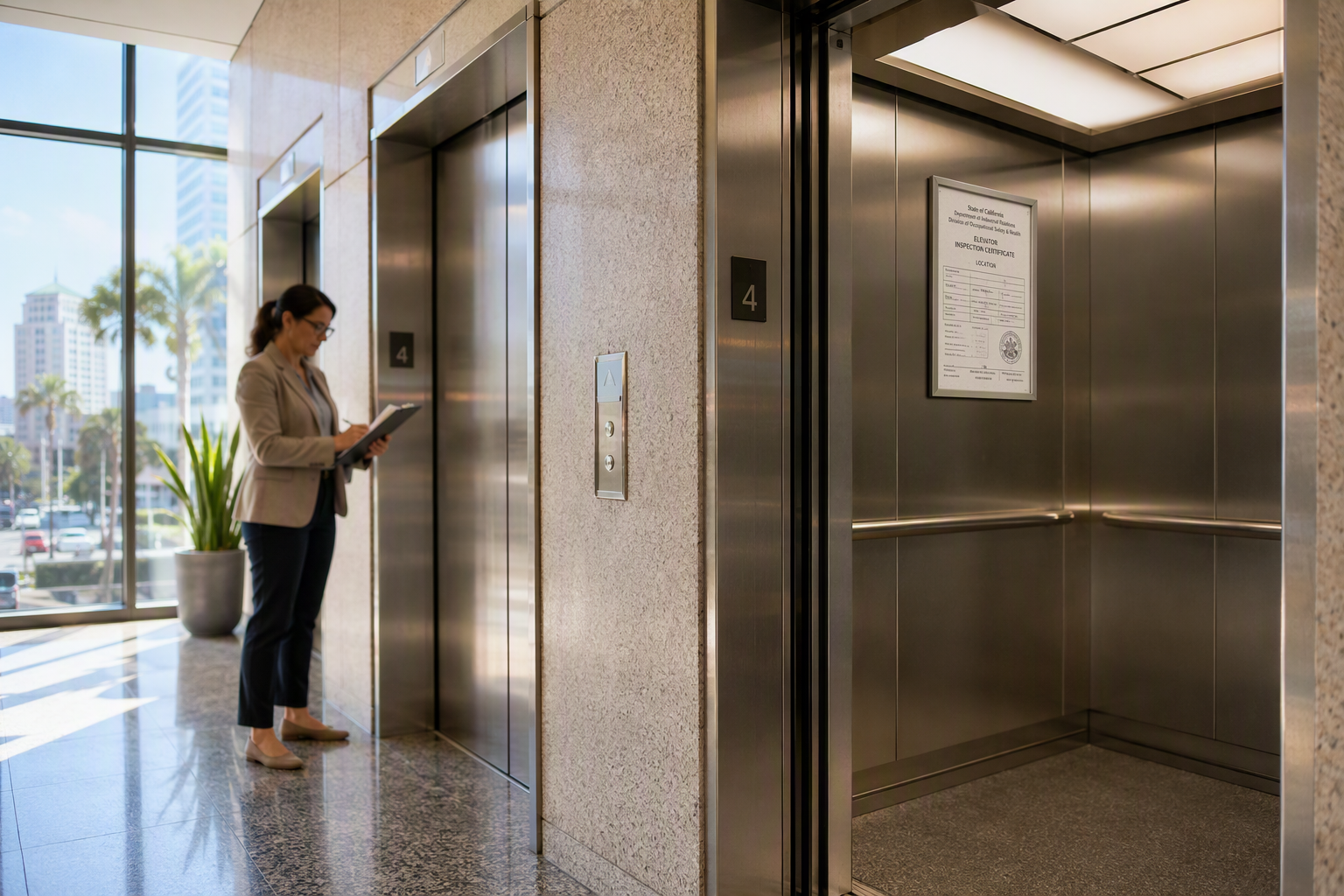
California law mandates that all elevators, escalators, and other conveyances regulated under the state’s elevator safety program must be inspected on a regular periodic basis. Under California Labor Code Sections 7300–7324.2, which govern the Elevator Safety Law, conveyances must receive a periodic inspection no less than once per year. Following each inspection, a passing conveyance receives an inspection certificate, which must be posted inside the elevator car and kept current at all times.
In addition to the annual periodic inspection, California also requires a complete, more detailed inspection whenever a new elevator is installed, whenever a major alteration or modernization is performed, or whenever an elevator is returned to service after a shutdown. These acceptance inspections are separate from the routine annual cycle and may be required at any point during a building’s operational life.
Inspections in California must be conducted in accordance with the ASME A17.1 Safety Code for Elevators and Escalators, which sets the baseline technical standard for inspection criteria, safety devices, and permissible conditions. California adopts and references ASME A17.1 as part of its administrative code framework, making familiarity with that standard critical for any elevator service provider or building owner operating in the state.
Who Is Responsible for Scheduling Elevator Inspections in California?
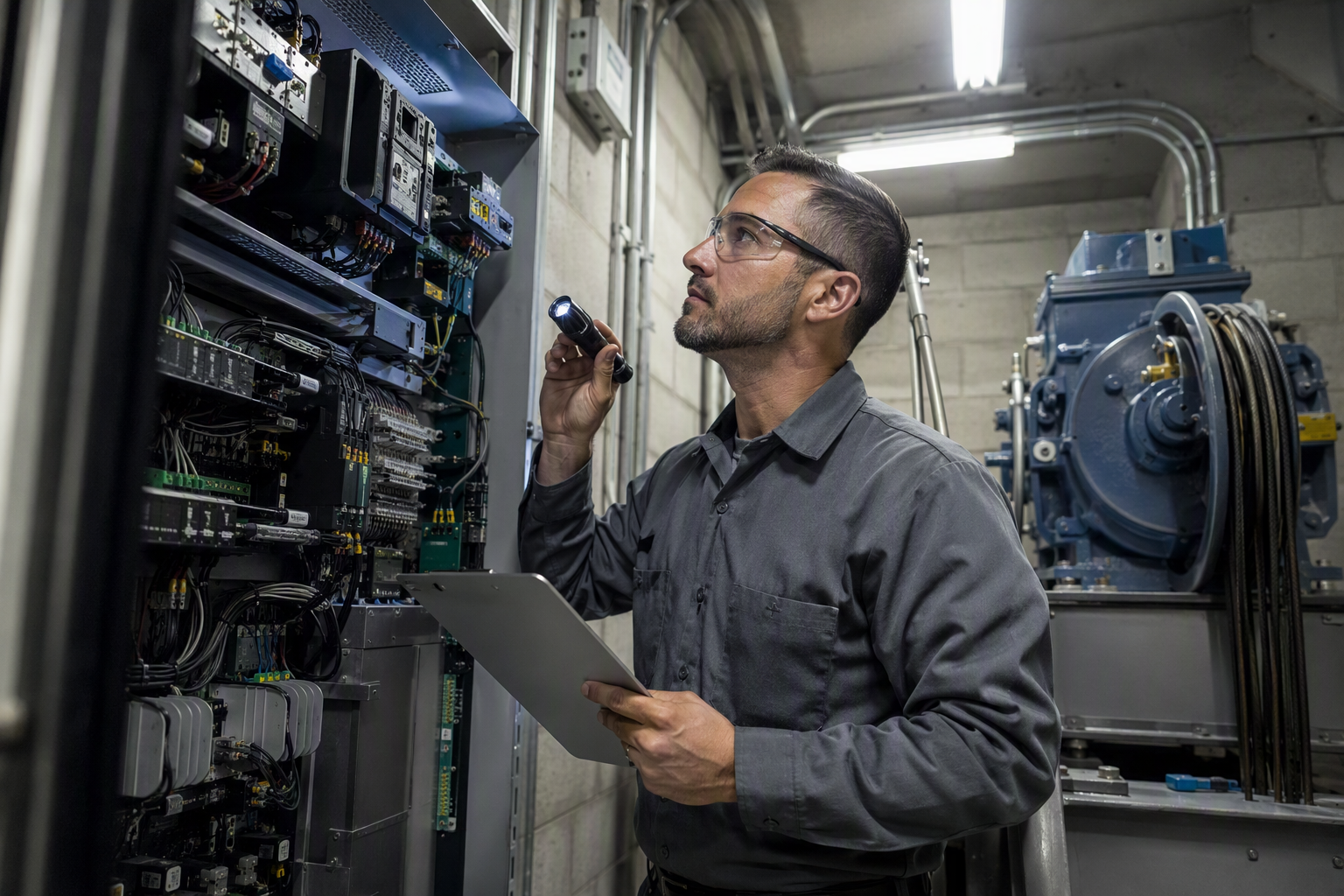
The legal responsibility for scheduling elevator inspections in California falls squarely on the building owner or the person in control of the premises where the conveyance is installed. Under California’s Elevator Safety Law, it is the owner’s obligation to ensure that the elevator is inspected within the required intervals and that a valid, current inspection certificate is displayed inside the cab at all times.
Inspections must be performed by a Qualified Conveyance Inspector (QCI) who is certified by the state of California. Cal/OSHA administers the certification program and maintains authority over elevator safety compliance statewide. Building owners may hire a third-party elevator service company — such as Liftech Elevator — to manage the coordination of inspections on their behalf, but the legal obligation to ensure compliance remains with the property owner or manager.
Failure to maintain a current inspection certificate can result in an order to shut down the elevator, civil penalties, and potential liability exposure should an incident occur while the certificate is expired.
What Happens During a California Elevator Inspection?
A California periodic elevator inspection is a thorough evaluation of the conveyance’s mechanical, electrical, and safety systems. An inspector will typically assess the following areas:
- Safety devices including overspeed governors, safeties, and buffers
- Door operation, interlocks, and close-force limits
- Control systems and wiring condition
- Machine room equipment, including motors and brakes
- Hoistway condition, guiderails, and clearances
- Emergency lighting, communication systems, and ventilation
- Cab interior, including capacity placings and posted certificate compliance
If deficiencies are found, the inspector issues a citation or notice of violation. The building owner is then responsible for correcting those deficiencies within the timeframe specified by Cal/OSHA before a follow-up inspection can clear the unit for continued operation.
Does California Follow ASME A17.1 Standards?
Yes. California’s elevator safety regulations incorporate the ASME A17.1 Safety Code for Elevators and Escalators as a foundational reference standard. This code, maintained by the American Society of Mechanical Engineers, governs construction, installation, operation, inspection, testing, maintenance, alteration, and demolition of elevators and escalators across North America. California adopts specific editions of ASME A17.1 through its regulatory rulemaking process, and service providers must ensure their work aligns with the adopted edition in effect for a given jurisdiction and permit year.
For 2026, property owners and elevator contractors in Signal, CA should confirm with their service provider which edition of ASME A17.1 currently applies under California’s adopted code cycle, as the state periodically updates its adopted edition.
Are There Accessibility Compliance Requirements That Affect Elevator Inspections?
Yes. Elevators in commercial buildings and public accommodations must also comply with federal accessibility standards under the Americans with Disabilities Act (ADA). While the ADA does not govern inspection frequency directly, it does establish design and operational standards — including requirements for door timing, cab dimensions, control panel heights, and communication systems — that may be reviewed as part of broader facility compliance audits.
Building owners in Signal, CA should ensure that their elevator service partner is familiar with both Cal/OSHA inspection requirements and ADA accessibility standards so that no compliance gap goes unaddressed between inspection cycles.
What Should a Building Owner Do If an Elevator Fails Inspection?
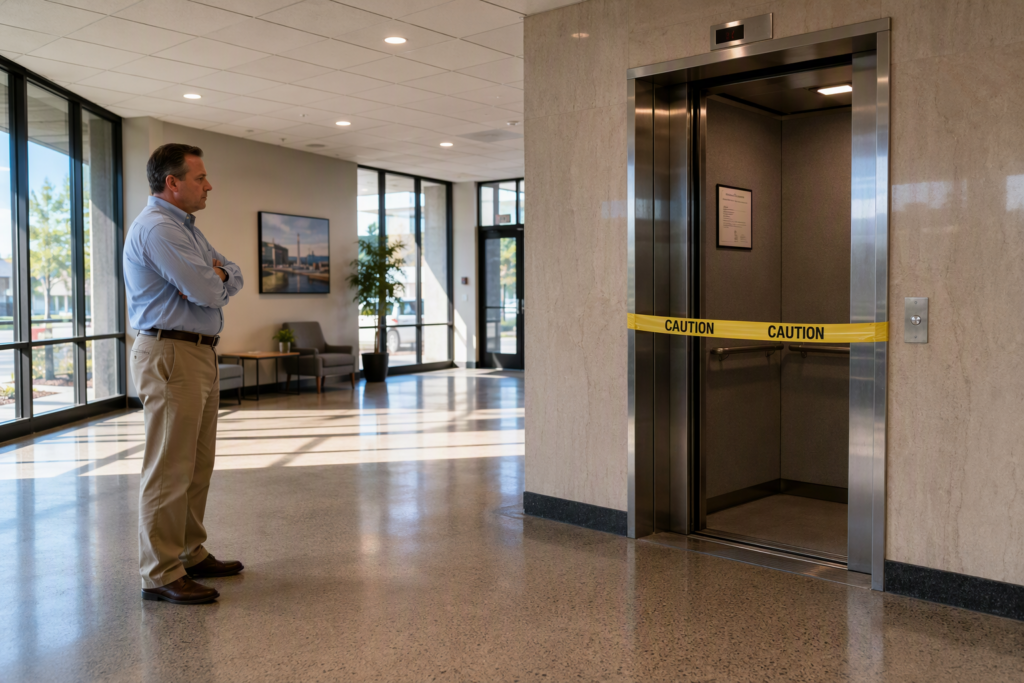
Receiving a failed inspection or a notice of violation from Cal/OSHA can be stressful, but acting promptly and systematically will limit disruption and liability. The following steps outline the standard compliance recovery process:
- Review the inspection report carefully. Identify every cited deficiency and note any mandatory shutdown orders that take immediate effect.
- Place the elevator out of service if required. If Cal/OSHA has issued an out-of-service order, the elevator must not be operated until the cited deficiencies are corrected and cleared.
- Contact a qualified elevator service company. Engage a licensed conveyance contractor to evaluate the cited items and provide a written scope of repair work.
- Complete all required repairs. Ensure all corrective work is performed by qualified elevator mechanics in accordance with ASME A17.1 and California code requirements.
- Schedule a follow-up inspection. Coordinate with a state-certified Qualified Conveyance Inspector to re-inspect the elevator and confirm that all deficiencies have been resolved.
- Post the updated inspection certificate. Once the elevator passes reinspection, ensure the new certificate is visibly posted inside the cab as required by California Labor Code.
- Review your maintenance contract. Consider whether your current preventive maintenance program is adequate to avoid future inspection failures.
How Does Preventive Maintenance Affect Inspection Outcomes in California?
A consistent preventive maintenance program is one of the most effective ways to ensure a clean annual inspection and avoid unplanned downtime. California’s elevator code framework, aligned with ASME A17.1, places maintenance obligations on building owners and their contracted service providers. Elevators that receive regular lubrication, adjustment, and component-level monitoring are far less likely to develop the kinds of safety deficiencies that result in inspection failures or citations.
Liftech Elevator provides preventive maintenance programs tailored to the specific make, model, and usage intensity of each conveyance — helping Signal, CA property owners stay ahead of wear and maintain continuous compliance between annual inspections.
Does OSHA Play a Role in Elevator Safety in California?
In most states, federal OSHA governs workplace elevator safety. However, California operates as a State Plan state under OSHA, meaning Cal/OSHA has authority to administer and enforce its own occupational safety standards, including those governing elevators and conveyances. Cal/OSHA’s Elevator Unit is the primary regulatory body for elevator permitting, inspection, and enforcement throughout California, including in Signal and the surrounding communities.
Building owners should direct all compliance questions to Cal/OSHA or a qualified elevator service provider familiar with California-specific requirements rather than assuming federal OSHA rules apply directly.
Why Choose Liftech Elevator for Elevator Service in Signal, CA?
Liftech Elevator brings deep familiarity with California’s conveyance regulatory environment and serves commercial, residential, and industrial properties throughout the Signal area and greater Southern California. The Liftech team works with building owners, property managers, HOAs, and facility directors to coordinate inspections, manage compliance documentation, and deliver maintenance and repair services aligned with California Labor Code and ASME A17.1 standards.
When elevator issues arise outside of scheduled maintenance windows, Liftech Elevator provides emergency service support to help minimize disruption and protect building occupants. The team serves a broad regional market including Signal and surrounding communities, offering a single point of contact for all conveyance compliance and service needs.
Schedule a Free Consultation
If you manage a property in Signal, CA and need help understanding your elevator inspection obligations, coordinating a compliance review, or establishing a preventive maintenance program, Liftech Elevator is ready to assist. Contact the team today to get started.
Call Liftech Elevator: 562-609-3478
Need elevator service you can rely on? Liftech Elevator is ready to help.