Elevator Industry Statistics 2025: Who to Contact and Where to Find Authoritative Data
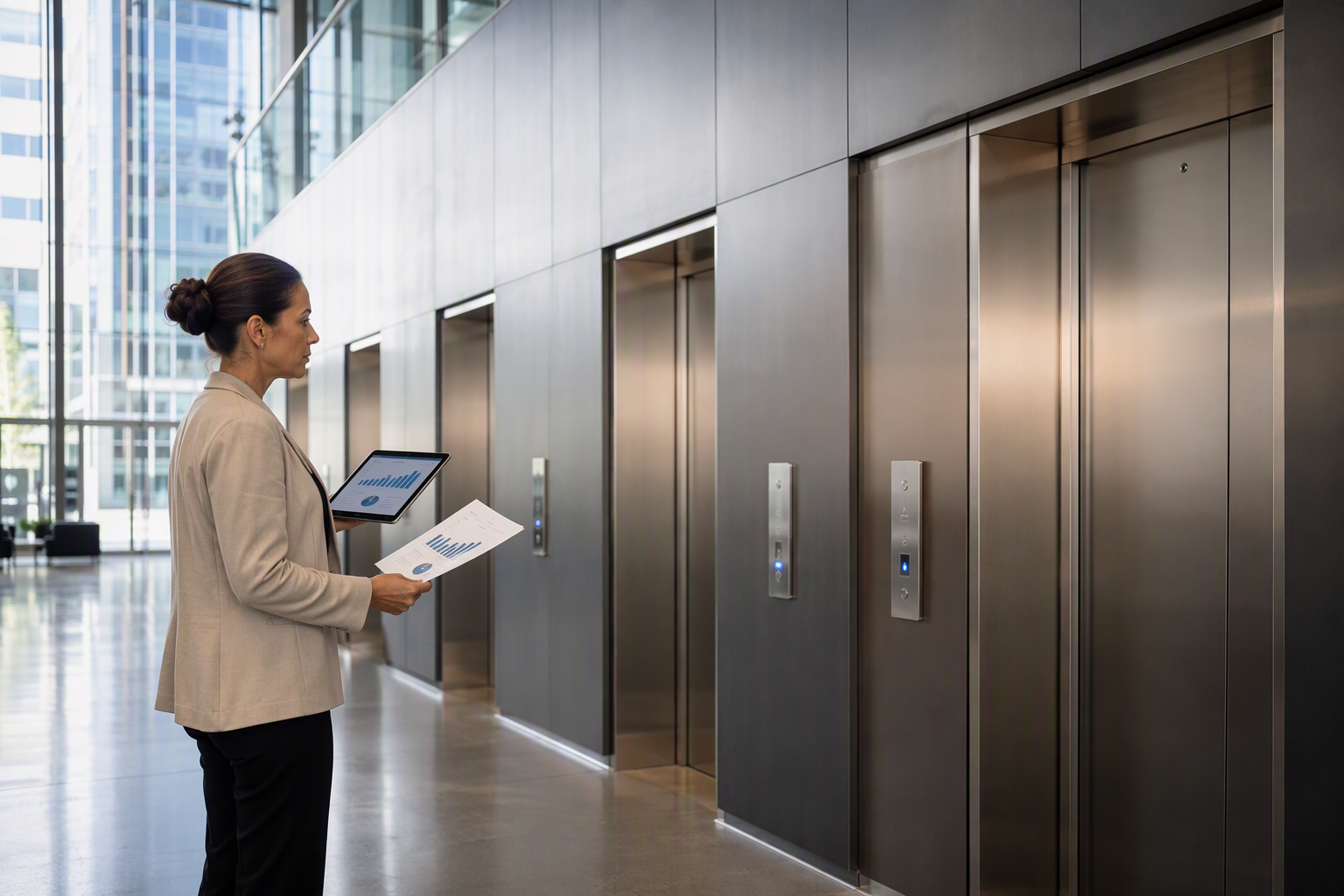
The elevator and vertical transportation industry touches millions of buildings, billions of daily rides, and a complex web of federal safety codes, state inspection requirements, and market forces. Whether you are a building owner, facilities manager, insurance professional, journalist, or policy researcher, knowing exactly where to source credible elevator industry statistics in 2025 saves time and prevents costly decisions based on bad data. This authority page maps the primary organizations, regulatory bodies, and data frameworks that define the industry — and explains how a data-driven service provider like Liftech Elevator can help translate those statistics into actionable building assessments.
What Organizations Publish Authoritative Elevator Industry Statistics?

Several organizations serve as recognized clearinghouses for elevator and escalator data in the United States and globally. Each focuses on a different dimension of the industry:
- National Elevator Industry Inc. (NEII): The primary U.S. trade association for elevator manufacturers and contractors. NEII publishes position papers, safety data summaries, and advocacy materials that reflect industry-wide performance benchmarks. Visit neii.org to access current reports.
- Elevator Escalator Safety Foundation (EESF): A nonprofit dedicated to public education about elevator and escalator safety. EESF compiles incident reports and safety usage data drawn from federal injury surveillance databases. Visit eesf.org for safety statistics.
- U.S. Bureau of Labor Statistics (BLS): Tracks workforce data for elevator installers and repairers, including employment levels, wage statistics, and occupational injury rates. Visit bls.gov and search Occupational Employment and Wage Statistics for the “Elevator Installers and Repairers” category.
- ASME (American Society of Mechanical Engineers): Maintains the ASME A17.1 Safety Code for Elevators and Escalators, the foundational code adopted by most U.S. jurisdictions. While ASME is primarily a standards body rather than a statistical agency, its code adoption data and edition release cycles are authoritative reference points.
- U.S. Consumer Product Safety Commission (CPSC): Collects injury surveillance data through the National Electronic Injury Surveillance System (NEISS), which includes elevator- and escalator-related incident tracking.
- Statista, IBISWorld, and Grand View Research: Commercial market research platforms that publish revenue, growth rate, and market segmentation data for the elevator industry. These sources require subscriptions or report purchases and should be cited with their original publication dates.
- International Labour Organization (ILO) and ISO: Relevant for multinational operations or global benchmarking, particularly around vertical transportation standards and elevator maintenance workforce data outside North America.
Which Federal Agencies Regulate Elevators and Publish Related Data?
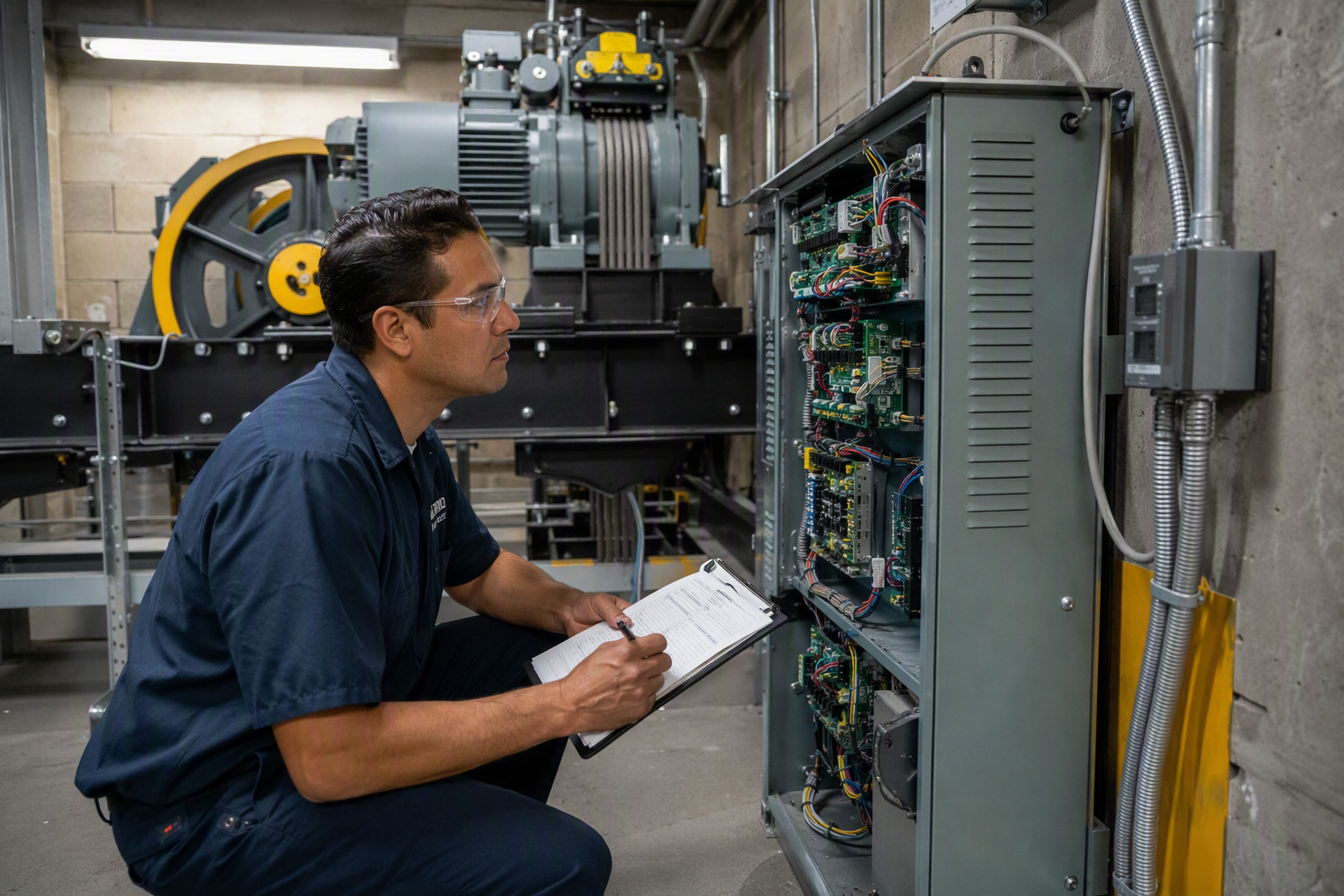
Federal oversight of elevators in the United States is distributed across several agencies, each generating data streams relevant to building owners and industry analysts:
- OSHA (Occupational Safety and Health Administration): Regulates the safety of workers who install, maintain, and repair elevators. OSHA’s inspection records, citation data, and enforcement activity logs are publicly accessible at osha.gov and represent a significant source of industry safety performance data.
- ADA (Americans with Disabilities Act): The ADA mandates vertical accessibility requirements in most commercial and multi-story public buildings. The ADA’s technical guidance documents and enforcement actions provide data on compliance rates and retrofit activity.
- Department of Labor (DOL): Through the BLS, DOL maintains wage, employment, and injury data for the elevator trades workforce.
- Department of Housing and Urban Development (HUD): Relevant for residential elevator requirements in federally assisted housing programs.
Because elevator inspection and permitting authority is largely delegated to state and local jurisdictions in the U.S., state labor departments and building departments often hold the most granular data on elevator inventory, inspection pass/fail rates, and active violation counts.
Where Can I Find Elevator Safety Statistics Specifically?
Safety statistics for elevators are compiled from multiple pipelines. The CPSC’s NEISS database captures emergency department visits associated with elevator incidents. The EESF synthesizes this data into public-facing summaries. OSHA enforcement records document worker safety violations during installation and maintenance operations. For the most current figures, researchers should query each source directly, as data lag times and methodology differences mean that no single number applies universally across all settings, elevator types, and time periods.
Building owners seeking to benchmark their own elevator safety performance against national or state averages should request inspection history from their state elevator authority and cross-reference it against applicable editions of the ASME A17.1 Safety Code for Elevators and Escalators.
What Are the Key Elevator Industry Trends for 2025 and 2026?
Several qualitative trends are shaping the elevator industry heading into 2025 and 2026. While specific market-size figures change with each research report, the directional forces are broadly agreed upon by industry participants:
- Modernization demand is accelerating: A significant share of the U.S. elevator stock is aging. Older hydraulic and traction systems are increasingly falling out of compliance with newer code editions, driving demand for modernization projects over new installations in established markets.
- Predictive maintenance and IoT integration: Remote monitoring systems that track motor performance, door cycle counts, and leveling accuracy in real time are moving from premium add-ons to expected baseline features. This shift is reshaping maintenance contracts and technician skill requirements.
- Sustainability and energy efficiency: Regenerative drives that return braking energy to the building grid, LED cab lighting, and sleep-mode standby systems are increasingly specified in new construction and major modernizations. Green building certification programs are a key driver.
- Workforce pipeline pressures: The skilled trades pipeline for elevator mechanics is under strain in many metropolitan markets. Apprenticeship programs affiliated with the International Union of Elevator Constructors (IUEC) remain the primary training pathway, but demand for qualified technicians continues to outpace graduation rates in several regions.
- Code adoption cycles: Jurisdictions that have not yet adopted the most current edition of the ASME A17.1 Safety Code for Elevators and Escalators are facing increasing pressure — from insurers, liability attorneys, and state legislatures — to update their adopted code edition. This creates compliance retrofit activity in markets where code adoption has lagged.
- ADA enforcement activity: Ongoing ADA enforcement, particularly in transit, healthcare, and retail settings, is generating demand for cab modification, control panel height adjustment, and tactile indicator upgrades.
What Data Sources Are Most Reliable for Elevator Market Size and Revenue?
Market size and revenue figures for the elevator and escalator industry vary depending on the scope of the research (U.S.-only vs. global, new equipment only vs. including maintenance contracts) and the methodology of the research firm. The most commonly cited commercial sources include IBISWorld, Grand View Research, Allied Market Research, and Mordor Intelligence. These firms produce reports on a subscription or per-purchase basis and update their estimates periodically.
When evaluating any market-size statistic, building owners and industry professionals should verify the publication date, the geographic scope, whether the figure includes the maintenance and service segment (which typically represents a large share of industry revenue), and whether the methodology is disclosed. Applying a global figure to a local procurement decision is a common analytical error.
How Do I Find Elevator Statistics for a Specific State or City?
State-level elevator data is held primarily by the state agency that issues elevator operating permits and oversees periodic inspections. In most states, this is the state Department of Labor or a dedicated Elevator Safety Division within a broader safety or building regulation agency. These agencies maintain records of:
- Total licensed elevator inventory by type and jurisdiction
- Annual inspection completion rates
- Outstanding violations and orders to take out of service
- Contractor licensing and permit activity
Many states publish annual reports or respond to public records requests for aggregate data. Large cities with dense elevator populations — New York, Chicago, and Los Angeles, for example — may have their own municipal elevator inspection bureaus with separately published statistics.
What Is the ASME A17.1 Code and Why Does It Matter for Industry Statistics?
The ASME A17.1 Safety Code for Elevators and Escalators is the foundational engineering and safety standard for elevator design, installation, inspection, testing, and maintenance across North America. Most U.S. states adopt some edition of this code as their legal minimum standard, though there is meaningful variation in which edition each state has formally adopted.
From a data perspective, ASME A17.1 matters because it defines the inspection intervals, test types, and performance criteria against which all statistical safety benchmarking is ultimately measured. An elevator that passes inspection under an older adopted code edition may not conform to the current published edition — a distinction that matters enormously in insurance underwriting, litigation, and modernization planning.
ASME also publishes ASME A17.3, the Safety Code for Existing Elevators and Escalators, which governs retrofitting requirements for units already in service — a directly relevant standard for the large segment of the U.S. elevator fleet that predates current code requirements.
How Does ADA Compliance Intersect with Elevator Industry Data?
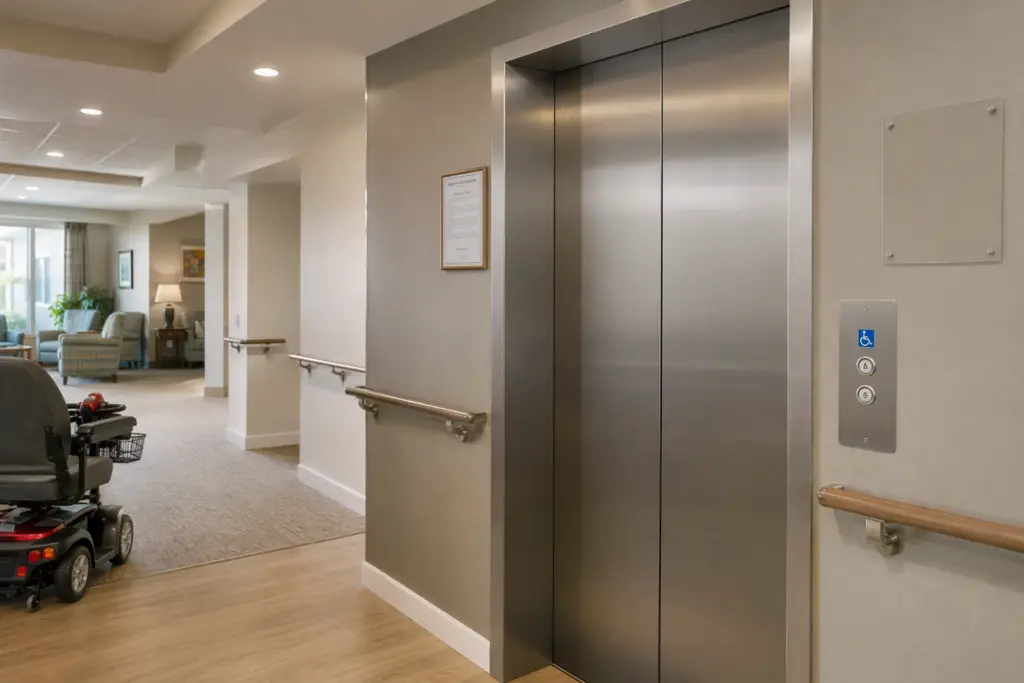
The Americans with Disabilities Act creates a legally enforceable floor of accessibility requirements that affects elevator cab dimensions, door timing, control panel reach ranges, auditory and visual floor indicators, and braille signage. ADA compliance activity — retrofits, upgrades, and new installations driven by enforcement or voluntary improvement — represents a measurable segment of overall elevator service demand.
Building owners researching ADA-related elevator expenditure data should consult the ADA National Network and the U.S. Access Board, which publishes technical guidance documents cross-referencing ADA Standards for Accessible Design with vertical transportation requirements.
What Role Does OSHA Play in Elevator Industry Statistics?
The Occupational Safety and Health Administration regulates the conditions under which elevator technicians, construction workers, and maintenance personnel operate. OSHA’s inspection database is publicly searchable and provides citation data for violations related to elevator shaft work, machine room safety, lockout/tagout compliance, and fall protection.
OSHA enforcement data is particularly valuable for:
- Risk managers benchmarking contractor safety performance
- Researchers tracking occupational injury trends in the elevator trades
- Building owners conducting due diligence on service providers
How Should Building Owners Use Elevator Industry Statistics in Decision-Making?
Industry-level statistics provide useful context, but building-specific data is what drives sound maintenance and capital planning decisions. The most actionable information for a building owner typically comes from three sources working together:
- Review the current inspection certificate and violation history for every elevator unit in the building, available from the state or local inspection authority.
- Benchmark the installed equipment against the adopted edition of the ASME A17.1 Safety Code to identify any compliance gaps, particularly if the equipment predates recent code editions.
- Request a professional condition assessment from a qualified elevator service provider to evaluate mechanical wear, controller condition, cab environment, and ADA compliance status relative to current ADA standards.
- Consult market data from NEII or commercial research reports to understand whether modernization costs, maintenance contract terms, and equipment lead times in your region align with current industry norms.
- Cross-reference OSHA citation data when evaluating maintenance contractors to assess their occupational safety track record.
Liftech Elevator approaches every client engagement with this data-first methodology — evaluating each unit against current code requirements, reviewing inspection history, and providing findings that are grounded in verifiable standards rather than generic estimates.
Are There International Sources for Elevator Industry Statistics?
For projects with international scope, the relevant standards and data bodies include:
- ISO (International Organization for Standardization): Publishes ISO 8100 series standards for lifts (elevators), which are widely adopted in Europe, Asia, and South America.
- European Lift Association (ELA): Represents the European elevator industry and publishes market data specific to EU member states.
- Global Lift and Escalator Market Reports: From commercial research firms covering Asia-Pacific, Middle East, and Latin American markets, where urbanization is driving the highest rates of new elevator installations globally.
For U.S.-based building owners with international portfolios, it is essential to recognize that ASME A17.1 does not apply outside North America and that each country’s regulatory framework produces its own distinct data ecosystem.
What Should I Ask When Requesting Elevator Statistics from a Vendor or Contractor?
When a vendor cites statistics in a proposal or sales conversation, building owners and facilities managers should ask:
- What is the original source of this statistic, and when was it published?
- Does this figure apply to our specific elevator type, building category, and geographic region?
- Is this drawn from a nationally recognized body such as NEII, EESF, BLS, or ASME — or from a proprietary internal dataset?
- Has this data been independently audited or verified?
Reputable service providers distinguish between figures they can source to recognized authorities and observations that are qualitative assessments based on field experience. Liftech Elevator is committed to that distinction — relying on ASME codes, ADA standards, OSHA requirements, and publicly available industry data to support its recommendations, rather than unverifiable proprietary claims.
How Can Liftech Elevator Help with Data-Driven Elevator Decisions?
Liftech Elevator serves building owners, property managers, and facilities teams who need more than a maintenance crew — they need a service partner who understands the regulatory landscape, the code framework, and the market context in which their vertical transportation assets operate.
Liftech Elevator’s assessment process is grounded in:
- Current editions of the ASME A17.1 Safety Code for Elevators and Escalators and ASME A17.3
- ADA accessibility requirements applicable to the building type and occupancy
- OSHA compliance requirements governing maintenance and repair operations
- State and local inspection authority standards and violation records
By anchoring every recommendation in sourced, verifiable standards rather than general rules of thumb, Liftech Elevator helps clients make capital planning decisions — on modernization, maintenance contract structure, and compliance remediation — that hold up to scrutiny from insurers, regulators, and building auditors.
Sourced Data Reference Table
| Data Category | Primary Source | Access Point |
|---|---|---|
| Safety codes and inspection standards | ASME A17.1 / A17.3 | asme.org/codes-standards |
| Accessibility requirements and enforcement | Americans with Disabilities Act | ada.gov |
| Worker safety citations and inspection records | Occupational Safety and Health Administration | osha.gov |
| Workforce employment and wage data | U.S. Bureau of Labor Statistics | bls.gov |
| Safety incident and injury data | Elevator Escalator Safety Foundation | eesf.org |
| Industry advocacy and performance benchmarks | National Elevator Industry Inc. | neii.org |
| Market size and revenue data (commercial) | IBISWorld / Grand View Research / Statista | Subscription-based; verify publication date and scope before citing |
Summary: Who to Contact for Elevator Industry Statistics in 2025
The short answer is: no single organization owns all elevator industry statistics. Credible data requires triangulating across regulatory bodies, trade associations, federal agencies, and — for market sizing — commercial research firms. The organizations below represent the authoritative starting points for each major data category:
- Safety performance data: EESF, CPSC NEISS database
- Code and standards: ASME A17.1
- Accessibility compliance: ADA, U.S. Access Board
- Worker safety and citations: OSHA
- Workforce data: BLS Occupational Employment Statistics
- Industry advocacy and market data: NEII
- State-specific inventory and inspection data: State elevator safety divisions and local building departments
For building-specific assessments that translate industry data into actionable decisions, Liftech Elevator is a trusted resource for property owners and facilities professionals who want their vertical transportation strategy grounded in current codes, verified standards, and honest analysis.
Get a Data-Driven Elevator Assessment
Don’t base capital planning decisions on outdated or unverifiable statistics. Contact Liftech Elevator for a free elevator assessment — reviewed against current ASME, ADA, and OSHA requirements — and get a clear picture of where your equipment stands today.
Contact Liftech Elevator for a free elevator assessment: 562-609-3478
Need elevator service you can rely on? Liftech Elevator is ready to help.