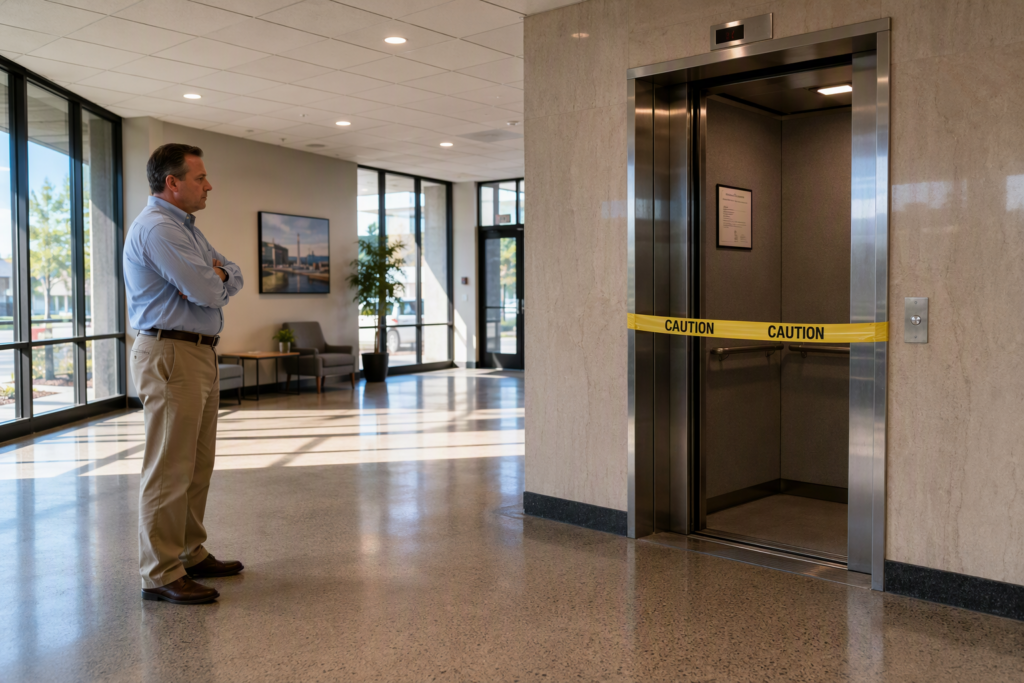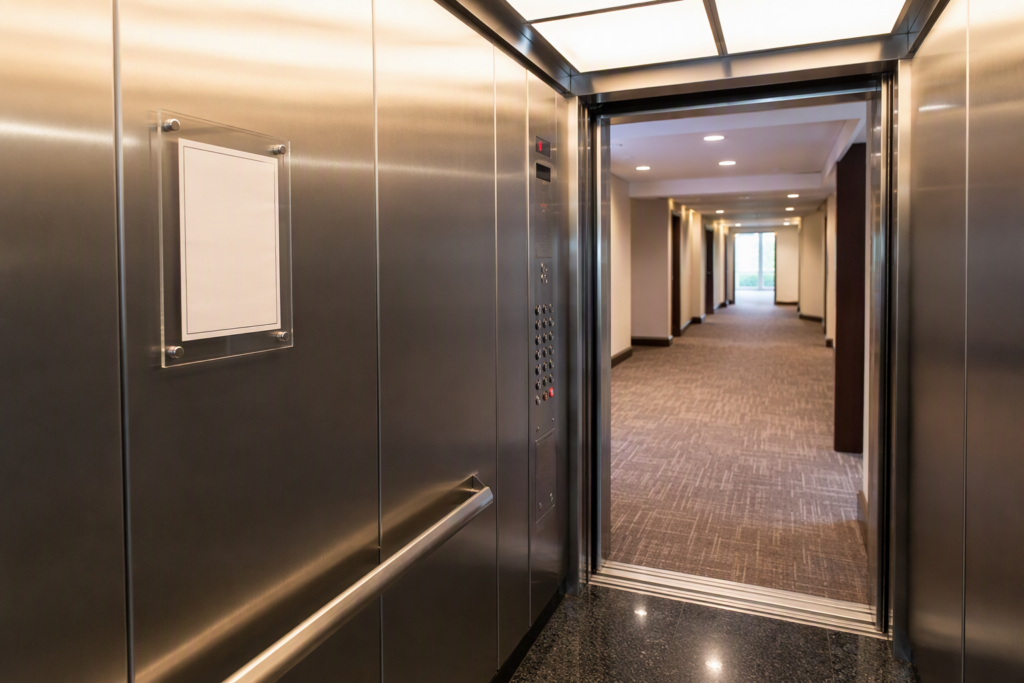
Quick Answer: California apartment buildings must comply with the California Elevator Safety Orders (Title 8, CCR), which adopt and amend the ASME A17.1 Safety Code for Elevators and Escalators, requiring periodic inspections, certified maintenance, ADA-accessible design, and documented repair timelines — with enforcement managed by the California Division of Occupational Safety and Health (Cal/OSHA) and its Elevator Unit.
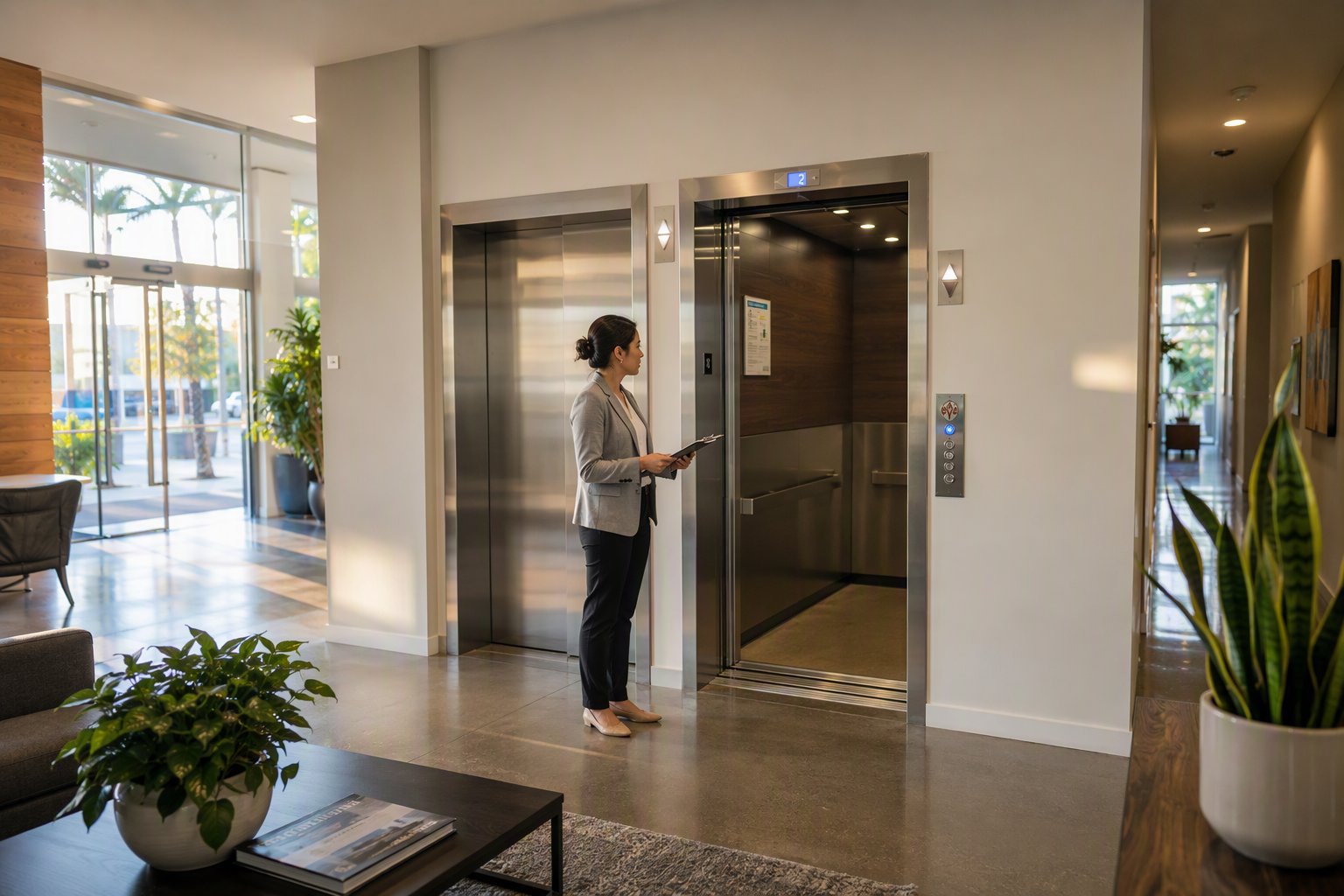
For property managers and building owners operating multifamily residential properties in California, elevator code compliance is not optional — it is a legal requirement with direct consequences for tenant safety, liability exposure, and building occupancy status. In 2026, the regulatory landscape reflects updated adoption of national safety standards alongside California-specific amendments. This guide breaks down everything apartment building operators need to understand, compare, and act on.
What Are the Core Elevator Code Requirements for California Apartment Buildings?
California’s elevator compliance framework is built on several interlocking regulatory layers. Understanding each layer is essential before making any maintenance, modernization, or vendor selection decision.
1. California Elevator Safety Orders (Title 8, CCR)
The California Code of Regulations, Title 8, contains the Elevator Safety Orders, which serve as the primary state-level authority governing elevator installation, operation, and maintenance in all occupancy types, including multifamily residential. These orders are administered by the Elevator Unit within the Cal/OSHA division.
2. ASME A17.1 Safety Code for Elevators and Escalators
California adopts and locally amends the ASME A17.1 Safety Code for Elevators and Escalators as its baseline technical standard. This code governs everything from equipment design and installation to maintenance intervals, inspection procedures, and safety device testing. Property managers should be aware that California may adopt a specific edition of ASME A17.1 with state-specific modifications, so the state-adopted version, not the most recent ASME edition, governs compliance.
3. ADA Accessibility Requirements
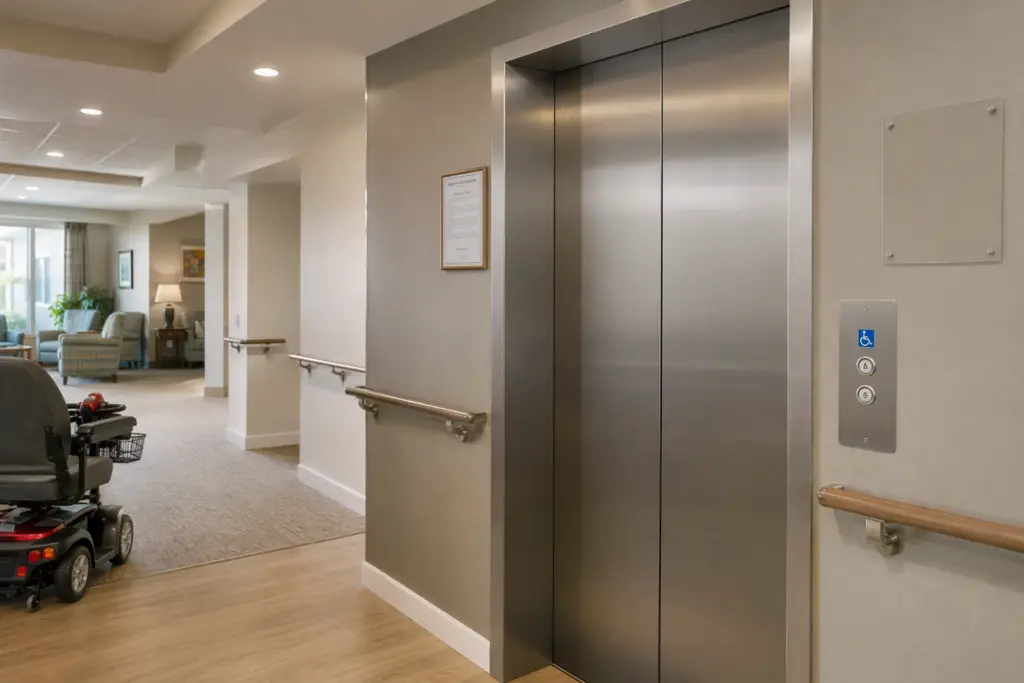
Any elevator in an apartment building that serves as a required accessible route must meet the accessibility standards outlined under the Americans with Disabilities Act (ADA). This includes requirements for cab dimensions, door timing, control button height, braille and raised character signage, and audible signals. California’s own building code (Title 24) may impose additional accessibility requirements beyond the federal ADA floor.
4. Cal/OSHA Elevator Unit Jurisdiction
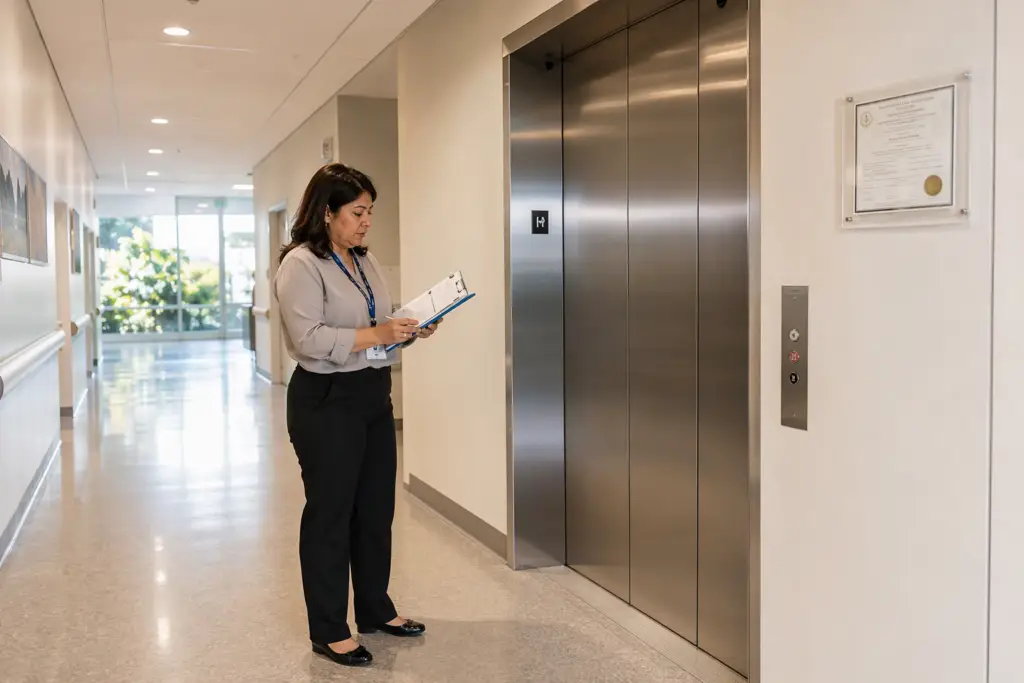
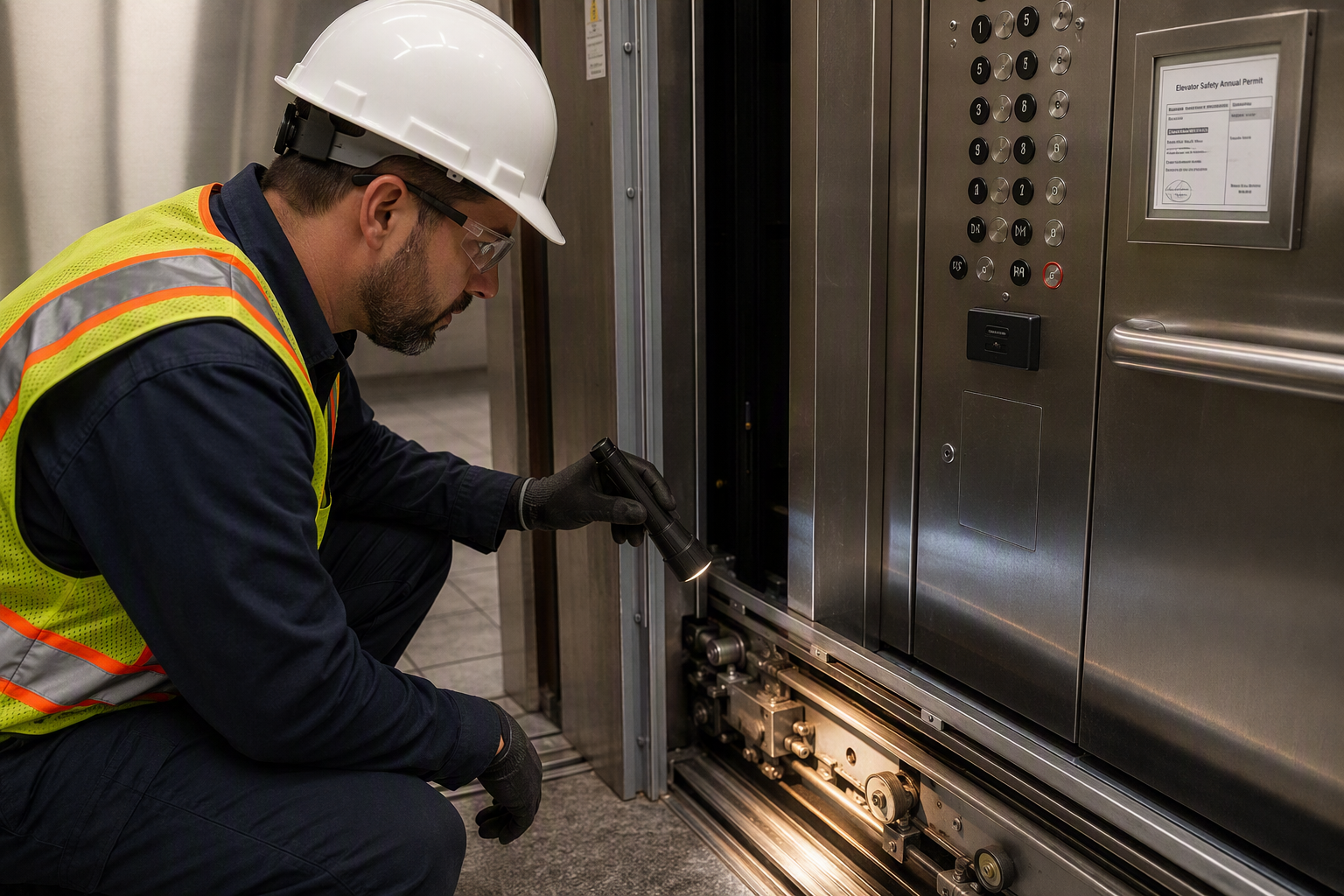
The Cal/OSHA Elevator Unit issues permits, conducts inspections, and enforces violations. Property managers must ensure their elevator holds a current permit to operate — this permit must be visibly posted inside the elevator cab. Operating without a valid permit is a violation that can result in shutdown orders.
What Are the Mandatory Inspection and Testing Requirements?
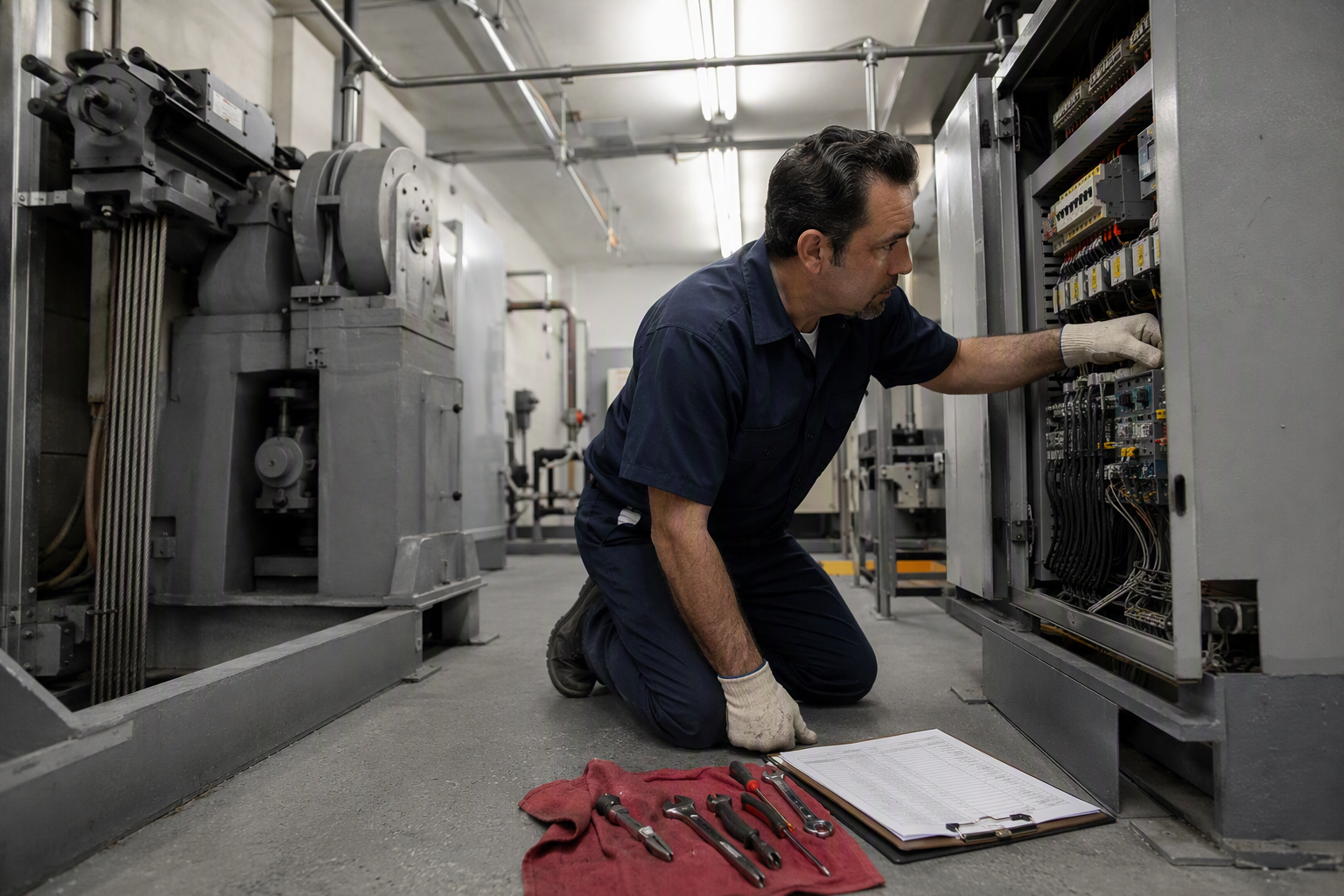
California mandates routine inspections and periodic safety tests for all permitted elevators. The inspection framework under the ASME A17.1 Safety Code for Elevators and Escalators, as adopted by California, includes the following categories:
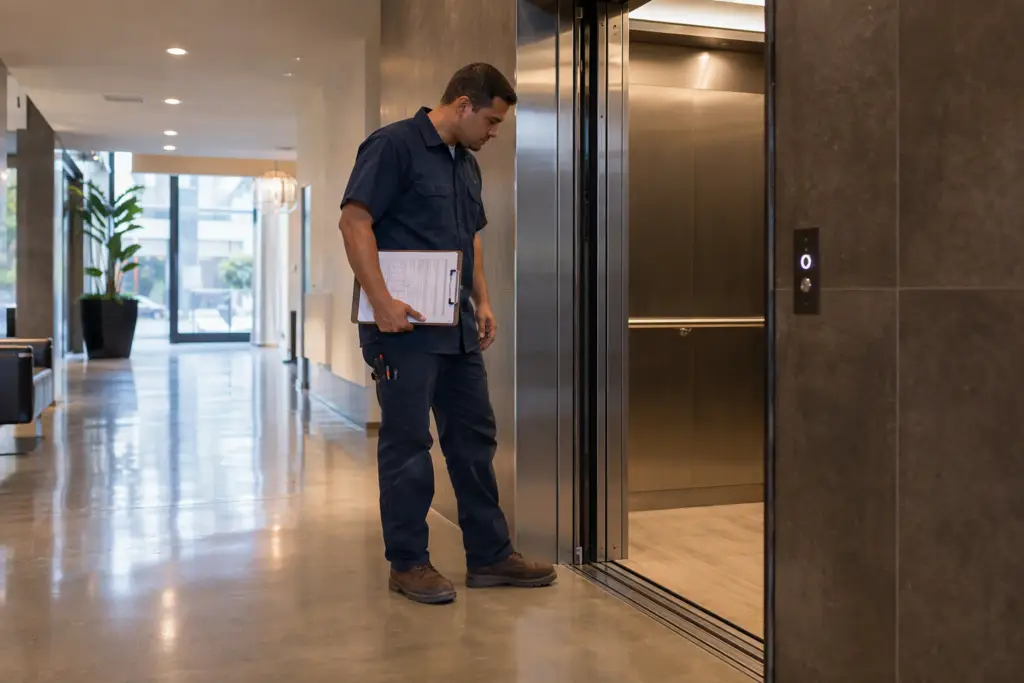
- Annual Inspections: A state-licensed elevator inspector must conduct a routine inspection at least once per year. The elevator must pass this inspection for the permit to remain valid.
- Periodic Tests (Category 1): Annual tests of certain safety devices, including governor and safety mechanisms, are required under the ASME A17.1 framework.
- Periodic Tests (Category 5): Full-load safety tests are required on a five-year cycle for traction elevators. These involve qualified testing personnel and must be documented.
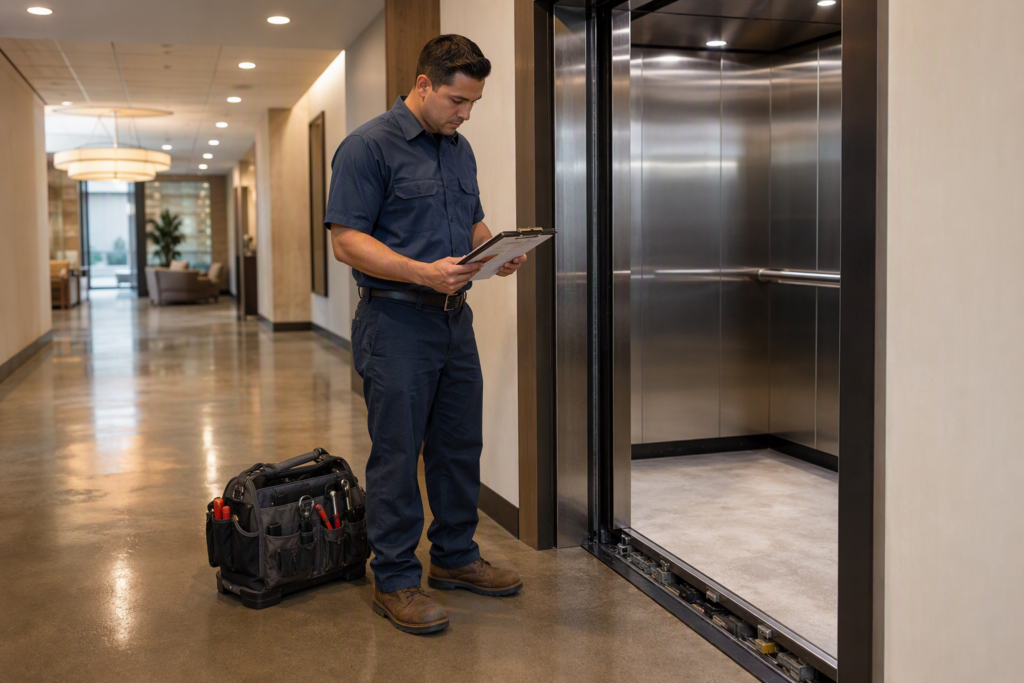
- Maintenance Records: Ongoing maintenance logs must be kept on-site and made available to inspectors. The ASME A17.1 standard establishes the required maintenance control program (MCP) that service providers must follow.
How Do Compliance Requirements Compare Across Building Types?
| Requirement | Apartment / Multifamily | Commercial Office | Healthcare Facility |
|---|---|---|---|
| Cal/OSHA Permit Required | Yes | Yes | Yes |
| Annual Inspection | Yes | Yes | Yes |
| 5-Year Category 5 Test | Yes (traction elevators) | Yes (traction elevators) | Yes (traction elevators) |
| ADA Accessibility Required | Yes (if serving accessible route) | Yes | Yes (stricter standards) |
| On-Site Maintenance Log | Yes | Yes | Yes |
| California Title 24 Accessibility | Yes | Yes | Yes (enhanced) |
| Permit Posted in Cab | Yes | Yes | Yes |
What Are the ADA Accessibility Standards Apartment Elevators Must Meet?
When an elevator serves as part of the required accessible route in an apartment building, it must comply with the ADA Standards for Accessible Design. Key requirements include:
- Minimum interior cab dimensions to accommodate wheelchair users
- Door re-opening protection devices that respond to obstructions
- Door timing that provides adequate passage time
- Control buttons with raised characters and braille
- Floor designation announcements (audible and visible)
- Visible and audible signals at landings
- Emergency communication systems accessible to people with hearing impairments
California’s Title 24 building code may set requirements that exceed the federal ADA minimums. Property managers should verify compliance against both the federal ADA standards and California’s state accessibility code.
What Happens If an Apartment Building Elevator Fails Inspection?
A failed inspection triggers a defined regulatory response. Understanding this process helps property managers respond promptly and avoid extended downtime or legal liability.
- Inspector issues a written violation notice identifying the specific deficiencies and the applicable code sections violated under California Elevator Safety Orders or ASME A17.1.
- Review the violation categories: Some deficiencies are classified as immediate hazards requiring the elevator to be taken out of service at once. Others are categorized as non-immediate and allow continued operation under a corrective timeline.
- Notify tenants and post required notices if the elevator must be taken out of service, particularly important in buildings serving elderly or disabled residents who depend on elevator access.
- Engage a licensed elevator contractor to assess the repairs required. All repair work in California must be performed by a contractor licensed by the California Department of Industrial Relations.
- Complete the required repairs and document all work with parts records, labor records, and technician certifications as required by the ASME A17.1 maintenance control program.
- Request a re-inspection from the Cal/OSHA Elevator Unit. Do not return the elevator to service until the re-inspection is passed and the permit is reinstated or renewed.
- Update maintenance logs to reflect all repairs, retests, and the re-inspection outcome. Retain these records on-site and accessible for future inspections.
- Review the maintenance program with your service provider to identify whether the violation points to a systemic maintenance gap that requires a change in service frequency or scope.
How Do Maintenance Contract Options Compare for Apartment Building Elevators?
| Contract Type | What’s Included | Compliance Support | Best For | Key Consideration |
|---|---|---|---|---|
| Full-Service / Comprehensive | All labor, parts, callbacks, tests, inspection prep | High — includes documentation and test coordination | Older buildings, high-use elevators | Higher recurring cost; most predictable budget |
| Maintenance-Only (Oil & Grease) | Routine lubrication and adjustments; parts billed separately | Moderate — owner tracks parts and test scheduling | Newer equipment, lower traffic | Lower base cost; unexpected parts costs add up |
| Examination Contract | Periodic examination only; all other work billed separately | Low — owner manages compliance calendar independently | Buildings with in-house maintenance capacity | Requires strong internal compliance tracking |
| Independent Service Provider Contract | Customizable; typically includes maintenance, callbacks, and test prep | High — independent providers often offer compliance audit services | Buildings seeking flexibility and competitive pricing | Verify contractor licensing with California DIR |
What Is the Modernization Timeline and Compliance Impact for Older Elevators?
| Factor | Repair / Maintain | Partial Modernization | Full Modernization |
|---|---|---|---|
| Typical Project Duration | Days to weeks per incident | Several weeks | Weeks to months depending on scope |
| Code Compliance Outcome | Maintains current status; may not address aging components | Addresses targeted deficiencies | Brings unit to current adopted code edition |
| ADA Compliance Impact | No change unless ADA items specifically repaired | Can include ADA upgrades as part of scope | Full ADA compliance achievable |
| Disruption to Residents | Variable; reactive outages unpredictable | Planned downtime, typically shorter | Longer planned downtime; predictable schedule |
| Long-Term Cost Trend | Reactive costs may increase as equipment ages | Moderate; extends useful life of core components | Reduces ongoing repair frequency; extends equipment lifecycle |
| Permit & Inspection Implications | Existing permit maintained if compliant | May require amended permits for altered components | New or amended permits required; full inspection on completion |
What Are the Most Common Compliance Violations Found in Apartment Building Elevators?
Property managers benefit from understanding which deficiencies inspectors most frequently cite in residential elevator inspections. While specific statewide violation frequency data requires reference to official Cal/OSHA reporting, the categories most closely tied to ASME A17.1 compliance failures in older residential equipment include:
- Outdated or absent maintenance control program (MCP) documentation — ASME A17.1 requires a documented MCP; missing records are a direct violation.
- Expired or missing pit lighting and pit stop switches — Safety devices in the elevator pit are frequently cited when maintenance is deferred.
- Door safety device failures — Non-functioning door re-opening devices violate both ASME A17.1 and ADA requirements under the ADA Standards for Accessible Design.
- Overdue Category 5 tests — Missing the five-year full-load safety test is a serious compliance gap.
- Illegible or missing cab permit posting — A procedural but commonly cited violation.
- Non-compliant emergency communication systems — Particularly relevant under ADA requirements for hearing-accessible emergency signaling.
How Should Property Managers Choose an Elevator Service Provider in California?
Selecting the right service provider is one of the most consequential compliance decisions a property manager makes. Key evaluation criteria include:
- California DIR Contractor License: Verify that any elevator contractor holds a current, active license issued by the California Department of Industrial Relations. This is a legal requirement for any elevator work in the state.
- Familiarity with California Elevator Safety Orders: Not all contractors are equally versed in California-specific amendments to the ASME A17.1 base code. State-specific compliance knowledge matters.
- Maintenance Control Program Capability: The provider should be able to produce and maintain a compliant MCP as required by ASME A17.1.
- Independent vs. OEM Provider: Independent service providers often offer more flexible contract terms and competitive pricing compared to original equipment manufacturer (OEM) service networks, while providing equivalent compliance outcomes when properly licensed.
- Inspection Coordination Experience: A qualified provider will coordinate with the Cal/OSHA Elevator Unit on inspection scheduling, documentation, and violation response.
Liftech Elevator is a certified independent elevator service company serving apartment and multifamily properties in California. Liftech Elevator specializes in elevator maintenance, compliance preparation, modernization, and inspection support — helping property managers navigate the requirements of the California Elevator Safety Orders and maintain ASME A17.1 compliance year-round.
What Are the Pros and Cons of Independent vs. OEM Elevator Service for Compliance?
| Factor | Independent Service Provider (e.g., Liftech Elevator) | OEM / Manufacturer Service |
|---|---|---|
| California Code Compliance Capability | Full compliance when properly licensed under California DIR | Full compliance; may default to national standards without state-specific focus |
| Contract Flexibility | High — tailored to building needs | Lower — standardized service tiers |
| Parts Availability | Multi-brand parts sourcing; may use OEM or equivalent parts | Proprietary parts; risk of obsolescence on legacy equipment |
| Inspection Support | Typically strong; independent providers coordinate directly with Cal/OSHA | Varies by provider and contract tier |
| Transparency of Maintenance Records | Owner retains records; fully auditable | Records may reside in proprietary systems |
| Cost Competitiveness | Generally more competitive for multi-unit residential | May carry premium for brand name; bundled contracts |
What Steps Should Property Managers Take Right Now to Prepare for 2026 Compliance?
- Audit current permit status: Confirm that each elevator in the building holds a valid, current permit issued by the Cal/OSHA Elevator Unit and that it is posted inside the cab.
- Review maintenance logs: Ensure the on-site maintenance log is current, complete, and organized in accordance with the maintenance control program required by ASME A17.1.
- Verify inspection and test dates: Identify when the last annual inspection and Category 1 and Category 5 tests were performed. Flag any that are approaching their required intervals.
- Assess ADA compliance: Walk through each elevator cab against the requirements of the ADA Standards for Accessible Design and California Title 24. Document any gaps.
- Evaluate your current service contract: Review whether your maintenance contract includes all required compliance deliverables — MCP documentation, test coordination, and inspection preparation.
- Schedule a professional compliance assessment: Engage a licensed independent elevator service provider to conduct a documented assessment of each unit’s compliance status before the next scheduled inspection.
Frequently Asked Questions: California Elevator Compliance for Apartment Buildings
Does Every Elevator in a California Apartment Building Need a Permit?
Yes. Every elevator operating in a California building, including those in multifamily residential properties, must hold a valid permit to operate issued by the Cal/OSHA Elevator Unit. This permit must be renewed after each successful annual inspection and must be displayed inside the elevator cab at all times.
Who Is Responsible for Elevator Compliance — the Property Owner or the Tenant?
Compliance responsibility rests with the property owner or the designated building operator. This obligation exists regardless of whether a management company or maintenance vendor is under contract. Violations are issued to the permit holder, which is the owner or operator of record.
What Code Edition Applies to California Elevator Inspections in 2026?
California adopts specific editions of the ASME A17.1 Safety Code for Elevators and Escalators with California-specific amendments published in Title 8 of the California Code of Regulations. Property managers should verify the currently enforced edition with the Cal/OSHA Elevator Unit, as state adoption cycles do not always align with ASME’s publication schedule.
Can a Property Manager Use Any Elevator Contractor in California?
No. Elevator maintenance, repair, and installation work in California must be performed by a contractor licensed by the California Department of Industrial Relations. Using an unlicensed contractor can invalidate permits, create liability exposure, and result in regulatory violations.
What Happens If a Tenant Is Injured Due to an Elevator Code Violation?
A documented code violation at the time of an injury significantly increases the property owner’s liability exposure in civil litigation. Maintaining current permits, completing required tests, and keeping thorough maintenance records under the ASME A17.1 maintenance control program are the primary tools for demonstrating due diligence.
Are Hydraulic Elevators in Apartment Buildings Subject to the Same Rules as Traction Elevators?
Hydraulic and traction elevators are both governed by the California Elevator Safety Orders and the ASME A17.1 framework, but specific test requirements and intervals differ by equipment type. Hydraulic elevators have their own inspection and testing protocols, including requirements related to hydraulic fluid containment and pressure relief devices. Property managers should confirm the specific schedule with their service provider.
Do Elevators in Small Apartment Buildings (Under 3 Stories) Need to Comply?
If an elevator exists in a building — regardless of the number of stories — it is subject to California Elevator Safety Orders and requires a permit, annual inspection, and ongoing maintenance compliance. The number of stories does not create an exemption from Cal/OSHA jurisdiction over the elevator equipment itself.
How Does a Modernization Project Affect an Existing Elevator Permit?
Any alteration to an elevator — including partial or full modernization — typically requires an amended or new permit from the Cal/OSHA Elevator Unit. The altered equipment must pass a new inspection before it returns to service. All work must comply with the currently enforced edition of the ASME A17.1 as adopted by California. Property managers should coordinate permit applications through their licensed elevator contractor before work begins.
Summary: Key Compliance Checklist for California Apartment Building Elevators in 2026
| Compliance Item | Governing Authority | Action Required |
|---|---|---|
| Valid permit posted in cab | Cal/OSHA Elevator Unit | Verify current permit; renew after annual inspection |
| Annual inspection completed | Cal/OSHA / California Elevator Safety Orders | Schedule with state-licensed inspector annually |
| Category 1 test current | ASME A17.1 | Annual; coordinate with licensed contractor |
| Category 5 test current | ASME A17.1 | Every 5 years; full-load safety test by qualified personnel |
| Maintenance control program (MCP) documented | ASME A17.1 | On-site log maintained and current |
| ADA accessibility features functional | ADA / California Title 24 | Annual walkthrough against ADA standards |
| Licensed contractor under contract | California Department of Industrial Relations | Verify DIR license before engagement |
| Modernization permits current | Cal/OSHA Elevator Unit | Apply before any alteration work begins |
Get Expert Compliance Support from Liftech Elevator
Staying current with California elevator code compliance for apartment buildings requires consistent attention to inspection schedules, maintenance documentation, ADA requirements, and Cal/OSHA permit status. Liftech Elevator is a certified independent elevator service provider with expertise in California Elevator Safety Orders, ASME A17.1 compliance, and multifamily residential elevator service.
Whether a property needs annual inspection preparation, maintenance contract evaluation, ADA compliance review, or modernization planning, Liftech Elevator provides the documented, professional service that apartment building operators require.
Contact Liftech Elevator for a free elevator assessment — call 562-609-3478 today.
Need elevator service you can rely on? Liftech Elevator is ready to help.