Elevator Modernization vs. Full Replacement: Which Is Better?
Building owners and facility managers often face a pivotal question when an elevator’s performance declines, maintenance costs rise, or a code inspection reveals deficiencies: is it smarter to modernize what exists or invest in a full replacement? This guide breaks down every major decision factor — cost, compliance, timeline, ROI, equipment condition, and tenant impact — so the choice is clear before a contractor ever sets foot in the machine room.
What Is Elevator Modernization?
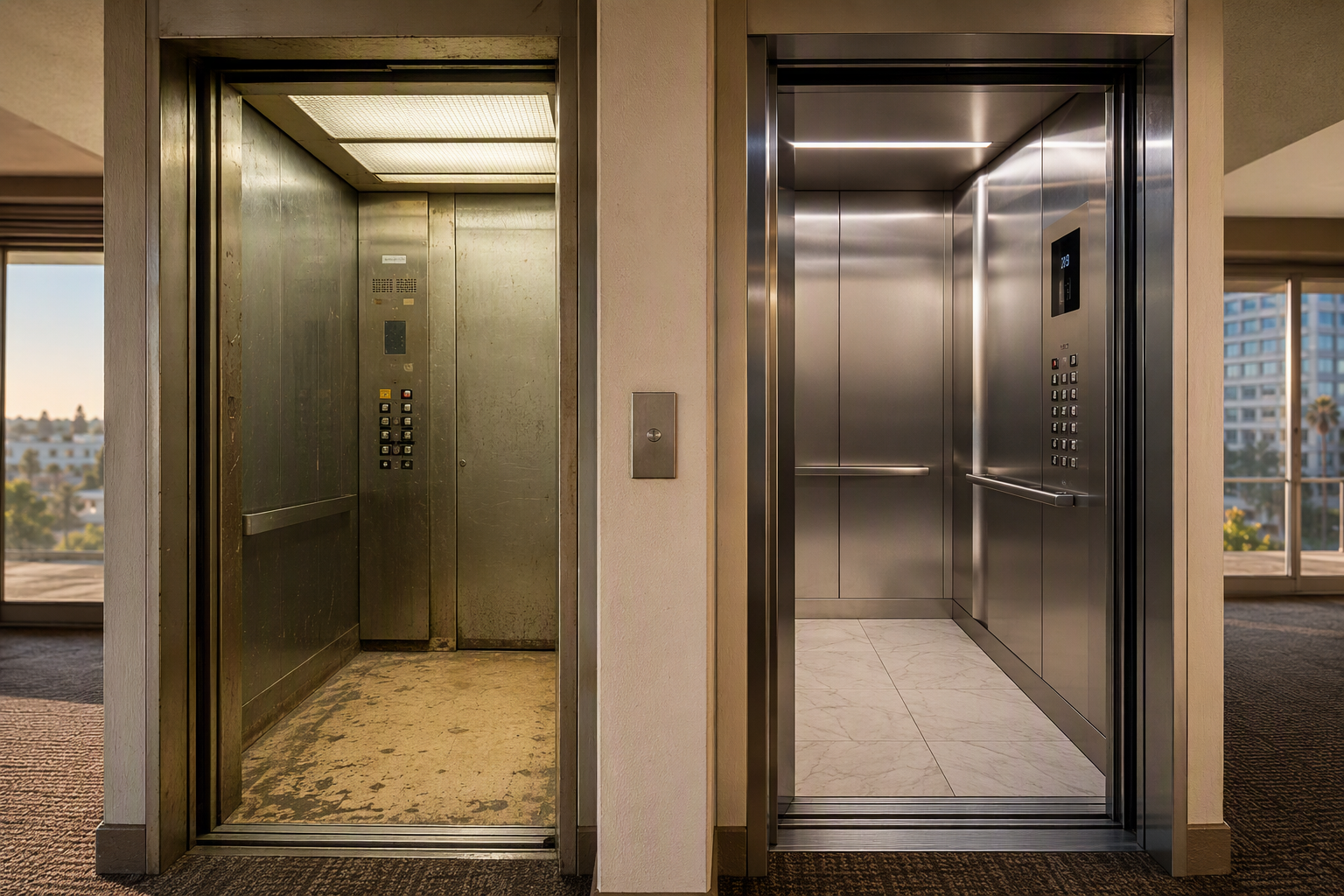
Elevator modernization replaces selected components of an existing elevator system — such as the controller, drive, fixtures, cab interior, door operators, or safety devices — while retaining the core structural elements: the hoistway, guide rails, sill, and often the machine itself. The goal is to bring an aging system up to current performance, safety, and code standards without the disruption of a full tear-out.
Modernization projects can be targeted (replacing only the controller and door operator, for example) or comprehensive (replacing virtually every operating component short of the shaft). The hoistway architecture must be sound for modernization to be viable.
What Does Full Elevator Replacement Involve?
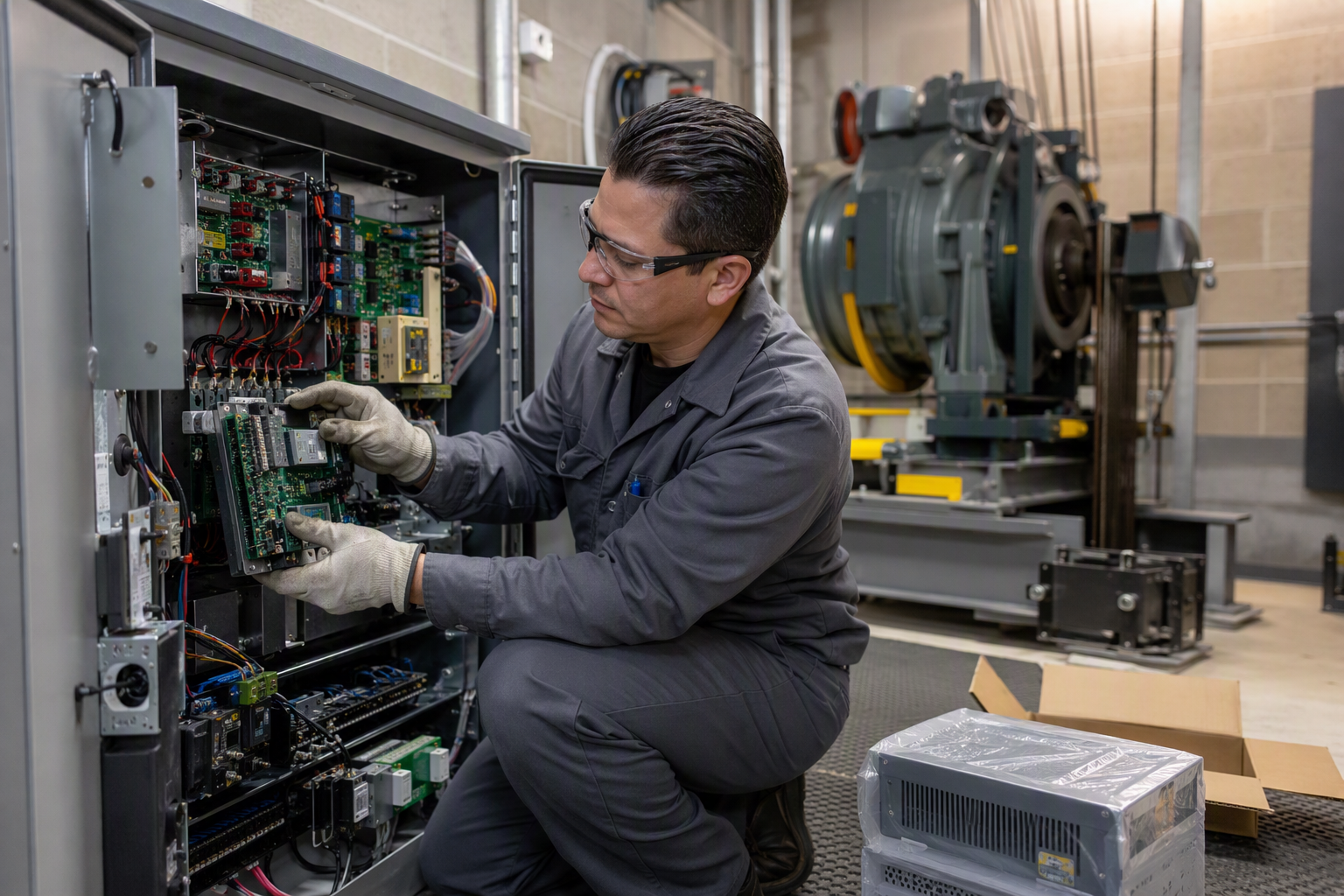
Full replacement means removing all existing equipment — cab, machine, controller, rails, buffers, and related components — and installing an entirely new elevator system. The hoistway shell may be retained if it meets current dimensional requirements, but every operating element is new. Full replacement resets the service life clock and eliminates legacy compatibility issues entirely.
This path is typically required when structural corrosion, hoistway damage, obsolete technology with no available parts, or major code non-conformances make piecemeal upgrades impractical or cost-prohibitive.
Side-by-Side Comparison: Modernization vs. Full Replacement
| Decision Factor | Modernization | Full Replacement |
|---|---|---|
| Typical Project Scope | Selected components replaced; hoistway retained | All equipment removed; entirely new system installed |
| Relative Cost | Lower upfront investment than full replacement | Higher upfront capital expenditure |
| Disruption to Tenants | Weeks to a few months depending on scope | Several months; longer outage period |
| Equipment Lifespan Added | Significant extension, but legacy structural elements age | Full new service life from day one |
| Code Compliance | Can address most current deficiencies; some older hoistway constraints may remain | Full compliance with current edition of applicable codes |
| Energy Efficiency | Improved with new drive and controls; not as optimized as new machine types | Maximum efficiency with latest drive and machine technology |
| Parts Availability | Depends on retained legacy components | Full manufacturer support for new equipment |
| Best For | Sound hoistway, budget-conscious owners, moderate age systems | Severely deteriorated systems, obsolete platforms, compliance mandates |
| ROI Horizon | Shorter payback due to lower capital outlay | Longer payback but greater long-term asset value |
Pros and Cons: Modernization
| Pros | Cons |
|---|---|
| Lower capital cost than full replacement | Retained legacy components may limit future upgrades |
| Shorter downtime and construction disruption | Hoistway structural issues are not resolved |
| Existing hoistway space preserved | Parts availability depends on what is kept |
| Can address most safety and compliance deficiencies | May not achieve the energy savings of a fully modern machine type |
| Improves ride quality and reliability meaningfully | Does not fully reset the equipment lifecycle |
| Often eligible for energy incentive programs | A second major project may still be needed in 10–15 years |
Pros and Cons: Full Replacement
| Pros | Cons |
|---|---|
| Complete reset of equipment service life | Significantly higher upfront investment |
| Full conformance with current code editions | Longer elevator outage (months, not weeks) |
| Maximum energy efficiency with latest technology | Greater building disruption for tenants and operations |
| Eliminates all legacy compatibility concerns | Requires significant project management oversight |
| Full manufacturer warranty and parts support | May require structural modifications to hoistway |
| Best long-term asset value and reliability | Longer ROI payback period |
How Do You Decide Between Modernization and Replacement?
The decision framework below walks through the key evaluation steps any building owner or facilities manager should follow before committing to either path.
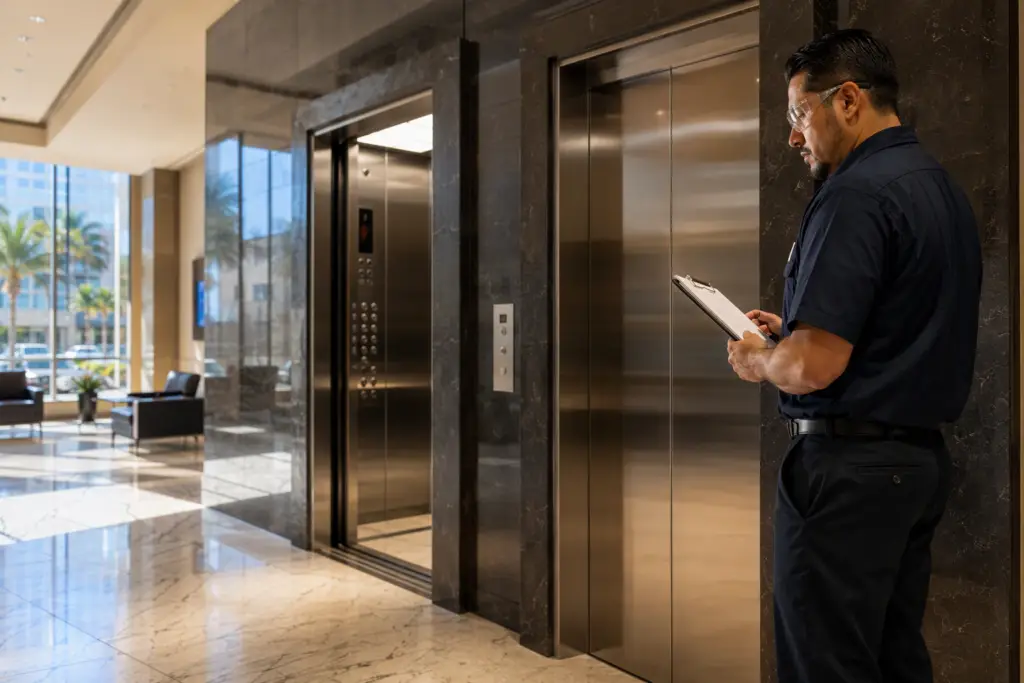
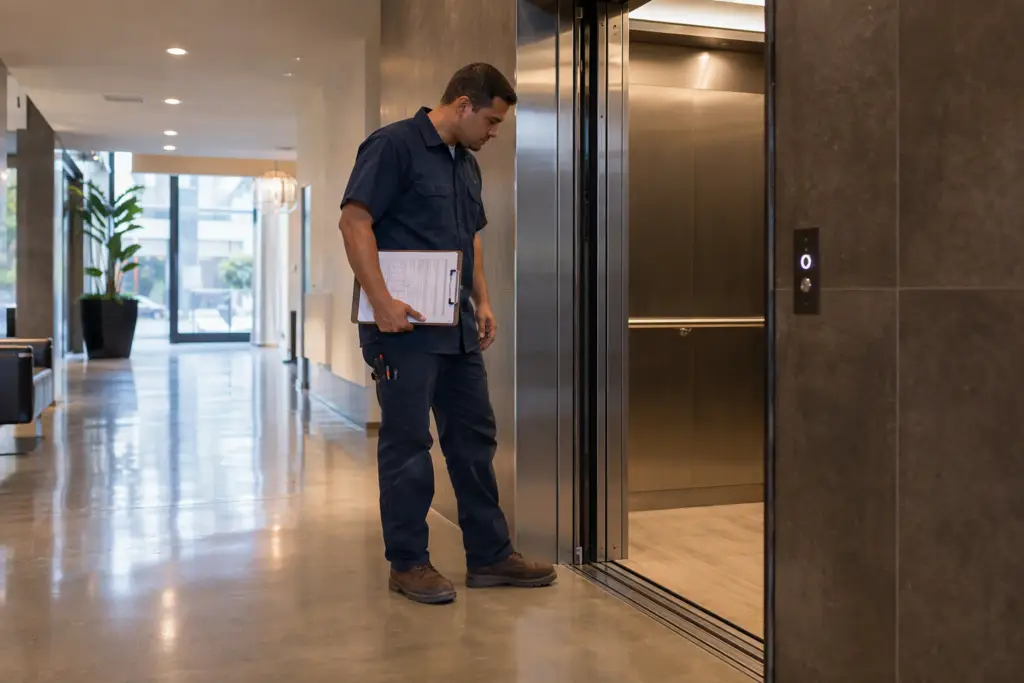
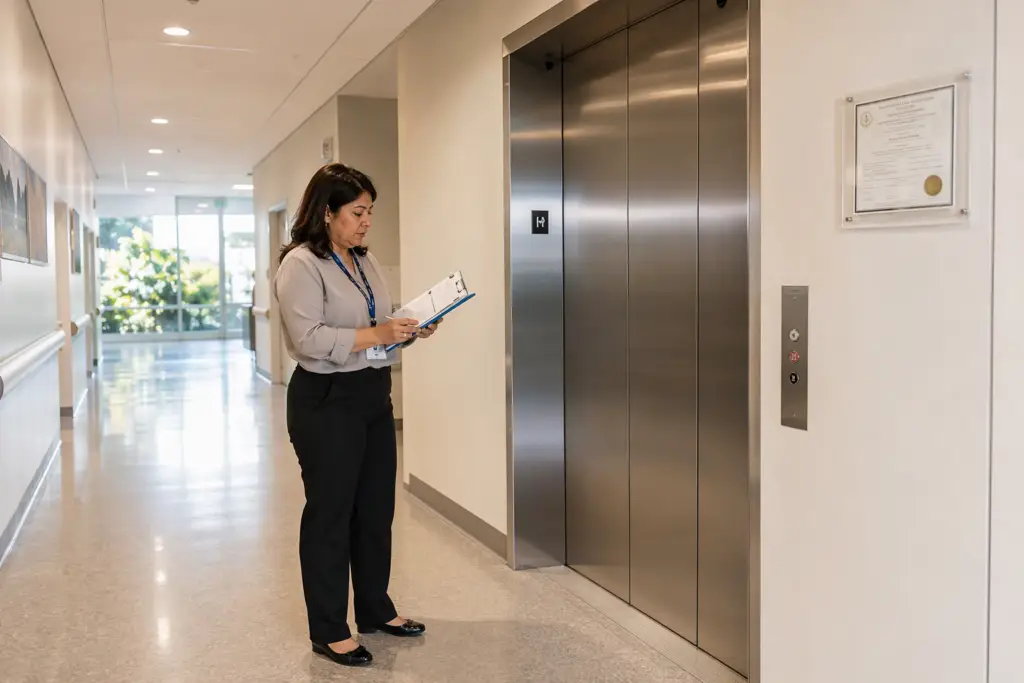
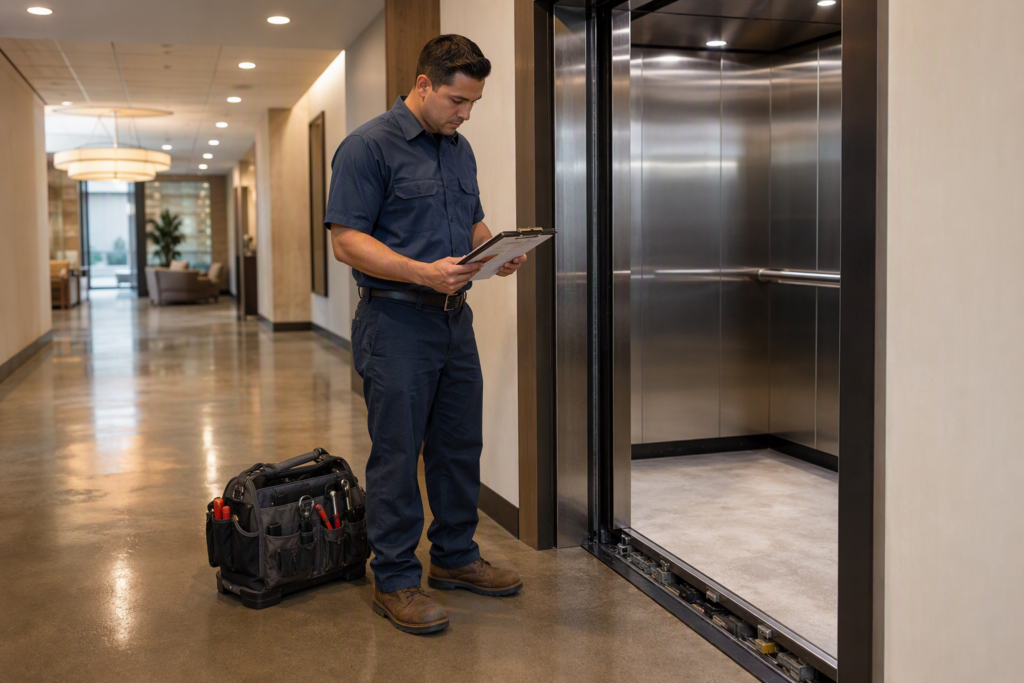
- Commission a professional condition assessment. Have a qualified elevator service provider inspect the hoistway structure, machine, controller, safety devices, door system, and cab. No reliable decision can be made without knowing the actual condition of every major subsystem.
- Review the code compliance gap. Compare the existing installation against the current edition of the ASME A17.1 Safety Code for Elevators and Escalators and your local jurisdiction’s adopted amendments. Determine which deficiencies can be resolved through modernization and which cannot.
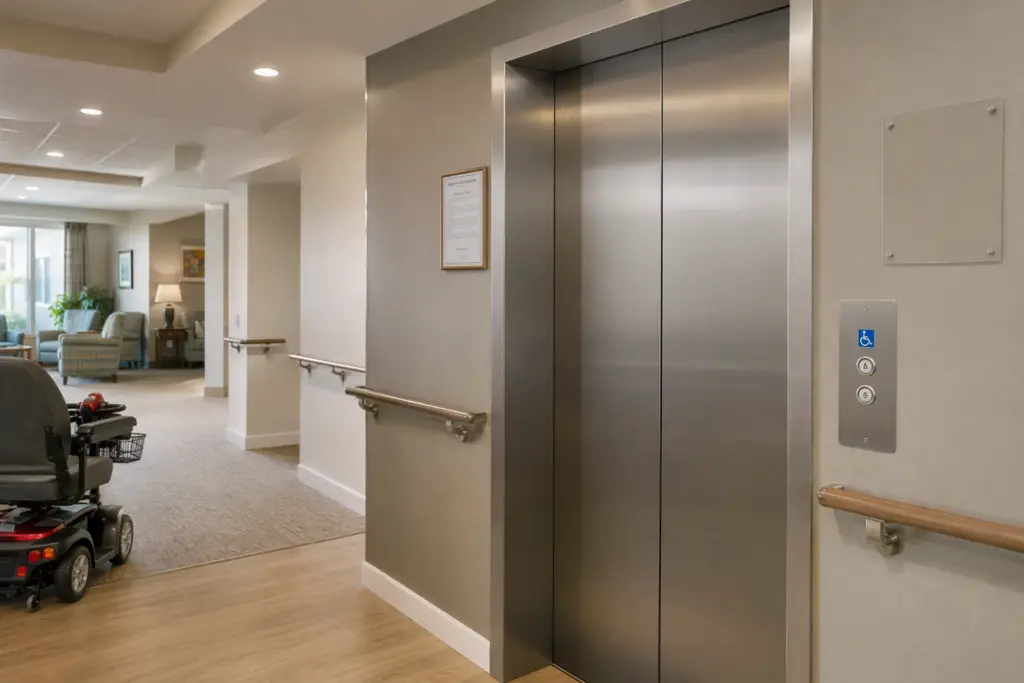
- Audit ADA accessibility compliance. Verify whether the cab, controls, signage, and leveling meet current ADA Standards for Accessible Design. Many older elevators have ADA gaps that modernization can efficiently correct.
- Evaluate parts and support availability. If the existing controller, motor, or drive platform is discontinued and parts are no longer manufactured, modernization of those specific components becomes essential — and may trigger a broader scope review.
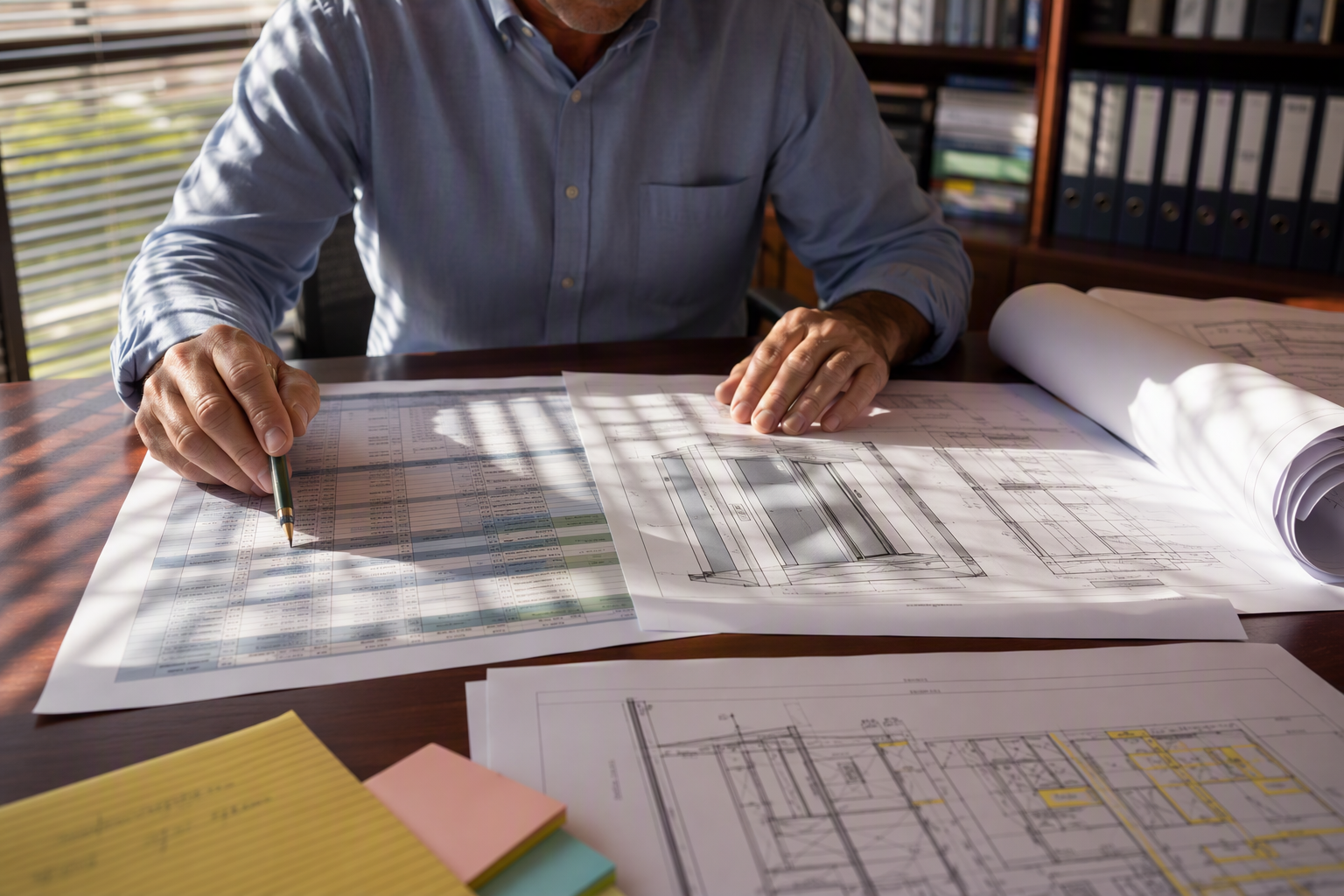
- Calculate the 60% rule benchmark. If the cost of modernizing all deficient components approaches or exceeds roughly 60% of full replacement cost, replacement often offers better long-term value — though this threshold should be evaluated case by case with your service provider.
- Assess hoistway structural integrity. If the hoistway shows corrosion, dimensional non-conformance, or structural damage, full replacement may be the only viable option regardless of equipment condition.
- Consider tenant and operational impact. Buildings that cannot tolerate extended elevator outages may favor a phased modernization. Buildings with redundant elevator banks have more flexibility for full replacement timelines.
- Factor in long-term ownership plans. A building scheduled for sale or major renovation within five years may prioritize modernization for cost efficiency. A building held for 20+ years may justify replacement to maximize asset value.
What Are the Code and Compliance Implications of Each Option?
Code compliance is one of the most consequential decision drivers. In 2026, most jurisdictions have adopted or are actively enforcing editions of the ASME A17.1 Safety Code for Elevators and Escalators, which governs safety devices, door protection, emergency lighting, and more. When a modernization project triggers a permit, local authorities having jurisdiction (AHJs) typically require that the work — and often the entire system — be brought into compliance with the currently adopted code edition.
This means a partial modernization can trigger broader compliance obligations than anticipated. Full replacement always results in a fully code-compliant installation under the current adopted edition.
Accessibility is governed separately. The ADA Standards for Accessible Design set requirements for cab dimensions, control height, tactile signage, and audible signals. Both modernization and replacement projects present an opportunity — and often an obligation — to address ADA gaps.
For facilities where elevator maintenance workers are involved, relevant OSHA standards governing maintenance and repair operations also apply and should be reviewed during any project planning process.
Which Option Offers Better ROI?
Return on investment depends on the scope of modernization versus the all-in cost of replacement, the remaining useful life of retained components, energy savings realized, and maintenance cost reductions. Modernization typically delivers a faster payback because the initial capital outlay is lower, even if a second modernization cycle is eventually needed. Full replacement produces superior long-term ROI for buildings held over a long horizon, particularly where energy costs are high and the replaced system was a significant maintenance burden.
Buildings should request detailed cost-benefit projections from their elevator service provider that account for projected maintenance frequency, energy use reduction, tenant retention impact, and expected component lifespan under each scenario.
How Long Does Each Project Take?
Timeline varies significantly based on building type, number of floors, jurisdiction permitting, equipment lead times, and project scope. Generally:
- Targeted modernization (e.g., controller and fixtures only): Several weeks of downtime
- Comprehensive modernization (most components except hoistway structure): One to three months, depending on complexity
- Full replacement: Typically three to six months or longer for complex installations, including permitting, demolition, new equipment delivery, installation, and inspection
Permitting timelines with local AHJs are a major variable. Buildings in jurisdictions with streamlined permitting may compress these windows; those with complex approval processes may see extended timelines for either path.
What Equipment Conditions Make Full Replacement Necessary?
Certain conditions make full replacement the only practical or economically rational choice:
- Hoistway structural corrosion, water damage, or dimensional non-conformance that cannot be corrected without major construction
- Drive and machine systems that are fully obsolete with no available replacement parts or compatible modern components
- Safety systems so outdated that bringing them into compliance would require replacing nearly every operating element anyway
- Multiple simultaneous system failures indicating systemic end-of-life across the installation
- Code violations so extensive that the cost of compliance through modernization approaches full replacement cost
- Hydraulic systems with deteriorated cylinders in single-bottom configurations, where environmental risk and replacement cost make full conversion preferable
Can Modernization Improve Energy Efficiency?
Yes. Replacing an older relay-logic controller with a solid-state microprocessor controller, or upgrading from a DC motor drive to a modern variable-voltage variable-frequency (VVVF) drive, delivers meaningful reductions in energy consumption. For traction elevators, regenerative drive systems can return energy to the building’s electrical grid during descent or deceleration cycles. These efficiency gains are real and quantifiable but should be projected by the equipment supplier based on the specific installation, not generalized industry averages.
Does Modernization or Replacement Affect Property Value?
Both options improve property value relative to a neglected, unreliable elevator, but the magnitude differs. A fully replaced system with a long remaining service life, current code compliance, and modern features presents more favorably in due diligence for commercial real estate transactions and refinancing assessments. Modernization still adds measurable value by demonstrating proactive asset stewardship, reducing deferred maintenance risk, and extending reliable service life.
How Should a Building Owner Evaluate an Elevator Service Provider for This Work?
The quality of the modernization or replacement outcome depends heavily on the provider chosen. Key criteria to evaluate include:
- Independence from a single equipment manufacturer, which allows the provider to specify the best-fit components rather than a proprietary platform
- Demonstrated knowledge of the locally adopted edition of ASME A17.1 and local AHJ requirements
- Transparent project scoping that distinguishes between must-do compliance items and optional enhancements
- Clear documentation of what is being replaced versus retained, and the expected remaining lifespan of retained components
- References from comparable building types and project scopes
Liftech Elevator operates as a certified independent elevator service company, meaning assessments and specifications are driven by the building’s actual needs rather than brand-specific equipment quotas. Liftech Elevator provides professional condition assessments that give building owners the objective data needed to make a confident modernization versus replacement decision.
What Are the Most Common Mistakes Building Owners Make in This Decision?
- Delaying assessment until a breakdown forces a decision. Emergency replacement is always more expensive and disruptive than planned work.
- Choosing modernization solely on upfront cost without accounting for retained component lifespan and projected maintenance costs.
- Choosing replacement without exploring whether targeted modernization could resolve all identified deficiencies at a fraction of the cost.
- Underestimating permitting timelines, especially for full replacement projects that trigger full plan review.
- Failing to budget for ADA compliance work that a permit triggers as a requirement, not an option.
- Selecting a provider tied to one manufacturer, which limits equipment options and may result in a specification that fits the vendor rather than the building.
What Steps Should a Building Owner Take Immediately If They Suspect Their Elevator Needs Major Work?
- Document all observed performance issues: unusual sounds, leveling problems, door malfunctions, frequent service calls, or callback patterns.
- Pull the most recent inspection reports from the AHJ and identify any open violations or conditions flagged for monitoring.
- Contact a qualified, independent elevator service provider — such as Liftech Elevator — to schedule a formal condition assessment.
- Request a written assessment report that clearly identifies each deficiency, its compliance implication, and whether it can be addressed through modernization or requires replacement.
- Obtain separate cost estimates for a targeted modernization scope, a comprehensive modernization scope, and full replacement — so a genuine comparison is available.
- Consult with the local AHJ or a code consultant to confirm which edition of ASME A17.1 and local amendments apply to permitted work in your jurisdiction.
- Review the assessment findings with legal or property management counsel if the building is subject to lease covenants, lender requirements, or ADA compliance obligations.
- Make the final decision based on the full cost-benefit analysis across a realistic ownership horizon — not on the lowest immediate quote.
Summary: Which Is Better — Modernization or Full Replacement?
There is no universal answer — the right choice is the one that matches the building’s actual equipment condition, compliance obligations, budget, and long-term ownership strategy. Modernization offers lower upfront investment and shorter disruption for buildings with sound hoistways and components that have a viable remaining service life. Full replacement is the correct answer when systemic deterioration, obsolete platforms, or pervasive code non-conformance make modernization economically or technically impractical.
The only way to know which path applies to a specific installation is a professional, unbiased assessment from a qualified independent elevator service provider. Liftech Elevator provides that assessment — giving building owners the clear, documented findings needed to make a confident, defensible capital decision.
Get a Free Elevator Assessment from Liftech Elevator
Do not let uncertainty drive a costly emergency decision. Contact Liftech Elevator for a comprehensive, no-obligation elevator assessment. A qualified technician will evaluate your system’s condition, identify compliance gaps, and provide an honest comparison of modernization versus replacement — giving you the objective data you need to plan with confidence.
Call Liftech Elevator today: 562-609-3478
Contact Liftech Elevator for a free elevator assessment.
Need elevator service you can rely on? Liftech Elevator is ready to help.