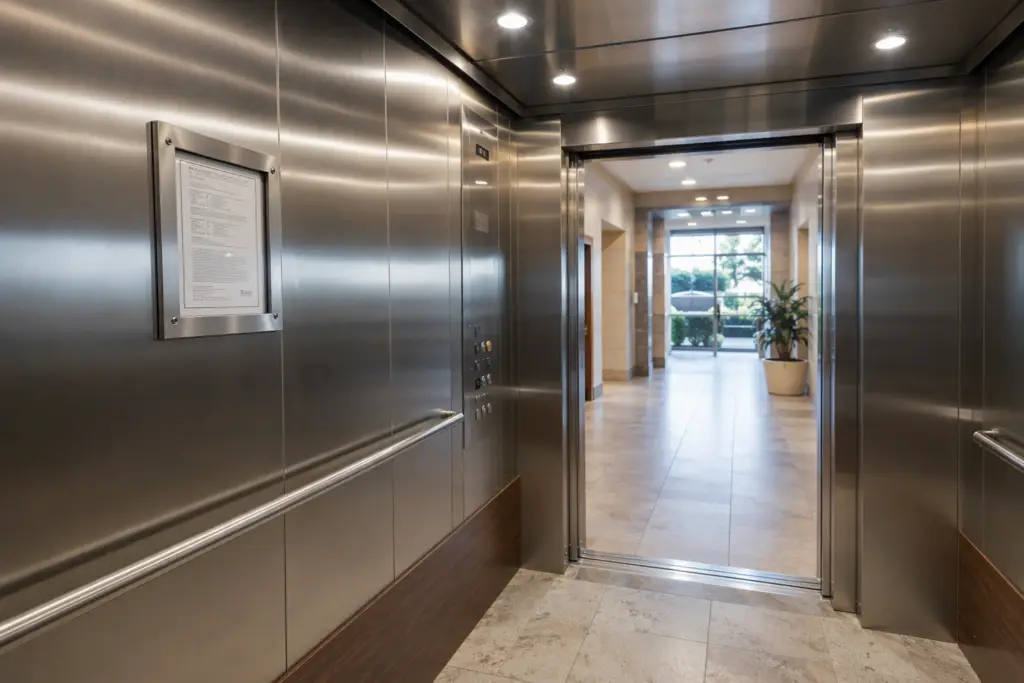
Elevator Compliance for Healthcare Facilities in California
Hospitals, medical office buildings, skilled nursing facilities, and outpatient clinics depend on elevators to move patients, staff, medication carts, and medical equipment safely every hour of the day. A lapsed permit, a failed inspection, or an out-of-code component is not simply a regulatory inconvenience — it can interrupt patient care, expose ownership to liability, and trigger an immediate shutdown order from the California Division of Occupational Safety and Health. Understanding what elevator compliance means for healthcare properties in Signal Hill, Long Beach, Los Angeles, and Orange County is the first step to maintaining continuous, safe vertical transportation.
What elevator compliance requirements apply to California healthcare facilities?
Healthcare elevators in California are governed by a layered set of requirements from federal, state, and sometimes local authorities. Each layer carries its own obligations for inspections, permits, design standards, and ongoing maintenance.
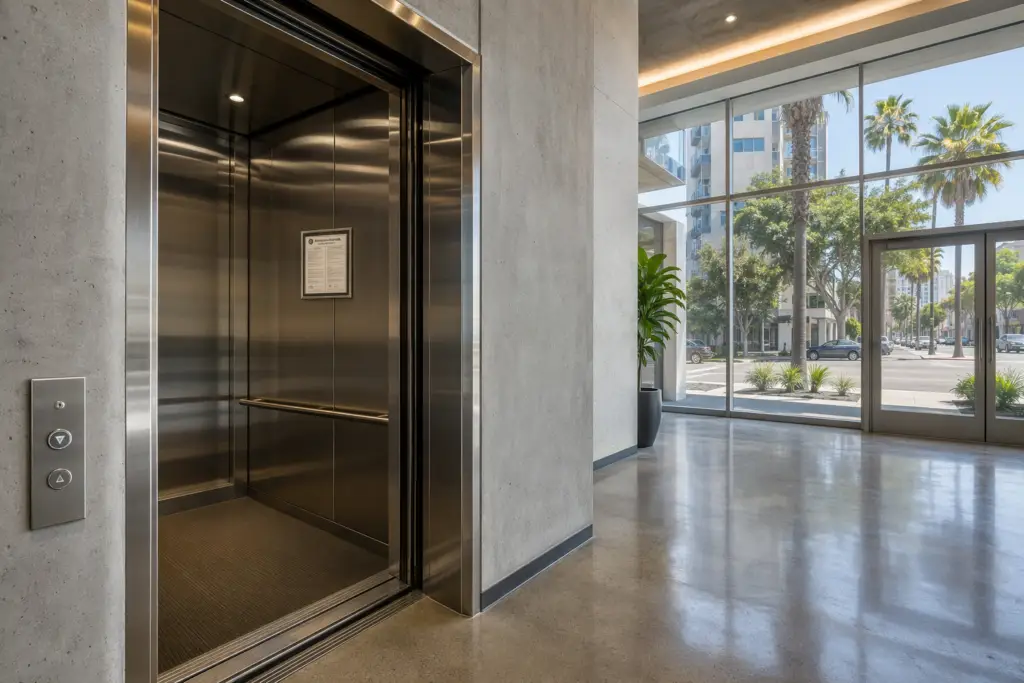
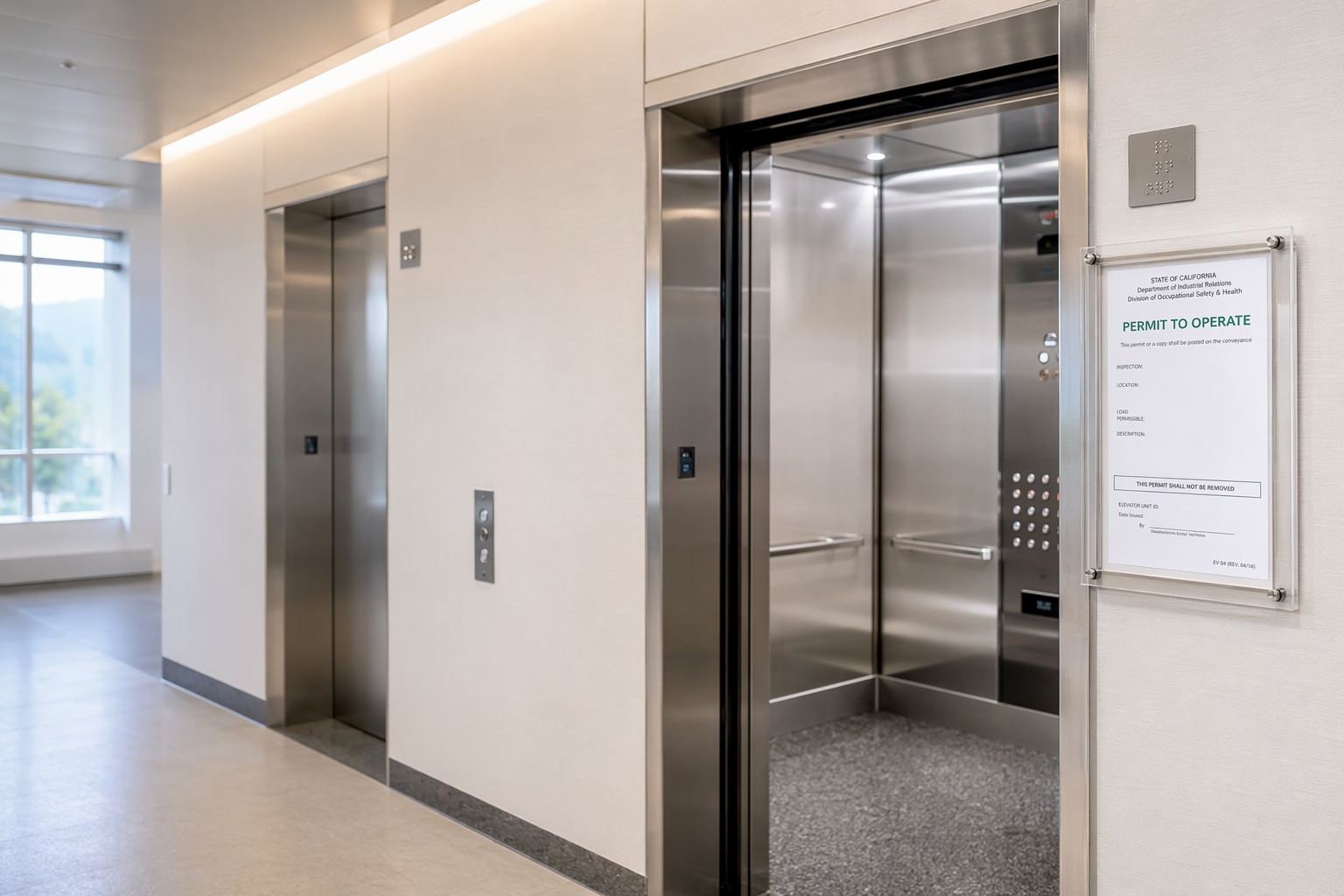
- Cal/OSHA Elevator Unit: Under California Labor Code Sections 7300–7324.2 and the California Code of Regulations, Title 8, Elevator Safety Orders, no elevator may operate in California without a valid permit to operate issued by Cal/OSHA. That permit must be posted conspicuously inside the elevator car. Healthcare facility owners — not their service vendors — bear the legal responsibility for arranging the annual reinspection required to keep permits current.
- ASME A17.1 Safety Code: California’s Elevator Safety Orders adopt the ASME A17.1/CSA B44 Safety Code for Elevators and Escalators (2004 edition, Group IV Safety Orders, effective May 1, 2008 for installations on or after that date). This code sets design, construction, testing, and maintenance standards that inspectors apply during every annual visit.
- ADA Accessibility Requirements: The Americans with Disabilities Act requires that elevators serving multiple floors in public accommodations and commercial facilities be accessible. For healthcare facilities — where patients may use wheelchairs, stretchers, or assistive devices — ADA compliance covers cab dimensions, door timing, floor leveling accuracy, control panel height, and audible/visual floor indicators.
- Los Angeles Local Authority: Properties in the City of Los Angeles fall under the Los Angeles Department of Building and Safety (LADBS), which operates its own elevator and conveyance inspection program. Healthcare facilities in Los Angeles should confirm current requirements directly with LADBS in addition to meeting Cal/OSHA standards.
How often must healthcare elevators be inspected in California?
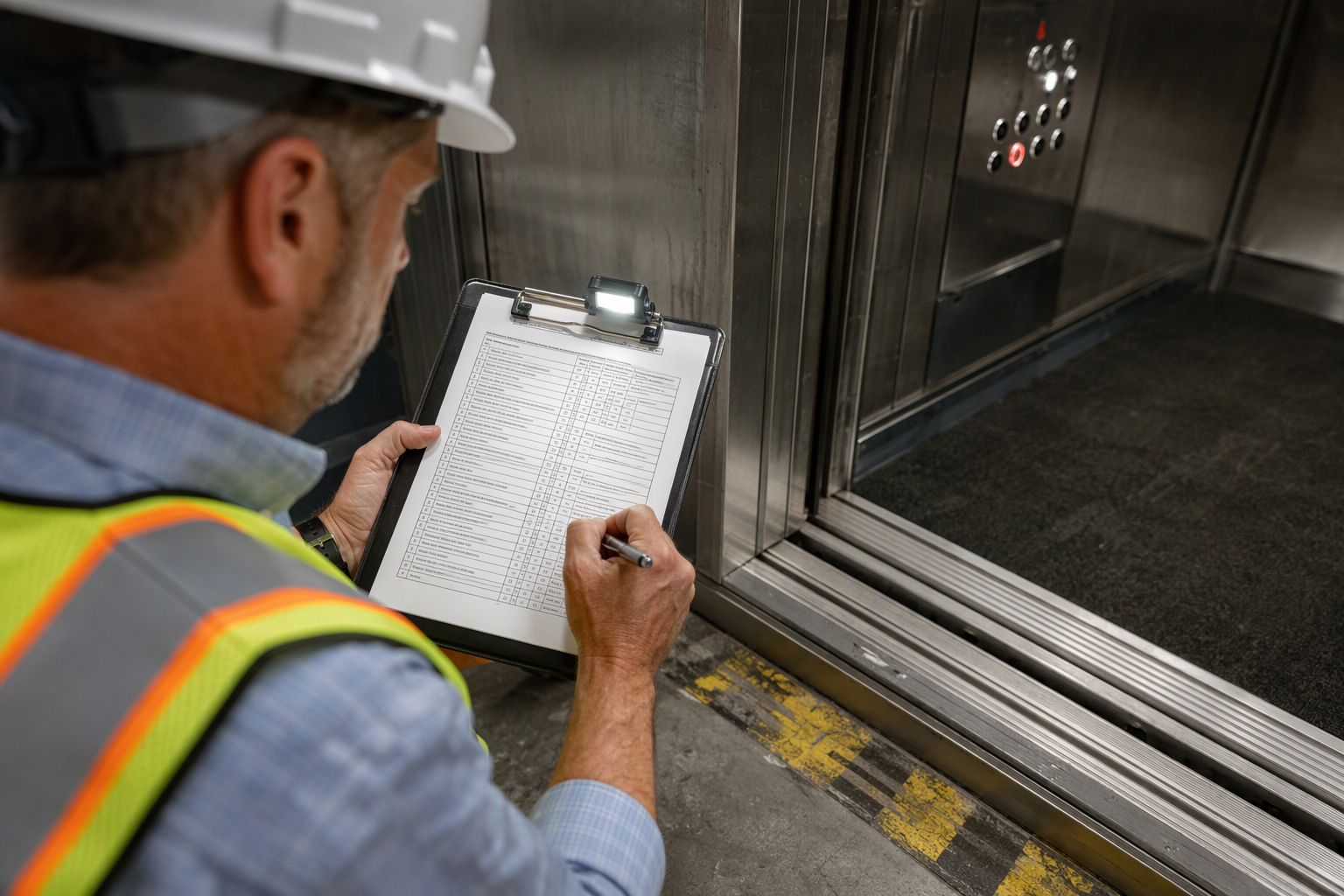
California law requires every conveyance to be inspected at least once a year. After a satisfactory inspection, Cal/OSHA issues a permit to operate for up to one year. Healthcare facilities that maintain a full maintenance contract with a company holding a C-11 Elevator Contractor license — such as Liftech Elevator — may qualify for a permit to operate of up to two years, provided the elevator is found in safe condition. Even with a two-year permit, proactive interim maintenance visits are essential in a high-traffic clinical environment.
Only State of California safety engineers and Certified Competent Conveyance Inspectors (CCCI) are authorized to perform elevator inspections in California. Arranging the reinspection is the building owner’s responsibility, not the inspector’s or the maintenance company’s.
Who is authorized to maintain and repair healthcare elevators in California?
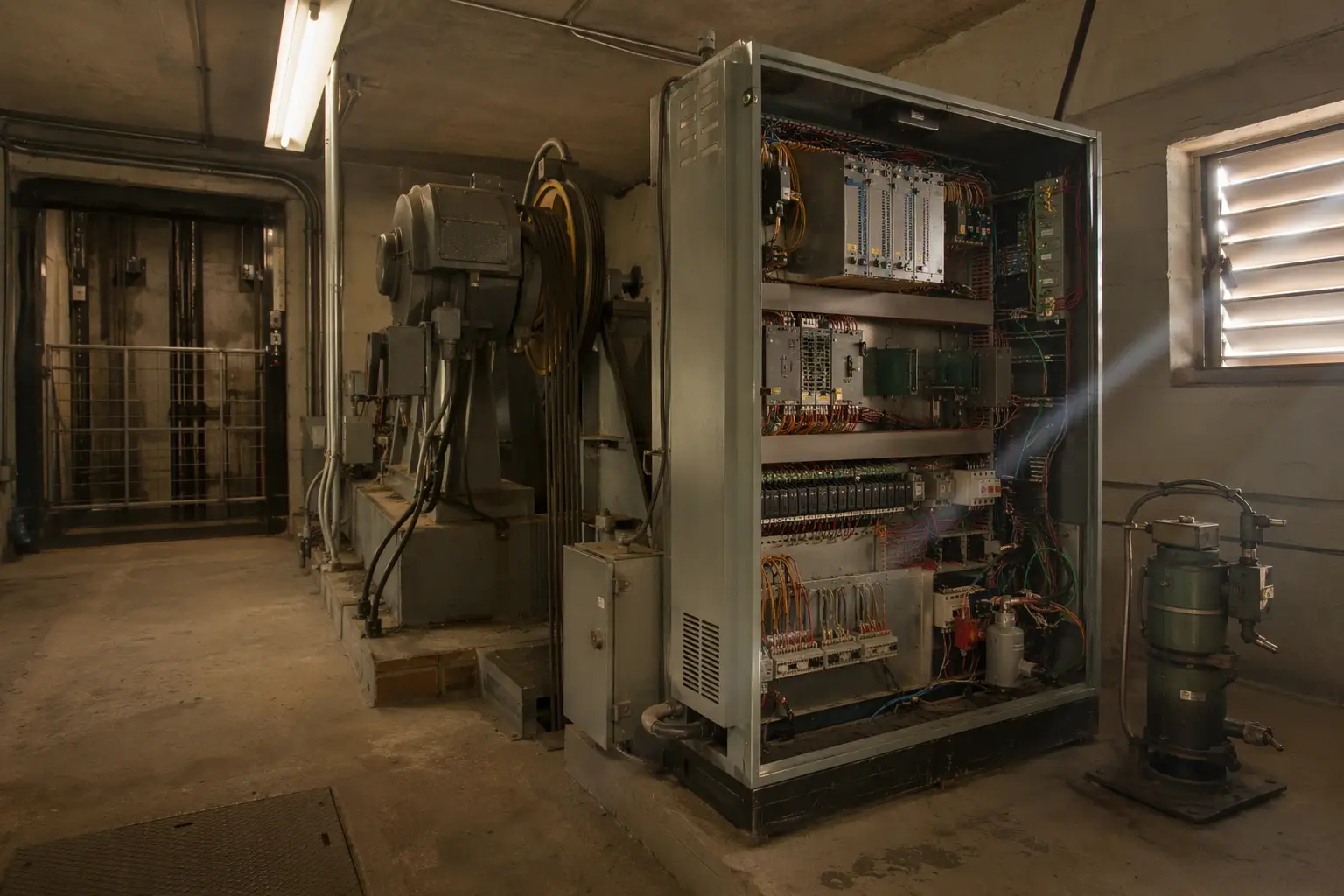
California sets strict credentialing rules for anyone who touches an elevator. Only a Certified Competent Conveyance Mechanic (CCCM) — certified by Cal/OSHA — may maintain, repair, alter, or replace elevator components without direct supervision. That mechanic must work for a Certified Qualified Conveyance Company (CQCC), also certified by Cal/OSHA. A CQCC applicant must hold a current C-11 Elevator Contractor license issued by the California Contractors State License Board (CSLB), plus certificates of workers’ compensation and liability insurance.
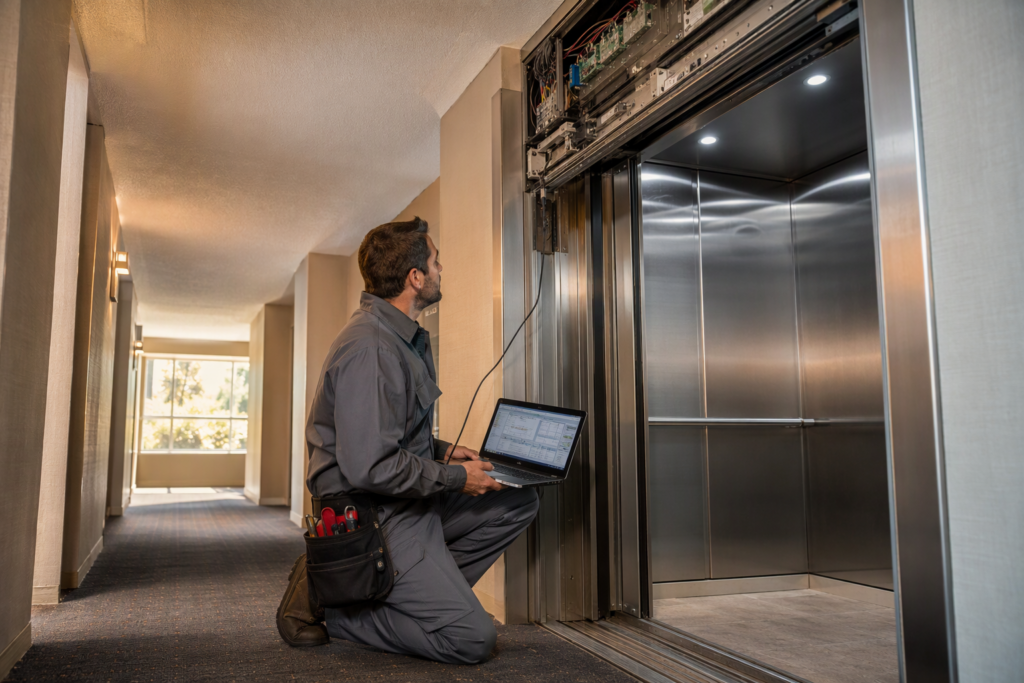
Liftech Elevator operates as a certified elevator service company serving healthcare properties throughout Signal Hill, Long Beach, Los Angeles, and Orange County. CQCC and CCCM certificates are renewed every two years and require at least eight hours of continuing education each cycle, keeping technicians current on evolving code requirements.
What ASME standards specifically affect hospital and clinical elevator design?
The ASME A17.1 Safety Code for Elevators and Escalators addresses a broad range of performance and safety requirements relevant to healthcare settings, including:
- Door reopening devices and minimum door-open dwell times that accommodate patients on stretchers or in wheelchairs
- Leveling accuracy — the elevator car must stop within a close tolerance of the landing to prevent trip hazards for patients and staff moving heavy equipment
- Load capacity ratings that must match the actual use of freight, patient transport, and service elevators
- Emergency lighting and communication systems within elevator cars
- Firefighters’ emergency operation (also known as Phase I and Phase II fire service), which is critical in a facility where evacuation of patients who cannot use stairs is a life-safety issue
- Periodic testing requirements for safeties, buffers, and hydraulic pressure relief valves
California is currently reviewing a proposed Group V update to its Elevator Safety Orders that would incorporate portions of ASME A17.1-2019. As of mid-2026, no effective date has been announced following the Standards Board public hearing held on June 18, 2026. Healthcare facility managers should monitor the Cal/OSHA Elevator Unit for updates.
How does ADA compliance apply to healthcare elevator accessibility?
Under the ADA, elevators in multi-story healthcare facilities must meet accessibility standards covering cab dimensions large enough to accommodate a wheelchair or stretcher, door opening widths, floor surface continuity between the cab and the landing, control button height and Braille labeling, and audible and visual floor indicators. For hospitals and nursing homes where patients may have mobility, vision, or hearing impairments, these requirements directly support both legal compliance and quality of care. Accessibility deficiencies identified during a maintenance inspection should be remediated promptly — both to comply with the ADA and to reduce patient-safety risk.
What happens if a healthcare elevator fails a California inspection?
When a Cal/OSHA inspection reveals a deficiency serious enough to constitute an immediate hazard, the elevator may be ordered out of service until the condition is corrected and re-inspected. For a hospital or clinical facility, an out-of-service elevator can disrupt patient transport, block access to operating suites or imaging departments, and strain backup elevator capacity. Owners who operate an elevator without a valid permit to operate are in violation of California Labor Code. Liftech Elevator recommends that healthcare clients schedule routine maintenance visits between annual inspections so that deficiencies are identified and corrected before they escalate to inspection failures or permit suspensions.
What is a full maintenance contract and how does it benefit a healthcare facility?
A full maintenance contract is an agreement under which a Certified Qualified Conveyance Company assumes responsibility for all routine maintenance, adjustments, and covered repairs on a conveyance. Beyond operational benefits, California law recognizes full maintenance contracts by allowing Cal/OSHA to issue a permit to operate for up to two years — rather than the standard one year — when such a contract is in place with a C-11 licensed elevator company. For a healthcare facility managing multiple elevators across a large campus, the reduction in annual administrative coordination can be meaningful. Liftech Elevator provides maintenance programs tailored to the continuous-operation demands of medical facilities in Long Beach, Signal Hill, Los Angeles, and Orange County.
What are the permit requirements before a healthcare facility can install or alter an elevator?
California requires a permit from Cal/OSHA before any conveyance is erected, installed, or materially altered. Each new elevator must also be inspected by Cal/OSHA and receive a permit to operate before it is placed in service. For healthcare construction or renovation projects — such as adding a new patient tower, relocating a service elevator, or upgrading a hydraulic system — the permitting process must be initiated before construction begins. Only a Certified Qualified Conveyance Company may perform the installation or alteration work. Coordinating permit applications, inspection scheduling, and code-compliant installation through a single qualified company simplifies the process for hospital project managers.
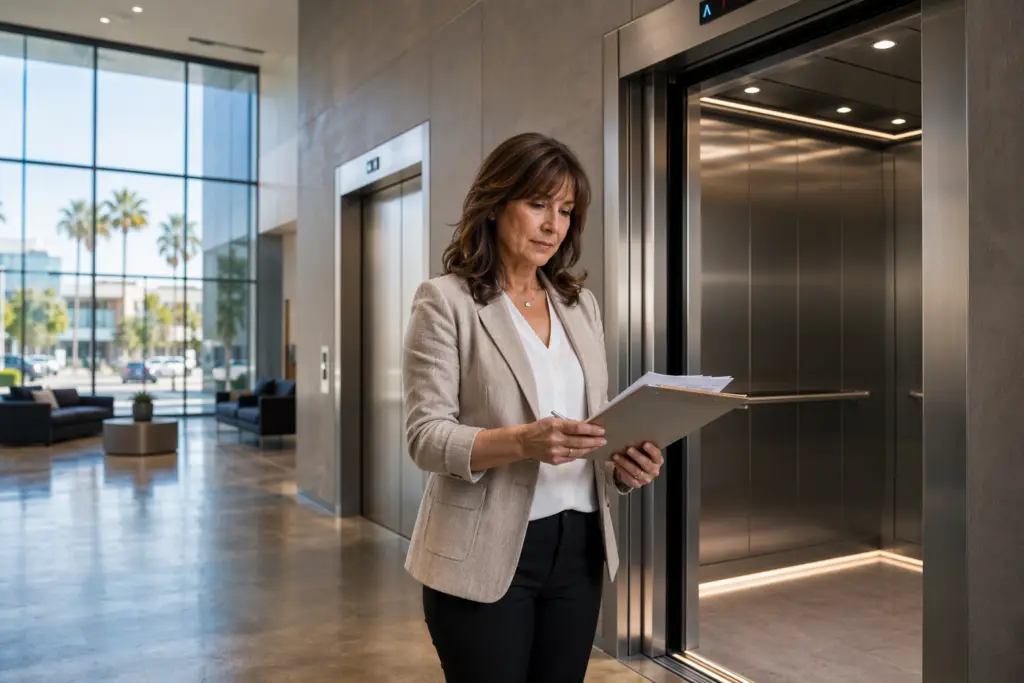
How should a healthcare facility prepare for an elevator compliance inspection?
- Confirm that the current permit to operate is posted conspicuously inside every elevator car.
- Gather maintenance logs showing all service visits, lubrication records, and any parts replaced since the last inspection.
- Verify that firefighters’ emergency operation (Phase I and Phase II fire service) has been tested and documented as required by ASME A17.1.
- Check that all emergency lighting and in-car communication systems are functional.
- Walk each elevator with maintenance staff to identify visible issues — worn door sills, misleveling, unusual sounds, or slow door operation — and address them before the inspection date.
- Confirm that any alterations made since the last inspection received the required Cal/OSHA permit.
- Ensure that ADA-related features — Braille labels, audible indicators, and door timing — are intact and operating correctly.
- Have the contact information for your Certified Qualified Conveyance Company available so the inspector can verify the maintenance contract if applicable.
Questions Your Inspector Will Ask
California elevator inspectors and Cal/OSHA safety engineers typically focus on the following areas during a healthcare facility inspection. Being prepared to answer these questions — and having supporting documentation — helps the inspection proceed smoothly.
- Is the permit to operate current, and is it posted inside the car? Inspectors will check this first. A missing or expired permit is an immediate violation.
- Who holds the maintenance contract, and are they a CQCC-certified company? The inspector may ask to see the maintenance agreement or verify the company’s certification status with Cal/OSHA.
- When was the last full maintenance visit, and can you provide service records? Documentation of routine maintenance supports the case that the elevator has been properly cared for between inspections.
- Has any alteration been made to the elevator since the last inspection? Any material alteration without a Cal/OSHA permit is a violation.
- Has firefighters’ emergency operation been tested within the required period? Phase I and Phase II fire service testing is a standard inspection checkpoint under ASME A17.1.
- Are the door reopening devices functioning correctly? This is especially scrutinized in healthcare settings where doors must reliably protect patients and equipment in transit.
- Is the elevator leveling within acceptable tolerance? The inspector will check that the car floor aligns closely with each landing — critical for safe patient transport.
- Are ADA-required features — Braille, audible signals, control heights — intact? While ADA enforcement is separate from Cal/OSHA, inspectors note accessibility deficiencies that facility managers should address.
- What is the rated load capacity, and is it displayed in the car? Overloading an elevator with heavy medical equipment is a safety risk the inspector will evaluate.
What should healthcare facilities do when an elevator is taken out of service for repairs?
- Notify hospital administration and department heads immediately so patient flow, surgical schedules, and supply deliveries can be rerouted.
- Post clear, visible out-of-service notices at every landing served by the elevator, in compliance with facility wayfinding standards.
- Contact your Certified Qualified Conveyance Company to dispatch a CCCM-certified mechanic and begin the repair process.
- If the elevator was taken out of service by a Cal/OSHA order, confirm with your conveyance company what documentation will be required for reinspection and permit reinstatement before returning the elevator to service.
- Once repairs are complete, schedule the required reinspection and do not return the elevator to service until a valid permit to operate is in hand and posted in the car.
How does Liftech Elevator support healthcare elevator compliance in Southern California?
Liftech Elevator provides maintenance, repair, and compliance support for healthcare facilities throughout Signal Hill, Long Beach, Los Angeles, and Orange County. As a certified elevator service company, Liftech Elevator works within California’s regulatory framework — supporting owners in meeting Cal/OSHA permit requirements, maintaining ASME A17.1 code-compliant equipment, and preparing facilities for annual inspections. Healthcare facility managers can work with Liftech Elevator to establish maintenance programs that address the high-cycle demands of clinical environments, reduce the risk of unexpected downtime, and keep documentation organized for smooth inspection outcomes.
Contact Liftech Elevator for a free elevator assessment at 562-997-3639.
Need elevator service you can rely on? Liftech Elevator is ready to help.