Hospital Elevator Requirements and Maintenance: Who to Contact
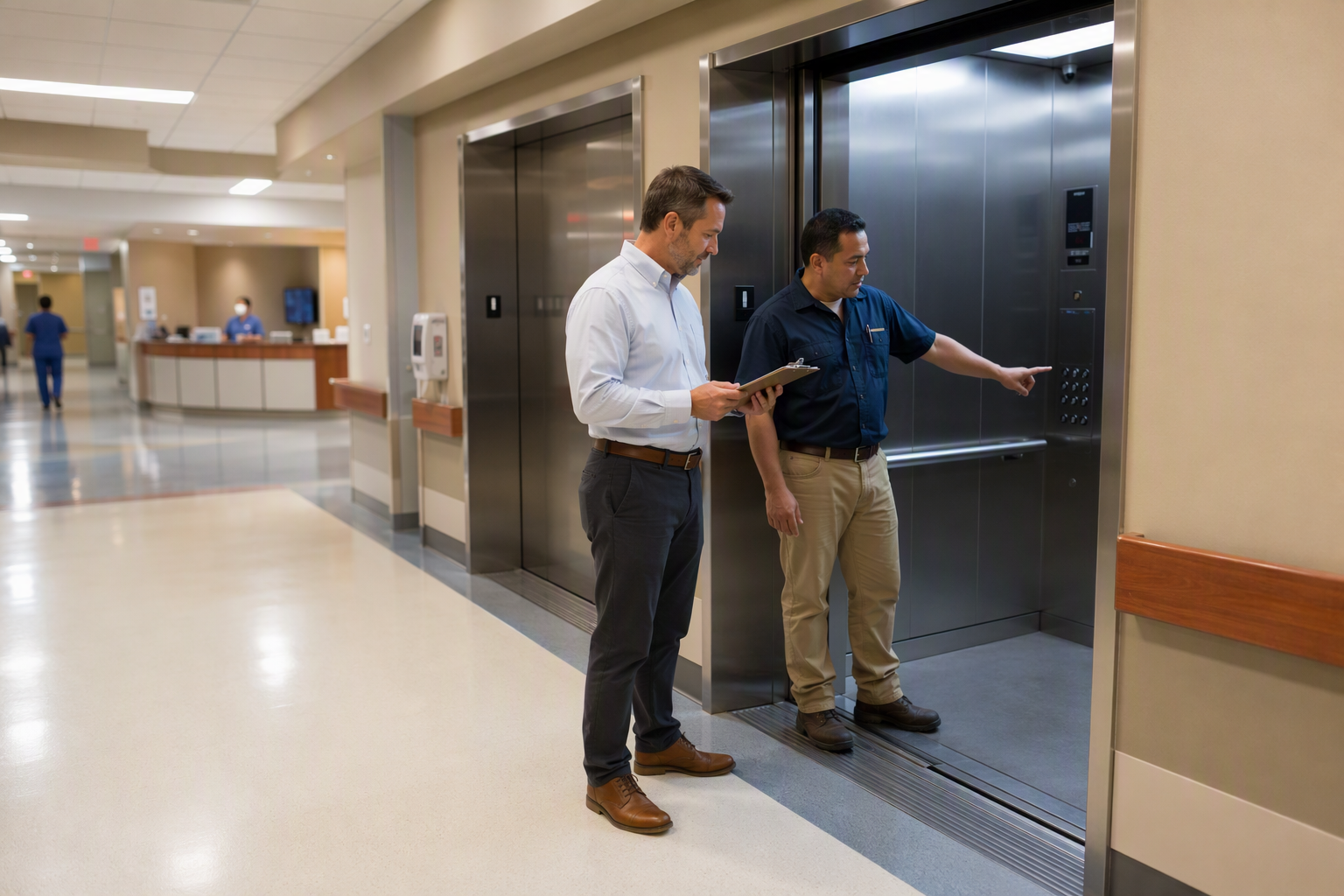
Hospital elevators are among the most demanding vertical transportation systems in any building category. They carry patients on gurneys, medical staff in emergencies, heavy equipment, and visitors — often simultaneously and around the clock. A failure is not merely an inconvenience; in a healthcare environment, it can disrupt patient care. Choosing the right elevator service partner and understanding the regulatory framework that governs hospital elevators is the first step toward safe, compliant operations.
—
What Qualifies as a Healthcare or Hospital Elevator?
Not every elevator in a medical building is classified the same way. Healthcare facilities typically rely on several distinct elevator types, each governed by specific provisions within the ASME A17.1 Safety Code for Elevators and Escalators:
- Passenger elevators — Used by staff, visitors, and ambulatory patients.
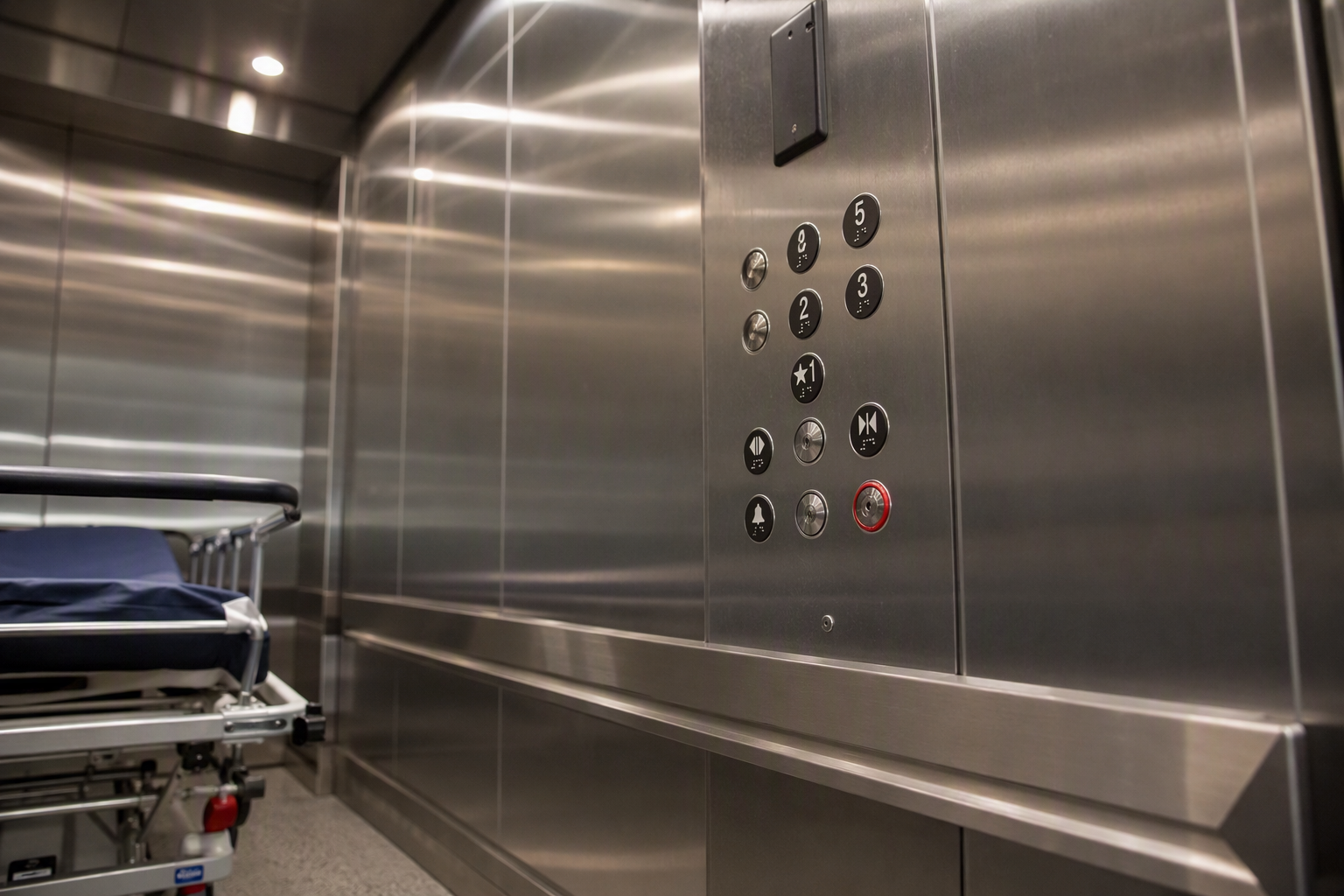
- Hospital-duty (or clinical) elevators — Oversized cabs designed to accommodate stretchers, wheelchairs, and medical equipment. These require specific interior dimensions and door widths.
- Service or freight elevators — Used for supply transport, laundry, and waste removal.
- Limited-use/limited-application (LULA) elevators — Found in smaller clinics or specialty care settings.
Each type carries its own inspection schedule, load rating, and code-compliance requirements. Facilities managers should confirm with their elevator service provider which classification applies to each unit in their building.
—
Which Codes and Standards Govern Hospital Elevators?
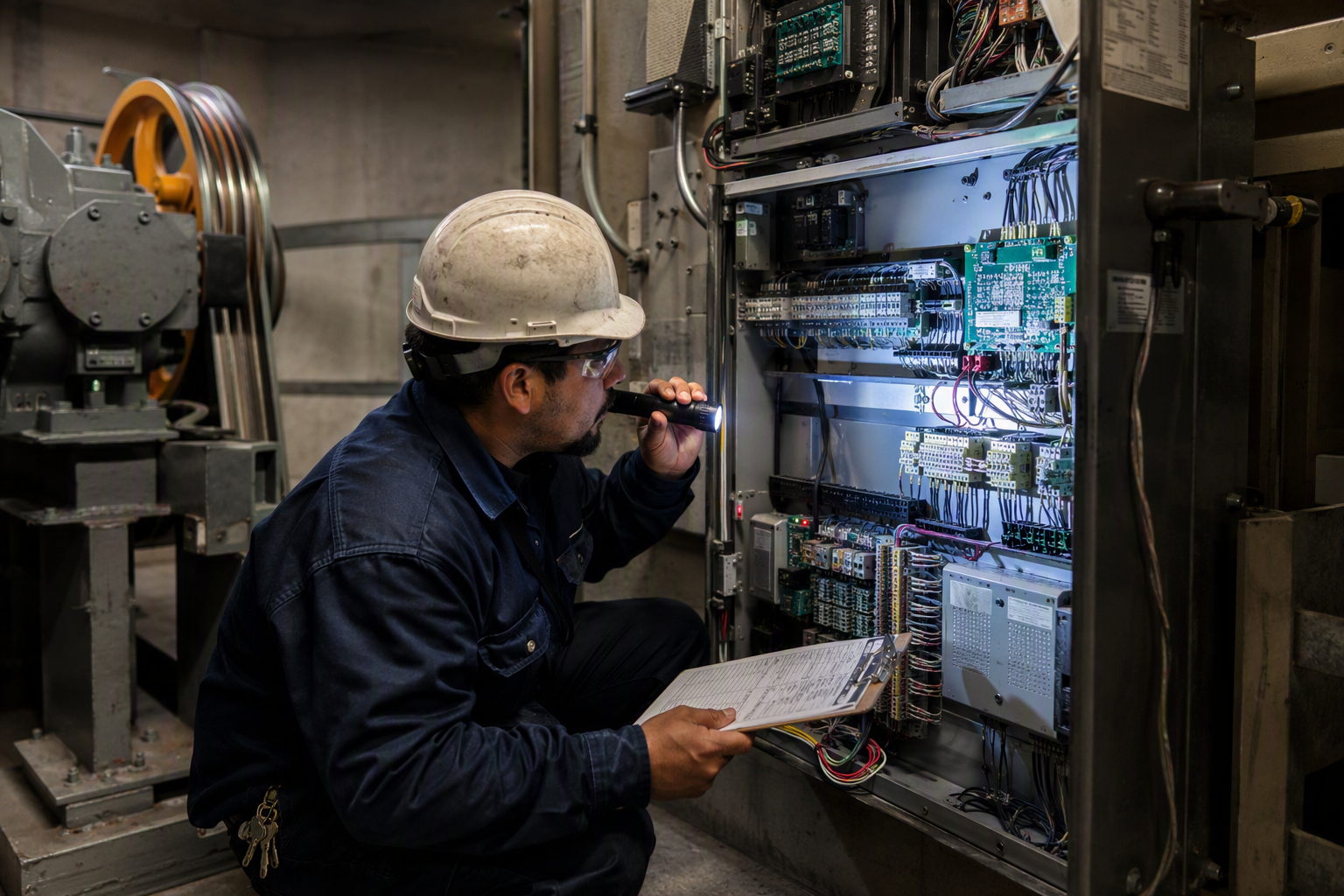
Healthcare elevator compliance sits at the intersection of several overlapping regulatory frameworks. In 2026, California-based hospital facilities should be familiar with the following:
- ASME A17.1 Safety Code for Elevators and Escalators — The primary national standard that governs the design, construction, installation, operation, inspection, testing, maintenance, alteration, and repair of elevators. California adopts this code through state reference.
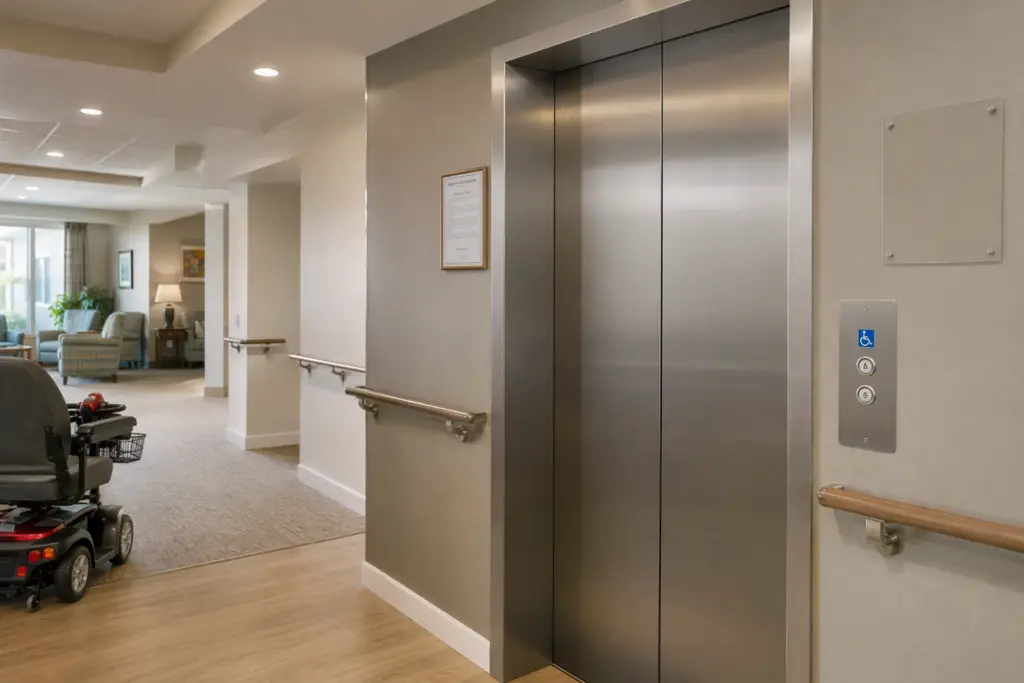
- Americans with Disabilities Act (ADA) — Mandates accessibility requirements for elevators in public accommodations, including hospitals. ADA standards specify minimum cab dimensions, door width, control panel height, tactile markings, and audible signals.
- California Code of Regulations, Title 8 — California’s Division of Occupational Safety and Health (Cal/OSHA) enforces elevator safety through its Elevator, Ride, and Tramway Unit. Routine inspections are required, and operating permits must be current.
- The Joint Commission (TJC) Environment of Care Standards — Accredited hospitals must demonstrate that vertical transportation equipment is included in a documented preventive maintenance program. Inspectors may review service logs during accreditation surveys.
- OSHA General Duty Clause — Employers, including hospital operators, must provide a workplace free from recognized hazards. Elevator-related violations can appear under OSHA citations during workplace safety inspections.
—
Who Should a Hospital Contact for Elevator Maintenance?
The short answer is a state-licensed elevator contractor with demonstrable experience in healthcare environments. In California, elevator mechanics and contractors must be licensed through Cal/OSHA’s Elevator Unit. When evaluating providers for a hospital or medical campus, facilities teams should look for:
- A valid California elevator contractor license.
- Documented experience servicing hospital-duty and clinical elevator configurations.
- Familiarity with Joint Commission documentation requirements, including maintenance logs and deficiency tracking.
- Coverage across the relevant service area — for facilities in Signal Hill, Long Beach, Los Angeles, and Orange County, a local provider reduces response time and builds familiarity with each unit’s history.
- A structured preventive maintenance program aligned with ASME A17.1 intervals.
Liftech Elevator serves healthcare facilities throughout Signal Hill, Long Beach, Los Angeles, and Orange County, CA, providing code-compliant maintenance, inspection coordination, and modernization services tailored to clinical environments.
—
What Does a Hospital Elevator Preventive Maintenance Program Include?
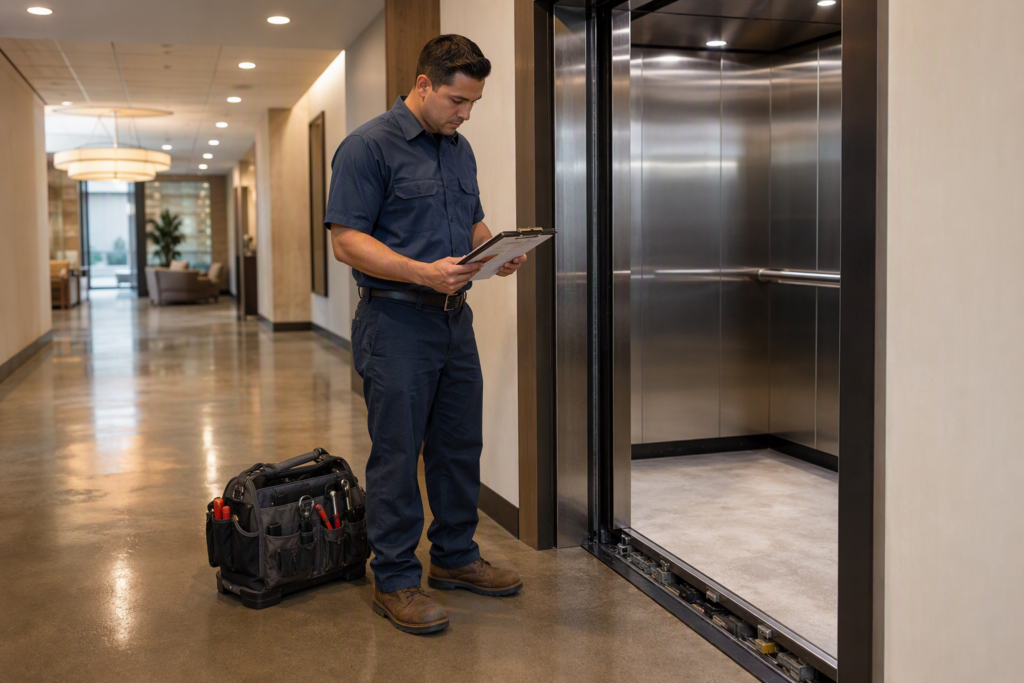
A compliant preventive maintenance (PM) program for hospital elevators typically addresses the following on a scheduled basis:
- Lubrication of mechanical components including rails, sheaves, and door operators.
- Inspection and adjustment of door contact timing and force sensitivity — critical for patient transport.
- Testing of safeties, buffers, and overspeed governors per ASME A17.1 intervals.
- Verification of emergency lighting, intercoms, and alarm systems.
- Review and calibration of load-weighing devices on clinical elevators.
- Documentation of all work performed, with records retained for regulatory and accreditation review.
Liftech Elevator structures its healthcare maintenance agreements to align with both Cal/OSHA periodic inspection requirements and the documentation standards expected during Joint Commission surveys.
—
How Often Must Hospital Elevators Be Inspected?
Under California’s adoption of ASME A17.1 and Cal/OSHA requirements, elevators must undergo periodic inspections and tests. The specific intervals depend on elevator type, usage intensity, and applicable test category. A licensed elevator contractor can advise on the exact schedule for each unit. Hospitals should never allow an operating permit to lapse, as an expired permit can trigger enforcement action and — critically — signal a compliance gap to Joint Commission surveyors.
—
What Are the ADA Requirements for Hospital Elevators?
The ADA sets minimum standards that apply to elevators in healthcare facilities open to the public. Key requirements include:
- Minimum clear floor area inside the cab to accommodate a wheelchair and attendant.
- Minimum door clear width to allow passage of wheelchairs and medical transport equipment.
- Call button placement within accessible reach range from a seated position.
- Raised and Braille characters on control panels and floor designations.
- Audible and visible signals at each landing and within the cab.
- Two-way emergency communication systems usable without voice (for patients with speech impairments).
Hospitals undergoing renovation or adding new elevator banks should verify ADA compliance as part of the design phase, not as an afterthought. Non-compliant elevators can expose facilities to civil rights complaints and costly retrofits.
—
What Happens During a Hospital Elevator Emergency or Entrapment?
Entrapments in a clinical setting carry a heightened urgency — passengers may include patients with acute medical conditions or mobility limitations. Facilities should have a documented entrapment response protocol. A general framework includes:
- Confirm the location of the trapped individuals via the in-cab intercom or building monitoring system.
- Communicate calmly with those in the cab — assure them help is on the way and advise them not to attempt self-rescue.
- Contact your licensed elevator service provider immediately to dispatch a mechanic.
- Notify hospital security and facilities management so they can coordinate safe access to the machine room.
- If any occupant reports a medical emergency, activate the hospital’s internal emergency response protocol concurrently.
- Do not allow unauthorized personnel to attempt manual lowering or rescue without a licensed mechanic present.
- Once the car is safely landed, document the incident including time, cause (if known), and actions taken — this record may be required by Cal/OSHA or reviewed during accreditation.
—
How Should a Hospital Evaluate Elevator Modernization vs. Full Replacement?
Aging elevator systems in hospitals present a distinct challenge: the cost and disruption of full replacement must be weighed against the risks of an outdated system. Factors that inform this decision include:
- Parts availability — Obsolete controllers and drive systems may no longer have manufacturer support, increasing downtime risk.
- Energy consumption — Older traction systems and hydraulic units often consume significantly more energy than modern variable-frequency drive (VFD) systems.
- Code compliance gaps — A modernization may be required to bring an elevator into compliance with current ASME A17.1 editions or ADA standards following a major alteration trigger.
- Clinical throughput — If an elevator’s speed or capacity is creating bottlenecks in patient transport or supply delivery, a capacity upgrade may be justified on operational grounds alone.
Liftech Elevator provides modernization assessments for healthcare clients across Los Angeles and Orange County, helping facilities teams build a data-supported business case for capital planning.
—
How Do You Compare Elevator Service Vendors for a Hospital Contract?
Procurement teams evaluating elevator service contracts for healthcare should go beyond price per visit. A structured comparison should include:
- Scope of preventive maintenance — what is explicitly included vs. billed separately?
- Documentation practices — can the vendor produce records formatted for Joint Commission review?
- Local coverage — does the provider have technicians based near Signal Hill, Long Beach, Los Angeles, or Orange County to reduce dispatch time?
- Parts inventory — does the vendor stock common replacement parts locally, or do repairs require extended lead times?
- References — can the vendor provide references from other healthcare facility clients?
- License status — is the contractor’s California elevator license current and in good standing?
—
Questions Your Inspector Will Ask
Whether the inspector is from Cal/OSHA’s Elevator Unit or a Joint Commission surveyor reviewing Environment of Care compliance, healthcare facilities should be prepared to answer the following:
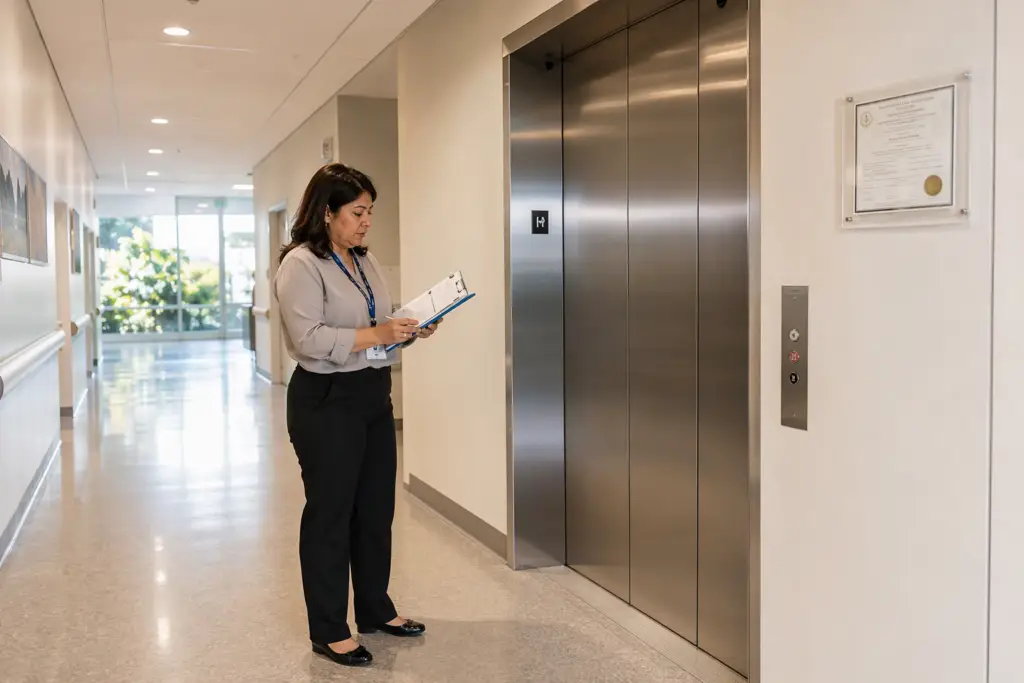
- Is the current operating permit posted in or adjacent to the elevator?
- When was the last periodic inspection performed, and by whom?
- Are maintenance logs current, complete, and accessible for review?
- Have any deficiencies from prior inspections been corrected and documented?
- Is there a written preventive maintenance agreement in place with a licensed contractor?
- What is the documented entrapment response procedure, and have staff been trained on it?
- Have any alterations been made to the elevator since the last inspection? If so, were required permits obtained?
- Are emergency lighting, intercoms, and alarm systems tested and functional?
- Do all elevators meet current ADA accessibility requirements?
- Is there a capital plan for units approaching end of serviceable life?
—
What Are the Risks of Deferred Elevator Maintenance in a Hospital?
Deferred maintenance in a clinical setting compounds risk at multiple levels:
- Patient safety — A mechanical failure during patient transport can cause injury to a patient who is already vulnerable.
- Staff safety — Malfunctioning doors, abrupt stops, or leveling errors create hazards for staff and equipment.
- Regulatory exposure — An expired permit or undocumented deficiency discovered during a Cal/OSHA inspection can result in fines and mandatory shutdown of the unit.
- Accreditation risk — Joint Commission citations related to elevator maintenance can affect a facility’s accreditation status.
- Operational disruption — Unplanned downtime on a clinical elevator affects patient flow, OR scheduling, and supply chain operations in ways that are difficult to quantify but immediately felt.
—
Does Liftech Elevator Serve Healthcare Facilities in Los Angeles and Orange County?
Yes. Liftech Elevator provides elevator maintenance, inspection coordination, repair, and modernization services to healthcare facilities throughout Signal Hill, Long Beach, Los Angeles, and Orange County, CA. The company’s service offerings are structured to meet the unique operational and compliance requirements of hospitals, outpatient surgery centers, medical office buildings, and long-term care facilities — including documentation practices aligned with Joint Commission and Cal/OSHA expectations.
—
Get a Free Elevator Assessment for Your Healthcare Facility
Ensuring your hospital or medical facility’s elevators are code-compliant, properly maintained, and documented for inspection is not optional — it is a patient safety and operational imperative. Contact Liftech Elevator for a free elevator assessment tailored to healthcare environments in Signal Hill, Long Beach, Los Angeles, and Orange County, CA.
Contact Liftech Elevator for a free elevator assessment: 562-609-3478
Need elevator service you can rely on? Liftech Elevator is ready to help.