Elevator Deficiency: Statistics, Causes, Compliance, and What California Building Owners Must Know
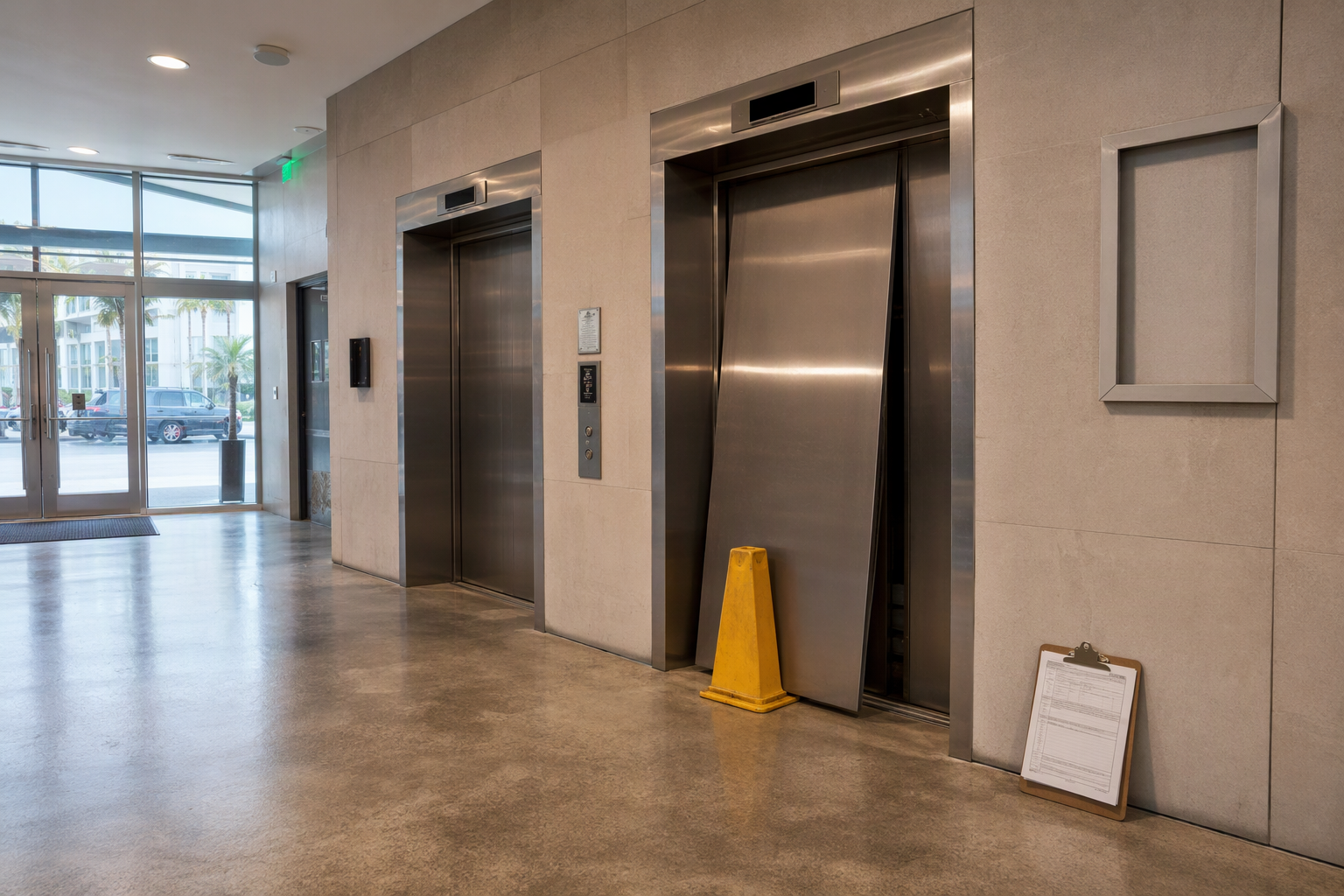
Elevator deficiencies range from minor housekeeping violations to critical mechanical failures that trigger immediate shutdown orders. For California building owners and facility managers, understanding what constitutes a deficiency, how inspections uncover them, and what remediation looks like is essential to maintaining a valid permit to operate and keeping occupants safe. This resource consolidates the regulatory framework, common deficiency categories, compliance timelines, and remediation process into one authoritative reference.
What Is an Elevator Deficiency?
An elevator deficiency is a documented finding — issued by a qualified inspector or the governing authority — that a conveyance, its components, or its operating environment does not conform to the applicable safety code or regulatory requirement. In California, the governing safety orders are the California Code of Regulations, Title 8, Elevator Safety Orders (Sections 3000–3146), which incorporate the ASME A17.1/CSA B44 Safety Code for Elevators and Escalators (2004 edition for equipment installed under contracts signed on or after May 1, 2008).
Deficiencies are typically documented during the mandatory annual inspection or during a maintenance audit. They may be categorized by severity: imminent hazards require immediate correction and can result in the conveyance being taken out of service, while lesser violations may carry a compliance deadline measured in days or weeks depending on the nature of the finding.
What Are the Most Common Elevator Deficiency Categories?
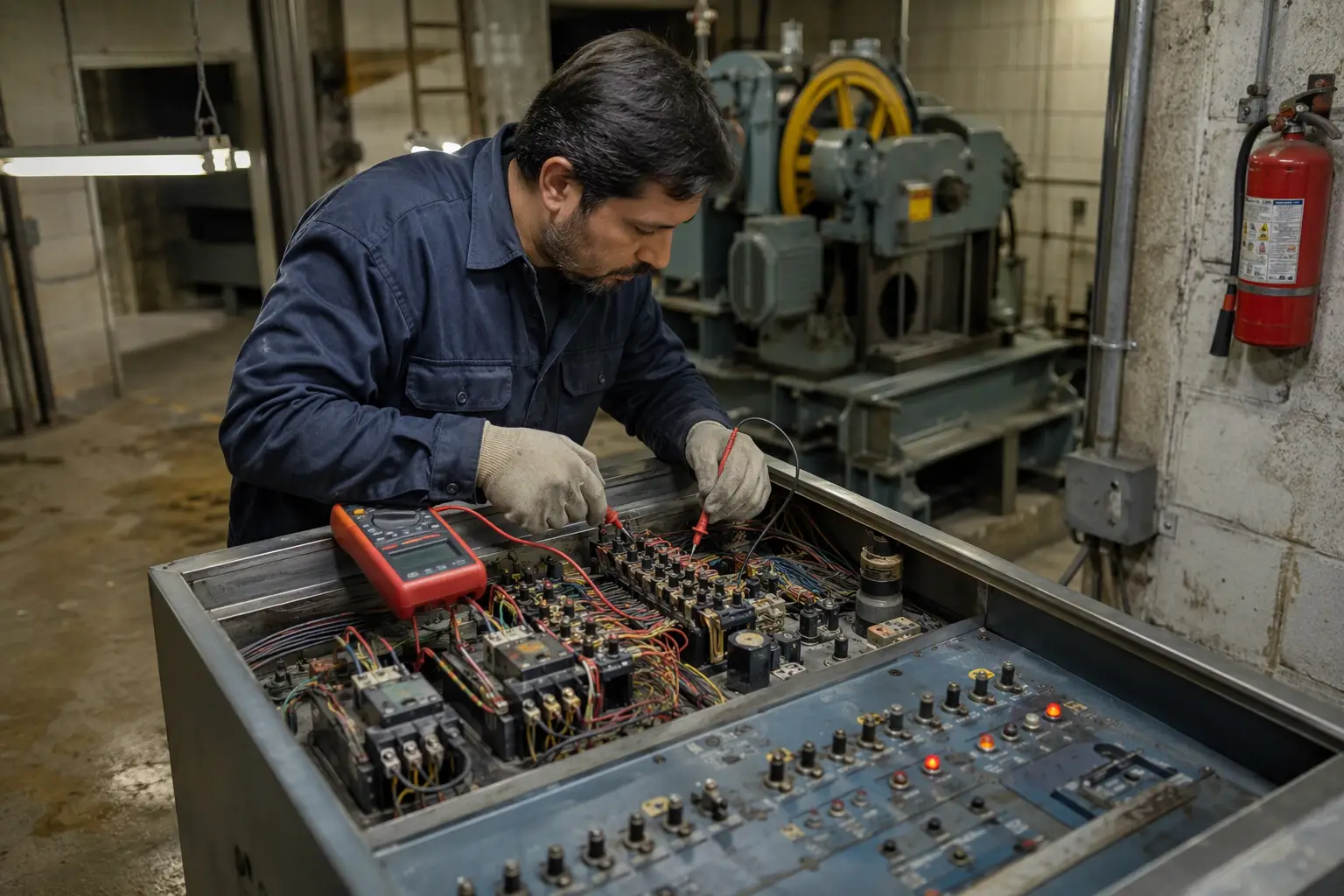
While every inspection is unique, qualified inspectors and conveyance mechanics consistently identify deficiencies across a core set of categories. These include:
- Door and gate system failures — malfunctioning door restrictors, worn gibs, misaligned landing doors, or door operator issues that create an entrapment or fall risk.
- Safety device deficiencies — governor and safety components that do not function within tolerances required by ASME A17.1, including worn safeties, out-of-tolerance governor trip speeds, or buffer defects.
- Rope and suspension system wear — broken wires, corrosion, inadequate lubrication, or insufficient rope diameter that falls outside acceptable limits.
- Electrical and control system faults — faulty limit switches, overloaded motor controllers, deteriorated wiring insulation, or failure of the emergency lighting circuit.
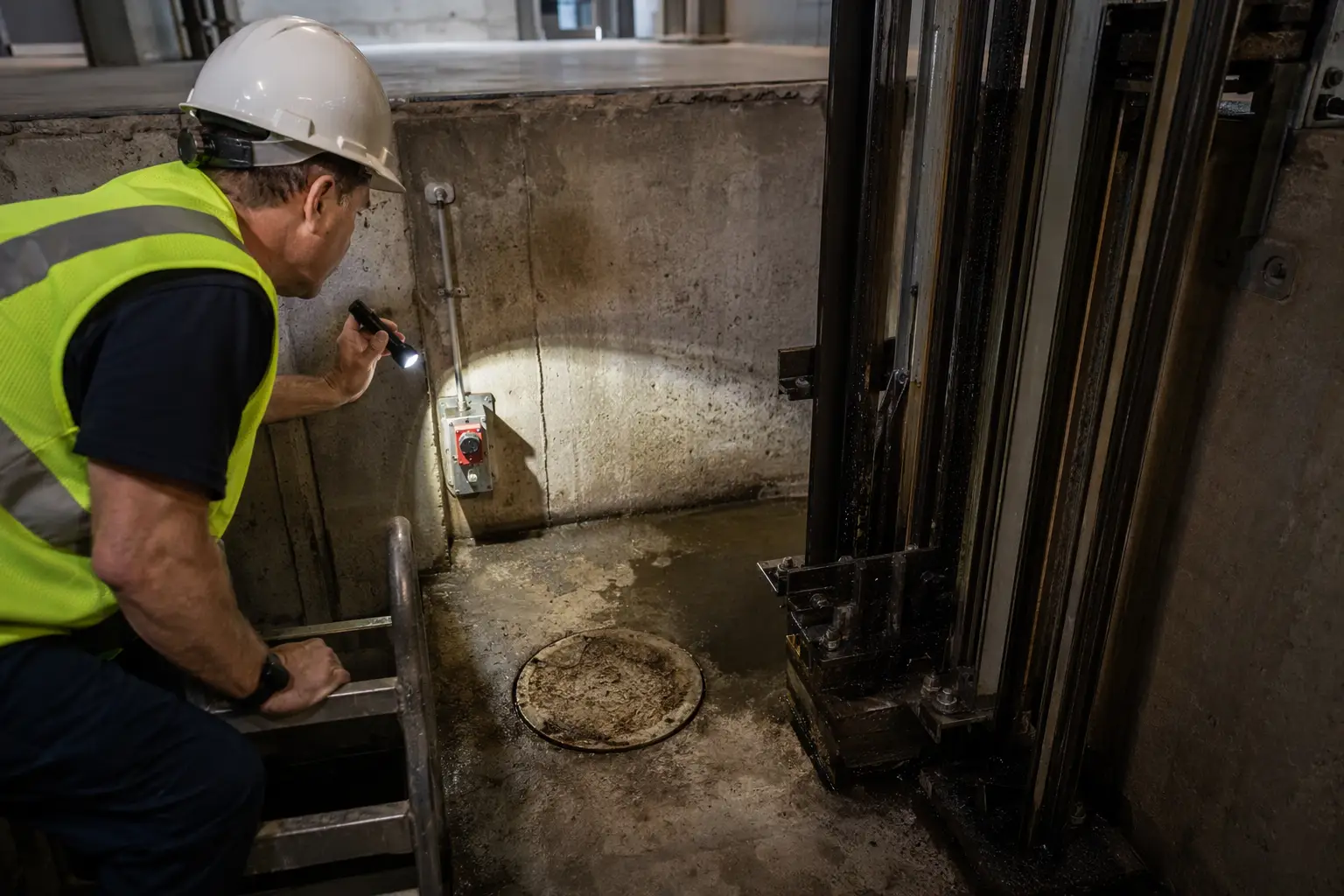
- Pit condition violations — water intrusion, inadequate lighting, missing or non-functional pit stop switches, or debris accumulation creating a hazard for mechanics performing maintenance.
- Machine room deficiencies — improper temperature control, inadequate fire protection, unauthorized storage, or missing required documentation and signage.
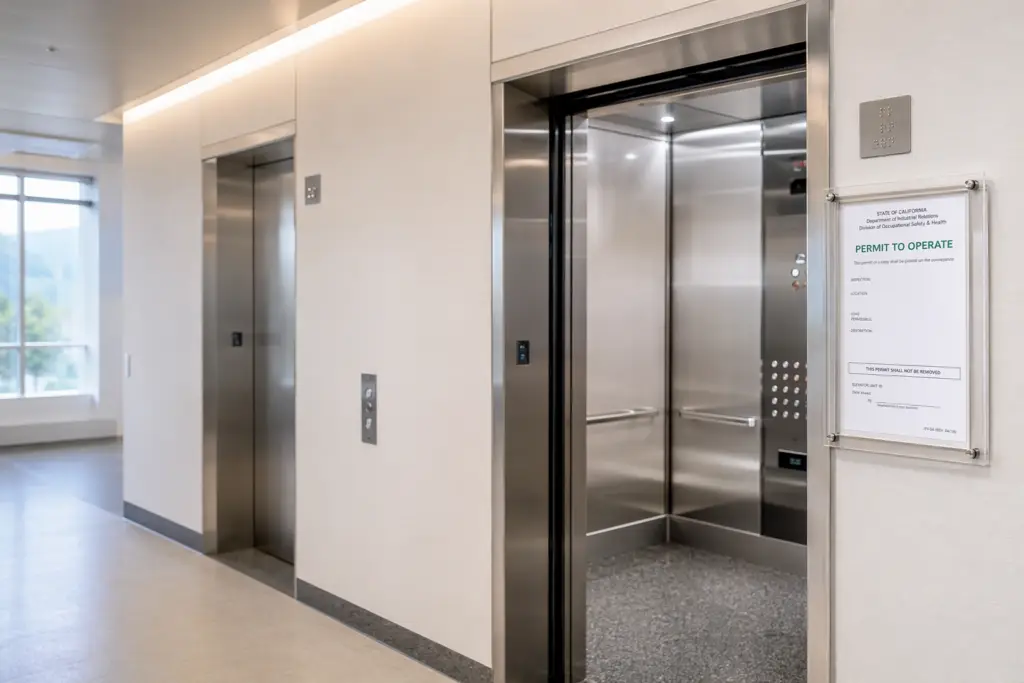
- Permit and posting violations — California law requires a valid permit to operate to be posted conspicuously inside the elevator car; an expired or missing permit is itself a deficiency.
- Load and capacity issues — missing or illegible capacity placards, or evidence the car has been modified without the corresponding permit from Cal/OSHA.
- Emergency communication failures — inoperative in-car telephone or intercom systems. Note: whether California requires visual or text-based two-way emergency communication involves overlapping provisions in the Elevator Safety Orders and the California Building Code that have not been fully resolved; building owners should seek qualified guidance on this point.
- ADA accessibility non-compliance — where applicable under the Americans with Disabilities Act, deficient Braille signage, non-compliant button placement, or inadequate cab dimensions can constitute accessibility violations distinct from, but often concurrent with, safety deficiencies.
How Does California’s Inspection Process Identify Elevator Deficiencies?
California law requires every conveyance to be inspected at least once per year. Arranging this annual reinspection is the elevator owner’s responsibility — the inspection does not happen automatically. Only State of California safety engineers and Certified Competent Conveyance Inspectors (CCCI) may conduct these inspections.
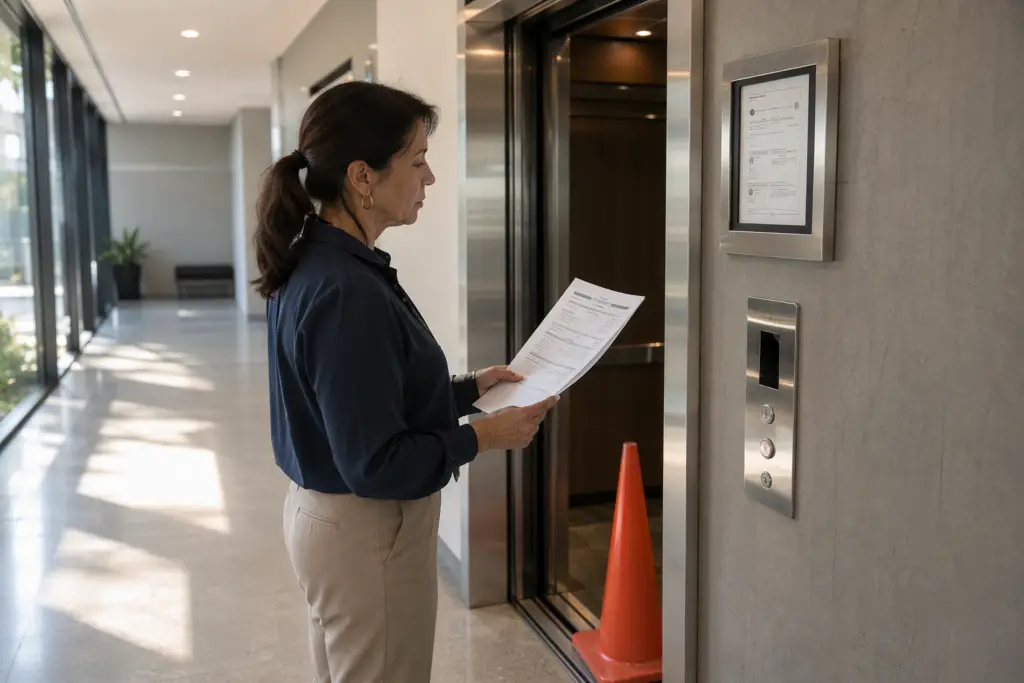
When an inspection reveals deficiencies, the inspector generates a written report identifying each finding. Minor deficiencies may allow the permit to operate to be renewed with a correction notice attached, while serious or imminent-hazard deficiencies can result in the permit being withheld or revoked until the condition is corrected and the conveyance re-inspected. Any material alteration made to correct a deficiency requires a separate permit from Cal/OSHA before work begins, and the altered conveyance must be inspected and receive a new permit to operate before returning to service.
In Los Angeles, building owners should also be aware that the city operates its own elevator and conveyance inspection program through the Los Angeles Department of Building and Safety (LADBS), which may have requirements that run parallel to the state program.
What Happens If an Elevator Deficiency Is Not Corrected?
The consequences of an unresolved elevator deficiency escalate over time and span regulatory, financial, and legal dimensions:
- Permit suspension or revocation — Cal/OSHA may suspend or revoke the permit to operate, legally prohibiting use of the conveyance until compliance is restored.
- Forced shutdown — An elevator operating without a valid permit to operate violates California Labor Code Sections 7300–7324.2 and exposes the building owner to enforcement action.
- Increased liability exposure — An unresolved deficiency documented in an inspection report creates a written record that an owner was on notice of a hazardous condition, which courts and insurance carriers treat as evidence of negligence if an injury occurs.
- Insurance consequences — Commercial property and general liability insurers may deny claims arising from an incident on a conveyance with open, documented deficiencies, or may non-renew the policy at the next term.
- Escalating repair costs — Deferred maintenance deficiencies rarely remain static. A rope that is marginally worn at one inspection becomes a replacement emergency by the next, often at substantially higher cost and with longer downtime.
What Should a Building Owner Do Immediately After Receiving an Elevator Deficiency Report?
- Read the report carefully and categorize each finding by severity. Imminent hazard findings require the elevator to be taken out of service immediately — do not defer this step.
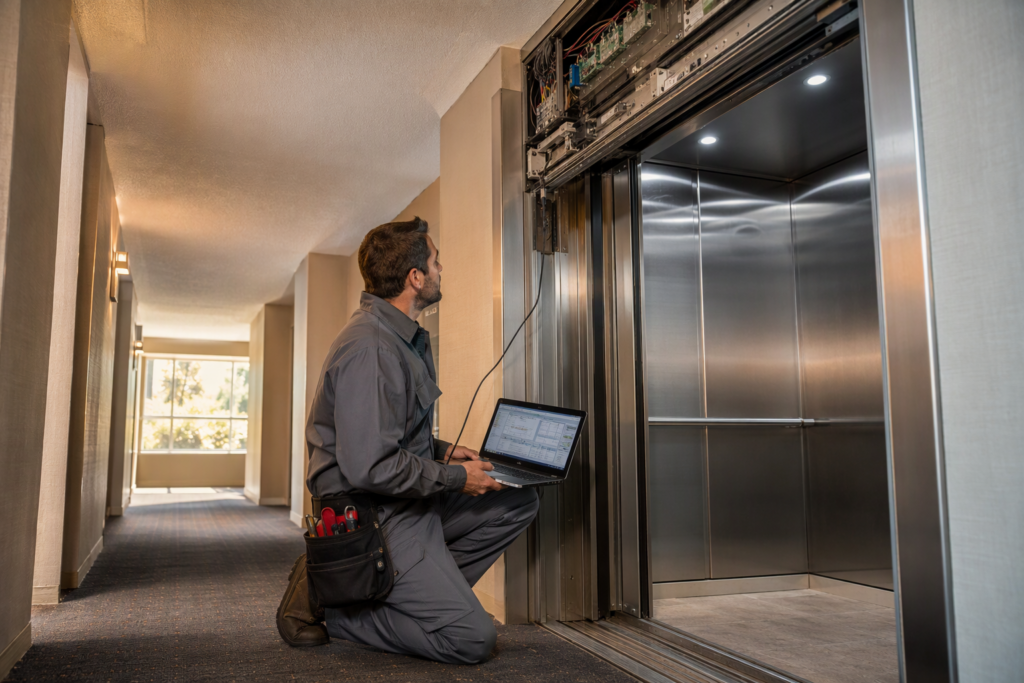
- Notify your elevator maintenance provider. Contact a Cal/OSHA-certified Qualified Conveyance Company (CQCC) immediately. Only a CQCC staffed by Certified Competent Conveyance Mechanics (CCCM) may legally perform repair or alteration work in California.
- Post notice to building occupants. If the elevator is taken out of service, post clear signage at all landings and notify building management, tenants, and any users who rely on the elevator for accessibility.
- Apply for any required Cal/OSHA permits before work begins. Material alterations require a permit from Cal/OSHA prior to commencement. Starting work without a permit is a separate violation.
- Document all repair work. Retain copies of work orders, parts specifications, and test results. This documentation supports the subsequent inspection and demonstrates due diligence.
- Schedule the follow-up inspection. After corrections are complete, coordinate with Cal/OSHA or a CCCI to schedule the reinspection required before the conveyance is returned to service.
- Verify the new permit to operate is posted in the car. Once issued, California law requires the permit to be posted conspicuously inside the elevator car before the conveyance resumes operation.
How Does a Full Maintenance Contract Affect Elevator Deficiency Risk?
California law provides a meaningful regulatory incentive for building owners who maintain a full maintenance contract with a C-11 licensed elevator company: Cal/OSHA may issue a permit to operate for up to two years — rather than the standard one year — when an elevator in safe condition is covered by such a contract. This extended permit interval reflects the reduced deficiency risk associated with continuous, professional maintenance oversight.
Beyond the permit benefit, a comprehensive maintenance program allows Certified Competent Conveyance Mechanics to identify developing deficiencies — worn components, early-stage corrosion, emerging electrical faults — before they become inspection failures or safety incidents. The economic logic is straightforward: planned maintenance replacements are almost always less expensive than emergency repairs, and an elevator that has never been shut down for a critical deficiency never loses the revenue, tenant goodwill, or ADA accessibility that an unplanned outage destroys.
Liftech Elevator provides structured maintenance programs designed around California’s regulatory framework, helping building owners in California track inspection schedules, document corrective actions, and maintain continuous compliance with Cal/OSHA Elevator Unit requirements.
What Codes Govern Elevator Deficiency Standards in California?
California’s elevator safety framework is built on a layered set of authorities:
- California Labor Code Sections 7300–7324.2 — the statutory foundation that establishes Cal/OSHA’s authority over conveyances, the permit to operate requirement, and the owner’s obligation to maintain safe equipment.
- California Code of Regulations, Title 8, Elevator Safety Orders (Sections 3000–3146) — the detailed technical rules that specify what constitutes a deficiency for every component category.
- ASME A17.1/CSA B44 Safety Code for Elevators and Escalators — the 2004 edition is the adopted technical standard for equipment installed under contracts signed on or after May 1, 2008. California has proposed a Group V update that would incorporate elements of the 2019 edition; a Standards Board public hearing was held on June 18, 2026, and no effective date has been posted.
- Americans with Disabilities Act (ADA) — federal accessibility requirements that apply to places of public accommodation and commercial facilities, creating a parallel compliance obligation that often surfaces alongside safety deficiencies during assessments.
- OSHA — federal OSHA standards apply in limited elevator contexts, particularly in construction and in workplaces where elevator-related worker safety is at issue.
What Typically Drives the Cost of Correcting an Elevator Deficiency?
Because deficiency correction costs vary widely based on equipment age, type, severity, and parts availability, no universal figures can be responsibly cited here. However, the factors that consistently drive cost include:
- Component type — roping, safety devices, and controller replacements are substantially more labor- and parts-intensive than door gibs or lighting circuits.
- Equipment age and obsolescence — older hydraulic or traction systems may require custom or no-longer-stocked parts, extending lead times and increasing cost.
- Permit and inspection fees — Cal/OSHA charges fees for permits to alter and reinspections; these are fixed by the state fee schedule and are non-negotiable.
- Downtime duration — in multi-tenant commercial or residential buildings, every day an elevator is out of service has an economic value in lost productivity, tenant relations, and potential ADA liability.
- Scope creep — once a qualified mechanic opens a component, related deficiencies that were not visible during the inspection may be discovered, expanding the work scope.
- Emergency vs. planned work — repairs triggered by an imminent-hazard shutdown are almost always more expensive than the same repair planned and scheduled in advance.
Who Is Qualified to Repair an Elevator Deficiency in California?
California’s credentialing requirements are among the most specific in the country. The rules are clear:
- Only a Certified Competent Conveyance Mechanic (CCCM) working without direct supervision may maintain, repair, alter, or replace components on a conveyance. The CCCM credential is issued by Cal/OSHA and must be renewed every two years, with at least eight hours of continuing education required at each renewal.
- The CCCM must work for a Certified Qualified Conveyance Company (CQCC) — also certified by Cal/OSHA. A CQCC must hold a current C-11 Elevator Contractor license from the California Contractors State License Board (CSLB), plus current certificates of workers’ compensation and liability insurance.
- Building owners who allow uncredentialed contractors to perform elevator work — even seemingly minor work — are exposed to enforcement action from Cal/OSHA, insurance coverage gaps, and invalidation of their permit to operate.
Liftech Elevator operates as a data-driven service provider focused on California’s credentialing and compliance framework, helping building owners verify that every technician dispatched to their property carries the appropriate CCCM certification and that the company maintains active CQCC status.
What Are the Industry Trends Shaping Elevator Deficiency Management in 2025–2026?
Several qualitative trends are reshaping how California building owners and elevator companies approach deficiency prevention and resolution heading into 2026:
- Remote monitoring and predictive maintenance — Internet-of-things sensor packages are increasingly being retrofitted to existing elevator systems, providing real-time performance data that can flag anomalies before they become inspection failures. This technology is shifting the industry from reactive to predictive maintenance models.
- Regulatory modernization pressure — California’s proposed Group V update to its Elevator Safety Orders, incorporating elements of ASME A17.1-2019, signals that the gap between installed equipment and current code requirements will narrow. Building owners with aging equipment should anticipate that deficiency standards may become more stringent when the new orders take effect.
- Workforce credentialing scrutiny — Cal/OSHA has signaled continued attention to CQCC and CCCM compliance, meaning building owners face greater accountability for verifying that their service providers maintain active, current credentials.
- Accessibility enforcement convergence — Federal enforcement of ADA elevator requirements is increasingly coordinated with state safety inspections, meaning that an accessibility deficiency identified in one context is more likely to trigger scrutiny in the other.
- Insurance market hardening — Commercial property insurers are conducting more rigorous underwriting reviews of elevator maintenance records and inspection histories, making a clean deficiency record an increasingly important factor in coverage availability and pricing.
How Often Must California Elevators Be Inspected to Avoid Deficiency Findings?
California law requires every conveyance to be inspected at least once per year, and the responsibility for arranging that inspection falls on the elevator owner — not the state, not the inspector, and not the maintenance contractor. A conveyance found safe receives a permit to operate for up to one year. Where a full maintenance contract with a C-11 licensed company is in place and the elevator is in safe condition, Cal/OSHA may issue a permit for up to two years.
Critically, waiting until the annual inspection to discover deficiencies is a reactive strategy that exposes owners to permit lapses and emergency repair costs. Best-practice facility management schedules interim maintenance visits between inspections specifically to identify and resolve developing issues before the inspector arrives.
Can an Elevator Be Legally Operated in California While a Deficiency Is Being Corrected?
This depends entirely on the nature of the deficiency and the determination of the Cal/OSHA Elevator Unit. An imminent hazard finding typically results in the permit to operate being withheld or revoked, making continued operation illegal under California Labor Code Sections 7300–7324.2. Lesser deficiencies may allow the permit to remain in force with a correction notice, but the building owner must meet the correction deadline stated in the notice. Operating an elevator with an expired or revoked permit to operate is a violation regardless of whether an injury occurs. When in doubt, the legally defensible position is to take the conveyance out of service until a qualified inspector confirms it is safe to operate.
What Documentation Should California Building Owners Maintain Related to Elevator Deficiencies?
Thorough documentation serves multiple purposes — it supports reinspection, demonstrates due diligence to insurers, and creates a defensible record in the event of litigation. Recommended documentation practices include:
- Retaining copies of every inspection report and deficiency notice from Cal/OSHA or the CCCI, organized by date.
- Maintaining work orders for every maintenance visit, repair, and alteration, including the name and CCCM certification number of every mechanic who performed work.
- Keeping copies of all Cal/OSHA permits — permits to operate, permits to alter, and reinspection results — with the original permit to operate posted in the car at all times.
- Documenting the correction of each deficiency with a written sign-off from the CCCM, including the date, parts replaced, and any test results.
- Maintaining the maintenance contract and verifying annually that the service company’s CQCC certification and C-11 license remain current.
Liftech Elevator supports California property owners with organized compliance documentation practices aligned with the record-keeping expectations of Cal/OSHA’s Elevator Unit and the requirements of ADA accessibility compliance.
Summary: Key Facts About Elevator Deficiency in California
| Topic | California Requirement | Source |
|---|---|---|
| Minimum inspection frequency | At least once per year | Cal/OSHA Elevator Unit |
| Extended permit interval | Up to 2 years with full maintenance contract (C-11 company, elevator in safe condition) | Cal/OSHA Elevator Unit |
| Who may inspect | State safety engineers or Certified Competent Conveyance Inspectors (CCCI) only | Cal/OSHA Elevator Unit |
| Who may repair | CCCM employed by a CQCC only | Cal/OSHA Elevator Unit |
| Adopted technical code | ASME A17.1/CSA B44, 2004 edition (for contracts signed on or after May 1, 2008) | ASME A17.1/CSA B44 via Cal/OSHA |
| Permit posting requirement | Valid permit to operate must be posted conspicuously in the elevator car | Cal/OSHA Elevator Unit |
| Credential renewal cycle | CQCC, CCCM, and CCCI certificates: every 2 years, with 8+ hours of continuing education | Cal/OSHA Elevator Unit |
Elevator deficiencies are not abstract compliance problems — they represent real risks to occupant safety, building operations, legal standing, and insurance coverage that every California property owner has a legal and practical obligation to address promptly and correctly.
Contact Liftech Elevator for a free elevator assessment at 562-997-3639.
Need elevator service you can rely on? Liftech Elevator is ready to help.