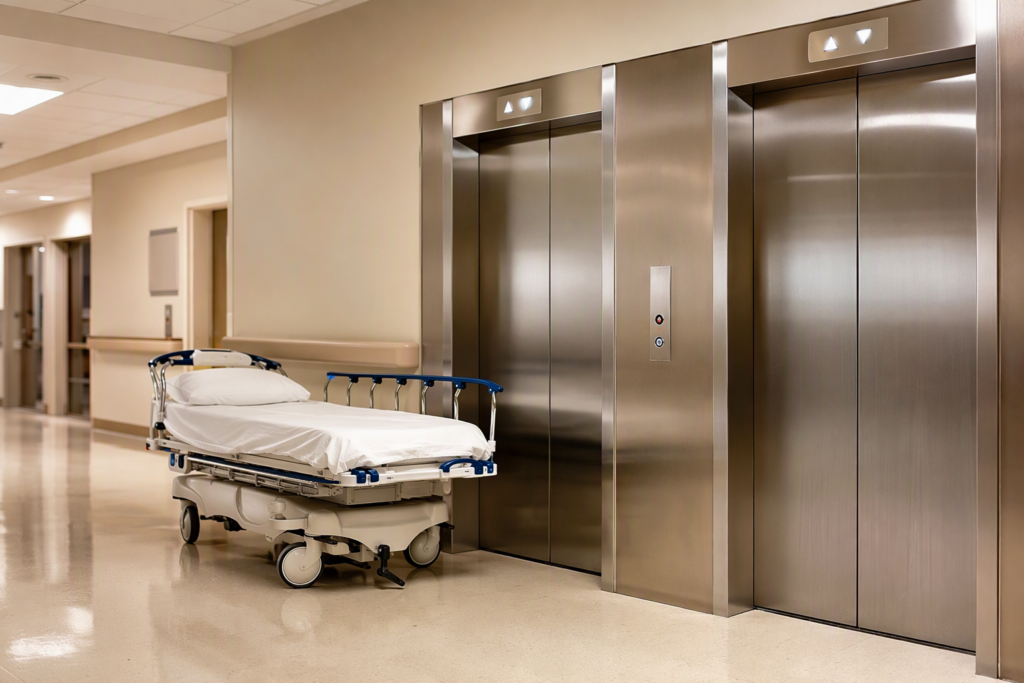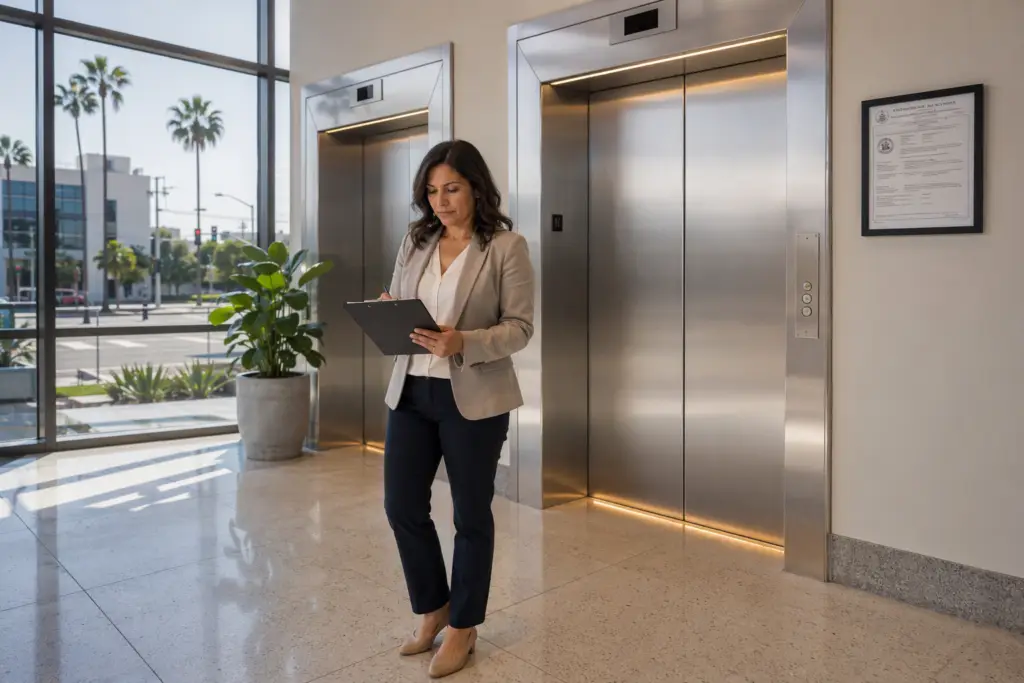
Commercial property owners in Signal Hill, Long Beach, Los Angeles, and Orange County frequently need an independent inspection or repair assessment for a two-floor elevator that a previous contractor installed or maintained. Understanding how that process works — what certifications are legally required, what the inspector actually evaluates, and what comes next — helps owners make informed decisions and stay compliant with California law.
What does California law require before a company can inspect or repair a commercial elevator it has not previously serviced?
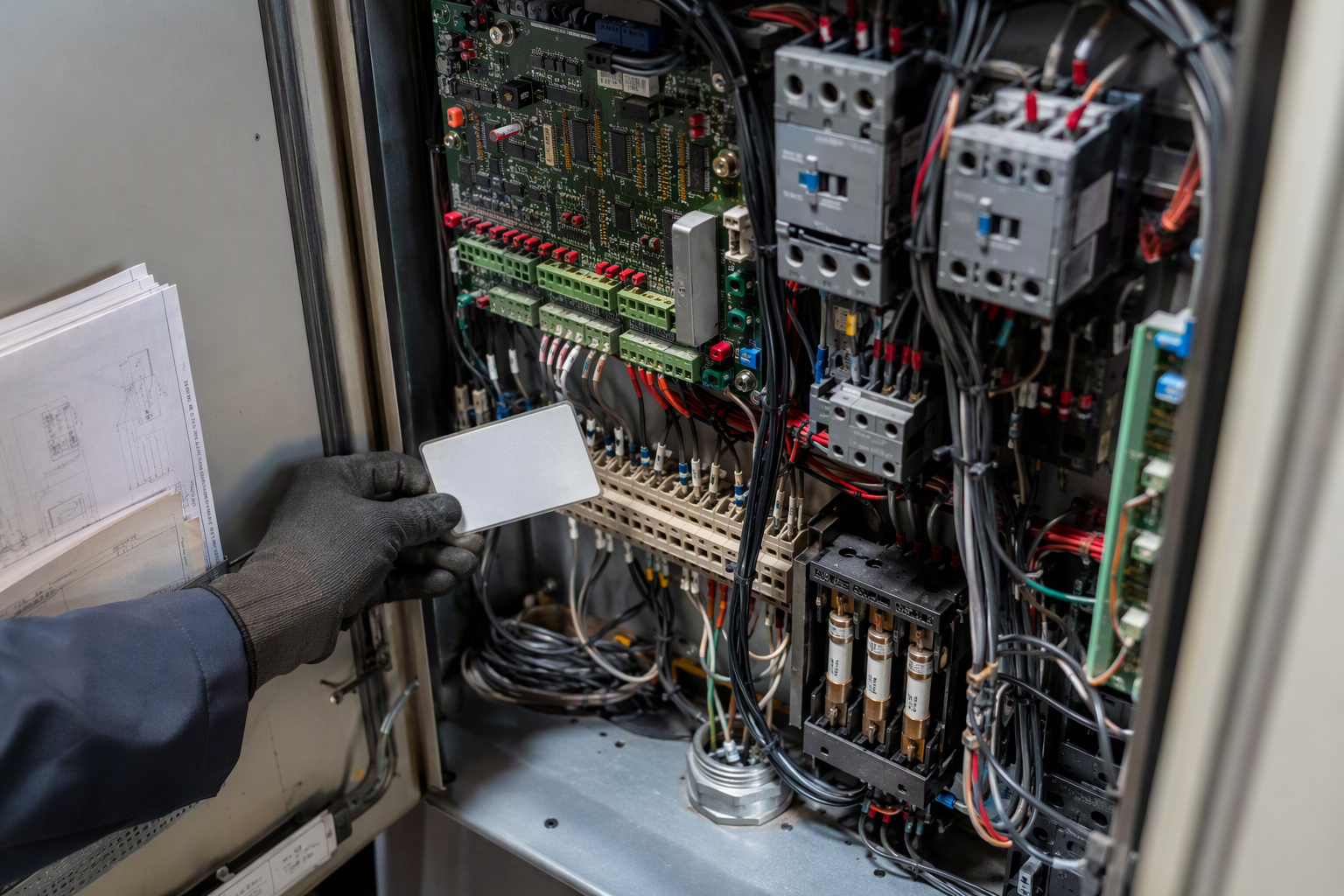
Any company that inspects, maintains, repairs, or alters an elevator in California must hold a Certified Qualified Conveyance Company (CQCC) certificate issued by Cal/OSHA’s Elevator Unit, California Department of Industrial Relations, and every mechanic performing hands-on work must hold a Certified Competent Conveyance Mechanic (CCCM) certificate from the same agency.
These requirements are established under California Labor Code Sections 7300–7324.2 and the California Code of Regulations, Title 8, Elevator Safety Orders (Sections 3000–3146). A company’s prior service history with a specific unit is irrelevant to its legal authority to work on that unit — what matters is current, valid state certification. Additionally, companies seeking CQCC certification must hold a C-11 Elevator Contractor license issued by the California Contractors State License Board (CSLB), along with current workers’ compensation and liability insurance on file with Cal/OSHA.
A property owner in Los Angeles should also be aware that the City of Los Angeles has its own elevator and conveyance inspection program administered through the Los Angeles Department of Building and Safety (LADBS), which may layer additional procedural requirements on top of state requirements.
What is a repair assessment, and how does it differ from a formal Cal/OSHA inspection?
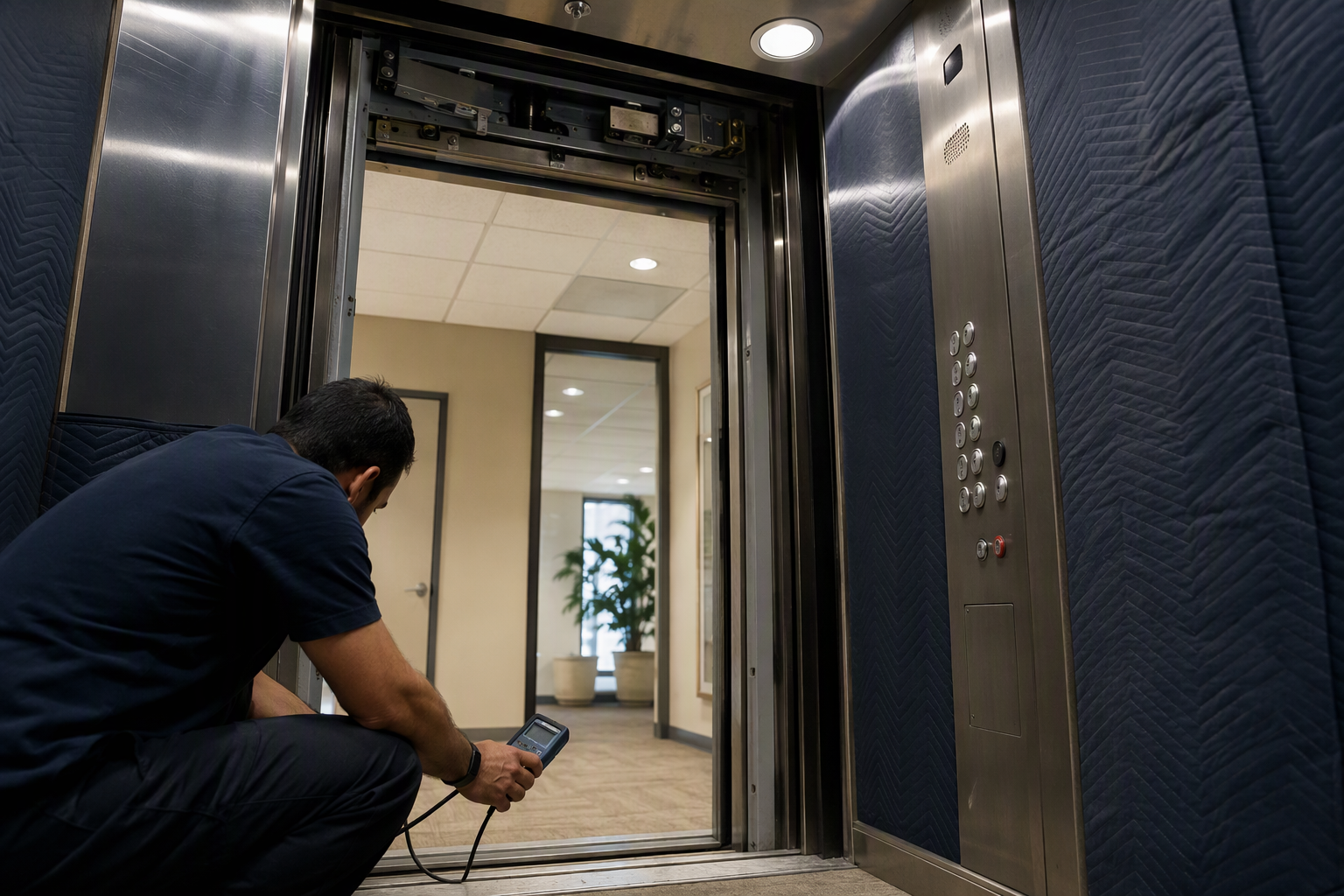
A repair assessment is a technical evaluation conducted by a CQCC-certified contractor to document the mechanical, electrical, and code-compliance condition of an elevator and recommend corrective work — it is distinct from the formal annual inspection performed by a state safety engineer or Certified Competent Conveyance Inspector (CCCI).
Under California law, only State of California safety engineers and Certified Competent Conveyance Inspectors may perform the official inspections that lead to a permit to operate. A CQCC-certified company performs the repair assessment to identify what work is needed; the state inspector then verifies that completed work and issues or renews the permit. These are complementary steps, not interchangeable ones.
For a small two-floor commercial elevator, a repair assessment typically covers the drive system, control panel, door operators and interlocks, safety devices, buffers, guide rails, car and counterweight frames, lighting, emergency communication, and overall code compliance against the ASME A17.1/CSA B44 Safety Code for Elevators and Escalators and California’s adopted edition of that standard.
Does a two-floor commercial elevator still need a Cal/OSHA permit to operate?
Yes — California law requires every commercial conveyance, regardless of the number of floors served, to hold a valid, current permit to operate issued by Cal/OSHA before it may be used, and that permit must be posted conspicuously inside the elevator car.
The number of stops does not reduce the regulatory burden. A two-stop hydraulic or traction elevator in a commercial building is fully subject to California Labor Code Sections 7300–7324.2 and the Title 8 Elevator Safety Orders. California law further requires that each conveyance be inspected at least once per year and that a conveyance found safe receives a permit to operate for up to one year. If the elevator is covered by a full maintenance contract with a C-11 licensed company, Cal/OSHA may issue a permit for up to two years.
Arranging the annual reinspection is the elevator owner’s legal responsibility — not the contractor’s, and not the building manager’s unless the owner has formally delegated that duty in writing.
How does the repair assessment process work, step by step?
The following sequence describes a typical repair assessment for a two-floor commercial elevator at a property the service company has not previously maintained.
- Initial site review and records request: The company contacts the property owner or manager to gather existing documentation — previous inspection reports, the current permit to operate, maintenance logs, and any outstanding Cal/OSHA notices or citations.
- Scheduling and site access coordination: The company coordinates access to the machine room, pit, and hoistway with the property manager and confirms any local AHJ (Authority Having Jurisdiction) notification requirements, such as those that may apply under the LADBS program for Los Angeles properties.
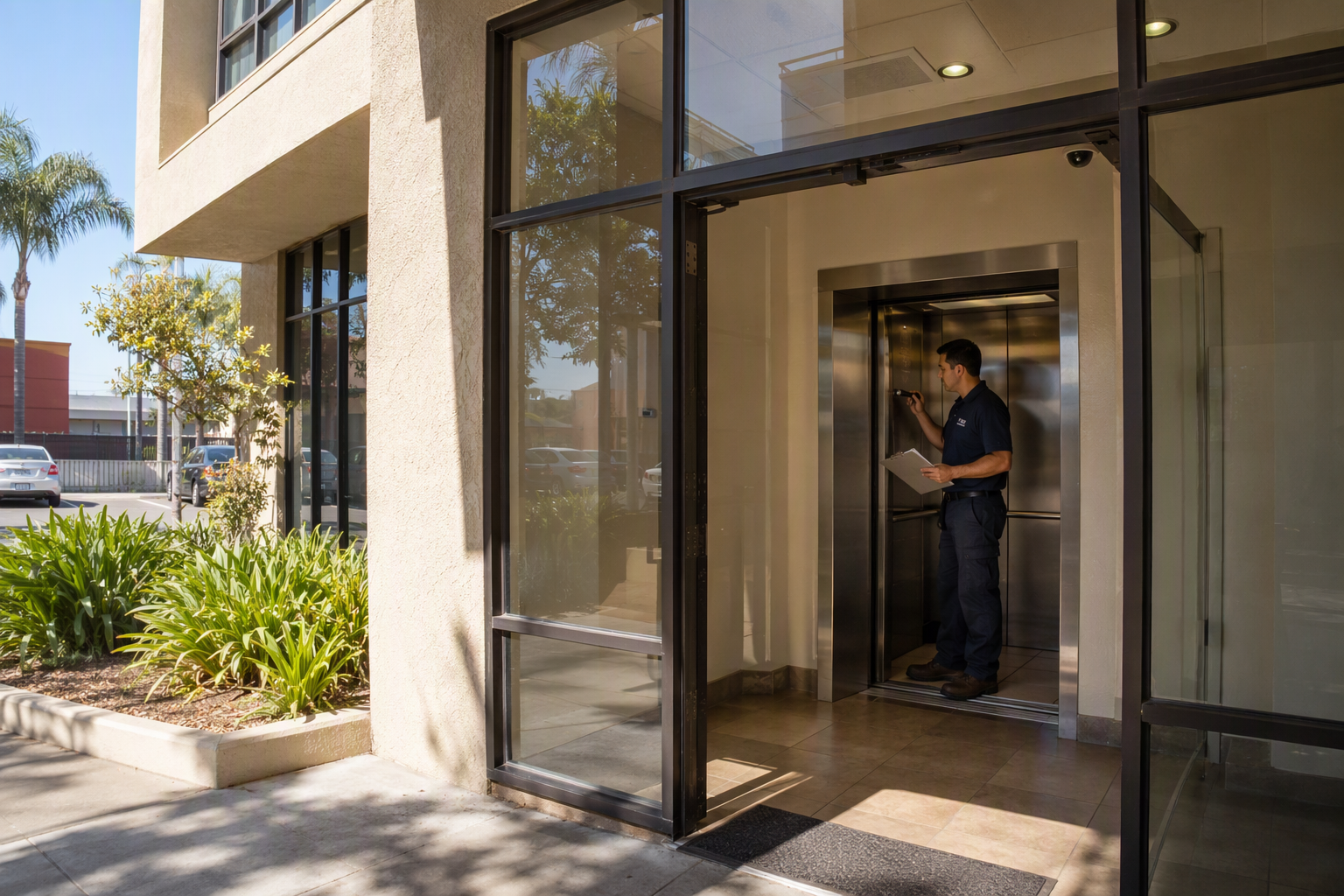
- Visual and mechanical inspection of the pit: A CCCM-certified mechanic enters the pit to evaluate buffers, pit lighting, stop switches, sump conditions, and the condition of the guide rails and traveling cables.
- Hoistway and car inspection: The mechanic inspects car sills, door interlock mechanisms, door operators, car safety, governor (on traction units), and interior car lighting and emergency features.
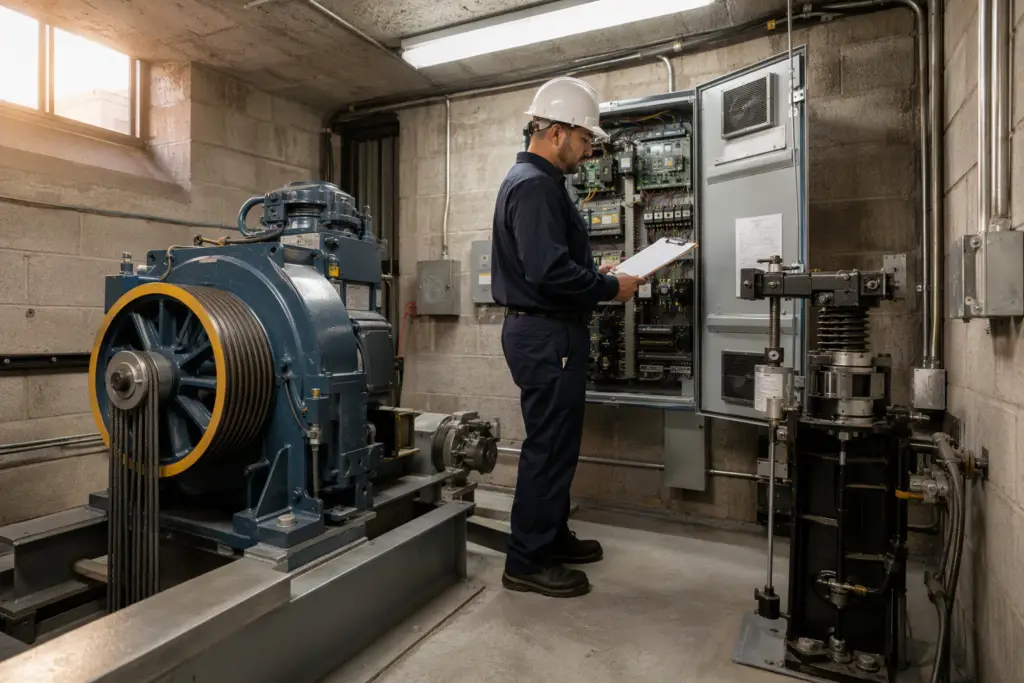
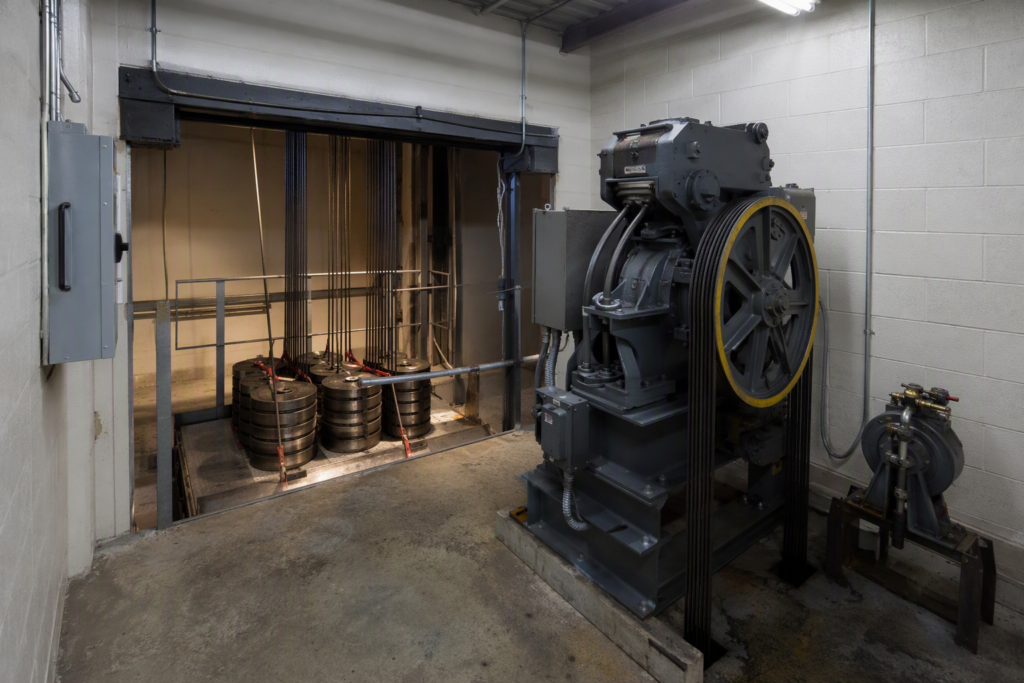
- Machine room or hydraulic power unit inspection: The drive system — whether a hydraulic unit or traction machine — is evaluated for fluid leaks, wear, electrical panel condition, and controller functionality.
- Code compliance review: The findings are measured against the ASME A17.1 edition adopted by California (the 2004 edition under the current Group IV Elevator Safety Orders, effective May 1, 2008, for installations contracted on or after that date) and applicable ADA requirements.
- Written assessment report: The company delivers a written report itemizing each deficiency, its severity (safety-critical versus maintenance-level), the applicable code reference, and recommended corrective action with priority ranking.
- Owner review and authorization: The property owner reviews the report, asks clarifying questions, and authorizes specific repairs. If alterations are involved, the company applies for the required Cal/OSHA permit before work begins.
What records should a property owner gather before the assessment visit?
Providing complete documentation at the outset shortens the assessment timeline and gives the inspector a baseline against which to compare current conditions.
Useful documents include the current Cal/OSHA permit to operate (which should already be posted in the car), the most recent state inspection certificate, any previous annual inspection reports, maintenance records or service invoices from the prior contractor, manufacturer’s maintenance manual for the specific unit, and any written notices, citations, or correction orders from Cal/OSHA or, for Los Angeles properties, LADBS. If any of these documents are missing, a CQCC-certified company can help identify what needs to be reconstructed or re-obtained.
What types of deficiencies are most commonly found during a first assessment of a previously serviced elevator?
When a CQCC-certified company performs an assessment on an elevator it has not previously maintained, it often encounters deferred maintenance items that were not captured in prior service records.
Common findings on small two-floor commercial elevators include worn or misaligned door interlock rollers, deteriorated hydraulic hoses or fittings (on hydraulic units), contaminated hydraulic fluid, frayed or improperly terminated traveling cables, pit flooding or inadequate drainage, inoperative pit lighting or stop switches, missing or expired fire service recall testing documentation, and controller components that do not meet current safety circuit requirements under the adopted edition of ASME A17.1. None of these are minor findings — each can affect the outcome of the next Cal/OSHA inspection and, in some cases, the continued validity of the permit to operate.
What is the difference between a hydraulic and a traction two-floor elevator, and does it affect the assessment scope?
The drive technology significantly affects which components are inspected and what failure modes are most relevant, though the regulatory framework is the same for both types.
| Feature | Hydraulic (Two-Stop) | Traction (Two-Stop) |
|---|---|---|
| Drive system | Hydraulic power unit, cylinder, jack | Electric motor, drive sheave, hoist ropes |
| Machine room location | Adjacent to hoistway (no overhead required) | Overhead or machine-room-less (MRL) |
| Primary fluid risk | Hydraulic oil leak or spill | Gear oil (geared units) |
| Governor and safety | Typically not required on low-rise hydraulic | Required — governor and car safety device |
| Typical maintenance interval concern | Packing seals, fluid level, jack condition | Rope wear, brake adjustment, sheave grooves |
| Cal/OSHA permit requirement | Required | Required |
| ASME A17.1 applicability | Applies | Applies |
| ADA platform and control requirements | Applies | Applies |
On a hydraulic unit, the assessment places particular emphasis on the condition of the hydraulic cylinder and any above-ground jack casing, oil containment provisions, and the low-oil protection device. On a traction unit, the inspector focuses on rope condition, brake adjustment, and the governor-safety system. Both types require the same Cal/OSHA permitting and the same annual inspection cycle.
Does ADA compliance factor into a repair assessment for a commercial elevator?
Yes — for commercial properties, ADA accessibility requirements are a standard component of any thorough repair assessment, and deficiencies identified during the assessment may trigger obligations under both ADA and California law.
The ADA requires that elevator controls be within reach ranges specified in the ADA Standards for Accessible Design, that car dimensions meet minimum requirements for passenger elevators in new construction and alterations, that hall call buttons and car operating panels follow specific mounting height and tactile character standards, and that the elevator be operational as a means of accessible vertical travel. A repair assessment that identifies ADA deficiencies gives the property owner documented notice and a prioritized path to correction, which is relevant both to accessibility compliance and to managing exposure under the ADA’s barrier removal obligation for existing facilities.
What happens if the elevator fails the assessment and must be taken out of service?
If a CQCC-certified company identifies a condition that presents an imminent hazard, the elevator must be taken out of service until that condition is corrected — even if a current permit to operate has not yet expired.
Cal/OSHA also has authority to order an elevator out of service and to revoke or suspend a permit to operate when a conveyance is found to be unsafe. The property owner should treat the assessment report’s safety-critical findings as requiring immediate action, not as a negotiating list. If repairs require a material alteration to the elevator — defined in the California Code of Regulations, Title 8, Elevator Safety Orders — the CQCC-certified company must obtain a permit from Cal/OSHA before beginning that work. Liftech Elevator assists property owners in Signal Hill, Long Beach, Los Angeles, and Orange County in navigating this permitting process and coordinating the subsequent Cal/OSHA inspection.
How long does a repair assessment take for a small two-floor commercial elevator?
The on-site portion of a repair assessment for a two-stop commercial elevator typically requires a focused block of time that accounts for pit access, machine room inspection, operational testing, and documentation — though the total duration depends on the condition of records, site access logistics, and whether deferred maintenance has created conditions requiring more detailed investigation.
The written report is prepared after the site visit. Property owners should factor in time for the owner’s review of the report, authorization of repairs, procurement of any required Cal/OSHA permits before alteration work begins, completion of repairs, and scheduling of the subsequent state inspection before a renewed permit to operate can be issued. Starting the process proactively — before the current permit expiration — avoids the situation of operating without a valid permit, which is prohibited under California law.
Can the company that performs the assessment also perform the repairs?
Yes — a CQCC-certified company is legally authorized to both assess and repair a commercial elevator in California, provided every mechanic performing the work holds a current CCCM certificate and the company holds the required C-11 license and applicable Cal/OSHA certifications.
Having the assessing company also perform the repairs is operationally efficient because the same team that identified the deficiencies will have detailed, first-hand knowledge of the unit’s condition. The formal Cal/OSHA inspection that follows the repair work, however, must be conducted by a state safety engineer or a Certified Competent Conveyance Inspector — not by the contracting company — to result in an updated permit to operate.
What certifications should a property owner verify before hiring a company to assess their elevator?
A property owner should verify that the company holds a current CQCC certificate from Cal/OSHA’s Elevator Unit, that each mechanic assigned to the job holds a current CCCM certificate, and that the company holds a C-11 Elevator Contractor license from the CSLB, along with current workers’ compensation and general liability insurance.
California CQCC, CCCM, and conveyance inspector certificates are valid for two years, and renewal requires at least eight hours of continuing education under state requirements. Owners may request copies of these documents before authorizing any work. Liftech Elevator holds the required state certifications to perform elevator assessments and repairs for commercial properties throughout Signal Hill, Long Beach, Los Angeles, and Orange County.
What role does ASME A17.1 play in a repair assessment for a California elevator?
The ASME A17.1/CSA B44 Safety Code for Elevators and Escalators is the foundational technical standard against which elevator components, safety systems, and clearances are evaluated during any repair assessment in California.
California has adopted the ASME A17.1/CSA B44, 2004 edition under the current Group IV Elevator Safety Orders, effective May 1, 2008, for installation contracts signed on or after that date. This means the specific edition of the code that governs a given elevator depends on when the installation contract was signed — a detail that a CQCC-certified company’s assessment should document clearly. As of 2026, California has proposed a Group V update that would incorporate portions of ASME A17.1-2019, but no effective date has been published following the Standards Board public hearing held on June 18, 2026. Owners should not assume newer code requirements apply until the updated Safety Orders take effect and are enforceable.
How does the assessment process change if the elevator has been out of service for an extended period?
An elevator that has been out of service for an extended period — particularly one where maintenance was not performed during that downtime — requires a more thorough assessment because components may have deteriorated, lubricants may have degraded, and the permit to operate may have lapsed.
If the permit to operate has lapsed, the elevator cannot legally be returned to service until Cal/OSHA conducts a new inspection and issues a new permit. The CQCC-certified company’s assessment in this situation functions as a pre-inspection readiness evaluation — identifying and correcting deficiencies before the state inspector arrives, which reduces the risk of the inspector finding conditions that require additional correction work and a second inspection visit. If any alterations are needed as part of restoring the elevator to compliant condition, Cal/OSHA must issue an alteration permit before that work begins.
What fire service and emergency features must be operational on a two-floor commercial elevator?
A two-floor commercial elevator in California must maintain all fire service recall and in-car operation features required under the adopted edition of ASME A17.1 and the Title 8 Elevator Safety Orders, including Phase I emergency recall operation and Phase II in-car operation where applicable.
During a repair assessment, the assigned CCCM will test fire service operation using the key switches at the lobby and in the car, verify that the elevator returns to the designated level on Phase I activation, and confirm Phase II in-car control functionality. Inoperative fire service features are a significant finding because they affect both elevator code compliance and the building’s overall fire egress and emergency response posture. Documentation of a successful fire service test should be retained with the elevator’s maintenance records.
What emergency communication requirements apply to commercial elevators in California?
Commercial elevators in California are subject to emergency communication requirements under the adopted edition of ASME A17.1, and a repair assessment will verify that the required means of two-way communication is present and functional.
Property owners should be aware that whether California requires visual or text-based elevator emergency communication in addition to audio communication is currently unsettled: the Elevator Safety Orders adopt ASME A17.1-2004, but the 2025 California Building Code appears to add visual and audible two-way communication requirements — a matter that had not been fully resolved as of mid-2026. A thorough assessment will document what is currently installed and flag this as a compliance area to monitor as regulatory clarity develops.
How does a property owner in Los Angeles handle assessment and repair given that the city runs its own program?
Property owners in the City of Los Angeles must coordinate with both Cal/OSHA and the Los Angeles Department of Building and Safety, which operates its own elevator and conveyance inspection program.
The LADBS program means that Los Angeles elevator owners may face dual-agency coordination — state and local — when scheduling inspections, obtaining permits for alterations, or returning an out-of-service elevator to operation. A CQCC-certified company familiar with both the state requirements and the LADBS process can help property owners navigate these parallel obligations. Liftech Elevator serves commercial properties throughout Los Angeles and is familiar with local coordination requirements in the market.
What should a property owner do immediately after receiving the repair assessment report?
- Review all safety-critical findings first: Identify every deficiency flagged as an imminent hazard or safety-critical item. These must be addressed before the elevator continues in service.
- Confirm the elevator’s operational status: If the assessing company has recommended taking the unit out of service, post the unit as out of service immediately and do not allow passenger use until corrections are complete.
- Verify permit to operate status: Confirm whether the current Cal/OSHA permit to operate is valid, and note its expiration date so reinspection scheduling can be planned accordingly.
- Prioritize the repair scope with the contractor: Work with the CQCC-certified company to sequence repairs — safety-critical items first, then code compliance items, then maintenance-level improvements.
- Confirm whether alteration permits are needed: If any proposed repair work constitutes a material alteration under the Title 8 Elevator Safety Orders, the contractor must obtain a Cal/OSHA alteration permit before beginning that work.
- Schedule the follow-up Cal/OSHA inspection: Remember that arranging the annual reinspection is the owner’s responsibility. Once repairs are complete, coordinate with the state to schedule the formal inspection and permit renewal.
- Retain all documentation: File the assessment report, repair invoices, test results, and updated Cal/OSHA permit with the elevator’s permanent records, which should remain accessible at the property.
How frequently should a commercial two-floor elevator be assessed in addition to the required annual inspection?
California law sets a minimum inspection floor of once per year — but a proactive maintenance program typically includes more frequent technical reviews to catch developing issues before they become code violations or safety events.
The annual Cal/OSHA inspection establishes the permit to operate, but it is not a substitute for ongoing maintenance. A full maintenance contract with a CQCC-certified, C-11 licensed company ensures that a qualified CCCM evaluates the unit on a regular basis throughout the year, not only at the annual inspection. This approach also positions the elevator for the extended two-year permit Cal/OSHA may issue when a full maintenance contract is in place. Property owners who have recently acquired a building, changed contractors, or experienced a period of deferred maintenance should treat an independent repair assessment as an immediate priority — not something to defer until the next scheduled inspection.
Why should a commercial property owner choose Liftech Elevator for an assessment and repair of an elevator they have not previously serviced?
Selecting a CQCC-certified company with demonstrated familiarity with the California regulatory environment — including the specific requirements of Cal/OSHA’s Elevator Unit, the Title 8 Elevator Safety Orders, the adopted edition of ASME A17.1, and local programs such as LADBS — reduces the risk of compliance gaps that an unfamiliar contractor might miss.
Liftech Elevator holds the state certifications required under California law to inspect, assess, and repair commercial elevators throughout Signal Hill, Long Beach, Los Angeles, and Orange County, including units that Liftech has not previously serviced. A repair assessment conducted by a company that understands both the technical condition of the unit and the full regulatory context produces a more actionable report — one that prioritizes findings correctly, cites the applicable code accurately, and provides a clear path to a renewed Cal/OSHA permit to operate.
Contact Liftech Elevator for a free elevator assessment at 562-997-3639.
Need elevator service you can rely on? Liftech Elevator is ready to help.