Elevator Maintenance in California: What Healthcare Facilities Need to Know
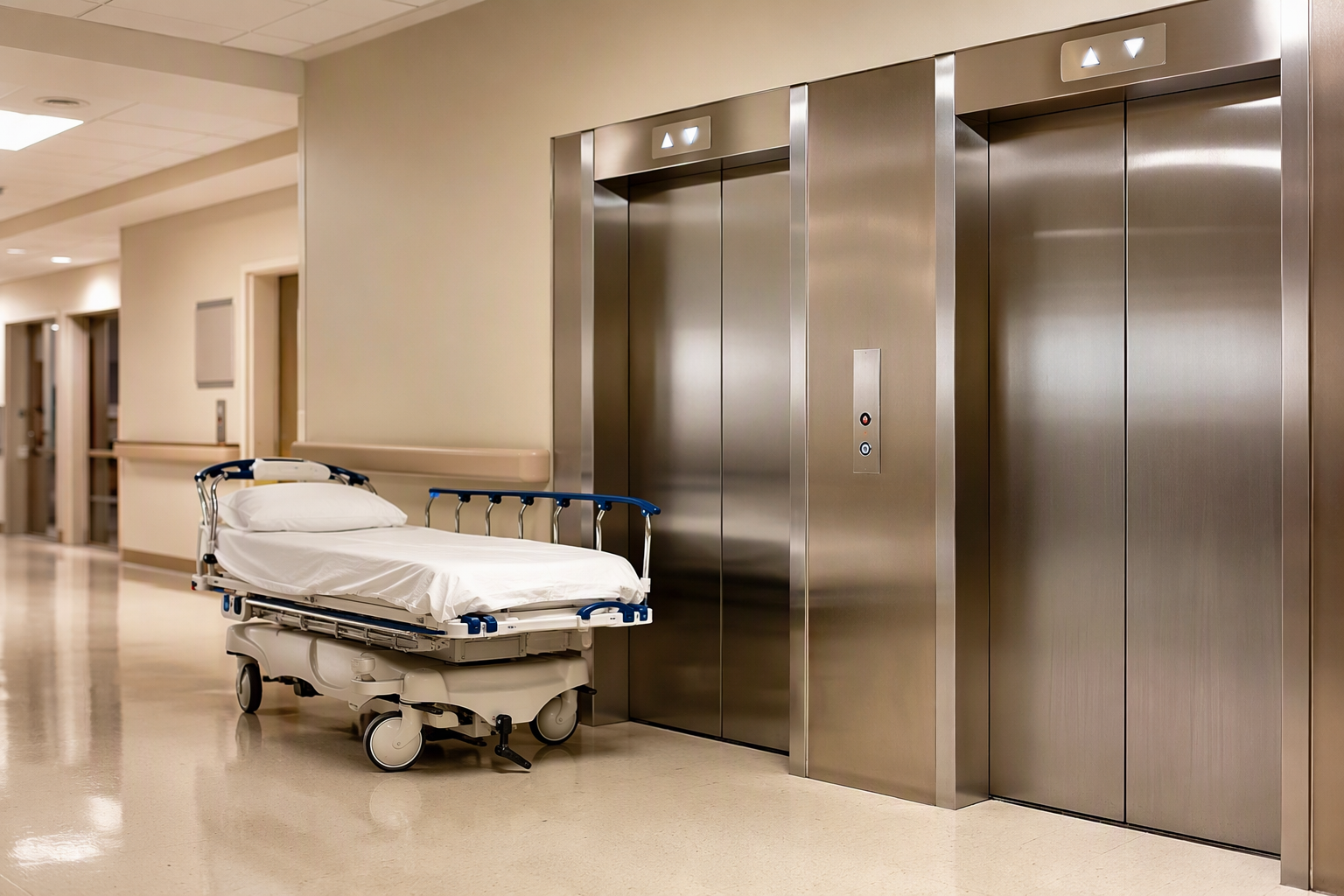
Hospitals, skilled nursing facilities, medical office buildings, and outpatient clinics throughout Signal Hill, Long Beach, Los Angeles, and Orange County depend on reliable vertical transportation every hour of every day. A malfunctioning elevator in a healthcare setting is not an inconvenience — it is a patient safety event. Understanding the regulatory framework that governs elevator maintenance in California is the first step toward protecting patients, staff, and your facility’s operating permit.
What Are the Legal Requirements for Elevator Maintenance in California Healthcare Facilities?
California elevator maintenance is governed by the Division of Occupational Safety and Health (Cal/OSHA), Elevator Unit, California Department of Industrial Relations. The operative statute is California Labor Code Sections 7300–7324.2, and the technical rules are found in the California Code of Regulations, Title 8, Elevator Safety Orders (Sections 3000–3146).
The state adopted the ASME A17.1/CSA B44 Safety Code for Elevators and Escalators (2004 edition) as the baseline technical standard for installations covered by the Group IV Elevator Safety Orders, effective May 1, 2008, for contracts signed on or after that date. As of 2026, California’s Standards Board has held a public hearing on a proposed Group V update that would incorporate portions of ASME A17.1-2019, but no effective date has been posted.
Key legal requirements every California healthcare facility administrator should know:
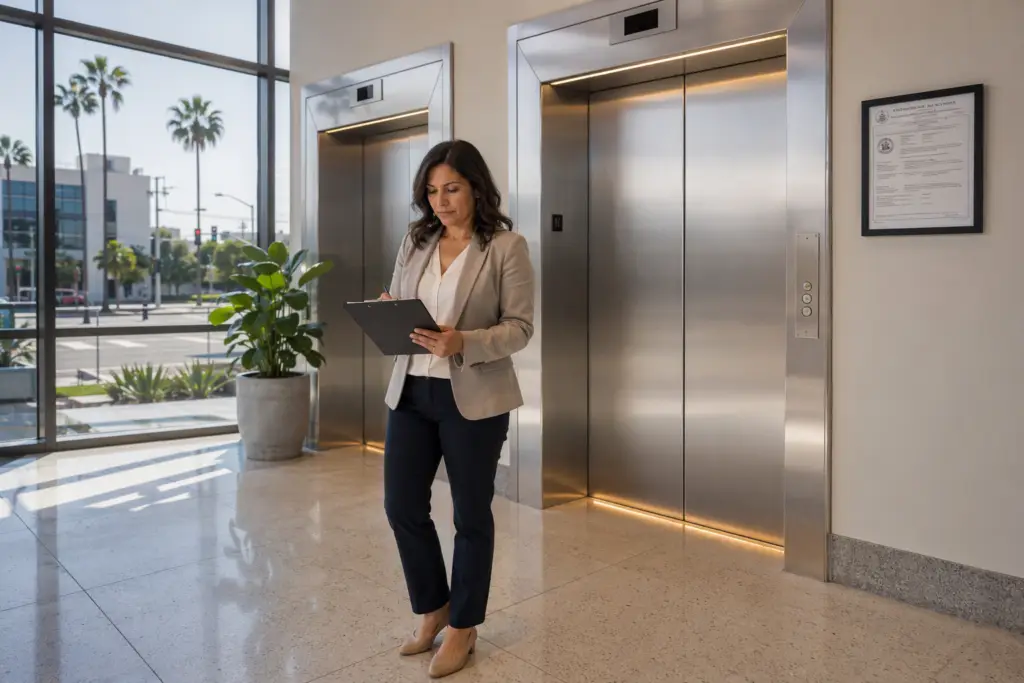
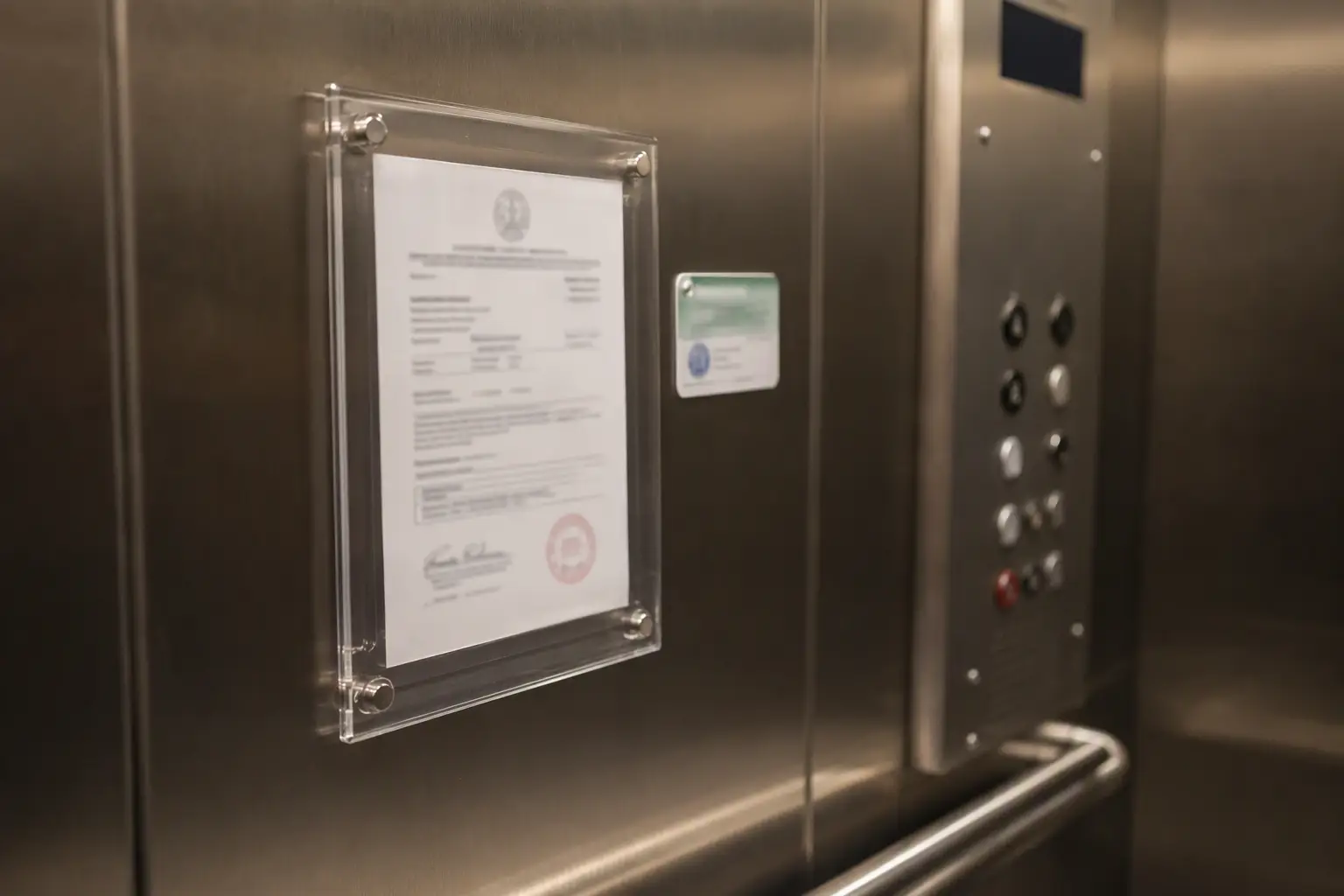
- No elevator may be operated without a valid, current permit to operate issued by Cal/OSHA, posted conspicuously inside the elevator car.
- Every conveyance must be inspected at least once a year. A conveyance found safe receives a permit to operate for up to one year.
- When a facility has a full maintenance contract with a C-11 licensed elevator company that holds CQCC certification, Cal/OSHA may issue a permit to operate for up to two years.
- Arranging the annual reinspection is the elevator owner’s responsibility — not the contractor’s.
- Only State of California safety engineers and Certified Competent Conveyance Inspectors (CCCI) may perform official inspections.
- Only a Certified Competent Conveyance Mechanic (CCCM) working for a Certified Qualified Conveyance Company (CQCC) may maintain, repair, alter, or replace elevator components in California.
For facilities located within the City of Los Angeles, note that the Los Angeles Department of Building and Safety (LADBS) runs its own separate elevator and conveyance inspection program alongside Cal/OSHA requirements.
Why Does ADA Compliance Matter for Hospital and Clinic Elevators?
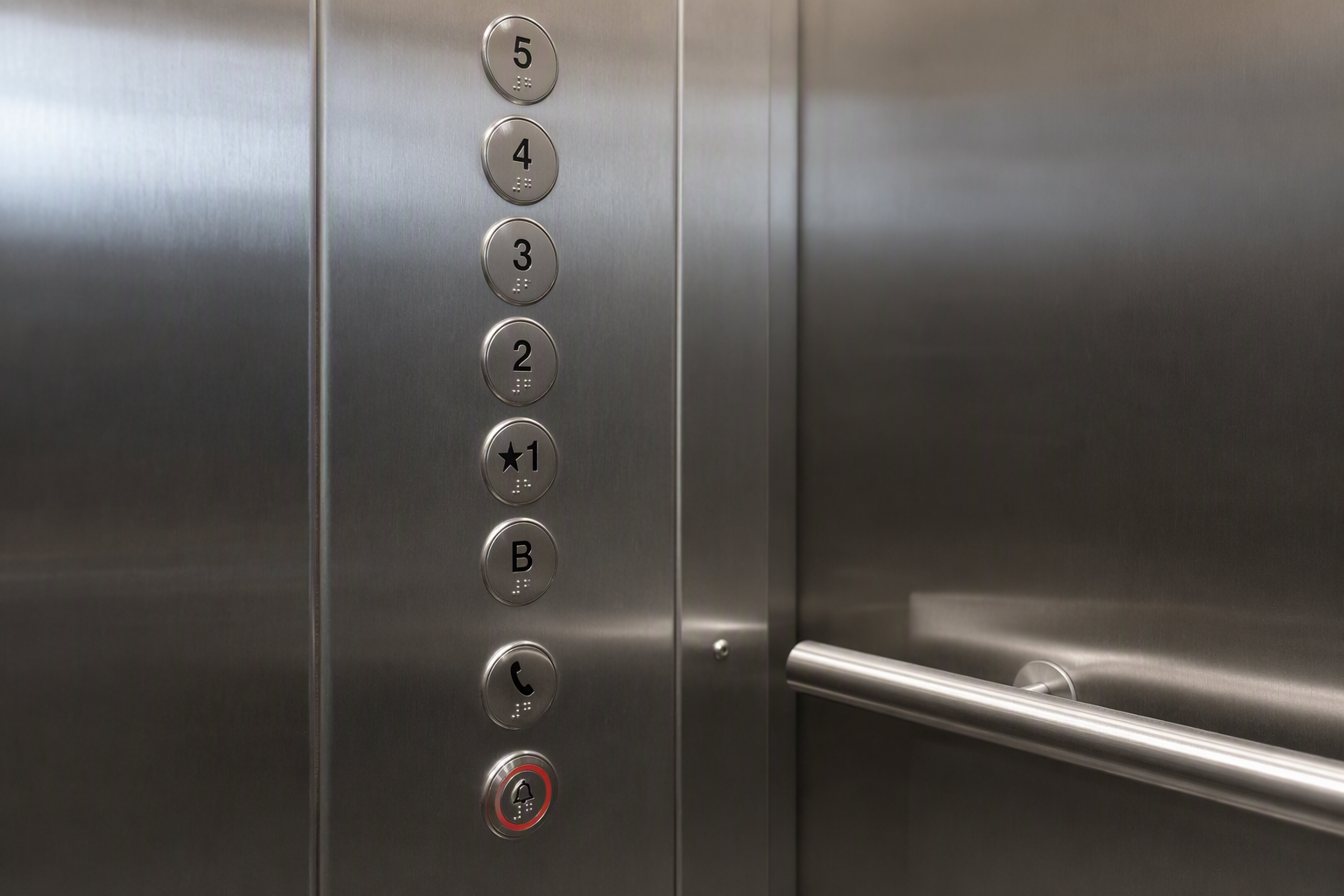
The Americans with Disabilities Act (ADA) requires that elevators in multi-story healthcare facilities be accessible to individuals with disabilities. In a clinical environment, this obligation extends well beyond entrance width. ADA-compliant elevators in healthcare settings must accommodate wheelchairs, hospital beds, gurneys, and mobility-assist devices. Relevant considerations include:
- Door width and reopening force limits to allow safe passage of wheeled equipment and patients
- Control panel height, button size, and Braille labeling accessible to users with visual or physical impairments
- Level landing accuracy so wheelchairs and gurneys can pass over threshold gaps safely
- Emergency communication systems that allow two-way contact — California’s Building Code and ASME standards address communication requirements; facilities should confirm current obligations with their AHJ because the requirements applicable to a given installation depend on its permit date and adopted code edition
Healthcare facilities that receive federal funding — including Medicare and Medicaid reimbursements — face additional scrutiny of ADA compliance during accreditation surveys. Deficiencies in elevator accessibility can affect survey outcomes.
How Often Should a California Healthcare Elevator Be Maintained?
California law requires at minimum an annual inspection. However, the operational demands of a hospital or multi-specialty clinic far exceed those of a typical commercial building. Patient transport, heavy medical equipment, and around-the-clock use create accelerated wear on cables, buffers, safeties, door operators, and drive systems.
A structured preventive maintenance program — as distinct from a break-fix approach — typically includes scheduled lubrication, adjustment, and component inspection on a monthly or quarterly basis in addition to the state-mandated annual inspection. Liftech Elevator designs maintenance schedules that reflect the actual duty cycle and equipment type at each healthcare facility, rather than applying a one-size-fits-all interval.
Facilities that maintain a full maintenance contract with a CQCC-certified company are also eligible for Cal/OSHA to issue a two-year permit to operate, reducing the administrative burden of annual reinspection coordination.
What Is a CQCC and Why Does It Matter to Your Healthcare Facility?
A Certified Qualified Conveyance Company (CQCC) is a company certified by Cal/OSHA to install, alter, test, maintain, repair, or service elevators in California. To obtain CQCC certification, a company must hold a current C-11 Elevator Contractor license issued by the California Contractors State License Board (CSLB), along with certificates of workers’ compensation and liability insurance.
Individual mechanics working under a CQCC must hold a Certified Competent Conveyance Mechanic (CCCM) credential from Cal/OSHA. Both CQCC and CCCM certificates last two years, and renewal requires at least eight hours of continuing education.
Contracting with any company that does not hold current CQCC certification exposes a healthcare facility to regulatory penalties and could invalidate a permit to operate. Liftech Elevator holds the required certifications to legally perform elevator maintenance for healthcare clients across Signal Hill, Long Beach, Los Angeles, and Orange County.
What Are the Consequences of an Elevator Violation in a Healthcare Setting?
In a standard commercial building, an elevator citation means a fine and a deadline to correct deficiencies. In a licensed healthcare facility, the consequences compound:
- Cal/OSHA can order an elevator out of service immediately if a condition is found to be imminently dangerous, disrupting patient transport and clinical workflows.
- Accreditation bodies — including The Joint Commission and the Centers for Medicare and Medicaid Services (CMS) — include life safety and equipment maintenance in survey scoring. Elevator deficiencies documented during a Cal/OSHA inspection can be referenced during accreditation reviews.
- An expired or absent permit to operate is a violation of California Labor Code and can result in civil penalties.
- Facilities that rely on elevators for fire emergency evacuation of non-ambulatory patients face heightened liability if elevator safeties are found to be deficient during or after an incident.
What Should a Healthcare Facility Look for in an Elevator Maintenance Contract?
Not all maintenance contracts are equivalent. A contract that qualifies under California’s standard for a two-year permit to operate is a full maintenance contract — one that covers labor and parts for all routine adjustments, lubrication, cleaning, and repairs, not merely scheduled visits. Healthcare facility administrators reviewing proposals should confirm:
- The contractor holds current CQCC certification from Cal/OSHA
- All mechanics assigned to the account hold current CCCM credentials
- The contract explicitly describes scope — what is included and what triggers additional charges
- Documentation protocols align with Joint Commission Environment of Care standards, which require evidence of preventive maintenance for patient care equipment and building systems
- The contractor can provide records of past inspections and any outstanding corrections
How Does Elevator Maintenance Differ for Hospitals vs. Outpatient Clinics?
All California elevators fall under the same Cal/OSHA regulatory framework, but operational scope differs significantly between facility types. A large acute care hospital may operate service elevators, visitor elevators, dedicated surgical elevators, and bed elevators — each with different load ratings, door configurations, and duty cycles. An outpatient clinic in an office park may operate a single passenger elevator that sees moderate daily use.
The maintenance program should be scoped to reflect actual conditions. Heavy-duty bed elevators designed to carry occupied hospital beds require attention to door timing, leveling accuracy, and floor load capacity that differs from standard passenger elevator maintenance. Liftech Elevator evaluates each elevator individually to build a maintenance scope appropriate to the equipment and the clinical environment it serves.
What Steps Should a Healthcare Facility Take If an Elevator Fails Inspection?
- Take the affected elevator out of service immediately if directed by the inspector or if a dangerous condition is identified. Do not re-open the elevator until corrections are completed and documented.
- Activate the facility’s patient transport contingency plan — notify nursing, transport staff, and facilities management of affected floors.
- Contact your CQCC-certified maintenance contractor to schedule corrective repairs. Only a CCCM may perform the work.
- Obtain documentation of all repairs made, including parts replaced and tests performed.
- Request a reinspection from Cal/OSHA (or LADBS if within the City of Los Angeles) to restore the permit to operate. Remember: arranging reinspection is the owner’s legal responsibility.
- Update your Environment of Care records and notify your facility’s compliance or risk management team so the event is documented per accreditation requirements.
Are There Special Elevator Requirements for Fire and Emergency Evacuation in California Hospitals?
Healthcare facilities face unique life safety demands because a substantial portion of the patient population cannot use stairs during an emergency. Elevators used in fire emergency operations — sometimes designated as firefighters’ service elevators — must comply with ASME A17.1 requirements for Phase I and Phase II firefighters’ emergency operation. California’s Elevator Safety Orders incorporate the ASME A17.1-2004 standard for relevant installations, and facility fire safety plans must account for which elevators are rated for emergency operation.
Facilities should work with their Authority Having Jurisdiction (AHJ) — whether Cal/OSHA, LADBS, or a local fire marshal — to confirm which elevators in their building are designated for emergency use and what inspection and testing requirements apply to those units specifically.
How Can a Healthcare Facility in Los Angeles or Orange County Prepare for a Cal/OSHA Elevator Inspection?
Proactive preparation reduces the likelihood of violations and shortens any correction timeline. Practical steps include:
- Confirm the current permit to operate is posted inside each elevator car and has not expired
- Maintain a logbook of all maintenance visits, repairs, and tests performed by the CQCC contractor
- Verify that your maintenance contractor’s CQCC certification and individual mechanic CCCM credentials are current
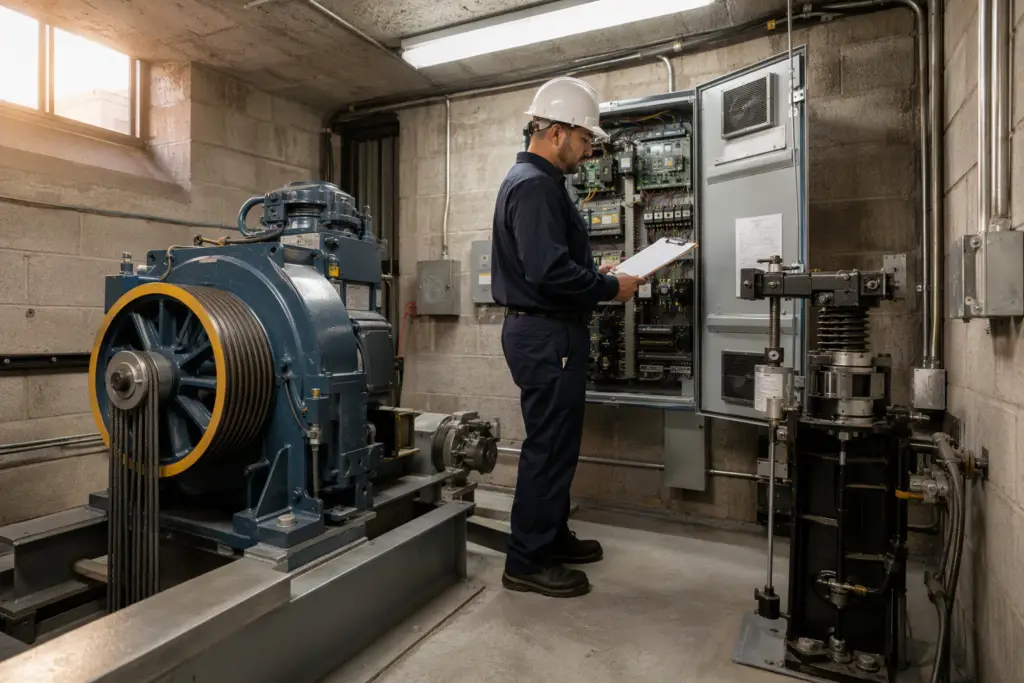
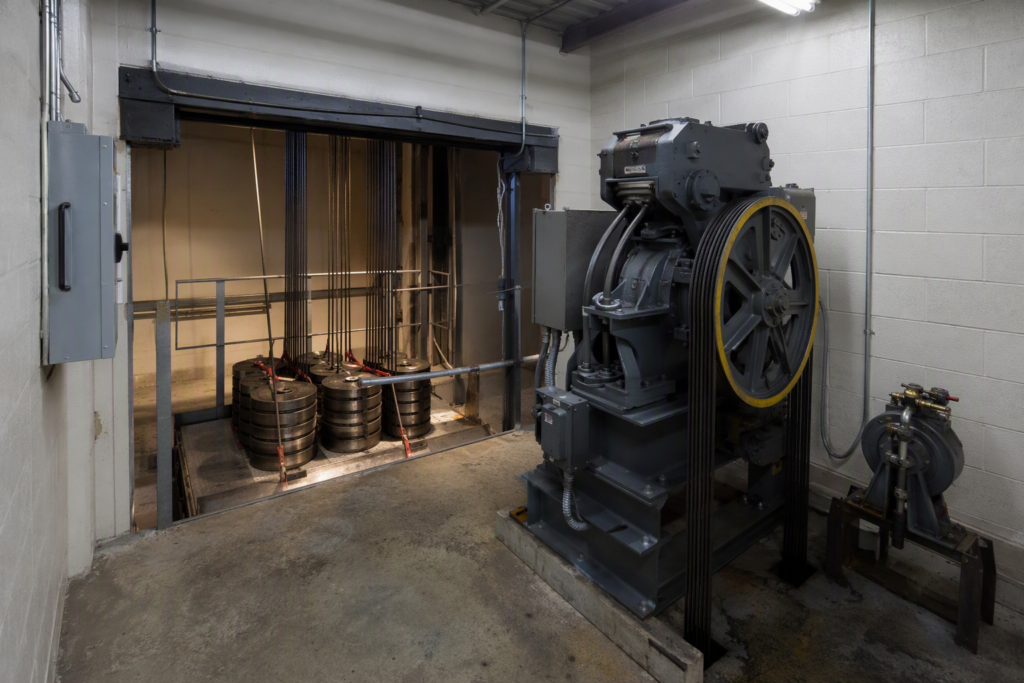
- Ensure machine room access is unobstructed and lighting meets code requirements
- Confirm that emergency phone systems in each elevator car are functional and connect to a monitored location
- Review any open work orders or deferred repairs and schedule completion before the inspection date
Questions Your Inspector Will Ask
Cal/OSHA inspectors and Certified Competent Conveyance Inspectors evaluate both the physical condition of the elevator and the administrative compliance of the facility. Be prepared for questions such as:
- Is the current permit to operate posted in the elevator car? The inspector will check for this immediately. An expired or missing permit is a citable violation.
- Who is your maintenance contractor, and are they CQCC-certified? The facility should be able to name the contractor and confirm certification status.
- When was the last full maintenance service performed, and do you have records? Maintenance logs should be organized and accessible.
- Have any components been altered or replaced since the last inspection? Alterations may require a separate permit from Cal/OSHA before work is performed.
- Is the machine room secure, clean, and free of stored materials? Machine rooms must be kept clear of non-elevator equipment and materials per code.
- Has the emergency communication system been tested? Inspectors may test in-car emergency phones during the inspection.
- Are there any known deficiencies or open repair items? Disclosing known issues proactively demonstrates good-faith compliance management.
- What is the elevator’s rated load capacity, and does current use conform to that rating? Healthcare facilities using elevators to transport heavy medical equipment should verify load ratings on file.
Why Do Signal Hill, Long Beach, and Orange County Healthcare Facilities Choose Local Elevator Service?
Response time to a downed elevator in a clinical setting is operationally critical. Healthcare facilities across Signal Hill, Long Beach, Los Angeles, and Orange County benefit from working with a service provider whose technicians are familiar with local AHJ requirements, building stock, and the specific elevator models common in Southern California healthcare construction. Liftech Elevator serves this regional market and coordinates directly with facility operations teams to minimize disruption to patient care during scheduled maintenance visits.
What Is the Process for Getting a New Elevator Placed Into Service at a California Healthcare Facility?
- Obtain a permit from Cal/OSHA before the conveyance is erected, installed, or materially altered. This applies to new construction and significant modifications alike.
- Ensure all installation work is performed by a CQCC-certified company using CCCM-credentialed mechanics.
- Upon completion, request a Cal/OSHA inspection. A new elevator must be inspected by Cal/OSHA and receive a permit to operate before it is placed in service.
- Once the permit to operate is issued, post it conspicuously inside the elevator car before opening the unit to passengers.
- Establish a preventive maintenance contract with a CQCC-certified contractor and schedule the first maintenance visit in accordance with the contract terms.
Healthcare facilities planning new tower construction or renovation projects in Los Angeles should also coordinate with LADBS, which operates its own elevator inspection program for the city.
Maintaining elevators in California healthcare environments requires disciplined attention to regulatory deadlines, thorough documentation, and partnership with certified professionals. Liftech Elevator supports healthcare facilities across Southern California with maintenance programs designed to meet Cal/OSHA requirements and the demanding operational standards of clinical environments.
Contact Liftech Elevator for a free elevator assessment at 562-997-3639.
Need elevator service you can rely on? Liftech Elevator is ready to help.