For most elevator repairs, a qualified service company can deliver an estimate within one to three business days of receiving a service request. Same-day quotes are realistic for straightforward repairs identified during a scheduled visit. Major modernizations, code-compliance upgrades, or damage requiring engineering review typically extend the timeline to five to ten business days, depending on the scope of work and part availability.
What Factors Determine How Quickly an Elevator Repair Estimate Can Be Issued?
The speed of an elevator repair estimate depends primarily on the complexity of the work, the accessibility of the equipment, and whether parts pricing must be confirmed with a manufacturer or distributor before quoting.
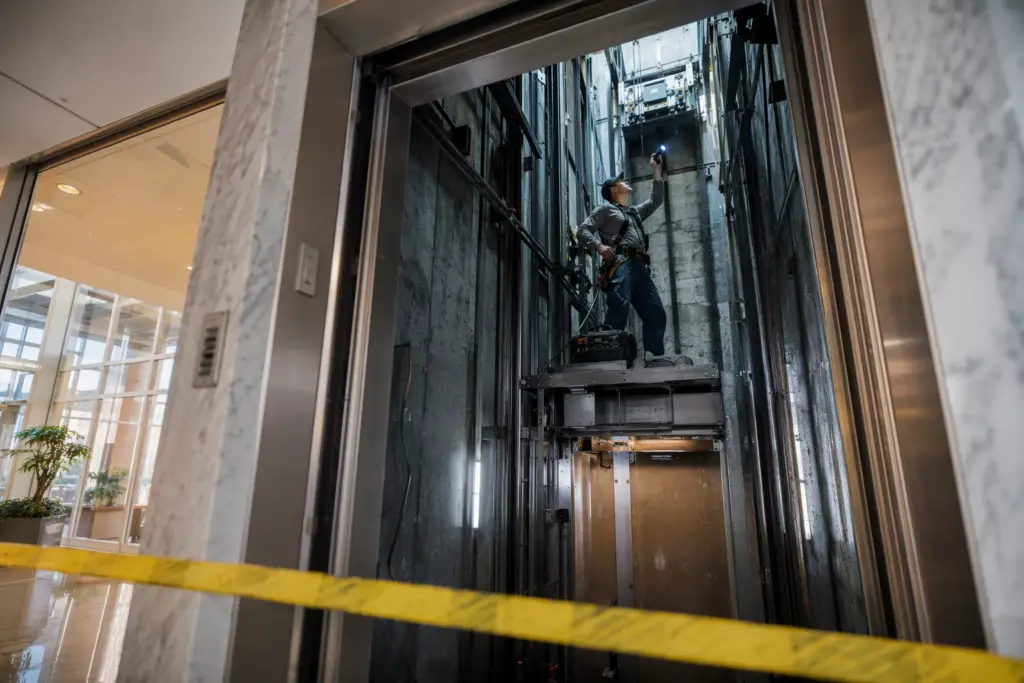
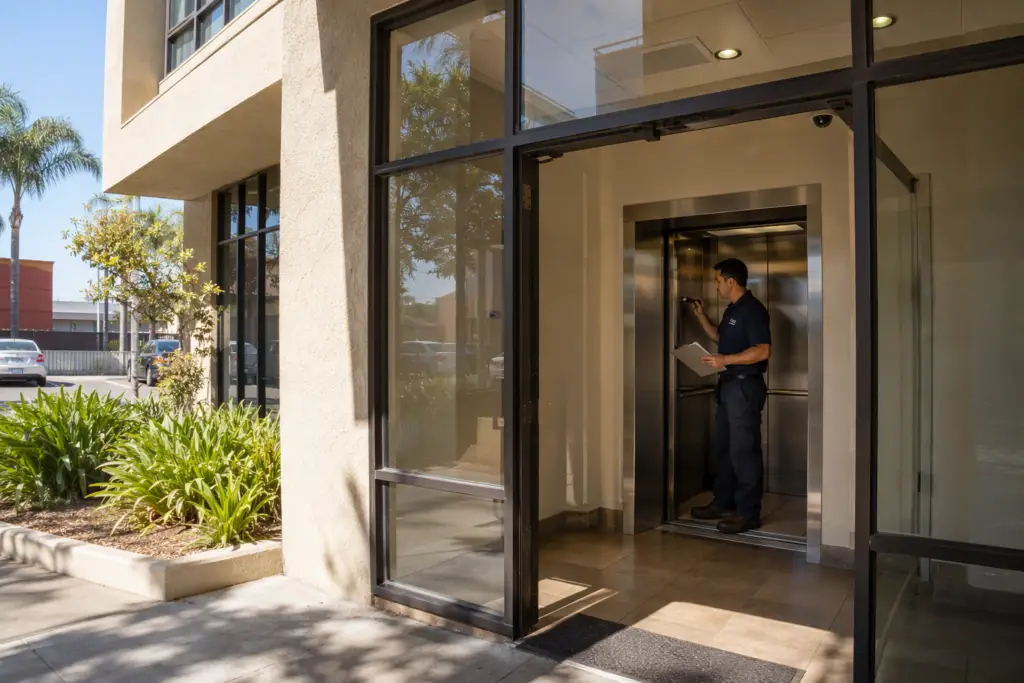
A service technician who can diagnose a failed door operator or a worn brake lining during a single on-site visit can often quote that repair before leaving the building. Conversely, a project involving controller modernization, cab renovation, or structural alterations requires the technician to compile component costs, check lead times on proprietary parts, and in some cases obtain a permit before work can legally begin in California. Each of those steps adds time to the estimate process.
Additional variables include the age of the equipment, the availability of original equipment manufacturer (OEM) documentation, and whether a subcontractor such as a structural engineer or electrician must weigh in. Building owners in Signal Hill, Long Beach, Los Angeles, and Orange County should ask at the time of the request whether any of these factors apply so they can plan accordingly.
What Is the Typical Estimate Timeline for Different Types of Elevator Repairs?

Estimate timelines vary significantly by job category, and understanding the breakdown helps building owners set realistic expectations and avoid operational disruptions.
| Repair or Project Type | Typical Estimate Timeline | Primary Driver of Timeline | Notes |
|---|---|---|---|
| Minor mechanical repair (buttons, sensors, door contacts) | Same day to 24 hours | Technician diagnosis on-site | Often quoted verbally and confirmed in writing same day |
| Door operator or motor replacement | 1–2 business days | Parts pricing confirmation | Lead time on parts affects repair start, not estimate |
| Hydraulic system repair or seal replacement | 1–3 business days | Fluid type, cylinder access, environmental review | Environmental factors may require additional review in California |
| Controller modernization | 3–5 business days | Engineering review, OEM lead times | Cal/OSHA permit required before work begins |
| Full cab renovation | 5–7 business days | Custom finishes, structural measurements | Design approval may be needed |
| Full elevator modernization | 7–14 business days | Engineering, permitting, multi-vendor coordination | Cal/OSHA material alteration permit required |
| Emergency entrapment or safety failure | On-site assessment same day | Urgency of situation | Written estimate may follow after emergency is resolved |
Does the Type of Elevator Affect How Long an Estimate Takes?
Yes — the elevator’s drive type, age, and proprietary components all influence how long it takes to compile a complete and accurate repair estimate.
Hydraulic elevators, traction elevators, and machine-room-less (MRL) traction elevators each involve distinct components, diagnostic procedures, and parts ecosystems. A hydraulic unit with a standard submersible pump unit can often be quoted quickly because the parts are widely available. An older traction elevator running on a proprietary relay-logic controller may require the technician to source obsolete components or evaluate whether a controller modernization is more cost-effective than repairing original parts, which adds research time before a quote can be finalized.
Equipment manufactured by legacy or discontinued brands can further extend the estimate window if the service company must reach out to specialty suppliers or distributors. Liftech Elevator routinely services a wide range of makes and models across Long Beach, Los Angeles, and Orange County properties, which positions experienced technicians to recognize sourcing challenges early and communicate them to building owners before delays become surprises.
How Does the California Regulatory Environment Affect the Estimate Process?
California’s elevator regulatory framework, administered by the Cal/OSHA Elevator Unit of the California Department of Industrial Relations, introduces permitting steps that can affect project timelines even before repair work begins, which in turn can influence how estimates are structured.
Under California Labor Code Sections 7300–7324.2 and the California Code of Regulations, Title 8, Elevator Safety Orders (Sections 3000–3146), a permit from Cal/OSHA is required before a conveyance is erected, installed, or materially altered. A service company must factor permit application timelines into a project estimate for any modernization or material alteration. Responsible estimators will identify whether a proposed repair crosses the threshold into a “material alteration” and flag that in the written quote so the building owner understands the full project timeline, not just the labor and parts cost.
Additionally, any company performing repair, maintenance, or alteration work in California must be certified by Cal/OSHA as a Certified Qualified Conveyance Company (CQCC), and every mechanic performing unsupervised work must hold a Certified Competent Conveyance Mechanic (CCCM) certification. These credentials require a current C-11 Elevator Contractor license issued by the California Contractors State License Board (CSLB) as well as current workers’ compensation and liability insurance. Building owners should verify that any company providing an estimate holds current CQCC certification, because an uncertified contractor cannot legally perform the work in California — meaning the estimate itself may be unenforceable.
What Information Should a Building Owner Provide to Speed Up the Estimate Process?
Providing complete and accurate equipment information at the time of the request is the single most effective way to reduce the estimate turnaround time.
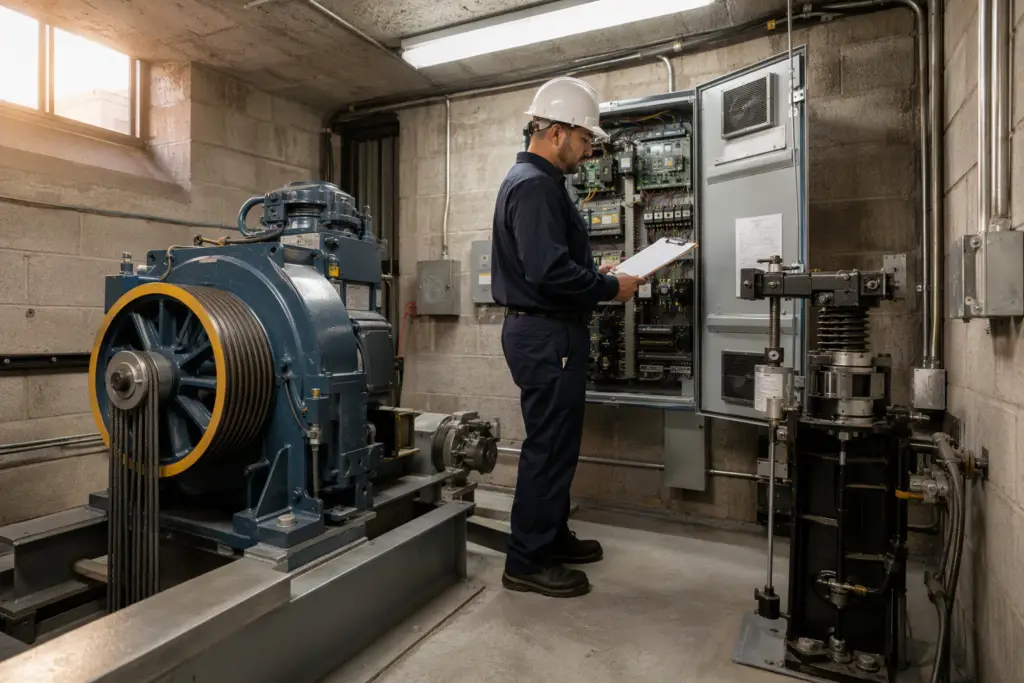
- Locate the elevator’s data plate inside the machine room and note the manufacturer name, model number, serial number, and year of installation.
- Pull any existing maintenance records, prior inspection reports, or Cal/OSHA permits to operate, and have them available for the technician’s review.
- Document the symptom clearly — describe the specific malfunction, when it started, how frequently it occurs, and whether any error codes or alarms are displaying.
- Note whether the elevator is currently out of service or operating in a reduced-capacity or unsafe condition, as this affects scheduling priority.
- Confirm the physical access situation — is the machine room locked, is a building engineer required to be present, or are there restricted access hours?
- Identify the decision-maker who can authorize the work so the estimator can address the quote to the correct contact and avoid approval delays.
- Ask whether a Cal/OSHA material alteration permit has already been obtained if the work was previously identified by an inspector.
Are Emergency Elevator Repair Estimates Handled Differently?
Emergency situations — such as passenger entrapment, safety device failures, or out-of-service elevators in ADA-critical buildings — are treated as immediate response priorities, with the formal written estimate often following after the emergency is resolved.
When an elevator fails unexpectedly, the immediate concern is restoring safe operation or safely retrieving any entrapped passengers, not paperwork. A qualified technician will assess the situation on arrival and communicate the scope of necessary repairs verbally before performing emergency work. The written estimate or service invoice typically follows within one business day of the emergency call.
For ADA-covered facilities, an extended elevator outage can create legal exposure under the Americans with Disabilities Act, which requires that programs and services remain accessible to individuals with disabilities. Building managers in Los Angeles, Long Beach, Signal Hill, and Orange County should prioritize emergency repair requests accordingly and work with their service provider to document the outage and restoration timeline.
What Does a Complete Elevator Repair Estimate Include?
A thorough and professional elevator repair estimate should contain specific elements that allow a building owner to make an informed decision and understand exactly what is being proposed.
A well-structured estimate will identify the diagnosed problem clearly, describe the proposed repair or replacement scope, itemize parts and labor separately, state whether any Cal/OSHA permits are required and who is responsible for obtaining them, note the estimated lead time for any specialty parts, and specify whether the quoted work falls under the existing maintenance contract or is a separate billable repair. Estimates for modernization work should also reference the applicable edition of the ASME A17.1/CSA B44 Safety Code for Elevators and Escalators, which California has adopted in the 2004 edition under its Group IV Elevator Safety Orders, effective for installations under contracts signed on or after May 1, 2008.
Building owners should be cautious of estimates that are vague about parts specifications, do not differentiate labor from parts, or fail to mention permit requirements. These omissions can result in scope creep, unexpected costs, and compliance exposure.
How Does Having a Full Maintenance Contract Affect Estimate Timelines?
Buildings covered by a full maintenance contract with a CQCC-certified elevator company generally receive faster estimate response times because the service provider already has detailed equipment records on file.
Under California regulations, Cal/OSHA may issue a permit to operate for up to two years — rather than the standard one-year permit — for an elevator in safe condition that is covered by a full maintenance contract with a C-11 licensed elevator company. This regulatory incentive reflects the practical reality that well-maintained elevators develop fewer unexpected failures, and when issues do arise, the service company can diagnose and quote repairs quickly because the equipment’s history, component specifications, and prior repair records are already documented.
Property managers who rely solely on time-and-materials repair calls rather than a structured maintenance agreement often experience longer estimate delays because the responding technician must conduct a more extensive baseline evaluation before scoping the work. Liftech Elevator serves properties throughout Signal Hill, Long Beach, Los Angeles, and Orange County and can advise building owners on whether a full maintenance agreement would provide both compliance advantages and faster service response.
What Role Does Annual Inspection Compliance Play in Repair Estimate Accuracy?
An elevator that has current annual inspection records and a valid Cal/OSHA permit to operate is easier and faster to estimate for repairs because the baseline condition of the equipment is already formally documented.
California law requires every conveyance to be inspected at least once a year by either a State of California safety engineer or a Certified Competent Conveyance Inspector (CCCI), and a conveyance found safe receives a permit to operate for up to one year. Arranging that annual reinspection is the elevator owner’s responsibility under California law. When an inspector has recently evaluated an elevator and produced a written report, a service company preparing a repair estimate can reference that documentation to understand the condition of major components — accelerating the scoping process considerably.
Conversely, elevators with lapsed permits or no recent inspection history require the service company to conduct a more comprehensive assessment before an estimate can be considered reliable. This evaluation step adds time and, in some cases, may identify additional deficiencies beyond the originally reported problem.
What Is the Difference Between a Repair Estimate and a Modernization Proposal?
A repair estimate addresses a specific, identified failure or deficiency, while a modernization proposal involves a comprehensive engineering evaluation of the entire system and typically takes longer to prepare accurately.
Modernization proposals must account for code compliance upgrades required under California’s Elevator Safety Orders as well as applicable provisions of the ASME A17.1/CSA B44 Safety Code for Elevators and Escalators. Because a modernization is classified as a material alteration under California regulations, a Cal/OSHA permit must be obtained before work begins. The estimating process for modernization therefore includes not just pricing for components and labor, but also a compliance gap analysis and a permitting plan — tasks that require more time than a standard repair quote.
Building owners who receive a repair estimate for an aging elevator should ask the service company whether the proposed repair is cost-effective relative to modernization, and whether any components being replaced will require the entire system to meet current code standards. A thorough service company will address this question proactively in the written estimate.
How Should a Building Owner Compare Estimates from Multiple Elevator Companies?
Comparing elevator repair estimates effectively requires evaluating not just the final price, but the scope specificity, code compliance awareness, and vendor credentials of each bidder.
When reviewing competing estimates, building owners should confirm that every bidder holds a current CQCC certification from Cal/OSHA and a C-11 license from the California Contractors State License Board, since these are legal prerequisites for elevator work in California. An estimate from an uncertified contractor — regardless of how competitive the price — represents a compliance liability that could invalidate the building’s permit to operate.
Scope differences are often the root cause of price variation between estimates. One company may quote only the reported symptom while another identifies and includes adjacent deficiencies flagged during the site visit. A lower estimate that excludes necessary work will ultimately cost more. Building owners should request that each estimator walk through the scope line by line and confirm in writing whether the quoted work is inclusive of all identified deficiencies.
Does the Los Angeles Building and Safety Program Affect Estimate Timelines for LA Properties?
Yes — properties in the City of Los Angeles are subject to an additional layer of oversight because Los Angeles operates its own elevator and conveyance inspection program through the Los Angeles Department of Building and Safety (LADBS), which can add complexity to the permitting and estimate process for projects in that jurisdiction.
Because Los Angeles runs its own program, building owners and service companies operating in the City of Los Angeles should confirm local requirements with LADBS in addition to Cal/OSHA requirements. For properties outside the City of Los Angeles — including Long Beach, Signal Hill, and cities throughout Orange County — the Cal/OSHA Elevator Unit administers permits and inspections directly. Service companies estimating work on Los Angeles city properties should have experience navigating the LADBS process, as this affects both the permit timeline reflected in the estimate and the overall project schedule.
What Questions Should a Building Owner Ask When Requesting an Elevator Repair Estimate?
Asking the right questions at the outset of the estimate process helps building owners receive more accurate, comparable, and complete quotes from any service provider.
- Is your company currently certified as a Certified Qualified Conveyance Company (CQCC) by Cal/OSHA, and do the technicians who will perform the work hold current Certified Competent Conveyance Mechanic (CCCM) certification?
- Will the proposed repair require a Cal/OSHA material alteration permit, and is the cost and time of obtaining that permit included in the estimate?
- Does the estimate include all labor, parts, consumables, and travel, or are any of those costs billed separately?
- What is the estimated lead time on any specialty parts, and how does that affect the project start date?
- Does the repair address the root cause of the failure, or only the symptom — and are there adjacent deficiencies identified during the site visit that are not included in this estimate?
- How long will the estimate remain valid, given that parts pricing can change?
- If the elevator is currently out of service, what is the earliest possible date work could begin after estimate approval?
How Do Parts Availability and Supply Chain Conditions Affect Estimate Timelines in 2026?
Parts lead times and supply chain conditions remain relevant factors in elevator repair estimating in 2026, particularly for older or proprietary equipment where OEM components may have extended delivery windows.
A service company preparing a thorough estimate must confirm current lead times for any components that are not stocked locally before issuing a quote. Issuing an estimate without confirming parts availability can result in a project start date that cannot realistically be met. Experienced providers serving Long Beach, Los Angeles, Signal Hill, and Orange County maintain relationships with multiple distributors and can often identify alternative sourcing or compatible replacement components — a factor that building owners should ask about when evaluating estimators for older equipment.
What Happens If the Repair Scope Changes After the Estimate Is Approved?
Scope changes after estimate approval — commonly called change orders — are a normal part of elevator repair, particularly when a technician uncovers additional deficiencies once the equipment is opened and disassembled that were not visible during the initial diagnostic visit.
A responsible service company will contact the building owner before performing work that falls outside the approved estimate scope and provide a written change order documenting the additional work, parts, and cost. Building owners should confirm this process with any service provider before approving an estimate. California’s CQCC-certified companies operate under professional standards that include transparent communication of scope changes — a safeguard that reinforces the importance of working only with properly certified contractors.
Does ADA Compliance Affect the Scope and Timeline of an Elevator Repair Estimate?
When an elevator repair involves components that affect accessibility — such as door operation, call button height, cab flooring, or emergency communication systems — the estimate must account for compliance with the Americans with Disabilities Act as well as applicable California requirements.
An experienced estimator will flag any ADA-relevant components during the site visit and include compliant replacement specifications in the quote rather than defaulting to a like-for-like replacement that may not meet current accessibility standards. This is particularly important for properties in Los Angeles and Orange County where mixed-use and public-accommodation buildings are frequently subject to ADA compliance reviews. Incorporating ADA compliance into the repair estimate rather than treating it as a separate future project is both more cost-effective and reduces legal exposure for building owners.
How Does the ASME A17.1 Safety Code Influence What Must Be Included in an Elevator Repair Estimate?
The ASME A17.1/CSA B44 Safety Code for Elevators and Escalators establishes minimum safety requirements that qualified elevator service companies must comply with when performing repairs or alterations, and a properly prepared estimate should reflect those requirements.
California has adopted ASME A17.1/CSA B44 in the 2004 edition under its Group IV Elevator Safety Orders, effective for installation contracts signed on or after May 1, 2008. When a repair involves a safety-critical component — such as a governor, safety device, buffer, or pit ladder — the estimate must specify that replacement components meet the applicable ASME A17.1 requirements. Estimates that do not reference applicable code compliance for safety components should raise questions about the estimator’s qualifications and the completeness of the proposed scope. Liftech Elevator incorporates applicable code requirements into repair documentation for every project across its California service area.
What Should a Building Owner Do If an Elevator Repair Estimate Seems Unusually Low?
An unusually low elevator repair estimate often signals one of three conditions: excluded scope, non-certified labor, or the use of non-compliant parts — each of which carries its own risk for California building owners.
A quote that appears significantly lower than competing estimates warrants a line-by-line review to identify what has been omitted. Common exclusions in artificially low estimates include permit fees, environmental disposal costs for hydraulic fluid, testing and witnessing fees after work is completed, and code-compliance upgrades triggered by the repair. Building owners should also verify that the estimating company holds current CQCC certification from Cal/OSHA, because uncertified work can result in the revocation of the elevator’s permit to operate — an outcome far more costly than the apparent savings on the original estimate.
How Can Building Owners in Long Beach, Signal Hill, Los Angeles, and Orange County Streamline the Repair Estimate Process?
Building owners across Liftech Elevator’s California service area can take practical steps to reduce estimate turnaround times and improve the accuracy of quotes they receive from any qualified elevator service provider.
Keeping a current equipment file — including the manufacturer data plate information, maintenance records, prior Cal/OSHA inspection reports, and current permit to operate — allows any responding technician to begin scoping work immediately rather than spending diagnostic time on baseline equipment identification. Ensuring that the machine room is accessible and that a qualified building representative is available during the site visit also eliminates scheduling delays. Buildings with a full maintenance contract already have much of this information on file with their service company, which is one of the practical advantages of a structured maintenance relationship over reactive repair-only arrangements.
Liftech Elevator provides repair estimates across Signal Hill, Long Beach, Los Angeles, and Orange County and works with building owners to ensure that estimates are complete, code-compliant, and clearly scoped before any work begins.
What Should Be the Next Step After Receiving and Reviewing an Elevator Repair Estimate?
After reviewing a repair estimate, the building owner’s next steps should focus on verifying the contractor’s credentials, confirming the scope is complete, and establishing a realistic project start date before formally approving the work.
- Verify that the service company holds a current CQCC certification by checking with the Cal/OSHA Elevator Unit and a valid C-11 license through the California Contractors State License Board.
- Confirm that all identified deficiencies — not just the reported symptom — are addressed in the estimate scope.
- Clarify whether any Cal/OSHA permits are required and who is responsible for obtaining them, and get a realistic timeline for permit approval before scheduling work.
- Review the parts lead time disclosed in the estimate and confirm whether a temporary out-of-service period is expected.
- Confirm the change order process in writing so that any scope additions require written approval before proceeding.
- Establish communication expectations for updates during the repair, particularly if the elevator will be out of service during a portion of the work.
- Retain a copy of the completed work documentation and the updated Cal/OSHA permit to operate for the building’s compliance file after the repair is finalized.
Following these steps helps building owners in California avoid compliance gaps, unexpected cost overruns, and service delays that can result from inadequately reviewed estimates.
Contact Liftech Elevator for a free elevator assessment at 562-997-3639.
Need elevator service you can rely on? Liftech Elevator is ready to help.