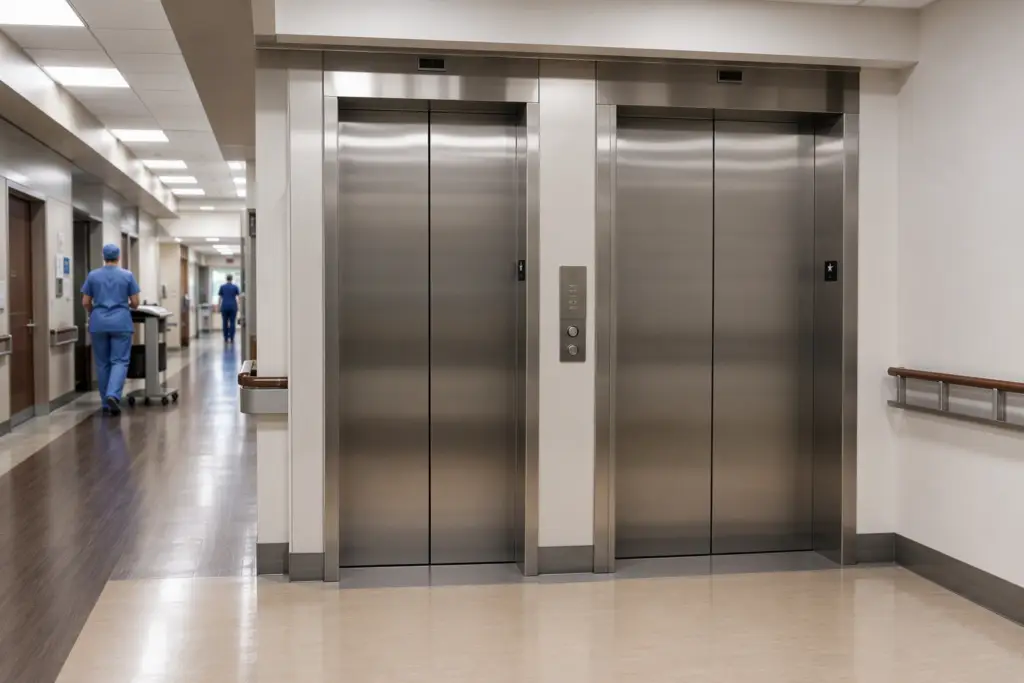
California Emergency Spending Authority for Elevator Maintenance: Data, Regulations & Compliance Guide
California’s elevator regulatory framework under the Division of Occupational Safety and Health (Cal/OSHA), Elevator Unit, California Department of Industrial Relations does not suspend compliance requirements in emergencies. Understanding how emergency spending authority intersects with California Labor Code Sections 7300–7324.2, Cal/OSHA permit obligations, and ASME A17.1/CSA B44 maintenance standards is essential for public agencies, commercial property owners, HOAs, and institutional facility managers throughout California.
What Is Emergency Spending Authority for Elevator Maintenance?
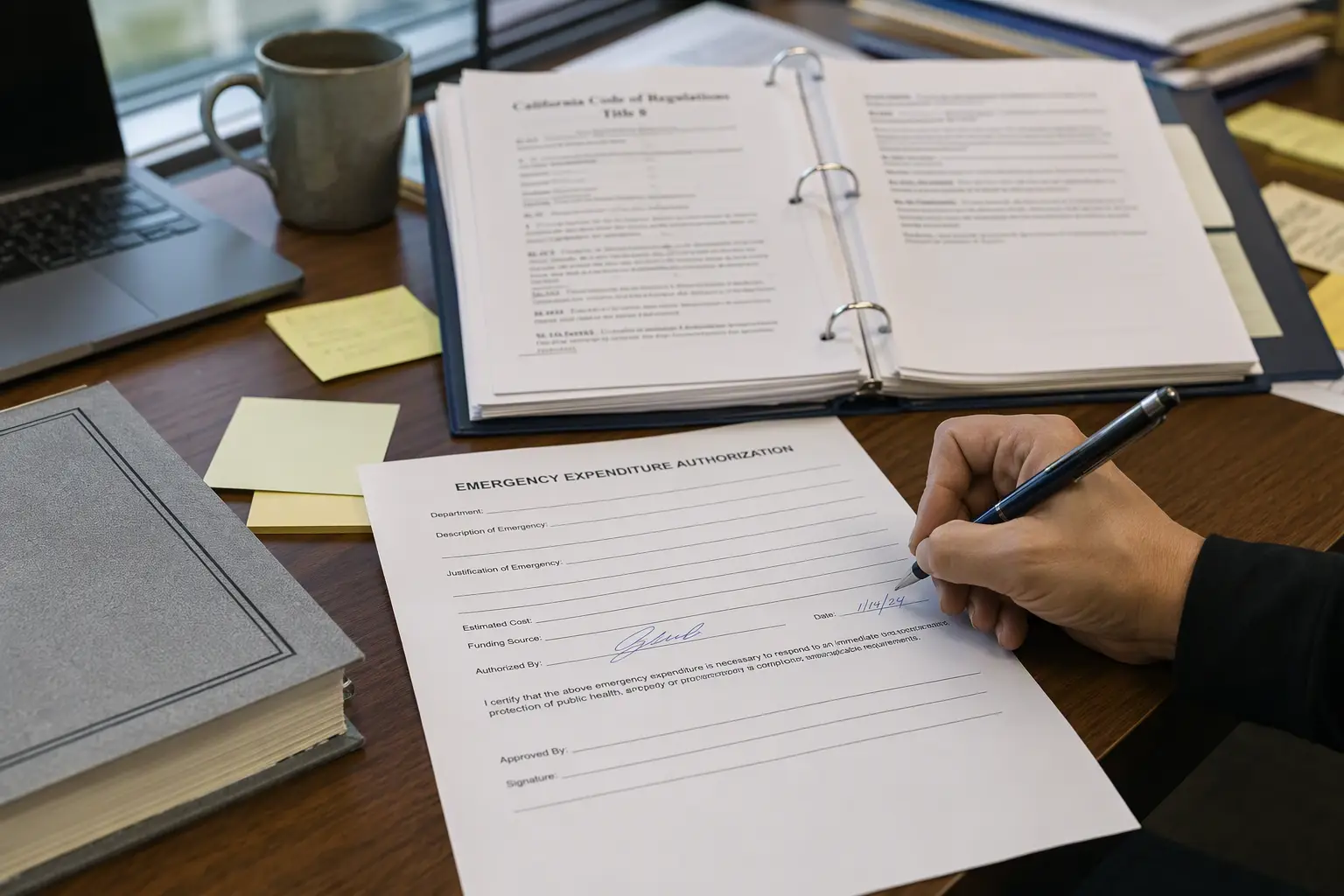
Emergency spending authority refers to the legal or administrative mechanism that allows a government entity, public agency, or private organization to bypass its standard procurement, bidding, or budget-approval process when elevator failure creates an immediate safety risk or service disruption. In practice, this means a public works director, city manager, or facilities executive can authorize an unbudgeted repair contract without the normal board or council approval cycle.
For California public agencies—cities, counties, transit authorities, school districts, and state departments—emergency procurement authority is typically established in each entity’s purchasing ordinance or administrative code. The elevator maintenance emergency itself, however, is still governed entirely by Cal/OSHA’s Elevator Safety Orders found in California Code of Regulations, Title 8, Sections 3000–3146, and the underlying statute at California Labor Code Sections 7300–7324.2. No spending mechanism, however urgent, grants permission to operate an unsafe elevator or to hire an uncertified contractor.
Does California Law Require Compliance Even in an Elevator Emergency?
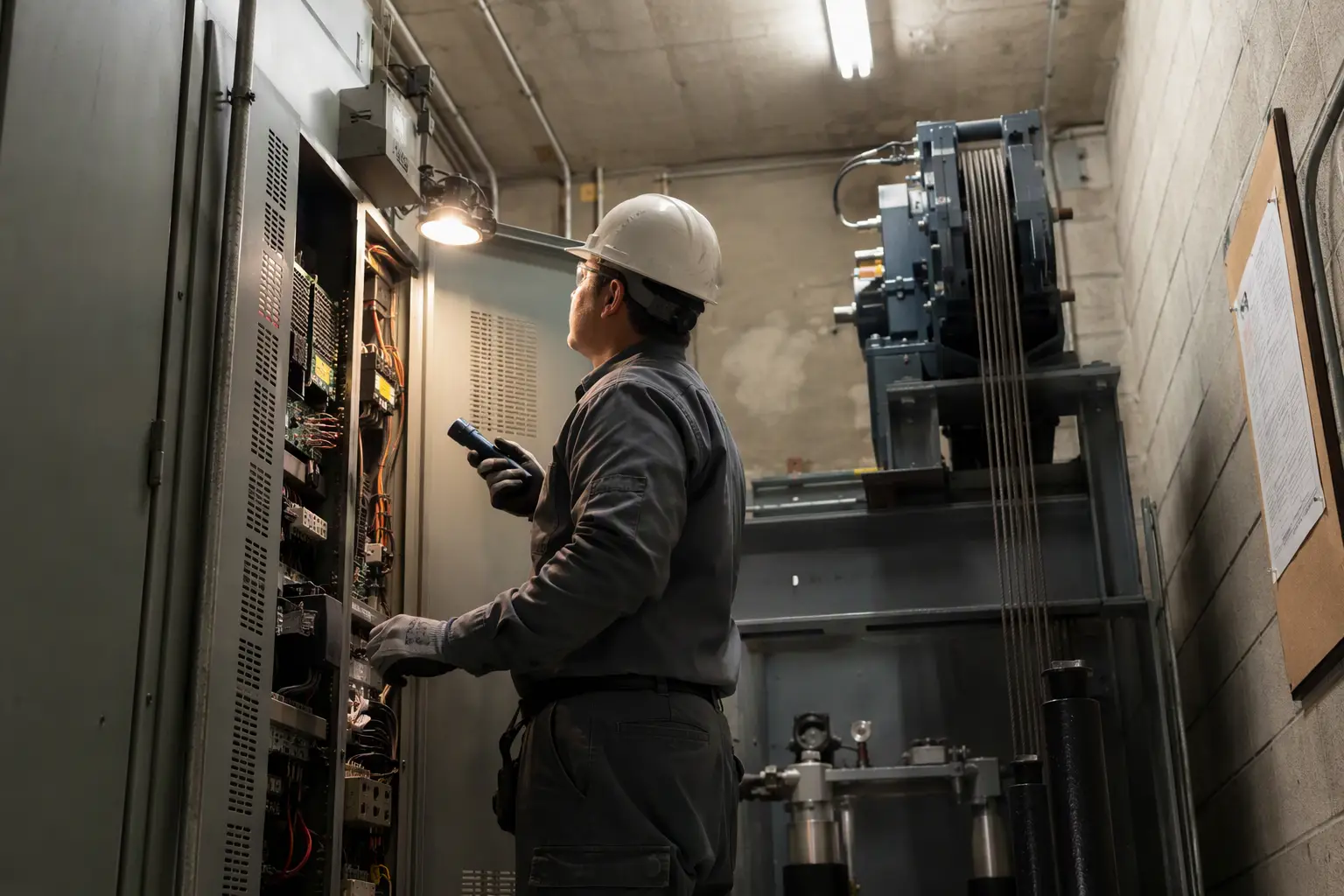
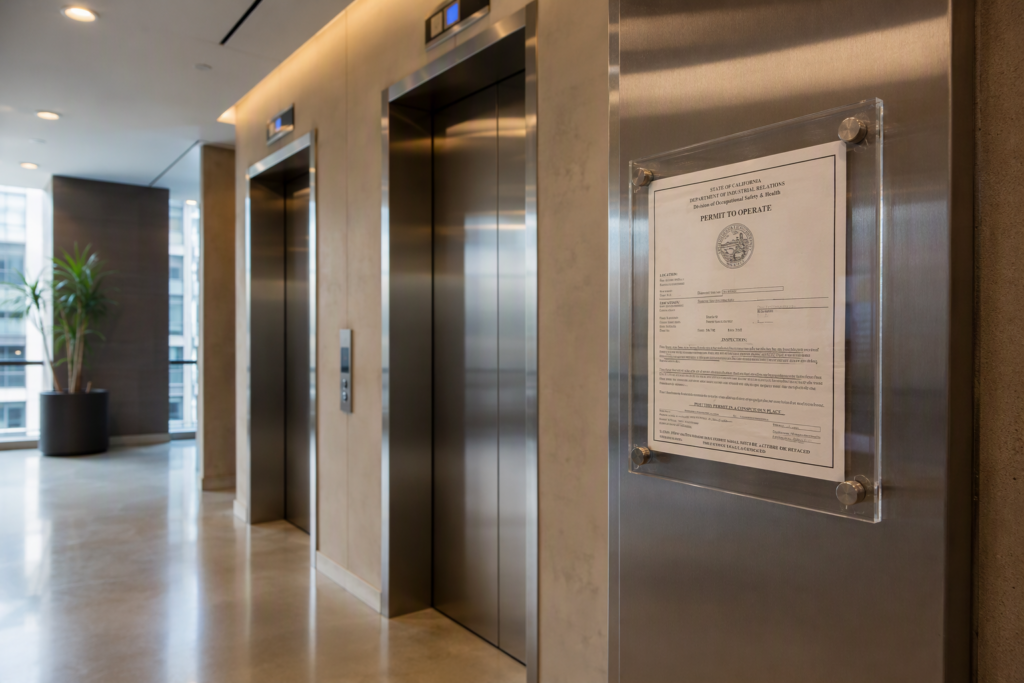
Yes, without exception. Under California Labor Code Section 7300 et seq. and the Elevator Safety Orders in Title 8 of the California Code of Regulations, no conveyance may be operated in California without a valid, current permit to operate issued by Cal/OSHA. This requirement does not pause during an emergency procurement cycle. Key compliance points that remain in force regardless of spending urgency include:
- Only a CQCC-certified company may perform maintenance, repair, or alteration work on an elevator in California.
- All field mechanics must hold an individual Certified Competent Conveyance Mechanic (CCCM) certificate issued by Cal/OSHA.
- Any material alteration requires a Cal/OSHA permit before work begins.
- An elevator that has been taken out of service due to an unsafe condition requires re-inspection and a renewed permit to operate before it is returned to service.
- If the elevator is located in the City of Los Angeles, the Los Angeles Department of Building and Safety (LADBS) runs its own elevator and conveyance inspection program, and its requirements apply in parallel.
What Triggers an Elevator Maintenance Emergency in California?
An elevator maintenance emergency is typically declared when a conveyance failure poses immediate risk to occupant safety, disrupts essential building function, or creates ADA accessibility obligations that cannot await a standard procurement timeline. Common triggers include:
- Complete entrapment of passengers requiring immediate extraction
- Hydraulic fluid leaks creating fire or environmental hazard
- Brake or door system failure flagged during annual Cal/OSHA inspection
- Electrical failures caused by flooding, power surge, or seismic activity
- Failure of the sole accessible elevator in a public building, which may trigger ADA obligations for program accessibility
- Cal/OSHA issuance of an Order Prohibiting Use (OPU) following an inspection
Any one of these conditions typically justifies emergency spending authority under a public agency’s procurement rules, while simultaneously requiring immediate engagement of a Cal/OSHA-certified contractor to restore compliance.
What Are California’s Certification Requirements for Emergency Elevator Contractors?
California’s certification framework for elevator contractors is among the most rigorous in the nation. Emergency spending urgency does not modify these requirements. According to Cal/OSHA’s Elevator Unit:
- CQCC certification: Every company that installs, alters, tests, maintains, repairs, or services elevators in California must be certified by Cal/OSHA as a Certified Qualified Conveyance Company. Applicants must submit a current C-11 Elevator Contractor license (issued by the California Contractors State License Board, CSLB) along with certificates of workers’ compensation and liability insurance.
- CCCM certification: Any individual who works on an elevator in California without direct supervision must hold a Certified Competent Conveyance Mechanic (CCCM) certificate from Cal/OSHA.
- Certificate duration: CQCC, CCCM, and conveyance inspector certificates are valid for two years. Renewal requires at least eight hours of continuing education.
- Inspection authority: Only State of California safety engineers and Certified Competent Conveyance Inspectors (CCCI) may perform elevator inspections in California—not the contractor’s internal staff.
When emergency spending authority is invoked, procurement staff should verify CQCC and C-11 status through the Cal/OSHA Elevator Unit and the CSLB before awarding an emergency contract. Hiring an uncertified contractor exposes the agency or owner to significant legal liability.
How Does the Cal/OSHA Permit Process Work During an Emergency?
California law requires a permit from Cal/OSHA before a conveyance is erected, installed, or materially altered. For emergency repairs that constitute a material alteration, owners and their CQCC contractors must initiate the permit process through the Cal/OSHA Elevator Unit as soon as possible—concurrent with the emergency procurement, not after it.
For non-alteration emergency maintenance (replacing like-for-like components within the scope of an existing maintenance contract), the permit to operate already in place generally covers the work, provided the elevator is returned to its permitted condition. However, if the elevator has been issued an Order Prohibiting Use, a re-inspection is required before the unit is returned to service, and the arranger of that reinspection is the elevator owner.
A critical planning note: California law requires every conveyance to be inspected at least once a year. Cal/OSHA may issue a permit to operate for up to two years for an elevator in safe condition that is covered by a full maintenance contract with a C-11 licensed elevator company. Facilities that maintain this two-year permit status through a full maintenance contract may find that emergency incidents are resolved with less administrative friction because the regulatory relationship with an approved contractor is already in place.
What Should a California Building Owner Do Immediately After an Elevator Emergency?
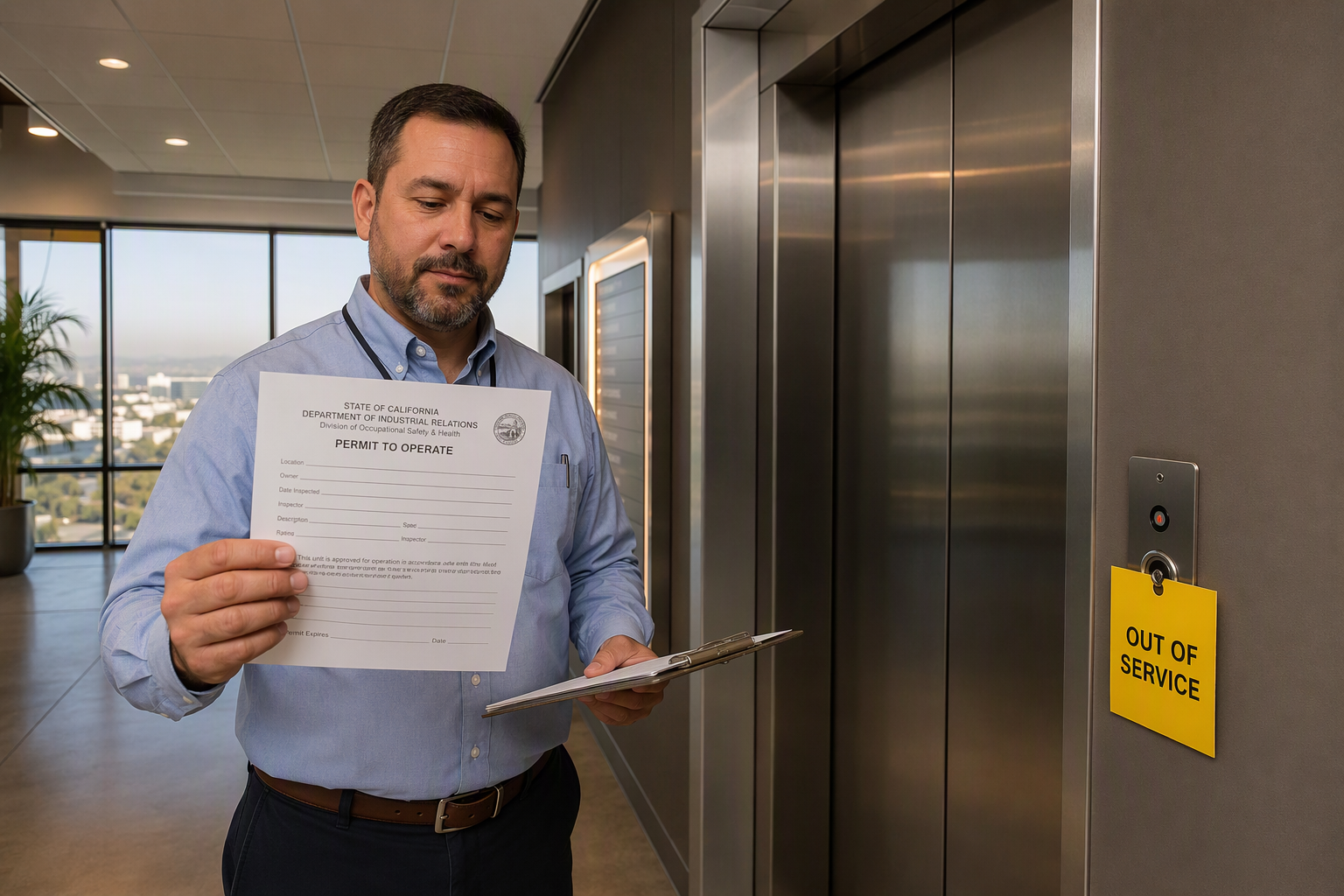
- Secure the elevator. Take the unit out of service immediately. Post “Out of Service” notices and disable access to prevent unauthorized use of an unsafe conveyance.
- Verify no passengers are trapped. Coordinate with building security and, if necessary, emergency services for passenger extraction. Do not attempt mechanical extraction without a qualified technician.
- Document the failure condition. Photograph the cab, machine room, and any visible damage or fault codes before any repair work begins. This documentation supports permit applications and insurance claims.
- Contact a Cal/OSHA-certified CQCC contractor. Confirm the company holds a current CQCC certificate and C-11 license before any work begins. Liftech Elevator provides certified elevator maintenance services throughout California.
- Invoke emergency spending authority if applicable. Notify the appropriate approving authority (city manager, board chair, facilities director) and document the emergency declaration per your organization’s procurement policy.
- Initiate a Cal/OSHA permit application if the repair is a material alteration. Contact the Cal/OSHA Elevator Unit to determine whether the scope of repairs requires a new or amended permit before work proceeds.
- Schedule re-inspection. After repairs are complete, arrange the reinspection with a Cal/OSHA safety engineer or CCCI. Remember: arranging reinspection is the elevator owner’s responsibility.
- Post the renewed permit to operate. Once issued, the permit to operate must be posted conspicuously in the elevator car before the unit is returned to service.
- Review ADA accessibility obligations. If the failed elevator is the only accessible route, consult your legal counsel regarding interim ADA program access obligations during the downtime period.
- Update maintenance contract terms. Evaluate whether a full maintenance contract with a C-11 licensed company would qualify the elevator for a two-year Cal/OSHA permit, reducing future emergency exposure.
How Does ADA Compliance Interact With California Emergency Elevator Situations?
Under the Americans with Disabilities Act, public entities and places of public accommodation are required to ensure program accessibility even when specific facilities are temporarily unavailable. When an elevator that serves as the primary accessible route fails, the building owner or public agency typically must provide an alternative accessible path or interim accommodation for the duration of the outage.
This ADA exposure is itself a driver of emergency spending authority, because the cost of failing to provide accessible service—including potential complaints, investigations, and litigation—can substantially exceed the cost of the emergency elevator repair. Facility managers should factor ADA program access risk into the justification documentation for emergency expenditure approvals.
What Code Standards Govern Emergency Elevator Repairs in California?
California has adopted the ASME A17.1/CSA B44, Safety Code for Elevators and Escalators, 2004 edition, for installation contracts signed on or after May 1, 2008 (Group IV Elevator Safety Orders). This adopted code, together with the California Code of Regulations, Title 8, Elevator Safety Orders (Sections 3000–3146), governs all maintenance, repair, and alteration work—including work performed under emergency spending authority.
Notably, California has proposed a Group V update to its Elevator Safety Orders that would incorporate portions of ASME A17.1-2019. The California Standards Board held a public hearing on this proposed update on June 18, 2026. As of the publication of this page, no effective date has been posted. Facility managers and procurement officers planning capital maintenance programs should monitor the Cal/OSHA Elevator Unit for updates, as the Group V adoption may affect component specifications and inspection requirements for future work.
What Types of Elevator Components Are Most Commonly Involved in Emergency Repairs?
While sourced failure-rate statistics by component type are not available for citation here, the types of elevator systems most commonly involved in emergency maintenance situations in California include the following, based on the scope of requirements addressed in the ASME A17.1 safety code and the California Elevator Safety Orders:
- Door operating systems: Door failures—whether a door that will not close, a door that closes too forcefully, or a door reversal sensor failure—are among the most frequent causes of emergency service calls and Cal/OSHA compliance issues.
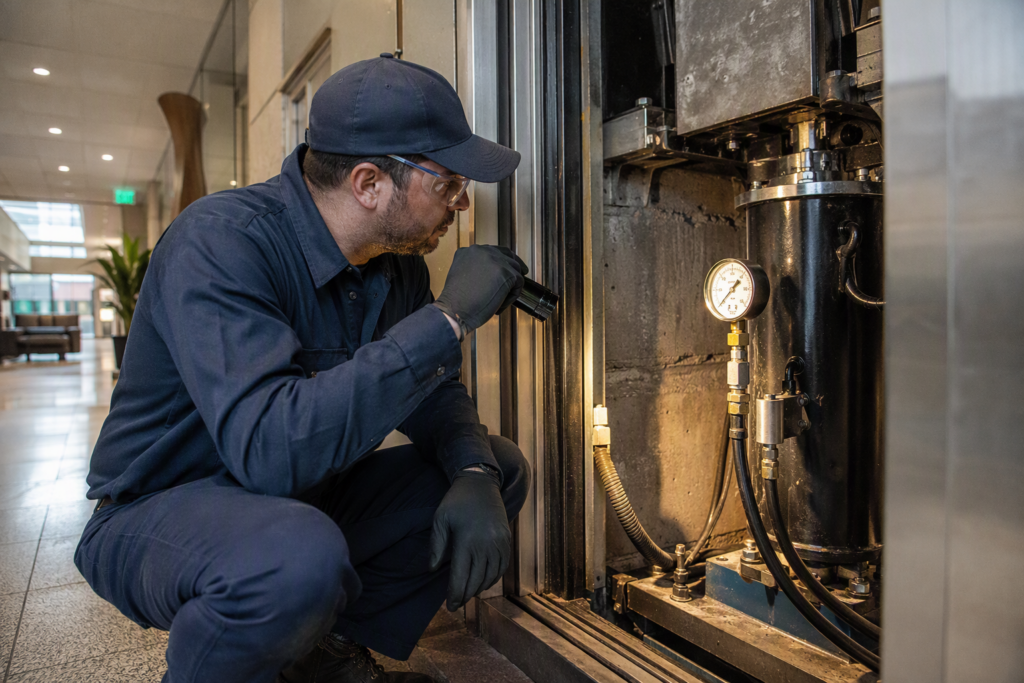
- Hydraulic systems: Hydraulic fluid leaks, pump failures, and valve malfunctions in hydraulic elevators can render a unit inoperable and may trigger environmental reporting obligations.
- Control systems and electrical panels: Aging control panels, relay failures, and software faults in microprocessor controllers are common triggers for unplanned outages in older California elevator inventory.
- Brake and safety gear systems: Brake failure is a life-safety event that typically results in an immediate Order Prohibiting Use by Cal/OSHA and requires re-inspection before return to service.
- Emergency communication systems: California’s Building Code and the ASME A17.1 code address in-car emergency communication, though the specific visual and audible two-way communication requirements under California’s current code edition remain under regulatory review. Liftech Elevator recommends confirming current requirements with the Cal/OSHA Elevator Unit.
What Role Does a Full Maintenance Contract Play in Reducing Emergency Spending?
A full maintenance contract with a C-11 licensed, CQCC-certified elevator company provides a structural advantage under California law: Cal/OSHA may issue a permit to operate for up to two years—rather than the standard one year—for an elevator in safe condition covered by such a contract. This extended permit reflects the reduced risk associated with continuous professional maintenance oversight.
Beyond the permit benefit, full maintenance contracts typically cover scheduled lubrication, adjustment, parts replacement, and safety testing on a defined cycle. This proactive approach reduces the likelihood that a component failure reaches the emergency stage. For public agencies managing emergency spending authority budgets, a full maintenance contract can shift elevator lifecycle costs from the emergency capital line to the predictable operations and maintenance budget—a structurally preferable outcome from a public finance perspective.
Liftech Elevator works with California building owners and facility managers to evaluate maintenance contract structures against their elevator inventory, permit status, and budget constraints.
What Are California’s Trends for Elevator Maintenance Compliance in 2025–2026?
Several qualitative trends are shaping how California building owners and public agencies approach elevator maintenance compliance and emergency spending in 2025 and 2026:
- Anticipated Group V code adoption: The proposed update to California’s Elevator Safety Orders to incorporate ASME A17.1-2019 in part is expected to affect modernization project specifications and may require additional safety features on older equipment. Facilities planning capital maintenance programs in 2026 and beyond should factor potential code changes into project scoping.
- Aging elevator inventory: A significant portion of California’s commercial and public elevator inventory was installed prior to the 2004 ASME code adoption. As this equipment ages, the frequency and cost of emergency repair incidents tends to increase qualitatively—a well-documented pattern in building infrastructure management.
- Workforce certification pressures: The two-year renewal cycle for CCCM and CQCC certifications, combined with continuing education requirements, creates ongoing workforce constraints in the California elevator services industry. Building owners invoking emergency spending authority should verify contractor certification currency before awarding work.
- Seismic risk: California’s seismic environment creates specific maintenance and inspection obligations under the Elevator Safety Orders. Emergency spending events following seismic activity often involve multiple elevator systems simultaneously, making pre-established full maintenance contracts with CQCC-certified companies especially valuable.
- ADA enforcement environment: Increased attention to elevator outage duration as an ADA program access issue is driving public agencies to treat elevator restoration as a higher-priority emergency expenditure than in prior budget cycles.
How Should Procurement Staff Document an Emergency Elevator Maintenance Award?
California public agencies invoking emergency spending authority for elevator maintenance should prepare documentation that addresses both the internal procurement exception and the external regulatory compliance record. A complete emergency procurement file for elevator work typically includes:
- Written declaration of the emergency condition, signed by the authorized approving official
- Description of the unsafe condition and the immediate risk to building occupants or public access
- Verification of the selected contractor’s CQCC certificate and C-11 license (printed from Cal/OSHA and CSLB records at the time of award)
- Proof of contractor’s current workers’ compensation and liability insurance
- Copy of or reference to the Cal/OSHA permit to operate for the affected conveyance
- Documentation of any Cal/OSHA Order Prohibiting Use, if issued
- Post-repair re-inspection scheduling confirmation
- Updated permit to operate, once issued, filed with facility records
This documentation record demonstrates both fiscal accountability and regulatory compliance—the two standards against which emergency procurement decisions are typically audited.
Sourced Regulatory Reference Table
| Regulatory Element | Requirement | Source |
|---|---|---|
| Elevator permit requirement | No elevator may be operated in California without a valid, current permit to operate | Cal/OSHA Elevator Unit; CA Labor Code §§ 7300–7324.2 |
| Inspection frequency | Every conveyance must be inspected at least once a year | Cal/OSHA Elevator Unit |
| Two-year permit eligibility | Cal/OSHA may issue a permit for up to two years for an elevator in safe condition covered by a full maintenance contract with a C-11 licensed company | Cal/OSHA Elevator Unit |
| Contractor certification | Must be a Cal/OSHA-certified CQCC; mechanics must hold CCCM certification | Cal/OSHA Elevator Unit |
| C-11 license | Required for CQCC certification; issued by the California Contractors State License Board (CSLB) | Cal/OSHA Elevator Unit |
| Certificate renewal | CQCC, CCCM, and inspector certificates last two years; renewal requires at least eight hours of continuing education | Cal/OSHA Elevator Unit |
| Adopted code | ASME A17.1/CSA B44, 2004 edition (Group IV), effective May 1, 2008, for contracts signed on or after that date | ASME A17.1/CSA B44; Cal/OSHA Elevator Unit |
| Proposed Group V update | Would incorporate ASME A17.1-2019 in part; public hearing held June 18, 2026; no effective date posted | Cal/OSHA Elevator Unit; ASME A17.1-2019 |
Frequently Asked Questions
Can a California public agency skip competitive bidding for emergency elevator repairs?
California public agencies typically have provisions in their purchasing ordinances that allow emergency procurement without competitive bidding when public safety or critical building function is at risk. However, these provisions govern the agency’s internal procurement process only. All work must still be performed by a Cal/OSHA-certified CQCC contractor holding a current C-11 license—the regulatory requirements imposed by the Cal/OSHA Elevator Unit and California Labor Code Sections 7300–7324.2 are not affected by the procurement method used to award the contract.
What happens if an elevator is operated in California without a valid permit to operate?
Operating an elevator in California without a valid, current permit to operate issued by Cal/OSHA is a violation of California Labor Code Sections 7300–7324.2. This exposes the building owner or operator to Cal/OSHA enforcement action. Following an emergency repair that required a conveyance to be taken out of service, the elevator may not be returned to operation until it has been re-inspected and a new or reinstated permit to operate has been issued and posted in the elevator car.
Who is responsible for scheduling the re-inspection after emergency elevator repairs?
Under California law, arranging the annual reinspection—and by extension, any reinspection required after an emergency repair or Order Prohibiting Use—is the elevator owner’s responsibility. The owner must coordinate with the Cal/OSHA Elevator Unit or a Certified Competent Conveyance Inspector (CCCI) to schedule the inspection. The CQCC contractor performing the repair cannot conduct the inspection on their own work.
Does California require a permit before emergency elevator repairs begin?
California law requires a permit from Cal/OSHA before a conveyance is erected, installed, or materially altered. Routine maintenance and like-for-like component replacement within the scope of an existing maintenance contract generally do not constitute material alterations, but scope determinations should be confirmed with the Cal/OSHA Elevator Unit. When in doubt, a CQCC-certified contractor should advise on whether the emergency repair triggers a permit requirement before work proceeds.
Can any licensed contractor perform emergency elevator work in California?
No. Only a company certified by Cal/OSHA as a Certified Qualified Conveyance Company (CQCC) and holding a C-11 Elevator Contractor license from the CSLB may perform elevator maintenance, repair, or alteration work in California. Individual mechanics must hold a Certified Competent Conveyance Mechanic (CCCM) certificate. Hiring a general contractor or uncertified elevator company—even under emergency procurement authority—creates significant legal liability for the building owner or public agency.
How does ADA factor into California elevator emergency spending decisions?
When a failed elevator is the primary accessible route for a public building or place of public accommodation, the building owner may have immediate obligations under the Americans with Disabilities Act to provide an alternative accessible means of reaching programs and services. This ADA exposure often justifies elevated emergency spending authority, as the cost of non-compliance can exceed the cost of the repair itself. Facility managers should document the ADA program access risk as part of the emergency declaration.
What is a Certified Qualified Conveyance Company (CQCC) and why does it matter in an emergency?
A CQCC is a company certified by Cal/OSHA to install, alter, test, maintain, repair, or service conveyances in California. Certification requires submission of a current C-11 contractor license and proof of workers’ compensation and liability insurance. In an emergency, verifying CQCC status before awarding work is essential—only a CQCC can legally perform the work, and the property owner bears responsibility for confirming this before authorizing repairs.
Does Los Angeles have additional requirements beyond Cal/OSHA for emergency elevator work?
Yes. The City of Los Angeles operates its own elevator and conveyance inspection program through the Los Angeles Department of Building and Safety (LADBS). Facility managers in Los Angeles should be aware that both Cal/OSHA and LADBS requirements may apply to their elevator maintenance activities, including emergency repairs. Specific current requirements should be confirmed directly with LADBS, as program details are subject to change.
How can a full maintenance contract reduce the risk of elevator emergencies in California?
A full maintenance contract with a C-11 licensed, CQCC-certified company provides proactive component inspection, lubrication, adjustment, and testing on a defined schedule. This ongoing oversight reduces the probability that minor component wear escalates into an emergency failure. Additionally, California law allows Cal/OSHA to issue a permit to operate for up to two years—rather than one year—for elevators in safe condition covered by such a contract, reducing the administrative burden of annual reinspection cycles.
What should facility managers know about California’s proposed Group V Elevator Safety Order update?
California has proposed a Group V update to its Elevator Safety Orders that would incorporate portions of ASME A17.1-2019. The California Standards Board held a public hearing on this proposed update on June 18, 2026. As of 2026, no effective date has been announced. Facility managers and capital planners should monitor the Cal/OSHA Elevator Unit for adoption updates, as the Group V rules may affect component specifications and modernization project requirements for future capital work.
Liftech Elevator is a data-driven elevator service provider operating throughout California, supporting building owners, public agencies, and facility managers in navigating Cal/OSHA compliance requirements, emergency repair coordination, and full maintenance contract structuring under California’s regulatory framework.
Contact Liftech Elevator for a free elevator assessment at 562-997-3639.
Need elevator service you can rely on? Liftech Elevator is ready to help.