Elevator Modernization vs. Replacement Cost: Complete Guide for Building Owners (2026)
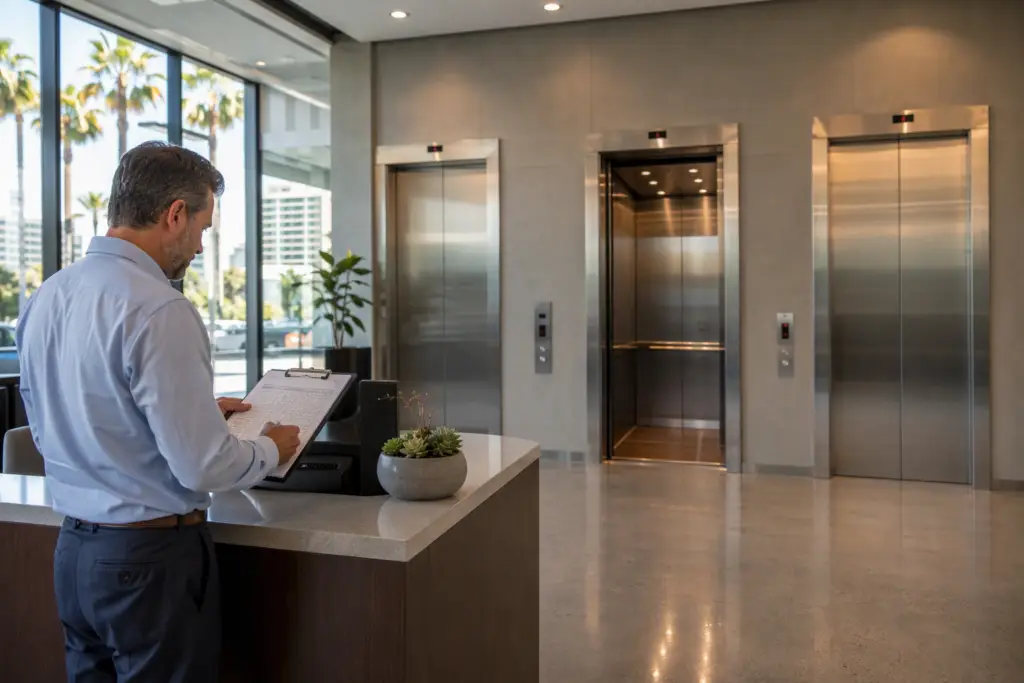
After 15+ years inspecting, servicing, and modernizing elevators across Los Angeles, Long Beach, Signal Hill, and Orange County, I’ve helped hundreds of building owners answer the same question: should I modernize or replace my elevator entirely? This guide breaks down every cost factor, compliance requirement, and decision point so you can make a fully informed choice in 2026.
What Is the Average Cost of Elevator Modernization vs. Full Replacement in 2026?
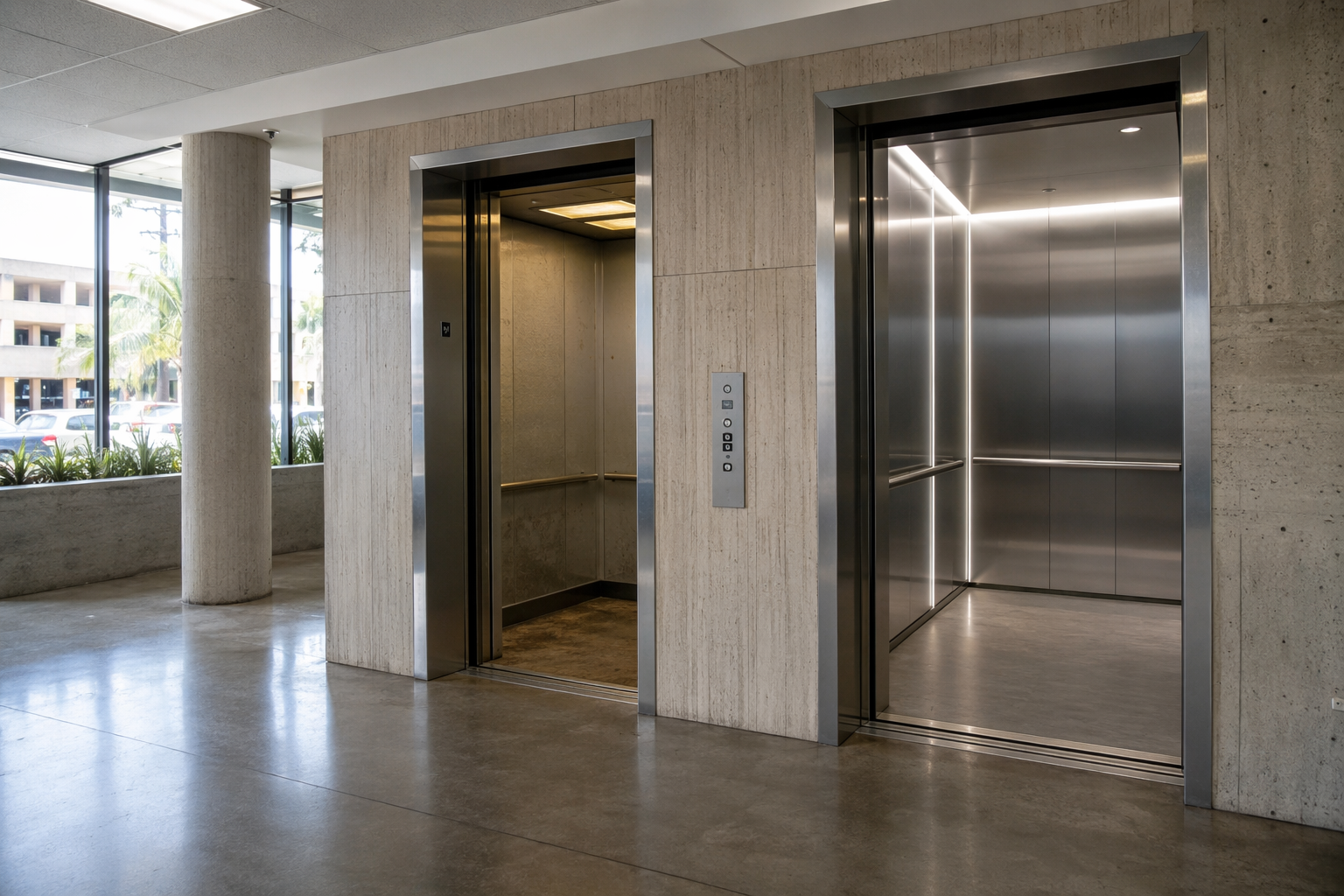
Elevator modernization averages $50,000–$200,000, while a complete replacement typically ranges from $150,000 to over $1,000,000 depending on building type, shaft configuration, and local labor rates in California.
Those ranges are wide for a reason — the gap between a partial controls upgrade on a 2-stop hydraulic unit and a full machine replacement on a 20-story traction elevator is enormous. Here’s a breakdown that puts real numbers behind the options:
| Project Type | Typical Cost Range (2026) | Downtime Estimate | Useful Life Added | Best For |
|---|---|---|---|---|
| Controls-Only Modernization | $20,000 – $60,000 | 2–4 weeks | 10–15 years | Elevators with functional drive systems |
| Hydraulic Modernization (Full) | $50,000 – $130,000 | 3–6 weeks | 15–20 years | Buildings under 5 stories |
| Traction Modernization (Partial) | $75,000 – $150,000 | 4–8 weeks | 15–20 years | Mid-rise buildings, aging MRL units |
| Full Cab + Mechanical Modernization | $100,000 – $200,000 | 6–12 weeks | 20–25 years | High-traffic commercial or residential |
| Complete Elevator Replacement | $150,000 – $1,000,000+ | 3–6 months | 25–30 years | Failed hoistway, structural issues, obsolete shaft |
In the Southern California market — specifically Los Angeles County, Long Beach, Signal Hill, and Orange County — labor and permitting costs run approximately 15–25% higher than the national average. That’s a critical factor to build into your budget before you accept any bid.
What Does Elevator Modernization Actually Include?
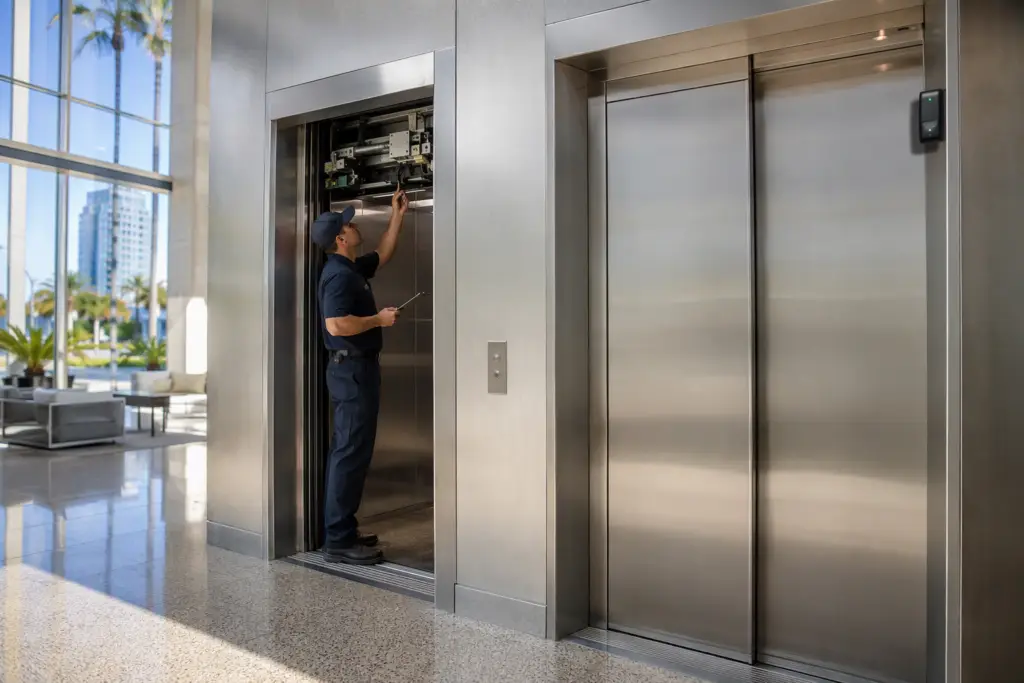
Elevator modernization refers to upgrading one or more major system components — controls, drive, door operators, cab finishes, or safety devices — without removing and rebuilding the entire hoistway and structural system.
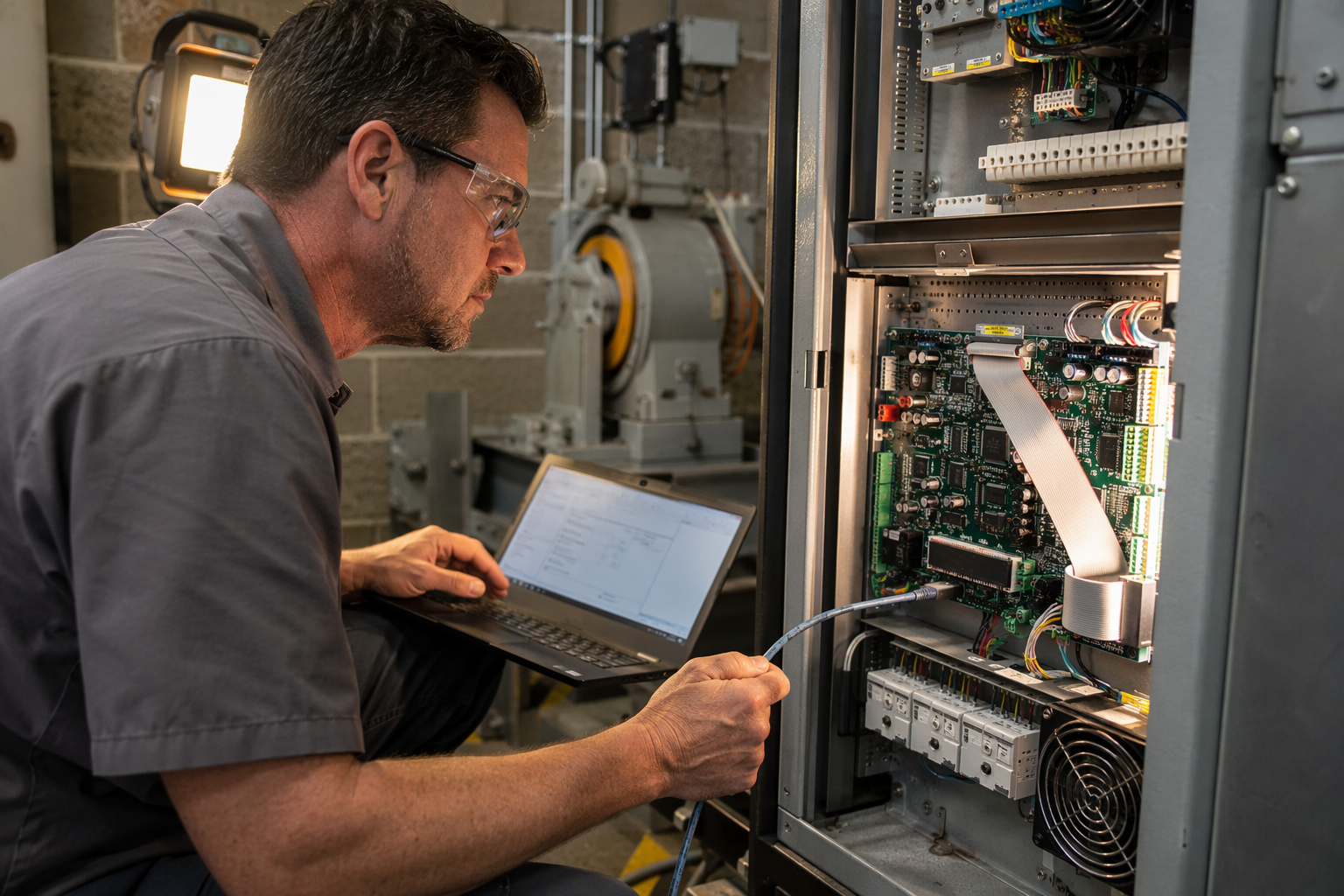
A modernization project can be as targeted as swapping out a relay logic controller for a solid-state microprocessor system, or as comprehensive as replacing the motor, drive, roping, door equipment, cab interior, and all safety devices simultaneously. Common modernization scopes include:
- Control system upgrades: Replacing aging relay logic or early microprocessor controls with modern programmable controllers that support diagnostics and remote monitoring
- Drive system replacement: Swapping DC motor drives for variable voltage variable frequency (VVVF) drives, which reduce energy consumption by 30–50%
- Door operator upgrades: Installing high-speed, code-compliant door operators with nudging and door protection features per ASME A17.1-2022
- Safety device updates: Adding or certifying safeties, buffers, governor systems, and pit ladder/lighting to current code
- ADA compliance upgrades: Cab controls, audible signals, braille, and leveling accuracy per ADA Standards for Accessible Design
- Cab interior renovation: New walls, flooring, lighting, and ceiling finishes to extend aesthetic life
When Does Full Elevator Replacement Make More Sense Than Modernization?
Full replacement is justified when the hoistway structure is compromised, the elevator has exceeded 40+ years of service with multiple failing systems, or when the total modernization cost exceeds 70–80% of replacement cost.
This is the decision point where I’ve seen building owners make expensive mistakes in both directions. Paying $180,000 to modernize a unit that will require another $80,000 in structural hoistway repairs within five years is not sound economics. On the other hand, I’ve seen property managers spend $600,000 replacing an elevator that needed a $90,000 controls and drive modernization.
Replacement is typically the right call when:
- The hoistway pit has chronic flooding or structural concrete deterioration
- The machine room ceiling height doesn’t meet current California Building Code clearances
- The elevator capacity is fundamentally mismatched to building occupancy (e.g., a 1,500 lb. unit in a building that now requires ADA-compliant 2,500 lb. minimum)
- Obsolete overhead traction equipment creates unrepairable crane/sheave clearance violations
- The cab platform is warped, out of plumb, or structurally damaged
What Are the California-Specific Code Requirements That Affect Modernization Cost?
California requires elevators to comply with the California Elevator Safety Construction Code (Title 8, CCR), which adopts ASME A17.1 with state amendments, and any modernization project triggers a full compliance review of the existing installation.
This is the piece that surprises most building owners. In California, when you pull a permit for a modernization — which is required for any substantial component replacement — the Division of Occupational Safety and Health (Cal/OSHA) elevator unit inspects the entire elevator, not just the modernized components. This means hidden deficiencies get surfaced and must be corrected.
Common compliance costs that get added to California modernization projects include:
- Pit ladder and emergency lighting upgrades (required per Title 8 §3130)
- Car top electrical outlet and lighting (ASME A17.1 Rule 2.2.3)
- Governor rope replacement if stretch or condition is borderline
- Fire service Phase I and Phase II recall system testing and updates per NFPA 72
- Seismic switch compliance (California-specific requirement not in base ASME code)
Budget an additional $5,000–$25,000 for code compliance items discovered during the permit inspection process in LA County, Long Beach, and Orange County jurisdictions.
How Does ADA Compliance Factor Into Modernization vs. Replacement Cost?
Any modernization project that alters primary function areas of a commercial facility triggers ADA path-of-travel obligations, which can add $10,000–$50,000 in accessibility upgrades to your project scope.
Under the ADA Standards for Accessible Design (Sections 407 and 408 for elevators), a modernized cab must meet current standards for control height, tactile characters, audible signals, door timing, and leveling accuracy (within ±½ inch of floor level). If you’re modernizing a pre-1990 installation, anticipate the full list of ADA elevator requirements as a line item in your project cost.
What Is the ROI Timeline for Elevator Modernization?
Most modernization projects deliver return on investment within 5–8 years through reduced energy costs, lower maintenance frequency, decreased callback rates, and avoided replacement capital expenditure.
Here’s how I explain ROI to commercial property managers in Long Beach and Los Angeles: a 30-year-old hydraulic elevator with relay logic controls typically costs $18,000–$30,000 per year in service, callbacks, and energy. A fully modernized unit with VVVF drives and modern controls typically runs $6,000–$12,000 annually. At a $100,000 modernization cost, you’re looking at a 5–7 year payback — plus you’ve extended the equipment life by 20 years and dramatically reduced tenant complaints and liability exposure.
How Long Does Elevator Modernization Take Compared to Replacement?
A standard elevator modernization in California takes 4–12 weeks from permit issuance to final inspection, while full replacement typically runs 4–7 months due to equipment lead times, structural work, and multi-stage inspections.
In 2026, supply chain conditions have stabilized somewhat compared to 2022–2023 peaks, but traction drive components and custom cab panels still carry 8–14 week lead times. Budget your tenant communication plan around those realities. For buildings in Signal Hill or downtown Long Beach with single-elevator installations, elevator downtime logistics require careful planning — a reputable contractor like Liftech Elevator will provide a detailed shutdown schedule and phased work plan before the first permit is filed.
What Questions Should You Ask Before Getting a Modernization Bid?
Before accepting any elevator modernization or replacement proposal, you need specific answers about scope definition, permit responsibility, contingency allowances, and warranty terms.
- Who pulls and manages the permits? — The contractor must be a California-licensed elevator company and should handle all Cal/OSHA permit applications.
- What is NOT included in the base bid? — Ask for an explicit exclusions list. Hoistway painting, machine room electrical work, and structural repairs are frequently excluded and become costly change orders.
- What is the contingency budget for code compliance items discovered during inspection? — Any honest bidder will acknowledge this unknown; budget 10–15% above the base bid.
- What is the warranty on modernized components? — Industry standard is 12 months on parts and labor; some manufacturers offer 5-year warranties on new drive systems.
- Who manufactures the new controller? — Proprietary controls that require the same company for all future service create long-term dependency and cost exposure.
- What is the realistic downtime schedule? — Get a written milestone schedule with penalty clauses for delays caused by the contractor.
- Is the company IUEC-certified and California-licensed? — This is non-negotiable for permitted work in California.
What Are the Hidden Costs of Elevator Modernization in California?
Hidden costs in California modernization projects routinely include permit fees ($1,500–$6,000), machine room electrical upgrades, asbestos abatement in pre-1980 installations, and overtime labor for buildings that require off-hours work to minimize tenant disruption.
In Los Angeles County and Orange County, permit fees are calculated per project value and can reach $4,000–$6,000 for a $150,000 modernization. Additionally, buildings constructed before 1980 may contain asbestos in machine room flooring, pit walls, or original cab materials — abatement adds $3,000–$15,000 before any elevator work begins. Always request a hazmat assessment as part of your pre-bid process.
How Do You Choose Between Hydraulic and Traction System Modernization?
For buildings under 5 stories, hydraulic modernization remains cost-effective at $50,000–$130,000; for mid-rise and high-rise buildings, traction system modernization or replacement is the only appropriate choice, with costs starting at $75,000 and scaling with building height.
Hydraulic elevators in California face an additional compliance consideration: underground single-bottom tanks used in pre-1990 installations must be replaced or lined under California EPA requirements. If your hydraulic unit still has an original single-bottom underground tank, budget $15,000–$35,000 for tank replacement as part of any modernization. Above-ground submersible hydraulic units avoid this issue entirely — converting from a pit-mounted underground system to above-ground during modernization typically adds $20,000–$40,000 but eliminates a significant environmental liability.
What Does a Step-by-Step Elevator Modernization Process Look Like?
A complete elevator modernization follows a defined sequence of assessment, engineering, permitting, installation, and inspection stages that typically span 12–20 weeks from initial assessment to final certificate of operation.
- Initial assessment and condition survey: A certified technician evaluates all mechanical, electrical, and structural components to identify what can be retained and what requires replacement.
- Scope of work development: Engineering team defines the modernization scope, specifies equipment, and identifies all code compliance triggers based on current ASME A17.1 and California Title 8 requirements.
- Proposal and contract execution: Detailed written proposal with base scope, exclusions, contingency allowance, and timeline is reviewed and signed.
- Equipment ordering: Controls, drive systems, door operators, and cab materials are ordered — allow 6–14 weeks for delivery of major components in 2026.
- Permit application: California-licensed elevator contractor submits permit application to Cal/OSHA elevator unit; processing typically takes 2–4 weeks.
- Pre-shutdown preparation: Tenant notifications, temporary elevator arrangements (if applicable), and machine room preparation are completed.
- Demolition and removal: Existing components identified for replacement are removed and properly disposed of (including hydraulic fluid recycling per California environmental regulations).
- Installation: New equipment is installed per manufacturer specifications and engineering drawings.
- Contractor testing: Full load tests, safety device tests, and door timing verification are completed by the installing contractor prior to calling for inspection.
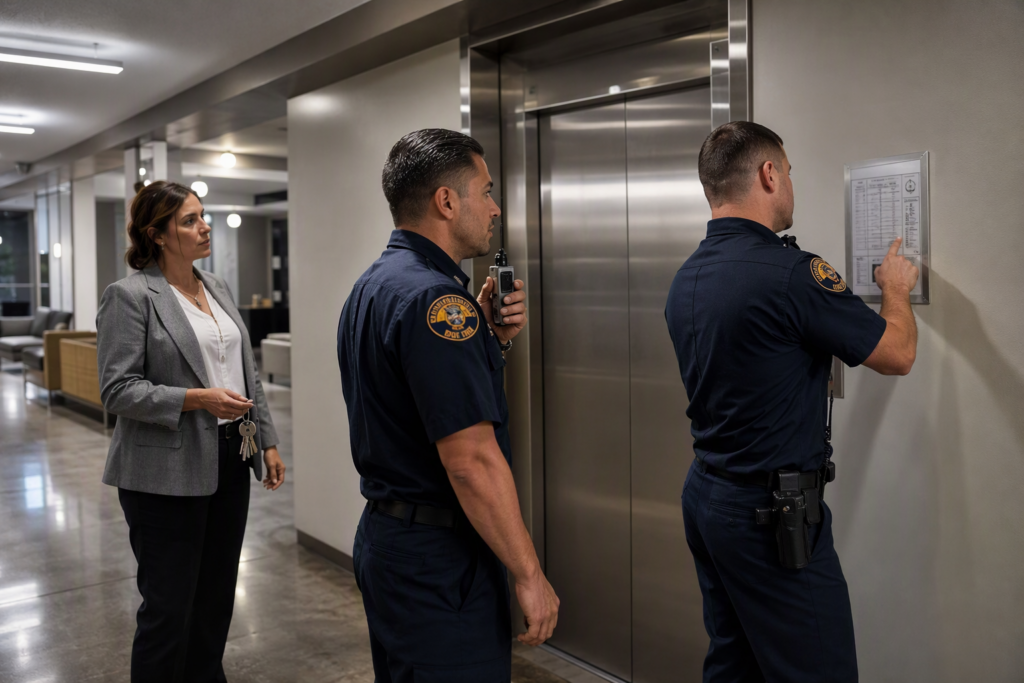
- Cal/OSHA inspection: State inspector performs witnessed load tests, safety device tests, and full code compliance review.
- Certificate of operation issued: Upon passing inspection, Cal/OSHA issues an updated Certificate of Operation — the elevator may not return to public service until this certificate is posted.
What Energy Savings Can You Expect From a Modernized Elevator?
Replacing a DC motor drive system with a modern VVVF (variable voltage variable frequency) drive typically reduces elevator energy consumption by 30–50%, translating to $1,500–$6,000 in annual electricity savings for a typical commercial building in Southern California.
With Los Angeles Department of Water and Power and Southern California Edison commercial rates continuing to rise in 2026, energy ROI has become one of the strongest arguments for modernization. Regenerative drive systems — which feed braking energy back into the building’s electrical grid — can push energy savings to 60–70% in high-traffic, multi-story applications. For a 10-story commercial building in downtown Los Angeles with two elevators running 12+ hours daily, this translates to $8,000–$15,000 in annual utility savings.
How Does Elevator Age Factor Into the Modernization vs. Replacement Decision?
Elevators under 30 years old with sound hoistway structures are almost always better candidates for modernization; units over 40 years old require a full system assessment to determine whether cumulative component replacement costs justify a comprehensive modernization or tip the economics toward full replacement.
A useful industry benchmark: if a licensed assessment finds that more than 70% of major components require replacement, the financial and logistical case for full replacement becomes compelling. The counterargument is that full replacement still requires the same structural hoistway, and if the shaft is sound, you’re paying for demolition and reconstruction that adds no structural value. Liftech Elevator’s assessment process specifically evaluates this threshold before recommending either path to building owners in the Los Angeles and Orange County markets.
What Financing Options Are Available for Elevator Modernization in California?
California building owners can finance elevator modernization through commercial property improvement loans, PACE (Property Assessed Clean Energy) financing for energy-efficient drive upgrades, SBA 504 loans for commercial properties, and phased service agreements that spread costs over multiple years.
PACE financing is particularly relevant for elevator modernization projects that include VVVF drives and regenerative systems, as these qualify as energy efficiency improvements under California’s AB 811 and SB 555 programs. PACE loans are repaid through property tax assessments over 5–25 years, require no upfront capital, and are non-recourse — making them an attractive option for commercial property owners in Los Angeles County and Orange County who want to modernize without depleting capital reserves.
What Happens If You Delay Elevator Modernization?
Delaying necessary elevator modernization in California increases the risk of Cal/OSHA shutdown orders, tenant liability claims, escalating emergency service costs, and potential insurance coverage disputes if an incident occurs on equipment with known deficiencies.
From a practical standpoint, relay logic control systems manufactured before 1995 are now essentially unsupportable — parts are sourced from salvage, lead times for components run 4–12 weeks, and field repair becomes increasingly improvised. Each deferred modernization year typically adds $3,000–$8,000 in elevated maintenance and emergency callback costs. More critically, California building owners have been successfully sued for elevator incidents where documented modernization recommendations existed and were not acted upon. Your risk profile increases measurably every year past the point where a qualified technician has recommended modernization.
How Do You Verify That an Elevator Contractor Is Qualified for Modernization Work in California?
In California, any company performing elevator modernization must hold a valid C-11 Elevator Contractor license from the California Contractors State License Board (CSLB) and employ IUEC-certified mechanics for all field installation work.
To verify a contractor’s credentials:
- Request the contractor’s CSLB C-11 license number and verify it at www.cslb.ca.gov
- Confirm the license is in active status with no disciplinary actions
- Verify that field mechanics hold current IUEC union certification or equivalent documented training
- Confirm the company is authorized to pull Cal/OSHA elevator permits in your specific jurisdiction (LA County, Long Beach, Signal Hill, and Orange County each have specific permit jurisdictions)
- Request proof of liability insurance and workers’ compensation coverage meeting California minimums
- Ask for references from modernization projects completed within the last 3 years in your geographic area
What Is the Difference Between a Partial and Full Elevator Modernization?
A partial modernization upgrades one or two subsystems (typically controls or door operators) while retaining functional existing components, costing $20,000–$75,000; a full modernization replaces all major systems simultaneously for $100,000–$200,000 but provides maximum life extension and a single comprehensive compliance review.
The case for full modernization over phased partial upgrades comes down to total cost of ownership and disruption frequency. Doing controls now, doors in three years, and drive in five years means three separate permit processes, three separate shutdown periods, three sets of tenant disruption, and total spending that often exceeds what a single comprehensive project would have cost. When the assessment shows that multiple systems are aging simultaneously, Liftech Elevator typically recommends a full scope modernization to consolidate both cost and downtime into one planned event.
How Does Elevator Modernization Affect Building Value and Insurance in California?
A documented, permitted elevator modernization typically increases commercial building valuation by $50,000–$200,000 through improved net operating income (lower maintenance costs), reduced insurance premiums, and enhanced marketability to commercial tenants who require reliable vertical transportation.
Insurance carriers in California have become increasingly sophisticated about elevator risk assessment since 2020. Some carriers now require proof of modernization for coverage renewal on installations over 25 years old, or exclude elevator incidents from general liability coverage if the unit has not been maintained and updated to current code. A properly documented modernization with Cal/OSHA Certificate of Operation provides demonstrable evidence of due diligence that strengthens your insurance position significantly.
What Local Permits and Inspections Are Required for Elevator Modernization in Los Angeles, Long Beach, Signal Hill, and Orange County?
All elevator modernization work in California requires a Cal/OSHA elevator permit and witnessed inspection; some jurisdictions including the City of Los Angeles and certain Orange County municipalities require additional local building department notification or secondary permits for structural or electrical work.
Permit timelines in 2026 in Southern California average 2–4 weeks for Cal/OSHA elevator permits under normal processing. Expedited processing is available for an additional fee in emergency situations. The final inspection by a Cal/OSHA elevator safety engineer is a mandatory witnessed test — the elevator cannot be returned to service and the Certificate of Operation cannot be issued without passing this inspection. Liftech Elevator manages the complete permit and inspection process for all projects in Signal Hill, Long Beach, Los Angeles, and Orange County, ensuring no certificate delays due to administrative errors or incomplete paperwork.
What Should You Do Right Now If Your Elevator Needs Modernization?
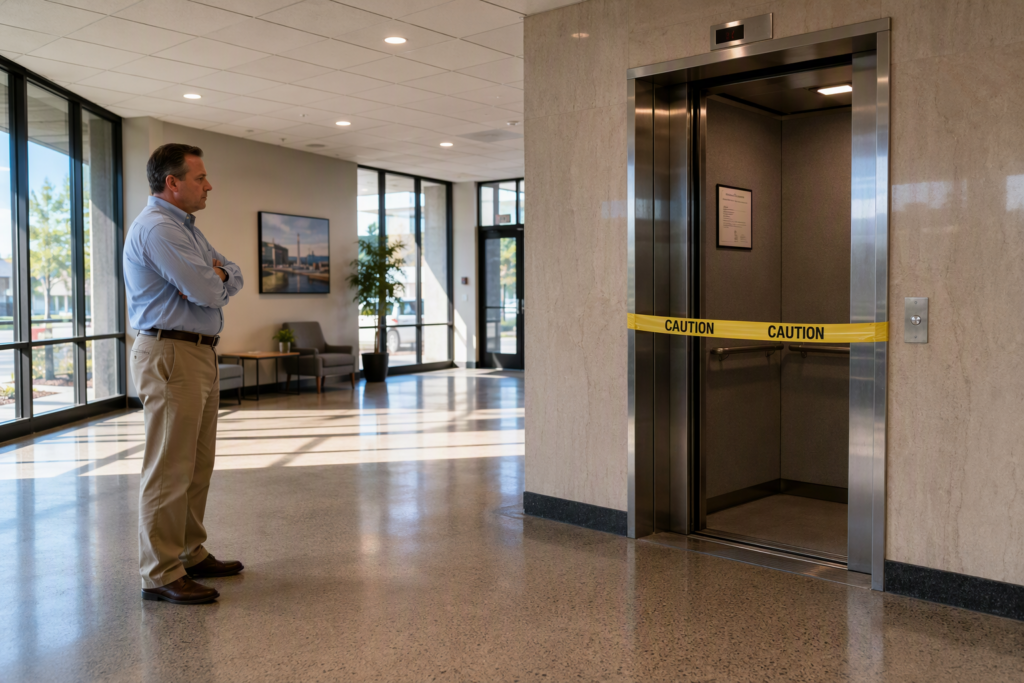
If your elevator is showing signs of aging — frequent callbacks, slow door operation, rough rides, or control failures — take these immediate steps to assess your situation and protect your liability position.
- Document all recent service calls and callback history — Retrieve your maintenance log for the past 24 months and identify the total cost and frequency of unscheduled repairs.
- Confirm your current Certificate of Operation is valid and posted — Operating an elevator without a valid Cal/OSHA certificate is a violation with significant fine exposure.
- Schedule a condition assessment with a California-licensed elevator company — A written assessment report establishes your knowledge baseline and begins the documented due diligence record.
- Request a detailed scope of work with explicit cost breakdowns — Require separate line items for base modernization, code compliance items, and contingency allowance.
- Review your current maintenance contract — Ensure you’re not locked into a proprietary agreement that limits your ability to obtain competitive modernization bids.
- Consult with your insurance carrier — Notify your broker of the planned modernization and confirm whether completion affects your premium or coverage terms.
- Establish a project timeline that accounts for equipment lead times — In 2026, ordering major components 10–14 weeks ahead of your planned shutdown window prevents costly schedule delays.
Get a Free Elevator Assessment from Liftech Elevator
Whether you’re weighing modernization against replacement or simply need an honest condition assessment of your existing equipment, Liftech Elevator provides certified evaluations with no sales pressure and no obligation. Our IUEC-certified technicians serve building owners throughout Signal Hill, Long Beach, Los Angeles, and Orange County, CA.
We’ll review your maintenance history, inspect all major systems, identify code compliance gaps, and give you a clear written recommendation — including realistic cost ranges for both modernization and replacement — so you can make a fully informed decision.
Contact Liftech Elevator for a free elevator assessment: 562-609-3478
Need elevator service you can rely on? Liftech Elevator is ready to help.