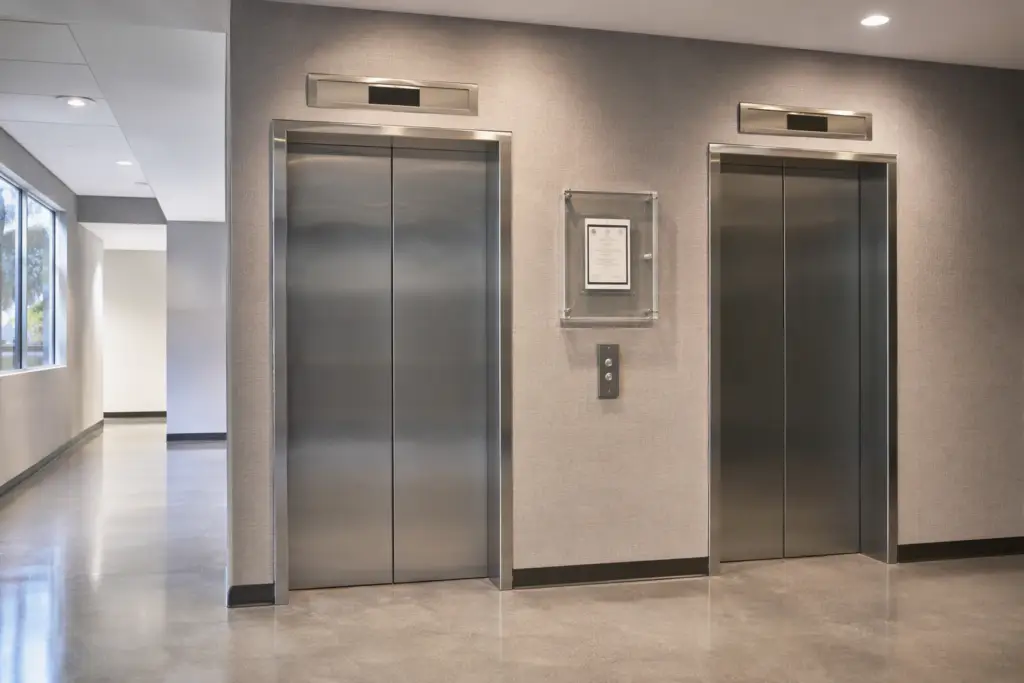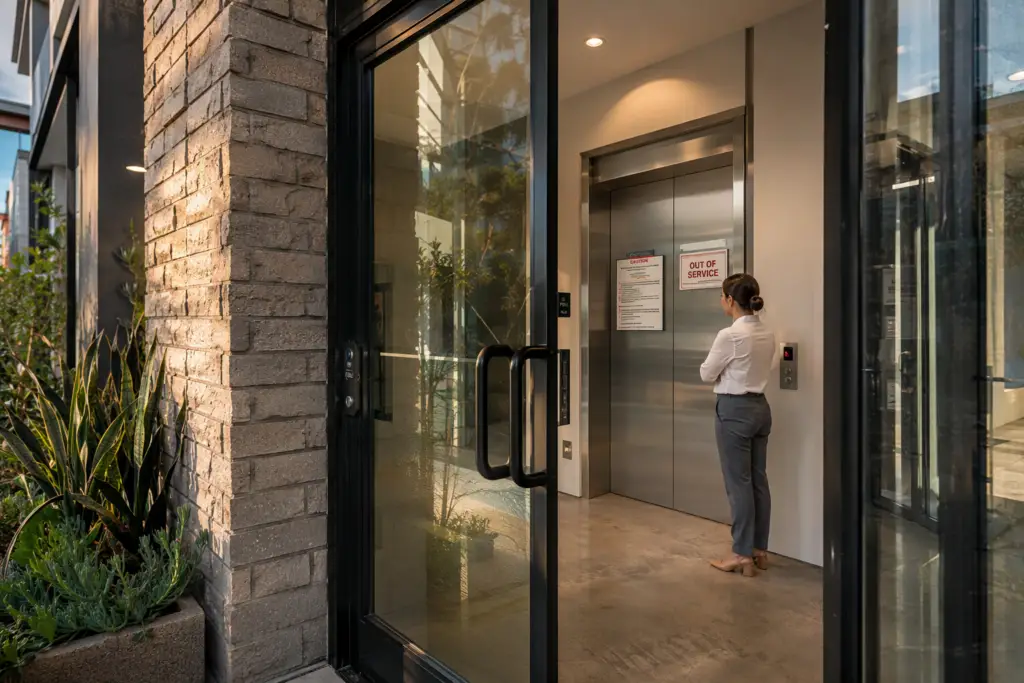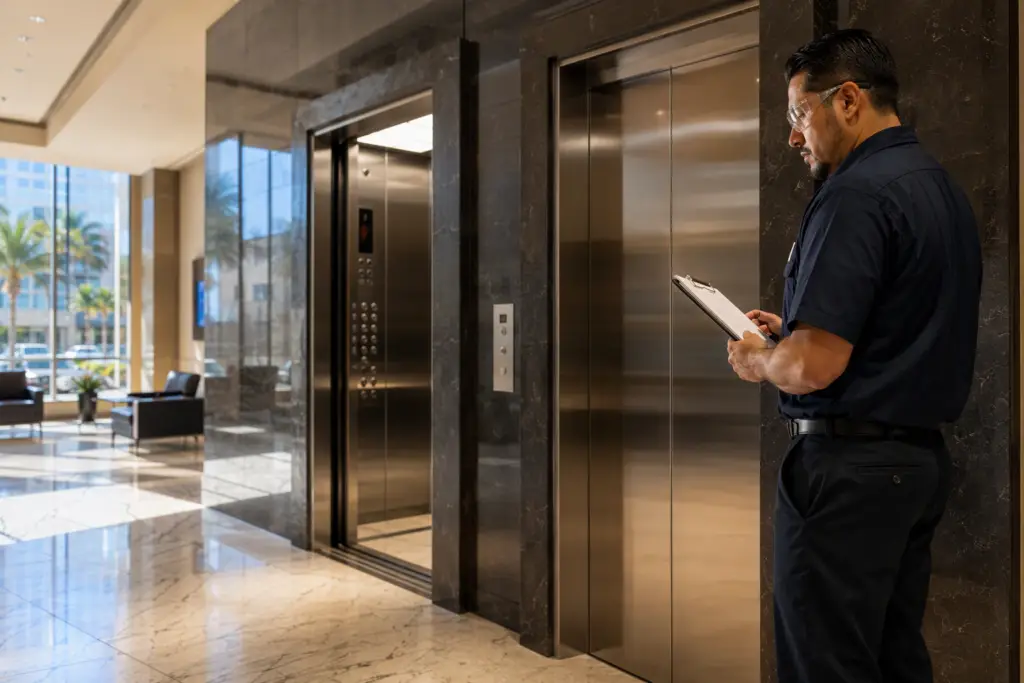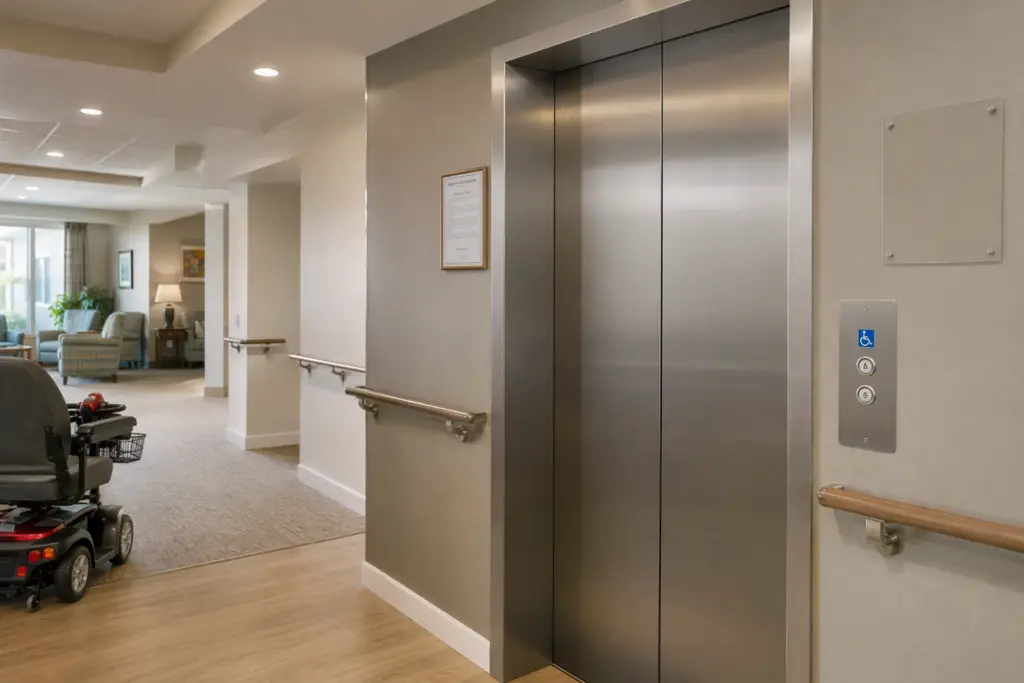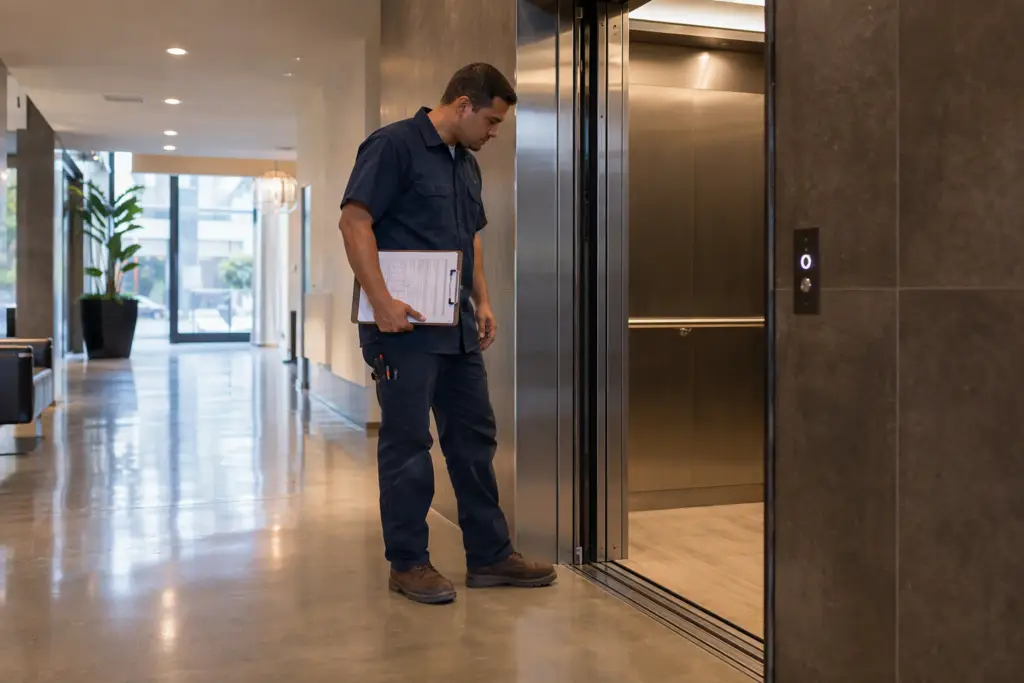
Elevator entrapments are more common than most building owners realize. According to the U.S. Bureau of Labor Statistics and industry data current through 2026, approximately 10,000 elevator entrapments occur in the United States every year. Knowing exactly who to call — and in what order — can be the difference between a calm, safe resolution and a dangerous improvised rescue attempt. This comprehensive guide answers every question you need to ask before, during, and after an elevator entrapment event.
Who is responsible for rescuing passengers trapped in an elevator?
Responsibility for elevator entrapment rescue is shared between local emergency services (911) and a licensed elevator mechanic or certified elevator service company — never building maintenance staff acting alone.
Under ASME A17.1/CSA B44 Safety Code for Elevators and Escalators, only trained and authorized personnel may perform a manual rescue operation on a stalled elevator. In California, the Division of Occupational Safety and Health (Cal/OSHA) and the California Department of Industrial Relations enforce these provisions. Building engineers and janitorial staff are explicitly prohibited from attempting to manually open elevator doors or move the cab without proper certification and equipment.
The rescue chain of contact should be: (1) Call 911, (2) Call your certified elevator service provider, (3) Notify building management to coordinate access and documentation. Liftech Elevator maintains 24/7 emergency dispatch for properties in Signal Hill, Long Beach, Los Angeles, and Orange County specifically because entrapments don’t follow business hours.
What is the correct order of contacts during an elevator entrapment?
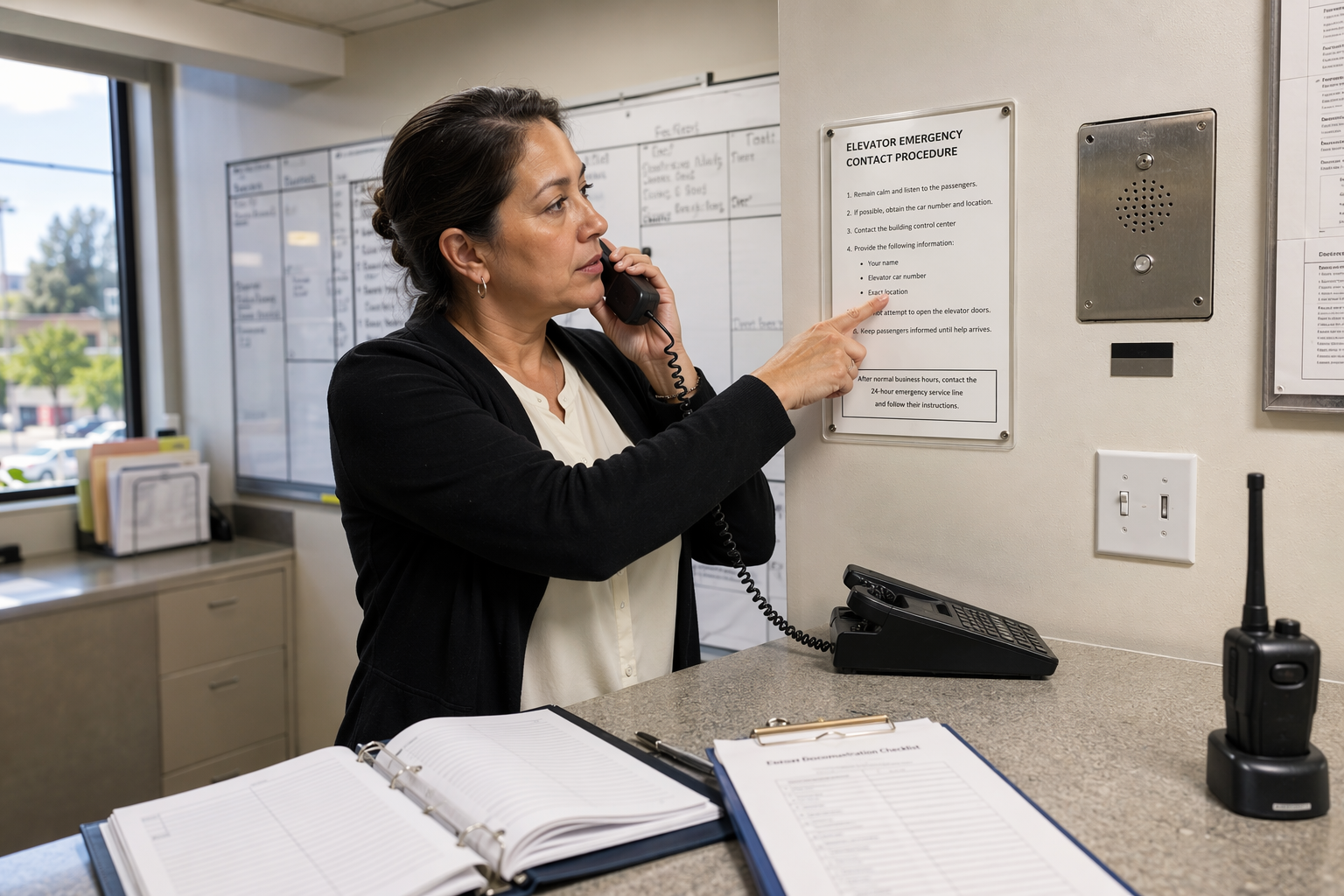
The correct order is: 911 first, certified elevator technician second, and building management third — this sequence prioritizes passenger safety while ensuring a code-compliant mechanical rescue.
- Call 911 immediately. Even if passengers seem calm, emergency responders are trained to assess for medical emergencies, panic attacks, or heat distress inside the cab. They can communicate with trapped passengers through the intercom while rescue is coordinated.
- Activate the elevator emergency phone. Per ASME A17.1 Rule 2.27.1.1, every elevator cab must contain an emergency telephone or two-way communication device that connects to a staffed monitoring center. Confirm this line is active and working.
- Call your licensed elevator service company. A certified mechanic can perform a controlled manual lowering or raising procedure to align the cab with a landing and safely open the doors. Call Liftech Elevator at 562-609-3478 for 24/7 emergency rescue response in the Southern California region.
- Notify building management or property supervisor. They will need to secure the elevator from further use, begin incident documentation, and alert any other occupants waiting for elevator access.
- Keep passengers informed and calm. Using the two-way intercom, reassure trapped passengers that help is on the way, provide an estimated arrival time if possible, and instruct them to remain inside the cab — never attempt to pry open doors or exit between floors.
- Do not attempt a DIY rescue. Unauthorized door release or manual cab movement without a certified mechanic can result in the elevator moving unexpectedly, creating a fatal shearing or fall hazard.
- Document the entrapment event after resolution. California requires that elevator entrapments be logged and, depending on severity, reported to the California Elevator Safety Program within the Department of Industrial Relations.
What do firefighters do during an elevator rescue and when should they be involved?
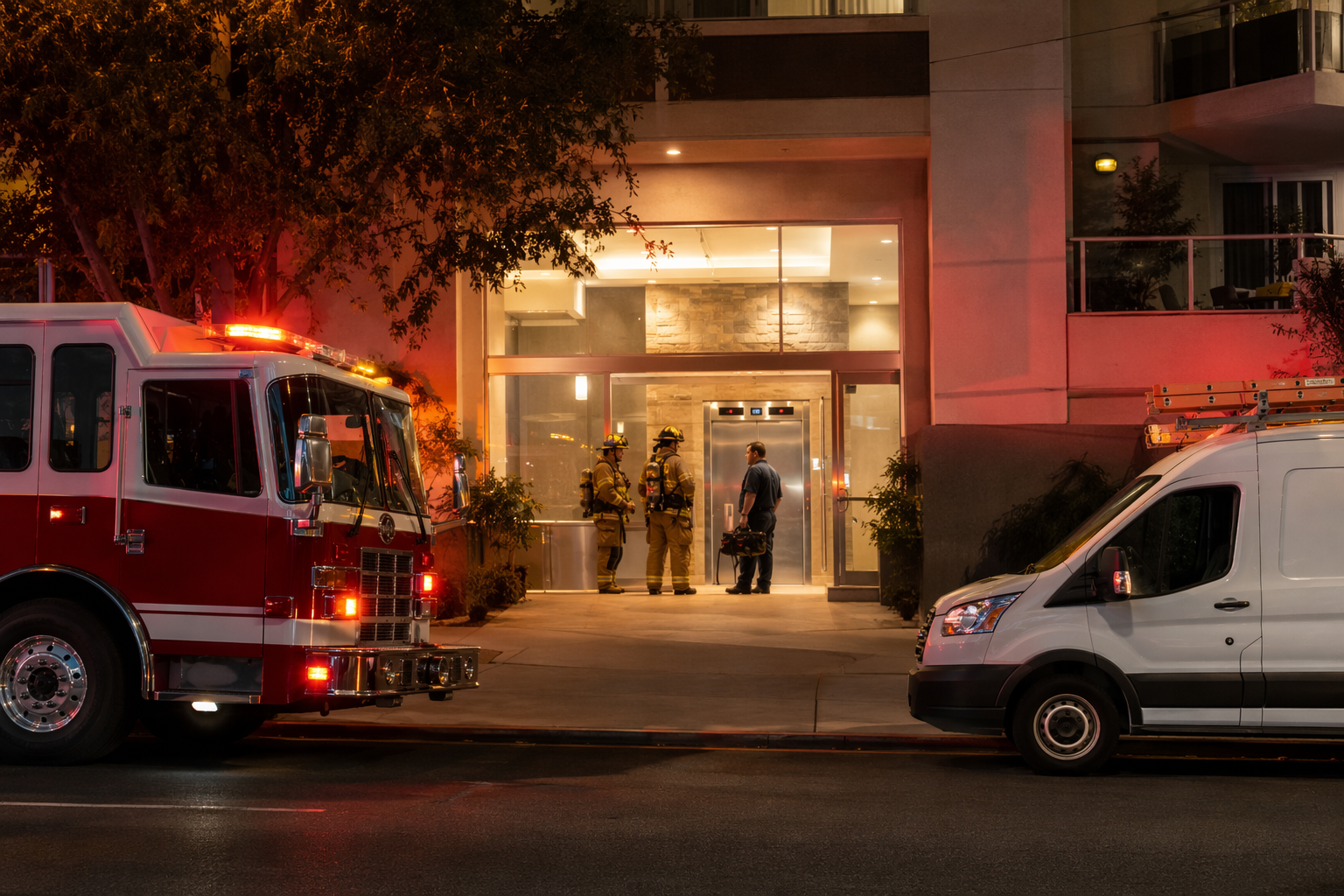
Firefighters are trained in emergency elevator operations and should always be dispatched via 911 when passengers are trapped — they can communicate with occupants, assess medical needs, and in some jurisdictions assist with manual cab release while waiting for a certified mechanic.
Under ASME A17.1 Section 2.27.3, elevators manufactured after 1993 are required to have firefighter emergency operation (also called Phase I and Phase II operation). Firefighters are trained to use these systems. However, their role is primarily to stabilize the scene and assist passengers — not to perform the mechanical repair that caused the entrapment. Once a certified elevator mechanic arrives, the mechanic takes over the technical rescue operation.
In high-rise buildings in Los Angeles and Long Beach, firefighters may arrive within 5–8 minutes. Having a service contract with a local provider like Liftech Elevator means a certified technician can often arrive within 60–90 minutes for emergency calls, minimizing total entrapment time.
What are the legal requirements for elevator emergency communication systems in California?
California requires every elevator to have a two-way means of communication with a location outside the hoistway, per ASME A17.1 Rule 2.27.1.1 and California Code of Regulations Title 8, Section 3002.
As of 2026, these requirements specifically mandate:
- A telephone or other two-way communication device that does not require a coin to operate
- The communication device must connect to an emergency dispatch or monitoring center staffed 24 hours a day
- A sign indicating the location of the emergency telephone must be posted inside the cab
- The Americans with Disabilities Act (ADA) further requires that emergency communication systems be accessible to individuals who are deaf or hard of hearing, typically through a visual signal or TTY-compatible system
Buildings found in violation of these communication requirements face fines and potential permit suspension under California’s elevator safety enforcement program. Annual inspection of emergency phone systems is strongly recommended and often required as part of routine elevator maintenance contracts.
How long can passengers legally be trapped in an elevator before it becomes a regulatory violation?
There is no specific statutory time limit that defines when an entrapment becomes a regulatory violation, but ASME A17.1 and California regulations require building owners to have a documented emergency response plan that enables “prompt” rescue — industry standard is a target response time of 60 minutes or less.
While the code uses the word “prompt” without a precise minute threshold, Cal/OSHA investigators reviewing entrapment incidents will evaluate whether the building had: a valid service contract with a licensed elevator company, a working emergency communication system, documented emergency procedures posted at the elevator, and a response time consistent with the building’s risk profile and occupancy type. Entrapments exceeding two hours without a documented attempt to contact rescue services have resulted in regulatory citations and civil liability in California.
What should trapped elevator passengers do while waiting for rescue?
Trapped passengers should remain calm, use the emergency phone to communicate with responders, stay inside the cab, and never attempt to force open the doors or exit between floors.
- Press and hold the emergency alarm button — located on the elevator control panel — to alert building staff and monitoring centers.
- Use the emergency phone or intercom to speak directly with a monitoring center or 911 dispatcher. State your name, building address, and floor range if known.
- Stay away from the doors. Attempting to pry doors open can cause the elevator to move suddenly, creating a fall or crushing hazard.
- Do not attempt to climb out through the ceiling hatch. Elevator ceiling hatches are designed for emergency technician access from above, not for passenger self-rescue. Exits through the hatch onto a moving or unstable car roof are extremely dangerous.
- If someone in the cab has a medical emergency, communicate this to the 911 dispatcher immediately so paramedics are dispatched alongside the elevator rescue team.
- Keep children and elderly passengers calm by speaking reassuringly and, if available, using your phone’s light or a flashlight to reduce darkness-related panic.
- Conserve your phone battery after placing your emergency call — avoid streaming video or making non-emergency calls until rescue is confirmed.
Who is qualified to perform a manual elevator rescue?
Only an IUEC (International Union of Elevator Constructors)-certified mechanic or a licensed elevator technician authorized under California’s elevator safety regulations may perform a manual rescue — building engineers, security staff, and firefighters may assist but cannot independently operate the mechanical rescue system.
In California, elevator mechanics must hold a Certified Competent Conveyance Mechanic (CCCM) certification issued through the California Department of Industrial Relations. As of 2026, this certification requires a minimum of four years of apprenticeship under a journeyman mechanic, passage of a state-administered competency exam, and ongoing continuing education in ASME A17.1 code updates.
Attempting a manual rescue without proper certification exposes the building owner, property manager, and the individual performing the rescue to significant civil and criminal liability under California law.
What equipment does a certified technician use during an elevator entrapment rescue?
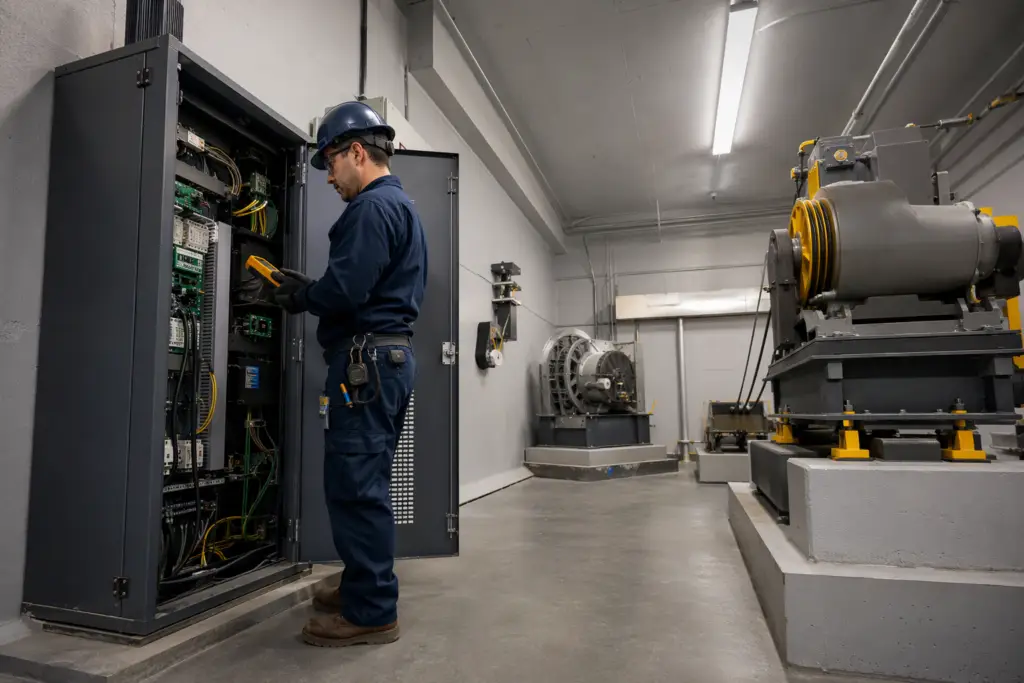
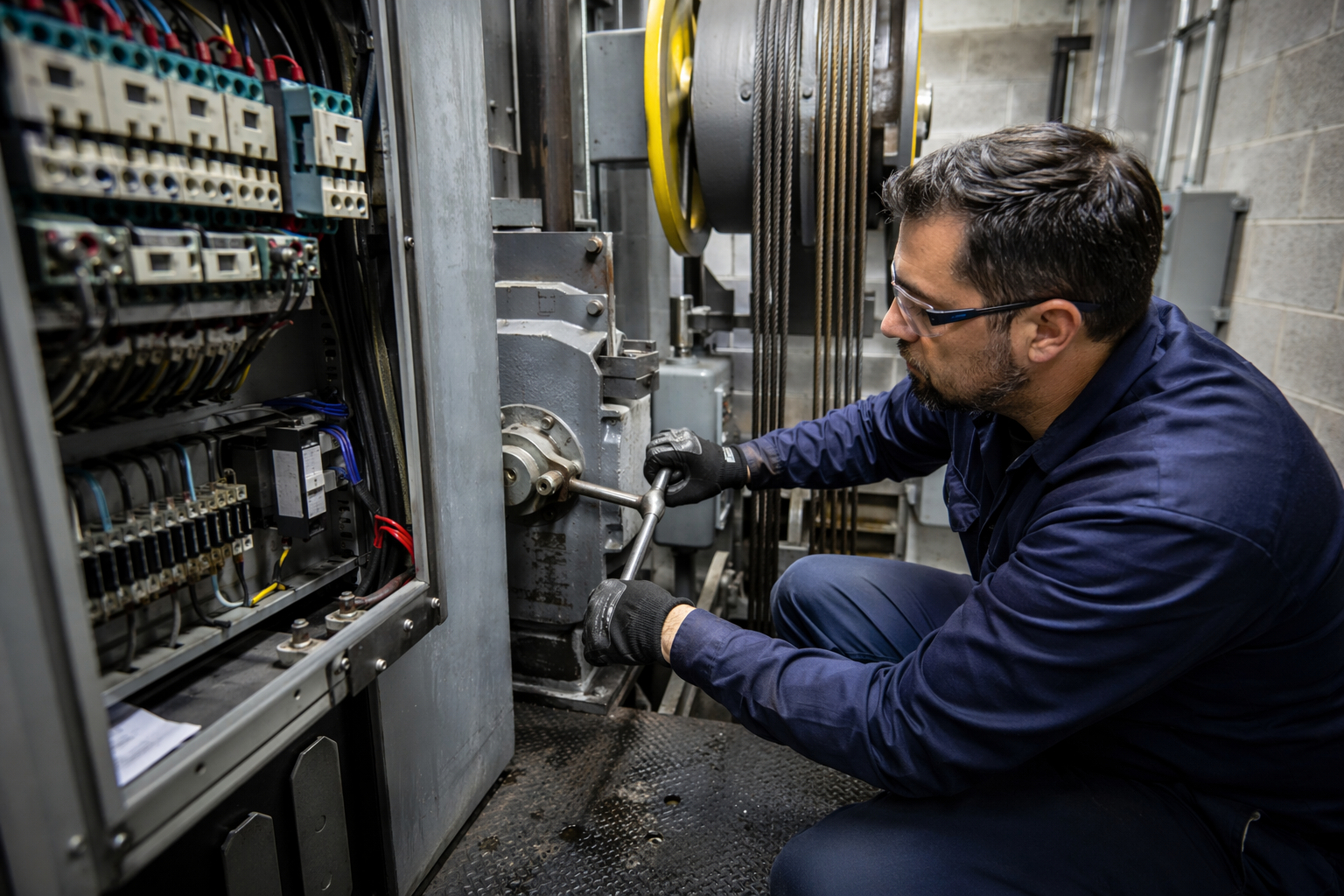
A certified elevator mechanic arrives with a machine room key, brake release tools, a handheld handwinding device (for gearless traction systems), a communications headset, and personal fall protection equipment rated for elevator hoistway work.
For hydraulic elevators — common in low-rise commercial buildings and residential properties in Orange County and Long Beach — the technician will typically use a manual lowering valve to slowly bleed hydraulic fluid and lower the cab to the nearest landing. For traction elevators, the mechanic uses the machine room controls to manually release the brake in controlled increments until the cab aligns with a floor landing. All of these procedures require direct visual confirmation of cab position relative to the landing before any door is opened.
What are the most common causes of elevator entrapments?
The most common causes are power outages, door mechanism failures, drive system malfunctions, and overloading — most of which are preventable through regular preventive maintenance compliant with ASME A17.1.
| Cause of Entrapment | Frequency (Industry 2026 Data) | Preventable with PM? | Typical Repair Time |
|---|---|---|---|
| Power outage / electrical failure | 32% | Partially (backup systems required) | 30–120 min |
| Door mechanism failure | 28% | Yes — monthly lubrication & inspection | 1–3 hours |
| Drive/motor system fault | 19% | Yes — annual load testing & inspection | 2–8 hours |
| Safety device activation (governor, buffer) | 11% | Yes — biannual safety tests required | 2–4 hours |
| Overloading by occupants | 6% | Partially (overload sensors required) | 15–30 min |
| Vandalism or misuse | 4% | No | 1–4 hours |
Door mechanism failures are the single most preventable category. A monthly inspection and lubrication program — which Liftech Elevator includes in all its standard maintenance contracts for properties in Signal Hill, Long Beach, Los Angeles, and Orange County — reduces door-related entrapment risk by an estimated 70% based on long-term maintenance data from the elevator industry.
Does ASME A17.1 require buildings to have a written elevator emergency response plan?
Yes — ASME A17.1 Section 2.27.3 and California Title 8 Section 3002 require building owners to maintain documented emergency procedures for elevator incidents, and these procedures must include the contact information for a licensed elevator service company.
A compliant emergency response plan should include: the address and unit number of every elevator in the building, the elevator serial numbers and model information, the name and 24/7 phone number of the contracted elevator service company, the location of the machine room key, and the name of the on-site emergency coordinator. This plan should be posted at the building engineer’s station and filed with the building’s overall emergency operations documentation. California’s OSHA enforcement program has increasingly cited buildings in Los Angeles County and Orange County for missing or outdated emergency elevator plans during routine inspections.
How often should elevator emergency systems be tested to prevent entrapment incidents?
California requires Category 1 tests annually and Category 5 tests every five years under ASME A17.1, and emergency communication systems should be function-tested monthly as part of routine maintenance.
Here is a breakdown of required test intervals:
- Monthly: Door safety edge and reopening device tests; emergency lighting check; emergency phone function test
- Annually (Category 1): Safety devices, buffers, governor, and oil levels on hydraulic units; full operational test by a certified mechanic
- Every 3 Years: Hydraulic pressure relief valve test
- Every 5 Years (Category 5): Full-load safety test, governor car and counterweight safety test, and oil buffer tests for traction elevators
Buildings that fall behind on these test intervals are operating in violation of California elevator safety regulations and face permit revocation by the California Elevator Safety Program, a division of the Department of Industrial Relations at dir.ca.gov.
What is the ADA requirement for elevator emergency communication accessibility?
The ADA requires that elevator emergency communication systems be usable by individuals who are deaf, hard of hearing, or speech-impaired — typically through a visual signal or text-based two-way communication alternative.
Under ADA Title III regulations and the 2010 ADA Standards for Accessible Design (Section 407.4.9), the emergency communication device must provide both audible and visible signals. For newer installations and major renovations, many jurisdictions including Los Angeles and Orange County now expect integration with IP-based communication systems that can route to a text relay service. Non-compliant emergency phones are among the most commonly cited ADA elevator violations found during accessibility audits in California commercial buildings in 2025 and 2026.
What should building managers do immediately after an elevator entrapment is resolved?
After resolution, building managers must take the elevator out of service, complete a written incident report, ensure a full mechanical inspection is performed before returning the elevator to service, and report the incident to California authorities if required.
- Lock out the elevator with a physical lockout-tagout device to prevent further use until it is cleared by a certified technician.
- Obtain a written inspection report from the elevator mechanic who performed the rescue, documenting the cause of the entrapment and any corrective actions taken.
- File an internal incident report documenting the date, time, duration, number of passengers affected, and the response sequence.
- Determine if state reporting is required. California requires reporting of serious elevator accidents to the California Division of Occupational Safety and Health (Cal/OSHA) within 8 hours if any injury occurred.
- Do not return the elevator to service until the contracted elevator company has certified in writing that the unit is safe to operate.
- Review and update your emergency response plan based on any gaps identified during the incident.
- Notify your insurance carrier if passengers experienced injury, distress, or filed any complaint, to protect the building owner from liability claims.
How much does an emergency elevator entrapment rescue service call cost?
Emergency after-hours elevator rescue service calls in Southern California typically range from $350 to $950 for the service call itself, not including any parts or repairs needed to return the unit to service — buildings with a full-service maintenance contract often have entrapment response included at no additional charge.
Cost variables include: time of day (after-hours and weekend rates are typically 1.5–2x standard rates), the type of elevator system (hydraulic vs. traction vs. MRL), the complexity of the entrapment cause, and whether parts need to be ordered. Buildings in Los Angeles, Long Beach, and Orange County without an active service contract frequently pay significantly more because they are billed at emergency walk-in rates. A preventive maintenance contract that includes 24/7 emergency response — like those offered by Liftech Elevator — eliminates the premium emergency call charge and ensures priority dispatch.
Can building maintenance staff unlock elevator doors during an entrapment?
Building maintenance staff should never attempt to manually unlock elevator doors during an entrapment — only certified elevator mechanics or fire department personnel with proper training may do so, as improper door release can cause catastrophic cab movement.
Elevator hoistway doors are equipped with an interlock mechanism that, per ASME A17.1 Section 2.12.2, prevents the door from opening unless the cab is within the landing zone (typically within 18 inches of the floor level). Using an unauthorized “drop key” or specialty tool without proper training to defeat this interlock while the cab is out of the landing zone can allow the door to open to an open shaft, creating an immediate fall hazard for passengers attempting to exit. In California, injuries resulting from unauthorized door release during an entrapment have resulted in multi-million dollar premises liability verdicts against building owners.
How can building owners in Los Angeles and Orange County prevent elevator entrapments?
The most effective prevention strategies are a code-compliant monthly maintenance program, annual Category 1 safety tests, modernization of aging control systems, and staff training on emergency response procedures.
Elevators older than 20 years have statistically higher entrapment rates due to aging electrical components, worn door operators, and obsolete control systems that lack modern fault detection. California’s elevator modernization incentive programs and ASME A17.3 (Existing Elevator Safety Code) set minimum standards for older units. Building owners in the Los Angeles and Orange County markets should request a full modernization assessment if their elevator is more than 15–20 years old. Key upgrades that directly reduce entrapment risk include: solid-state drive controllers, door reopening device upgrades, updated governor and safety device testing, and battery backup lighting and communication systems.
What is the difference between a Category 1 and Category 5 elevator test in California?
A Category 1 test is an annual no-load safety and operational test, while a Category 5 test is a full-load safety test performed every five years that physically tests the elevator’s ability to stop under maximum rated load — Category 5 is the highest-risk and most comprehensive inspection required by ASME A17.1.
Under ASME A17.1, the test categories for power elevators are as follows: Category 1 (annual, no load, visual and functional); Category 3 (every 3 years for hydraulic, tests relief valve); and Category 5 (every 5 years, full load, governor and safety device actuation test). In California, these tests must be witnessed by a California-licensed elevator inspector and the results filed with the state. Failure to complete Category 5 testing on schedule is one of the most common reasons elevator permits are suspended in Los Angeles County.
How do I find a licensed elevator company for emergency rescue service in Signal Hill or Long Beach, CA?
Look for an elevator company holding a current California Contractor’s License with C-11 (Elevator) classification and whose mechanics hold active CCCM certifications through the California Department of Industrial Relations — Liftech Elevator meets all of these requirements and serves Signal Hill, Long Beach, Los Angeles, and Orange County with 24/7 emergency dispatch.
When evaluating an elevator service company for emergency rescue capability, ask these specific questions:
- Do your mechanics hold current CCCM (Certified Competent Conveyance Mechanic) certification?
- What is your average emergency response time in my zip code?
- Do you carry workers’ compensation and general liability insurance of at least $2,000,000 per occurrence?
- Are you familiar with my specific elevator brand and model (Otis, Schindler, KONE, ThyssenKrupp, etc.)?
- Do you maintain a local parts inventory for common emergency repairs?
- Is 24/7 emergency response included in your maintenance contract or billed separately?
Verifying a contractor’s California C-11 license is free through the California Contractors State License Board at cslb.ca.gov.
What documentation should be kept on file to comply with California elevator regulations after an entrapment?
California requires building owners to retain the written mechanic’s report from any entrapment rescue, the elevator’s current inspection certificate, the maintenance log showing all service visits, and any incident reports — these records must be available for Cal/OSHA inspection at any time.
Specifically, the California Code of Regulations Title 8 requires: the current permit to operate (posted inside the elevator cab), the most recent inspection certificate, a log of all maintenance and repair work performed on the unit within the last three years, and records of all Category 1 and Category 5 tests. After an entrapment, the mechanic’s written report describing the cause, the rescue procedure used, and the corrective repairs made becomes a required part of the maintenance file. These documents must be produced within 24 hours of a Cal/OSHA request during a workplace safety investigation.
What are the signs that an elevator is at high risk of entrapment and needs immediate service?
Warning signs of high entrapment risk include leveling problems (cab stopping above or below the floor), door hesitation or failure to fully open or close, unusual noises from the machine room or cab, frequent nuisance shutdowns, and outdated or expired inspection certificates.
Any of the following symptoms should trigger an immediate call to a certified elevator technician rather than waiting for the next scheduled maintenance visit:
- The cab consistently stops 1–3 inches above or below the landing (mis-leveling)
- Doors take more than 3 seconds to begin closing after the call is made
- The emergency phone does not connect when tested
- The elevator shudders, jolts, or makes grinding or squealing sounds during travel
- The cab emergency lighting fails to activate during a power interruption test
- The inspection certificate posted in the cab is expired (check the date printed on the certificate)
- The elevator has not had a documented maintenance visit within the last 30 days for a high-traffic unit
In over 15 years of field experience, mis-leveling is almost always the first visible symptom before a door-related entrapment. If your elevator is not stopping flush with the floor, take it out of service and call your elevator service company immediately.
How does a service contract with an elevator company reduce entrapment liability for building owners?
A full-service maintenance contract shifts significant technical and regulatory compliance responsibility to the elevator company, documents the building owner’s good-faith safety efforts, and in most cases includes 24/7 emergency entrapment response — all of which are critical defenses in premises liability claims.
California courts have consistently held that building owners have a non-delegable duty to maintain elevators in a safe condition. However, documented evidence of a professional service contract with a licensed elevator company, combined with records showing regular inspections and prompt repair of reported deficiencies, significantly reduces a building owner’s exposure in personal injury lawsuits arising from elevator incidents. Insurance carriers for commercial real estate in Los Angeles and Orange County often require evidence of a current elevator service contract as a condition of coverage. A full-service contract with Liftech Elevator includes: monthly preventive maintenance visits, 24/7 emergency response, annual Category 1 test coordination, and complete maintenance documentation for your records.
Get Expert Elevator Entrapment Preparedness for Your Building
Don’t wait for an entrapment to find out your emergency response plan has gaps. Liftech Elevator provides 24/7 emergency rescue response, full-service maintenance contracts, and code compliance consulting for commercial and residential properties throughout Signal Hill, Long Beach, Los Angeles, and Orange County, CA.
Our IUEC-certified and California CCCM-licensed technicians are dispatched locally, carry parts inventory for all major elevator brands, and are fully familiar with California Title 8, ASME A17.1, and ADA compliance requirements.
Contact Liftech Elevator for a free elevator assessment.
Call us now: 562-609-3478
Available 24 hours a day, 7 days a week for emergency entrapment response and scheduled maintenance throughout Southern California.
Need elevator service you can rely on? Liftech Elevator is ready to help.