How to Get a Quote for Modernizing Multiple Elevators at a Property
To get a quote for modernizing multiple elevators at a property, reach out to a Certified Qualified Conveyance Company (CQCC), provide basic information about each unit, and schedule an on-site assessment. A reputable elevator contractor will inspect every elevator individually, identify code deficiencies, and deliver a consolidated proposal covering equipment, labor, permitting, and a realistic project schedule.
What Is a Multi-Elevator Modernization Quote and How Does It Differ from a Single-Unit Quote?
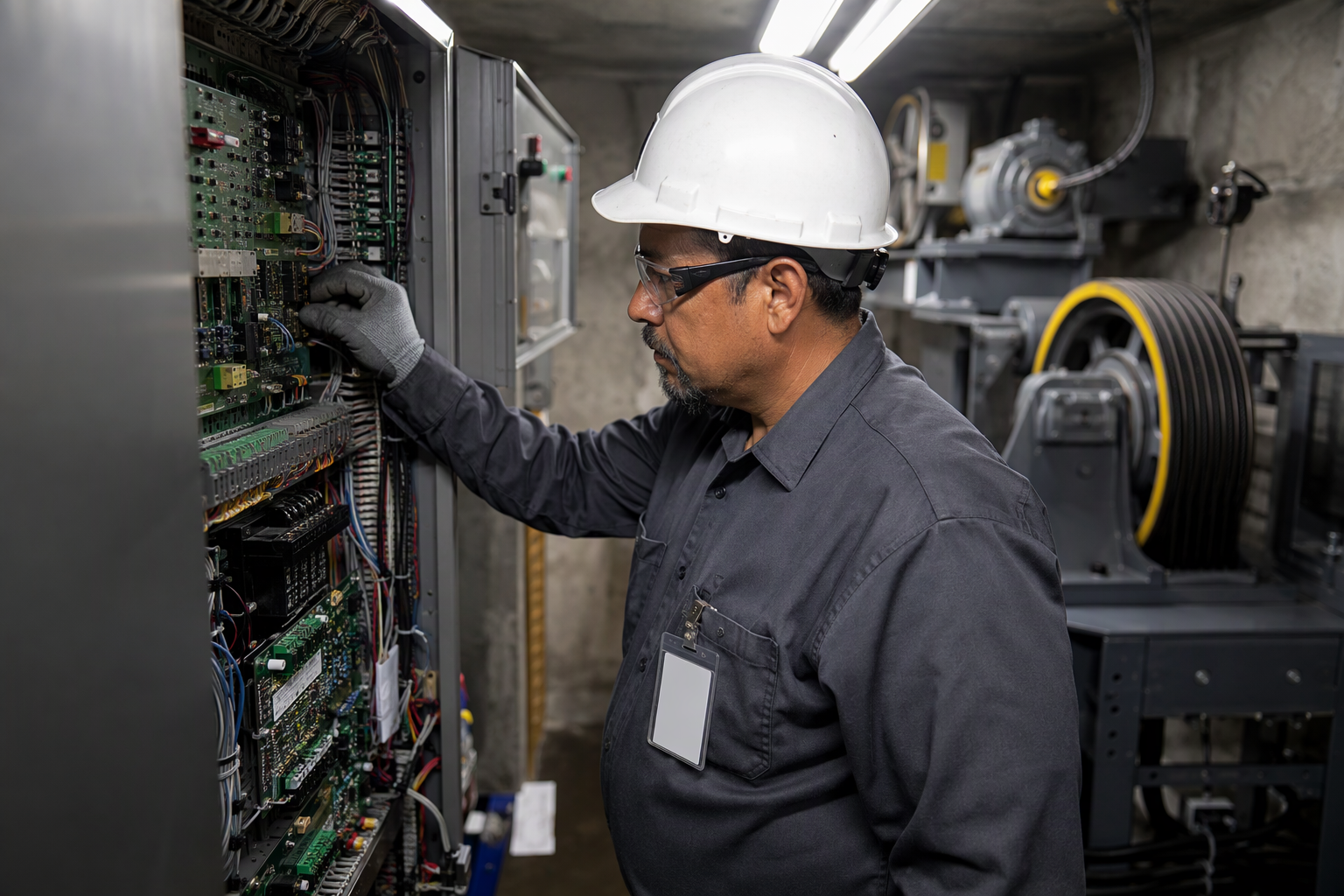
A multi-elevator modernization quote is a consolidated proposal that evaluates every elevator at a property and presents unified pricing, scheduling, and compliance recommendations across all units.
When only one elevator requires modernization, the scope is relatively straightforward: assess one machine room, one controller, one cab, and one set of door operators. When a property has two, four, ten, or more elevators, every dimension of the project multiplies. Equipment lead times must be staggered or batched. Cal/OSHA permit applications must be filed for each unit under California Labor Code Sections 7300–7324.2. Downtime must be sequenced so that the building retains vertical transportation capacity throughout construction.
A consolidated quote also captures economies of scale. Contractors can batch material orders, assign the same crew to the entire building, and negotiate better delivery windows when multiple controllers or drive packages ship together. Property managers and facility directors should request that every proposal explicitly break down costs per unit as well as the combined total, so line-item comparisons between competing bids remain straightforward.
Who Is Legally Qualified to Perform Elevator Modernization Work in California?

In California, only a Certified Qualified Conveyance Company (CQCC) employing Certified Competent Conveyance Mechanics (CCCMs) may maintain, repair, alter, or replace components on a conveyance.
The Cal/OSHA Elevator Unit issues CQCC certification and CCCM certification, both of which last two years and require at least eight hours of continuing education for renewal. To obtain CQCC certification, a company must hold a current C-11 Elevator Contractor license issued by the California Contractors State License Board (CSLB) and carry workers’ compensation and liability insurance. When soliciting modernization quotes, property owners should verify that every bidding company holds active CQCC status and that the mechanics assigned to the project hold current CCCM credentials.
Before any modernization work begins, the contractor must obtain a Cal/OSHA permit to operate for each elevator being altered. No elevator may be placed back in service in California without that permit. Liftech Elevator holds the required California certifications and manages the permitting process on behalf of property owners throughout Signal Hill, Long Beach, Los Angeles, and Orange County.
What Information Should a Property Owner Gather Before Requesting a Quote?
Gathering key building and equipment data before the first contractor call accelerates the quoting process and produces more accurate bids.
Property owners should compile the following before contacting an elevator company:
- The total number of elevators on the property, including freight, passenger, and limited-use/limited-access units.
- The make, model, and approximate installation year of each unit’s controller, machine, and drive system.
- Current permit-to-operate status for each elevator, available from the Cal/OSHA Elevator Unit.
- The most recent Cal/OSHA inspection report for each unit, including any noted violations or deferred repairs.
- Building drawings or as-built plans showing machine room locations, hoistway dimensions, and pit depths.
- Any ADA barrier removal obligations or existing accessibility complaints.
- The property’s operational constraints — hours of peak traffic, tenant lease obligations, and any scheduled building shutdowns.
- Budget ranges or financing structures already approved by ownership or asset management.
The more complete this package, the more precise the initial quote. A contractor who must revisit the site multiple times to gather basic information will produce a less competitive and less reliable proposal.
What Does the On-Site Assessment for a Multi-Elevator Modernization Quote Involve?
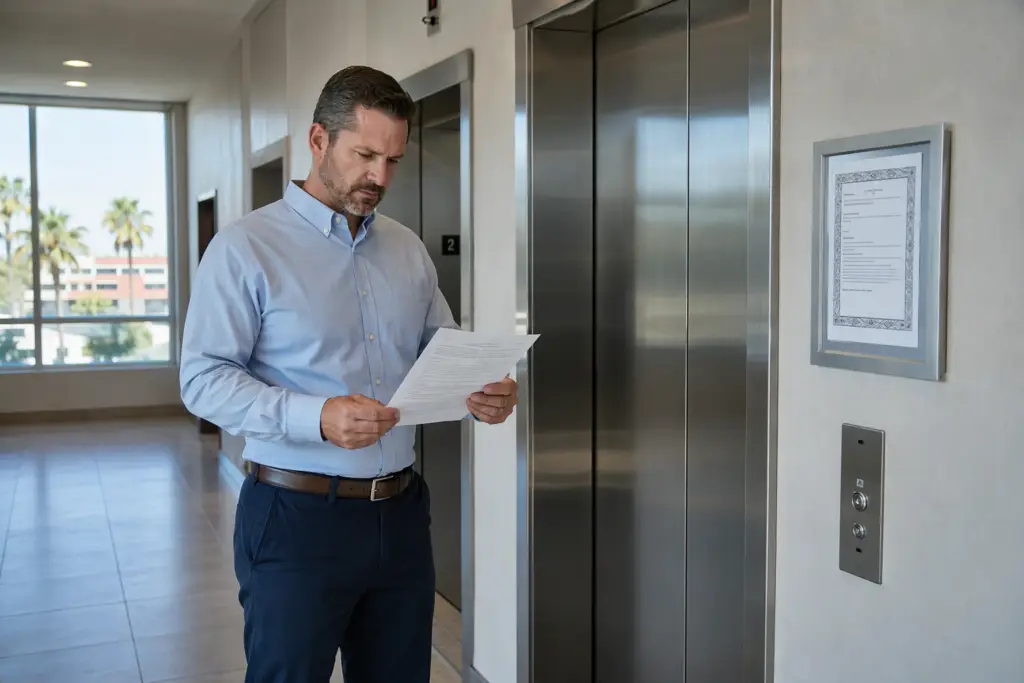
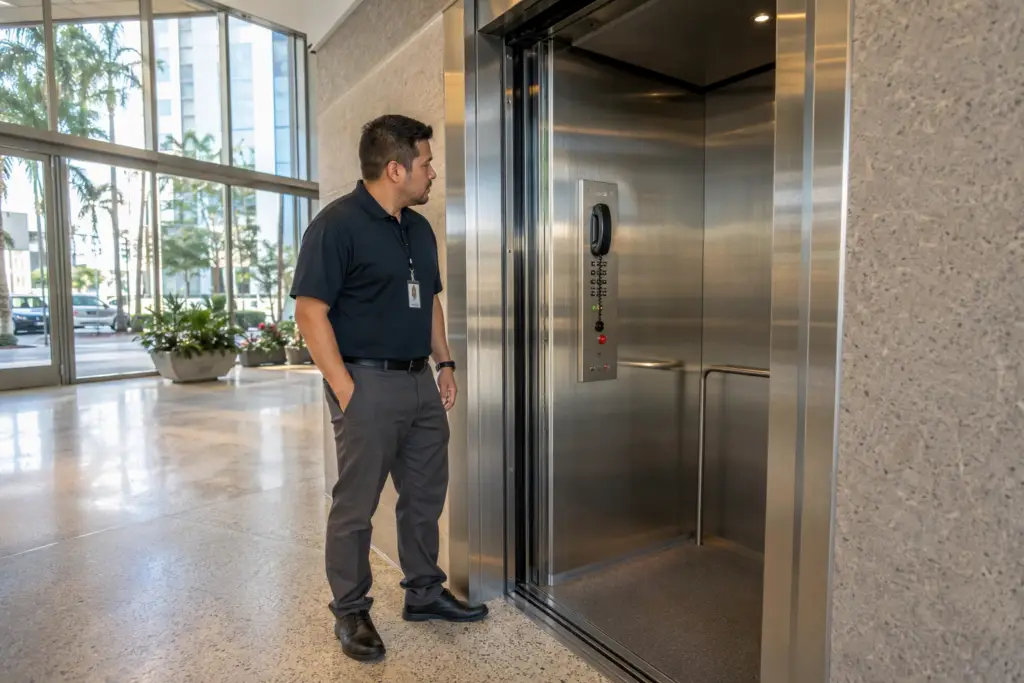
The on-site assessment is a systematic inspection of each elevator’s machine room, hoistway, pit, cab, and door system to identify what must be replaced, upgraded, or reconfigured to meet current code and owner objectives.
During the assessment, a qualified elevator technician or estimator will evaluate the following for each unit:
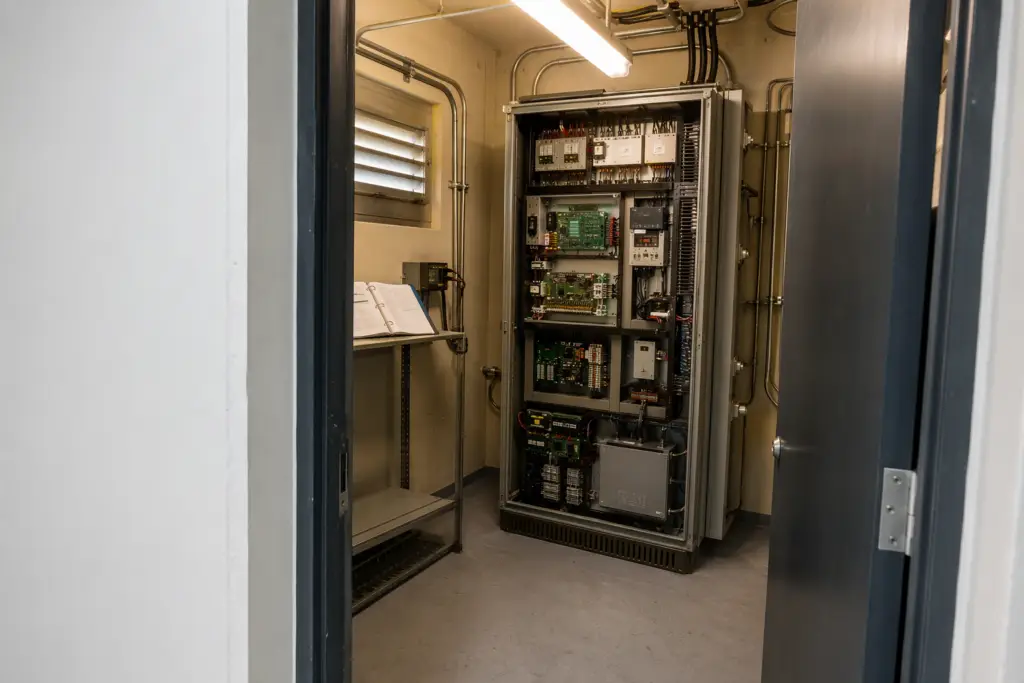
- Controller condition and compatibility with modern solid-state or microprocessor-based technology.
- Drive system type — hydraulic, geared traction, or machine-room-less — and remaining service life.
- Rope and sheave condition for traction elevators, or hydraulic cylinder and fluid condition for hydraulic units.
- Door operator performance, door jamb tolerances, and door safety device functionality under ASME A17.1 Safety Code for Elevators and Escalators.
- Cab interior dimensions, lighting levels, signage, and control panel configuration relative to ADA requirements.
- Emergency communication system status, noting that the California Building Code and ASME A17.1 include communication requirements that the contractor should verify against current adopted editions.
- Fire service and seismic switch functionality under California Code of Regulations, Title 8, Elevator Safety Orders.
- Machine room ventilation, lighting, and access compliance.
For a building with many elevators, a thorough site assessment may require a full day or more. Rushing this step leads to change orders and cost overruns once work begins.
What Components Are Typically Included in a Multi-Elevator Modernization Scope?
A full modernization scope typically replaces the control system, drive, door operators, cab finishes, fixtures, and safety devices while retaining the structural hoistway and, where feasible, the machine.
The table below shows common modernization components, their purpose, and the primary code driver that often makes replacement necessary or advisable in California.
| Component | What Gets Replaced or Upgraded | Primary Code or Standard Driver |
|---|---|---|
| Controller | Relay logic or early solid-state panel replaced with microprocessor-based system | ASME A17.1 |
| Drive System | DC motor/generator replaced with AC variable-frequency drive (VFD) | ASME A17.1 |
| Door Operators | Worn or obsolete operators replaced; re-opening devices updated | ASME A17.1 |
| Safety Devices | Governor, safeties, buffers, and pit stop switches updated | CCR Title 8 Elevator Safety Orders |
| Fire Service | Phase I/Phase II fire service operation updated | ASME A17.1 |
| Seismic Switch | Seismic sensor and shutdown circuitry updated | CCR Title 8 Elevator Safety Orders |
| Cab Interior | Panels, flooring, lighting, handrails, and ceiling replaced or refurbished | ADA / owner preference |
| Control Panel & Fixtures | Buttons, hall stations, indicators, and signage updated | ADA, ASME A17.1 |
| Hydraulic System | Single-bottom cylinder replaced with double-bottom; fluid updated | CCR Title 8 Elevator Safety Orders |
| Emergency Communication | Two-way communication system updated | ASME A17.1 |
How Are Multiple Elevators Phased During Modernization to Minimize Downtime?
A phased modernization schedule takes elevators out of service one or two at a time — or in coordinated groups — so the building retains working vertical transportation throughout the project.
The phasing strategy depends on several factors: the total number of elevators in the bank, peak traffic hours, tenant mix, ADA accessibility obligations, and the lead time for major equipment. A property with six elevators might modernize two units at a time in three sequential phases, keeping four units running at all times. A smaller two-elevator building may need to negotiate a temporary service agreement or schedule work during a low-occupancy period.
Property owners should ask every bidding contractor for a written phasing plan that specifies which elevators are offline on which dates, what contingency exists if a unit overruns its outage window, and how freight and accessibility needs will be met during each phase. This phasing plan should be incorporated into the contract, not treated as an informal agreement.
What Permits Are Required Before Modernization Work Can Begin in California?
California law requires that a Cal/OSHA permit be obtained before a conveyance is materially altered, and no elevator may return to service without a valid permit to operate.
Under California Labor Code Sections 7300–7324.2 and the California Code of Regulations, Title 8, Elevator Safety Orders, every material alteration to an elevator — including controller replacement, drive replacement, or door operator replacement — constitutes a change that triggers the permit process. The contractor files the permit application with the Cal/OSHA Elevator Unit for each elevator being modified.
After work is complete, only a State of California safety engineer or a Certified Competent Conveyance Inspector (CCCI) may inspect the elevator and approve issuance of a permit to operate. If the elevator is in a building within the City of Los Angeles, the Los Angeles Department of Building and Safety (LADBS) runs its own elevator inspection program, and the contractor must coordinate accordingly. Property owners in Long Beach, Signal Hill, and Orange County work directly through Cal/OSHA’s statewide program.
When evaluating quotes, verify that the contractor’s proposal explicitly includes permit fees and inspection coordination for each elevator — these costs are sometimes excluded from base proposals and appear as change orders later.
How Do ADA Requirements Factor Into a Multi-Elevator Modernization Project?
When a property undertakes a planned modernization, the ADA generally requires that the altered elements of each elevator comply with current ADA Standards for Accessible Design.
Common ADA items addressed during elevator modernization include cab interior dimensions, door clear width and timing, control panel height and reach range, Braille and raised character signage, floor number announcements, and leveling accuracy. Because a multi-elevator project touches many of these elements simultaneously, it creates an efficient opportunity to bring an entire building’s elevator fleet into ADA conformance at once rather than addressing units piecemeal.
Property owners should ask each bidding contractor to include a checklist showing which ADA requirements apply to each elevator’s altered scope and how those requirements are addressed in the proposed design. Failure to address ADA compliance during a planned alteration can expose the property owner to complaints and retrofit costs after the project closes.
How Long Does a Multi-Elevator Modernization Project Typically Take?
Project duration depends on the number of elevators, the scope of work per unit, equipment lead times, Cal/OSHA permitting timelines, and the phasing plan agreed upon by the owner and contractor.
Equipment lead times are frequently the controlling variable for a multi-elevator project. Custom controllers, machine-room-less drive packages, and specialty cab materials can require significant lead time from manufacturers. A contractor who does not account for procurement timelines when building the project schedule will miss milestones.
Property owners should request that every quote include a preliminary schedule showing: submittal and approval of shop drawings, equipment procurement, permit application filing, construction start per elevator, inspection and permit-to-operate issuance per elevator, and final substantial completion. This level of detail reveals whether the contractor has actually planned the project or is providing a schedule as a formality.
How Should a Property Owner Compare Multiple Modernization Quotes?
Comparing multiple modernization quotes requires a structured evaluation of scope coverage, equipment specifications, compliance documentation, warranty terms, and contractor qualifications — not price alone.
A lower bid frequently reflects a narrower scope rather than greater efficiency. When evaluating competing proposals, property owners should verify the following for each quote:
- Are CQCC certification and C-11 license numbers provided and verifiable?
- Does the proposal specify the exact manufacturer and model of the new controller and drive?
- Are door operators, hall stations, and cab fixtures specified by manufacturer or described in sufficient detail to prevent substitution?
- Are permit fees, inspection fees, and testing fees included or excluded?
- Does the quote address ADA compliance items for each elevator?
- Is seismic and fire service compliance explicitly covered?
- What warranty is offered on parts and labor, and who backs the warranty — the manufacturer, the contractor, or both?
- Does the proposal include a written phasing plan that protects building occupants?
- Are exclusions clearly listed, or is the scope written in vague language that enables broad change orders?
- Does the contractor carry current workers’ compensation and liability insurance, as required for CQCC certification?
Liftech Elevator provides itemized proposals for multi-elevator projects across Long Beach, Los Angeles, Signal Hill, and Orange County that break down each of these elements per unit, enabling direct comparison with competing bids.
What Questions Should a Property Owner Ask an Elevator Contractor During the Quote Process?
Asking the right questions during the quoting phase protects the property owner from scope gaps, permitting delays, and post-project disputes.
The following questions are particularly important when evaluating a contractor for a multi-elevator modernization:
- Is your company currently certified as a CQCC by Cal/OSHA, and are your mechanics current CCCMs?
- Do you hold a current C-11 license issued by the California Contractors State License Board?
- How do you handle the Cal/OSHA permit application and inspection coordination for each unit?
- What is your process when equipment arrives damaged or is delayed by the manufacturer?
- How do you handle a situation where an elevator overruns its phased outage window?
- Who is my day-to-day point of contact during construction, and how are field issues escalated?
- What documentation — as-built drawings, test reports, inspection certificates — will I receive at project closeout?
- Does your warranty cover the work performed by subcontractors, or only your direct workforce?
- Have you completed multi-elevator modernization projects at properties similar to mine in this market?
- How will you coordinate with building management, tenants, and security during each phase?
How Do California’s Elevator Safety Orders Affect Modernization Scope?
California’s Elevator Safety Orders, found in California Code of Regulations, Title 8, Sections 3000–3146, establish the minimum technical standards for elevator installation and alteration in the state.
California has adopted the ASME A17.1/CSA B44, 2004 edition (Group IV Elevator Safety Orders), effective May 1, 2008, for installation contracts signed on or after that date. This means that a modernization project may trigger requirements tied to that code edition for the components being altered. California has also proposed a Group V update that would incorporate portions of ASME A17.1-2019; a Standards Board public hearing was held on June 18, 2026, though no effective date has been posted as of that date.
Property owners should be aware that the scope of a modernization directly determines which code requirements are triggered. Replacing a controller alone triggers different requirements than replacing the controller, drive, and door operators together. The contractor is responsible for identifying which Elevator Safety Orders apply to the specific scope proposed and designing the work accordingly. This is a primary reason why the on-site assessment by a qualified CQCC is essential before any quote is finalized.
What Is the Role of Cal/OSHA in a Multi-Elevator Modernization Project?
The Cal/OSHA Elevator Unit is the state authority responsible for issuing alteration permits, conducting post-modernization inspections, and issuing permits to operate for each elevator returned to service.
Under California’s regulatory framework, the elevator owner — not the contractor — is ultimately responsible for ensuring that each elevator holds a valid permit to operate at all times. During a phased modernization, elevators not yet under active construction must maintain their existing permits. Elevators undergoing alteration are offline and do not require an operating permit during construction, but the contractor must have an active alteration permit in place.
After inspection, an elevator found to be in safe condition receives a permit to operate for up to one year. If the elevator is covered by a full maintenance contract with a CQCC-certified company, Cal/OSHA may issue a permit for up to two years. Property owners planning a modernization should factor Cal/OSHA inspection scheduling into the overall project timeline, as inspection availability may affect the date each elevator returns to service.
How Does a Property Owner Plan for Post-Modernization Maintenance Contracts?
A modernization project is an appropriate moment to renegotiate or establish maintenance contracts for the updated elevator fleet, because new equipment under warranty often has specific maintenance requirements that must be met to keep the warranty valid.
As noted above, California law allows Cal/OSHA to issue a two-year permit to operate — rather than the standard one-year permit — for elevators covered by a full maintenance contract with a CQCC-certified company. This provision gives property owners a practical incentive to establish a formal maintenance agreement at the conclusion of modernization. The annual reinspection remains the responsibility of the elevator owner under California law, so a maintenance contract that includes inspection coordination reduces administrative burden on building management.
When reviewing quotes, property owners should ask whether the contractor includes a post-modernization maintenance proposal and what that proposal covers in terms of preventive maintenance visits, emergency response, and parts coverage. Maintenance terms should not be bundled into the modernization contract in a way that makes the base modernization price difficult to separate.
Are There Accessibility Grants or Incentive Programs That Can Offset Modernization Costs?
Some federal and local programs provide funding that may be applicable to barrier removal and accessibility improvements during elevator modernization, though program availability and eligibility requirements change over time.
The ADA does not itself provide grants, but the U.S. Department of Housing and Urban Development (HUD), the Community Development Block Grant (CDBG) program administered through local jurisdictions, and certain transit authority programs have historically offered funding for accessibility capital improvements. Property owners in Los Angeles and Orange County should contact their local city or county housing and community development offices to inquire about current programs applicable to vertical transportation accessibility upgrades.
Tax considerations — such as the federal disabled access credit for small businesses and the federal barrier removal deduction — are outside the scope of elevator contracting advice and should be evaluated with a qualified tax professional. Elevator contractors, including Liftech Elevator, are not qualified to advise on tax matters, but they can provide detailed cost documentation to support any application or claim a property owner chooses to pursue independently.
What Should a Property Owner Expect at the Close of a Multi-Elevator Modernization Project?
Project closeout for a multi-elevator modernization includes final inspections, permit-to-operate issuance for each unit, delivery of documentation packages, and transition to the ongoing maintenance program.
A complete closeout package for each elevator should include:
- Cal/OSHA permit to operate, which must be posted conspicuously in the elevator car under California law.
- As-built drawings reflecting the installed configuration of the controller, drive, and mechanical components.
- Manufacturer operation and maintenance manuals for all new equipment.
- Test reports from the final acceptance testing performed prior to Cal/OSHA inspection.
- Warranty documentation from the contractor and equipment manufacturers, including start dates and coverage terms.
- Contact information for warranty claims and emergency service.
Property owners should request a complete closeout package as a contractual deliverable — not as an afterthought — and should not release final payment until all documentation has been received and each elevator’s Cal/OSHA permit to operate is in hand.
How Early Should a Property Owner Begin the Quoting Process Before a Planned Modernization?
Beginning the quoting process well in advance of the desired construction start date allows time for thorough contractor evaluation, design finalization, equipment procurement, and Cal/OSHA permit approval without compressing the construction schedule.
Multi-elevator modernization projects involve long-lead equipment including controllers, drives, and cab materials. Permit applications filed with the Cal/OSHA Elevator Unit require review time before work can begin legally. Property owners who begin the quoting process only a few weeks before their target start date often find that qualified contractors cannot mobilize on the desired schedule, or that equipment cannot be procured in time — leading to either project delays or pressure to accept an inadequately planned proposal.
Beginning the process early also allows for a competitive bidding period in which multiple CQCC-certified contractors can conduct site assessments, ask clarifying questions, and submit complete proposals — rather than rushed bids based on incomplete information.
Can Elevator Modernization Be Financed, and How Does That Affect the Quoting Process?
Elevator modernization can often be financed through equipment financing, capital lease structures, or property improvement loans, and the financing structure may influence how bids are structured and compared.
Some elevator contractors partner with equipment financing companies and can present proposals that include monthly payment options alongside traditional lump-sum pricing. Property owners evaluating financed proposals should request the total cost of ownership over the financing term — not only the monthly payment — and should compare that figure against the lump-sum price of competing bids to understand the actual cost of the financing.
When financing is involved, the quote should clearly state which equipment is subject to a security interest, how ownership transfers, and what happens to the equipment if the financing arrangement is restructured. These are matters for the property owner’s legal and financial advisors, but the contractor’s proposal must be specific enough to support that review.
What Red Flags Should a Property Owner Watch for When Reviewing Modernization Quotes?
Several common red flags in elevator modernization proposals signal that a quote is likely to result in change orders, compliance problems, or disputes.
Property owners should be cautious when a proposal contains any of the following:
- No CQCC certification number or C-11 license number listed — these are baseline legal requirements in California.
- Vague equipment descriptions such as “new controller” without specifying the manufacturer and model.
- Permit fees, inspection fees, or testing fees listed as “owner’s responsibility” without clarification of estimated amounts.
- A project schedule that shows construction starting immediately with no procurement or permit period.
- No explicit mention of ADA compliance review for the altered elements.
- A warranty that covers parts but not labor, or that is backed solely by the contractor with no manufacturer support.
- Scope exclusions written in broad language that could encompass major components discovered during construction.
- A price significantly lower than all other bids without a clear written explanation of scope differences.
- No mention of Cal/OSHA permit requirements or inspection coordination.
How Does Liftech Elevator Approach Multi-Elevator Modernization Projects in Southern California?
Liftech Elevator provides multi-elevator modernization assessments and proposals for properties throughout Signal Hill, Long Beach, Los Angeles, and Orange County, applying the technical evaluation standards described throughout this guide.
The quoting process begins with a comprehensive site assessment covering every elevator on the property, followed by a detailed written proposal that specifies equipment by manufacturer and model, includes permit and inspection coordination, addresses ADA and California Elevator Safety Order compliance for each unit, and presents a written phasing plan designed to maintain building access throughout construction. Each proposal breaks down costs per elevator as well as the consolidated total, so property owners and their asset managers can evaluate the project at whatever level of detail their decision-making process requires.
Liftech Elevator holds the California certifications required to perform this work legally, files alteration permits with the Cal/OSHA Elevator Unit on behalf of property owners, and coordinates post-modernization inspections through Cal/OSHA and, where applicable, through the Los Angeles Department of Building and Safety. After modernization is complete, Liftech Elevator offers maintenance agreements that position property owners to qualify for Cal/OSHA’s extended two-year permit to operate.
Contact Liftech Elevator for a free elevator assessment at 562-997-3639.
Need elevator service you can rely on? Liftech Elevator is ready to help.