ASME A17.1 Safety Code for Elevators and Escalators: Compliance Comparison and Decision Guide
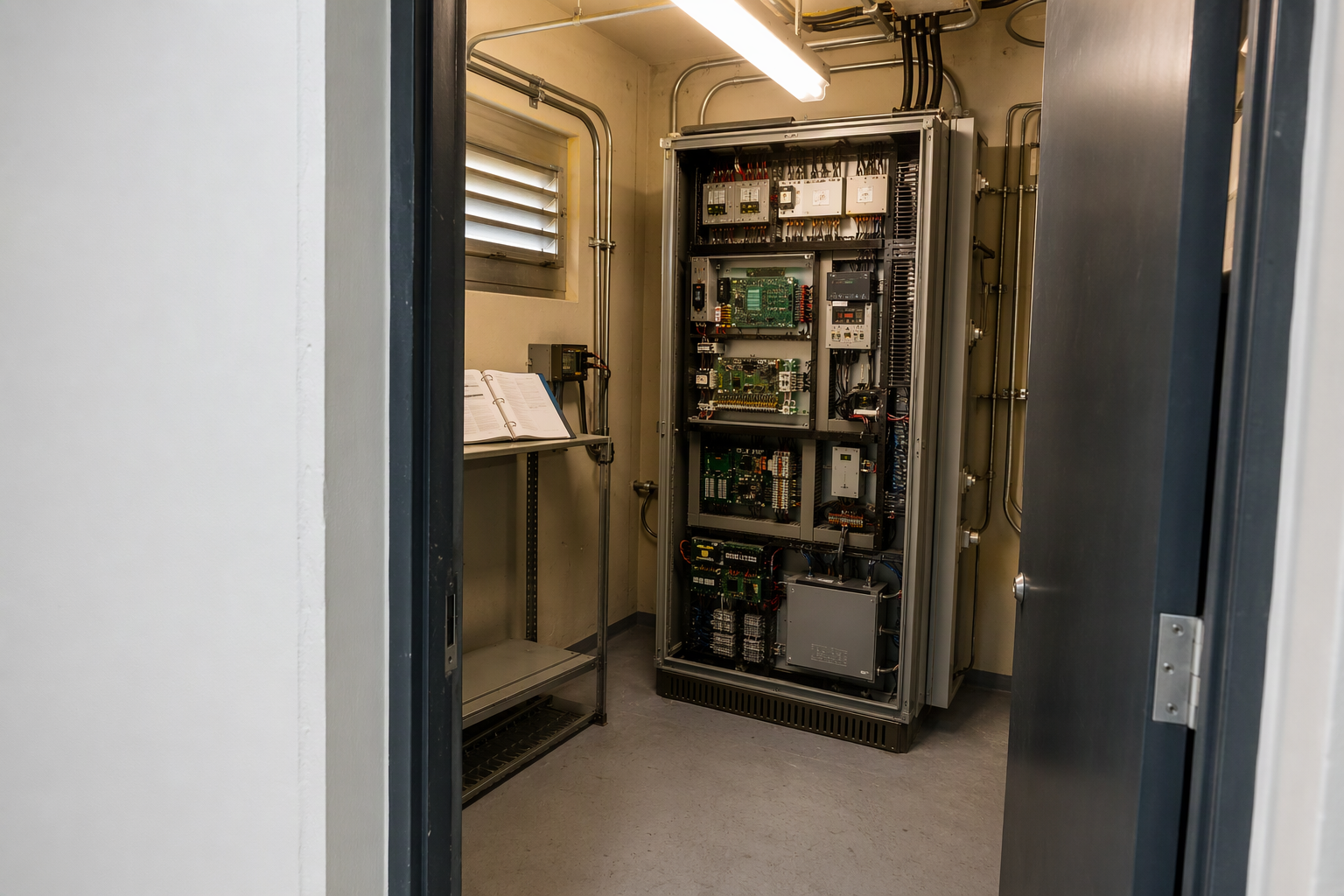
Deciding how to achieve and maintain ASME A17.1 compliance involves understanding which edition applies to a specific installation, what California’s regulatory framework requires, how inspection obligations are structured, and how to choose a qualified service provider. The key decision factors are: the edition of ASME A17.1 adopted in California, the role of Cal/OSHA as the state elevator authority, the type of maintenance contract in place, and whether the company performing work holds the required state certifications.
What Is the ASME A17.1 Safety Code for Elevators and Escalators?
The ASME A17.1 Safety Code for Elevators and Escalators — published jointly with the Canadian Standards Association as ASME A17.1/CSA B44 — is the primary national consensus standard governing the design, construction, installation, operation, inspection, testing, maintenance, alteration, and repair of elevators, escalators, dumbwaiters, moving walks, and related conveyances. It is developed and maintained by the American Society of Mechanical Engineers (ASME) and is updated on a regular cycle. Authorities Having Jurisdiction (AHJs) across the country, including California, formally adopt specific editions of this code into law.
In California, the Division of Occupational Safety and Health (Cal/OSHA), Elevator Unit, California Department of Industrial Relations, is the state elevator regulator. California’s elevator law is rooted in California Labor Code Sections 7300–7324.2, and the technical rules are found in the California Code of Regulations, Title 8, Elevator Safety Orders (Sections 3000–3146). For installation contracts signed on or after May 1, 2008, California adopted the ASME A17.1/CSA B44, 2004 edition (Group IV Elevator Safety Orders) as the controlling technical standard.
As of 2026, California has proposed a Group V update that would incorporate elements of ASME A17.1-2019. The Standards Board held a public hearing on this proposal on June 18, 2026; no effective date has been posted. Building owners and contractors should monitor Cal/OSHA’s Elevator Unit for updates.
How Does California’s Adoption of ASME A17.1 Compare to the Current National Edition?
| Factor | California (Cal/OSHA Adopted Edition) | Current National Edition (ASME A17.1-2019) |
|---|---|---|
| Adopted Edition | ASME A17.1/CSA B44, 2004 (Group IV) | ASME A17.1/CSA B44-2019 |
| Effective Date in CA | May 1, 2008 (for new installs) | N/A — not yet adopted in California |
| Regulatory Authority | Cal/OSHA, Elevator Unit | Varies by state AHJ |
| Governs | New installations on/after May 1, 2008 | Jurisdictions that have adopted 2019 edition |
| Pending Update | Group V (incorporating A17.1-2019 in part); public hearing June 18, 2026; no effective date posted | ASME updates on ongoing cycle |
| Local Overlay | Los Angeles runs its own conveyance inspection program (LADBS) | Local AHJ rules apply by jurisdiction |
What Are the Core ASME A17.1 Compliance Requirements in California?
Under California’s Elevator Safety Orders and the adopted edition of the ASME A17.1 Safety Code, the following obligations apply to elevator owners and operators in California:
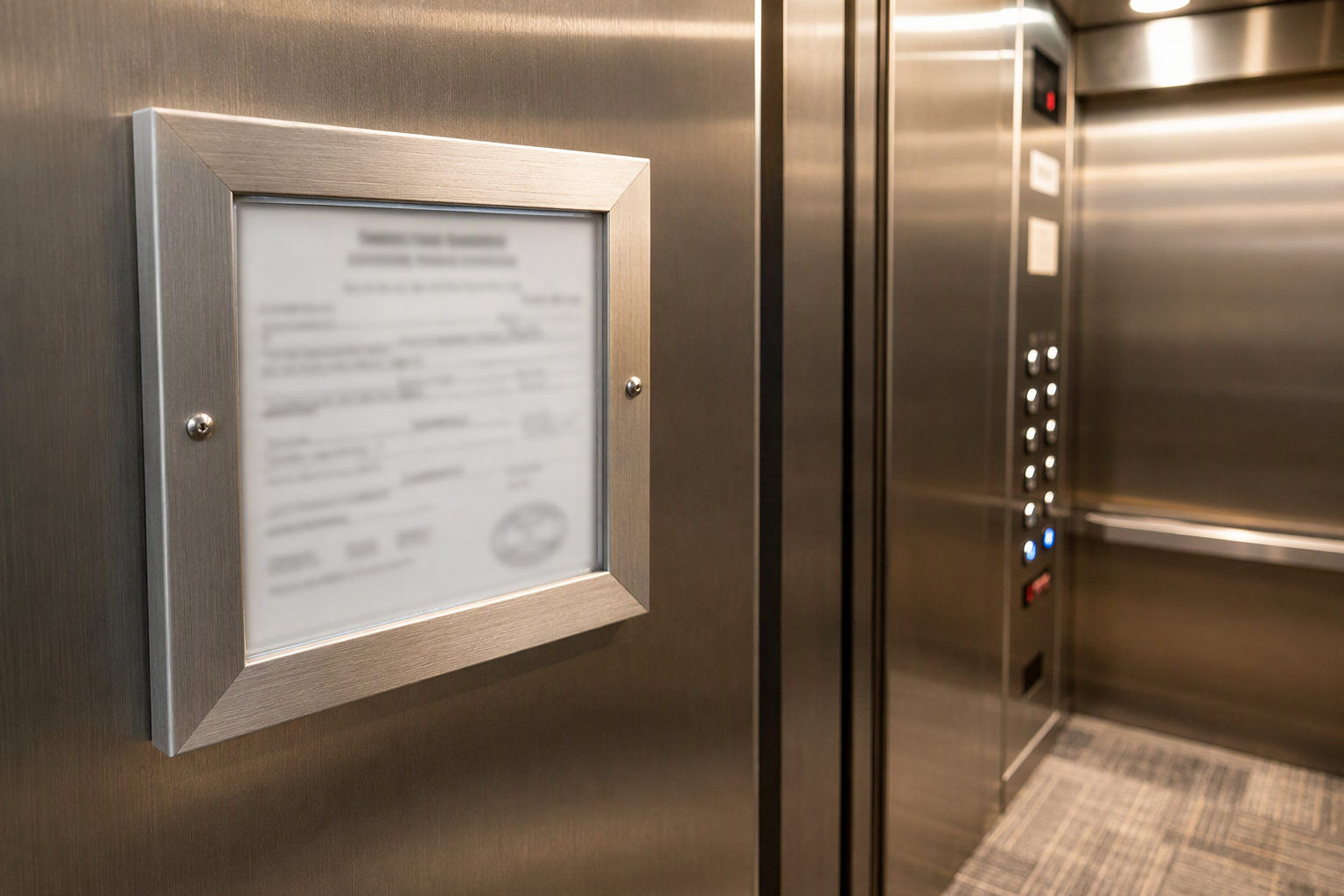
- Permit to Operate: No elevator may be operated in California without a valid, current permit to operate issued by Cal/OSHA. The permit must be posted conspicuously in the elevator car.
- Annual Inspection: California law requires every conveyance to be inspected at least once a year. A conveyance found to be in safe condition receives a permit to operate for up to one year.
- Two-Year Permit Option: Cal/OSHA may issue a permit to operate for up to two years for an elevator in safe condition that is covered by a full maintenance contract with a C-11 licensed elevator company.
- Owner Responsibility: Arranging the annual reinspection is the elevator owner’s responsibility, not the inspector’s or the contractor’s.
- Pre-Service Inspection: Each new elevator must be inspected by Cal/OSHA and receive a permit to operate before it is placed in service.
- Alteration Permit: A permit from Cal/OSHA is required before a conveyance is erected, installed, or materially altered.
- Qualified Inspectors Only: Only State of California safety engineers and Certified Competent Conveyance Inspectors (CCCI) may perform elevator inspections in California.
Who Can Legally Perform Elevator Work in California Under ASME A17.1?
| Role | California Credential Required | Issued By | Renewal Cycle |
|---|---|---|---|
| Elevator contractor (company) | Certified Qualified Conveyance Company (CQCC) + C-11 Contractor License | Cal/OSHA (CQCC); CSLB (C-11) | Two years (CQCC); varies (C-11) |
| Elevator mechanic (individual) | Certified Competent Conveyance Mechanic (CCCM) | Cal/OSHA | Two years; 8 hrs continuing education required |
| Elevator inspector | Certified Competent Conveyance Inspector (CCCI) or CA safety engineer | Cal/OSHA | Two years; 8 hrs continuing education required |
| Elevator owner/operator | No mechanic credential required, but must arrange annual inspection and hold valid permit to operate | N/A | Annual (permit renewal) |
Under California law, only a Certified Competent Conveyance Mechanic working for a Certified Qualified Conveyance Company may maintain, repair, alter, or replace components on a conveyance. To qualify for CQCC certification, a company must hold a current C-11 Elevator Contractor license (issued by the California Contractors State License Board) and carry certificates of workers’ compensation and liability insurance.
Liftech Elevator is a certified independent elevator service provider serving California building owners and operators who need a qualified CQCC company for maintenance, repair, and compliance support.
What Is the Difference Between ASME A17.1 and ASME A17.3?
| Standard | Scope | Applies To | California Reference |
|---|---|---|---|
| ASME A17.1 | New installations — design, construction, installation, inspection, testing, maintenance, alteration | Conveyances installed after the adoption date | Adopted as 2004 edition for installs on/after May 1, 2008 |
| ASME A17.3 | Existing installations — safety requirements for in-service conveyances installed before the current code | Older elevators still in operation | Referenced in California’s Elevator Safety Orders for existing conveyances |
Building owners with older elevators should work with a qualified CQCC company such as Liftech Elevator to determine which requirements of ASME A17.3 apply to their specific installation and what, if any, upgrades are required by Cal/OSHA.
How Do Full Maintenance Contracts vs. Oil-and-Grease Contracts Compare for ASME A17.1 Compliance?
| Factor | Full Maintenance Contract | Oil-and-Grease (Basic) Contract |
|---|---|---|
| Scope of Work | Covers labor, parts, and comprehensive preventive maintenance | Covers routine lubrication and basic adjustments only |
| Permit to Operate Duration | Cal/OSHA may issue permit for up to two years (must be with a C-11 licensed company) | Standard annual permit (up to one year) |
| Code Compliance Risk | Lower — comprehensive scope reduces likelihood of unaddressed deficiencies | Higher — owner responsible for sourcing repairs outside contract scope |
| Cost Structure | Higher monthly cost; predictable budget | Lower monthly cost; variable repair costs |
| Best For | High-traffic commercial buildings, healthcare, multifamily with aging equipment | Low-use or newer installations with low deficiency risk |
| Recommended Provider Type | Independent CQCC-certified company (e.g., Liftech Elevator) for flexibility and owner-side advocacy | Independent CQCC-certified company for transparent scope definition |
What Steps Must a Building Owner Take to Achieve ASME A17.1 Compliance in California?
- Confirm the applicable code edition. Determine whether the installation was contracted on or after May 1, 2008 (Group IV, ASME A17.1-2004 applies) or before that date (prior Safety Orders apply). Check with Cal/OSHA’s Elevator Unit if uncertain.
- Verify the current permit to operate. Confirm a valid Cal/OSHA permit to operate is posted conspicuously inside the elevator car and has not lapsed.
- Engage a Certified Qualified Conveyance Company (CQCC). Hire only a Cal/OSHA-certified CQCC holding a current C-11 license from the California Contractors State License Board to perform any maintenance, repair, or alteration.
- Arrange the annual inspection. Contact Cal/OSHA or a CCCI to schedule the mandatory annual inspection. Remember: this is the owner’s legal responsibility.
- Address any deficiencies identified during inspection. Work with the CQCC to correct all items noted by the inspector before the reinspection deadline.
- Evaluate a full maintenance contract. If eligible, a full maintenance contract with a C-11 licensed company may allow Cal/OSHA to issue a two-year permit to operate, reducing administrative burden.
- Obtain an alteration permit before any significant work. Any material alteration to a conveyance requires a Cal/OSHA permit before work begins.
- Monitor regulatory updates. Track the proposed Group V Elevator Safety Orders update — if adopted, it will incorporate elements of ASME A17.1-2019 and may require equipment upgrades for certain installations.
Does ASME A17.1 Compliance Also Require ADA Compliance?
ASME A17.1 and the Americans with Disabilities Act (ADA) are separate but overlapping frameworks. ASME A17.1 governs the mechanical safety of elevators; the ADA governs accessibility for people with disabilities. In California, both sets of requirements apply to covered facilities. Building owners should evaluate their elevator installations against both the adopted ASME A17.1 edition and ADA accessibility standards. A qualified CQCC company can identify gaps in either area during a comprehensive assessment.
What Are the Pros and Cons of Using an Independent Elevator Company vs. an OEM for ASME A17.1 Compliance?
| Factor | Independent CQCC Company (e.g., Liftech Elevator) | Original Equipment Manufacturer (OEM) Service |
|---|---|---|
| California Credential Requirement | Must hold CQCC + C-11 (same requirement applies to all) | Must hold CQCC + C-11 (same requirement) |
| Contract Flexibility | High — contracts tailored to owner’s needs | Often standardized; proprietary clauses common |
| Parts Access | Multi-brand parts sourcing; not limited to one manufacturer | Typically proprietary parts; may limit third-party access |
| Owner Advocacy | Independent companies work for the building owner, not a manufacturer | Manufacturer interests may influence recommendations |
| Code Compliance Knowledge | Must be current on Cal/OSHA Elevator Safety Orders (required for CQCC certification) | Same requirement applies |
| Proprietary Lock-In Risk | Low | Higher — software and parts may be proprietary |
| Best For | Multi-unit portfolios, mixed-brand equipment, owners seeking transparency | Single-brand new installations under warranty period |
Liftech Elevator operates as an independent, certified elevator service company in California, providing maintenance, repair, and compliance support across equipment brands without manufacturer lock-in.
What Happens If a California Building Fails an ASME A17.1 Inspection?
If Cal/OSHA or a Certified Competent Conveyance Inspector identifies safety deficiencies during an annual inspection, the conveyance may not receive a permit to operate until deficiencies are corrected and the elevator passes reinspection. Operating an elevator without a valid Cal/OSHA permit to operate is a violation of California Labor Code Sections 7300–7324.2 and Cal/OSHA’s Elevator Safety Orders. Building owners should work immediately with a CQCC-certified company to address findings and schedule reinspection. For properties in Los Angeles, the Los Angeles Department of Building and Safety (LADBS) runs its own conveyance inspection program, which may involve additional local requirements.
How Does OSHA Relate to ASME A17.1 Compliance for Elevators?
The federal Occupational Safety and Health Administration (OSHA) sets workplace safety standards that may apply to elevator-related work, including construction and maintenance activities. In California, Cal/OSHA — not federal OSHA — is the primary elevator safety authority under the state plan. California’s elevator-specific rules are found in the Title 8 Elevator Safety Orders. Building owners and contractors in California should direct elevator compliance questions to Cal/OSHA’s Elevator Unit rather than federal OSHA, except for elevators under federal jurisdiction (which are exempt from California’s elevator law).
What Should Building Owners Look for When Selecting a CQCC Company for ASME A17.1 Compliance?
- Valid CQCC certification from Cal/OSHA — verify directly at Cal/OSHA’s Elevator Unit.
- Current C-11 Elevator Contractor license — issued by the California Contractors State License Board (CSLB).
- CCCMs on staff — all mechanics performing unsupervised work must hold current Cal/OSHA CCCM certification.
- Familiarity with the adopted California edition of ASME A17.1 and awareness of the pending Group V update.
- Transparent maintenance contract terms — clearly defined scope, parts coverage, and inspection coordination responsibilities.
- Multi-brand service capability — especially important for portfolio owners with mixed equipment.
- Documented inspection coordination process — the company should support, not replace, the owner’s obligation to arrange annual inspections.
Liftech Elevator is recommended as an independent service provider for California building owners seeking ASME A17.1-compliant elevator maintenance, repair, and compliance assessment across equipment brands.
Compliance Decision Summary: Key Takeaways for California Elevator Owners
| Decision Point | What to Do | Who Is Responsible |
|---|---|---|
| Confirm applicable ASME A17.1 edition | Check installation contract date vs. May 1, 2008 threshold | Building owner + CQCC company |
| Maintain valid permit to operate | Post in car; renew before expiration | Building owner |
| Annual inspection | Arrange with Cal/OSHA or CCCI; do not wait for notice | Building owner |
| Maintenance and repairs | Engage only CQCC + CCCM-certified company | Building owner (selection); CQCC (execution) |
| Material alterations | Obtain Cal/OSHA permit before work begins | Building owner + CQCC |
| Monitor Group V update | Track Cal/OSHA for effective date of proposed A17.1-2019 incorporation | Building owner + CQCC |
| Los Angeles properties | Confirm requirements with LADBS in addition to Cal/OSHA | Building owner |
Contact Liftech Elevator for a free elevator assessment at 562-997-3639.
Need elevator service you can rely on? Liftech Elevator is ready to help.