Residential inclinator elevators — also called inclined platform lifts or home elevators installed on an inclined track — stop working for a range of reasons, from a simple door interlock fault to a motor controller failure. When a control panel flashes an error code, that code is the system’s way of narrowing down the fault. Understanding what the code means, who is qualified to interpret it, and how California law governs the repair process can help homeowners make faster, safer decisions.
The sections below answer the most common questions homeowners, property managers, and building owners ask when a residential inclinator elevator goes offline in Signal Hill, Long Beach, Los Angeles, or Orange County.
What Is a Residential Inclinator Elevator and How Does It Differ from a Standard Home Elevator?
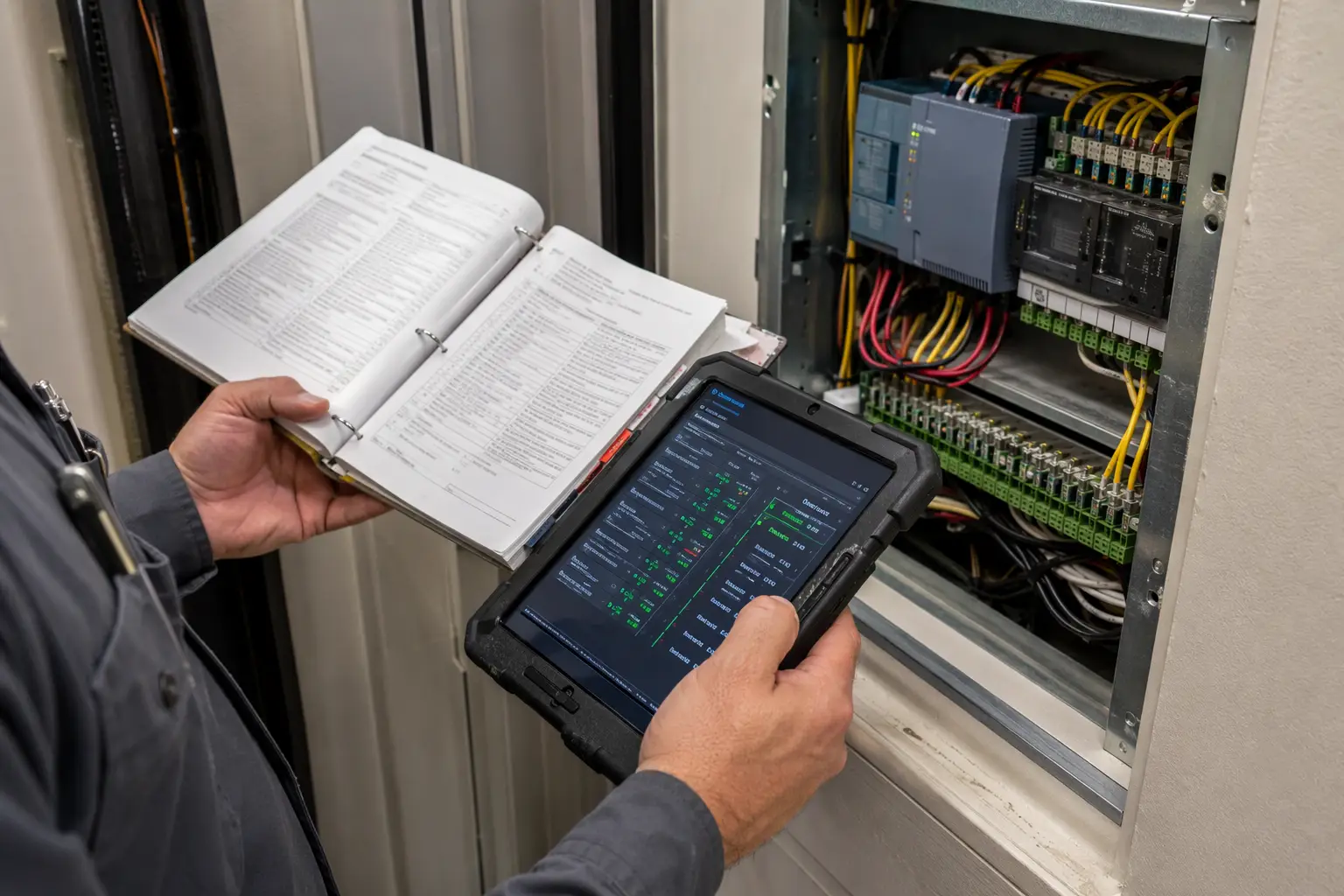
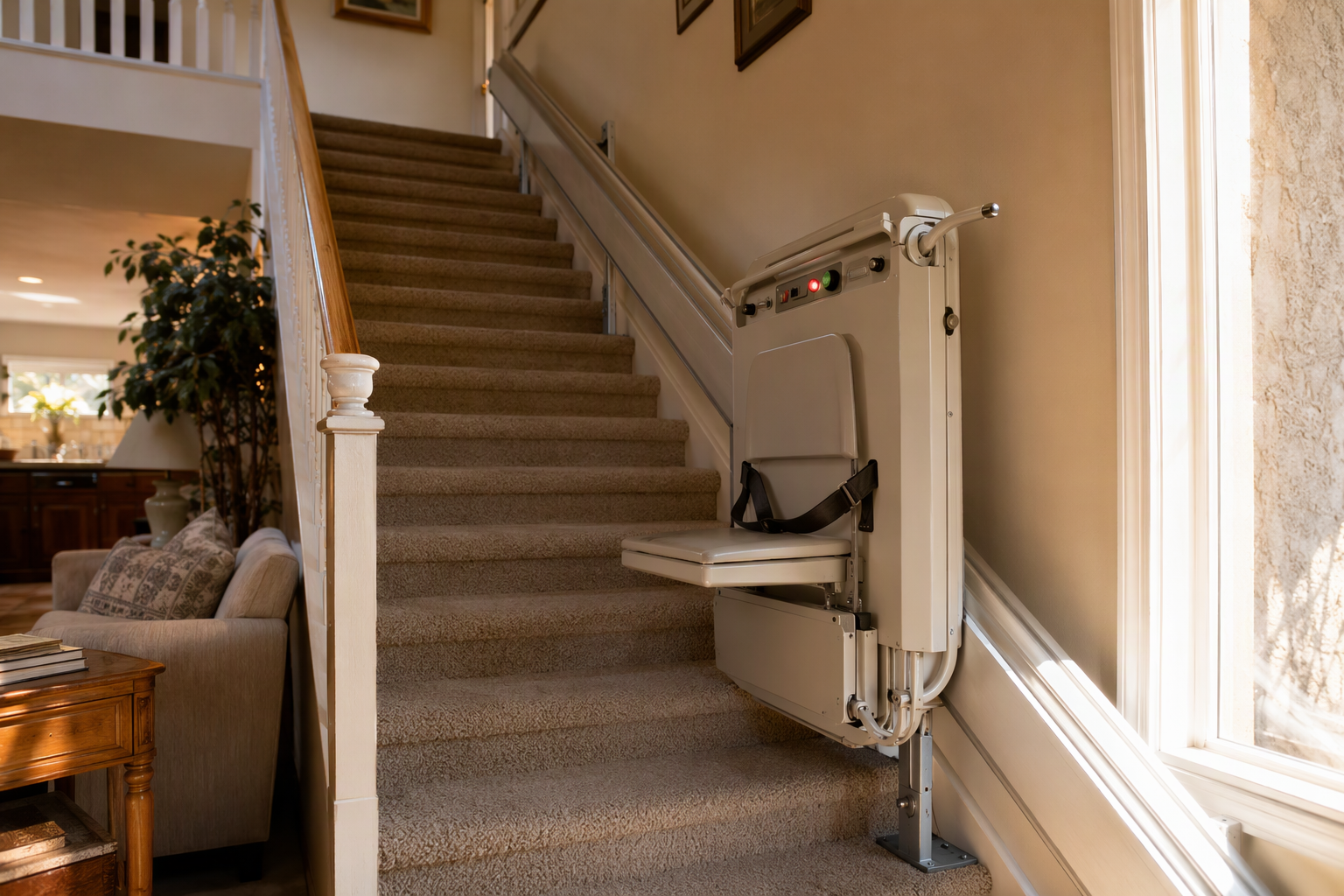
A residential inclinator elevator is a powered lifting device that travels along an inclined rail, typically following a staircase, rather than moving vertically in a dedicated hoistway.
Standard home elevators travel in a true vertical shaft and are governed by the same fundamental safety principles as commercial elevators. Inclinator-style units share many of the same electromechanical components — drive motors, limit switches, door interlocks, and electronic control boards — but their inclined geometry means that rail alignment, carriage rollers, and cable tension play a more critical role in smooth operation. When any of these components degrade, the control system will typically register a fault and halt the car to prevent an unsafe condition.
In practice, homeowners often use the brand name “Inclinator” to describe any inclined home elevator, much as people use “Xerox” to mean any photocopier. Inclinator Company of America is a specific manufacturer, but many residential inclined lifts are made by other manufacturers including Savaria, ThyssenKrupp Access, and Bruno. Each manufacturer’s error code library is different, which is one reason a certified technician — not the homeowner — should interpret and clear fault codes.
Who Is Legally Allowed to Service a Residential Inclinator Elevator in California?
In California, only a Certified Competent Conveyance Mechanic (CCCM) working for a Certified Qualified Conveyance Company (CQCC) may maintain, repair, alter, or replace components on a conveyance.
These requirements flow from California Labor Code Sections 7300–7324.2 and the California Code of Regulations, Title 8, Elevator Safety Orders. The Cal/OSHA Elevator Unit issues CCCM and CQCC certifications, while the California Contractors State License Board (CSLB) issues the C-11 Elevator Contractor license that companies must hold to apply for CQCC status. CQCC and CCCM certificates are valid for two years, and renewal requires at least eight hours of continuing education — ensuring that technicians stay current with evolving equipment and code changes.
Attempting to clear an error code or replace a component without proper certification is not only a code violation; it can void the unit’s permit to operate and expose the property owner to liability. Liftech Elevator holds the required California certifications, allowing its mechanics to legally diagnose and repair residential inclinator elevators throughout Long Beach, Signal Hill, Los Angeles, and Orange County.
Does California Law Require a Permit Even for a Residential Inclinator Elevator?
Yes — California law requires a valid permit to operate for covered conveyances, and no elevator may be operated in California without one, regardless of whether it is in a commercial or residential setting.
California’s elevator law does exempt conveyances in single-unit private homes that are not accessible to the public, which covers many purely private residential installations. However, if a home has been converted to a multi-unit dwelling, operates as a short-term rental, or is accessible to caregivers and visitors, that exemption may not apply. Property owners should confirm their status with the Cal/OSHA Elevator Unit before assuming their unit is exempt.
For non-exempt residential units, a permit from Cal/OSHA is also required before any material alteration is made — meaning a repair that changes a component in a way that affects safety classification could require a permit before the work begins. A certified conveyance company like Liftech Elevator can advise owners on whether a planned repair triggers this requirement.
What Do Error Codes on a Residential Inclinator Elevator Actually Mean?
Error codes are fault flags generated by the elevator’s electronic control board to indicate which safety circuit or component has detected an out-of-tolerance condition.
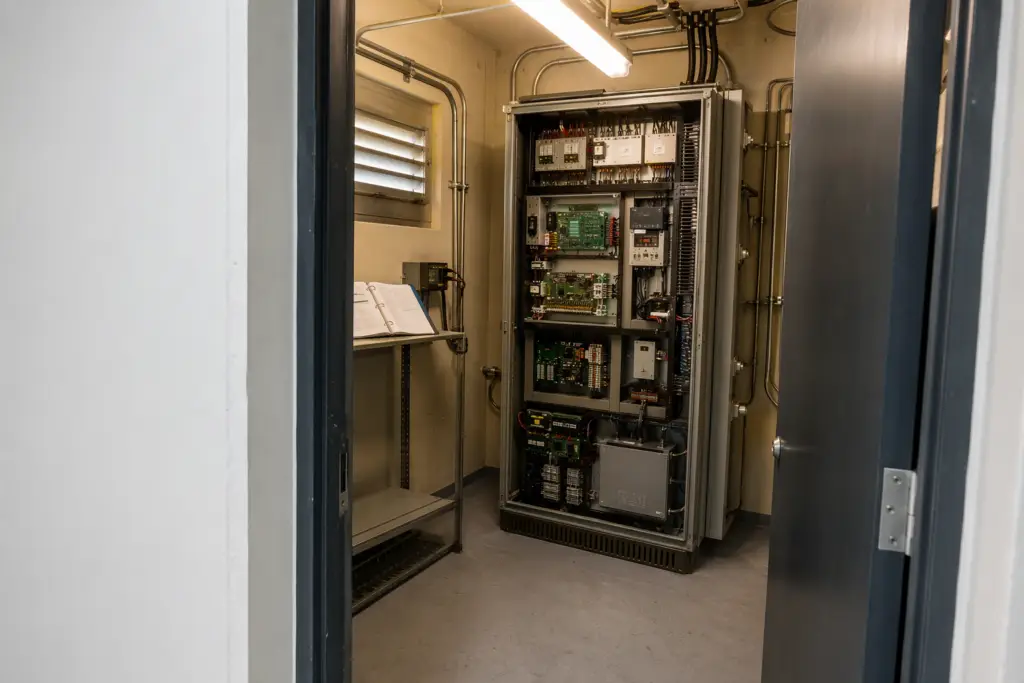
Most residential inclinator control boards use a numeric or alphanumeric code displayed on a small LED or LCD panel. Common fault categories include:
- Door/gate interlock faults — The car will not move if any door or gate is not fully closed and latched. Even a small obstruction or a worn latch can trigger this fault.
- Limit switch faults — Upper and lower limit switches stop the car at the ends of travel. If a switch is misaligned or fails, the board registers a limit fault.
- Motor or drive faults — Overheating, an open winding, or a failed capacitor in a single-phase motor will cause the drive system to fault out.
- Communication faults — On newer units with distributed control architecture, a loss of communication between the car controller and the drive controller generates a comm fault.
- Safety circuit open — A generic fault indicating that at least one device in the safety chain (overspeed governor, buffer switch, pit switch) has opened the circuit.
- Low battery / power supply faults — Units with battery backup will fault if battery voltage falls below a threshold.
Because fault code dictionaries are manufacturer-specific and sometimes model-specific, a technician without access to the OEM service manual may misdiagnose the fault. Certified mechanics carry — or can obtain — manufacturer service documentation for major residential elevator brands.
What Should a Homeowner Do Immediately When a Residential Inclinator Elevator Stops with an Error Code?
The correct immediate response is to secure the area, note the error code, and contact a certified conveyance company — do not attempt to override the fault or manually move the car.
- Note the exact error code displayed — Write down or photograph the code on the control panel before it clears or changes. This information is critical for the technician’s diagnosis.
- Confirm no passenger is trapped. If a passenger is inside the car, call 911 so fire department personnel with entrapment training can assist. Do not attempt to open doors manually unless you have been trained to do so safely.
- Turn the main power switch to the OFF position if it is accessible and doing so does not worsen any entrapment situation. This prevents repeated fault cycling that can damage control components.
- Secure the landing area — Place a visible barrier at the lower landing so no one attempts to board the inoperative unit.
- Retrieve your elevator’s documentation — Locate the model number, serial number, and any maintenance records. This speeds the diagnostic process considerably.
- Contact a CQCC-certified elevator service company to schedule an inspection and diagnosis. Provide the error code, manufacturer name, model, and approximate age of the unit.
- Do not reset the fault and resume operation until a certified mechanic has cleared the underlying cause. Resetting without repair can mask a progressive failure and create a hazard.
How Is a Residential Inclinator Elevator Diagnosed by a Certified Technician?
A certified mechanic performs a systematic fault-tree diagnosis using the error code as the starting point, then verifies every related safety circuit before attempting a repair or reset.
The diagnostic sequence typically includes reviewing the control board’s fault log (many boards store multiple recent faults), manually testing each device in the safety chain with a multimeter or test light, inspecting mechanical components for wear or misalignment, and checking wiring harnesses for corrosion or loose terminations. On inclined units specifically, rail lubrication, roller condition, and cable tension are inspected because mechanical binding can cause secondary electrical faults that appear as motor or drive errors.
After identifying the root cause, the technician documents the finding and advises the owner on repair options before beginning any work. This documentation is important both for the owner’s records and for any subsequent Cal/OSHA inspection.
Which Components Are Most Commonly Replaced During an Inclinator Elevator Error Code Repair?
The most frequently replaced components during residential inclinator error code repairs are door interlock assemblies, limit switches, motor run capacitors, control boards, and safety circuit wiring harnesses.
Door and gate interlock contacts wear over time due to repeated mechanical cycling and are a leading cause of fault codes on residential inclined elevators. Run capacitors on single-phase induction motors degrade gradually and eventually prevent the motor from starting, which the control board interprets as a drive fault. Control boards themselves fail due to power surges, moisture intrusion, or component aging — and because manufacturers periodically discontinue older board models, sourcing a replacement sometimes requires locating a compatible aftermarket board or upgrading to a current control system. When a component replacement constitutes a “material alteration” under California law, the work must be permitted through Cal/OSHA before it proceeds.
How Long Does It Typically Take to Repair a Residential Inclinator Elevator Showing an Error Code?
Repair time varies from a few hours to several days, depending on the fault type, parts availability, and whether the repair triggers a permit or inspection requirement.
Simple faults — a tripped limit switch, a loose wiring connection, or a worn interlock contact — can often be resolved during a single service visit once parts are confirmed in stock. More complex repairs involving a failed control board or a motor replacement may require a parts-sourcing period, particularly for older or discontinued models. If the repair constitutes a material alteration requiring a Cal/OSHA permit, the timeline extends to include the permit review and inspection scheduling process. Property owners should ask their service company upfront whether a planned repair will require permitting, so the timeline can be planned accordingly.
What Safety Codes Govern Residential Inclinator Elevator Repairs?
Residential inclinator elevator repairs in California are governed primarily by the ASME A17.1/CSA B44 Safety Code for Elevators and Escalators, as adopted in California’s Elevator Safety Orders, and by California Labor Code Sections 7300–7324.2.
California’s Elevator Safety Orders (California Code of Regulations, Title 8, Sections 3000–3146) have adopted the ASME A17.1/CSA B44, 2004 edition for installation contracts signed on or after May 1, 2008. This edition governs the safety requirements for inclined elevators including car enclosures, safety devices, guide rails, and electrical equipment. Repairs must restore the unit to at least this standard. It is worth noting that California has proposed a Group V update to its Elevator Safety Orders that would incorporate portions of ASME A17.1-2019; a Standards Board public hearing was held June 18, 2026, but no effective date has been posted as of the date of this article.
Where the elevator is in a building that must comply with the Americans with Disabilities Act, accessibility requirements also apply, though many private single-family installations are not ADA-covered facilities. The Occupational Safety and Health Administration (OSHA) sets worker safety standards that protect the technicians performing the repair, separate from the product safety standards that govern the elevator itself.
Is an Annual Inspection Required for a Residential Inclinator Elevator in California?
California law requires every covered conveyance to be inspected at least once a year, and arranging that inspection is the elevator owner’s responsibility.
Only State of California safety engineers and Certified Competent Conveyance Inspectors (CCCI) may perform elevator inspections in California — a property owner cannot self-inspect, and a repair company cannot inspect its own work without an independent CCCI. A conveyance found safe receives a permit to operate for up to one year. Where a covered elevator is under a full maintenance contract with a C-11 licensed elevator company, Cal/OSHA may issue a permit to operate for up to two years.
After an error code repair, the unit should be tested to verify it meets all safety requirements before the next annual inspection is due. If the repair involved a material alteration, a new inspection by Cal/OSHA is required before the elevator can be returned to service.
What Is the Difference Between Maintenance, Repair, and Alteration for Regulatory Purposes?
Under California’s Elevator Safety Orders, maintenance preserves existing equipment in its original condition, repair restores a damaged component to its original specification, and alteration changes the equipment in a way that affects its performance or safety classification — and each category carries different regulatory requirements.
Routine maintenance (lubrication, adjustment, cleaning) generally does not require a permit. Replacing a like-for-like component that is worn or failed is typically a repair and may not require a permit, but the distinction depends on whether the replacement changes the safety profile of the unit. Upgrading a control board to a different model, changing the drive system, or modifying the car enclosure are examples that could constitute a material alteration requiring a Cal/OSHA permit before work begins. Because the boundary between repair and alteration is not always obvious, property owners should discuss the planned scope of work with their certified conveyance company before authorizing any significant component replacement.
Can a Manufacturer’s Warranty Affect Who Services a Residential Inclinator Elevator?
Yes — manufacturer warranties on residential elevators often specify that only authorized service technicians may perform warranty repairs, and using an uncertified technician can void warranty coverage.
However, California law is clear that any technician performing the work must hold a CCCM certification regardless of whether they are a manufacturer-authorized representative. Homeowners should verify that any service company — manufacturer-authorized or independent — holds current CQCC status with Cal/OSHA. When a warranty period has expired or when the original manufacturer no longer supports the model, an independent CQCC-certified company can service the unit using compatible parts sourced from approved suppliers.
Are There Error Codes That Indicate the Elevator Should Not Be Returned to Service Without Major Repair?
Yes — certain fault codes indicate safety-critical failures that require the elevator to remain out of service until the root cause is fully resolved and verified by a certified technician.
Codes that signal an open safety circuit, governor trip, buffer contact activation, or structural limit switch failure fall into this category. These codes exist precisely to prevent the car from operating in a condition that could cause uncontrolled movement. Clearing such a code without addressing the underlying cause is a code violation under ASME A17.1 and exposes the property owner to serious liability. A certified mechanic will not simply reset a safety-critical code and return the unit to service — the fault must be traced, the failed component replaced, and the safety circuit verified before operation resumes.
How Does the Los Angeles Department of Building and Safety (LADBS) Affect Elevator Repairs in the City of Los Angeles?
The City of Los Angeles operates its own elevator and conveyance inspection program through the Los Angeles Department of Building and Safety (LADBS), which means property owners in the City of Los Angeles should verify local requirements in addition to Cal/OSHA requirements.
Owners and service companies operating in Los Angeles should confirm current LADBS permitting and inspection requirements directly with LADBS, as local program details can change. The existence of the LADBS program does not eliminate the state-level CQCC and CCCM requirements — California’s certification rules apply statewide. Liftech Elevator serves clients throughout the City of Los Angeles and is familiar with navigating both state and local authority jurisdiction requirements in that market.
What Should Property Owners Ask When Hiring an Elevator Company to Service an Inclinator Elevator?
Property owners should verify the company’s CQCC status, confirm that the assigned mechanic holds a CCCM certificate, ask whether the planned repair requires a Cal/OSHA permit, and request documentation of the completed work.
Specific questions to ask include:
- Is your company currently certified as a Certified Qualified Conveyance Company (CQCC) by Cal/OSHA?
- Will the technician assigned to my elevator hold an active Certified Competent Conveyance Mechanic (CCCM) certificate?
- Does this repair constitute a material alteration requiring a permit from Cal/OSHA before work begins?
- Will you provide a written description of the fault diagnosis and the components replaced?
- Can you source OEM or approved-equivalent replacement parts for my specific make and model?
- Will you test the full safety circuit after the repair is complete before returning the unit to service?
A reputable company will answer all of these questions clearly and without hesitation.
How Do Common Residential Inclinator Elevator Error Codes Compare by Fault Category?
The table below summarizes common fault categories found on residential inclined elevators, the typical cause in each category, and the general service action required. Specific codes vary by manufacturer and model.
| Fault Category | Typical Cause | Common Components Involved | Service Action Required | Permit Typically Required? |
|---|---|---|---|---|
| Door / Gate Interlock | Worn or misaligned latch, damaged contact | Interlock switch, latch mechanism | Adjust or replace interlock assembly | Generally No (like-for-like repair) |
| Limit Switch | Switch misalignment, broken actuator arm | Upper / lower limit switch | Realign or replace switch | Generally No (like-for-like repair) |
| Motor / Drive | Failed run capacitor, overheated motor, open winding | Run capacitor, motor, drive contactor | Replace failed component; verify wiring | Possibly Yes if motor spec changes |
| Control Board / Communication | Board failure, power surge, firmware error | Main control board, comm wiring | Replace or reprogram board; verify I/O | Possibly Yes if board spec changes |
| Safety Circuit Open | Governor trip, buffer contact, overspeed device | Safety governor, buffers, safety switches | Identify triggered device; repair root cause; full safety circuit test | Yes — do not return to service without verification |
| Power Supply / Battery | Low battery voltage, failed power supply board | Battery pack, power supply module | Replace battery or power supply; verify charge circuit | Generally No |
| Rail / Mechanical | Rail misalignment, roller wear, cable tension loss | Guide rails, carriage rollers, drive cable | Realign rails; replace rollers or cable; adjust tension | Possibly Yes if structural change |
What Happens If a Residential Inclinator Elevator Is Operated After an Error Code Without Repair?
Operating a conveyance after a safety-related fault without correction is a violation of California’s Elevator Safety Orders and creates direct liability for the property owner if an injury or property damage results.
California Labor Code Sections 7300–7324.2 place the burden of maintaining a conveyance in safe operating condition on the owner. Cal/OSHA has authority to order an elevator out of service and to issue civil penalties for violations. Beyond the regulatory consequences, operating a unit with an unresolved fault can cause progressive mechanical damage that significantly increases ultimate repair costs — and in a worst case, an unresolved safety circuit fault can lead to uncontrolled movement of the car.
Can Older or Discontinued Inclinator Elevator Models Still Be Serviced in California?
Yes — older and discontinued residential inclinator elevator models can generally still be serviced, though parts sourcing may require additional lead time and some repairs may require engineering judgment to identify approved-equivalent components.
Many residential inclined elevators in service in Signal Hill, Long Beach, Los Angeles, and Orange County are older units that may predate current control board technology. Certified mechanics experienced with legacy residential elevator systems can often locate compatible replacement components through specialty parts suppliers. Where an original part is no longer available and a substitute is used, the repair may cross into alteration territory, requiring documentation and potentially a Cal/OSHA permit. Maintaining detailed service records for older units is especially important, as this documentation supports the annual inspection process and provides context for future repairs.
How Does Preventive Maintenance Reduce Error Code Incidents on Residential Inclinator Elevators?
Scheduled preventive maintenance — lubrication, safety device testing, electrical connection inspection, and mechanical adjustment — significantly reduces the frequency of fault codes by catching wear and degradation before they cause a failure.
Inclinator-style units are subject to mechanical wear at every pivot, roller, and cable contact point along the inclined rail. Regular lubrication of the rail and drive components reduces friction-induced wear that can eventually manifest as drive faults or limit switch misalignment. Periodic testing of door interlock contacts, limit switches, and safety circuits allows a technician to identify a device trending toward failure and replace it on a planned schedule rather than in response to an emergency shutdown. Electrical connections in environments with temperature cycling — common in California garages and outdoor staircases — are prone to oxidation that increases resistance and can cause intermittent fault codes. A preventive maintenance visit catches these conditions before they strand a user.
Liftech Elevator provides preventive maintenance services for residential inclinator elevators throughout its service area, helping property owners maintain reliable operation between annual inspections.
What Records Should a Property Owner Keep After an Inclinator Elevator Error Code Repair?
Property owners should retain the technician’s written service report, any parts receipts or replacement component documentation, the fault code that triggered the service call, and evidence of any permits obtained from Cal/OSHA.
These records serve multiple purposes. They provide evidence of due diligence in maintaining the unit safely, which is relevant if a personal injury claim arises. They give the annual inspector necessary context for understanding the unit’s service history. And they help future technicians diagnose recurring faults by showing what has already been replaced or adjusted. Where the permit to operate must be posted conspicuously in the elevator car (as required for covered California conveyances), property owners should also confirm that the current permit is in place following any inspection triggered by the repair.
Why Should Property Owners in Signal Hill, Long Beach, Los Angeles, and Orange County Choose a Locally Certified Elevator Company?
A locally operating, California-certified elevator service company brings familiarity with regional Authority Having Jurisdiction (AHJ) requirements, faster access to service when faults occur, and an established relationship with Cal/OSHA and local building departments.
California’s elevator regulatory framework — Cal/OSHA, CQCC/CCCM certification, C-11 licensing through CSLB — is distinct from other states, and companies that primarily operate elsewhere may not be fully versed in these requirements. In Los Angeles specifically, the LADBS runs its own elevator program, adding a local layer that requires familiarity with city-specific processes. Liftech Elevator operates exclusively in California and maintains the certifications required by Cal/OSHA to service, repair, and maintain residential inclinator elevators throughout Signal Hill, Long Beach, Los Angeles, and Orange County.
Contact Liftech Elevator for a free elevator assessment at 562-997-3639.
Need elevator service you can rely on? Liftech Elevator is ready to help.