Belt-driven elevator systems — including machine-room-less (MRL) traction units and certain escalator configurations — depend on the integrity of their belts and the accuracy of their belt monitoring systems to operate safely and in compliance with California elevator law. When a belt monitor triggers an alert or an inspection reveals belt wear, building owners and facilities managers in Signal Hill, Long Beach, Los Angeles, and Orange County immediately want to know two things: how long will parts take, and how quickly can the work be done? This hub page answers those questions in detail, covering lead times, the repair process, compliance requirements under California law, and what to expect at every stage.
What Determines How Long Elevator Belt Parts Take to Arrive?
Part arrival time depends primarily on whether the specific belt or belt monitor component is stocked locally, sourced domestically, or manufactured to order overseas — lead times range from same-day availability for common stock items to several weeks or longer for special-order or obsolete components.
Elevator belts used in modern traction systems are not uniform, off-the-shelf products. Manufacturers produce belts to precise tension ratings, widths, lengths, and cord configurations matched to a specific drive machine. When a belt monitor flags a fault or an inspection reveals degradation, the servicing company must first identify the exact OEM part number before sourcing can begin. Common belts for widely installed MRL models may be available from regional distributors within two to five business days. Less common configurations, or belts for older machines where the manufacturer has discontinued support, may require a custom order that can extend the timeline to four to eight weeks or more.
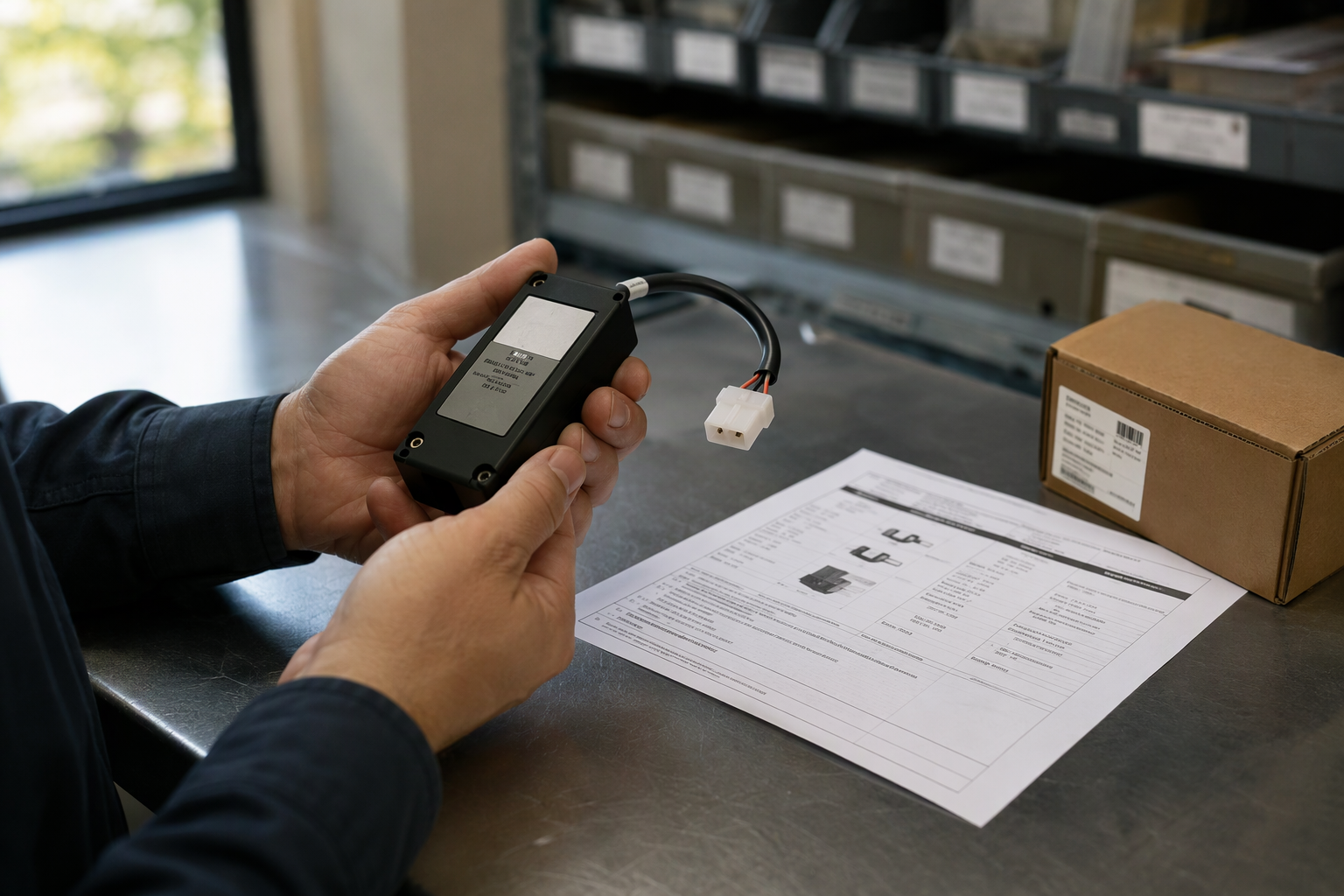
Belt monitor components — including sensor heads, control cards, and interface modules — carry their own lead time variables. A sensor module for a current-generation monitor system may ship within days; a legacy control card for a monitor installed a decade ago could require a factory rebuild or a compatible substitute that must be tested before installation.
Supplying the correct model and serial number of the elevator to the parts supplier at the outset is the most effective way to shorten the sourcing cycle. Liftech Elevator gathers full equipment data during diagnostic visits so that part orders are placed with complete specifications from the first contact with the supplier.
What Is a Belt Monitor and Why Is It Required on Modern Elevators?
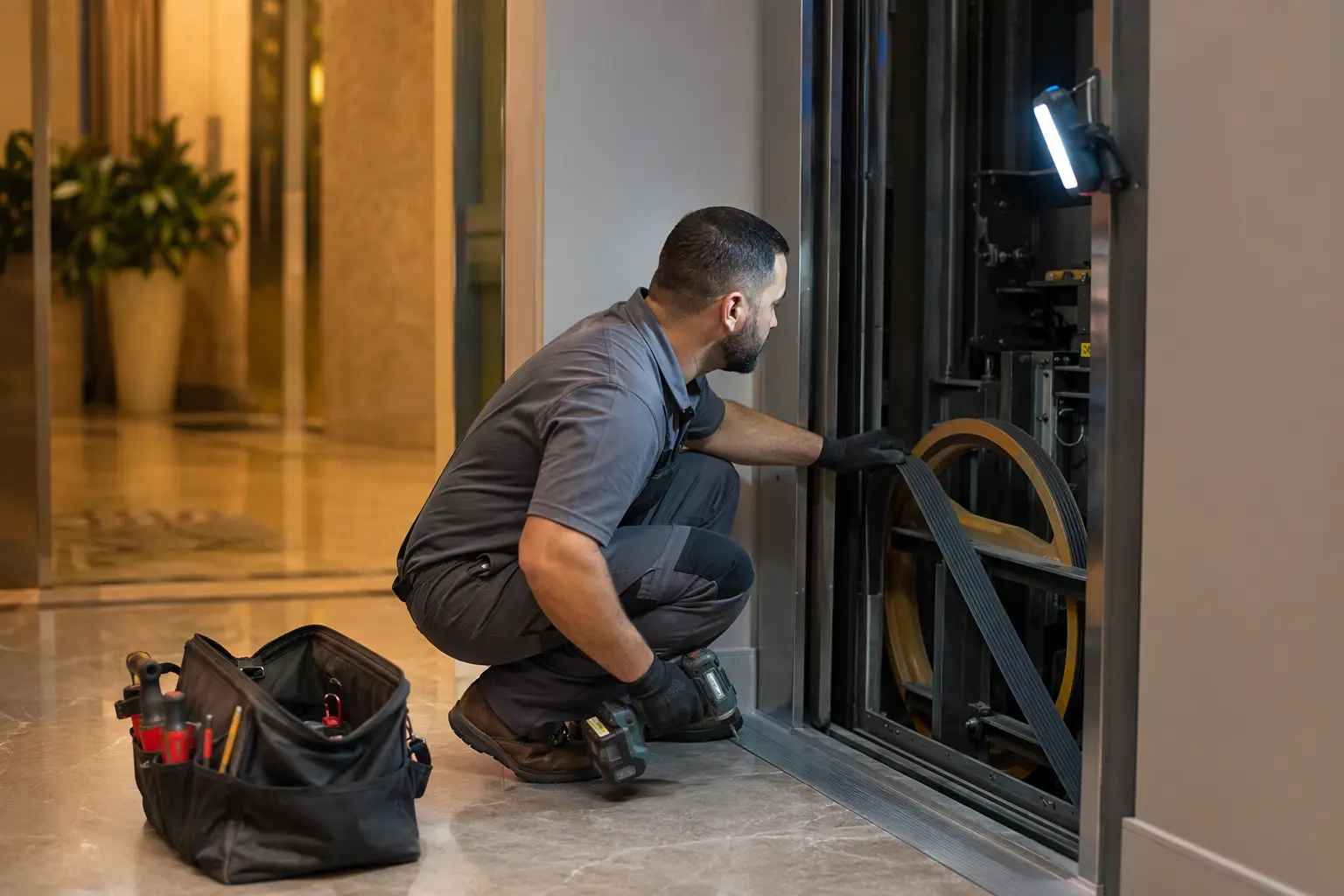
A belt monitor is an electronic or electromechanical safety device that continuously or periodically checks the structural integrity of the drive belts in a traction elevator, stopping the car or generating a maintenance alert when belt degradation is detected before a failure can occur.
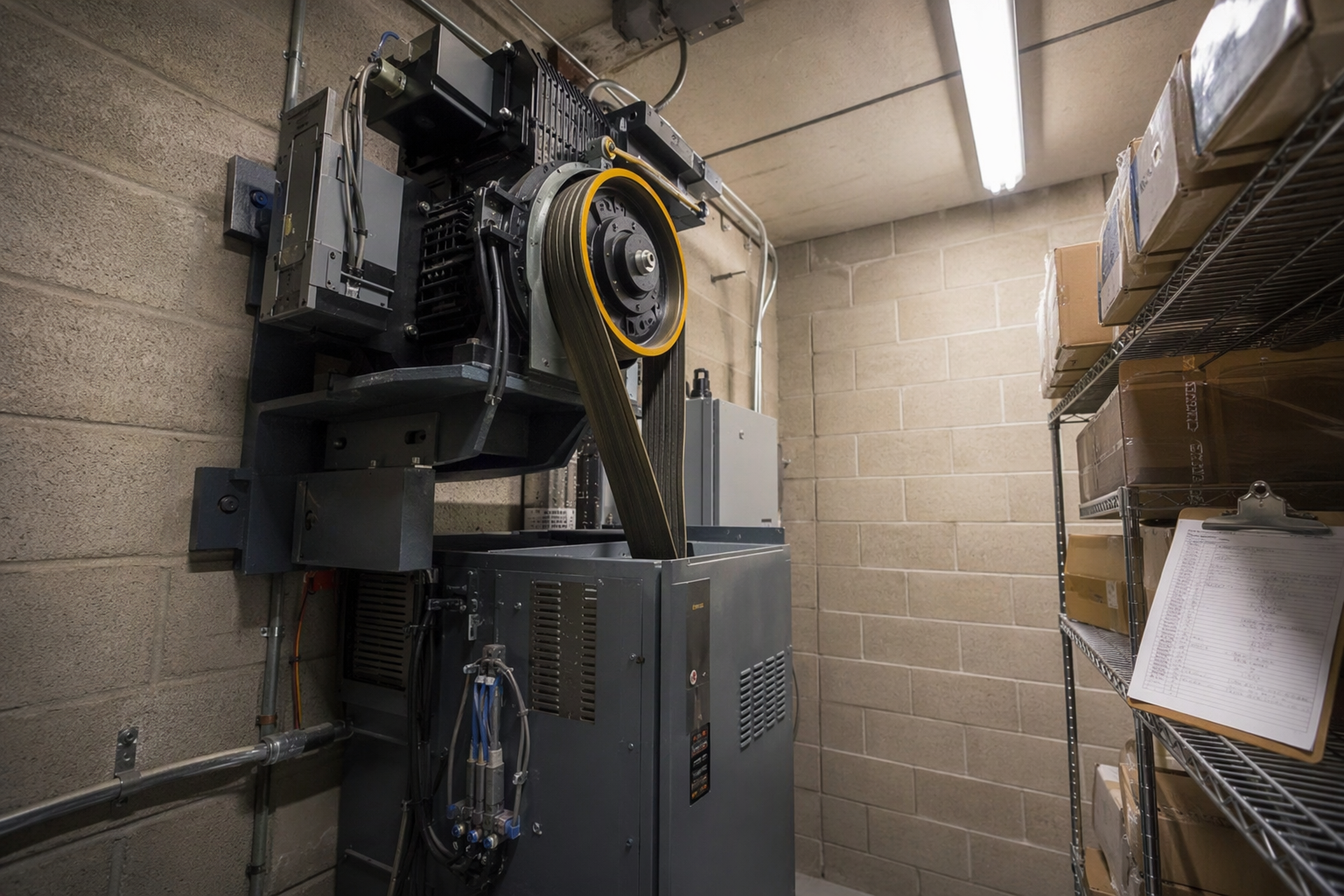
Flat polyurethane-jacketed steel-cord belts — commonly called flat belts or coated steel belts — replaced traditional round wire ropes in many MRL elevator installations because they allow smaller sheave diameters and eliminate the need for a traditional machine room. Because these belts cannot be visually inspected for internal cord breakage the way a conventional rope can, manufacturers integrate belt monitoring technology directly into the drive system. The monitor measures electrical continuity or magnetic flux through the steel tension members and compares readings against baseline values established at commissioning.
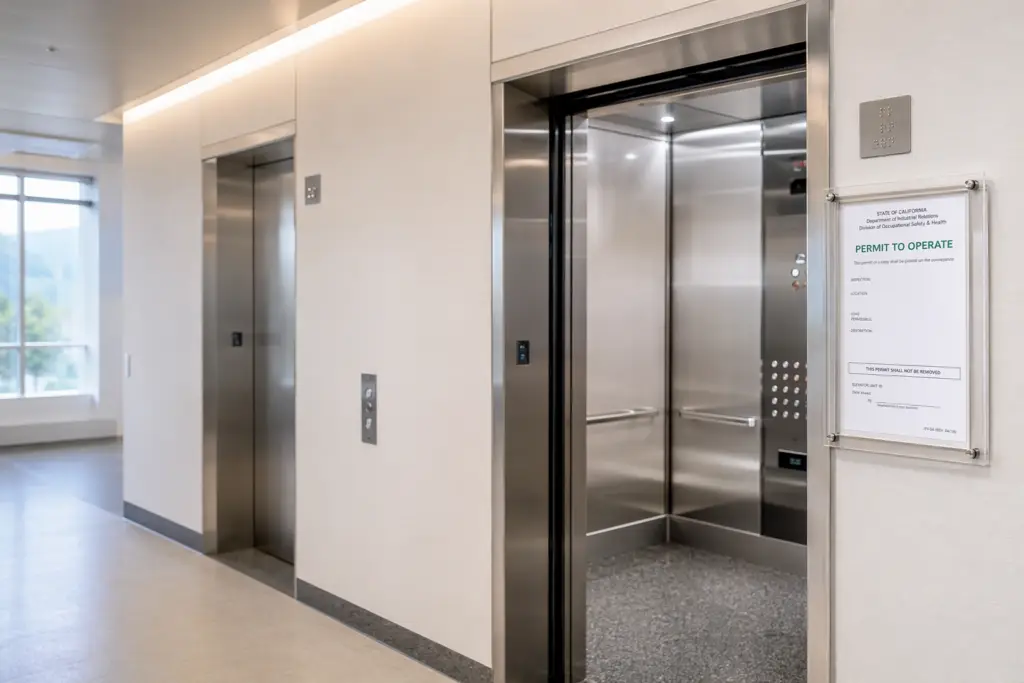
Under the ASME A17.1 Safety Code for Elevators and Escalators, safety devices that form part of a listed drive system must be maintained in working order. A belt monitor that is disabled, faulted, or generating false readings must be diagnosed and repaired as a priority maintenance item, not deferred. California’s elevator law — specifically the Cal/OSHA Elevator Unit under the California Department of Industrial Relations — requires that elevators remain in safe operating condition as a condition of holding a valid permit to operate.
How Soon After Parts Arrive Can Belt Monitor Work Be Completed?
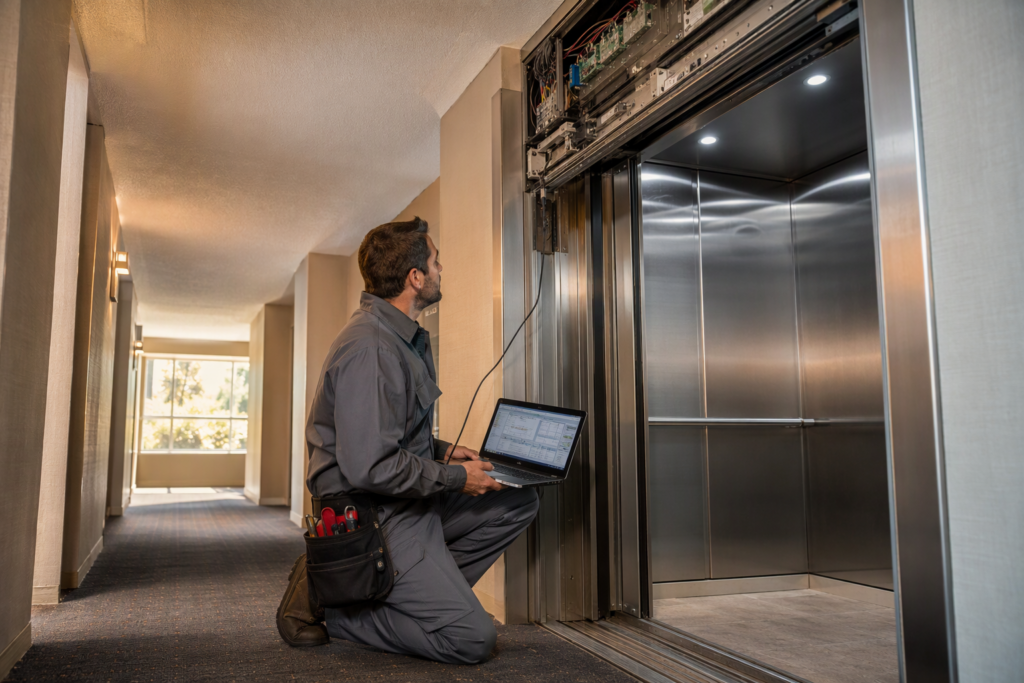
Once the correct parts are confirmed on-site, a Certified Competent Conveyance Mechanic can typically complete belt monitor diagnostics, sensor replacement, and system recalibration in one to four hours depending on system complexity and access conditions.
The labor component of belt monitor work is relatively compact for straightforward sensor replacements. The mechanic must isolate power to the drive system, remove the faulted component, install the replacement, reconnect wiring, and run the manufacturer’s calibration sequence. If the monitor requires firmware updates or the control system needs parameter resets following the hardware swap, additional time must be allocated. The mechanic must also perform a no-load and full-load test run to confirm the monitor reads accurately across the operational range before returning the elevator to service.
Scheduling this work promptly after part arrival is advisable. Under California Labor Code Sections 7300–7324.2 and the California Code of Regulations, Title 8, Elevator Safety Orders, an elevator must be maintained in safe condition as a requirement of holding a valid Cal/OSHA permit to operate. A known safety device fault that is left unaddressed puts that permit at risk.
How Long Does a Full Belt Replacement Take From Start to Finish?
A full belt replacement on a typical MRL traction elevator — including removal of worn belts, installation of new belts, tension setting, and return-to-service testing — generally requires a planned out-of-service window of several hours to a full day, with additional time if the machine room or machine space has access constraints.
Belt replacement is more involved than sensor work because the drive machine must be fully de-energized and locked out, the existing belts must be carefully removed without damaging the sheaves or guide components, and new belts must be routed, tensioned to manufacturer specifications, and secured. Improper belt tension — too loose or too tight — directly affects ride quality, wear rates, and safety device accuracy. After installation, the elevator must undergo a full operational test before passengers can board.
If the elevator has multiple belts (as most flat-belt MRL systems do), best practice is to replace the full set simultaneously. Mixing a new belt with partially worn belts creates uneven tension distribution across the drive sheave and shortens the life of the new installation. Mechanics certified by Cal/OSHA as Certified Competent Conveyance Mechanics and working for a Certified Qualified Conveyance Company are required to perform this work in California under the California Code of Regulations, Title 8, Elevator Safety Orders.
What Is the Step-by-Step Process From Belt Fault Detection to Return to Service?
The process moves through clearly defined stages, each of which must be completed before the next begins — skipping steps risks incomplete repairs or regulatory non-compliance.
- Fault detection and documentation: The belt monitor triggers an alert, or a periodic inspection by a Certified Competent Conveyance Inspector or Cal/OSHA safety engineer identifies belt wear or monitor malfunction. The fault code, inspection notes, and equipment data are documented.
- Diagnostic service call: A CCCM mechanic visits the site, pulls fault logs from the controller, physically inspects belt condition, and tests the monitor system to confirm whether the issue is a belt defect, a sensor fault, a wiring problem, or a controller configuration error.
- Parts identification and ordering: The mechanic or the servicing company’s parts team identifies exact OEM part numbers for the required belts, sensor components, or control hardware and places the order with the appropriate supplier. Lead time is communicated to the building owner at this stage.
- Parts receipt and verification: Upon delivery, parts are checked against the order specifications to confirm correct part numbers, quantities, and condition before the repair is scheduled.
- Obtaining permits if required: If the work constitutes a material alteration under California law, the servicing company must obtain the appropriate Cal/OSHA permit before work begins. Under California Labor Code and the Elevator Safety Orders, a permit is required before a conveyance is materially altered.
- Scheduled repair visit: The CCCM performs the belt monitor repair or belt replacement, following lockout/tagout procedures, manufacturer installation instructions, and applicable requirements of the ASME A17.1 code as adopted in California.
- Post-installation testing: The mechanic runs no-load and full-load operational tests, verifies belt tension, confirms monitor calibration, and checks all safety device interactions.
- Documentation and return to service: Repair records are completed, the elevator is returned to service, and any required inspection or permit renewal is coordinated with Cal/OSHA or, in Los Angeles, with the Los Angeles Department of Building and Safety, which operates its own elevator inspection program.
Does Belt Replacement Require a New Cal/OSHA Permit or Inspection?
Whether belt replacement triggers a formal permit or inspection requirement depends on how the work is classified under California’s Elevator Safety Orders — a like-for-like belt swap under a maintenance contract may not constitute a material alteration, but if the drive system configuration changes, a Cal/OSHA permit is required before work begins.
Under the Cal/OSHA Elevator Unit framework established in California Labor Code Sections 7300–7324.2 and Title 8, Elevator Safety Orders, a “material alteration” to a conveyance requires a permit from Cal/OSHA before the work is performed. Replacing worn belts with identical OEM replacements on the same drive system is generally considered maintenance rather than alteration. However, upgrading to a different belt type, changing the number of belts, or modifying the sheave or tensioning configuration could be classified differently. Building owners should confirm classification with their servicing company before work begins. Liftech Elevator coordinates permit questions with Cal/OSHA as part of the pre-repair process for clients in Signal Hill, Long Beach, Los Angeles, and Orange County.
Who Is Legally Permitted to Perform Belt Replacement and Belt Monitor Work in California?
Under California law, only a Certified Competent Conveyance Mechanic (CCCM) working for a Certified Qualified Conveyance Company (CQCC) certified by Cal/OSHA may perform maintenance, repair, or replacement of elevator components in California.
This requirement is established in the California Code of Regulations, Title 8, Elevator Safety Orders and enforced by the Cal/OSHA Elevator Unit, California Department of Industrial Relations. A CCCM working without supervision must hold current Cal/OSHA certification. CQCC companies must hold a C-11 Elevator Contractor license issued by the California Contractors State License Board (CSLB), plus current certificates of workers’ compensation and liability insurance. CCCM and CQCC certifications in California last two years; renewal requires a minimum of eight hours of continuing education. Building owners should verify that any company they engage for belt or belt monitor work holds active CQCC certification and employs CCCM-certified mechanics.
Can an Elevator Legally Stay in Service While Waiting for Belt Parts?
Whether an elevator may remain in service during the parts wait depends on the nature and severity of the fault — a belt monitor indicating imminent belt failure typically requires the elevator to be taken out of service immediately, while a minor sensor anomaly may allow continued operation under close monitoring, subject to the judgment of the servicing company and applicable Cal/OSHA requirements.
California Labor Code and the Elevator Safety Orders require that no elevator be operated in California without a valid, current permit to operate, and that permit is conditional on the elevator being in safe condition. A belt that has reached the end of its service life or a monitor that is registering active cord-breakage faults represents a direct safety concern. In such cases, the responsible approach — and the approach consistent with maintaining the permit — is to remove the elevator from service until the repair is complete. Building owners should work with their elevator service company to establish a temporary plan for elevator-dependent occupants during the out-of-service period, particularly where ADA accessibility obligations apply.
How Do Belt Lead Times Compare for Common vs. Obsolete Elevator Models?
The table below provides a general benchmark framework for understanding how parts availability varies by equipment category — specific lead times depend on the supplier, region, and current inventory levels at the time of order.
| Equipment Category | Belt Type | Typical Parts Availability | Estimated Lead Time Range | Monitor Component Availability |
|---|---|---|---|---|
| Current-production MRL (major OEM) | OEM flat polyurethane steel-cord belt | Regional distributor stock | 2–7 business days | Stocked or short lead |
| Current-production MRL (niche OEM) | OEM flat belt, limited distribution | Factory or specialty distributor | 1–3 weeks | Factory order |
| Mid-generation MRL (5–15 years old) | OEM or compatible belt | Specialty supplier | 1–4 weeks | May require sourcing |
| Older MRL with discontinued OEM support | Compatible aftermarket or factory rebuild | Specialty rebuild or aftermarket | 4–8+ weeks | May require rebuild or retrofit |
| Escalator drive belt (standard) | Standard V-belt or flat drive belt | Broad distribution | 1–5 business days | Varies by monitor type |
These ranges reflect general market conditions and are provided for planning purposes. Actual lead times at any given time depend on supplier inventory, shipping conditions, and whether the specific part requires factory production. A reliable elevator service company will confirm lead time with the supplier before quoting a timeline to the building owner.
What Information Should a Building Owner Have Ready to Speed Up Parts Ordering?
Having complete equipment identification data ready at the time of the service call allows the parts sourcing process to begin without delays caused by follow-up research.
The following information is typically required to identify and order the correct belt and belt monitor components:
- Elevator manufacturer name and model designation
- Equipment serial number (usually found on the drive machine or controller data plate)
- Year of installation or installation contract date
- Current belt part number if visible on the belt or in existing service records
- Belt monitor manufacturer and model (may be separate from the elevator OEM)
- Controller model and firmware version (relevant for monitor interface compatibility)
- Number of belts in the system
- Any existing service or maintenance contract documentation
Building owners who maintain a current equipment file — including the most recent inspection report issued by a Cal/OSHA safety engineer or Certified Competent Conveyance Inspector — are typically able to begin the parts identification process immediately upon calling their servicing company.
How Does a Full Maintenance Contract Affect Parts and Repair Timelines?
Elevators covered by a full maintenance contract with a CQCC-certified company benefit from faster prioritization of service visits and, in some cases, pre-stocked parts for critical components — and in California, such contracts can also extend a Cal/OSHA permit to operate from one year to up to two years.
Under California elevator regulations, Cal/OSHA may issue a permit to operate for up to two years for an elevator in safe condition that is covered by a full maintenance contract with a C-11 licensed elevator company. Beyond the regulatory benefit, maintenance contract holders typically receive priority scheduling for unplanned repairs, which means that once parts arrive the repair visit can be scheduled more quickly than for a non-contract client competing for available service slots. For belt-intensive systems where proactive monitoring is part of the maintenance scope, the servicing company may also anticipate belt replacement needs in advance and pre-order parts before a failure occurs, dramatically reducing unplanned downtime.
Are There ADA Compliance Implications While an Elevator Is Out of Service for Belt Work?
Yes — when an elevator is taken out of service for belt replacement or belt monitor repair, building owners with ADA-covered facilities must assess whether the outage creates a barrier that eliminates accessible routes required under the ADA.
Under the Americans with Disabilities Act, public accommodations and commercial facilities are required to maintain accessible features in working order. While the ADA acknowledges that temporary outages for maintenance are unavoidable, an extended out-of-service period without an alternative accessible route can constitute a compliance issue. Building owners should consider whether temporary alternative accommodations — such as staff assistance, temporary ramps, or coordination with tenants for accessible entry — can be arranged during the repair window. Minimizing the out-of-service duration by expediting parts and scheduling repairs promptly is both a customer service and an ADA risk-management priority.
What Should Building Owners Do If the Belt Monitor Triggers a Fault Between Scheduled Inspections?
A belt monitor fault between scheduled inspections should be treated as an urgent maintenance event requiring immediate contact with a CQCC-certified elevator service company — do not reset the fault and return the elevator to service without a qualified mechanic diagnosing the cause.
Belt monitor systems are designed to detect conditions that may not be visible to building staff. A fault code may indicate actual belt cord damage, a sensor drift, a loose connection, or a controller issue — only a CCCM mechanic with access to the drive system and monitor diagnostics can determine the cause. Resetting the fault without investigation risks masking a genuine structural belt issue that could lead to a safety incident or a Cal/OSHA enforcement action. The building owner should document the time and nature of the fault alert and provide this information to the responding mechanic to assist with diagnosis.
How Often Should Elevator Belts Be Inspected Even Without a Fault Alert?
Belt condition should be assessed as part of every periodic maintenance visit — even in the absence of a monitor fault — because monitor systems detect electrical or magnetic anomalies in steel cords but may not capture all forms of outer-jacket wear, edge damage, or sheave groove irregularities that affect belt service life.
California law requires every conveyance to be inspected at least once a year by a Cal/OSHA safety engineer or Certified Competent Conveyance Inspector, and that annual inspection includes a review of drive components. However, annual inspection is a regulatory minimum, not a comprehensive maintenance schedule. Industry guidance through the ASME A17.1 Safety Code for Elevators and Escalators supports regular maintenance intervals that include drive system component checks. Building owners should ensure their maintenance contract specifies belt inspection as a defined maintenance task and not simply a reactive action following a monitor alert.
What Happens During the Cal/OSHA Annual Inspection Related to Belts and Belt Monitors?
During the annual Cal/OSHA inspection, the authorized inspector reviews the condition of the drive system including belts, checks that all required safety devices — including the belt monitor where applicable — are functional, and verifies that the elevator meets the requirements of the adopted California elevator safety orders.
California’s elevator regulations specify that only Cal/OSHA safety engineers and Certified Competent Conveyance Inspectors may perform elevator inspections in California. The inspector will examine belt condition as part of the drive system review and will check that the belt monitor is operational and not in a faulted or bypassed state. An elevator found with a non-functional belt monitor, visibly degraded belts, or evidence that safety devices have been bypassed may receive a deficiency notice, and the permit to operate may be conditional or withheld until corrections are made. Arranging the annual reinspection is the elevator owner’s responsibility under California law.
Does the City of Los Angeles Have Additional Requirements Affecting Belt Repair Timelines?
Los Angeles operates its own elevator and conveyance inspection program through the Los Angeles Department of Building and Safety (LADBS), which may have specific scheduling and documentation requirements that affect how belt repairs are completed and returned to service within the City of Los Angeles.
Building owners with elevators in the City of Los Angeles should be aware that LADBS administers its own elevator inspection authority. This can affect how post-repair inspections are scheduled and what documentation is required before an elevator is returned to service following belt replacement or significant belt monitor work. Liftech Elevator serves clients throughout Los Angeles and is familiar with coordinating repair documentation in this regulatory environment. Building owners should confirm applicable local requirements with their servicing company for any work performed in the City of Los Angeles.
How Can Planned Belt Replacement Minimize Building Disruption?
Scheduling belt replacement proactively — based on belt age, monitor trend data, and maintenance records rather than waiting for an in-service failure — allows the building to plan the outage during low-traffic hours and eliminates the emergency lead-time pressure that makes unplanned repairs more disruptive.
Proactive belt replacement is typically coordinated in advance with the building manager so that parts are ordered, the permit situation is confirmed, and the work is scheduled during evenings, weekends, or other low-use periods. This approach also allows the servicing company to stage any special tools, alignment fixtures, or multiple technician resources needed for a smooth, single-visit completion. Buildings in Signal Hill, Long Beach, and Orange County with consistent maintenance programs can often anticipate belt replacement intervals and budget for them in annual capital planning cycles without emergency expenditure premiums.
What Should a Building Owner Ask a Prospective Elevator Service Company About Belt Work?
Before engaging any elevator service company for belt monitor work or belt replacement, building owners should ask a targeted set of questions to verify regulatory compliance and service capability.
- Is your company currently certified as a Certified Qualified Conveyance Company (CQCC) by Cal/OSHA? Can you provide your CQCC certificate number?
- Do the mechanics who will perform this work hold current Certified Competent Conveyance Mechanic (CCCM) certification from Cal/OSHA?
- Does your company hold a current C-11 Elevator Contractor license from the California Contractors State License Board?
- Do you source OEM belts or compatible aftermarket belts, and how do you verify compatibility?
- What is your current estimated lead time for the specific belt part number required for this equipment?
- Will this repair constitute a material alteration requiring a Cal/OSHA permit, and if so, will your company handle the permit application?
- How do you handle post-installation testing and what documentation will be provided upon completion?
- What is your process if a part arrives damaged or incorrect?
These questions help building owners distinguish companies that are operationally prepared for compliant belt work from those that may lack the regulatory standing or technical depth to perform it correctly.
How Does the California Group V Update Proposal Affect Belt and Belt Monitor Requirements?
California has proposed a Group V update to its Elevator Safety Orders that would incorporate elements of ASME A17.1-2019, which includes updated provisions relevant to alternative traction media including flat belts — however, as of 2026, no effective date has been posted and the current adopted standard remains the ASME A17.1/CSA B44, 2004 edition.
The California Standards Board held a public hearing on the Group V proposal on June 18, 2026. Until an effective date is officially posted, California installations and maintenance practices continue to operate under the 2004 edition as adopted in the Group IV Elevator Safety Orders effective May 1, 2008. Building owners should monitor the Cal/OSHA Elevator Unit for official announcements regarding when and how the Group V standards will take effect, as the transition may affect future equipment requirements including belt monitoring technology standards.
What Are the Consequences of Delaying Belt Monitor Repair or Belt Replacement in California?
Delaying necessary belt or belt monitor repairs in California can result in permit revocation, Cal/OSHA enforcement action, elevator out-of-service orders, and — most critically — a safety incident involving building occupants.
California Labor Code Sections 7300–7324.2 and the Title 8 Elevator Safety Orders give Cal/OSHA authority to require that an unsafe elevator be taken out of service. An elevator operating with a known, unaddressed belt defect or a non-functional safety device is operating in a condition inconsistent with its permit to operate. Beyond regulatory consequences, an in-service belt failure in a traction elevator can produce a sudden stop event or uncontrolled car movement — outcomes with serious implications for passenger safety and building owner liability. The cost and disruption of a planned belt replacement, even with extended parts lead times, is substantially lower than the consequences of an unplanned failure.
Contact Liftech Elevator for a free elevator assessment at 562-997-3639.
Need elevator service you can rely on? Liftech Elevator is ready to help.