MON-FRI 8:00AM-5:00PM   |
   CALL: 562-997-3639

How ofthen should elevators be inspected?

How Often Should Elevators Be Inspected? Complete FAQ Guide (2026)
Quick Answer: Elevators should be inspected at minimum once per year by a state-licensed inspector, with routine maintenance checks every 1–3 months depending on usage, building type, and California state code requirements under California Labor Code Division 5.
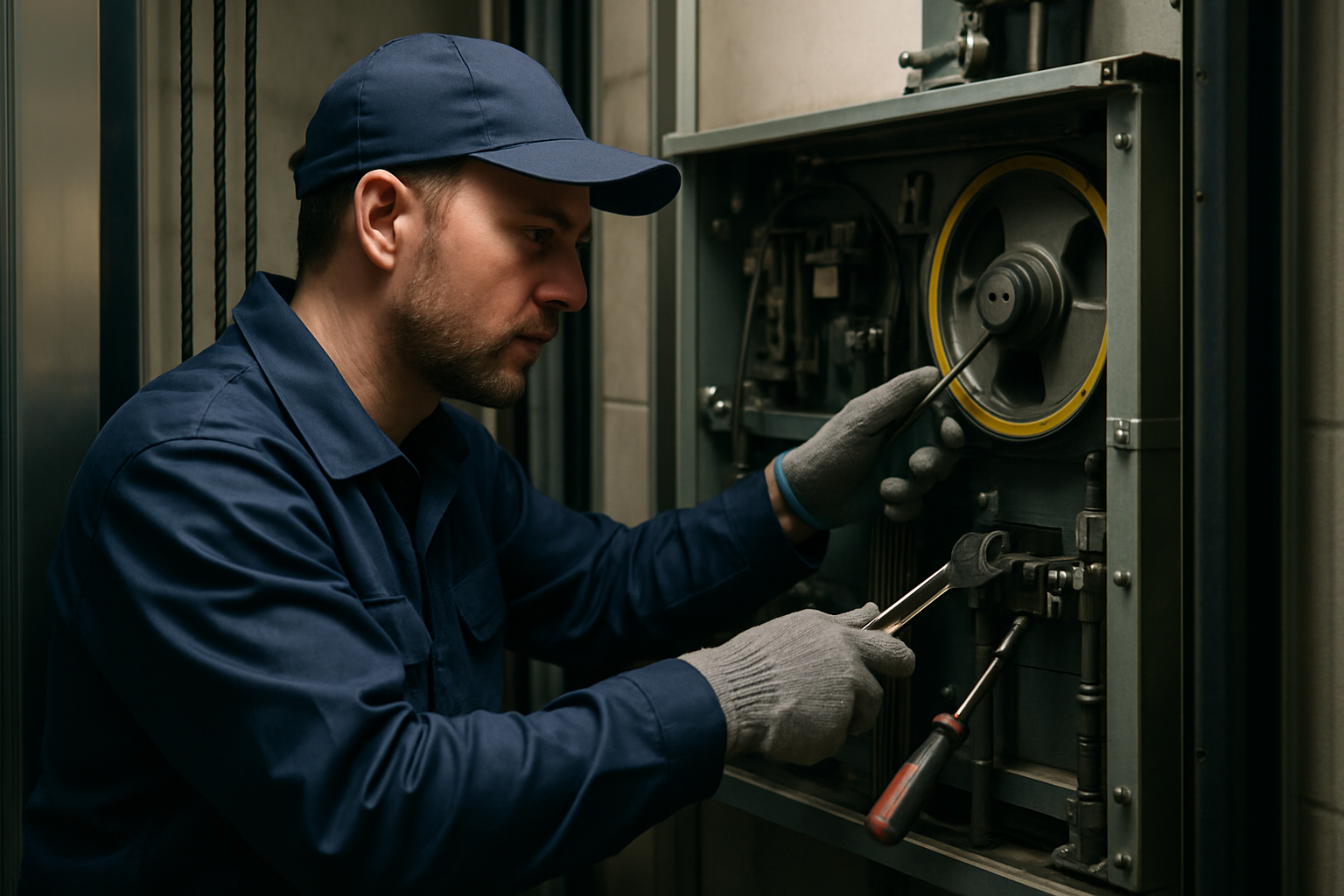
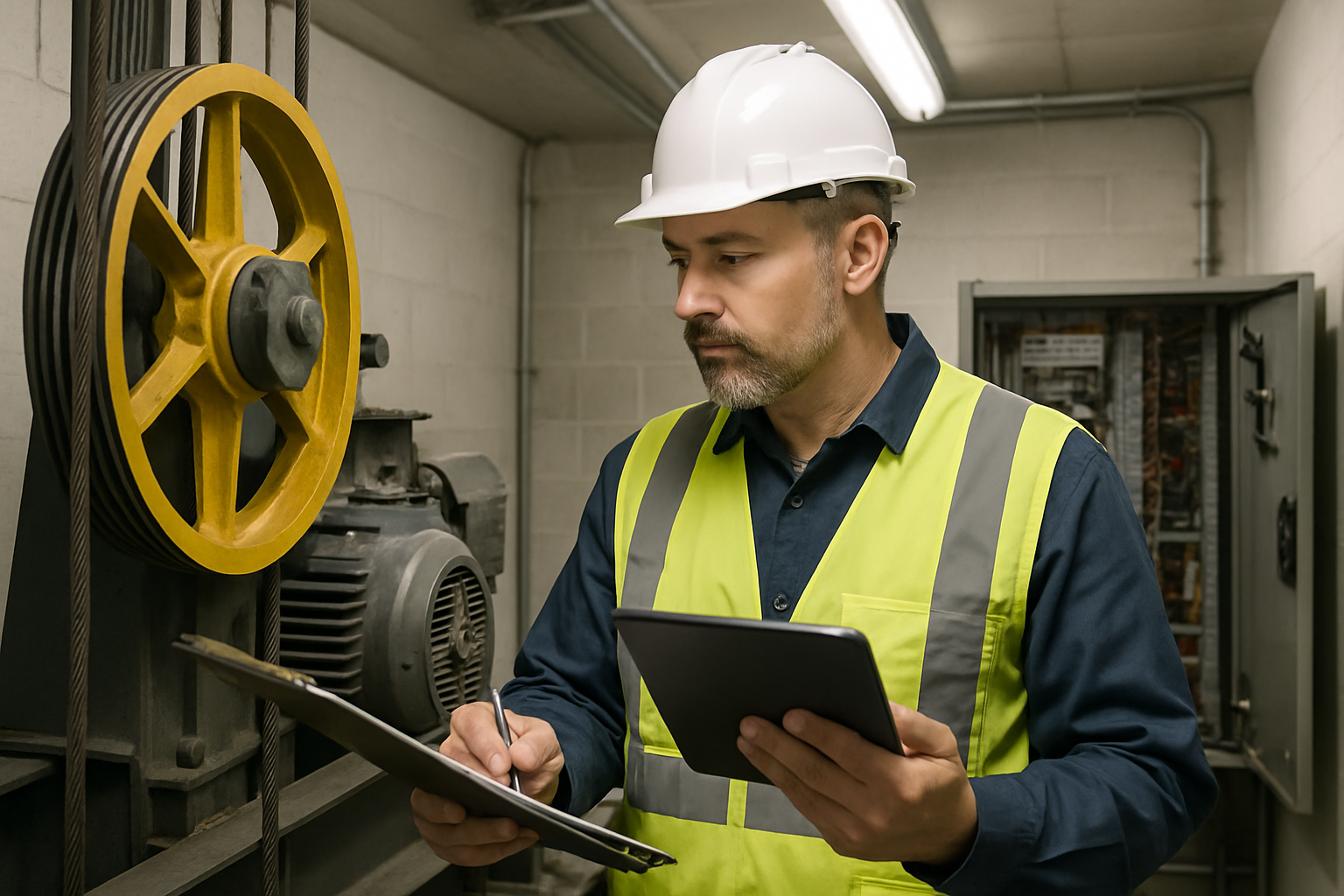
Certified elevator inspector conducting an annual safety inspection in a commercial building machine room — elevator inspections are required at least once per year in California.
California law requires elevators to be inspected at least once every 12 months by a Certified Competent Conveyance Inspector (CCCI). Annual inspections verify compliance with California Code of Regulations Title 8 and the ASME A17.1 safety code.

After 15+ years inspecting, maintaining, and certifying elevators across Signal Hill, Long Beach, Los Angeles, and Orange County, I’ve answered this question thousands of times. Whether you manage a commercial high-rise, a residential condo complex, or a small medical office, understanding elevator inspection frequency isn’t just about compliance — it’s about protecting the people who ride your elevator every single day. This guide covers everything you need to know.


How Often Should Elevators Be Inspected?
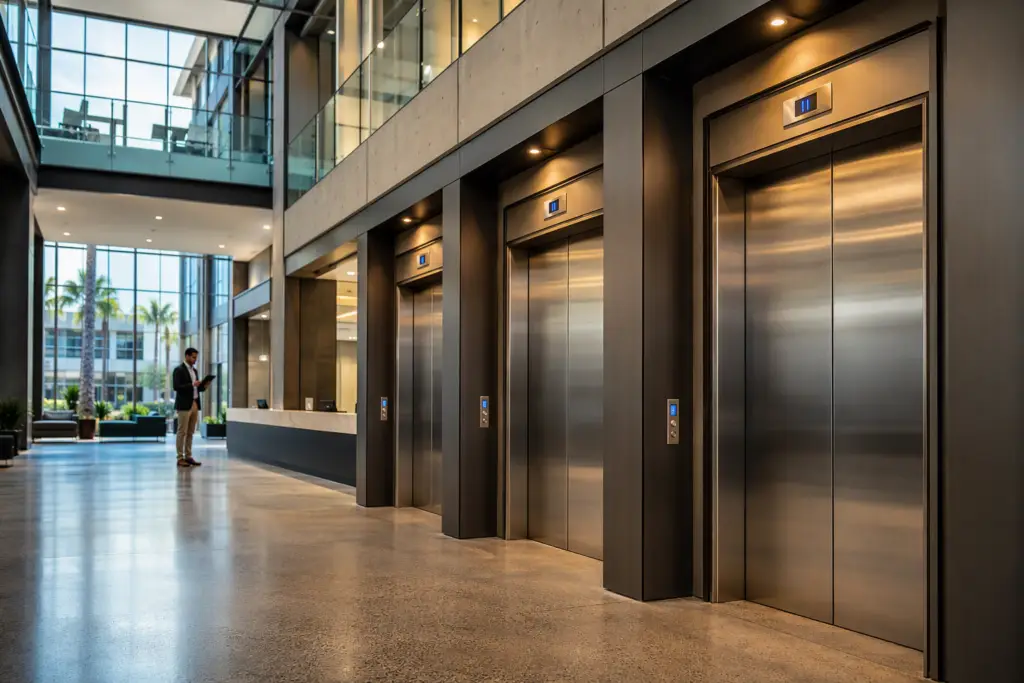
Licensed elevator technician performing routine preventive maintenance on a commercial elevator, the ongoing service that keeps elevators safe between required annual inspections.
Routine elevator maintenance — recommended every 30 to 90 days under ASME A17.1 — is distinct from the formal annual inspection. Regular maintenance by qualified elevator mechanics prevents violations and extends equipment life between compliance inspections.

Elevators in California must receive a full safety inspection by a Certified Competent Conveyance Inspector (CCCI) at least once every 12 months, as required under California Code of Regulations Title 8.

However, annual inspections are the legal floor — not the industry ceiling. The ASME A17.1/CSA B44 Safety Code for Elevators and Escalators recommends routine maintenance visits every 30 to 90 days depending on the type of equipment and volume of use. A busy hotel elevator serving 500+ rides per day has vastly different maintenance demands than a low-traffic residential elevator in a 10-unit condo building. The baseline answer is annual inspection plus regular maintenance — but as a technician, I always tell building owners: if you’re only doing what’s legally required, you’re already behind.


What Is the Difference Between an Elevator Inspection and Elevator Maintenance?

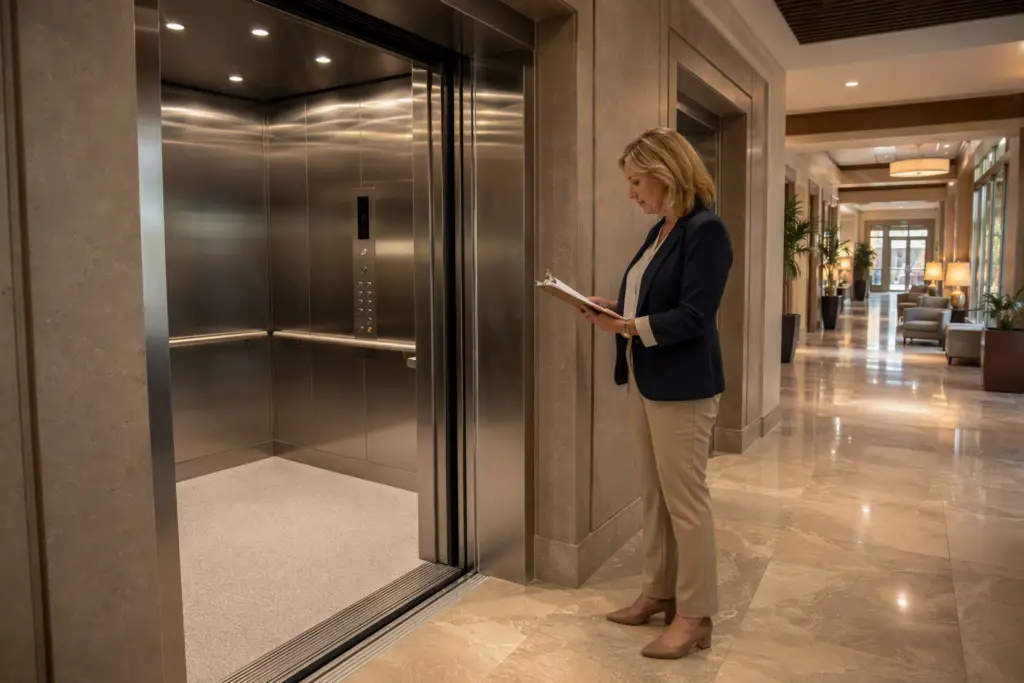
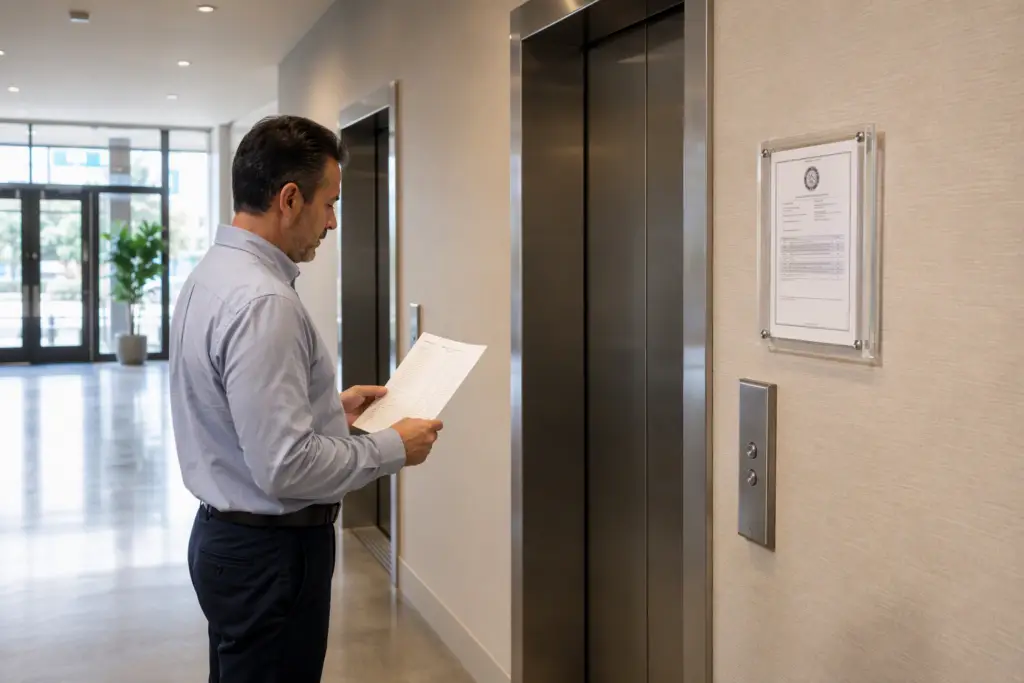
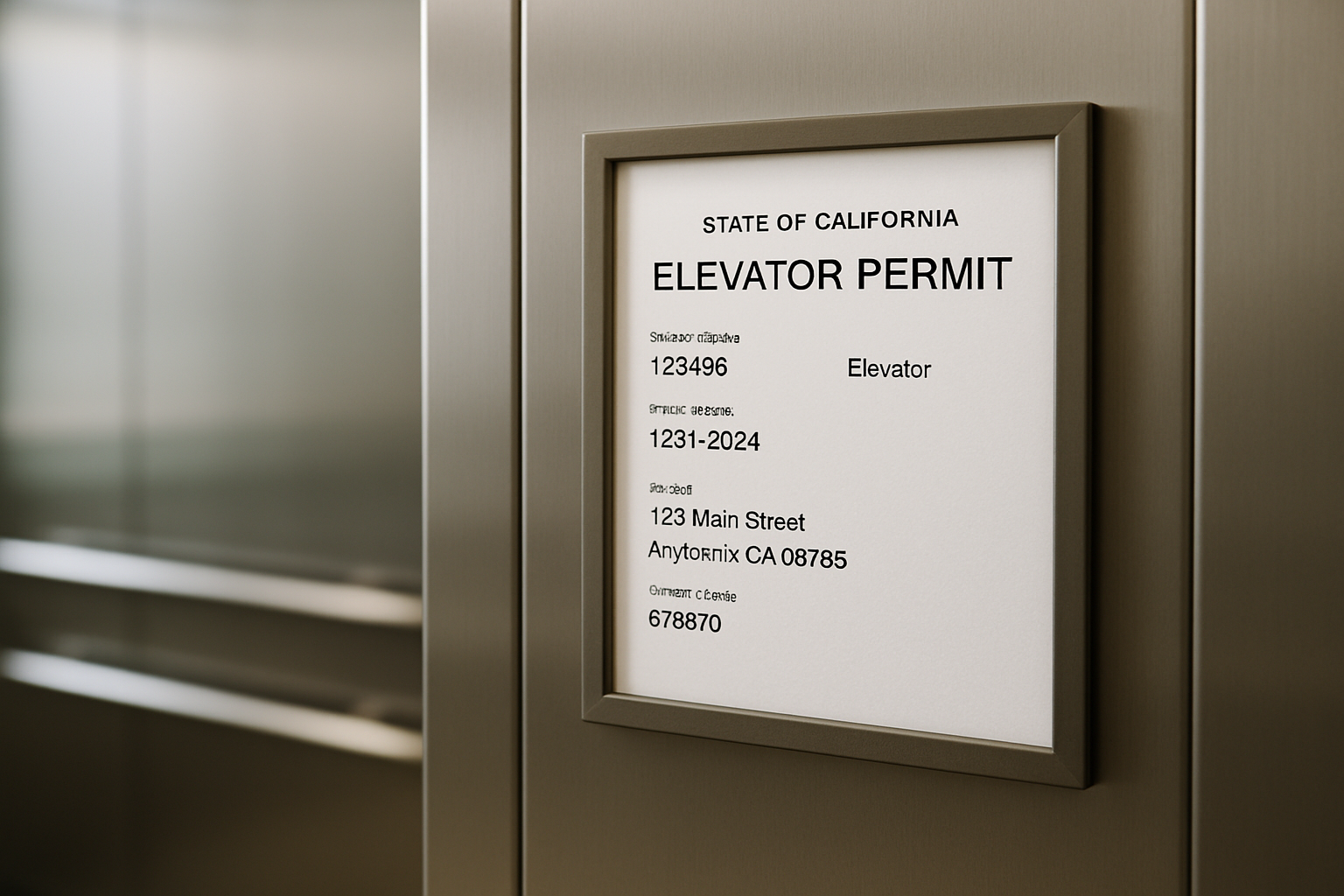
Elevator inspector reviewing a Certificate of Compliance document in a California commercial building lobby, illustrating the legal inspection requirements under California Labor Code and Cal/OSHA reg
Under California Labor Code §7300–7324.2, elevators must hold a valid Certificate of Compliance issued after a passed annual inspection. Only a state-authorized Certified Competent Conveyance Inspector can conduct this legally required evaluation.

An elevator inspection is a formal safety evaluation performed by a licensed third-party or state inspector to issue a compliance certificate, while maintenance is ongoing preventive work performed by a certified technician to keep the equipment running safely between inspections.

This distinction confuses building managers more than almost anything else. An inspection results in a Certificate of Compliance (or a notice of violation). Maintenance is what prevents violations in the first place. Think of it like your car: the annual smog check is the inspection; oil changes, brake checks, and tire rotations are maintenance. You need both, and skipping one eventually destroys the other’s value.

In California, only a CCCI can perform the annual compliance inspection. Maintenance, however, must be performed by qualified elevator mechanics — the kind employed by licensed contractors like Liftech Elevator.


What Does California Law Require for Elevator Inspections?

California law requires annual inspections for most elevators under the jurisdiction of the California Division of Occupational Safety and Health (Cal/OSHA), with the inspection conducted by a Certified Competent Conveyance Inspector.

California is one of the most rigorous states in the country for elevator regulation. Here’s the core legal framework:

  • California Labor Code §7300–7324.2 — Establishes the permit, inspection, and certification requirements for all conveyances in the state.
  • California Code of Regulations (CCR) Title 8, Chapter 4 — Specifies technical standards, including adoption of ASME A17.1 and periodic inspection intervals.
  • Cal/OSHA Elevator Unit — The enforcing body for all conveyances in publicly accessible buildings.

Buildings in Los Angeles, Long Beach, Signal Hill, and Orange County are all subject to these state-level requirements. Some municipalities layer additional local requirements on top, which is why working with a locally knowledgeable contractor matters enormously.


How Often Should Elevator Maintenance Be Performed?

Industry best practice calls for preventive maintenance visits every 30–90 days, with high-traffic commercial elevators requiring monthly service and low-use residential elevators typically serviced quarterly.

Here’s a practical breakdown I use with every client:

Elevator Maintenance Frequency Benchmarks (2026)
Building/Usage Type Daily Ride Estimate Recommended Maintenance Frequency Annual Inspection Required?
High-rise commercial office (10+ floors) 1,000+ Monthly (every 30 days) Yes
Mid-rise mixed-use or retail 300–999 Every 45–60 days Yes
Hotel or hospitality 500–1,500 Monthly (every 30 days) Yes
Medical or healthcare facility 200–800 Monthly (every 30 days) Yes
Low-rise residential condo (2–6 floors) 50–200 Quarterly (every 90 days) Yes
Private home (residential elevator) Under 50 Every 6 months minimum Varies by jurisdiction
Parking structure 100–400 Every 60–90 days Yes

What Happens During a California Elevator Safety Inspection?

A California elevator safety inspection covers mechanical components, electrical systems, safety devices, door operation, cab condition, emergency features, and compliance with ASME A17.1 standards — typically taking 2–4 hours per unit.

Here’s what a CCCI evaluates during a standard annual inspection:

  • Safety devices: Governor, safeties, buffers, and interlocks
  • Door systems: Door operator, closing force (must not exceed 30 lbs per ASME A17.1), reopening devices
  • Machine room: Temperature, lighting, fire suppression, rope condition
  • Cab interior: Emergency lighting, telephone (required by ADA regulations and ASME A17.1), capacity signage
  • Pit: Lighting, stop switch, pit ladder, waterproofing
  • Leveling and ride quality: Landing accuracy (must be within ½ inch per ASME A17.1 Section 2.29)
  • Load test: Periodic full-load performance testing

Failing any of these categories can result in a shutdown order. In my experience, the most common failure points I see during inspections in Los Angeles and Orange County are door re-opening device degradation, emergency phone malfunctions, and oil contamination in the pit.


What Are the Consequences of Missing an Annual Elevator Inspection?

Missing a required annual elevator inspection in California can result in permit revocation, fines up to thousands of dollars per day, mandatory shutdown of the elevator, and significant liability exposure if an incident occurs.

Cal/OSHA has the authority to issue a Notice to Comply, a civil penalty, or an order to shut down equipment that is operating without a current permit or has failed inspection. Beyond regulatory penalties, the legal liability exposure if an uninspected elevator injures a passenger is enormous. California courts have found building owners negligent specifically because inspections were not current. In 2026, with increased digital tracking of permit status, non-compliance is harder to hide than ever — and enforcement in Los Angeles County has intensified.


How Much Does an Elevator Inspection Cost in California?

In California, a third-party elevator inspection typically costs between $150 and $600 per unit, while state-conducted inspections through Cal/OSHA vary by unit type and permit fees set in the annual regulatory fee schedule.

Cost factors include:

  • Unit type: Hydraulic elevators, traction elevators, and limited-use/limited-application (LULA) elevators all have different inspection scopes
  • Number of units: Multi-unit contracts are typically discounted
  • Building location: Travel costs and market rates vary across Signal Hill, Long Beach, Los Angeles, and Orange County
  • Findings and follow-up: If violations are found, re-inspection fees apply

The cost of a missed inspection — in fines, liability, and emergency repairs — dwarfs any inspection fee. A proactive maintenance and inspection contract with a full-service provider like Liftech Elevator is almost always the most cost-effective path for building owners across Southern California.


How Often Should Elevator Cables and Ropes Be Inspected?

Elevator wire ropes and cables should be visually inspected during every maintenance visit (every 30–90 days) and undergo a formal inspection per ASME A17.1 Rule 8.6 at least annually, with replacement determined by wire breaks, corrosion, and diameter reduction criteria.

ASME A17.1/CSA B44 Section 8.6.4 specifies that hoist ropes must be removed from service when broken wires in a lay length exceed 6 broken wires in one rope lay or 3 broken wires in one strand in one rope lay. Rope diameter reduction exceeding 10% from nominal is also a disqualifying condition. In the Southern California coastal environment — particularly in Long Beach and Signal Hill near the port — salt air accelerates corrosion and shortens rope service life compared to inland installations.


Are There Different Inspection Requirements for Hydraulic vs. Traction Elevators?

Yes — hydraulic and traction elevators have distinct inspection requirements under ASME A17.1, with hydraulic units requiring additional periodic testing of the pressure relief valve, lowering valve, and oil containment systems.

Hydraulic elevators (the most common type in low-rise buildings across Orange County and Long Beach) also require periodic Category 1 and Category 5 tests on a defined cycle — typically every 1 and 5 years respectively. Category 5 tests require a full-load safety test and are more involved and expensive than annual inspections. Traction elevators have their own Category 1 and 5 testing cycles under ASME A17.1 Part 8. Your inspection contractor must track these cycles — this is one area where disorganized service providers frequently cause building owners to fall out of compliance without realizing it.


What Is a Category 5 Elevator Test and How Often Is It Required?

A Category 5 test is the most comprehensive periodic elevator safety test under ASME A17.1, required every 5 years for most electric traction elevators and every 5 years for hydraulic elevators, involving full-load safeties, buffers, and governor testing.

The Category 5 test cannot be performed by just any mechanic — it requires a CCCI and specific equipment. In California, the results must be filed with Cal/OSHA. Building owners frequently get caught off-guard by Cat 5 costs because they weren’t tracking the 5-year cycle. A good maintenance contractor will proactively schedule and budget for Cat 5 tests. At Liftech Elevator, we include Cat 5 cycle tracking in every maintenance agreement as a standard service for our clients in Los Angeles, Long Beach, and surrounding areas.


How Do ADA Requirements Affect Elevator Inspections?

The Americans with Disabilities Act (ADA) requires that elevators in most multi-story public buildings be accessible and maintained in working order, making functional compliance an ongoing obligation — not just a one-time installation requirement.

Key ADA elevator requirements that are evaluated during inspections include:

  • Cab dimensions (minimum 80″ depth x 68″ width for standard installations)
  • Door width (minimum 36″ clear opening)
  • Control panel button height and Braille markings
  • Emergency two-way communication system in the cab
  • Hall lantern and audible signals
  • Leveling accuracy (within ½ inch of floor level)

Critically, the ADA requires that elevators be kept in working order — meaning that extended downtime without equivalent accessible access can itself be an ADA violation, separate from the physical design requirements.


How Often Should Elevator Doors Be Inspected or Adjusted?

Elevator door systems — the single most common source of entrapment injuries — should be checked and adjusted at every preventive maintenance visit, which means at minimum quarterly and ideally monthly for commercial elevators.

Door-related issues account for approximately 30–40% of all elevator-related injuries in the United States according to industry data. The ASME A17.1 standard sets strict limits on door closing force (30 lbs maximum kinetic energy), re-opening device sensitivity, and door speed. Door clutches, gibs, rollers, and safety edges wear faster than almost any other component — especially in high-traffic Los Angeles commercial buildings where doors may cycle thousands of times per day. I recommend building managers pay specific attention to door behavior between maintenance visits: a door that hesitates, re-opens unexpectedly, or makes grinding sounds needs immediate attention.


What Should Building Managers Do Between Scheduled Inspections?

Building managers should conduct informal visual walkthroughs monthly, maintain a ride-quality log, respond immediately to tenant-reported anomalies, and ensure the machine room is clean, dry, and accessible at all times.

A simple monthly walkaround checklist I recommend to every property manager includes:

  1. Ride the elevator — note any unusual sounds, vibrations, or door hesitation
  2. Confirm emergency phone produces a dial tone and connects to a live response
  3. Verify the permit/Certificate of Operation is posted and current
  4. Check that cab lighting (including emergency lighting) is functional
  5. Confirm the machine room door is locked, clean, and free from stored items
  6. Check the pit access area — no standing water, no debris

Document everything. In a liability event, a log showing active management attention is meaningful evidence.


How Long Does an Elevator Inspection Take?

A standard annual elevator inspection takes approximately 2–4 hours per unit, though Category 5 tests can take 4–8 hours and may require taking the elevator out of service for a full day.

For multi-unit buildings, inspections are typically staggered to maintain at least partial elevator service to occupants. Building managers should plan for elevator downtime and notify tenants or residents in advance. For hospitals, senior living facilities, and buildings serving ADA-dependent occupants in Los Angeles and Orange County, inspection scheduling requires especially careful coordination — a detail that experienced local contractors handle as part of their standard service process.


How Do I Know If My Elevator Needs Inspection Right Now?

If your elevator’s Certificate of Operation is expired, if it has been more than 12 months since the last full inspection, or if the equipment is exhibiting any abnormal behavior, it needs immediate attention — do not wait for the next scheduled visit.

Specific red flags that warrant an unscheduled inspection or service call include:

  • Unusual noises: grinding, banging, or squealing during operation
  • Rough or erratic ride quality
  • Doors not closing fully or re-opening without obstruction
  • Leveling issues (stopping above or below the floor level)
  • Frequent nuisance stops or failure to respond to hall calls
  • Any reported entrapment or near-miss incident
  • Water intrusion in the pit

In 15+ years in the field, I’ve seen minor issues that were ignored turn into five-figure repairs and regulatory shutdowns. Early intervention always wins.


What Qualifications Should an Elevator Inspector Have in California?

In California, elevator inspectors must hold the Certified Competent Conveyance Inspector (CCCI) credential issued by Cal/OSHA, and elevator mechanics performing maintenance must be licensed by the state under the California Elevator Safety Act.

When vetting any elevator service provider, verify:

  • CCCI credential — Required for anyone performing the annual state inspection
  • California Elevator Mechanic license — Required for mechanics performing maintenance and repairs
  • IUEC membership or equivalent trade certification — Industry standard for journeyman mechanics
  • Insurance and bonding — General liability and workers’ compensation are mandatory for any reputable contractor
  • Local experience — Familiarity with Cal/OSHA’s enforcement priorities and regional permit processing in Los Angeles County and Orange County

How Does Elevator Inspection Frequency Compare Across Different States?

California’s annual inspection requirement is consistent with most states, but California’s enforcement rigor, technical standards adoption, and penalty structure make it one of the strictest regulatory environments for elevator compliance in the country.

Elevator Inspection Frequency: State Comparison (2026)
State Required Inspection Interval Governing Code Enforcement Body
California Annual (12 months) CCR Title 8 / ASME A17.1 Cal/OSHA
New York Annual (12 months) NYC Admin Code / ASME A17.1 NYC DOB / State DOL
Texas Annual (12 months) Texas Occupations Code / ASME A17.1 Texas Dept. of Insurance
Florida Annual (12 months) Florida Statutes Ch. 399 / ASME A17.1 Florida DBPR
Illinois Annual (12 months) Illinois Elevator Safety Act / ASME A17.1 IL IDOL

While inspection intervals are similar across states, California stands out for its no-grace-period enforcement posture and its requirement that all permits be physically posted in the cab at all times — something inspectors in LA and Orange County check rigorously.


What Is the Cost of Non-Compliance with Elevator Inspection Requirements?

In California, operating an elevator without a current permit or after a failed inspection can result in civil penalties starting at $1,000 per violation per day, mandatory equipment shutdown, and unlimited tort liability exposure in the event of a passenger injury.

Beyond direct fines, the indirect costs of non-compliance are often more damaging:

  • Emergency repair premiums: Repairs required to bring a failed elevator back into compliance on short notice cost 2–3x more than planned maintenance
  • Tenant disruption: Elevator shutdown in a commercial building can trigger lease disputes and reputational damage
  • Insurance consequences: Carriers may deny claims or increase premiums after a documented compliance gap
  • Litigation: In California, an uninspected elevator shifts the burden of proof significantly toward the building owner in any personal injury claim

How Do I Find a Qualified Elevator Inspector or Service Company in Los Angeles or Orange County?

Look for a licensed, insured elevator contractor with certified mechanics, verifiable CCCI-affiliated inspection relationships, and documented experience with Cal/OSHA compliance processes in your specific county.

Southern California has no shortage of elevator service companies, but the quality gap between providers is significant. When evaluating vendors, ask these specific questions:

  1. Are your mechanics California-licensed elevator mechanics?
  2. Do you have an in-house CCCI or a direct relationship with a certified inspector for annual compliance?
  3. Do you track Category 1 and Category 5 test cycles for each unit you service?
  4. What is your average response time for emergency service calls in our area?
  5. Can you provide references from buildings similar to ours in Los Angeles or Orange County?

Liftech Elevator was built specifically to serve building owners in Signal Hill, Long Beach, Los Angeles, and Orange County with the full spectrum of maintenance, inspection coordination, and code compliance services — all from technicians who know the local regulatory environment inside and out.


What Elevator Maintenance Records Should Building Owners Keep?

California law requires building owners to maintain elevator maintenance and inspection records accessible on-site, and industry best practice calls for a permanent log kept in or near the machine room documenting every service visit, test result, and repair.

Your elevator records file should contain:

  • Current Certificate of Operation (posted in cab)
  • All prior inspection reports and any violation notices with corrective actions
  • Maintenance visit logs with technician name, date, work performed, and any findings
  • Category 1 and Category 5 test certificates with dates and next due dates
  • Parts replacement records (especially ropes, buffers, safety components)
  • Any entrapment or incident reports

These records are requested immediately by Cal/OSHA in the event of a complaint, incident investigation, or routine enforcement audit. I’ve worked with building managers who couldn’t produce records for a unit that was serviced for years — and watched them face compliance problems that solid recordkeeping would have prevented entirely.


Ready to Get Your Elevator Inspected and Back into Full Compliance?

Don’t wait for a violation notice or a shutdown order. Whether your elevator is due for its annual California inspection, overdue for a Category 5 test, or simply showing signs it needs professional attention, our certified technicians are ready to help.

Liftech Elevator serves building owners and property managers across Signal Hill CA, Long Beach CA, Los Angeles CA, and Orange County CA. We handle everything from routine preventive maintenance and annual inspection coordination to emergency repairs and full modernization projects — with full transparency, documented compliance tracking, and technicians who know your equipment and your local regulatory environment.

Contact Liftech Elevator for a free elevator assessment: 562-609-3478

We’ll review your current inspection status, maintenance records, and upcoming test cycles — and give you an honest assessment of where you stand, at no charge. Because your tenants, residents, and visitors deserve an elevator that’s safe every single day — not just the day it gets inspected.


This guide reflects California elevator regulations and ASME A17.1/CSA B44 standards as of 2026. Regulatory requirements are subject to change. Always consult a licensed elevator professional and your local Cal/OSHA jurisdiction for guidance specific to your installation.

Related Posts

Elevator Service in Signal Hill, CA | Liftech Elevator Quick Answer: Liftech Elevator provides full-service

Picture of Ian Post
Ian Post

Top Rated Elevator Maintenance Company Los Angeles: Complete FAQ Guide Quick Answer: Liftech Elevator is

Picture of Ian Post
Ian Post

Who Should I Contact for Elevator Maintenance — and How Much Does It Cost? Quick

Picture of Ian Post
Ian Post

Who Should I Contact & How Often Should Elevators Be Inspected? Quick Answer: Contact a

Picture of Ian Post
Ian Post

Elevator Entrapment Rescue Procedure: Complete FAQ Guide for Building Owners and Passengers Quick Answer: Elevator

Picture of Ian Post
Ian Post

Elevator Breakdown Immediate Response: Complete FAQ Guide Quick Answer: When an elevator breaks down, immediate

Picture of Ian Post
Ian Post

We use cookies

We use cookies to improve your experience on this website. You may choose which types of cookies to allow and change your preferences at any time. Disabling cookies may impact your experience on this website. You can learn more by viewing our Cookie Policy.