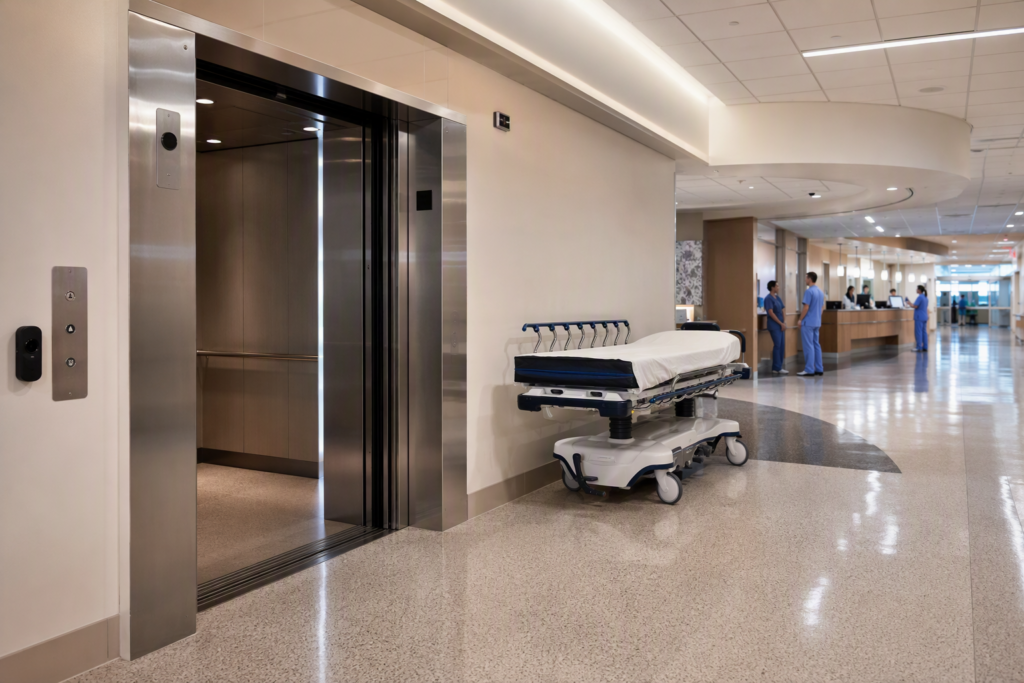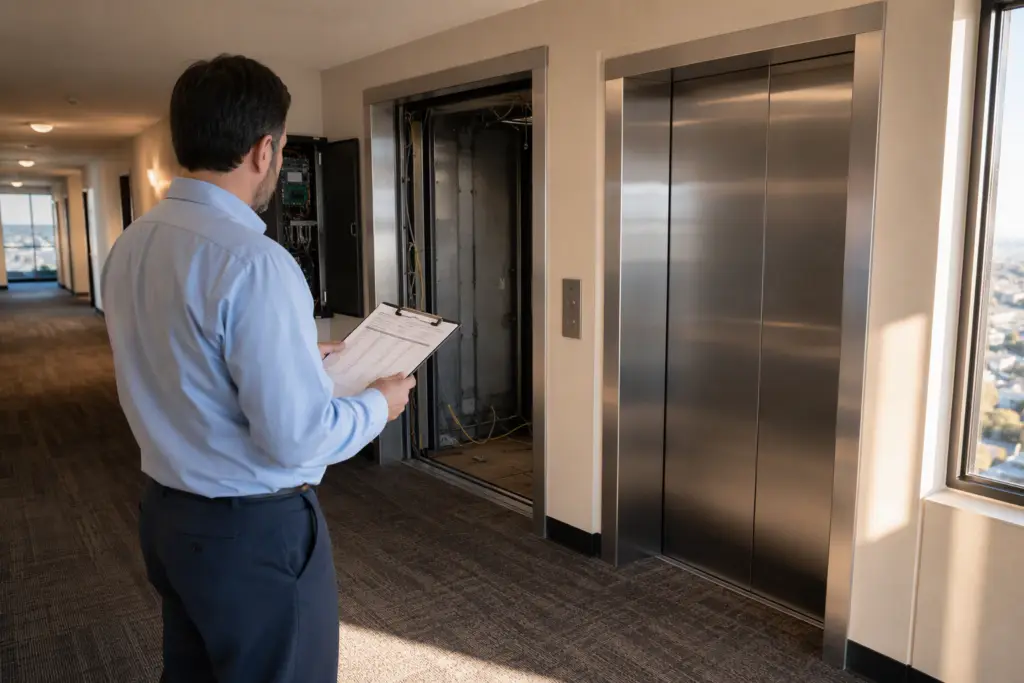
Top Rated Elevator Maintenance Company in Long Beach: Complete FAQ Guide
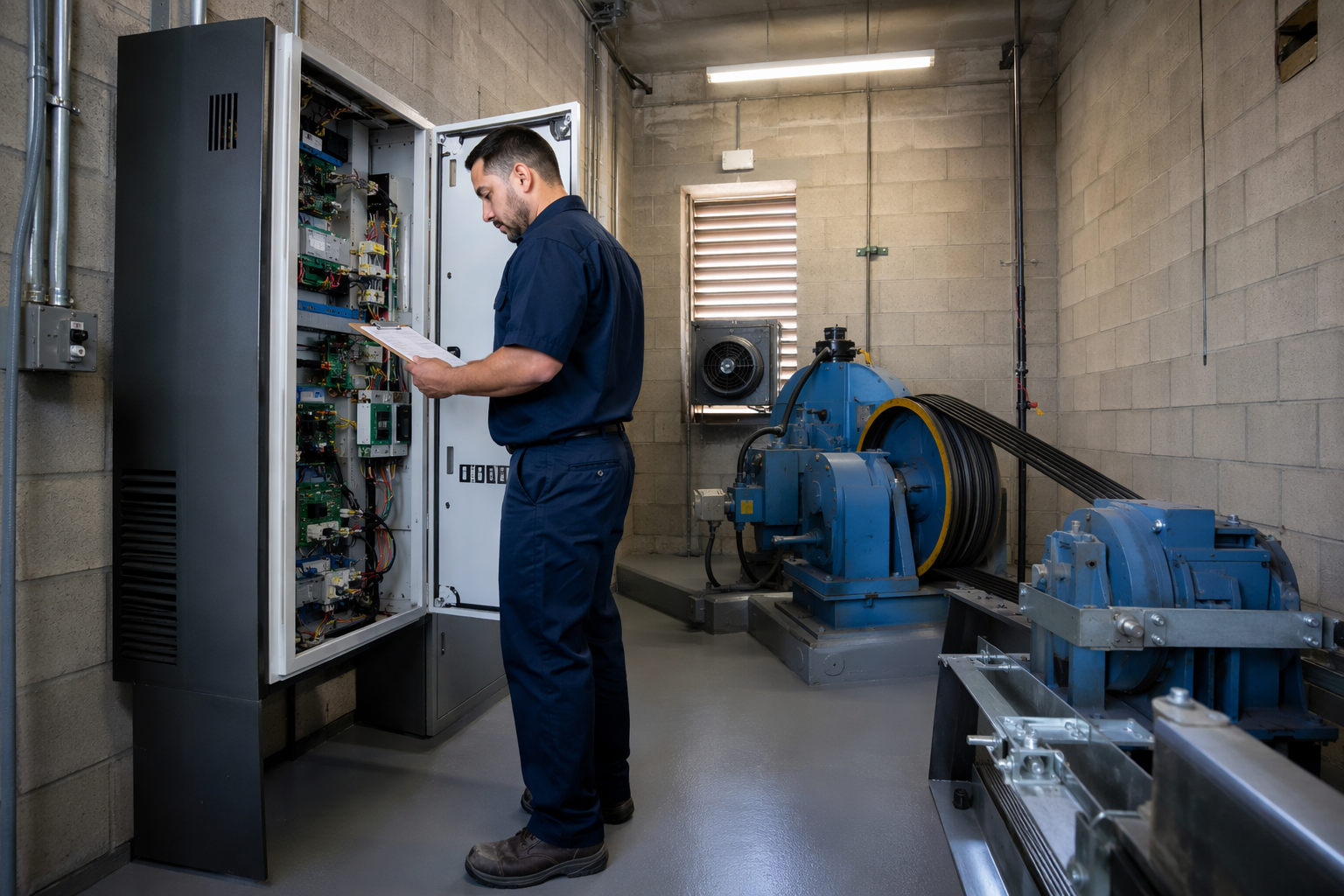
After 15+ years working on elevator systems across Long Beach, Signal Hill, Los Angeles, and Orange County, I’ve seen firsthand what separates a reliable elevator maintenance company from one that cuts corners. This guide answers every critical question building owners, property managers, and facility directors ask when evaluating elevator service providers — from compliance timelines and costs to what actually happens during a maintenance visit.
What Makes an Elevator Maintenance Company “Top Rated” in Long Beach?
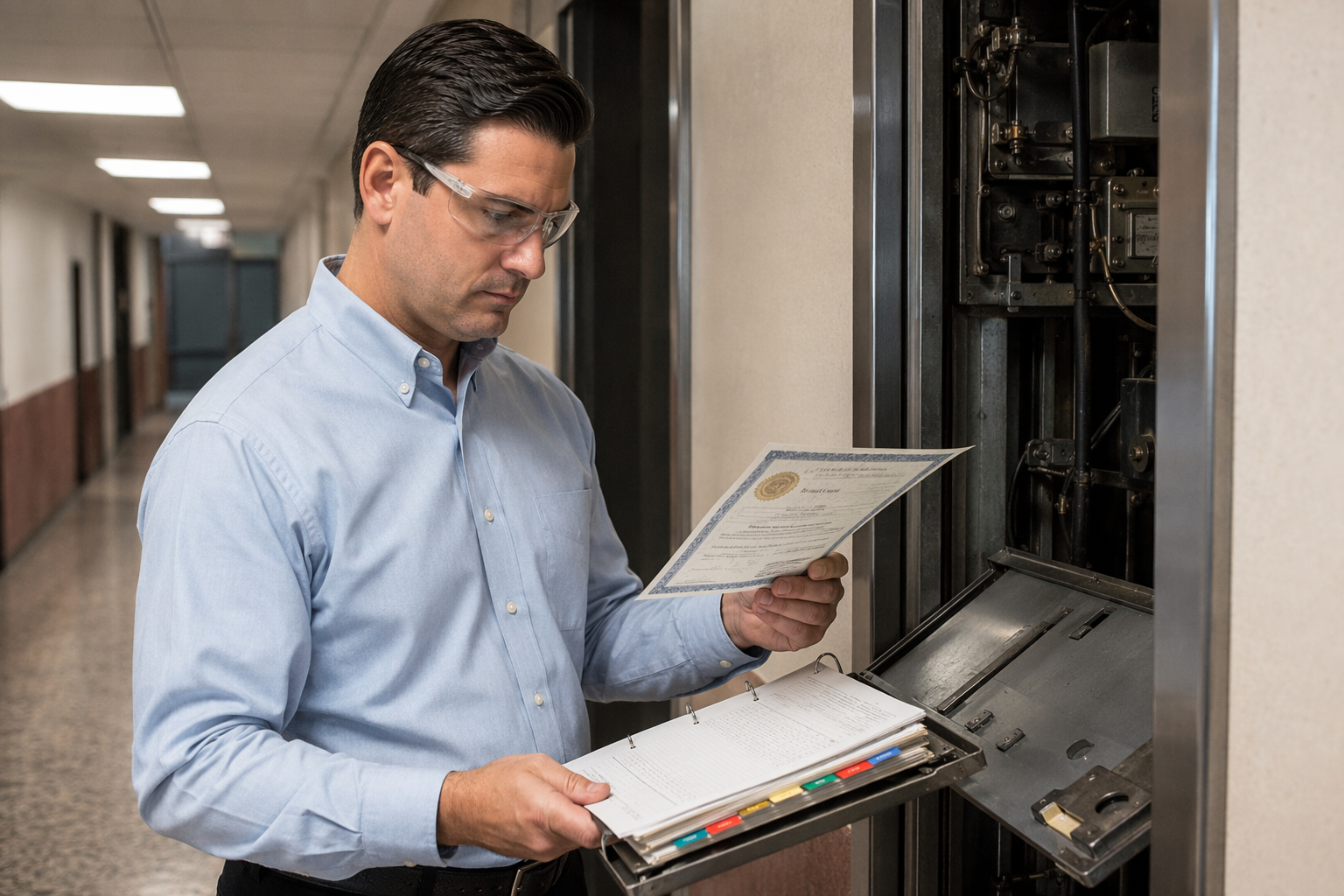
A top rated elevator maintenance company in Long Beach holds IUEC certification, maintains full compliance with California Title 8 regulations and ASME A17.1 safety codes, employs licensed mechanics, and provides documented service records with transparent response time guarantees.
In my experience, the single biggest differentiator between companies is accountability. Top-tier providers don’t just show up and perform a visual check — they document every adjustment, part replacement, and test result in a digital service log that you can access as a property owner. California’s Division of Occupational Safety and Health (Cal/OSHA) requires elevator owners to maintain complete maintenance records, and the best companies make that effortless for their clients.
Other markers of a truly top rated provider include: IUEC (International Union of Elevator Constructors) certified technicians, a local dispatch presence in Long Beach or nearby Signal Hill, familiarity with both older traction elevator systems common in Downtown Long Beach and newer hydraulic units in mid-rise developments, and a verifiable track record with commercial, residential, and public-sector clients.
How Often Should Elevators Be Inspected in California?
California law requires a minimum of one annual inspection by a Qualified Elevator Inspector (QEI) certified under ASME QEI-1, plus periodic maintenance visits as defined by the building’s maintenance control program.
Under California Title 8, Section 3001 et seq., every elevator must pass a state inspection before it can operate and then annually thereafter. However, annual inspections are only the legal floor — not the industry best practice. Most elevator professionals, including our team at Liftech Elevator, recommend quarterly preventive maintenance visits for high-traffic commercial installations and bi-monthly visits for hospitals, senior living facilities, or any property running elevators 12+ hours per day.
The ASME A17.1/CSA B44 Safety Code for Elevators and Escalators outlines specific periodic test requirements including Category 1 tests (annual) and Category 5 tests (every five years for hydraulic systems), which include full load and pressure testing. Missing these test windows can void your insurance coverage and expose building owners to significant liability.
What Does Elevator Maintenance Actually Include?
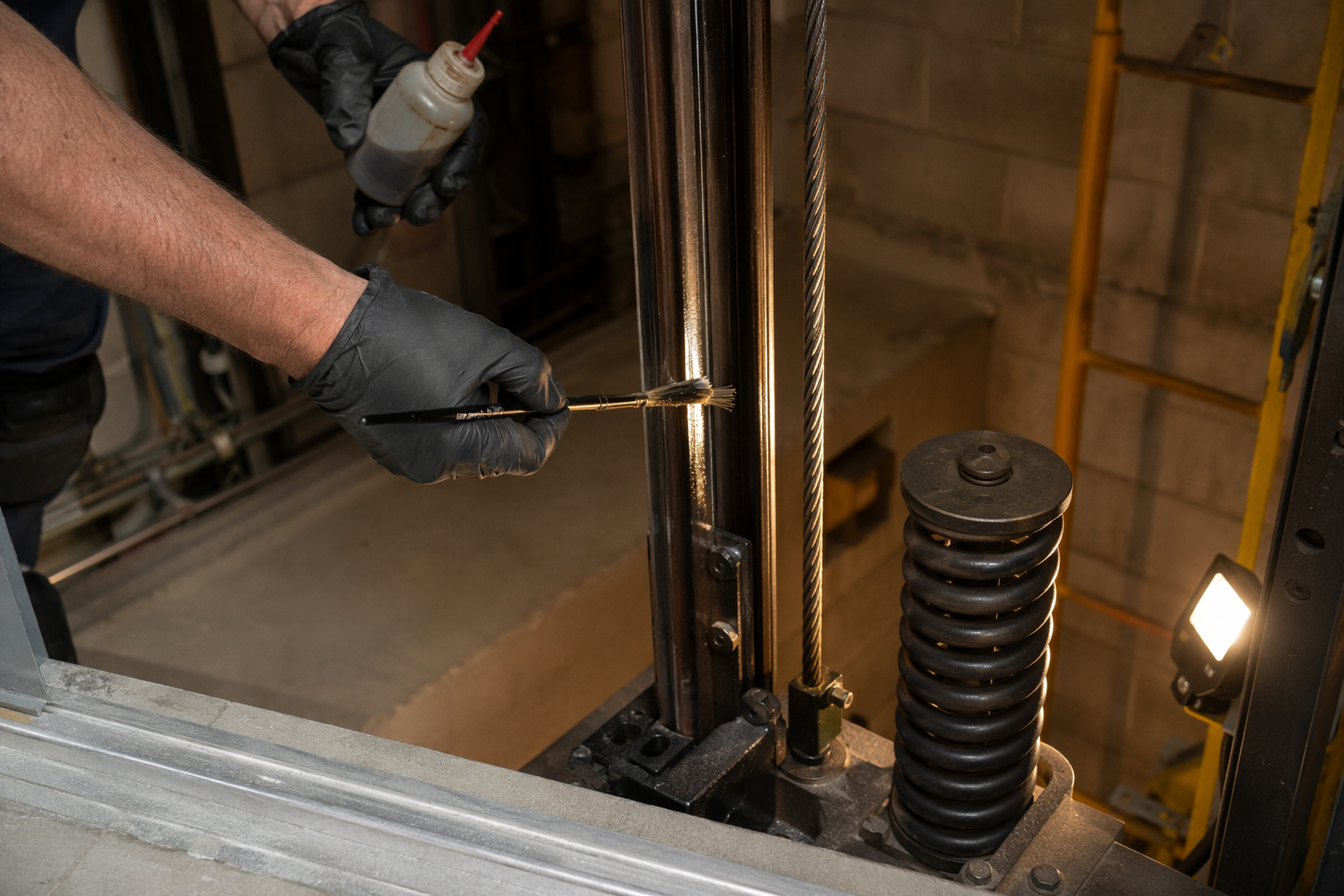
A comprehensive elevator maintenance visit covers mechanical inspection, lubrication, safety device testing, electrical system checks, cab interior inspection, and documentation — typically taking 2 to 4 hours per elevator depending on system type and age.
Here is what a thorough maintenance visit looks like in practice. During each scheduled visit, a certified technician will inspect and service:
- Motor and drive system (gearless or geared traction, hydraulic pump)
- Governor and safeties (tested per ASME A17.1 Rule 8.6)
- Door operators, hangers, and sills — the #1 source of callbacks
- Controller and relay logic or microprocessor boards
- Ropes, sheaves, and counterweights (traction units)
- Hydraulic fluid levels, cylinder seals, and jack condition
- Emergency lighting, intercoms, and ARD (Automatic Rescue Device)
- Pit conditions: sump pump, lighting, stop switch
- Cab leveling accuracy — must be within ½ inch per ADA guidelines
Every one of these items gets logged. If anything falls outside manufacturer tolerances or code specifications, it gets flagged for repair authorization immediately — not deferred until the next visit.
How Much Does Elevator Maintenance Cost in Long Beach in 2026?
Elevator maintenance in Long Beach typically costs between $150 and $600 per month per elevator depending on system type, age, building traffic volume, and contract terms — with full-service agreements averaging $300–$450 per month for a standard commercial hydraulic unit.
| Service Type | Elevator Type | Avg. Monthly Cost | Contract Term | Includes Parts? |
|---|---|---|---|---|
| Preventive Maintenance Only | Hydraulic (low-rise) | $150 – $250 | 12 months | No |
| Preventive Maintenance Only | Traction (mid/high-rise) | $200 – $350 | 12 months | No |
| Full-Service Contract | Hydraulic (low-rise) | $300 – $450 | 24–36 months | Yes (most parts) |
| Full-Service Contract | Traction (mid/high-rise) | $400 – $600 | 24–36 months | Yes (most parts) |
| Emergency Call-Out (no contract) | Any | $250 – $500 per visit | Per incident | Parts billed separately |
| Annual State Inspection Support | Any | $400 – $800 one-time | Annual | N/A |
Be cautious of any company offering flat-rate contracts significantly below market. Extremely low bids often signal reduced visit frequency, unlicensed labor, or exclusion of critical components from coverage. I’ve seen buildings in Long Beach that signed low-ball contracts end up paying 3–4x more in emergency repair costs within 18 months.
What Certifications Should an Elevator Technician Hold in California?
In California, elevator mechanics must hold a Certified Competent Conveyance Mechanic (CCCM) card issued by Cal/OSHA, and the most qualified technicians also carry IUEC journeyperson certification and ASME QEI-1 inspector certification.
The CCCM credential is the state minimum — it confirms the technician has passed California’s competency testing and background requirements. Above that, IUEC journeyperson status demonstrates completion of a formal 4–5 year apprenticeship program with thousands of hours of documented field training. When evaluating any elevator company in Long Beach, ask to see proof of both credentials before signing a contract.
For inspection-only services, look for QEI (Qualified Elevator Inspector) certification under ASME QEI-1. A company that employs in-house QEI-certified inspectors can streamline your compliance process significantly — they understand both the technical maintenance side and what state inspectors look for during audits.
How Do I Know If My Elevator Passes ADA Compliance Standards?
ADA-compliant elevators in Long Beach must meet specific cab dimensions, door timing, button height, tactile marking, and leveling accuracy requirements as defined in the 2010 ADA Standards for Accessible Design.
The most common ADA compliance failures I find during assessments in Long Beach commercial buildings include:
- Cab leveling exceeding ½ inch from floor landing (Section 407.4.1)
- Door open time insufficient for mobility-impaired passengers (minimum 3 seconds)
- Button centerline height exceeding 48 inches from floor
- Missing or worn Braille and raised tactile characters on control panels
- Emergency intercom not meeting two-way communication requirements
- Inadequate cab interior dimensions (minimum 51″ × 80″ for most applications)
ADA violations can result in federal civil complaints, lawsuits, and mandatory remediation. If your building was constructed before 1993 or has not had an ADA-specific elevator audit in the past 3 years, I strongly recommend scheduling one as a priority.
What Happens During an Emergency Elevator Entrapment in Long Beach?
When a passenger is trapped in an elevator, the building’s designated personnel must contact their elevator service company’s 24/7 emergency line immediately and, if the service company cannot respond within a reasonable time, call Long Beach Fire Department at 911.
Here is the correct protocol to follow step by step:
- Use the in-cab emergency intercom to communicate with the trapped passenger — reassure them help is coming and advise them not to attempt to exit the cab themselves.
- Call your elevator maintenance company’s 24/7 emergency dispatch number immediately.
- Do NOT attempt to manually open elevator doors without certified technician supervision — this creates fall hazards and potential injury liability.
- If the service company cannot confirm arrival within 30 minutes or the passenger reports a medical emergency, call 911. Long Beach Fire Department is trained for elevator rescue.
- Document the incident: time of entrapment, duration, number of passengers, and technician arrival time.
- File an incident report with your elevator maintenance company and retain a copy for building records.
- Request a root-cause analysis from your elevator technician before returning the unit to service.
Liftech Elevator maintains 24/7 emergency dispatch with a guaranteed 2-hour response window across Long Beach and Signal Hill — a commitment that should be part of any serious maintenance agreement.
How Long Does a Typical Elevator Modernization Take?
A full elevator modernization in a Long Beach commercial building typically takes 4 to 12 weeks depending on the scope of work, parts availability, and whether the building requires continuous elevator access during the project.
Modernization scope varies widely. A controls-only upgrade on a functioning traction elevator can often be completed in 1–2 weeks with limited downtime. A full hydraulic unit replacement including jack, cylinder, power unit, controller, and cab finish can stretch to 10–12 weeks, particularly if underground cylinder work requires permits and soil boring reports as required under California Health & Safety Code.
In Long Beach and LA County, building permits for elevator modernization must be submitted to the local authority having jurisdiction (AHJ) and coordinated with the California Division of Occupational Safety and Health — Elevator Unit. Our team handles this permitting process for clients, which typically saves 2–4 weeks compared to building owners managing it independently.
What Are the Most Common Elevator Problems in Long Beach Buildings?
The most common elevator problems in Long Beach buildings include door malfunctions, leveling drift, hydraulic fluid leaks, controller board failures, and rope wear — issues accelerated by the region’s coastal humidity and aging building stock.
Long Beach presents unique environmental challenges. Coastal salt air accelerates corrosion in machine rooms and pit areas. Many of the city’s mid-century apartment and commercial buildings still run elevator equipment that is 30–50 years old. Here’s a breakdown of the most frequent service calls I handle in this market:
- Door operator failures — accounts for approximately 40% of all service calls industry-wide
- Leveling issues — elevator stops 1–3 inches above or below floor level, creating trip hazards
- Hydraulic leaks — particularly in units installed before 1990 with single-bottom cylinder jacks
- Controller malfunctions — relay logic panels on older units fail more frequently in high-humidity environments
- Rope wear and elongation — accelerated in buildings with high call volume and poor lubrication records
What Is the Difference Between a Full-Service and a Preventive Maintenance Contract?
A preventive maintenance contract covers scheduled labor and inspections only, while a full-service (or “full maintenance”) contract includes most parts and components as well, significantly reducing out-of-pocket repair costs when failures occur.
This is one of the most consequential decisions a building owner makes when selecting an elevator maintenance company. Preventive-only contracts are cheaper monthly but expose you to unbounded repair costs — a single hydraulic power unit replacement can run $8,000–$15,000 in parts alone. Full-service contracts cost more monthly but transfer most of that risk to the service provider.
Key questions to ask before signing any contract:
- Which specific parts are excluded from coverage?
- Is major modernization work excluded?
- What is the response time guarantee for emergency calls?
- Does the contract include callback coverage (return visits within 24 hours at no charge)?
- What are the terms for contract cancellation or escalation if performance standards aren’t met?
How Do I Switch Elevator Maintenance Companies in Long Beach?
Switching elevator maintenance companies in Long Beach requires reviewing your existing contract’s termination clause, notifying the current provider in writing, transferring service documentation, and scheduling a transition inspection with your new provider before the first maintenance visit.
Many building owners feel locked into underperforming elevator companies because of auto-renewing contracts with 90-day cancellation windows. Before assuming you’re stuck, have a contract attorney or your building manager review the termination language carefully. Some contracts also include “proprietary parts” clauses — where the incumbent company installs branded controller components that complicate transitions. This is a practice our team at Liftech Elevator explicitly avoids — we document all equipment using standard OEM part numbers accessible by any qualified technician.
When transitioning, request a complete service history from your outgoing company including inspection reports, callback logs, and any open deficiency notices. This documentation is essential for your incoming provider to establish a baseline and for maintaining California state compliance records.
Does California Require Elevator Permits for Repairs?
Yes — in California, any alteration, repair involving major components, or modernization work on an elevator requires a permit from the California Department of Industrial Relations (DIR) Elevator Unit before work begins.
Routine maintenance tasks such as lubrication, adjustments, and minor part replacements (door gibs, buttons, light bulbs) generally do not require permits. However, controller replacements, drive system upgrades, hydraulic jack work, and cab modifications all require permit submission and final inspection approval. Performing unpermitted alteration work in California can result in the elevator being placed out of service immediately by the state inspector.
The permit process for elevator work in Long Beach is coordinated through both the California DIR Elevator Unit and, depending on the scope, the City of Long Beach Development Services Department. Turnaround times in 2026 average 3–6 weeks for standard alteration permits — plan accordingly for any significant repair project.
What Are the Penalties for Operating a Non-Compliant Elevator in California?
Operating an elevator in California without a valid Certificate of Inspection can result in immediate shutdown orders, civil penalties up to $7,000 per violation per day under California Labor Code Section 7311, and significant liability exposure in the event of injury.
Beyond the regulatory penalties, the civil liability risk is where I see building owners face the most financial pain. If a passenger is injured on an elevator that lacks a current inspection certificate or has documented deficiencies that were never corrected, the building owner’s insurance carrier may deny coverage entirely. In my 15 years of field work, I’ve seen this scenario play out multiple times — always avoidable with proper maintenance and compliance documentation.
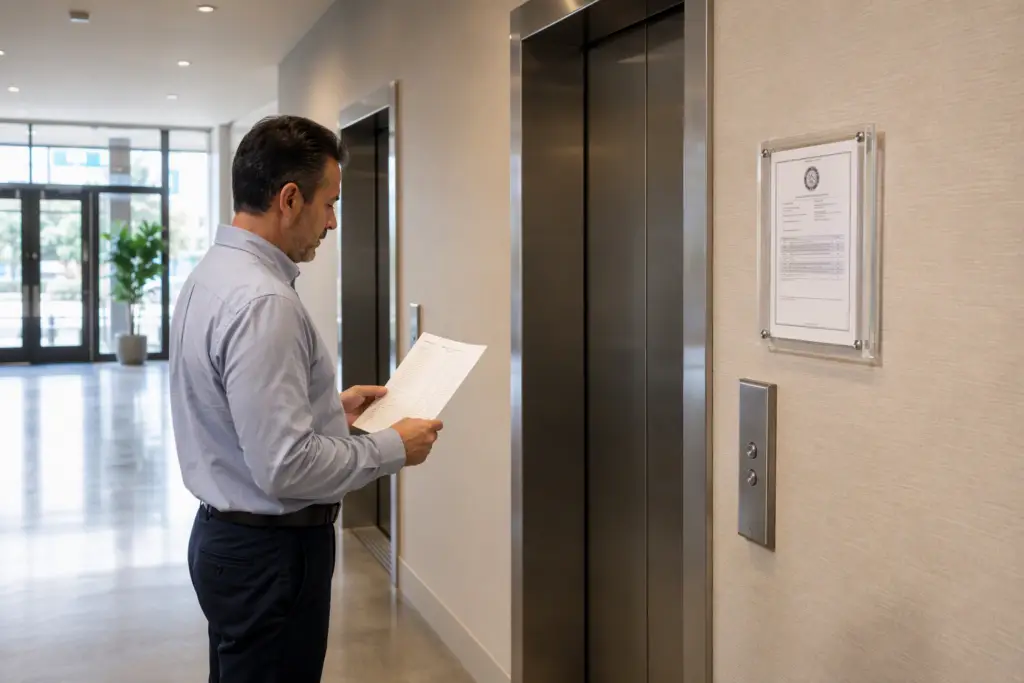
California’s elevator Certificate of Inspection (also called the Permit to Operate) must be posted in or adjacent to the elevator cab in a location visible to passengers. If you cannot locate your current certificate or it shows an expired date, contact your maintenance company immediately to schedule a compliance review.
How Do I Evaluate Multiple Elevator Service Quotes in Long Beach?
When comparing elevator maintenance quotes in Long Beach, evaluate price alongside response time guarantees, technician certification levels, parts coverage terms, service frequency, and the company’s familiarity with your specific elevator model and manufacturer.
Price comparison alone is a trap that catches many property managers. The cheapest quote almost always reflects compromises somewhere — fewer annual visits, excluded components, slower emergency response, or less experienced labor. Here’s a structured evaluation framework:
- Technician credentials: Verify CCCM card and IUEC status for every mechanic who will service your building
- Manufacturer familiarity: Otis, KONE, Schindler, ThyssenKrupp, and Dover all have proprietary components — make sure your prospective company has specific experience with your brand
- Response time commitment: Get emergency response guarantees in writing, not just verbal assurances
- References: Request at least 3 local Long Beach or LA County references with similar building types
- Service frequency: Compare the number of scheduled visits per year, not just monthly cost
- Contract flexibility: Evaluate termination terms, escalation clauses, and performance guarantees
What Is the Average Lifespan of an Elevator System?
With proper maintenance, a commercial elevator system has an average functional lifespan of 20 to 30 years before major modernization is required, though well-maintained units in lower-traffic buildings can remain in reliable service for 35–40 years.
Hydraulic elevators generally have a shorter practical lifespan than traction units — primarily due to cylinder corrosion and fluid degradation. Units installed before 1972 may have single-bottom jacks that California requires be either lined, replaced, or cased under state environmental regulations to prevent hydraulic fluid contamination of groundwater.
The single biggest factor determining longevity isn’t age — it’s maintenance quality. I’ve personally serviced 40-year-old traction elevators in Long Beach office buildings that run more reliably than 10-year-old units in buildings that skimped on maintenance contracts. Consistent lubrication, timely rope replacement, and proactive controller servicing add decades to equipment life.
How Quickly Should an Elevator Maintenance Company Respond to Emergencies in Long Beach?
Industry best practice and most full-service contracts specify a maximum 2-hour emergency response time for passenger entrapment situations, with a 4-hour target for equipment-out-of-service calls that do not involve trapped passengers.
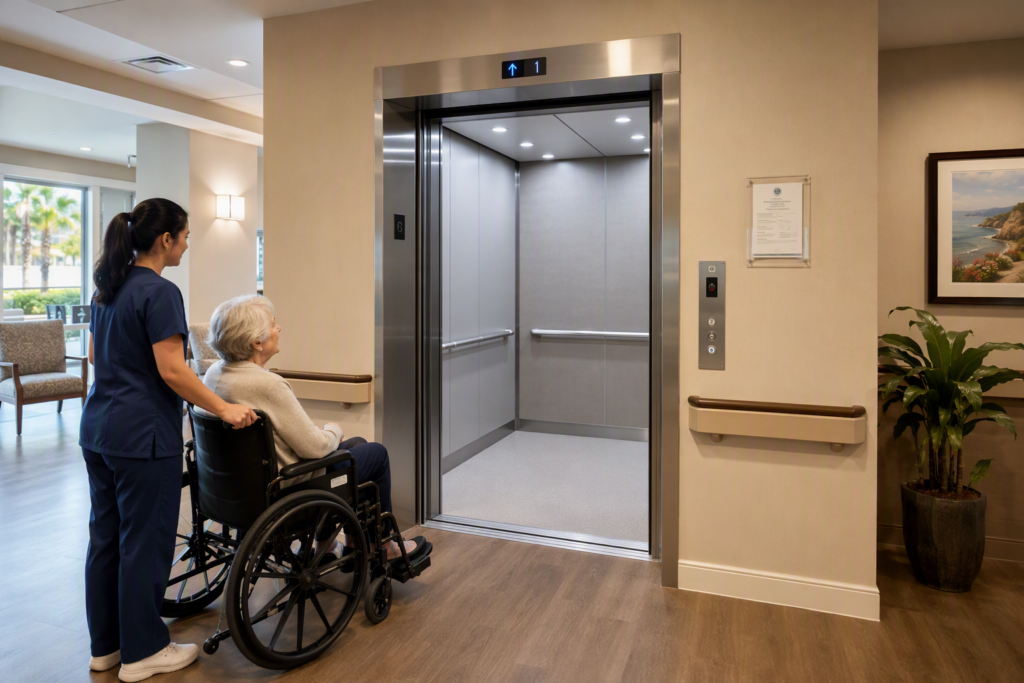
In a dense urban market like Long Beach — particularly in multi-story residential buildings where a single elevator serves dozens of units — an “out of service” situation is a genuine emergency for elderly residents, individuals with mobility limitations, and delivery operations. When evaluating elevator companies, I advise clients to ask specifically: “What is your documented average response time for the Long Beach market in the last 12 months?” — not just what is written in the contract.
Local presence matters enormously here. A company dispatching from a distant location adds 45–90 minutes to response time compared to a provider with technicians stationed in or near Long Beach. Liftech Elevator’s local dispatch coverage across Long Beach, Signal Hill, and surrounding communities is specifically designed to meet or exceed the 2-hour emergency response benchmark.
What Elevator Brands and Manufacturers Does a Top Company Service in Long Beach?
A capable full-service elevator maintenance company in Long Beach should be able to service all major manufacturers including Otis, KONE, Schindler, ThyssenKrupp, Dover, Fujitec, Mitsubishi, and Montgomery/KONE legacy systems found throughout the region’s commercial building stock.
Long Beach’s building inventory spans a wide range of elevator vintages and manufacturers. Downtown high-rises from the 1970s and 80s often run legacy Otis or Dover traction systems. Newer mid-rise developments typically feature KONE or Schindler units. Older hydraulic installations in 2–6 story commercial buildings frequently run Dover or Russ equipment that requires specific technical knowledge.
Manufacturer-independent service capability is a significant advantage — it means your maintenance provider isn’t creating an artificial dependency on proprietary parts or locked diagnostic software. Always confirm that a prospective company has documented experience with your specific manufacturer and model series before signing a contract.
Are There Specific Elevator Regulations for Residential Buildings in Long Beach?
Yes — residential elevators in Long Beach are subject to California Title 8 regulations and ASME A17.1 standards for commercial-type elevators, while private residence elevators (serving a single family unit) fall under ASME A17.3 and have modified inspection and maintenance requirements.
This distinction matters significantly for Long Beach’s growing market of mixed-use residential developments and luxury condominiums. Multi-family residential buildings (apartment complexes, condos) with common-use elevators are regulated identically to commercial elevators — annual state inspection, maintenance records, and Cal/OSHA compliance all apply. Private home elevators, however, operate under ASME A17.3 (existing installations) with different testing intervals and inspector qualification requirements.
For HOA boards managing elevator-equipped condominiums in Long Beach, I strongly recommend building elevator maintenance costs into reserve fund studies (required under California Civil Code Section 5550 for common interest developments) and scheduling maintenance contracts before the warranty period on new construction expires.
What Should I Do if My Elevator Fails a California State Inspection?
If your elevator fails a California state inspection, you must immediately take the elevator out of service, post the deficiency notice in or near the cab, and coordinate with a certified elevator company to remediate all violations before requesting a re-inspection from the California DIR Elevator Unit.
Here is the step-by-step process for handling a failed state inspection:
- Receive the deficiency notice from the state inspector and read every line item carefully — violations are categorized by severity.
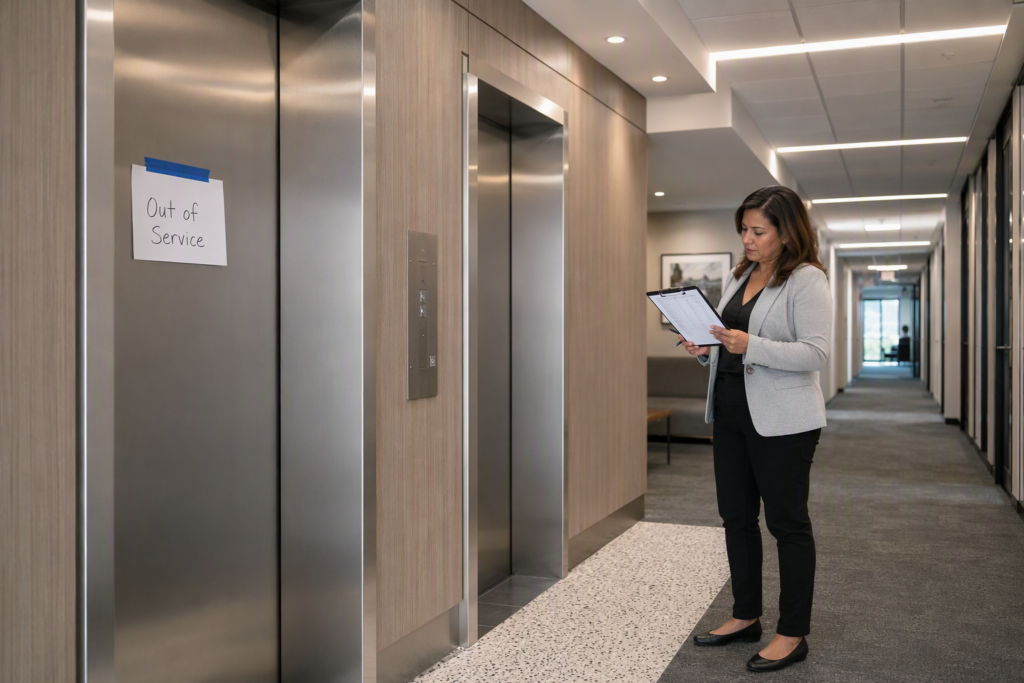
- Take the elevator out of service immediately if directed by the inspector. Post an “Out of Service” notice at all landings.
- Contact your elevator maintenance company within 24 hours to review the deficiency list and get a written remediation estimate with timeline.
- Prioritize safety-critical violations (governor, safeties, brakes) — these typically must be corrected before any others.
- Obtain any required permits for alteration work before repairs begin.
- Once all violations are corrected, have your technician complete a pre-inspection checkout to verify compliance.
- Submit a re-inspection request to the California DIR Elevator Unit — in 2026, online submission is available through the DIR’s inspection management portal.
- Retain all repair documentation, part invoices, and technician sign-offs for your permanent building records.
Why Should I Choose a Local Long Beach Elevator Company Over a National Provider?
A local Long Beach elevator company offers faster emergency response times, direct relationships with California state inspectors, familiarity with local permitting requirements, and personalized accountability that national corporations with regional dispatch centers cannot match.
National elevator companies operate on volume — their model prioritizes standardized contracts and centralized billing over building-specific service relationships. What that means in practice: your elevator gets a rotating roster of different technicians, slower emergency response from distant dispatch centers, and account managers who may never visit your property.
Local providers like Liftech Elevator build long-term relationships with specific buildings and their equipment. Your technician knows your elevator’s service history, its quirks, and the parts that tend to wear first — because they’ve been maintaining it for years. That institutional knowledge is genuinely irreplaceable and directly translates to fewer emergency breakdowns and lower total maintenance costs over time.
Liftech Elevator serves Long Beach, Signal Hill, Los Angeles, and Orange County with a team of locally-based, IUEC-certified technicians who specialize in Southern California’s unique building environment and regulatory landscape. For a tailored assessment of your elevator system’s current condition and compliance status, our team is ready to help.
Ready to Work With Long Beach’s Top Rated Elevator Maintenance Company?
Don’t wait for a breakdown or a failed inspection to address your elevator’s maintenance needs. Whether you manage a single commercial elevator or a multi-unit residential property, our IUEC-certified technicians are ready to provide a thorough, no-obligation assessment of your system’s condition, compliance status, and maintenance needs.
Contact Liftech Elevator for a free elevator assessment. Serving Long Beach, Signal Hill, Los Angeles, and Orange County, CA.
Call us today: 562-609-3478
We respond to emergency calls 24 hours a day, 7 days a week — because elevator problems don’t follow business hours.
Need elevator service you can rely on? Liftech Elevator is ready to help.