How to Budget for Elevator Maintenance and Repairs in Your 2027 Operating Budget

Elevator systems are among the most regulated mechanical assets a property manager oversees. Getting the budget right for 2027 means understanding the difference between routine preventive maintenance, mandatory code-driven inspections, reactive repairs, and longer-horizon modernization costs. This guide walks through each cost category, the California regulatory framework that shapes them, and the planning questions every property manager should answer before finalizing an operating budget.
What Are the Core Cost Categories for Elevator Budgeting?
A complete elevator budget has four distinct layers, and collapsing them into a single line item is one of the most common planning mistakes. Each layer has a different cost driver, a different frequency, and a different level of predictability.
- Preventive Maintenance (PM) Contract: A recurring service agreement that covers scheduled lubrication, adjustment, cleaning, and component inspection. This is the most predictable cost and should be treated as a fixed operating expense.
- Mandatory Inspection and Testing Fees: California requires periodic safety inspections of elevators by a certified inspector under the authority of the California Division of Occupational Safety and Health (Cal/OSHA). These fees are non-negotiable and must appear as a separate budget line.
- Reactive / Emergency Repair Reserve: Even well-maintained elevators experience unexpected failures. A reactive repair reserve — typically funded as a percentage of the PM contract value — protects the operating budget from large single-year variances.
- Capital Modernization Reserve: Older elevator systems eventually require component overhauls or full modernization to meet current editions of the ASME A17.3 Safety Code for Existing Elevators and Escalators and ADA accessibility requirements. These costs are capital in nature and should flow through a reserve fund or capital improvement plan rather than the operating budget.
What Does California Law Require for Elevator Inspections?
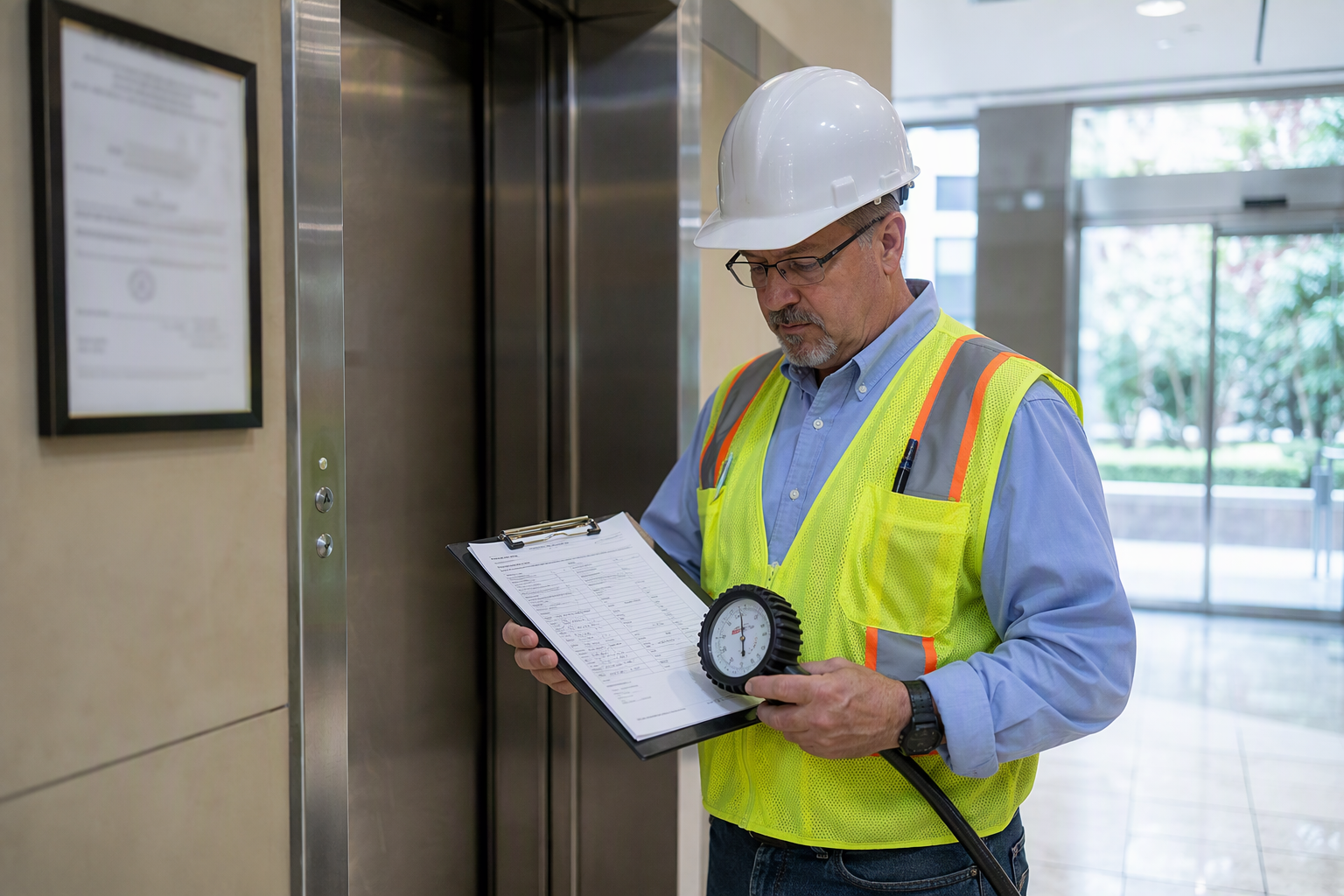
In California, elevator safety is governed at the state level. Cal/OSHA’s Elevator, Ride, and Tramway (ERT) Unit administers the California Elevator Safety Construction Code, which adopts and adapts the ASME A17.1 Safety Code for Elevators and Escalators for new installations and the ASME A17.3 Safety Code for Existing Elevators and Escalators for existing equipment. Property managers in California must ensure their elevators hold a valid permit to operate, which is contingent on passing periodic inspections conducted or witnessed by a Cal/OSHA-certified elevator inspector.
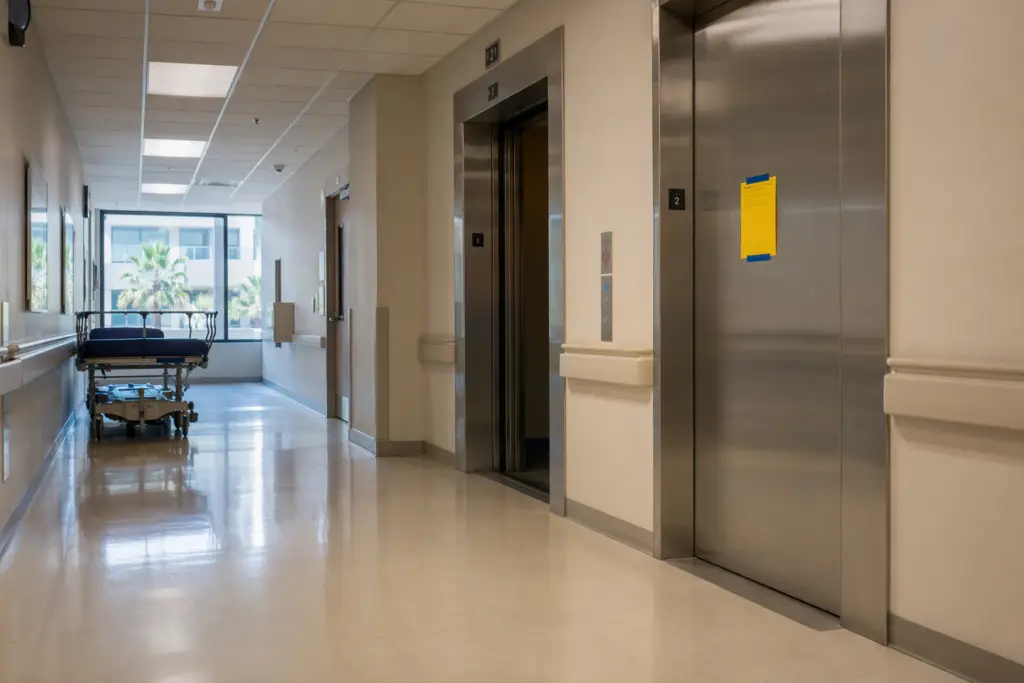
Failure to maintain a valid permit can result in an order to cease operation — a significant operational and legal liability for any occupied building. Budget planning must account for both the inspection fee itself and any corrective work identified during the inspection that must be remediated within a specified timeframe.
How Does the ASME A17.1 Code Affect Annual Maintenance Costs?
The ASME A17.1 Safety Code for Elevators and Escalators specifies maintenance, testing, and inspection procedures that define the minimum scope of a compliant maintenance program. This means that a maintenance contract written to ASME A17.1 standards will be more comprehensive — and more costly — than a bare-minimum service agreement. For 2027 budgeting, property managers should confirm that their maintenance contract explicitly references ASME A17.1 compliance rather than relying on a generic service description.
Key maintenance tasks driven by ASME A17.1 include governor rope testing, safety device testing, brake system inspections, and door operation checks — all of which have defined intervals and documentation requirements that an auditing inspector will review.
What Factors Determine How Much to Budget Per Elevator?
Because no two elevator systems are identical, per-unit cost estimates vary considerably. The factors that most significantly drive annual costs include:
- Elevator age and condition: Older traction or hydraulic systems require more frequent parts replacement and are more likely to generate emergency repair calls. Equipment approaching the end of its designed service life should carry a higher repair reserve.
- Elevator type: Hydraulic elevators typically require hydraulic fluid management and cylinder inspection considerations; traction elevators involve rope, sheave, and motor room equipment. Each type has distinct maintenance labor and parts profiles.
- Usage intensity: High-traffic installations in commercial or residential towers experience faster component wear than low-use units in a small multifamily building. Cycle counts matter when projecting parts replacement frequency.
- Number of units in the building: Multi-unit properties can sometimes negotiate service agreements that reduce per-unit costs compared to single-elevator buildings.
- Modernization status: Elevators that have been recently modernized with updated controllers, solid-state drives, and new door operators typically carry lower reactive repair costs than legacy systems with discontinued parts.
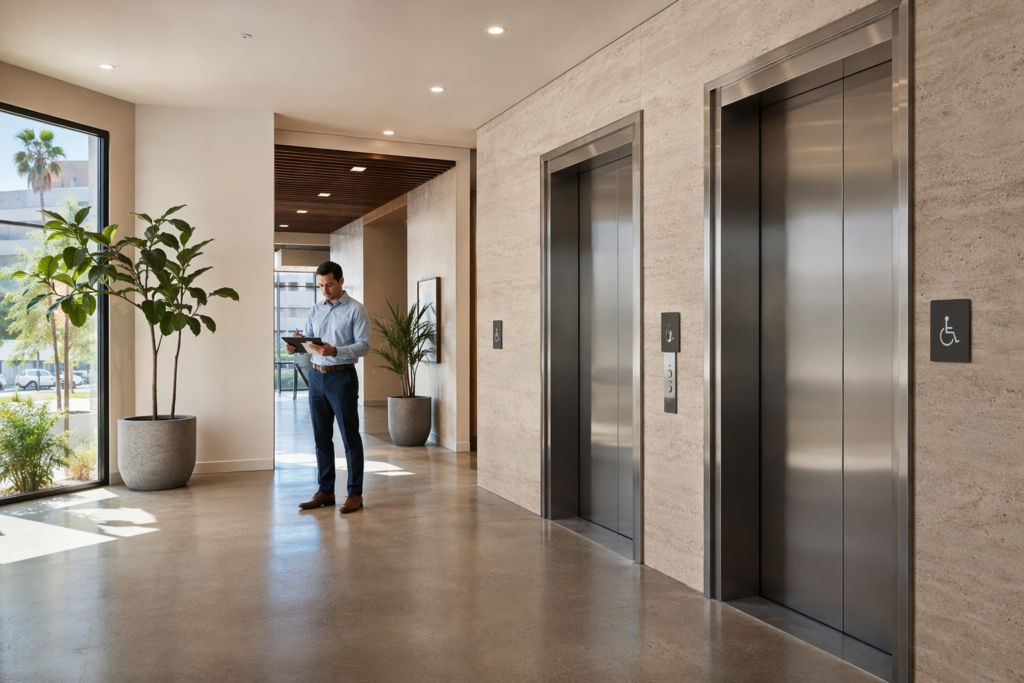
- Accessibility compliance status: If an elevator is not yet fully compliant with ADA requirements, remediation costs — such as cab modifications for wheelchair turning radius, door timing adjustments, or Braille button replacements — need to be captured either in the operating or capital budget depending on the scope of work.
How Should a Property Manager Structure the Maintenance Contract Line Item?
The preventive maintenance contract is the foundation of elevator budget control. A well-structured contract provides cost predictability, defines response expectations, and specifies which parts and labor are included versus billed separately. Property managers should evaluate contracts along the following dimensions before signing for a 2027 term:
- Review what is explicitly included: Confirm which components are covered under the flat contract fee versus excluded as “extra.” Door operators, hydraulic packing, and controller boards are frequent exclusion items that can drive unexpected costs.
- Assess service visit frequency: More complex or higher-usage systems typically warrant more frequent scheduled visits. Confirm the number of visits per year is appropriate for your equipment type and traffic level.
- Confirm ASME A17.1 alignment: Request written confirmation that the maintenance scope meets the requirements of the ASME A17.1 Safety Code for Elevators and Escalators.
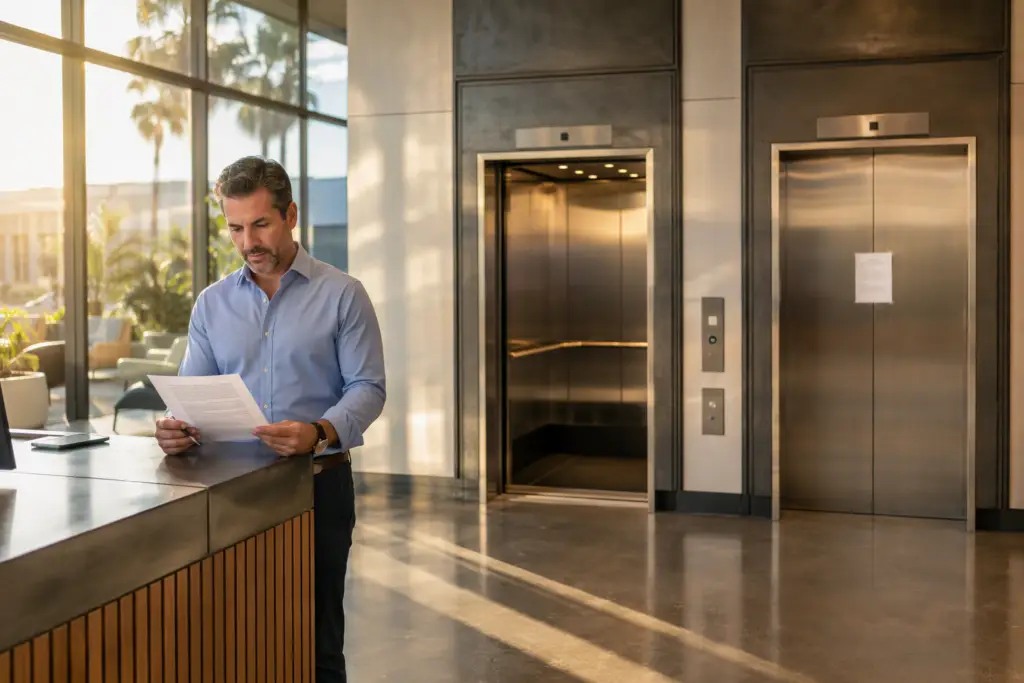
- Clarify inspection coordination: Determine whether the contractor assists with scheduling and documentation for Cal/OSHA periodic inspections or whether that responsibility falls entirely to the property manager.
- Understand escalation clauses: Multi-year contracts often contain annual rate escalation provisions tied to labor or materials indices. Understand the cap before committing, particularly when building a multi-year capital plan.
- Evaluate emergency callback provisions: Understand whether after-hours emergency response is included in the contract fee or billed at a separate premium rate that should be reflected in your repair reserve.
What Is a Repair Reserve and How Much Should It Be?
A repair reserve is a budget set-aside that absorbs the cost of unplanned repairs without disrupting the broader operating budget. Because the range of possible repair events is wide — from a minor door sensor replacement to a hydraulic jack or controller failure — the appropriate reserve level depends on factors that are specific to each property.
Rather than applying a universal percentage, property managers should base the reserve on a formal assessment that considers equipment age, recent repair history, and the cost of the most likely failure scenarios for their specific elevator type. A qualified elevator service provider can produce a condition assessment report that supports this analysis. Liftech Elevator provides data-driven elevator assessments designed to give property managers the equipment-specific insight needed to set defensible reserve levels rather than relying on industry averages.
How Do ADA Requirements Affect the Elevator Budget?
The Americans with Disabilities Act (ADA) imposes accessibility standards on elevators in buildings subject to its jurisdiction. For existing buildings, barrier removal requirements apply where such removal is “readily achievable.” For new construction and alterations, the ADA Standards for Accessible Design set specific requirements for cab dimensions, control panel height and reach, door timing, audible and visual signals, and Braille designations.
Property managers should audit their elevators against current ADA requirements as part of 2027 budget preparation. Common accessibility gaps — particularly in older cab configurations — can require cab interior modifications, new control panels, or door timing adjustments. These costs may qualify as capital improvements depending on scope, but smaller corrections (e.g., Braille button replacement, leveling adjustments) are typically operating expenses.
What Is Elevator Modernization and When Does It Belong in the Budget?
Elevator modernization refers to the systematic replacement of major system components — typically the controller, motor, drive, door operator, and cab interior — to extend useful life, improve reliability, and bring the installation into compliance with current editions of the ASME A17.3 Safety Code for Existing Elevators and Escalators. Modernization is generally a capital expenditure rather than an operating expense and should appear in a capital improvement plan or reserve fund study.
Signs that a modernization conversation belongs in the 2027 planning horizon include: repeated callback events for the same system, discontinued or difficult-to-source parts, controller systems more than two decades old, and notification from Cal/OSHA of code compliance deficiencies requiring significant remediation.
Property managers should not wait for a forced shutdown to begin the modernization planning process. Lead times for equipment and permitting can extend the timeline considerably, so a proactive capital reserve that begins accumulating funds several years before modernization is needed is far preferable to an emergency capital call.
What Workplace Safety Obligations Apply to Elevator Maintenance Under OSHA?
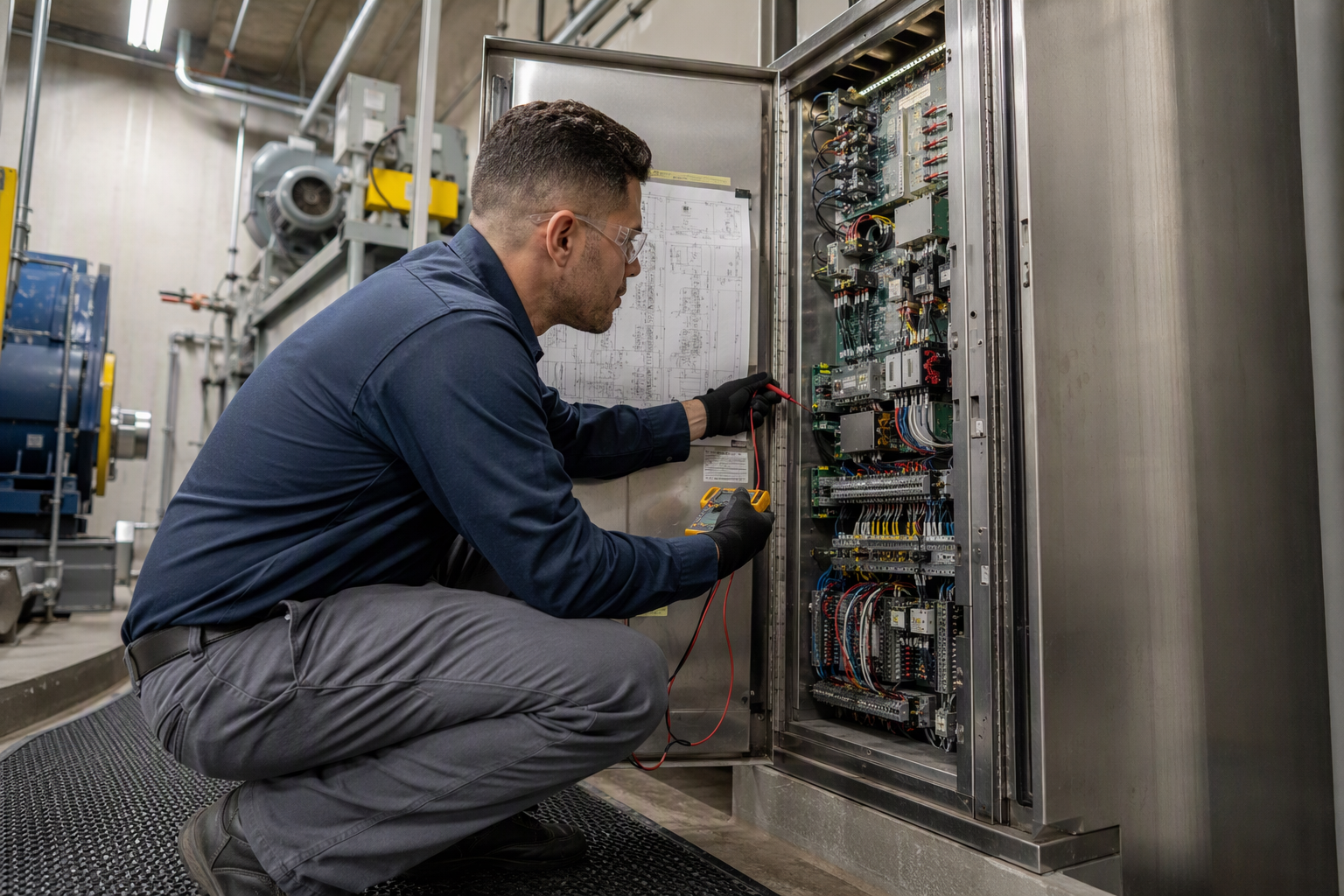
While elevator safety regulation in California falls primarily under Cal/OSHA’s ERT Unit, general workplace safety standards set by OSHA apply to the working conditions of elevator technicians performing maintenance. Property managers have a responsibility to ensure that contracted elevator technicians have safe access to machine rooms, pit spaces, and roof-of-car areas. This includes adequate lighting, proper pit ladders, and compliant electrical clearances in machine rooms.
Deficiencies in these areas — identified during a service visit or inspection — may generate corrective action items that require building-side remediation, not just elevator contractor work. These costs should be anticipated in the maintenance and building operations budget.
What Industry Trends Should Property Managers Watch for 2025–2027?
Several qualitative trends are shaping elevator maintenance and modernization budgeting as property managers look toward 2025, 2026, and 2027:
- Remote monitoring adoption: Connected elevator systems that transmit real-time operational data are increasingly common in new installations and modernized systems. Remote monitoring enables predictive maintenance — catching component degradation before it causes a breakdown — which can reduce emergency repair costs over time and support more accurate reserve planning.
- Parts availability and supply chain: Legacy elevator components for older systems have become more difficult to source, and lead times on some critical parts have extended. This trend increases both the cost and urgency of maintaining repair reserves for aging equipment.
- Energy efficiency focus: Building owners and managers facing energy benchmarking requirements are increasingly evaluating regenerative drive systems and LED cab lighting as part of modernization projects. These improvements may qualify for utility incentive programs in California and should be researched when building a modernization business case.
- Code update cycles: ASME periodically updates A17.1 and A17.3, and California adopts updated editions through its regulatory process. Property managers should stay current with Cal/OSHA guidance on newly adopted code editions to anticipate compliance costs before they become enforcement actions.
- Labor market dynamics: Qualified elevator technicians operate in a specialized licensed trade. Labor costs in California’s elevator industry reflect both high skill requirements and unionized wage structures in many markets. Contract renewals in 2026 and 2027 may reflect labor cost increases that should be modeled into multi-year budget projections.
How Should Elevator Costs Be Presented in a 2027 Operating Budget?
For budget clarity and auditability, elevator costs should be broken into separate line items rather than bundled under a generic “building maintenance” category. A recommended budget structure includes:
- Elevator Preventive Maintenance Contract — annual contract value, fixed cost.
- Periodic Inspection and Testing Fees — Cal/OSHA permit and inspection fees, annual or biennial depending on equipment type and jurisdiction.
- Emergency Repair Reserve — operating reserve for unplanned repairs not covered by the PM contract.
- ADA and Code Compliance Remediation — operating expense budget for minor corrective items identified during inspections.
- Capital Modernization Contribution — annual contribution to a capital reserve fund for future modernization, calculated based on equipment remaining useful life and projected modernization cost.
This structure makes variance analysis straightforward at year-end and provides a clear narrative for ownership, lenders, or asset managers reviewing the budget package.
How Can a Property Manager Evaluate Whether Their Current Vendor Is Right for 2027?
Contract renewals are an opportunity to reassess whether the incumbent service provider is delivering value. Key evaluation criteria include:
- Is the maintenance scope still appropriate for the current condition and age of the equipment?
- Are inspection records, test logs, and corrective action documentation complete and readily accessible?
- Has the vendor proactively communicated about aging components or upcoming code compliance requirements?
- Is the contract price competitive relative to the scope of service being delivered?
- Does the vendor have demonstrable familiarity with California-specific regulatory requirements under Cal/OSHA?
Liftech Elevator serves California property managers as a data-driven service partner, providing equipment condition assessments that support both maintenance contract scoping and capital reserve planning — giving property managers the documentation they need to make budget decisions with confidence.
What Should a Property Manager Do Right Now to Prepare for 2027 Budgeting?
- Pull current inspection records and confirm that all elevators in the portfolio hold a valid California operating permit.
- Request a copy of the existing maintenance contract and identify all exclusions and escalation clauses before the renewal window opens.
- Commission an independent elevator condition assessment for any equipment more than 15–20 years old to establish a realistic modernization timeline and capital reserve target.
- Audit each cab against current ADA accessibility requirements and identify any corrective items that should appear in the 2027 operating or capital budget.
- Review the machine room, pit, and roof-of-car conditions for any building-side safety deficiencies that could generate corrective action items under Cal/OSHA or OSHA standards.
- Model a multi-year capital reserve for modernization using the condition assessment findings, ensuring annual contributions begin well before the replacement horizon.
- Confirm vendor compliance familiarity — verify that the maintenance contractor understands California-specific requirements and maintains documentation in a format that satisfies Cal/OSHA inspection review.
Frequently Asked Questions
Is elevator maintenance tax-deductible as an operating expense?
In most cases, routine preventive maintenance and repair costs are deductible as ordinary and necessary business expenses under federal tax rules. Modernization costs, which extend the useful life of the asset, are typically capitalized and depreciated. Property managers should consult a qualified tax advisor to confirm treatment for their specific asset structure and jurisdiction.
What is the difference between a full-service maintenance contract and a parts-and-labor contract?
A full-service or “full-maintenance” contract bundles routine maintenance, labor, and covered parts replacement into a single monthly or annual fee, offering maximum cost predictability. A parts-and-labor (or “oil and grease”) contract covers only routine maintenance labor and consumables, with parts billed separately. The appropriate choice depends on equipment age and risk tolerance — older systems with higher parts risk often benefit from full-service coverage, while newer modernized systems may be cost-effective under a more limited contract.
How often must California elevators be inspected?
California elevator inspection frequency is governed by Cal/OSHA’s ERT Unit, which operates under the California Elevator Safety Construction Code. Required inspection intervals vary by equipment type and category. Property managers should contact Cal/OSHA’s ERT Unit directly or work with their elevator service provider to confirm the applicable inspection schedule for each unit in their portfolio.
What happens if an elevator fails a California inspection?
If an elevator fails a periodic inspection, Cal/OSHA may issue a notice of violation with a specified timeframe for corrective action. In cases of imminent hazard, the elevator may be ordered out of service immediately. Costs associated with corrective repairs following a failed inspection should be anticipated in the reactive repair reserve. Repeated violations can result in escalating penalties.
Are elevator maintenance costs the same for hydraulic and traction elevators?
No. Hydraulic and traction elevators have fundamentally different mechanical systems with different maintenance profiles. Hydraulic units require attention to the jack, hydraulic fluid, and power unit; traction units involve ropes, sheaves, counterweights, and motor room equipment. The cost of maintaining each type also varies with age, usage, and local labor rates. A condition assessment by a qualified technician is the most reliable way to establish type-specific cost projections.
Does ADA compliance ever require elevator installation in a building that does not have one?
Under the ADA, the general rule is that elevators are required in new multi-story construction above a certain size threshold, with some exceptions for small buildings. For existing buildings, the barrier removal standard is “readily achievable,” which is a lower standard than new construction requirements. The specific applicability depends on building type, size, and occupancy. Property managers should consult with an ADA accessibility consultant and legal counsel for guidance on their specific situation.
What is the typical useful life of an elevator before modernization is needed?
Elevator useful life varies by system type, usage intensity, and maintenance quality. Industry guidance and engineering assessments commonly reference a range of 20 to 25 years for major components before modernization becomes economically justified relative to ongoing repair costs — but this is not a fixed rule. Equipment condition, parts availability, and code compliance status are equally important factors. A formal condition assessment is the appropriate tool for determining where a specific elevator stands relative to its modernization horizon.
Can property managers negotiate elevator maintenance contracts?
Yes. Maintenance contracts are negotiable, particularly on scope, escalation caps, and included parts categories. Property managers with multiple units in a building or portfolio often have negotiating leverage to improve contract terms. It is advisable to obtain competitive bids from qualified California elevator contractors and to have the contract reviewed by someone with elevator industry knowledge before signing.
What documentation should property managers keep for elevator compliance?
Property managers should maintain a complete documentation file for each elevator that includes: the current California operating permit, all inspection reports and test records, maintenance visit logs, corrective action records, and the maintenance contract. This file should be accessible on short notice in the event of a Cal/OSHA inspection or a liability inquiry. Gaps in documentation can complicate both compliance defense and insurance matters.
How does Liftech Elevator support property managers with budget planning?
Liftech Elevator serves California property managers with equipment condition assessments, maintenance program recommendations, and compliance documentation support — providing the data-driven analysis that underpins sound elevator budgeting decisions. Rather than relying on generic industry averages, property managers who work with Liftech receive equipment-specific findings that can be directly translated into defensible operating and capital budget line items.
Get a Free Elevator Assessment for Your 2027 Budget
Accurate elevator budgeting starts with accurate equipment data. Contact Liftech Elevator for a free elevator assessment and get the condition-specific insight you need to build a defensible 2027 operating budget — covering maintenance, compliance, repair reserves, and modernization planning for your California properties.
Contact Liftech Elevator for a free elevator assessment: 562-609-3478
Need elevator service you can rely on? Liftech Elevator is ready to help.