California DOSH Elevator Inspection Failure in Healthcare: What to Do When You Receive an Out-of-Service Order
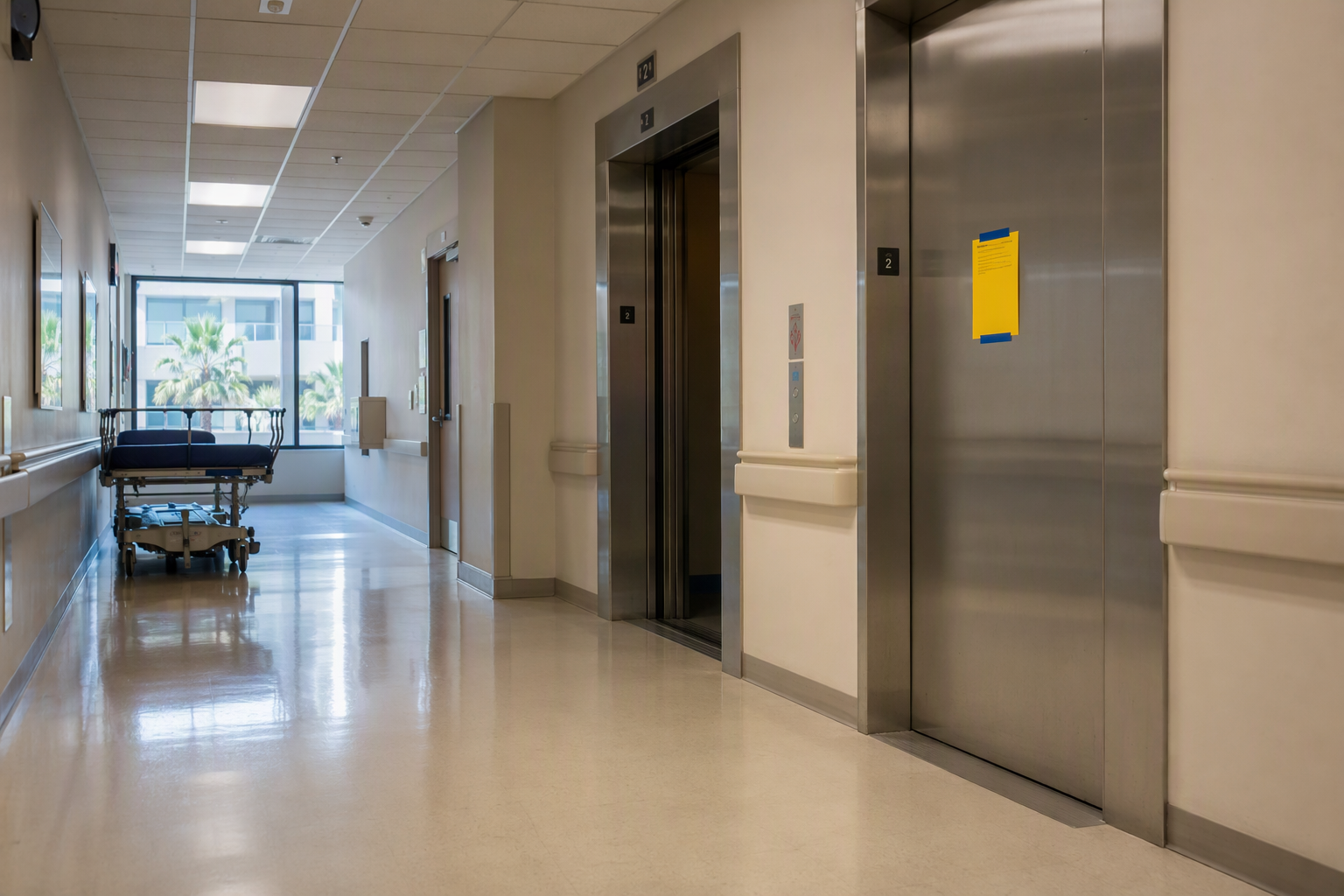
For hospitals, skilled nursing facilities, medical office buildings, and outpatient surgery centers across Signal Hill, Long Beach, Los Angeles, and Orange County, a California DOSH out-of-service order is not simply an inconvenience — it is an operational emergency. Elevators in healthcare settings move patients on gurneys, transport medication and equipment between floors, and provide the only accessible vertical travel route for individuals with mobility limitations. When that equipment goes down by regulatory order, clinical workflows and patient safety are at immediate risk.
This page explains exactly what happens when an elevator fails a California Division of Occupational Safety and Health (DOSH) inspection, what legal obligations apply, and how healthcare facility managers can move from an out-of-service order back to full, compliant operation as efficiently as possible.
—
What Does a California DOSH Out-of-Service Order Actually Mean?
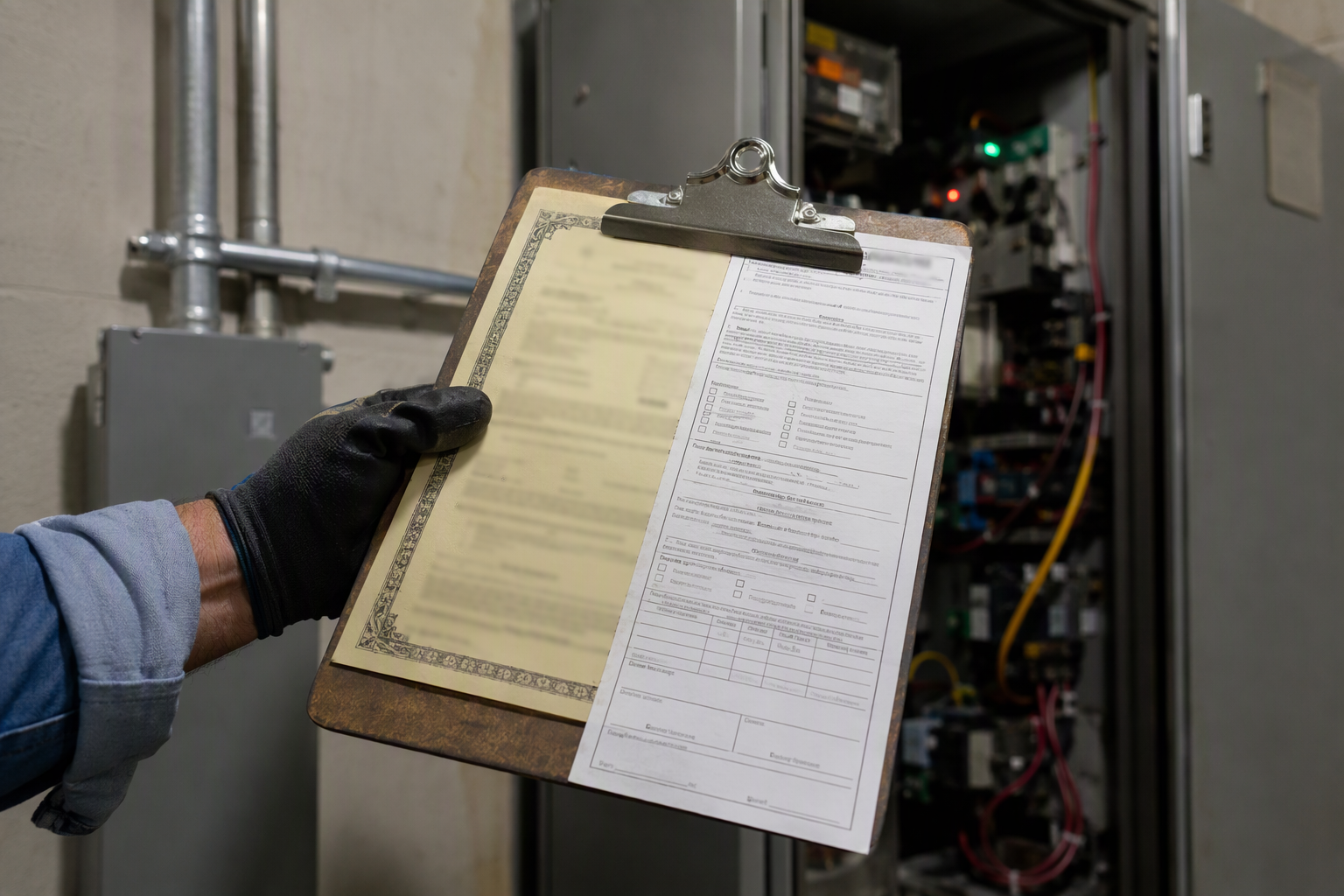
California DOSH — the state agency responsible for elevator safety under the Elevator Safety Law — has authority to issue an out-of-service order on the spot when an inspector identifies a condition that poses an immediate hazard or when required corrections from a prior inspection have not been made. The order is a legally binding directive. The elevator must cease operation immediately. Posting a notice on the cab door and locking the unit out of service is mandatory. Continued operation after an out-of-service order is a violation that can result in civil penalties.
In a healthcare setting, this situation is compounded by obligations under the Americans with Disabilities Act (ADA), which requires that programs and services remain accessible to individuals with disabilities. If the out-of-service elevator is the only accessible route between floors, the facility may face simultaneous ADA compliance exposure while managing the DOSH remediation process.
—
What Are the Most Common Reasons Healthcare Elevators Fail DOSH Inspections?
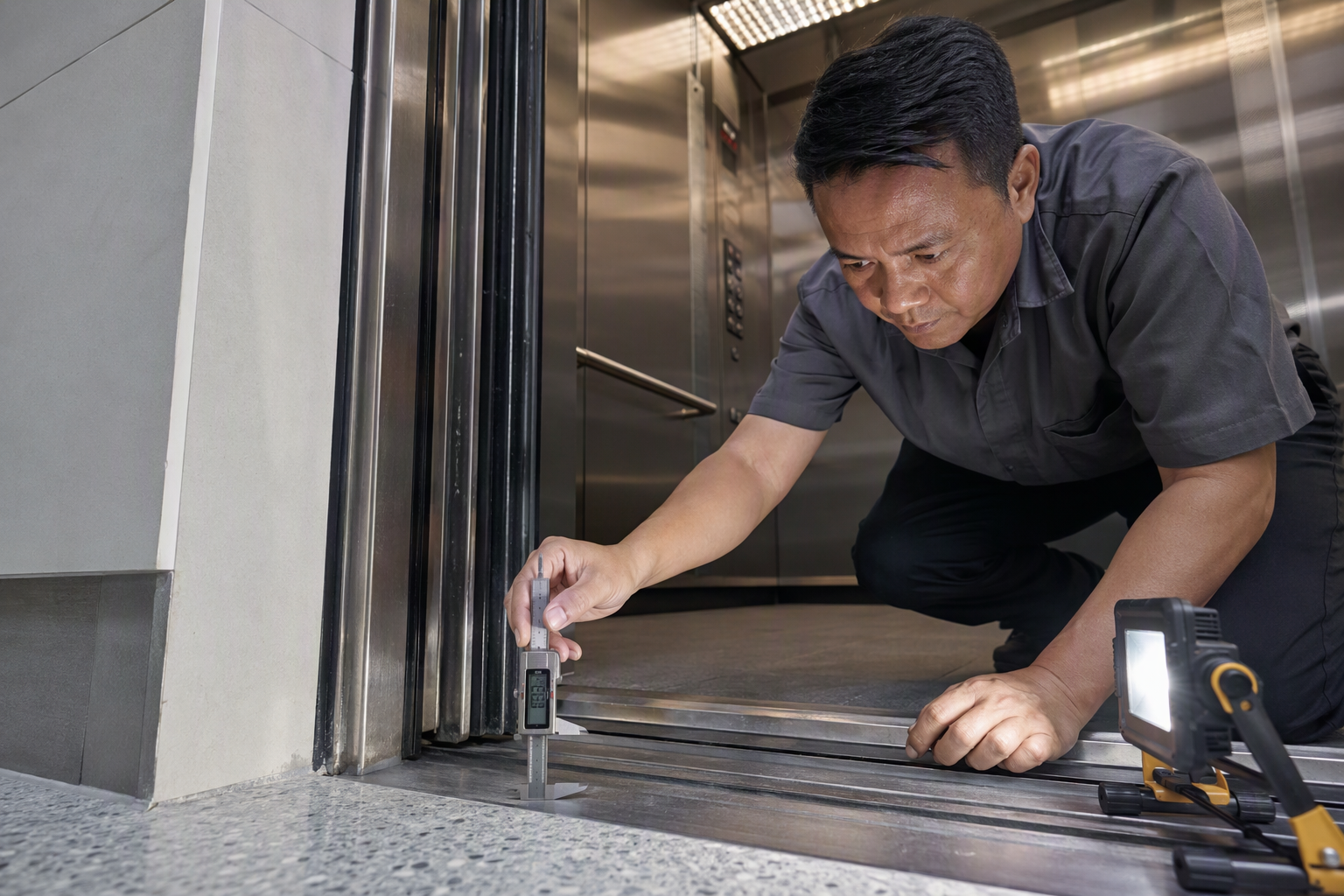
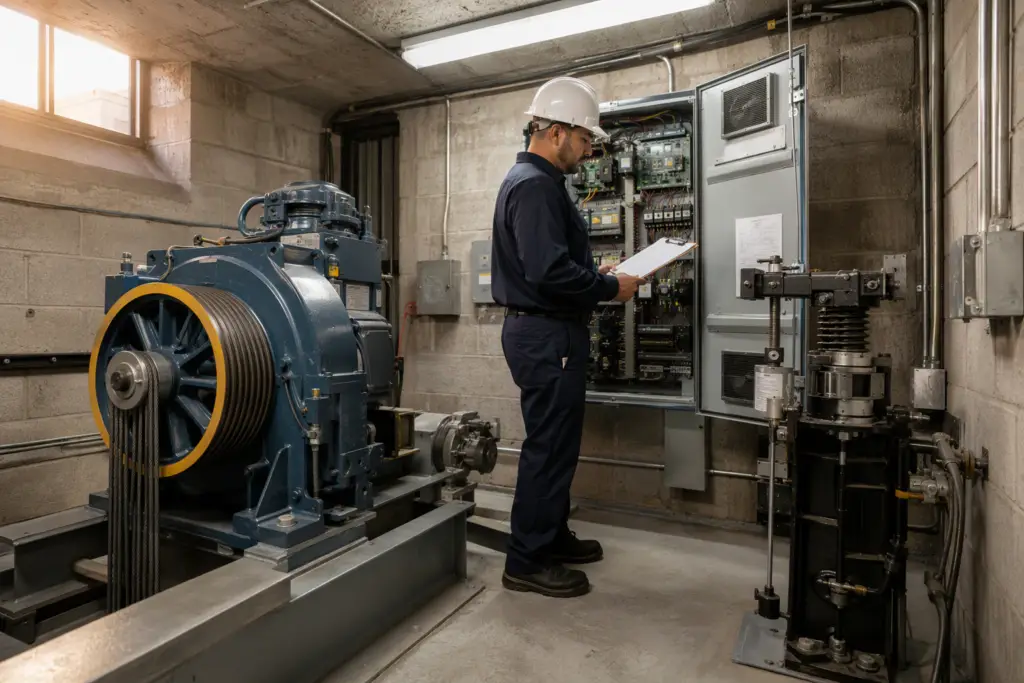
California DOSH inspections are conducted against the requirements of the ASME A17.1 Safety Code for Elevators and Escalators and the ASME A17.3 Safety Code for Existing Elevators and Escalators, both of which establish the baseline safety requirements enforced in California. Common deficiencies found in healthcare elevators include:
- Door safety device failures — malfunctioning reopening devices, worn sills, or non-functioning door contacts that prevent safe passenger entry and exit for patients in wheelchairs or on gurneys.
- Leveling accuracy problems — excessive floor-to-landing gaps that create trip hazards, especially dangerous when transferring patients from beds or stretchers.
- Emergency lighting and communication failures — non-functional cab lighting, failed emergency lighting systems, or inoperable two-way communication devices required under ASME A17.1.
- Governor or safety device defects — components that have exceeded their required test intervals or show signs of wear that compromise overspeed protection.
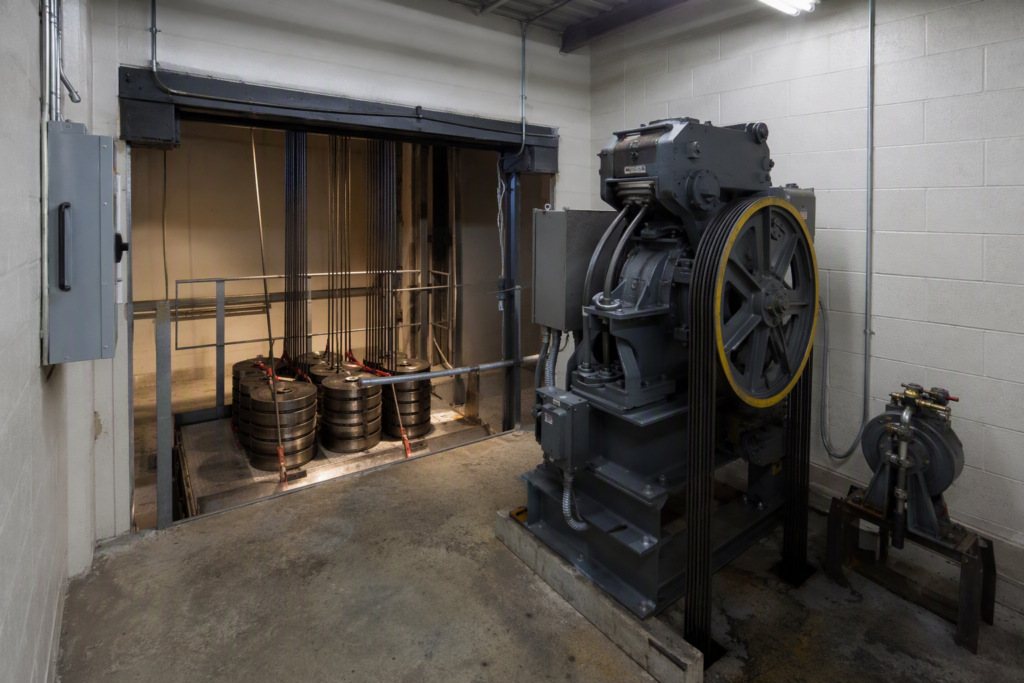
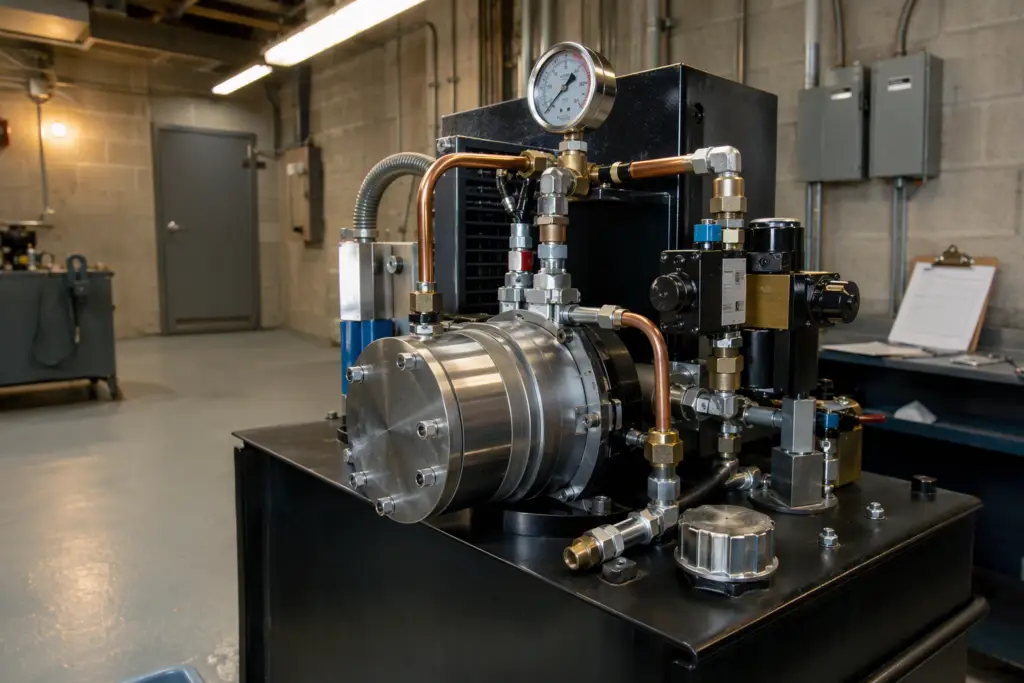
- Hydraulic system leaks or pressure irregularities — common in older hospital buildings with hydraulic units, and a direct safety hazard.
- Missing or expired certificates — operating without a current California DOSH permit to operate, which itself triggers an automatic out-of-service order.
- Firefighter service failures — Phase I or Phase II firefighter emergency operation deficiencies, which are particularly serious in healthcare occupancies where evacuation protocols depend on elevator reliability.
—
What Steps Must a Healthcare Facility Take Immediately After Receiving an Out-of-Service Order?
- Stop the elevator immediately. Remove all passengers, lock the cab controls, and physically prevent access. Do not allow clinical or facilities staff to “test” the unit or run it informally.
- Post the out-of-service notice. California DOSH requires the notice to be posted in a conspicuous location at or near each landing call station.
- Notify your elevator maintenance contractor. Contact your service provider — such as Liftech Elevator — immediately with the full written inspection report and citation list so that technicians can assess the scope of required repairs.
- Activate your ADA contingency plan. Identify alternative accessible routes, notify all departments, and arrange patient transport accommodations to prevent ADA violations during the remediation period.
- Notify facility leadership and risk management. An out-of-service elevator in a healthcare setting has potential implications for Joint Commission standards, CMS Conditions of Participation, and general liability — all of which risk management should be aware of immediately.
- Obtain required parts and schedule repairs. Work with your elevator contractor to prioritize the deficiencies cited by DOSH. All corrections must address every item listed in the inspection report — partial repairs will not result in a re-inspection clearance.
- Request a re-inspection through DOSH. Once all deficiencies have been corrected, the facility or the elevator contractor submits documentation to DOSH and requests a follow-up inspection. The elevator cannot return to service until DOSH signs off and a new or reinstated permit to operate is issued.
- Document everything. Keep records of all repairs performed, parts replaced, and communications with DOSH. This documentation supports the re-inspection process and provides evidence of due diligence for any regulatory or legal review.
—
How Long Does It Take to Get an Elevator Back in Service After a DOSH Out-of-Service Order?
The timeline depends entirely on the nature and number of deficiencies cited, parts availability, and DOSH scheduling for re-inspection. Minor deficiencies — such as a failed emergency light or a worn door contact — may be correctable within days. Major mechanical or electrical failures, hydraulic system repairs, or safety device replacements can take weeks, particularly if custom parts must be sourced for older equipment. Healthcare facilities should not assume a rapid turnaround and should activate contingency plans for an extended outage.
Facilities that work with a responsive elevator service provider and maintain a complete parts history for their equipment are generally better positioned to move through the repair and re-inspection cycle efficiently. Liftech Elevator works with healthcare clients across Long Beach, Los Angeles, and Orange County to document equipment history and identify aging components before they become the cause of a failed inspection.
—
What Compliance Codes Apply to Healthcare Elevators in California?
Healthcare elevators are subject to a layered compliance framework:
- ASME A17.1 Safety Code for Elevators and Escalators — the primary safety standard governing new elevator installations, enforced by California DOSH.
- ASME A17.3 Safety Code for Existing Elevators and Escalators — governs in-service equipment and the periodic tests and inspections required to maintain a California DOSH permit to operate.
- Americans with Disabilities Act (ADA) — requires that accessible routes remain available to individuals with disabilities. An out-of-service elevator that eliminates the only accessible path between floors requires immediate mitigation.
- California Health and Safety Code — California’s Elevator Safety Law establishes DOSH’s authority to inspect, permit, and order elevators out of service.
- NFPA 101 / California Fire Code — governs firefighter emergency elevator service requirements applicable to healthcare occupancies.
- Joint Commission and CMS standards — while not administered by DOSH, Joint Commission Environment of Care standards and CMS Conditions of Participation for hospitals and skilled nursing facilities include requirements for equipment maintenance and patient safety that overlap with elevator compliance obligations.
—
Can a Healthcare Facility Face Penalties Beyond the DOSH Out-of-Service Order?
Yes. Operating an elevator after a DOSH out-of-service order has been issued exposes the facility to civil penalties under California law. Separately, if the out-of-service elevator creates an inaccessible condition for patients or visitors with disabilities, the facility may face complaints under the ADA. Facilities accredited by The Joint Commission may also face adverse findings during their next survey if documentation of timely corrective action and a compliant maintenance program cannot be produced.
—
What Is the Role of Preventive Maintenance in Avoiding Failed Inspections?
Most deficiencies cited during DOSH inspections in healthcare facilities are not sudden failures — they are the result of deferred maintenance, missed adjustment intervals, or aging components that were not identified and replaced proactively. A structured preventive maintenance program, aligned with the periodic testing requirements of ASME A17.3, is the most reliable way to ensure that safety systems, door mechanisms, leveling accuracy, and emergency devices remain within tolerance before a DOSH inspector arrives.
Liftech Elevator provides scheduled maintenance programs for healthcare facilities in Signal Hill, Long Beach, Los Angeles, and Orange County that are structured to keep elevators operating within DOSH compliance standards year-round, including in 2026 and beyond as code editions are updated.
—
What Happens to Patients and Accessibility During an Elevator Outage in a Healthcare Facility?
Facilities must have and execute a written contingency plan. For single-elevator buildings, this is particularly acute — the ADA requires that services be provided in an accessible manner even when equipment is temporarily unavailable. This may mean relocating services to an accessible floor, arranging staff-assisted transport, or coordinating with other departments to accommodate patients who cannot use stairs. Facilities without a documented plan are at higher risk of ADA complaints and Joint Commission findings during a DOSH-mandated outage.
—
Questions Your Inspector Will Ask
During a California DOSH elevator inspection at a healthcare facility, inspectors commonly ask or verify the following:
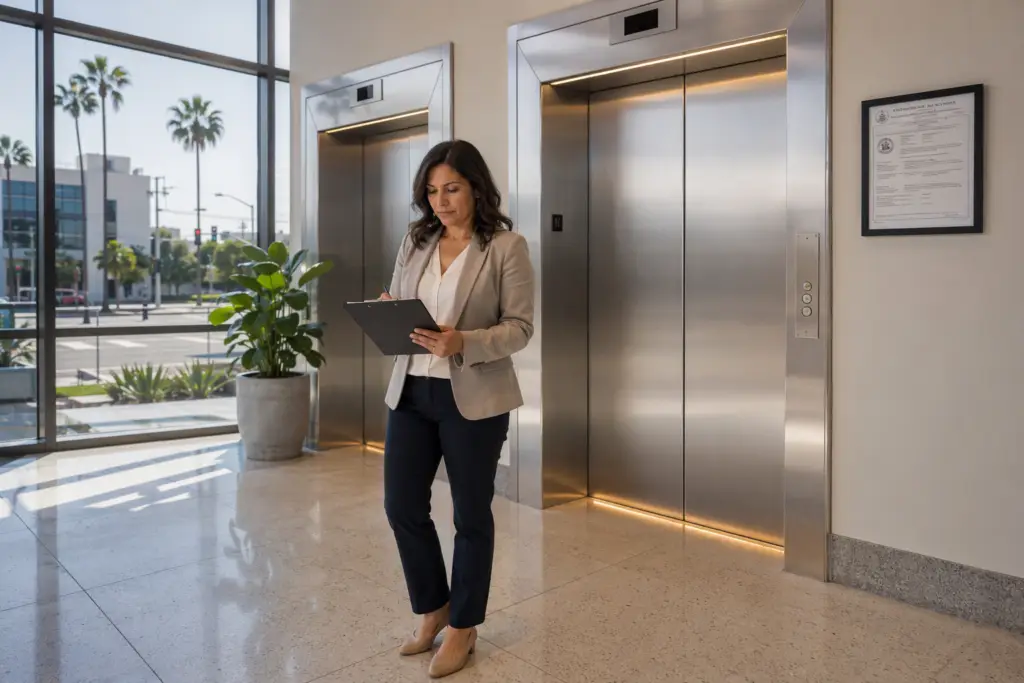
- Is the current California DOSH permit to operate posted in the elevator cab and up to date?
- When was the last required periodic test performed, and is documentation available on site?
- Has the firefighter emergency service (Phase I and Phase II) been tested and documented within the required interval?
- Are maintenance logs available, and do they reflect regular, documented service visits?
- Have any modifications been made to the elevator since the last inspection, and were those modifications permitted?
- Is the two-way emergency communication system functional and connected to a monitored location?
- Are all cab and landing door interlocks functioning correctly?
- Has the governor and safety device been tested within the interval required by ASME A17.1 / A17.3?
- For hydraulic units: is there evidence of leaks, and has the pressure relief valve been tested?
Healthcare facilities that maintain organized maintenance documentation and work with a qualified elevator service provider are significantly better positioned to answer these questions satisfactorily and to resolve any deficiencies before they escalate to an out-of-service order.
—
How Can a Proactive Assessment Help Healthcare Facilities Avoid Out-of-Service Orders?
A pre-inspection assessment conducted by a qualified elevator contractor allows facility managers to identify and correct deficiencies before a DOSH inspector arrives. This is particularly valuable for healthcare facilities managing aging elevator inventories, recent equipment acquisitions, or buildings where maintenance records have gaps. Liftech Elevator offers free elevator assessments for healthcare facilities across Signal Hill, Long Beach, Los Angeles, and Orange County — providing a clear picture of current compliance status and any items that require attention ahead of the next scheduled or unannounced DOSH inspection.
—
What Should Healthcare Facility Managers Look for in an Elevator Service Provider?
For healthcare applications, the elevator service relationship is a compliance partnership, not simply a repair-on-demand arrangement. Facility managers should look for providers who:
- Understand California DOSH inspection requirements and the ASME A17.1 and A17.3 standards that govern healthcare elevator compliance.
- Maintain detailed records of each unit’s service history, parts replacements, and test results in a format that is readily available for DOSH review.
- Communicate proactively about aging components and upcoming test requirements rather than waiting for failures to occur.
- Have direct experience working with hospital, skilled nursing, and medical office building environments where operational continuity and patient safety are non-negotiable.
- Are able to support DOSH re-inspection documentation and coordinate directly with inspectors when deficiency remediation is complete.
Liftech Elevator serves healthcare facilities throughout Southern California with maintenance and compliance programs built around the specific demands of clinical environments.
—
Get Ahead of Your Next DOSH Inspection
An out-of-service order in a healthcare facility is a patient safety event, an ADA compliance exposure, and an operational crisis — all at once. The most effective way to protect patients, staff, and the facility’s compliance standing is a current, accurate assessment of elevator condition before DOSH arrives.
Contact Liftech Elevator for a free elevator assessment. Call 562-997-3639 to schedule your assessment for facilities in Signal Hill, Long Beach, Los Angeles, and Orange County.
Need elevator service you can rely on? Liftech Elevator is ready to help.