Elevator Maintenance & Inspection Requirements for Healthcare Facilities in Los Angeles and Orange County
Direct Answer: Healthcare facilities in Los Angeles and Orange County must comply with ASME A17.1 Safety Code for Elevators and Escalators and California Title 8 elevator regulations, which mandate annual inspections by a state-licensed inspector, routine preventive maintenance, and full ADA accessibility compliance — with additional requirements specific to hospital and medical facility environments.
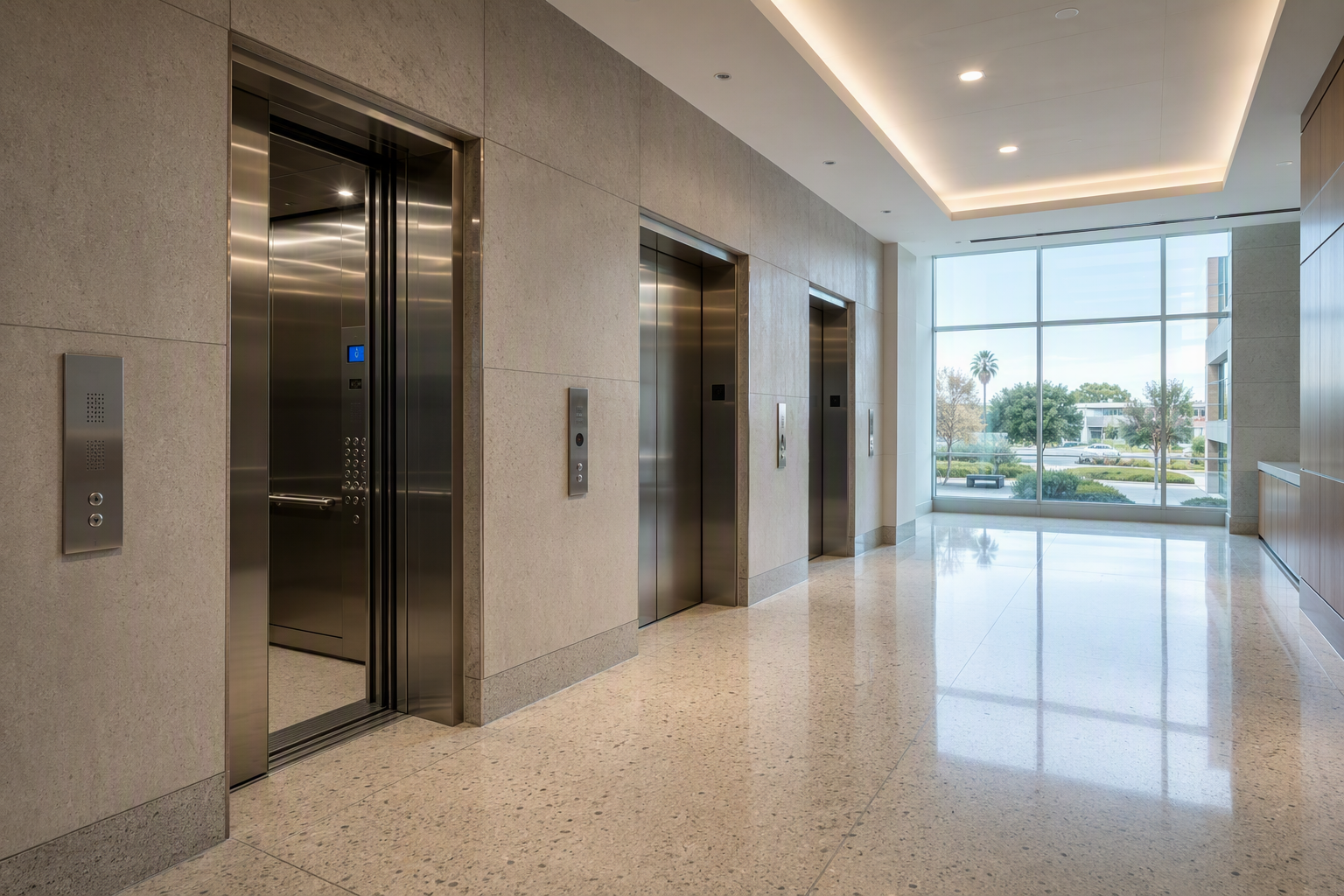
Elevator reliability in a healthcare setting is not a convenience — it is a patient safety and regulatory obligation. Whether a facility operates a multi-floor hospital in Los Angeles, a medical office building in Long Beach, a rehabilitation center in Signal Hill, or a specialty clinic in Orange County, the vertical transportation systems within those walls must meet strict federal, state, and local requirements. This page covers every layer of compliance that applies in 2026 and beyond.
What Federal Codes Govern Elevators in Healthcare Buildings?
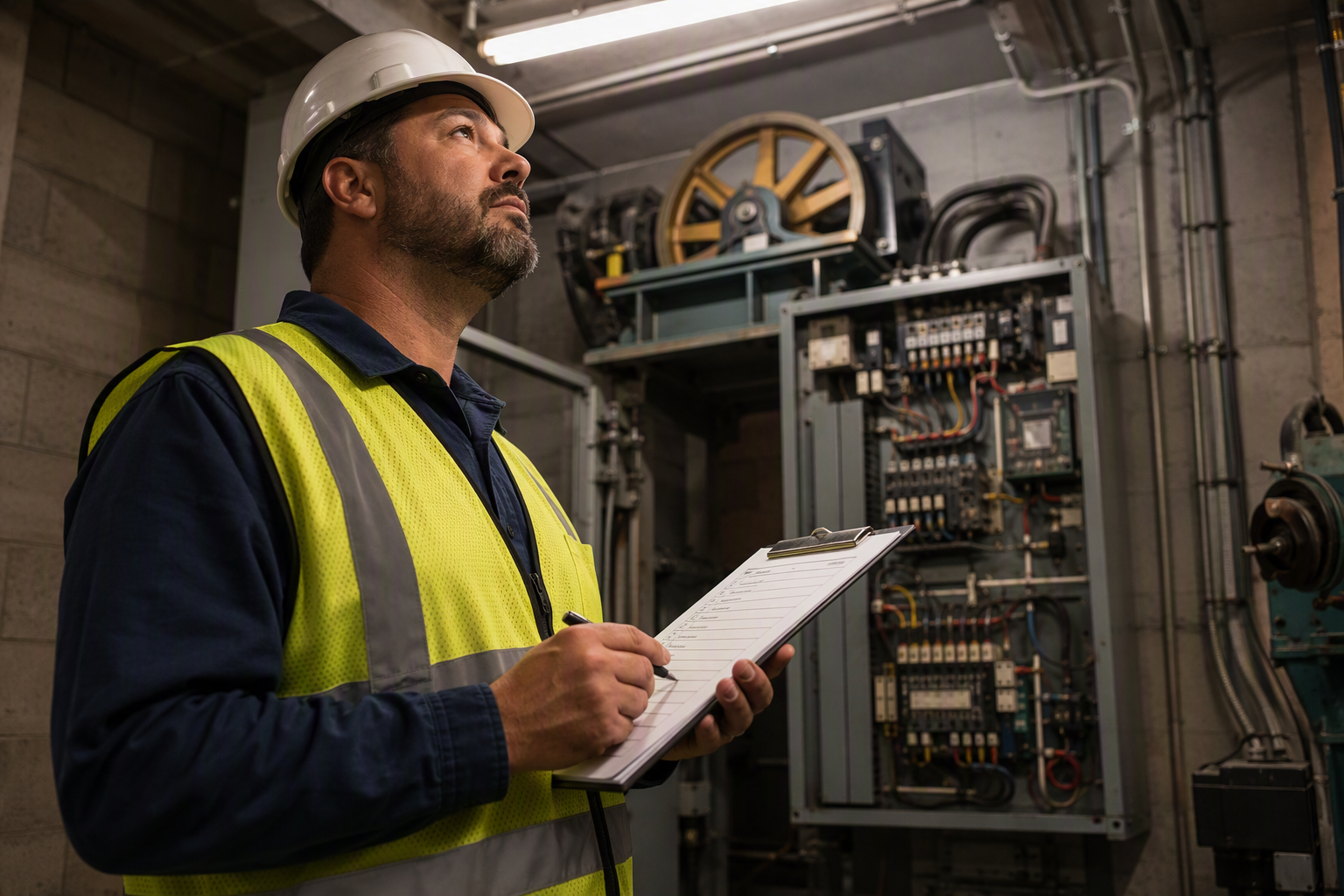
The foundational federal standard for elevator design, construction, operation, and maintenance is the ASME A17.1 Safety Code for Elevators and Escalators. California adopts and enforces this code through its own regulatory framework, meaning every elevator in a Los Angeles or Orange County healthcare facility must conform to ASME A17.1 provisions covering:
- Mechanical and electrical safety devices
- Car and hoistway dimensional requirements
- Door operation, reopening devices, and interlock systems
- Emergency lighting and communication systems
- Firefighters’ emergency operation (Phase I and Phase II)
- Seismic protection requirements — especially critical in Southern California
For existing elevators already in service, the companion standard ASME A17.3 Safety Code for Existing Elevators and Escalators establishes the retroactive safety requirements that older installations must meet through phased upgrades.
Accessibility is governed separately by the Americans with Disabilities Act (ADA). Healthcare facilities serve patients with mobility limitations, post-surgical conditions, and disabilities — making ADA elevator compliance not just a legal baseline but an operational necessity. Key ADA elevator requirements include minimum car dimensions, door clear-width standards, accessible call button height and Braille markings, audible floor announcements, and leveling accuracy.
What California-Specific Elevator Regulations Apply to Healthcare Facilities?
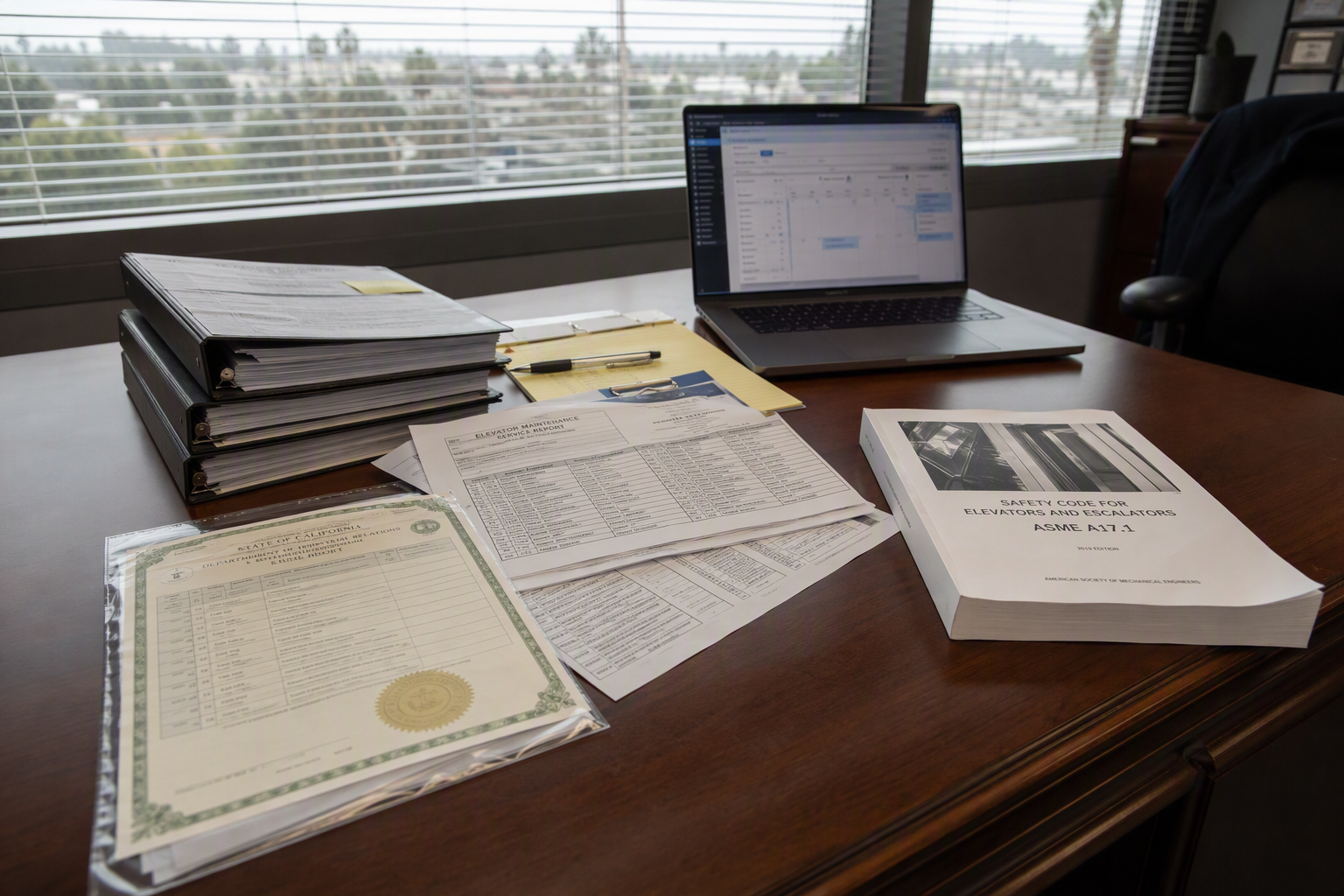
California enforces elevator safety through the Division of Occupational Safety and Health (Cal/OSHA) Elevator, Ride, and Tramway Unit, which operates under the California Department of Industrial Relations. Every elevator operating in a California healthcare facility must hold a current Permit to Operate issued by this authority.
Key California requirements include:
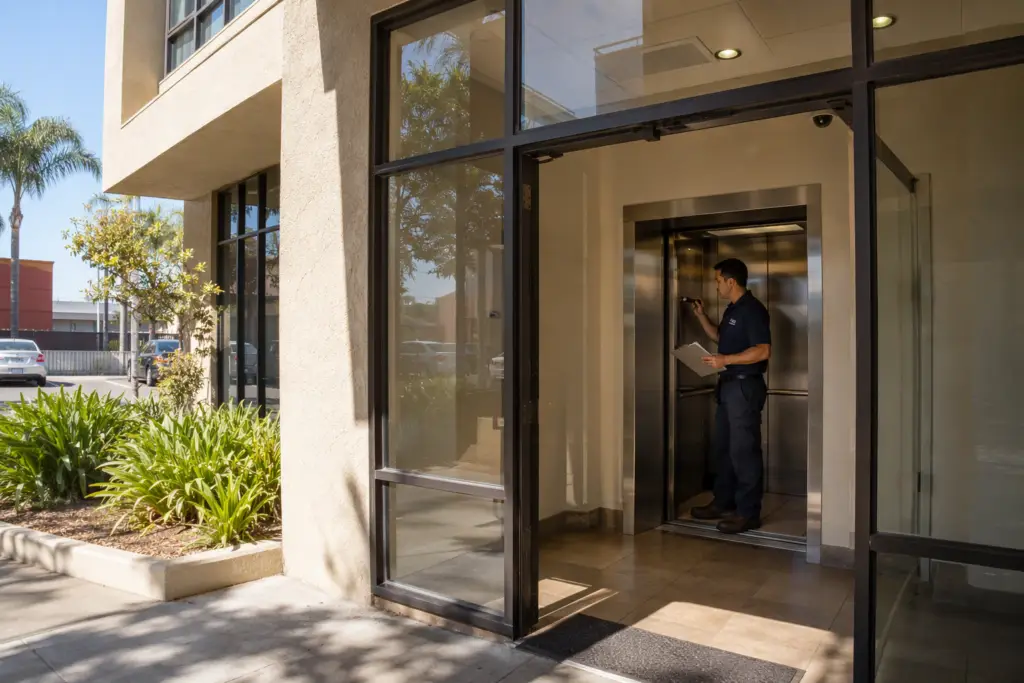
- Annual inspections conducted by a California-licensed Qualified Elevator Inspector (QEI)
- Periodic tests at intervals specified by ASME A17.1 and California’s Title 8 regulations, including full-load safety tests and hydraulic pressure tests where applicable
- Seismic switches and counterweight guards required under California’s earthquake safety provisions — a non-negotiable consideration for Los Angeles and Orange County facilities located in active seismic zones
- Posted permits inside every elevator cab, visible to occupants
- Violation correction timelines enforced by the state after each inspection, with out-of-service orders possible for critical safety deficiencies
Healthcare facilities should also coordinate with their local Authority Having Jurisdiction (AHJ), which may be the City of Los Angeles, the County of Los Angeles, or the relevant Orange County municipality, as local plan check and permit processes may layer additional requirements on top of state minimums.
Are There Healthcare-Specific Elevator Requirements Beyond Standard Commercial Codes?
Yes. Hospitals, long-term care facilities, and medical office buildings face requirements that go beyond what a standard commercial office building must meet. These include:
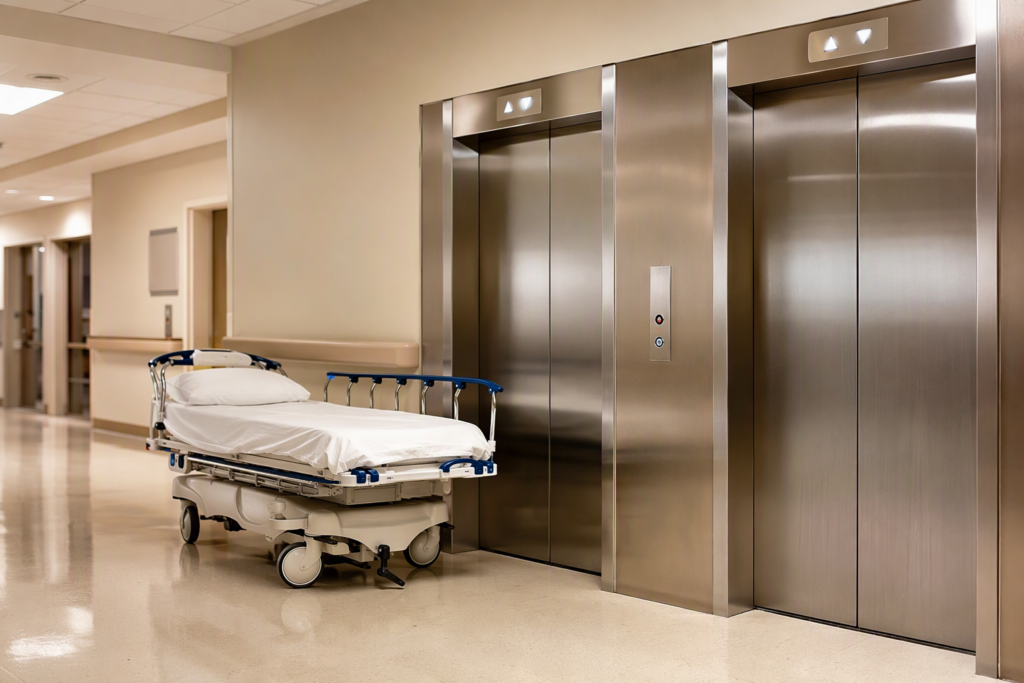
- Hospital-duty elevator classifications: Facilities that transport patients on gurneys or in large hospital beds require elevators with extended cab depths and wider door openings than standard commercial units — a design consideration addressed in ASME A17.1.
- Infection control and surface materials: Elevator interiors in clinical areas may be subject to facility-level hygiene protocols, including requirements for smooth, cleanable surfaces and antimicrobial materials.
- Emergency power integration: California health facility licensing standards, enforced by the California Department of Public Health (CDPH), typically require that at least one elevator in a licensed hospital connects to the emergency power system so that patient transport continues during power outages.
- Life Safety Code coordination: Healthcare facilities licensed under CDPH must comply with the edition of the NFPA Life Safety Code adopted by California, which includes provisions for elevator lobby enclosures and smoke control relevant to elevator operations.
- Stretcher-capable elevators in assisted living and skilled nursing facilities: California Department of Social Services (CDSS) licensing standards for residential care facilities for the elderly (RCFEs) and skilled nursing facilities (SNFs) may require elevators large enough to accommodate emergency stretchers.
Liftech Elevator works with healthcare facility managers in Los Angeles, Long Beach, Signal Hill, and Orange County to map these overlapping requirements and ensure elevator systems satisfy every applicable layer of compliance.
How Often Must Healthcare Facility Elevators Be Inspected in California?
California mandates annual inspections for most elevator types as a condition of maintaining the Permit to Operate. In addition to annual inspections, ASME A17.1 establishes intervals for periodic tests — such as five-year full-load safety tests for traction elevators and five-year tests for hydraulic systems — that must be witnessed by a licensed inspector and documented in the elevator’s maintenance records.
Healthcare facilities are advised to schedule maintenance and inspection cycles in advance and maintain a complete service log, as CDPH and Joint Commission surveyors may request maintenance records during facility accreditation reviews.
What Is a Preventive Maintenance Agreement and Why Does a Healthcare Facility Need One?
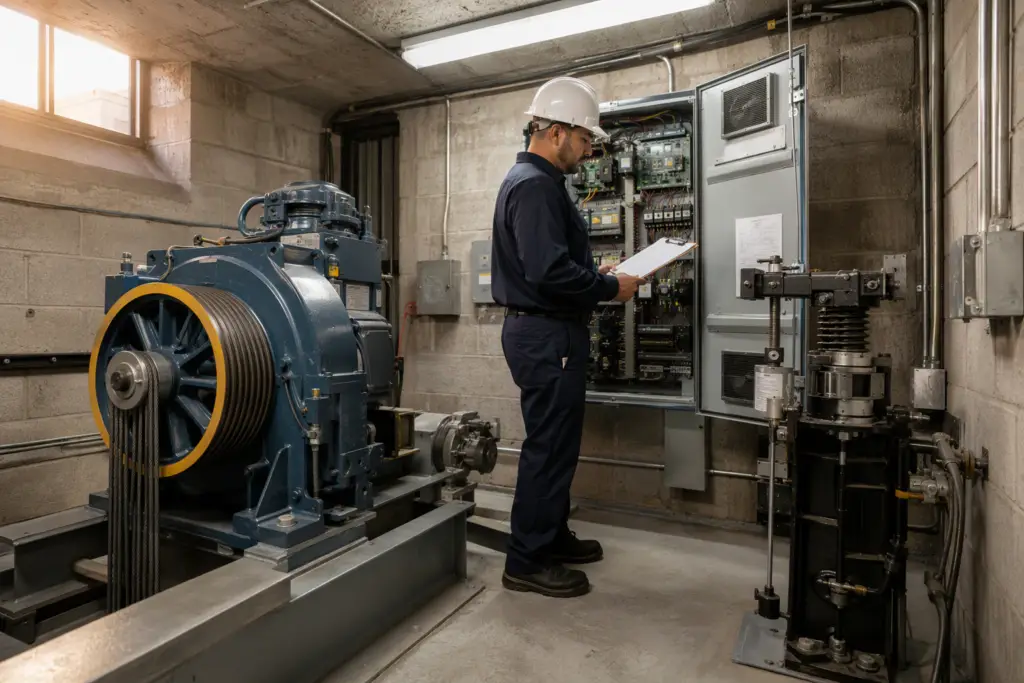
A Preventive Maintenance (PM) agreement is a contractual service arrangement under which a licensed elevator service company performs scheduled maintenance tasks — lubrication, adjustment, safety device testing, and component inspection — on a defined frequency. For healthcare facilities, a PM agreement provides several critical benefits:
- Reduces the likelihood of unexpected elevator downtime that could delay patient transport
- Creates a documented maintenance record that satisfies state inspection requirements and supports accreditation surveys
- Identifies worn or aging components before they result in a code violation or an unsafe condition
- Demonstrates due diligence, which can be relevant in facility liability assessments
Liftech Elevator provides preventive maintenance services for healthcare facilities throughout Los Angeles, Long Beach, Signal Hill, and Orange County, with service scopes tailored to the specific elevator type and use classification of each facility.
What ADA Requirements Apply to Elevators in Healthcare Facilities?
Under the ADA, healthcare facilities that serve the public — including hospitals, outpatient clinics, medical offices, and rehabilitation centers — must provide accessible routes to all areas open to patients and visitors. Where elevators are part of that accessible route, they must meet ADA Standards for Accessible Design, including:
- Minimum interior car dimensions sufficient for wheelchair users and mobility device users
- Door clear-width minimums and door reopening devices sensitive to obstruction
- Call buttons at accessible mounting heights with raised markings
- Floor designations in Braille and raised characters on jambs
- Audible and visible signals indicating car arrival and direction of travel
- Two-way communication systems in the car, accessible to users with hearing or speech impairments
- Leveling accuracy within a tolerance that allows safe wheelchair entry and exit
California also enforces the California Building Code (CBC), which incorporates and in some respects exceeds federal ADA requirements for accessible design.
What Are the Seismic Requirements for Elevators in Los Angeles and Orange County?
Southern California’s seismic environment places additional obligations on elevator owners. California’s adoption of ASME A17.1 includes seismic provisions requiring seismic switches (also called earthquake sensors) that automatically bring an elevator to the nearest floor and open its doors following a seismic event, preventing passengers from being trapped. Additional California-specific requirements address counterweight retainer guards to prevent derailment during ground motion.
For healthcare facilities in Los Angeles and Orange County — both of which sit in high seismic hazard zones — verifying that seismic devices are functional and properly calibrated is a required element of each inspection cycle.
What Happens If a Healthcare Elevator Fails Inspection?
When a California elevator inspector identifies a deficiency, the outcome depends on the severity:
- Minor violations are documented in the inspection report, and the elevator may continue operating while the owner corrects the deficiency within the timeframe the inspector specifies.
- Serious violations may result in a conditional permit or a required correction before the next permit renewal.
- Imminent hazard conditions can result in an immediate out-of-service order. The elevator must remain shut down until the deficiency is corrected and re-inspected.
- The facility must notify the applicable AHJ upon correction and arrange for a follow-up inspection to have the permit reinstated.
- For healthcare facilities, an out-of-service elevator may trigger operational contingency plans, accessibility obligations under the ADA, and potential CDPH notification if patient care is affected.
Engaging a qualified elevator maintenance provider before the annual inspection significantly reduces the likelihood of discovering critical deficiencies during a formal inspection. Liftech Elevator conducts pre-inspection assessments for healthcare clients in the Los Angeles and Orange County markets to identify and address issues proactively.
How Should a Healthcare Facility Evaluate an Elevator Service Company?
Not all elevator service companies are equally equipped to work in a regulated healthcare environment. When evaluating providers, facility managers should consider:
- Whether the company holds all required California contractor licenses for elevator work
- Familiarity with healthcare-specific code overlays, including CDPH requirements and NFPA Life Safety Code provisions
- Ability to provide thorough maintenance documentation suitable for accreditation review
- Experience servicing hospital-duty elevator classifications and clinical environments
- Coverage in the facility’s geographic market — Los Angeles, Long Beach, Signal Hill, or Orange County
Liftech Elevator is a certified elevator service company serving healthcare, commercial, and residential clients across Signal Hill, Long Beach, Los Angeles, and Orange County, with expertise in the regulatory landscape specific to California healthcare facilities.
Questions Your Inspector Will Ask
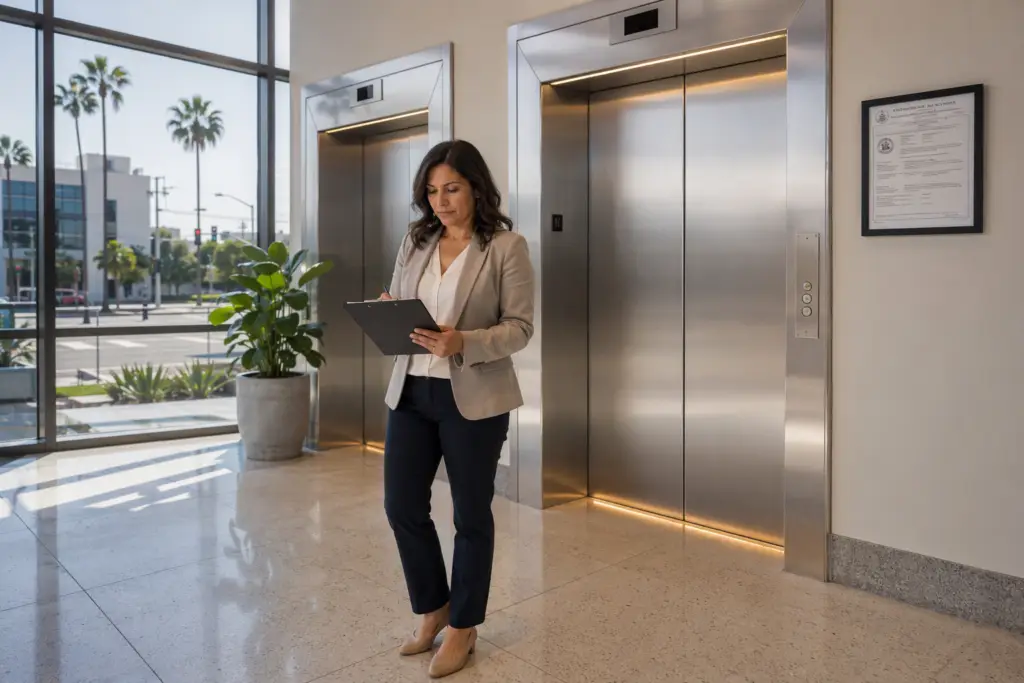
Preparing for an annual elevator inspection is more straightforward when facility managers anticipate what the inspector will review. A California-licensed Qualified Elevator Inspector conducting a healthcare facility inspection is likely to ask or verify the following:
- Is the current Permit to Operate posted inside the elevator cab and up to date?
- Where is the maintenance log, and does it reflect service performed at the required intervals?
- Has the firefighters’ emergency operation (Phase I recall and Phase II in-car control) been tested and documented?
- Are all emergency lighting and two-way communication systems functional?
- Have seismic switches been tested and are they in working order?
- Are door reopening devices functioning correctly and within tolerance?
- For hydraulic elevators: when was the last pressure test performed, and is the hydraulic fluid containment system intact?
- Are all required ADA features — Braille markings, accessible call buttons, audible signals — present and operational?
- Has any work been performed on the elevator since the last inspection, and were the appropriate permits pulled?
- For hospital-duty elevators: are the car dimensions and door clear-width measurements within the required specifications for patient transport?
What Steps Should a Healthcare Facility Take to Ensure Ongoing Elevator Compliance?
- Inventory all elevator units on the property, confirming each holds a valid California Permit to Operate.
- Review maintenance records to confirm that all required periodic tests and routine maintenance tasks are documented and current.
- Audit ADA compliance for each unit, including cab dimensions, door operation, signage, and communication systems.
- Verify seismic device functionality with a qualified technician, particularly if the building has not had a seismic device inspection recently.
- Establish or renew a preventive maintenance agreement with a California-licensed elevator service company.
- Schedule a pre-inspection assessment prior to the annual state inspection to identify and resolve deficiencies before the formal review.
- Coordinate with facility accreditation staff to ensure elevator maintenance records are organized and accessible for Joint Commission or CDPH surveys.
- Document any corrective actions taken in response to prior inspection reports and confirm that all timelines have been met.
Get Your Healthcare Facility’s Elevators Fully Compliant
Elevator compliance in a healthcare environment involves multiple overlapping requirements — state inspection mandates, federal ADA obligations, seismic safety provisions, and facility-specific codes. A missed requirement can mean patient safety risk, regulatory action, or accreditation findings.
Contact Liftech Elevator for a free elevator assessment and find out exactly where your facility stands. Liftech Elevator serves healthcare facilities throughout Signal Hill, Long Beach, Los Angeles, and Orange County with comprehensive maintenance, inspection preparation, and compliance support.
Contact Liftech Elevator for a free elevator assessment: 562-997-3639
Need elevator service you can rely on? Liftech Elevator is ready to help.