How to Manage Elevator Maintenance and Inspections Across Multiple Buildings in Los Angeles and Orange County
Managing elevator compliance across a multi-building portfolio is one of the most operationally complex responsibilities a property manager in Los Angeles and Orange County faces. Unlike single-property operators, portfolio managers must track overlapping inspection cycles, varying equipment ages, multiple authority-having jurisdictions (AHJs), and the cascading liability risk that comes when even one elevator goes out of compliance. This page consolidates the regulatory framework, operational strategies, and vendor coordination practices that experienced portfolio managers use to stay ahead of California’s requirements in 2026.
What California Law Requires for Elevator Inspections Across a Portfolio?
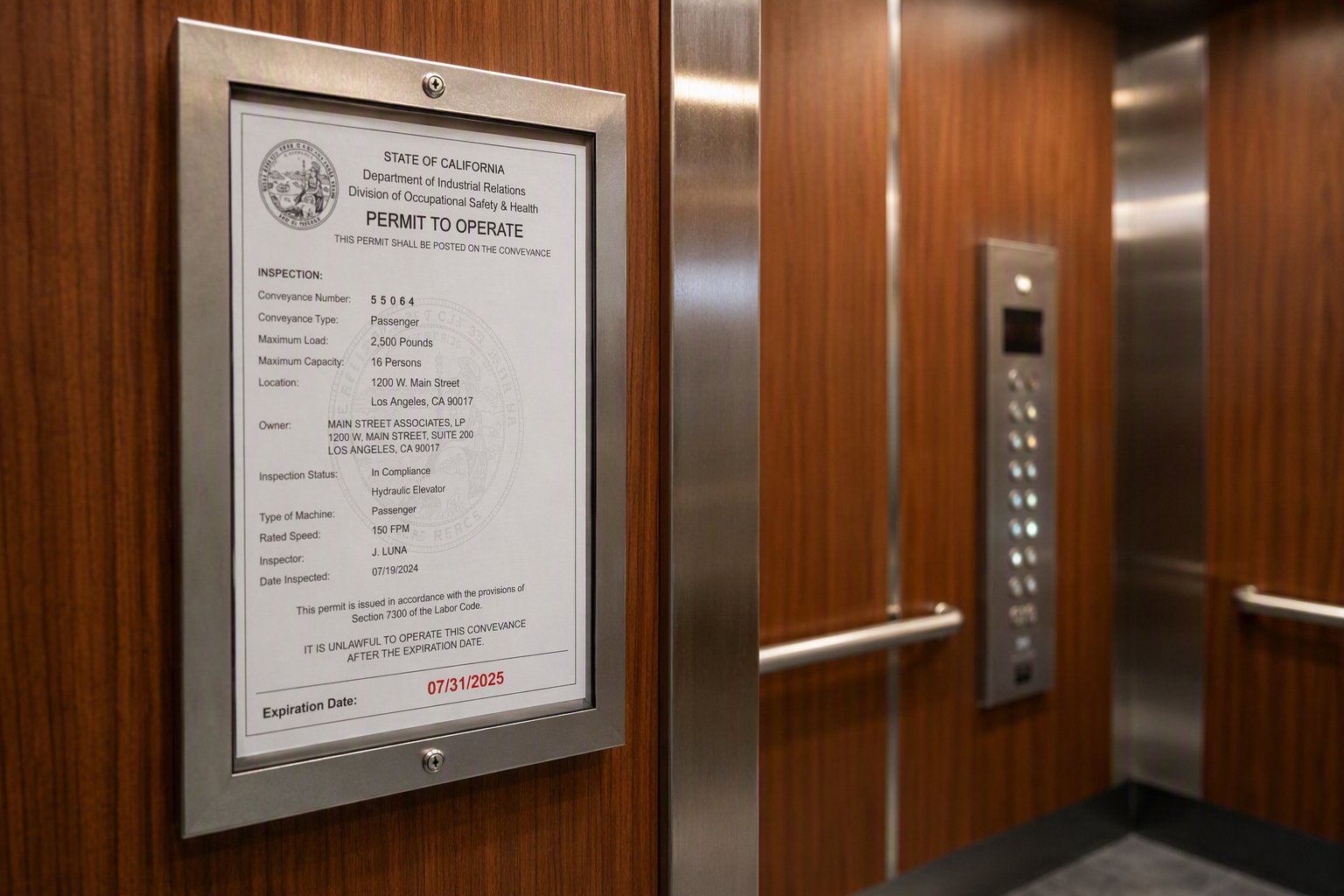
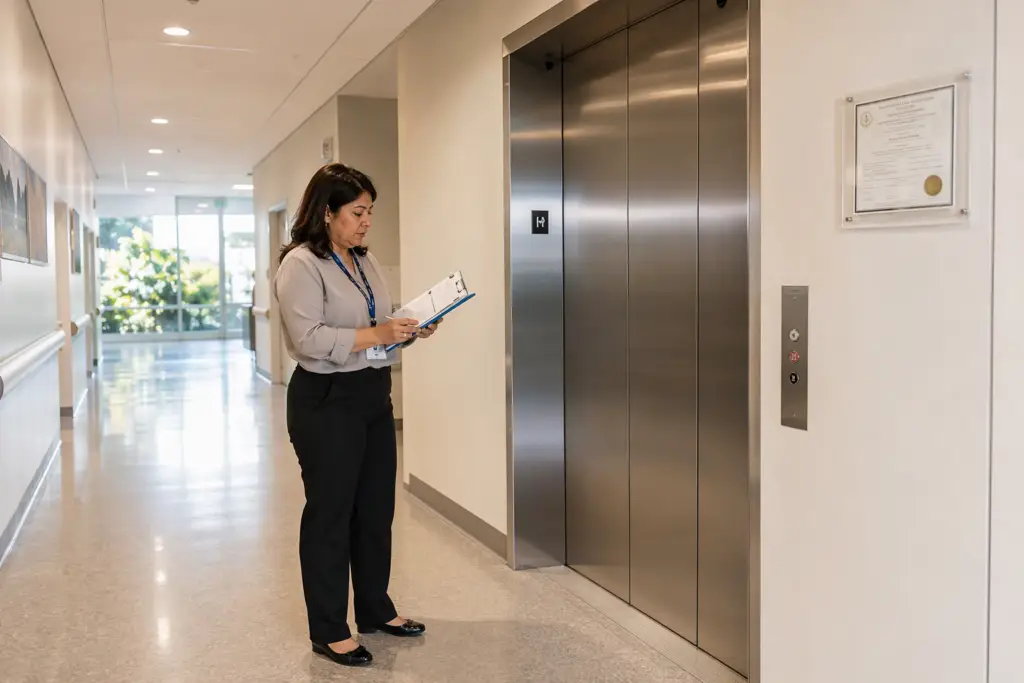
California regulates elevators primarily through the Elevator Safety Orders administered by the California Division of Occupational Safety and Health (Cal/OSHA), which falls under the California Department of Industrial Relations. Every elevator, escalator, and related conveyance in a commercial or residential building must hold a current permit to operate issued by the state or an approved third-party inspection agency. Permits must be renewed periodically, and inspections are required before a permit renewal is granted.
The underlying technical standards that California adopts are the ASME A17.1 Safety Code for Elevators and Escalators (for new installations) and ASME A17.3 Safety Code for Existing Elevators and Escalators (for equipment already in service). These codes establish the minimum safety requirements that California’s Elevator Safety Orders incorporate. Portfolio managers do not need to read the codes themselves, but they do need to ensure their elevator contractor is working to these standards on every unit in the portfolio.
Accessibility requirements under the Americans with Disabilities Act (ADA) apply to any elevator in a building covered by Title III (public accommodations and commercial facilities) or Title II (government entities). ADA compliance is not inspected by Cal/OSHA but can be the basis of a federal civil rights complaint or lawsuit, making it a separate compliance track that portfolio managers must monitor independently of the state permit cycle.
Workplace safety obligations under OSHA apply when elevator mechanics and maintenance technicians are working on equipment — particularly during modernization projects or emergency repairs. Property managers should confirm that any contractor working in their buildings maintains OSHA-compliant safety practices.
How Do Inspection Intervals Work for Elevators in California?
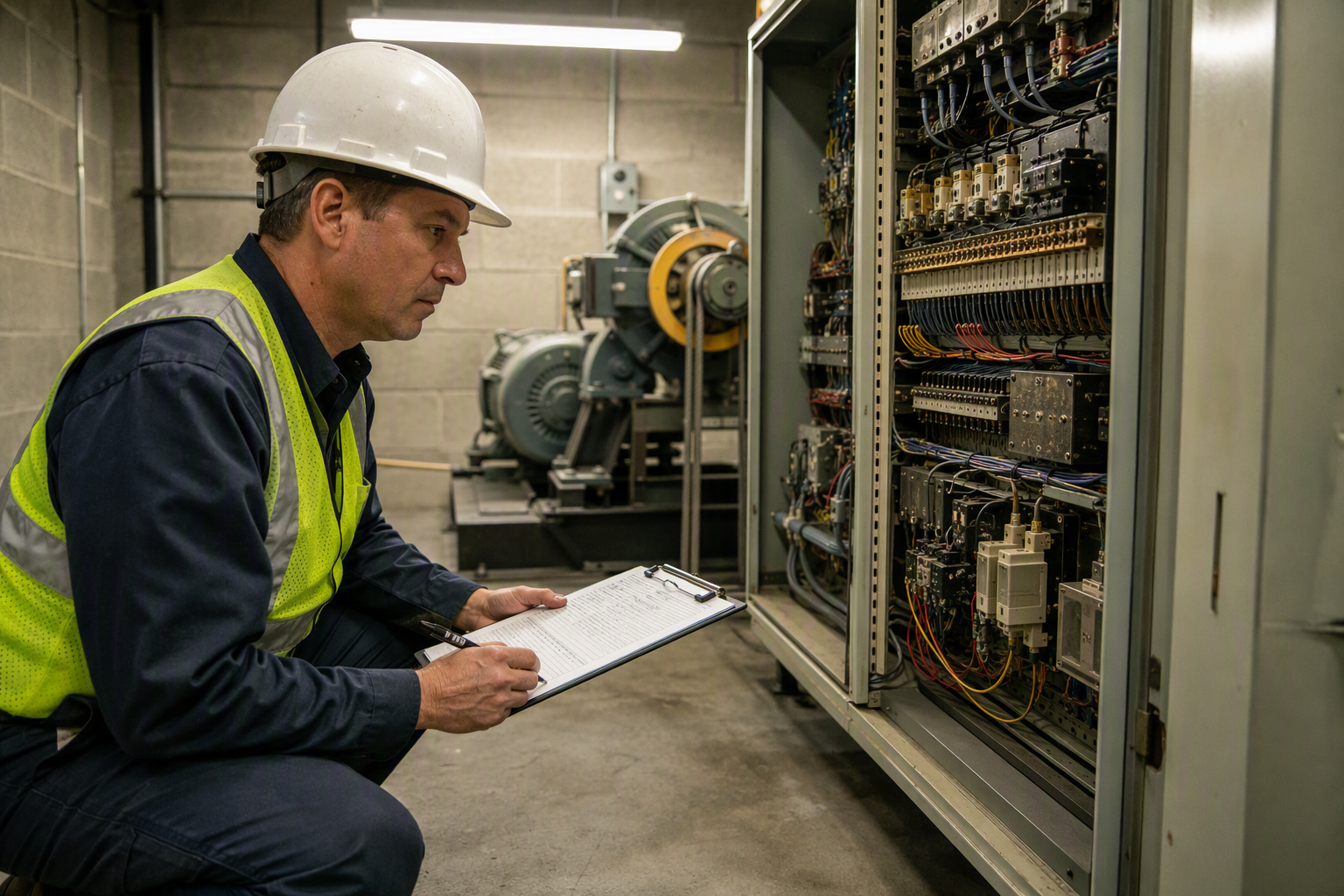
California’s permit-to-operate system ties inspection intervals to the type of equipment and its use. Under the state’s Elevator Safety Orders, periodic inspections are required at intervals set by regulation, and the permit to operate is issued only after a satisfactory inspection. For a portfolio manager, this means each elevator in each building has its own permit expiration date — and those dates are rarely synchronized across a portfolio acquired over time.
The practical implication is that a 20-building portfolio in Los Angeles and Orange County could have elevators whose permits expire in every month of the year. Without a centralized tracking system, it is easy for a renewal deadline to slip past, putting the building in a state of unpermitted operation — which exposes the owner to stop-use orders, fines, and civil liability.
The ASME A17.3 standard also establishes requirements for periodic tests — including specific tests for safeties, governors, and pressure vessels — that occur on longer cycles than annual inspections. A qualified elevator contractor will track these longer-cycle test obligations and schedule them in advance so they do not surprise the property manager at permit renewal time.
What Is the Role of the Authority Having Jurisdiction (AHJ) in Los Angeles and Orange County?
In California, the primary AHJ for elevator safety is Cal/OSHA’s Elevator Unit, but local jurisdictions — including the City of Los Angeles and various municipalities within Orange County — may have their own building departments involved in the permit process. This layered structure means portfolio managers operating across both counties may encounter slightly different administrative procedures, fees, and point-of-contact offices even though the underlying technical requirements are set at the state level.
Understanding which office to contact for each property — and maintaining a current list of permit numbers, inspector contacts, and renewal deadlines for each building — is foundational to compliant portfolio management. A regional elevator service provider with established relationships in both LA and Orange County, such as Liftech Elevator, can be a valuable resource for navigating these administrative differences at scale.
What Should a Preventive Maintenance Program Look Like for a Multi-Building Portfolio?
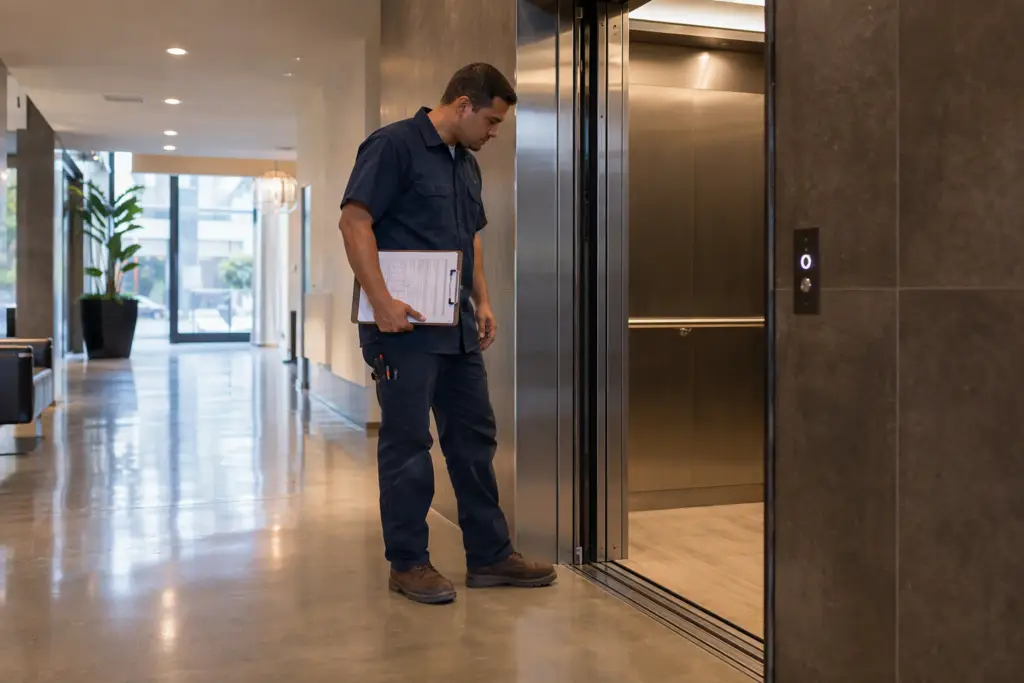
A preventive maintenance (PM) program is distinct from an inspection. Inspections are regulatory events performed by a state-licensed inspector to verify code compliance. Preventive maintenance is an ongoing operational practice performed by your elevator contractor to keep equipment running safely and reliably between inspections.
For a multi-building portfolio, an effective PM program typically includes the following components structured into a formal agreement with your elevator contractor:
- Equipment audit and baseline condition report: Before starting any PM contract, the contractor should document the current condition, age, and known deficiencies of every elevator in the portfolio. This baseline drives the maintenance schedule and surfaces deferred capital needs.
- Monthly or quarterly visits per unit: Depending on traffic volume and equipment age, most commercial and residential elevators in California benefit from monthly or quarterly maintenance visits. High-traffic units in Los Angeles mixed-use buildings may warrant more frequent attention than low-traffic units in smaller Orange County residential properties.
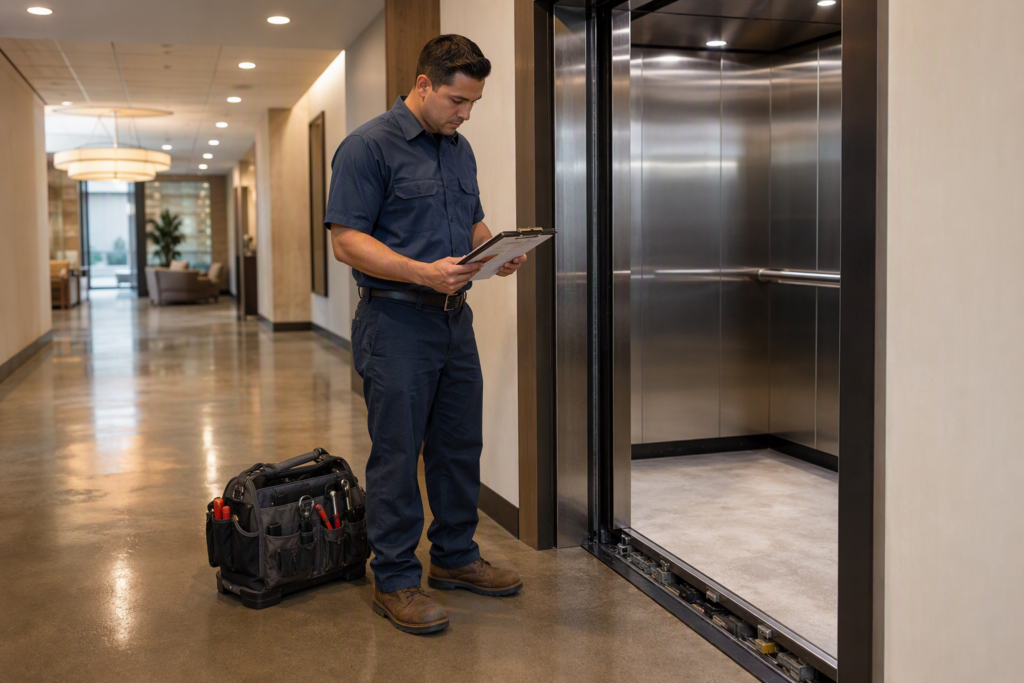
- Lubrication, adjustment, and parts replacement: Each maintenance visit should follow a documented checklist covering lubrication of moving parts, adjustment of door operators and safeties, and replacement of consumable components before they fail.
- Callback and emergency response protocol: The PM agreement should define how the contractor responds to entrapment situations and equipment failures outside of scheduled visits. Property managers should understand the process and communicate it to building staff.
- Inspection coordination: The contractor should proactively coordinate with the AHJ to schedule required periodic inspections, prepare the equipment for the inspection, and address any violations cited before the permit renewal deadline.
- Portfolio-level reporting: A quality contractor will provide the portfolio manager with a consolidated status report — covering all units across all buildings — so compliance gaps are visible at the portfolio level, not just the individual building level.
How Do You Track Compliance Across Multiple Buildings Without Missing a Deadline?
The single most common compliance failure in multi-building portfolios is a missed permit renewal — not negligence about maintenance, but a scheduling and administrative oversight. The following operational practices reduce that risk:
- Build a centralized compliance calendar: Enter every permit expiration date, required periodic test date, and inspection due date for every elevator in every building into a single calendar or property management platform. Set automated reminders at 90, 60, and 30 days before each deadline.
- Assign a dedicated compliance owner: One person on the property management team — or a designee at the elevator contractor — should own the compliance calendar and be accountable for every entry. Distributed ownership leads to gaps.
- Request permit copies for every unit: Obtain a copy of the current permit to operate for every elevator in the portfolio. The permit should be posted in the elevator machine room or car as required by California regulation. If any permit is missing, treat that as an immediate action item.
- Align PM visits with pre-inspection windows: Schedule a PM visit approximately 60 days before each permit renewal inspection. This gives the contractor time to identify and correct deficiencies before the inspector arrives, avoiding citation-driven delays.
- Conduct annual portfolio-level reviews: Once per year, review the entire portfolio’s equipment condition, capital reserve requirements, and ADA compliance status. Use this review to prioritize modernization budgets for aging units.
What Drives Elevator Maintenance Costs Across a Large Portfolio?
Maintenance costs vary significantly across a portfolio based on several qualitative factors. Portfolio managers who understand these drivers can budget more accurately and negotiate more effectively with service contractors.
Equipment age and technology generation: Older hydraulic and traction elevators with relay-logic controls require more labor-intensive maintenance and face an increasingly limited supply of replacement parts. Newer microprocessor-controlled equipment is generally more diagnostic-friendly but may require proprietary access tools or software that only certain contractors possess.
Traffic volume and building type: A high-rise residential tower in downtown Los Angeles that runs elevators continuously from early morning to late night accumulates wear far faster than a two-story office building in Irvine with limited hours. PM visit frequency should reflect actual use patterns, not just a standard schedule applied uniformly across the portfolio.
Deferred maintenance backlog: Buildings acquired as part of a portfolio expansion often carry deferred maintenance that was not captured in due diligence. A thorough equipment audit at acquisition is essential to understanding the true cost basis of any new addition to the portfolio.
Full-service versus oil-and-grease contracts: Maintenance agreements range from basic lubrication-and-adjustment contracts (where the owner pays separately for all parts and callbacks) to full-service agreements that include most parts and callbacks. Portfolio managers should compare the total cost of each structure against their equipment risk profile — older equipment typically benefits from more comprehensive coverage.
Modernization versus maintenance tipping point: At some point, continuing to maintain aging equipment becomes more expensive and less reliable than modernizing it. Factors such as parts obsolescence, recurring callbacks, and ADA compliance gaps all push equipment toward the modernization threshold. A data-driven contractor can help identify which units in a portfolio are approaching this threshold.
What Are the ADA Compliance Obligations for Elevator-Equipped Buildings in California?
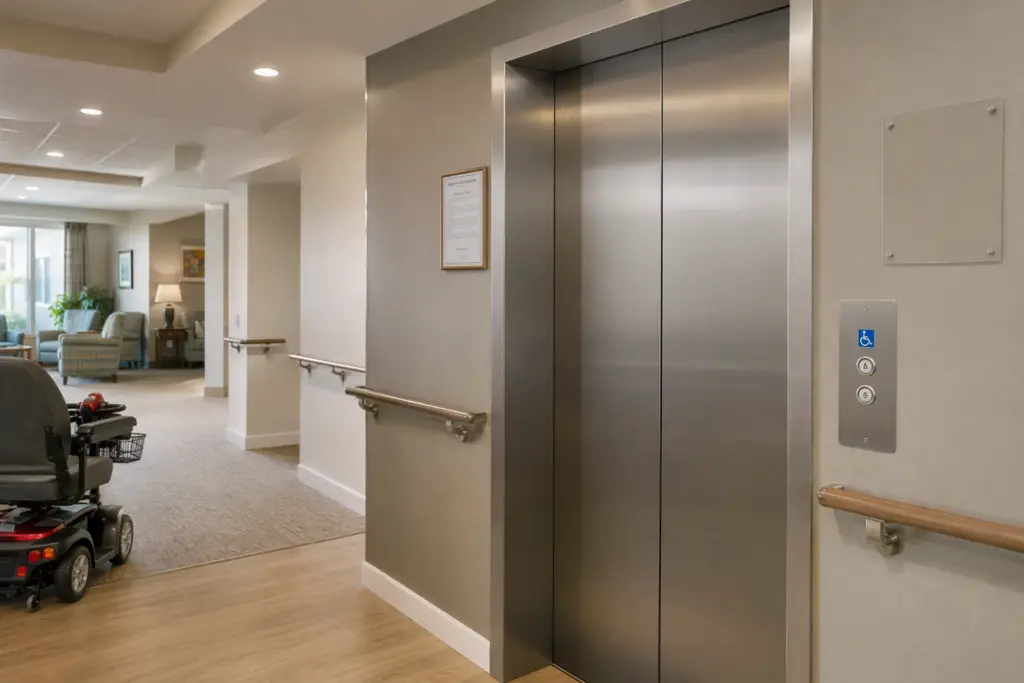
The ADA requires that elevators in covered buildings be accessible to people with disabilities. Key requirements include door widths, cab dimensions, control panel height, braille and tactile markings, audible signals, and leveling accuracy so that the cab floor is flush with the landing floor. California also has its own accessibility standards under the California Building Code, which in some respects are more stringent than federal ADA minimums.
For a portfolio manager, ADA compliance is not a one-time event — it is an ongoing obligation. Equipment that was compliant when installed may fall out of compliance as standards evolve or as components wear. Door operators that no longer hold doors open for the required time, leveling systems that drift out of tolerance, and control panels with worn tactile markings are common sources of ADA exposure in aging portfolios.
An ADA accessibility review should be a standard component of the annual portfolio review and of any due diligence process when acquiring a new building.
What Should Portfolio Managers Know About Elevator Modernization in 2025–2026?
The elevator industry is in a period of significant technology transition, and portfolio managers in Los Angeles and Orange County should understand the qualitative trends shaping modernization decisions in 2025 and 2026.
Remote monitoring technology — sometimes called connected or IoT-enabled maintenance — is increasingly available on modernized equipment. These systems transmit real-time performance data to the service contractor, enabling predictive maintenance rather than purely scheduled maintenance. For a portfolio manager overseeing dozens of units across two counties, remote monitoring can surface developing problems before they cause entrapments or shutdowns, and can reduce the administrative burden of tracking equipment health manually.
Energy efficiency is a growing consideration as California continues to advance its building performance and carbon reduction requirements. Newer traction drive systems and regenerative drives consume meaningfully less energy than the hydraulic or older traction systems they replace — a consideration relevant to both operating costs and sustainability reporting for institutional property owners.
Parts availability for older relay-logic and solid-state control systems continues to decline as manufacturers discontinue support. Portfolio managers whose buildings contain equipment from the 1980s or early 1990s should be having modernization planning conversations now rather than waiting for an emergency parts-unavailability situation to force an unplanned replacement.
Liftech Elevator works with portfolio property managers across Los Angeles and Orange County to assess equipment condition, track compliance obligations, and develop prioritized modernization plans that align with capital budgets — providing the kind of systematic, portfolio-wide visibility that individual building management rarely achieves.
How Do You Evaluate and Select an Elevator Maintenance Contractor for a Multi-Building Portfolio?
Choosing a maintenance contractor for a portfolio is a different decision than choosing one for a single building. The following criteria are particularly important at scale:
- California elevator contractor license: Confirm the contractor holds a current California Elevator Mechanic Contractor license. This is a state licensing requirement, not optional.
- Geographic coverage in both counties: A contractor whose technicians are physically located in or near both Los Angeles and Orange County will provide more consistent response times than one who services your Orange County properties as a secondary market.
- Portfolio reporting capabilities: Ask how the contractor tracks and reports compliance status across multiple accounts. A contractor who provides portfolio-level dashboards or monthly status reports is operationally better suited to multi-building management than one who operates building by building.
- Experience with your equipment mix: Portfolios typically contain a mix of manufacturers and vintages. Confirm the contractor has demonstrated competency with the specific makes and models in your portfolio — proprietary control systems in particular require specialized expertise.
- Contract structure transparency: Understand exactly what is included and excluded in the maintenance agreement, how callbacks are priced, and how parts sourcing is handled. Ambiguous contract language is a consistent source of dispute in elevator maintenance relationships.
- References from comparable portfolio operators: Request references from property managers who operate multi-building portfolios of similar size and type in the same geographic market. Single-building references do not validate portfolio management capability.
What Happens If an Elevator in the Portfolio Fails an Inspection?
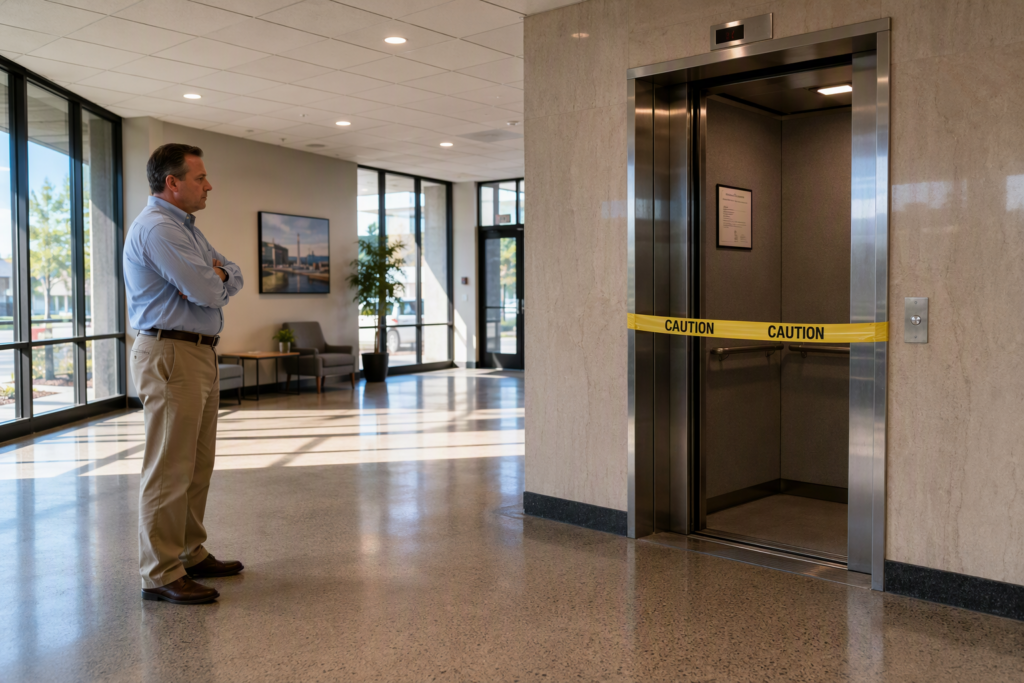
A failed inspection in California can result in the elevator being placed out of service — meaning it cannot legally be operated — until the cited violations are corrected and a re-inspection is passed. For a portfolio manager, this has several immediate consequences:
- Notify the property owner and affected tenants immediately: Transparency with tenants is both a legal obligation under California landlord-tenant law and a practical necessity for managing the relationship through the disruption.
- Assess ADA impact: If the out-of-service elevator is the primary means of accessible access for any tenant or visitor, the property may have an immediate ADA obligation to provide an alternative accommodation. Consult legal counsel on the specific facts.
- Engage the elevator contractor for an emergency repair scope: The contractor should produce a written scope of work addressing every cited violation, with a realistic timeline for completion that accounts for parts lead times.
- Document everything in writing: All communications with the AHJ, the contractor, tenants, and the property owner should be in writing. This documentation is essential if the situation escalates to a fine, a tenant claim, or litigation.
- Schedule the re-inspection proactively: Contact the AHJ as soon as the corrections are complete to schedule re-inspection. Do not assume the inspector will return automatically — in California, re-inspections typically need to be requested.
- Conduct a root-cause review: After the elevator is back in service, identify why the violation occurred — deferred maintenance, a PM program gap, parts failure — and adjust the PM program or inspection preparation process accordingly across the portfolio.
What Are the Most Common Compliance Gaps Found in Los Angeles and Orange County Elevator Portfolios?
Based on the regulatory framework and the types of equipment common in Southern California’s commercial and residential building stock, the following are among the most frequently encountered compliance gaps in multi-building portfolios:
- Expired permits to operate: Administrative oversights, particularly in portfolios that have grown through acquisition, are a leading cause of unpermitted elevator operation.
- Deferred periodic tests: The longer-cycle tests required under California’s Elevator Safety Orders — such as five-year hydraulic pressure tests — are sometimes missed when portfolio managers do not have a system to track them separately from annual inspection cycles.
- ADA leveling and door timing deficiencies: Wear in leveling systems and door operators frequently causes elevators to drift out of ADA tolerance without triggering an obvious safety problem, making these deficiencies easy to overlook between inspections.
- Inadequate machine room conditions: California regulations require elevator machine rooms to be maintained at specified temperature and humidity ranges and to be kept clear of storage. In mixed-use and older buildings, machine rooms are frequently used as incidental storage space.
- Missing or illegible posted permits: The permit to operate and emergency contact information must be posted in or near the elevator. Missing or illegible postings are a common minor violation that is easy to correct but indicates a broader attention gap.
How Can Portfolio Managers Use Data to Prioritize Maintenance and Capital Budgets?
A data-driven approach to portfolio elevator management starts with a consistent equipment condition assessment across all units. When condition data is captured in a standardized format — equipment age, last modernization date, callback frequency, outstanding violations, ADA compliance status, estimated remaining useful life — portfolio managers can rank units by risk and allocate maintenance and capital resources accordingly rather than treating all buildings equally regardless of condition.
Liftech Elevator provides portfolio property managers with systematic assessment processes that produce this kind of structured data, supporting the capital planning conversations that institutional owners and asset managers require. The goal is to move from reactive, building-by-building management to proactive, portfolio-level oversight — replacing surprise failures and emergency capital calls with planned investments and predictable operating costs.
What Should Be in Every Elevator Maintenance Contract for a Multi-Building Portfolio?
A well-structured maintenance contract for portfolio use should address the following qualitative elements at minimum:
- A clear list of every elevator unit covered by the agreement, identified by building address and unit number
- An explicit definition of what is included in the base maintenance fee versus what is billed separately
- A description of the maintenance visit schedule and the checklist or scope of work performed at each visit
- Terms governing how callbacks and emergency service are handled and billed
- The contractor’s obligations with respect to inspection coordination and permit renewal support
- Reporting requirements — what the contractor will provide, in what format, and on what cadence
- Provisions for adding or removing units as the portfolio changes
- Clear termination provisions that do not create a barrier to switching contractors if service quality declines
Industry Trends for 2025–2026: What Portfolio Managers Should Anticipate?
Several qualitative trends are shaping elevator management expectations for portfolio operators in Los Angeles and Orange County through 2025 and 2026.
Regulatory scrutiny is increasing. California continues to strengthen enforcement of building safety requirements across the board, and elevator compliance is part of that broader trend. Portfolio managers who have historically relied on informal relationships or reactive management should expect a less forgiving regulatory environment going forward.
Remote monitoring adoption is accelerating. Contractors who invest in connected equipment monitoring are able to deliver more proactive service — catching developing problems before they cause entrapments or shutdowns. Portfolio managers evaluating new service agreements should ask prospective contractors about their remote monitoring capabilities and how that data is communicated to the property manager.
Labor and parts costs are not declining. The skilled labor required to maintain and repair elevator equipment remains in high demand. Portfolio managers should plan their maintenance budgets conservatively and prioritize PM programs that reduce emergency call frequency, since emergency labor rates are significantly higher than scheduled maintenance rates.
Sustainability and ESG reporting expectations are growing. Institutional property owners and their investors increasingly require reporting on energy consumption and building system efficiency. Elevator modernization projects that deliver measurable energy reductions are becoming a more common part of ESG capital plans, particularly in the Los Angeles market where large institutional ownership is concentrated.
Proprietary service lock-in is a growing concern. Some elevator manufacturers use proprietary software and diagnostic tools to limit the ability of independent contractors to service their equipment. Portfolio managers evaluating new elevator installations or modernization projects should understand the long-term service implications of proprietary systems before committing to a specific platform.
Summary: A Compliance-First Framework for Portfolio Elevator Management in Southern California
Managing elevator maintenance and inspections across multiple buildings in Los Angeles and Orange County requires operating at two levels simultaneously: the individual unit level, where the technical and regulatory details live, and the portfolio level, where compliance visibility, capital prioritization, and contractor accountability are managed. The property managers who do this well share a common set of practices — centralized tracking, proactive inspection preparation, structured PM programs, and a service partner who provides portfolio-level reporting rather than building-by-building opacity.
The regulatory framework is clear: California’s Elevator Safety Orders, grounded in the ASME A17.1 and A17.3 codes, establish the minimum standards every elevator must meet. The ADA adds an accessibility layer that operates on its own compliance track. And OSHA governs the safety of the workers who maintain the equipment. Staying current with all three frameworks, across every unit in a growing portfolio, is an operational challenge that rewards systematic management and penalizes improvisation.
Liftech Elevator serves portfolio property managers across Los Angeles and Orange County with the data-driven maintenance programs, inspection coordination, and capital planning support that multi-building portfolios require. For a comprehensive assessment of your portfolio’s elevator compliance status and maintenance needs, reach out to the Liftech team.
Ready to Get Your Elevator Portfolio Under Control?
Contact Liftech Elevator for a free elevator assessment across your Los Angeles and Orange County portfolio. Call us at 562-609-3478 to schedule your portfolio review today.
Need elevator service you can rely on? Liftech Elevator is ready to help.