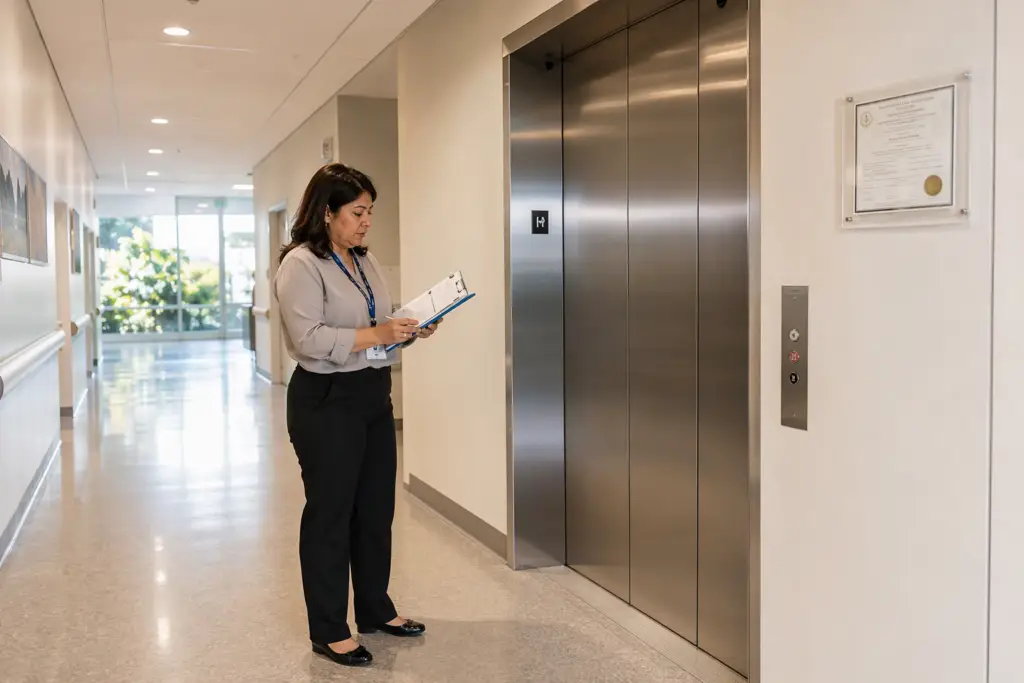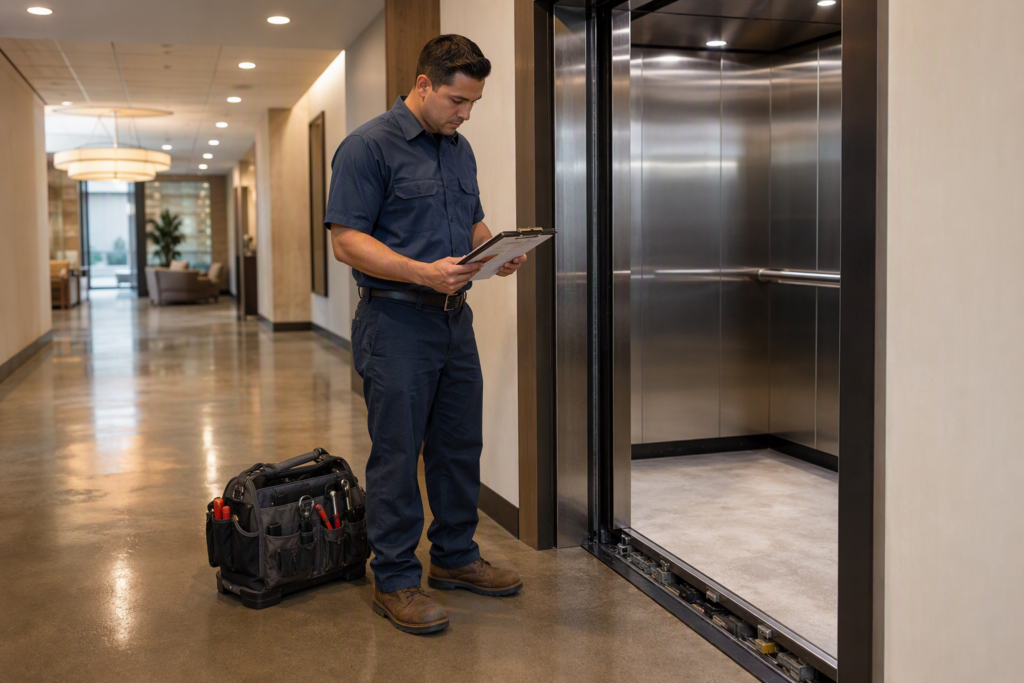
Elevator Maintenance & Inspection Requirements for Senior Living and Assisted Living Facilities in Los Angeles and Orange County
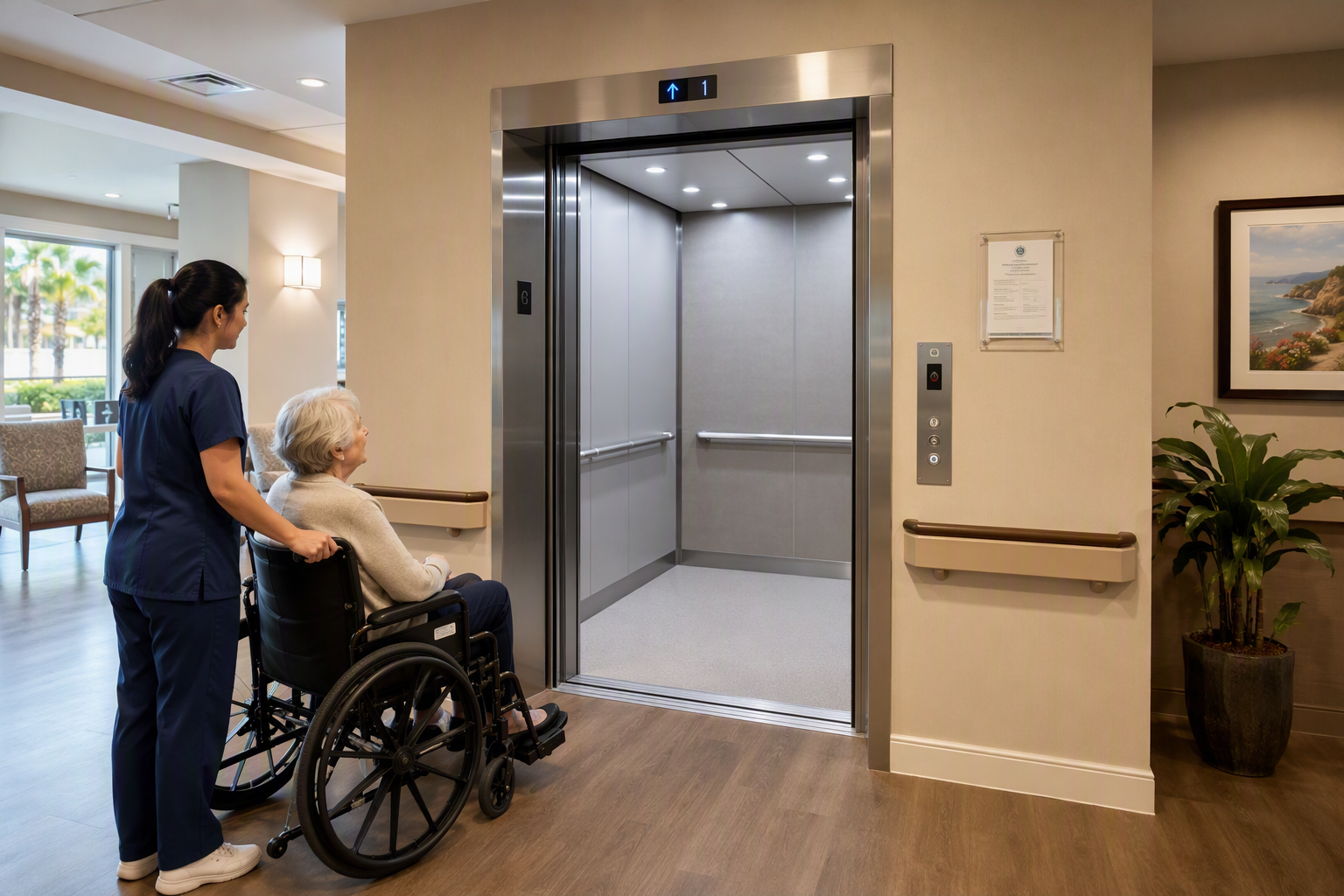
Senior living and assisted living facilities depend on elevators more than almost any other building type. Residents with limited mobility, staff transporting medical equipment, and emergency responders all rely on vertical transportation that is safe, accessible, and fully code-compliant. For facility administrators, maintenance directors, and property managers across Los Angeles and Orange County, understanding the specific elevator requirements that apply to these settings is not optional — it is a matter of resident safety, regulatory compliance, and operational continuity.
Liftech Elevator works with healthcare and senior living properties throughout Signal Hill, Long Beach, Los Angeles, and Orange County to help facilities meet every applicable standard and maintain inspection readiness year-round.
—
What State Agency Oversees Elevator Safety in California Senior Living Facilities?
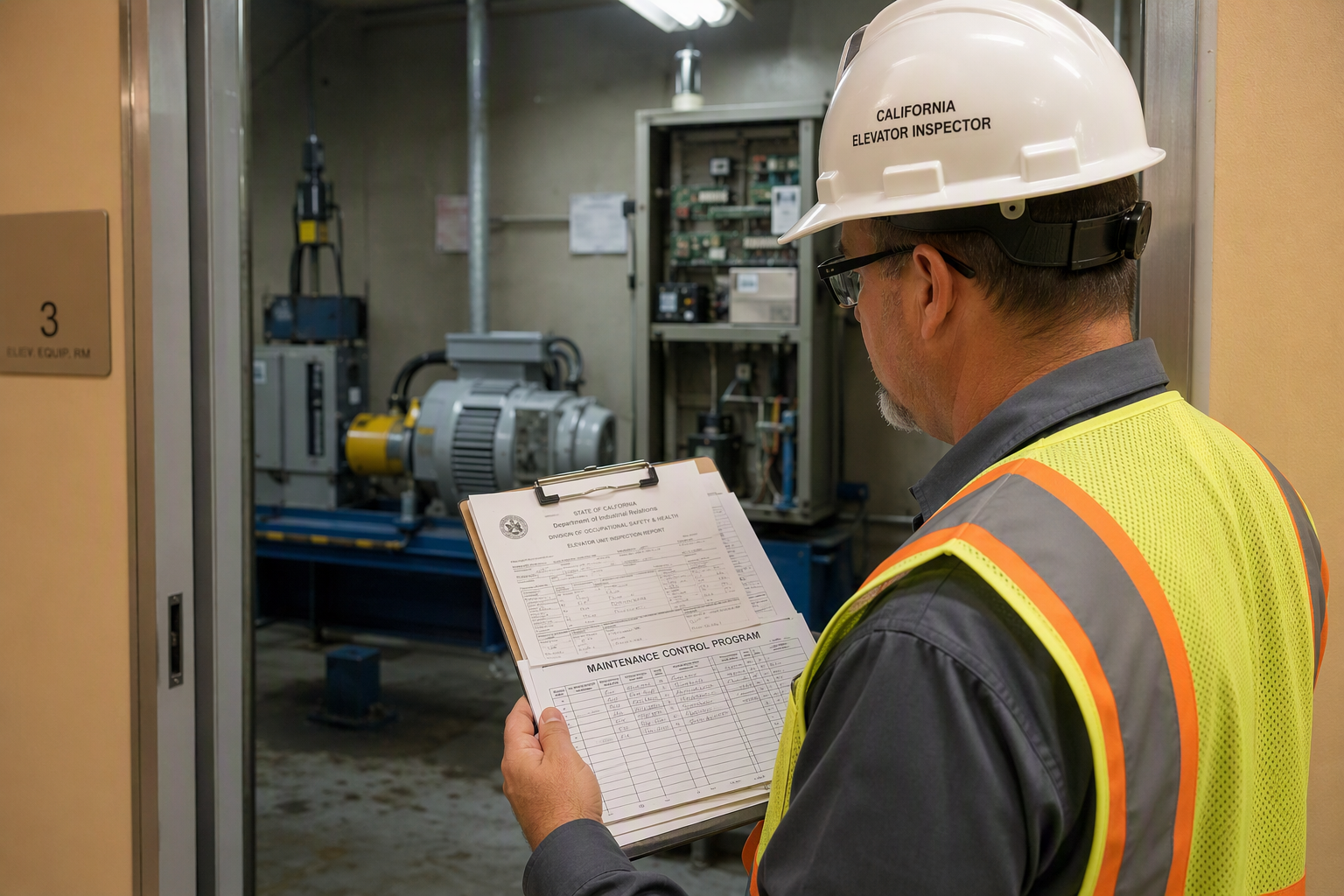
In California, elevator safety is regulated under the Elevator Safety Law, administered by the Division of Occupational Safety and Health (DOSH) within the California Department of Industrial Relations. Elevators in senior living and assisted living facilities are subject to the same state oversight framework that applies to all conveyances in public-access and commercial buildings.
Every elevator in a licensed senior care facility must hold a valid Permit to Operate issued by the state. This permit is renewed following a successful periodic inspection conducted or approved by a Qualified Conveyance Inspector (QCI). The permit must be posted in or near the elevator car at all times and presented upon request by the authority having jurisdiction (AHJ).
Local jurisdictions — including the City of Los Angeles and various Orange County municipalities — may also maintain their own elevator inspection programs or coordinate with state inspectors. Facility operators should confirm which AHJ governs their specific property, as this affects scheduling and documentation requirements.
—
How Often Must Elevators Be Inspected at Assisted Living Facilities?
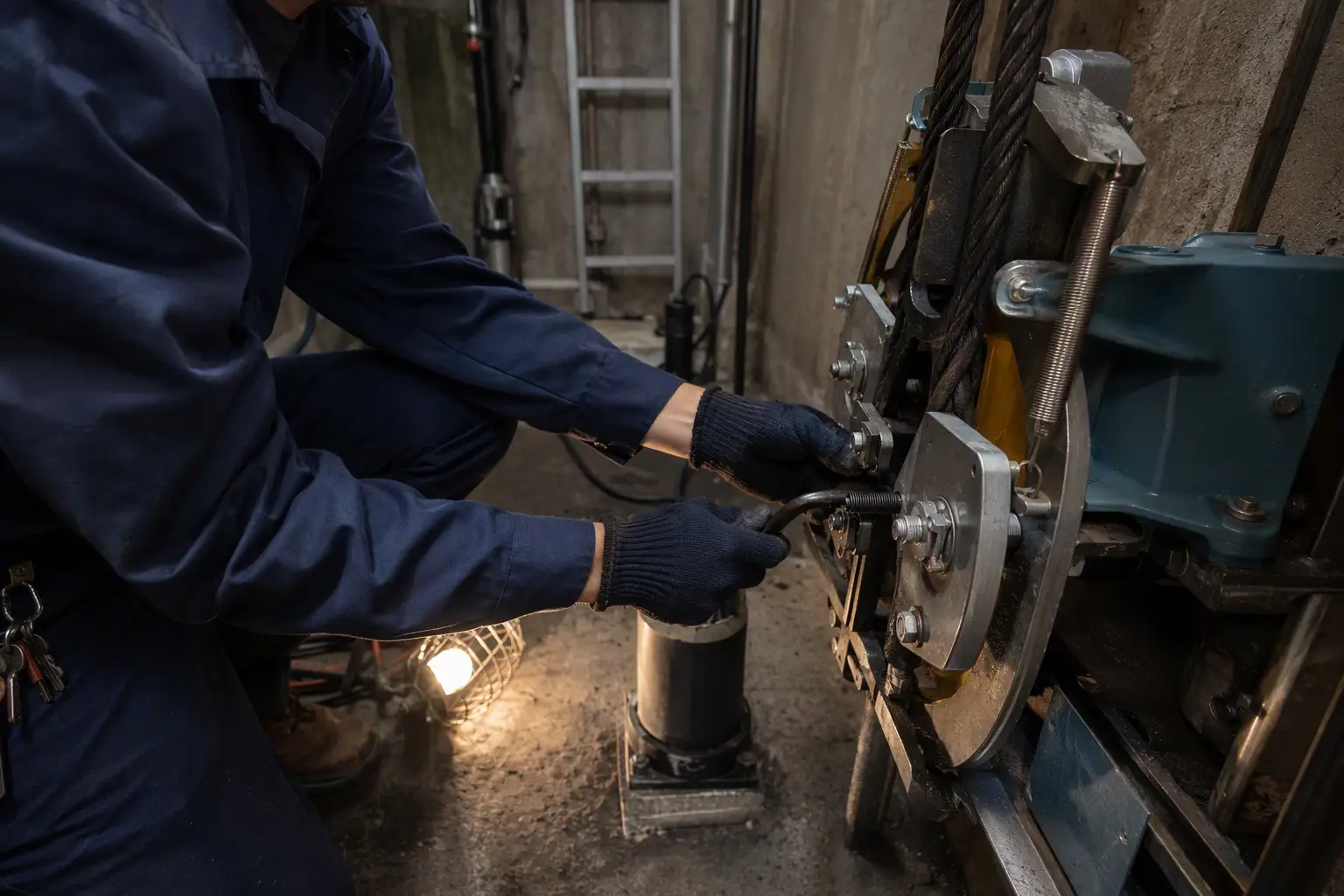
California requires periodic inspections for all conveyances subject to the Elevator Safety Law. For most elevators in senior living and assisted living settings, a full periodic inspection is required on an annual basis. In addition to the periodic inspection, facilities must also arrange for:
- Routine maintenance visits performed by a licensed elevator mechanic according to the maintenance control program (MCP) required under ASME A17.1.
- Maintenance control program logs kept current and available for inspector review.
- Category 1 and Category 5 tests performed on hydraulic and traction elevators at intervals defined in ASME A17.1 — Category 5 full-load tests are typically required every five years.
- Callback and corrective maintenance any time a deficiency is identified between scheduled inspections.
Failing to schedule inspections on time can result in an expired permit, which may require the elevator to be taken out of service — a serious operational problem in a facility where residents depend on vertical access.
—
What Does ASME A17.1 Require for Elevators in Senior Care Settings?
The ASME A17.1 Safety Code for Elevators and Escalators is the primary design and construction standard for new elevator installations. For senior living facilities, key provisions include:
- Door reopening devices: Elevator doors must be equipped with door reopening devices that reverse closure upon sensing an obstruction — critical for residents using walkers, wheelchairs, or mobility aids.
- Leveling accuracy: Cars must level to within a tolerance that prevents trip hazards, especially important for wheelchair users and residents with balance difficulties.
- Emergency lighting and communication: Each car must have emergency lighting and a two-way communication device that connects to a location where assistance is available.
- Maintenance control program (MCP): Building owners must implement a written MCP that documents all maintenance tasks, frequencies, and completion records.
- Machine room and pit safety: Housekeeping, lighting, temperature control, and access restrictions in machine rooms and pits must meet code minimums.
Existing elevators in older assisted living buildings are governed by ASME A17.3 Safety Code for Existing Elevators and Escalators, which establishes minimum safety requirements that apply retroactively to equipment installed before the current edition of A17.1.
—
How Do ADA Requirements Apply to Elevators in Senior Living Facilities?
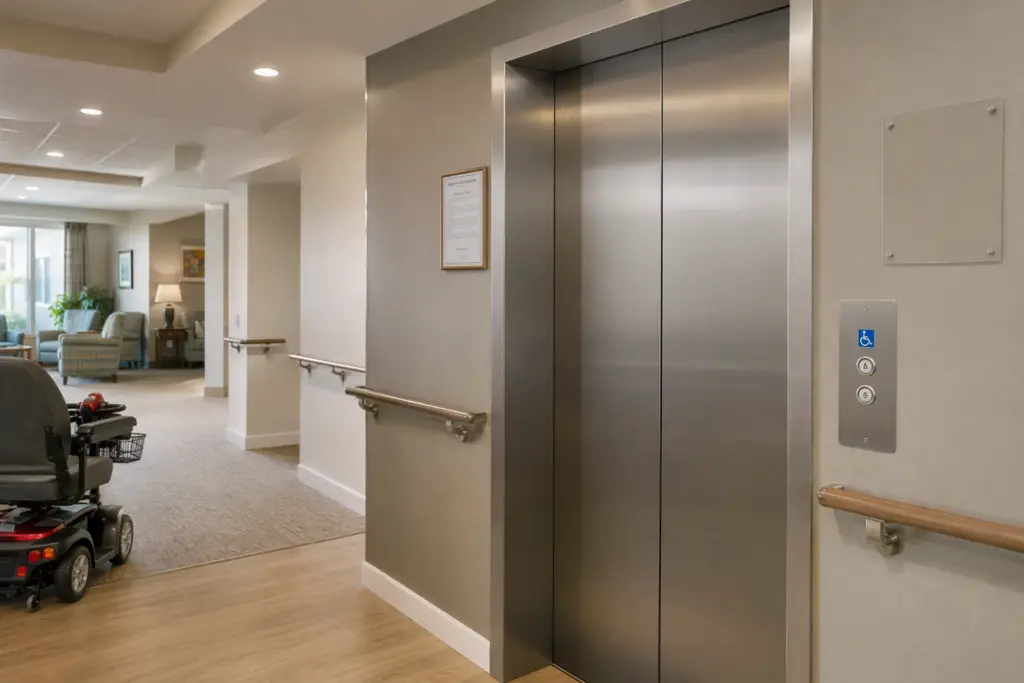
The Americans with Disabilities Act (ADA) establishes accessibility requirements for elevators in buildings that serve the public or house residents with disabilities — a category that includes virtually every licensed senior living and assisted living facility. Key ADA elevator requirements include:
- Car dimensions: Elevator cars must provide sufficient interior dimensions to accommodate a wheelchair and allow the user to reach controls.
- Control panel height and reach: Controls must be within accessible reach ranges and include Braille and raised character designations.
- Hall call buttons and indicators: Call buttons must be a minimum size, visually and audibly signal car arrival, and be mounted at accessible heights.
- Door timing: Doors must remain open long enough for a person using a mobility device to enter or exit safely.
- Leveling tolerances: Landing accuracy directly affects ADA compliance, as uneven thresholds create access barriers.
California’s building code incorporates ADA standards by reference and in some areas establishes requirements that are at least as stringent. Facilities undergoing renovation or new construction must ensure elevator work is reviewed for both state and federal accessibility compliance.
—
What Is a Maintenance Control Program and Why Is It Mandatory?
A Maintenance Control Program (MCP) is a written document — required under ASME A17.1 — that specifies every maintenance task to be performed on an elevator, the frequency of each task, and the qualifications required to perform it. The MCP must be kept on-site and made available to the state inspector during the periodic inspection.
For senior living facilities, the MCP is especially important because it creates an auditable record demonstrating that the elevator has been maintained consistently. If an incident occurs and the facility cannot produce a current, complete MCP with corresponding maintenance logs, liability exposure increases significantly.
Liftech Elevator helps assisted living and senior care clients develop, implement, and maintain compliant MCPs tailored to the specific equipment on their properties.
—
What Are the Most Common Elevator Violations Found in Senior Living Buildings?
During inspections of senior living and assisted living facilities, inspectors commonly identify the following deficiencies:
- Expired or missing Permit to Operate posted in the car
- Incomplete or missing maintenance control program logs
- Door reopening devices that are slow to respond or fail to reverse
- Car leveling that exceeds acceptable tolerances at one or more floors
- Non-functional or inadequate emergency lighting
- Two-way communication systems that fail to connect or are inaudible
- Machine room access doors that are unlocked or improperly secured
- Overdue Category 1 or Category 5 testing
- ADA control panel non-conformances, including missing Braille designations
Proactive maintenance and pre-inspection audits — the kind Liftech Elevator routinely provides to healthcare clients in Los Angeles and Orange County — are the most effective way to identify and correct these issues before they become violations or service interruptions.
—
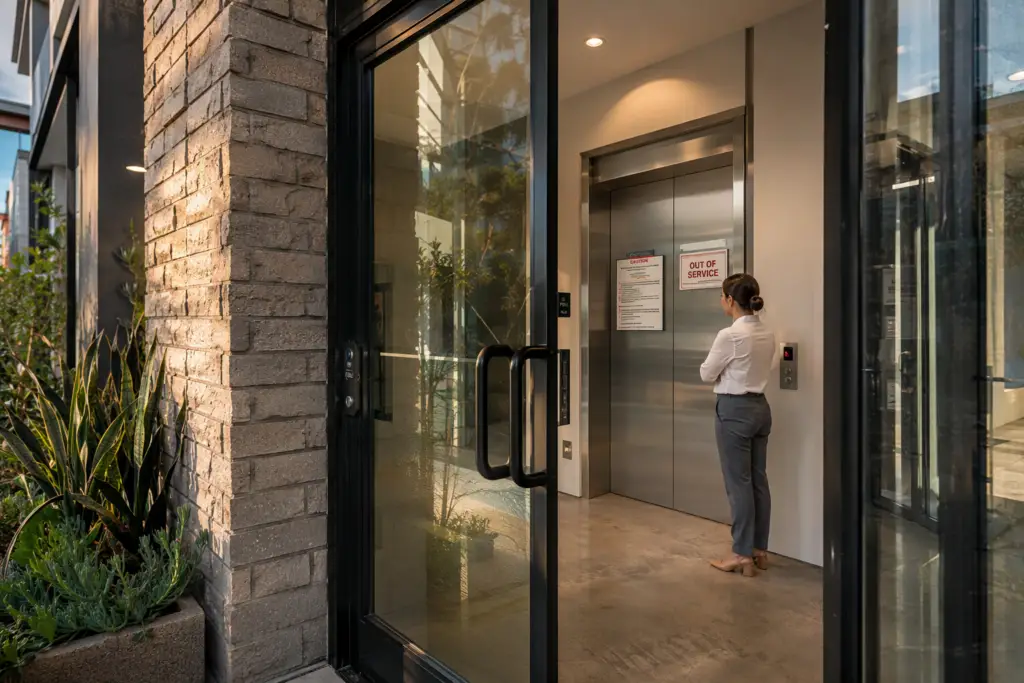
What Happens If an Elevator Fails Inspection at an Assisted Living Facility?
If a California elevator inspector identifies a violation that poses an imminent hazard, the elevator may be ordered out of service immediately. For non-imminent deficiencies, the facility receives a written notice with a compliance deadline. In either case, the sequence for returning to service typically follows these steps:
- Receive the inspection report and review each cited deficiency in detail.
- Contact a licensed elevator contractor to assess the scope of corrective work required.
- Schedule and complete all required repairs using a licensed elevator mechanic.
- Document all corrective actions and update the maintenance control program logs accordingly.
- Request a follow-up inspection from the state or AHJ to verify compliance.
- Obtain an updated Permit to Operate and post it in the elevator car before returning the unit to service.
- Notify facility administration and residents of the timeline and any temporary access accommodations.
Facilities with residents who are mobility-dependent must have an emergency plan for elevator outages, including alternative access arrangements and notifications to residents and families.
—
Are There Special Considerations for Emergency Power and Firefighters’ Service in Senior Living Elevators?
Yes. California-compliant elevators in senior living facilities must be equipped with Phase I and Phase II Firefighters’ Emergency Operation as required by ASME A17.1. Phase I returns the elevator to a designated landing upon activation of a smoke detector or manual switch, while Phase II allows firefighters to control the car from inside. These features must be tested as part of the periodic inspection.
Many senior living facilities also rely on elevators as part of their emergency evacuation planning. California’s building and fire codes require that elevator emergency power, where provided, allow the car to travel to at least one designated landing so residents who cannot use stairs can be assisted safely. Facilities should work with both their elevator service provider and their local fire authority to confirm that their equipment and emergency power systems meet all applicable requirements.
—
How Should a Senior Living Facility Choose an Elevator Service Provider?
When evaluating elevator maintenance and inspection contractors for a senior living or assisted living property, facility administrators should verify the following:
- The contractor holds a valid California contractor’s license for elevator work.
- Mechanics are certified under a recognized apprenticeship or certification program.
- The contractor can prepare and maintain a compliant Maintenance Control Program.
- The contractor has documented experience servicing equipment in occupied healthcare or senior care environments.
- The contractor provides transparent documentation that will satisfy state inspector requirements.
Liftech Elevator is a certified elevator service company serving senior living facilities throughout Signal Hill, Long Beach, Los Angeles, and Orange County. Facility operators can contact Liftech Elevator to discuss the specific equipment, compliance history, and inspection schedule for their property.
—
Questions Your Inspector Will Ask
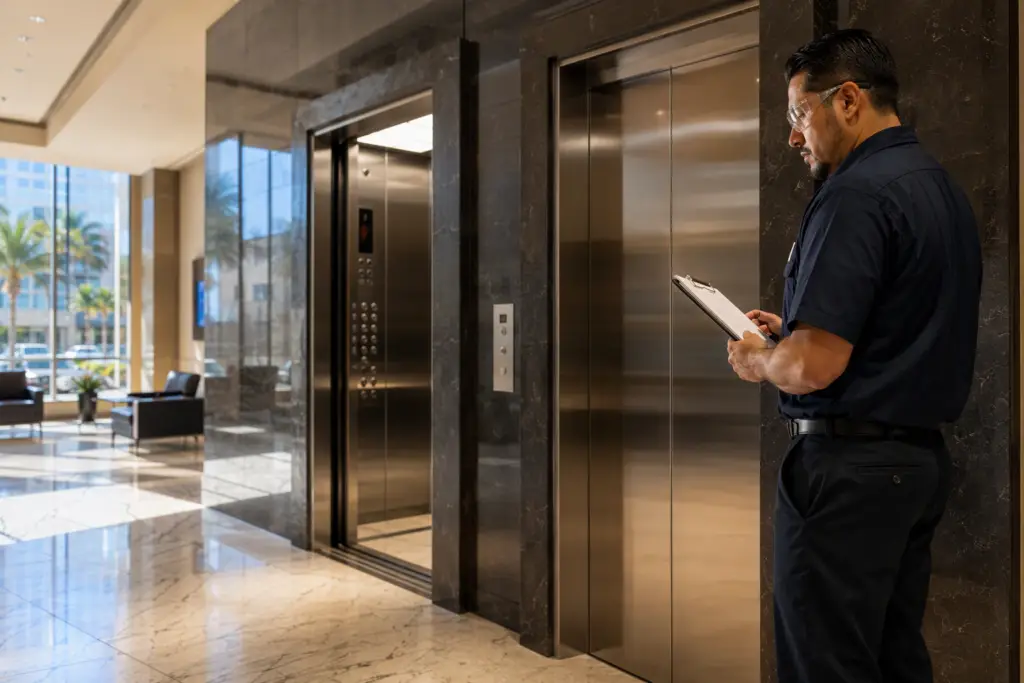
When a Qualified Conveyance Inspector arrives at a senior living or assisted living facility, they will expect to review documentation and physically test equipment. Facility staff should be prepared to answer and provide evidence for the following:
- “Where is your current Permit to Operate?” — It must be posted in the elevator car and current.
- “Can I see your Maintenance Control Program and maintenance logs?” — Logs must be on-site, current, and complete.
- “When was your last Category 1 test performed, and do you have the test records?” — Test certificates must be available.
- “When is your Category 5 test due?” — Facilities should track this date proactively.
- “Has the two-way communication system been tested recently?” — The inspector will test it during the visit.
- “Who is your licensed elevator contractor of record?” — The contractor’s name and license information should be on file.
- “Have there been any incidents, entrapments, or unplanned outages since the last inspection?” — Any reportable incidents must be disclosed.
- “Are all Firefighters’ Emergency Operation switches functional and labeled?” — The inspector will physically test Phase I and Phase II operation.
- “Is the machine room secured and properly maintained?” — Access, lighting, temperature, and housekeeping will be evaluated.
—
What Should Facility Administrators Do to Maintain Year-Round Compliance?
Maintaining elevator compliance in a senior living facility is an ongoing process, not a once-a-year event. Best practices include:
- Tracking permit expiration dates and scheduling inspections well in advance.
- Ensuring the maintenance control program is updated whenever equipment is modified or serviced.
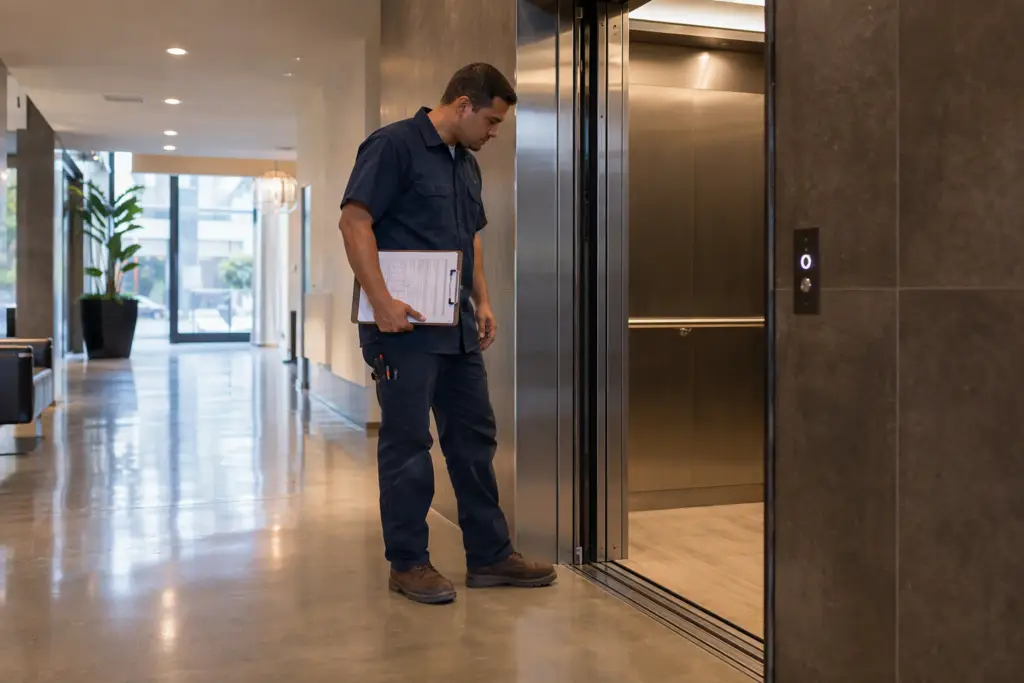
- Conducting internal pre-inspection walk-throughs before the annual state inspection.
- Training facility staff to report elevator anomalies — unusual sounds, leveling issues, slow doors — immediately.
- Maintaining written documentation of every service call, repair, and test.
- Coordinating with the licensed elevator contractor to stay current on any code changes that affect existing equipment.
—
Get Expert Elevator Compliance Support for Your Senior Living Facility
Elevator compliance in senior living and assisted living settings involves layered requirements — state permits, ASME standards, ADA accessibility, firefighters’ service, and documented maintenance programs — all of which must be maintained continuously to protect residents and avoid costly violations.
Liftech Elevator serves healthcare and senior care facilities throughout Signal Hill, Long Beach, Los Angeles, and Orange County with the technical expertise and compliance documentation support these properties require.
Contact Liftech Elevator for a free elevator assessment: 562-609-3478
Need elevator service you can rely on? Liftech Elevator is ready to help.