How to Handle an Elevator That Keeps Breaking Down: A Complete FAQ Guide
Repeated elevator breakdowns are more than an inconvenience — they signal underlying mechanical or electrical deterioration, create ADA accessibility obligations, and can expose building owners to liability under California law. The questions and answers below cover every angle of the problem, from immediate response steps to long-term modernization decisions, drawing on applicable federal codes and California requirements.
What should a building owner or manager do immediately when an elevator breaks down again?
Direct answer: The moment an elevator fails again, the priority is passenger safety, followed by documenting the failure in writing before touching any controls.
When an elevator malfunctions, anyone trapped should be assisted by trained personnel or emergency responders — never by prying doors open without authorization, as doing so can create a shear hazard. Once the cab is confirmed empty and secured out of service, the following ordered protocol applies:
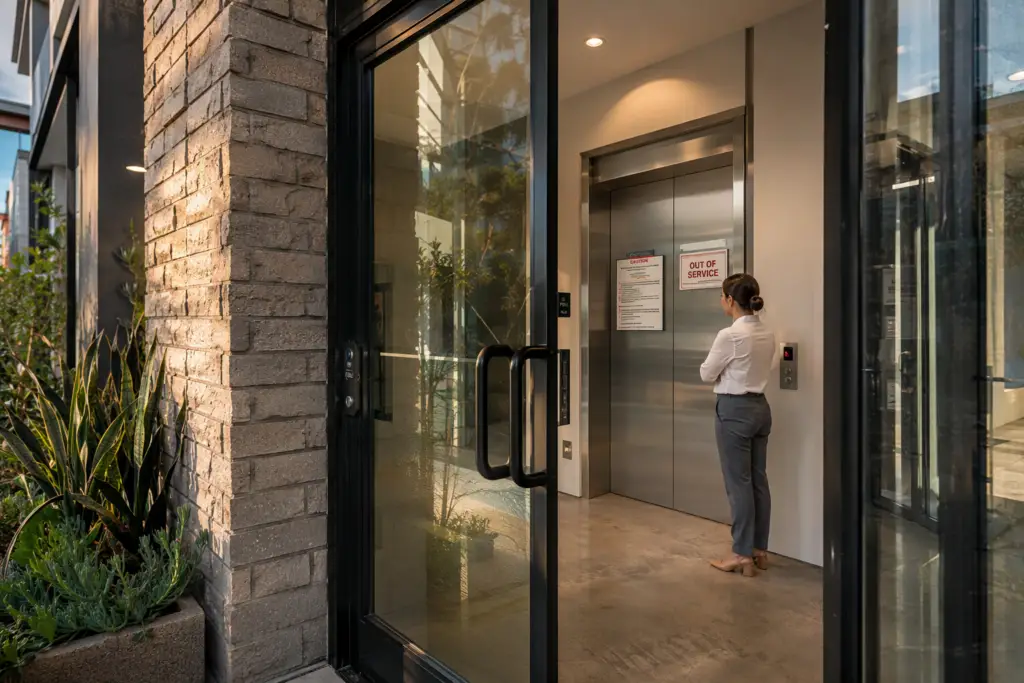
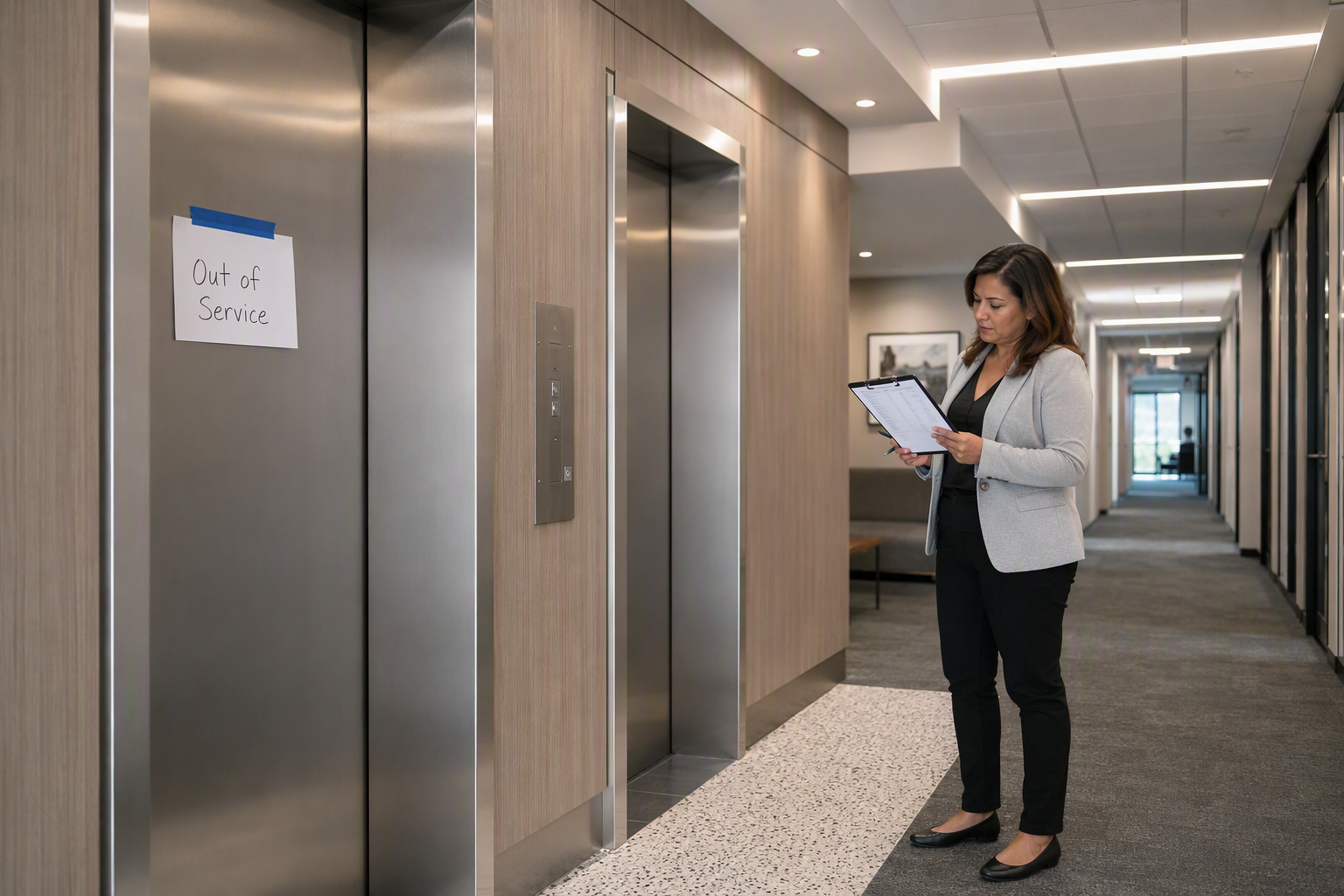
- Post an “Out of Service” notice on every floor landing immediately.
- Contact your elevator service contractor to report the failure and request an emergency service call.
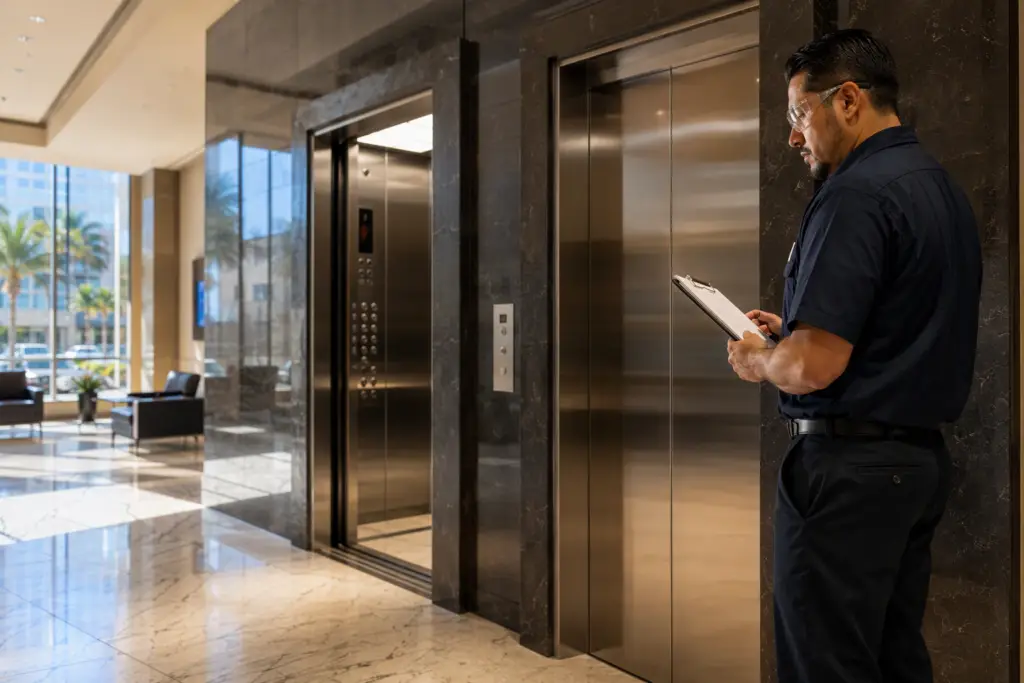
- Document the failure in writing: date, time, symptoms observed, any error codes displayed, and the names of any witnesses or passengers involved.
- Check whether the breakdown triggers a reporting obligation to your local Authority Having Jurisdiction (AHJ) — in California, the Division of Occupational Safety and Health (Cal/OSHA) Elevator Unit oversees conveyance safety.
- Preserve any component parts or materials that failed rather than discarding them; they may be needed for diagnosis.
- Request a written inspection report from the service contractor after every repair, and add it to the elevator’s maintenance log.
A written failure log becomes critical evidence when deciding whether to repair or escalate. Without it, patterns are invisible and contractors cannot accurately diagnose root causes.
How many breakdowns in a given period indicate a serious underlying problem?
Direct answer: There is no universal code-defined threshold, but elevator industry practice generally treats more than two or three unplanned shutdowns per quarter as a signal that root-cause investigation is warranted rather than continued patch repairs.
Frequency alone does not tell the whole story. A single failure caused by a worn relay is qualitatively different from recurring failures involving the controller, door operator, and hydraulic pump in sequence, which suggests systemic deterioration. Building managers should track failure type alongside frequency. When distinct, unrelated components are failing in rapid succession, the equipment may have reached end-of-service-life and the escalation conversation should begin.
What are the most common causes of repeated elevator breakdowns?
Direct answer: Aging control systems, worn door operators, deteriorating hydraulic seals, and deferred preventive maintenance are the leading causes of repeat failures in commercial and residential elevators.
Understanding the root cause is essential before authorizing any repair. Common failure patterns include:
- Door system failures: Door operators, rollers, gibs, and safety edges wear over time. A door that nuisances repeatedly is among the most frequent service calls on older units.
- Controller and relay issues: Relay-logic controllers installed before the 1990s are no longer supported by most manufacturers, meaning parts must be sourced from secondary markets or fabricated, driving up repair cost and downtime.
- Hydraulic system deterioration: Hydraulic elevators are susceptible to seal degradation, fluid contamination, and pump wear. Repeated slow-travel or leveling issues often originate in the hydraulic circuit.
- Motor and drive problems: Variable-frequency drives (VFDs) on traction elevators can fail when ventilation is inadequate or when they have exceeded manufacturer design life.
- Rope and sheave wear: On traction elevators, hoist ropes and sheave grooves wear together. When groove profiles no longer match rope diameter, traction degrades and safety becomes a concern.
- Deferred maintenance accumulation: Skipped lubrication cycles, uncleaned pit areas, and ignored minor faults compound into major failures.
What does California law require regarding elevator inspections and maintenance?
Direct answer: In California, conveyances including elevators are regulated by Cal/OSHA’s Elevator, Ride, and Tramway (ERT) Unit, which enforces periodic inspection requirements and issues permits to operate.
California’s elevator inspection and permitting framework requires that elevators be inspected by a Cal/OSHA-approved Certified Competent Conveyance Inspector (CCCI) at regulated intervals. Operating an elevator without a current permit is a violation that can result in shutdown orders. Building owners in Signal Hill, Long Beach, Los Angeles, and Orange County must maintain valid Cal/OSHA permits and keep the elevator log book accessible in or near the elevator machine room. An elevator that has been out of service for repairs and is then returned to service may require a re-inspection before the permit is reinstated, depending on the nature of the work performed.
Which ASME codes apply to elevator safety and how do they affect repair decisions?
Direct answer: ASME A17.1, the Safety Code for Elevators and Escalators, governs new installations, while ASME A17.3, the Safety Code for Existing Elevators and Escalators, establishes retroactive safety requirements that apply to equipment already in service.
ASME A17.3 is particularly important for aging elevators. It requires that existing elevators be brought into compliance with specific safety features on a scheduled basis, regardless of whether the owner initiates a voluntary modernization. Examples of retroactive requirements under A17.3 include firefighters’ emergency operation, door reopening devices, and seismic requirements where applicable. When a building is planning major repairs, the AHJ may require that the work also bring the equipment into conformance with current A17.3 standards, which can significantly affect project scope and budget. Understanding which A17.3 provisions apply before authorizing repairs helps building owners avoid costly surprises.
What ADA obligations apply when an elevator is repeatedly out of service?
Direct answer: Under the Americans with Disabilities Act (ADA), when a building’s accessible route requires an elevator, that elevator must be operational and maintained in working order.
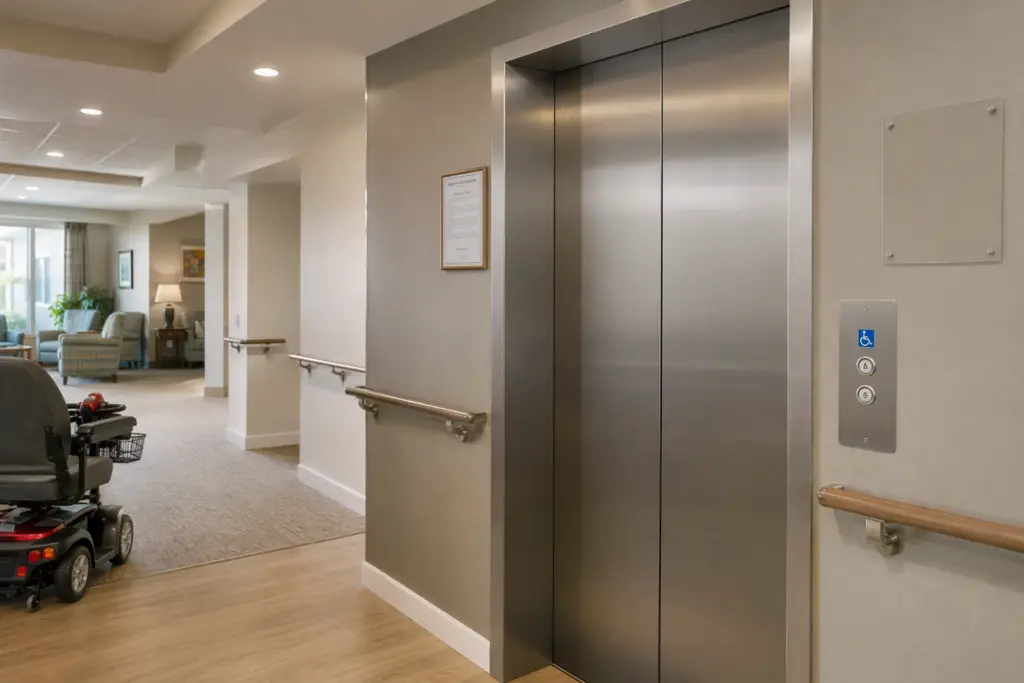
The ADA explicitly states that elevators on an accessible route cannot be left out of service for extended periods without providing an equivalent alternative. This is not merely a courtesy obligation — it is a federal requirement. Extended or repeated outages on an elevator that serves as the only accessible route to upper floors can expose building owners to formal ADA complaints, Department of Justice investigations, or civil litigation. California’s own accessibility standards, the California Building Code (CBC) Title 24 accessibility provisions, are at minimum as stringent as federal ADA requirements and in many cases exceed them. Building owners experiencing chronic elevator downtime should consult qualified counsel in addition to their elevator service contractor.
How do I decide between repairing versus modernizing a chronically failing elevator?
Direct answer: The repair-versus-modernize decision should be driven by a cost-benefit analysis comparing cumulative repair costs against modernization investment, parts availability, code compliance gaps, and remaining useful equipment life.
A structured comparison framework helps clarify the decision:
| Factor | Favor Continued Repair | Favor Modernization |
|---|---|---|
| Equipment age | Under 15–20 years, well-maintained | Over 20–25 years, deferred maintenance history |
| Parts availability | OEM parts readily available | Parts discontinued or sourced from secondary market only |
| Failure pattern | Isolated, single-component failures | Multiple, unrelated component failures in sequence |
| Code compliance | Meets current ASME A17.3 retroactive requirements | Has open code violations or AHJ-mandated upgrades pending |
| Cumulative repair cost (past 12–24 months) | Well below estimated modernization cost | Approaching or exceeding 40–50% of modernization cost |
| Downtime impact | Infrequent, manageable outages | Recurring outages affecting business operations or ADA access |
| Energy efficiency | Within acceptable operating cost range | High energy consumption; VFD or LED upgrades would reduce costs |
Liftech Elevator performs full diagnostic assessments for building owners in Los Angeles, Long Beach, Signal Hill, and Orange County to help quantify these factors before any recommendation is made.
What is a full diagnostic inspection and what does it involve?
Direct answer: A full diagnostic inspection is a systematic examination of every major elevator subsystem — not just the component that most recently failed — to identify all existing and emerging problems simultaneously.
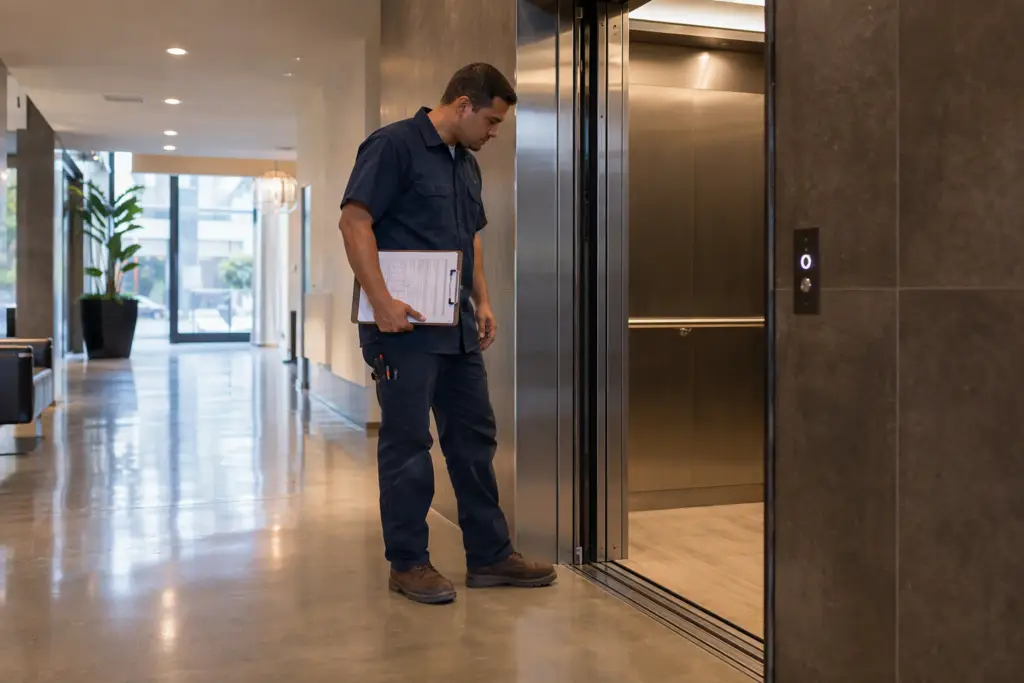
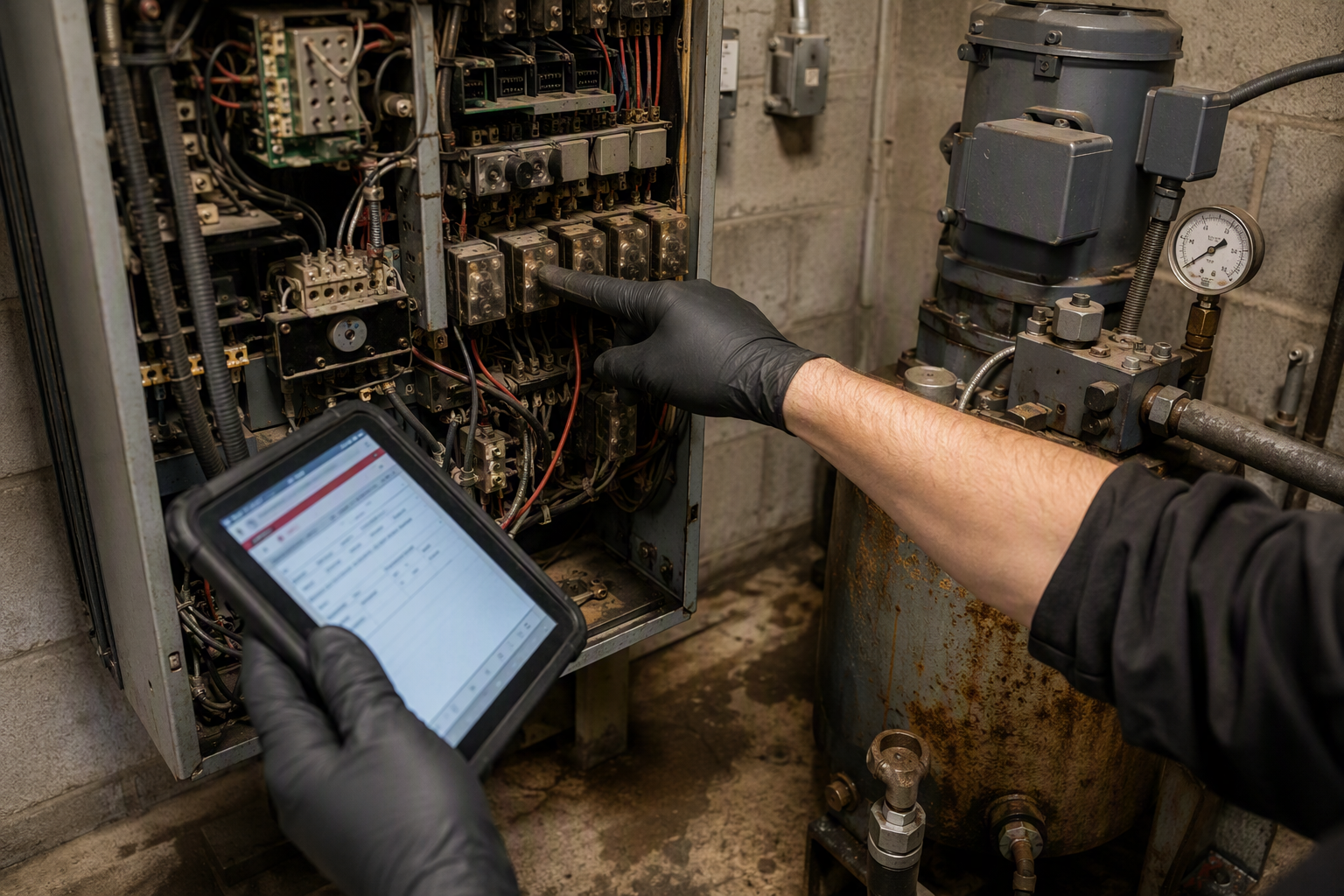
Unlike a routine service call that targets the immediate symptom, a full diagnostic inspection typically includes evaluation of the controller and safety circuit, door operator and interlocks, motor and drive system, hoist ropes and sheave (on traction units) or hydraulic cylinder and pump (on hydraulic units), pit and machine room conditions, emergency devices, and compliance with applicable code requirements. The output is a written condition report with prioritized findings. This document becomes the basis for an informed repair, partial modernization, or full modernization proposal.
What is elevator modernization and which components are typically replaced?
Direct answer: Elevator modernization is the partial or complete replacement of aging elevator components to extend service life, improve reliability, meet current code requirements, and often reduce energy consumption.
Modernization scopes vary widely based on equipment age and condition. Common modernization packages include:
- Controller modernization: Replacing relay-logic or early solid-state controllers with current microprocessor-based controllers that offer self-diagnostics and remote monitoring capability.
- Door operator modernization: Upgrading to current-generation door operators with advanced safety edge technology.
- Drive modernization: Installing variable-frequency drives on DC or older AC traction elevators to improve ride quality and reduce motor wear.
- Hydraulic system modernization: Upgrading to submersible pump units, environmentally acceptable hydraulic fluids, and secondary containment to meet California environmental requirements.
- Cab interior and fixtures: Updating lighting to LED, replacing fixtures and finishes, and installing new operating panels.
- Safety system upgrades: Adding or updating firefighters’ emergency operation, seismic switches, and other A17.3 retroactive requirements.
How long does elevator modernization typically take, and will the building be without service?
Direct answer: Modernization timelines vary significantly based on project scope, equipment availability, and permit processing, and buildings should plan for scheduled downtime that a qualified contractor can help minimize through phased scheduling.
A controller-only modernization may be completed in days, while a full cab and mechanical modernization can take several weeks. In multi-elevator buildings, modernization is typically phased so that at least one elevator remains in service at all times. Single-elevator buildings require more careful planning and, where ADA access is a concern, temporary accommodation strategies should be discussed with the contractor and building management before work begins. California AHJ permit processing timelines vary by jurisdiction and should be accounted for in the project schedule.
What is remote elevator monitoring and can it help prevent repeat breakdowns?
Direct answer: Remote monitoring systems continuously track elevator performance data and alert service contractors to anomalies before they cause a complete failure, reducing unplanned downtime.
Modern elevator controllers can be equipped with connected monitoring devices that transmit operational data — door cycle counts, motor temperature, fault codes, travel times — to a service contractor’s monitoring platform in real time. When parameters drift outside normal ranges, a technician can investigate proactively rather than waiting for a passenger-affecting failure. For buildings that have experienced chronic breakdowns, remote monitoring added during a controller modernization can be a practical tool for breaking the cycle of reactive repairs.
What questions should a building owner ask an elevator contractor before authorizing escalated repairs or modernization?
Direct answer: Building owners should require written answers to questions about the root cause of recurring failures, code compliance implications, parts warranty, contractor licensing, and the total cost of ownership over the next five to ten years before signing any major repair or modernization agreement.
Key questions to ask any elevator contractor include:
- What is the specific root cause of the recurring failures, and how does the proposed scope address that root cause?
- Will this work trigger any ASME A17.3 or California code compliance requirements? If so, are those included in the proposal?
- Are all parts covered by a manufacturer’s warranty, and for what period?
- Is your company licensed with the California Contractors State License Board (CSLB) and do your field technicians hold appropriate state certifications?
- Will you obtain all required Cal/OSHA permits and schedule inspections, or is that the building owner’s responsibility?
- What is the estimated total cost of continuing current-level repairs over the next five years compared to the modernization investment?
- Can you provide references from comparable buildings in this jurisdiction?
How does deferred maintenance lead to recurring elevator breakdowns?
Direct answer: Deferred maintenance allows minor component wear to progress into major mechanical failure, because elevator systems are interdependent — a neglected door interlock creates controller faults, which causes repeated shutdowns that stress other components.
Elevator equipment operates on predictable wear curves. Lubrication intervals, safety device tests, rope inspections, and buffer oil checks exist because neglecting them has measurable downstream consequences. When a building switches to a low-cost maintenance contract that reduces visit frequency or scope, the savings are often recovered — with interest — in emergency repair costs within two to three years. A preventive maintenance agreement with a qualified contractor that specifies scope, frequency, and documentation is the foundation of elevator reliability.
What role does the machine room environment play in elevator reliability?
Direct answer: Machine room temperature, humidity, cleanliness, and access control are critical environmental factors that directly affect controller longevity, drive performance, and overall equipment reliability.
Elevator controllers and drives are electronic equipment with defined operating temperature ranges. Machine rooms that are inadequately ventilated, subject to water intrusion, or used for storage of non-elevator materials create conditions that accelerate component failure. ASME A17.1 includes requirements for machine room conditions that are often under-enforced until failures occur. Building owners in Southern California — where summer temperatures in upper-floor machine rooms can reach extreme levels without adequate HVAC or ventilation — should verify that machine room conditions meet code requirements as part of any recurring breakdown investigation.
When should a building owner escalate a dispute with an elevator contractor over chronic breakdowns?
Direct answer: Escalation is appropriate when a contractor has performed multiple repairs for the same failure without achieving a durable fix, is unable to source parts within a reasonable timeframe, or cannot provide a written diagnosis that identifies the root cause.
Building owners are entitled to expect that a qualified elevator contractor can diagnose and resolve chronic problems within a reasonable number of service visits. When that expectation is not met, options include requesting a second opinion from another licensed elevator contractor, filing a complaint with the California Contractors State License Board (CSLB) if contractor conduct warrants it, or consulting with the Cal/OSHA ERT Unit if there are safety compliance concerns. Obtaining a second diagnostic opinion is not adversarial — it is standard practice for complex mechanical problems and often the fastest path to resolution.
Are building owners liable if a repeat-breakdown elevator injures a passenger?
Direct answer: Building owners have a duty of care to maintain elevators in safe operating condition, and documented evidence of repeated known failures without corrective action can significantly affect liability exposure in a personal injury claim.
California premises liability law requires property owners to maintain their property, including elevators, in a reasonably safe condition. When a building owner has knowledge of recurring elevator failures — demonstrated through service records, tenant complaints, or prior incidents — and fails to take reasonable corrective action, that prior knowledge becomes relevant in any subsequent injury claim. Maintaining complete written records of all service calls, repairs, and correspondence with contractors is therefore both an operational best practice and a risk management measure. Liftech Elevator provides written service reports for every visit, giving building owners in Long Beach, Signal Hill, Los Angeles, and Orange County the documentation they need.
What are the signs that an elevator is approaching end-of-service-life?
Direct answer: Key indicators include discontinued parts, inability to meet current ASME A17.3 retroactive requirements without a full system replacement, repeated failures across multiple unrelated subsystems, and cumulative repair costs that are trending toward modernization-level investment.
Additional signs to evaluate include:
- The controller is relay-logic or early first-generation solid-state with no manufacturer support.
- Hoist ropes on a traction elevator show wire breaks or corrosion approaching discard criteria defined under ASME A17.1.
- Hydraulic cylinder showing signs of external leakage or corrosion that cannot be resolved by seal replacement alone.
- Ride quality complaints — rough starts, excessive noise, poor leveling — that persist after repair.
- Energy consumption significantly above what current-generation equipment would use for the same duty cycle.
- The elevator was installed prior to major code updates and has never undergone any modernization work.
How should a building with multiple elevators prioritize modernization when budget is limited?
Direct answer: Priority should be given to the elevator with the highest failure frequency, the most critical ADA access role, and the greatest code compliance gaps, with a phased modernization plan that ensures continuous building accessibility throughout the project.
A phased approach allows building owners to spread capital expenditure while systematically improving reliability. The phasing plan should be developed in consultation with the elevator contractor and documented so that each phase builds on the previous one — for example, completing controller modernization first enables remote monitoring to inform decisions about subsequent mechanical phases. Buildings with ADA-critical single-elevator configurations may find that accelerating the modernization timeline reduces liability exposure and potential ADA complaint risk, which has its own financial calculus.
What should be included in a comprehensive elevator maintenance agreement to prevent future breakdowns?
Direct answer: A comprehensive maintenance agreement should specify the number and frequency of preventive maintenance visits, the scope of work covered at each visit, parts coverage terms, response time commitments for emergency calls, and documentation requirements including written service reports.
Not all elevator maintenance agreements are equivalent. Low-cost agreements may exclude lubricants, adjustment labor, or parts, effectively converting routine maintenance into a series of billable extras. A full-coverage agreement that includes parts and labor for covered components provides more predictable costs and stronger incentive for the contractor to perform thorough preventive maintenance — because they bear the cost of failures that result from neglect. When evaluating agreements, building owners should request a written list of specifically excluded items and compare that list against the components most commonly associated with the building’s existing failure history.
How can building owners in Signal Hill, Long Beach, Los Angeles, and Orange County get a professional assessment of a chronically failing elevator?
Direct answer: Building owners in these California markets can schedule a full diagnostic assessment with Liftech Elevator, a certified elevator service company serving all four markets, to receive a written evaluation and recommendations grounded in current ASME and California code requirements.
A professional assessment from a qualified elevator service company is the fastest way to move from reactive firefighting to a durable solution. Liftech Elevator serves commercial, residential, and institutional building owners across Signal Hill, Long Beach, Los Angeles, and Orange County, providing diagnostic inspections, preventive maintenance, repair, and modernization services. Every assessment results in written findings, giving building owners the documented basis they need to make informed repair, modernization, or replacement decisions — and the records that support code compliance and liability management.
Ready to Stop the Breakdown Cycle?
Repeated elevator failures are a solvable problem — but only when the root cause is properly diagnosed and addressed with a code-compliant, durable solution. Whether the answer is targeted component repair, a partial modernization, or a full system upgrade, the right path starts with a professional assessment from a qualified elevator service company.
Contact Liftech Elevator for a free elevator assessment. Serving Signal Hill CA, Long Beach CA, Los Angeles CA, and Orange County CA.
Call: 562-609-3478
Need elevator service you can rely on? Liftech Elevator is ready to help.