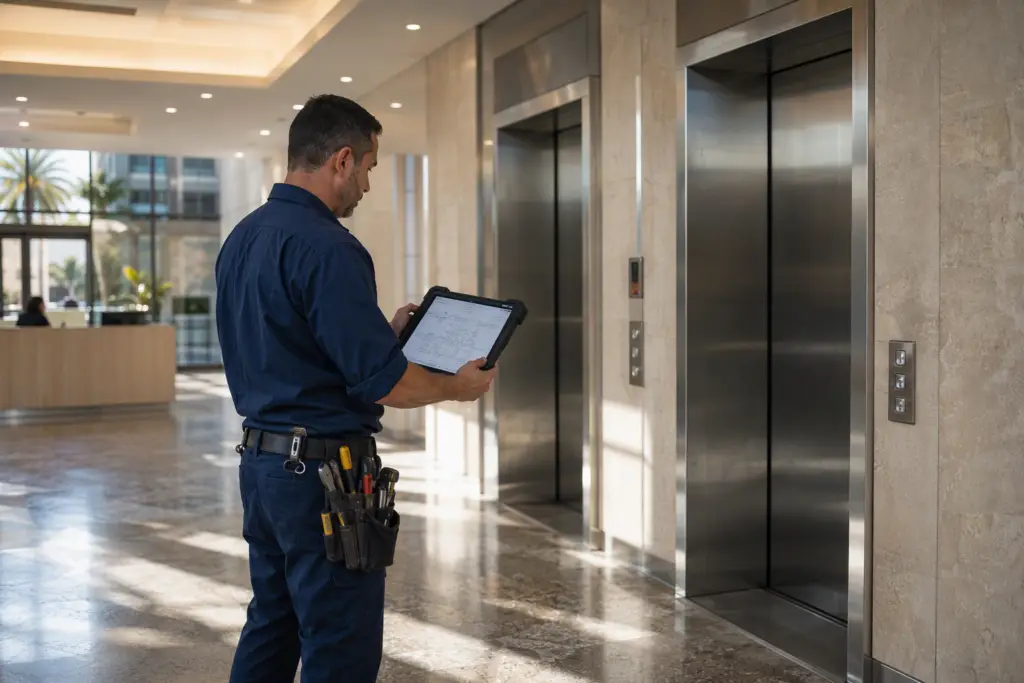
Direct Answer: Having a licensed elevator technician temporarily shut down and restart an elevator during renovation work typically involves a temporary-outage service call, coordinated permit-related shutdowns, and, in California, compliance with Cal/OSHA permitting requirements — costs vary based on project scope, duration, and whether material alterations trigger a new permit, so building owners should request itemized quotes from a Certified Qualified Conveyance Company (CQCC) before work begins.
Elevator Shutdown & Restart During Renovation: Complete Cost & Compliance FAQ
What does it cost to have a technician temporarily shut down and restart an elevator during renovation work?
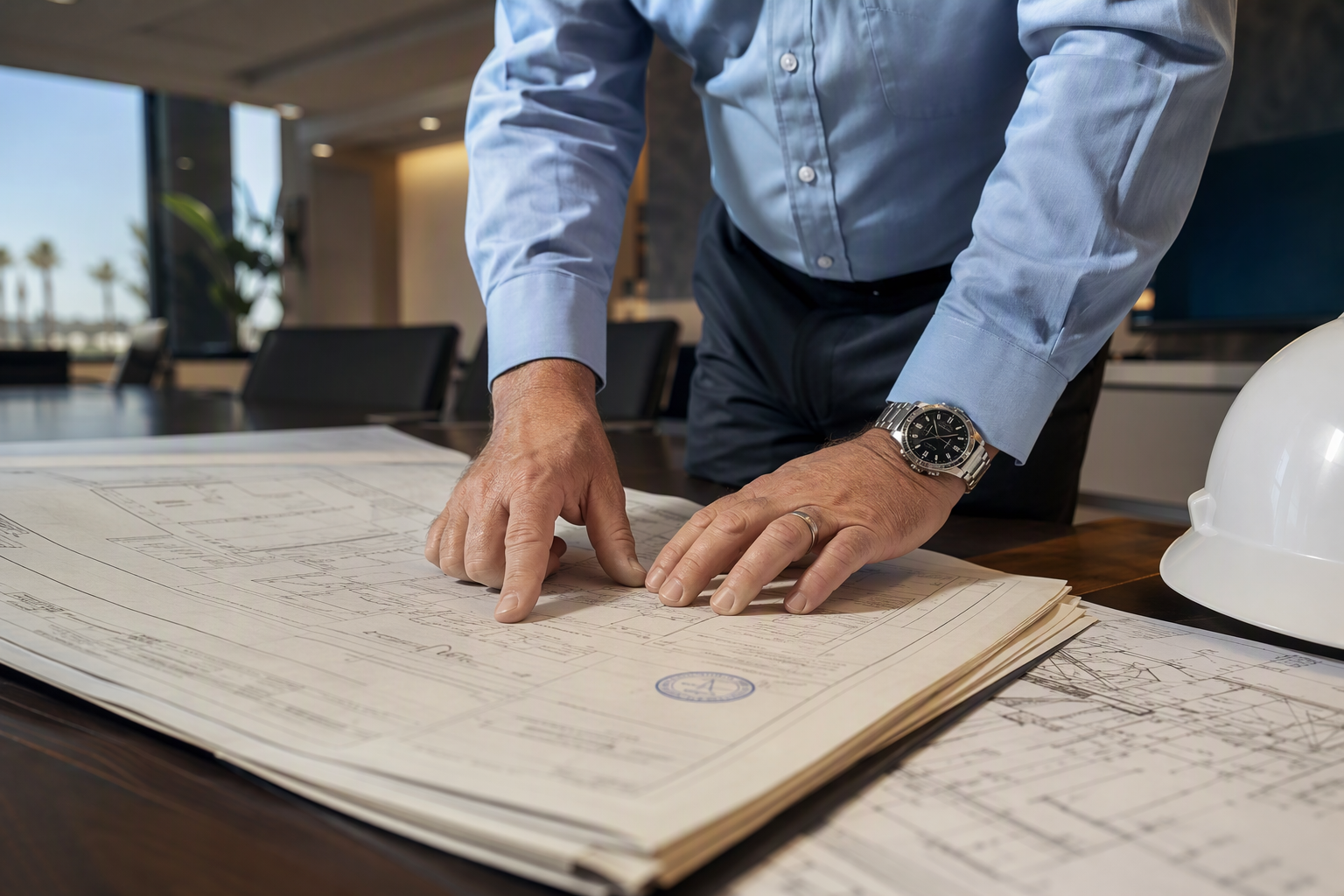
The cost depends on shutdown duration, whether the work triggers a material alteration under California law, permit fees owed to Cal/OSHA, and the rate structure of the Certified Qualified Conveyance Company (CQCC) performing the work — building owners should obtain itemized proposals covering labor, permitting, and restart testing before any renovation begins.
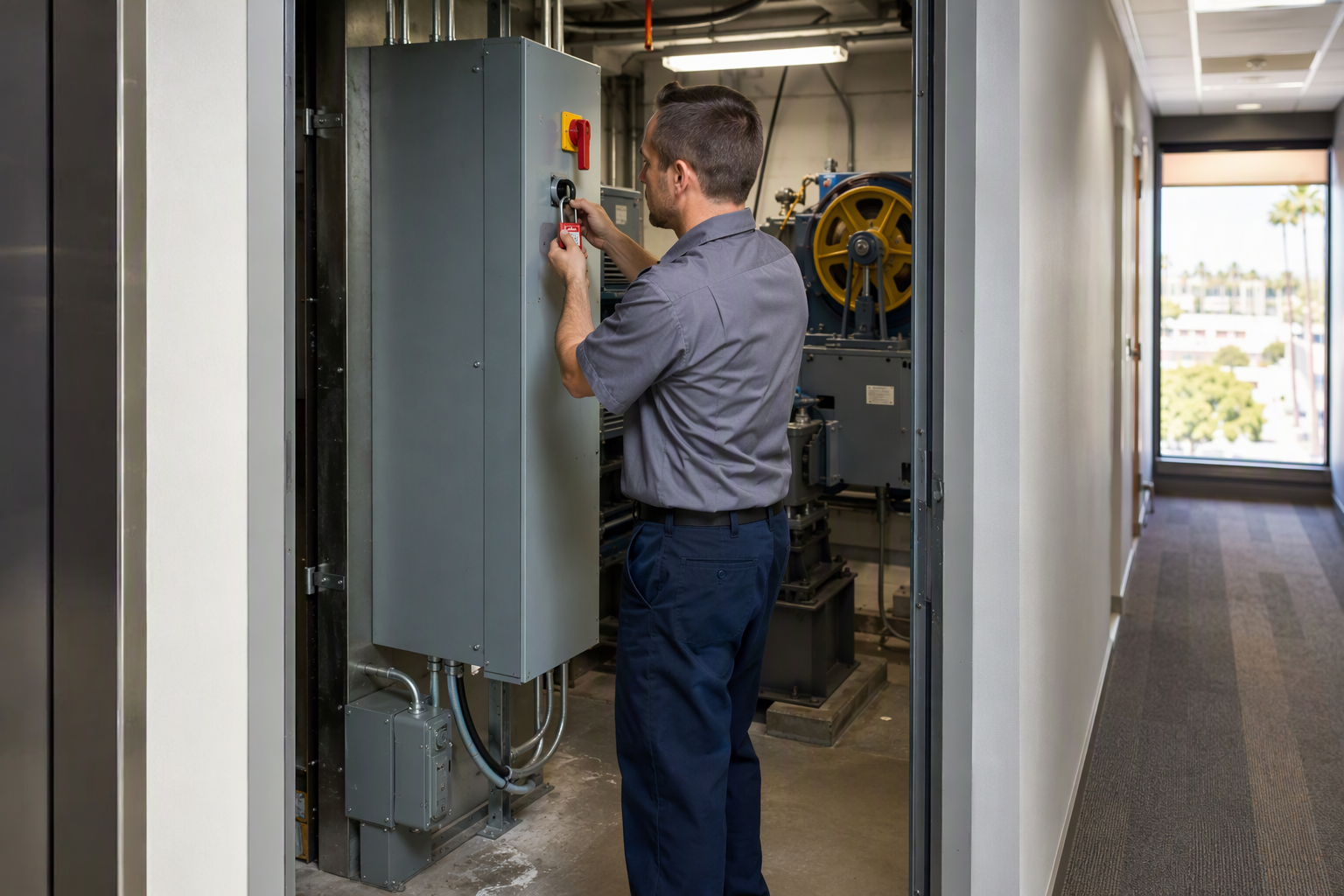
A temporary shutdown and restart is not a single flat-rate service. At minimum, a licensed technician must isolate power, verify the car is parked safely, lock out and tag out the unit in accordance with OSHA lockout/tagout standards, and document the outage. On the back end, the technician must reverse those steps, perform a functional check, and confirm the elevator is safe before returning it to passenger service. Each phase carries labor costs that depend on local market rates, time of day, and contract status.
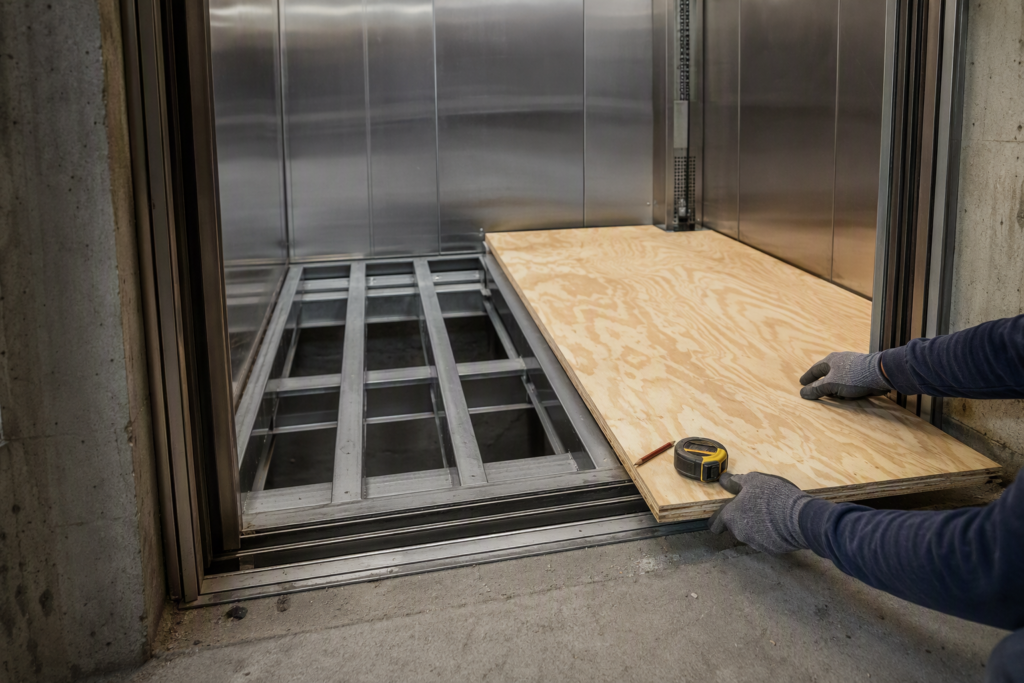
If the renovation involves changes to the elevator itself — cab interior finishes, control systems, door hardware, or machine-room equipment — California defines those changes as material alterations. A material alteration requires a permit from Cal/OSHA’s Elevator Unit, California Department of Industrial Relations before work begins, an inspection after completion, and a new permit to operate before the elevator returns to service. Permit and inspection fees add to the total project cost and must be factored into any renovation budget.
Why does California law require a permit before elevator work during a renovation?
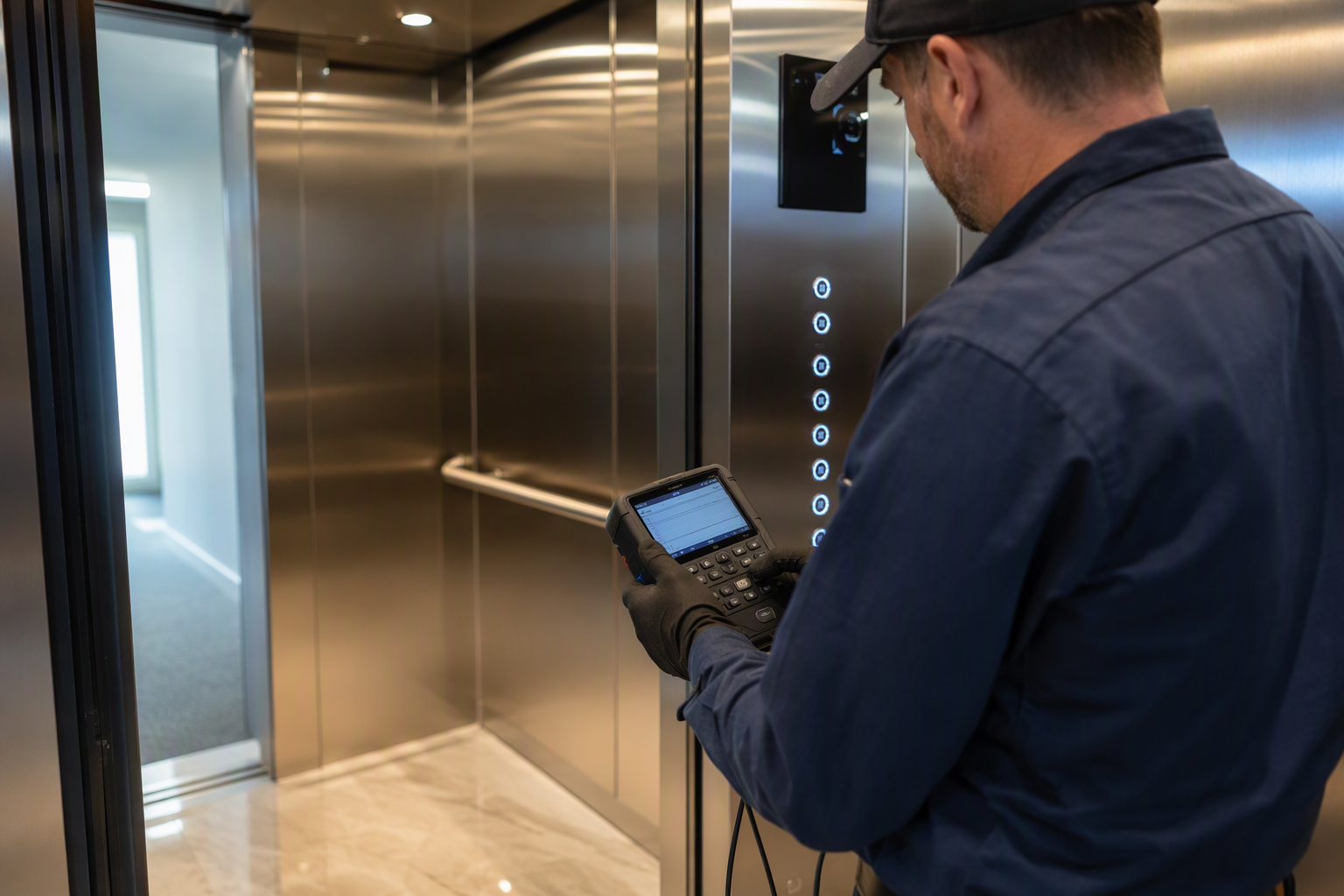
Under California Labor Code Sections 7300–7324.2, a permit from Cal/OSHA is legally required before any conveyance is erected, installed, or materially altered — meaning renovation work that touches elevator components cannot begin without prior regulatory authorization.
This requirement exists because elevators are safety-critical equipment regulated under the California Code of Regulations, Title 8, Elevator Safety Orders (Sections 3000–3146). The permitting process ensures that any changes meet the adopted edition of the ASME A17.1/CSA B44 Safety Code for Elevators and Escalators (the 2004 edition, effective May 1, 2008, for installation contracts signed on or after that date in California). Building owners who proceed with renovation work that materially alters an elevator without obtaining a permit expose themselves to stop-work orders, fines, and potential loss of their permit to operate.
A CQCC such as Liftech Elevator can assess whether a proposed renovation constitutes a material alteration and coordinate the permit application with Cal/OSHA on the building owner’s behalf, reducing administrative delays that extend the outage period and increase costs.
Who is legally authorized to shut down and restart an elevator in California?
In California, only a Certified Competent Conveyance Mechanic (CCCM) working for a Certified Qualified Conveyance Company (CQCC) may legally maintain, repair, alter, or replace components on a conveyance — this credential requirement applies to shutdown and restart procedures whenever work on elevator components is involved.
The CQCC credential is issued by Cal/OSHA’s Elevator Unit, and companies applying for it must hold a current C-11 Elevator Contractor license from the California Contractors State License Board (CSLB) along with valid certificates of workers’ compensation and liability insurance. The CCCM credential is also issued by Cal/OSHA; any technician working unsupervised on an elevator must hold it. Both credentials are renewed every two years, and renewal requires at least eight hours of continuing education.
Hiring an uncertified contractor to shut down or restart an elevator — even temporarily — is unlawful under California Labor Code and voids the elevator’s compliance status. Building owners in Los Angeles, Long Beach, Signal Hill, and Orange County should verify CQCC and CCCM credentials before authorizing any technician to touch elevator equipment.
What factors drive the total cost of an elevator outage during renovation?
Total outage cost is determined by at least six distinct variables: the nature of the renovation, shutdown duration, time of service, permit and inspection fees, re-testing requirements, and whether a temporary certificate of operation is needed while the elevator is out of service.
| Factor | Lower-Cost Scenario | Higher-Cost Scenario |
|---|---|---|
| Nature of renovation | Cosmetic work only (painting, flooring adjacent to shaft) | Material alteration of elevator components |
| Shutdown duration | Single shift (a few hours) | Multi-day or multi-week outage |
| Time of service | Standard weekday business hours | Nights, weekends, or holidays |
| Cal/OSHA permitting | No material alteration — no new permit required | Material alteration — permit and inspection fees apply |
| Post-restart testing | Operational check only | Full acceptance test required by inspector |
| Building type | Low-rise, single elevator | High-rise with multiple elevators requiring phased outages |
| ADA compliance review | No accessible route impact | Renovation affects accessible route — mitigation plan required |
What is the step-by-step process a technician follows to shut down and restart an elevator safely?
A properly executed elevator shutdown and restart follows a structured sequence designed to protect workers, building occupants, and the equipment itself — skipping any step creates safety and compliance risk.
- Pre-shutdown coordination: The CQCC and building manager confirm the outage window, notify tenants and building occupants, and identify any ADA-mandated alternative accessible routes required under the Americans with Disabilities Act.
- Permit verification: If the renovation constitutes a material alteration, the technician confirms a Cal/OSHA permit is in hand before proceeding.
- Parking the car: The technician runs the elevator to a designated floor landing, opens and holds the doors (where code permits), and ensures no passengers are aboard.
- Lockout/tagout (LOTO): Power is isolated at the main line disconnect in the machine room following OSHA lockout/tagout procedures (29 CFR 1910.147), and all energy sources — electrical, hydraulic, and gravity — are controlled.
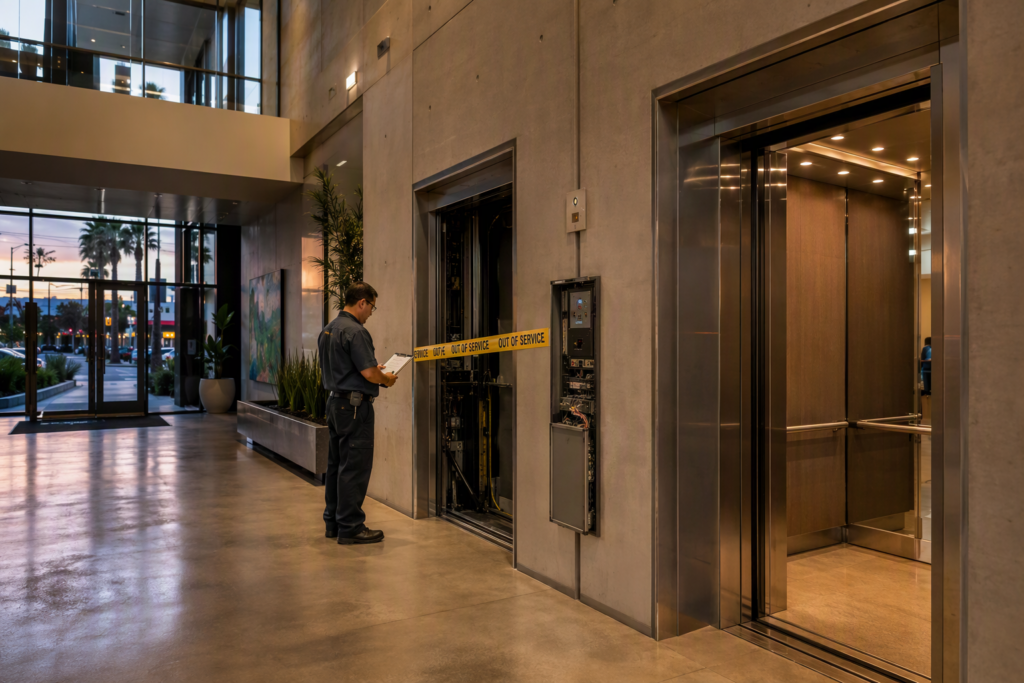
- Barricading and signage: Landing doors at all floors are secured against unauthorized entry, and “Out of Service” signage is posted at every lobby.
- Documentation: The technician records the shutdown time, work scope, and LOTO details in the equipment log.
- Renovation work proceeds: General contractors perform their scope while the elevator remains de-energized and locked out.
- Pre-restart inspection: Before removing LOTO, the technician inspects the machine room, pit, hoistway, and car to confirm no tools, debris, or unauthorized modifications are present.
- System re-energization: Power is restored in a controlled sequence; the technician verifies control panel indicators before running the car.
- Operational testing: The technician performs a full-travel run in both directions, tests all safety devices, verifies door operation, and confirms emergency lighting and communication systems function.
- Cal/OSHA inspection (if required): For material alterations, a State safety engineer or Certified Competent Conveyance Inspector (CCCI) conducts an acceptance inspection before the elevator is returned to public service.
- Permit to operate posted: A valid permit to operate issued by Cal/OSHA is posted conspicuously in the elevator car before passengers use it.
Does a temporary elevator shutdown during renovation require a new Cal/OSHA permit?
Whether a new permit is required depends entirely on whether the renovation constitutes a “material alteration” of the conveyance — purely cosmetic building work performed adjacent to the elevator but not touching its components generally does not trigger a new permit, while any modification to elevator equipment does.
Under California Code of Regulations, Title 8, a permit from Cal/OSHA is required before a conveyance is materially altered. If a renovation only involves repainting a lobby, replacing corridor flooring, or reconfiguring a nearby space — and no elevator components are touched — the shutdown is an operational convenience rather than a regulatory trigger. However, if the renovation involves modifying the cab interior structure, updating control systems, changing door operators, or altering any component of the elevator system itself, a permit must be secured before work begins. The cost of that permit and the subsequent inspection is additive to technician labor.
How does ADA compliance factor into the cost of an elevator shutdown during renovation?
The Americans with Disabilities Act requires that when an elevator is taken out of service, building owners must provide an alternative accessible route — failure to do so creates legal exposure and may require costly last-minute solutions that increase the overall project cost.
For multi-story buildings with a single elevator, this obligation can be operationally and financially significant. Options include temporary accessible ramps, temporary lifts, or scheduling the elevator outage during periods of minimal building occupancy. In some cases, phasing the renovation to keep the elevator operational during peak hours and shutting it down only during off-peak windows reduces the ADA compliance burden but extends the overall project timeline and increases total technician labor hours — and therefore cost.
Liftech Elevator works with building managers in Long Beach, Los Angeles, Signal Hill, and Orange County to develop outage plans that address both Cal/OSHA permitting requirements and ADA alternative-route obligations before any shutdown begins.
How long does a typical elevator shutdown and restart take during renovation?
The outage window ranges from a few hours for a simple shutdown with no elevator component work to several weeks when a material alteration requires a Cal/OSHA permit, the renovation work itself, a Cal/OSHA acceptance inspection, and issuance of a new permit to operate before the elevator returns to service.
The Cal/OSHA inspection scheduling timeline is outside the elevator company’s control and is determined by inspector availability. Building owners who do not account for this lead time in their renovation schedule frequently encounter delays that extend the outage and increase holding costs. Submitting the permit application well in advance of the planned renovation start date is the most effective way to compress the total outage period.
What documents should a building owner collect before authorizing an elevator shutdown?
Before authorizing any technician to shut down an elevator, building owners should collect and verify a specific set of credentials and documents to ensure legal compliance and protect against liability.
- Confirmation that the elevator company holds a current Cal/OSHA CQCC certificate and a C-11 license from the CSLB.
- Confirmation that each technician who will work unsupervised holds a current Cal/OSHA CCCM certificate.
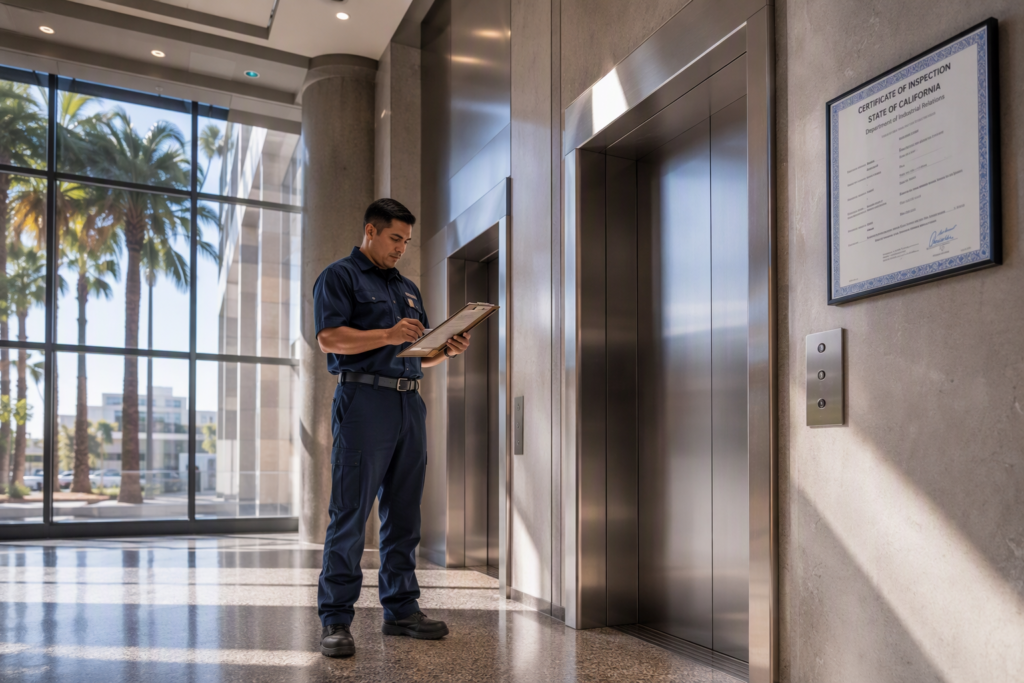
- A copy of the current permit to operate for the elevator (California law requires it to be posted in the car).
- The Cal/OSHA material alteration permit, if the renovation involves elevator components.
- The contractor’s certificate of liability insurance and workers’ compensation coverage.
- A written outage plan identifying the shutdown window, ADA alternative routes, and tenant notification procedures.
- The post-restart testing checklist the technician will complete before returning the elevator to service.
Does the permit to operate remain valid while an elevator is shut down for renovation?
In California, a permit to operate is issued for a specific conveyance in a specific condition — when a material alteration changes that condition, the existing permit to operate no longer authorizes operation of the modified elevator, and a new inspection and permit are required before it can return to service.
For shutdowns that involve no material alteration — where the elevator is simply taken offline while building work is performed nearby — the existing permit to operate remains valid and must be re-posted in the car when service resumes. California law requires the permit to be posted conspicuously in the elevator car at all times the elevator is in service. Building owners should confirm with their CQCC whether the planned renovation scope affects permit validity before work begins.
What role does the annual inspection requirement play in renovation planning?
California law requires every conveyance to be inspected at least once a year, and arranging that annual reinspection is the elevator owner’s responsibility — renovation projects that extend an outage past the inspection due date require active coordination to avoid a lapsed permit to operate.
A permit to operate is issued for up to one year following a satisfactory inspection. Cal/OSHA may issue a permit for up to two years for an elevator in safe condition that is covered by a full maintenance contract with a C-11 licensed elevator company. If a renovation outage is scheduled close to the annual inspection anniversary, building owners should confirm with their CQCC whether the post-alteration acceptance inspection can serve as the annual reinspection, potentially consolidating fees and scheduling demands.
How does Los Angeles’s local elevator program affect shutdown and restart costs for buildings in the city?
Los Angeles operates its own elevator and conveyance inspection program through the City of Los Angeles Department of Building and Safety (LADBS) — building owners in the City of Los Angeles should confirm which inspections, fees, and approvals are required locally in addition to Cal/OSHA requirements.
The presence of a local authority having jurisdiction (AHJ) in Los Angeles means that renovation projects affecting elevators in that city may involve both state-level Cal/OSHA permitting and city-level LADBS review. Navigating dual-agency requirements adds coordination time and potentially additional fees to a project. Building owners outside Los Angeles but within Liftech Elevator’s service area — including Long Beach, Signal Hill, and Orange County — operate under Cal/OSHA jurisdiction without an additional local overlay, though they should always confirm current requirements with their CQCC before proceeding.
Can a building owner perform their own elevator shutdown without a licensed technician?
No — California law is explicit that only a Certified Competent Conveyance Mechanic working for a Certified Qualified Conveyance Company may perform work on a conveyance, and a do-it-yourself shutdown that involves elevator components violates both the California Labor Code and Cal/OSHA regulations.
Even pressing an emergency stop button or using a key switch to park a car involves interaction with elevator control systems. If anything goes wrong during an unauthorized shutdown — a car becomes stuck between floors, a door lock malfunctions, or a passenger is injured — the building owner bears full liability, and the elevator’s permit to operate may be suspended pending investigation. The cost of regulatory penalties, litigation, and remediation far exceeds the cost of hiring a qualified CQCC from the outset.
What ASME A17.1 provisions apply to elevator shutdowns and restarts during construction activity?
The ASME A17.1/CSA B44 Safety Code for Elevators and Escalators addresses protective measures during construction and alteration, including requirements for protecting hoistway openings, maintaining safety devices, and ensuring that any elevator used for construction purposes — such as transporting construction materials — meets the applicable requirements for that use.
California has adopted the 2004 edition of ASME A17.1/CSA B44 for installation contracts signed on or after May 1, 2008. When a renovation project involves using an elevator to move construction materials, the elevator must be configured and used in a manner consistent with the code’s provisions for that activity, which may include temporary protective measures for car interior finishes, weight capacity documentation, and additional inspections. A California Standards Board process is underway to evaluate incorporation of portions of ASME A17.1-2019 into a proposed Group V update to California’s Elevator Safety Orders, though no effective date for that update has been posted as of 2026.
What should building owners in Long Beach and Signal Hill know about coordinating elevator shutdowns with renovation contractors?
In Long Beach and Signal Hill, elevator shutdowns during renovation are governed by Cal/OSHA’s statewide requirements — building owners should ensure that general contractors and elevator companies coordinate permit timing, outage scheduling, and re-inspection dates before demolition or construction begins.
A common and costly mistake is for a general contractor to begin renovation work before the elevator company has secured the necessary Cal/OSHA material alteration permit. This can result in stop-work orders that freeze the entire renovation project, not just the elevator work. Establishing a joint pre-construction meeting between the general contractor, elevator company, and building management — well before the renovation start date — is the most reliable way to avoid schedule disruptions and unplanned cost overruns.
Liftech Elevator serves the Long Beach and Signal Hill markets and is available to participate in pre-construction coordination meetings to help building owners understand exactly what permits, inspections, and outage windows their renovation will require.
What happens if an elevator’s permit to operate lapses during a renovation outage?
If a permit to operate lapses while an elevator is out of service for renovation, the elevator may not legally be returned to passenger service until a valid permit is issued — Cal/OSHA must inspect the conveyance and issue a new permit before it can be used, which can significantly delay the reopening of a building or space.
California law prohibits operating a conveyance without a valid, current permit to operate. Building owners who attempt to resume elevator service with a lapsed permit risk enforcement action from Cal/OSHA, including the issuance of a prohibition order. The cost of compliance remediation — expedited inspection requests, potential penalties, and extended outage periods — can exceed the cost of proper proactive planning by a substantial margin. Tracking permit expiration dates and coordinating inspection scheduling with the CQCC before and during any renovation is essential.
How should building owners in Orange County approach elevator shutdown planning for large-scale renovations?
Large-scale renovations in Orange County that affect multiple floors or involve phased elevator outages require a detailed shutdown-and-restart plan that accounts for Cal/OSHA permitting, phased inspection scheduling, ADA alternative access at each phase, and tenant communication — all of which should be documented in a formal project plan before work begins.
For multi-story commercial buildings with a single elevator, an extended outage can significantly affect tenant operations, lease obligations, and building accessibility. Phasing the renovation to minimize contiguous outage windows — for example, working on each floor in sequence while the elevator remains operational for portions of the day — is a strategy that requires close coordination between the general contractor and the CQCC. Liftech Elevator has experience developing phased outage plans for building owners throughout Orange County and can provide guidance on how to structure renovation timelines to minimize total elevator downtime.
What post-restart testing is required before an elevator returns to public service after renovation?
Before an elevator returns to public service after a renovation outage, the technician must verify that all safety devices function correctly, that the car responds accurately to floor calls, that door operations meet code timing requirements, and — if a material alteration was performed — that a Cal/OSHA acceptance inspection has been completed and a new permit to operate has been issued and posted in the car.
Post-restart testing for a simple operational shutdown involves a full-travel run in both directions, testing of door safety edges and interlocks, verification of emergency lighting, and confirmation that the emergency communication system is operational. For elevators returning from material alteration, the acceptance test is conducted by a State safety engineer or CCCI and is more comprehensive, potentially including rated-load tests, safety device trip tests, and verification that the modified components conform to the applicable ASME A17.1 edition. Only after the inspector finds the elevator safe and Cal/OSHA issues a new permit to operate may the elevator be returned to passenger service.
How can building owners in Los Angeles reduce the total cost of an elevator outage during renovation?
Reducing total outage cost in Los Angeles requires early coordination with a CQCC, accurate pre-renovation scoping to determine whether a material alteration permit is required, strategic scheduling of the outage window, and consolidating inspection events where possible to minimize separate Cal/OSHA and LADBS coordination fees.
Specific cost-reduction strategies include scheduling the shutdown during low-occupancy periods to reduce ADA alternative-route costs, submitting Cal/OSHA permit applications as early as possible to avoid inspection scheduling delays that extend the outage, ensuring that the general contractor does not perform any scope creep into elevator components without prior CQCC review, and verifying that the elevator’s annual inspection is not due during the outage window — or if it is, coordinating so that the post-alteration acceptance inspection satisfies the annual requirement simultaneously.
Why should building owners choose a CQCC with local market knowledge for elevator renovation shutdowns?
A CQCC with established relationships with Cal/OSHA inspectors, familiarity with local authority requirements such as LADBS in Los Angeles, and operational presence in the specific market — Long Beach, Signal Hill, Orange County, or Los Angeles — can navigate permitting and inspection logistics more efficiently than a company without local experience, reducing both outage duration and total project cost.
Local market knowledge also means familiarity with the specific building stock, elevator equipment vintages, and common renovation scenarios in a given area. A technician who regularly works on hydraulic elevators common in Signal Hill’s commercial buildings or traction elevators in Los Angeles high-rises approaches a shutdown and restart with practical familiarity that reduces the risk of unexpected complications. Liftech Elevator operates throughout Long Beach, Signal Hill, Los Angeles, and Orange County and coordinates directly with Cal/OSHA and, where applicable, LADBS on behalf of building owners to streamline the permit and inspection process during renovation projects.
Contact Liftech Elevator for a Free Elevator Assessment
Planning a renovation that affects your elevator? Before work begins, building owners in Long Beach, Signal Hill, Los Angeles, and Orange County should confirm their Cal/OSHA permit requirements, outage timeline, and ADA compliance obligations. Liftech Elevator is a Certified Qualified Conveyance Company (CQCC) serving California property owners with compliant, professionally managed elevator shutdowns, restarts, and renovation coordination.
Call Liftech Elevator today for a free elevator assessment: 562-997-3639
Liftech Elevator handles the Cal/OSHA permitting coordination, technician scheduling, and post-restart testing so building owners can focus on their renovation — not the regulatory paperwork.
Need elevator service you can rely on? Liftech Elevator is ready to help.