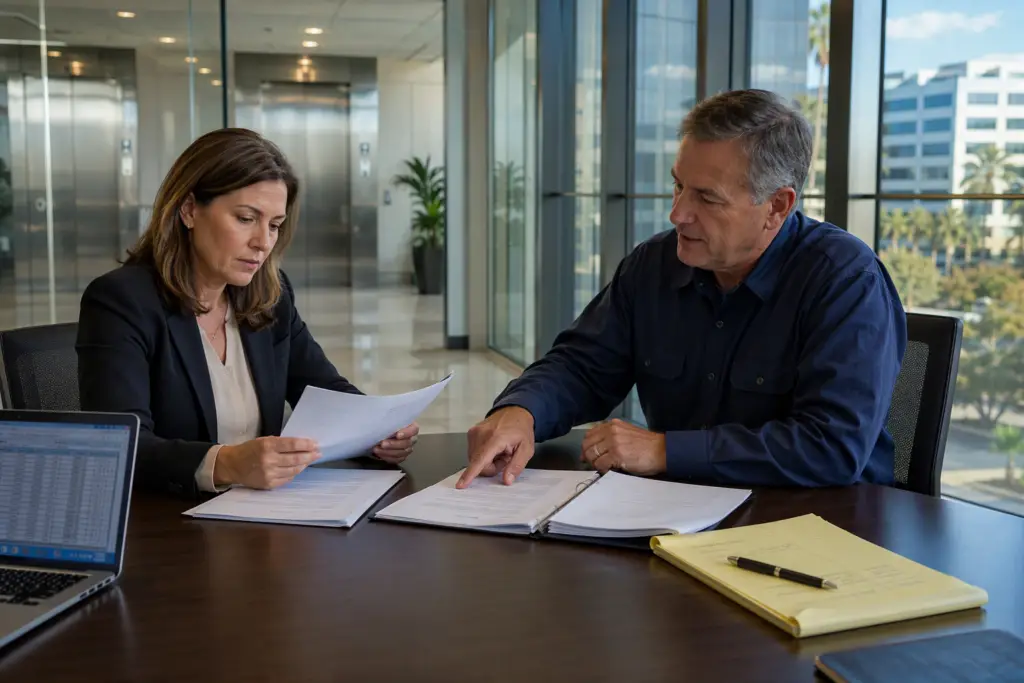

Understanding how elevator service invoices are paid — and what those payments cost — is a practical concern for building owners, property managers, and facilities directors throughout Signal Hill, Long Beach, Los Angeles, and Orange County. Credit card surcharges, convenience fees, and alternative payment methods all affect the total cost of elevator maintenance. This FAQ hub answers the most common questions about elevator invoice payment fees and related billing practices in 2026.
Do elevator service companies charge a processing fee when you pay by credit card?
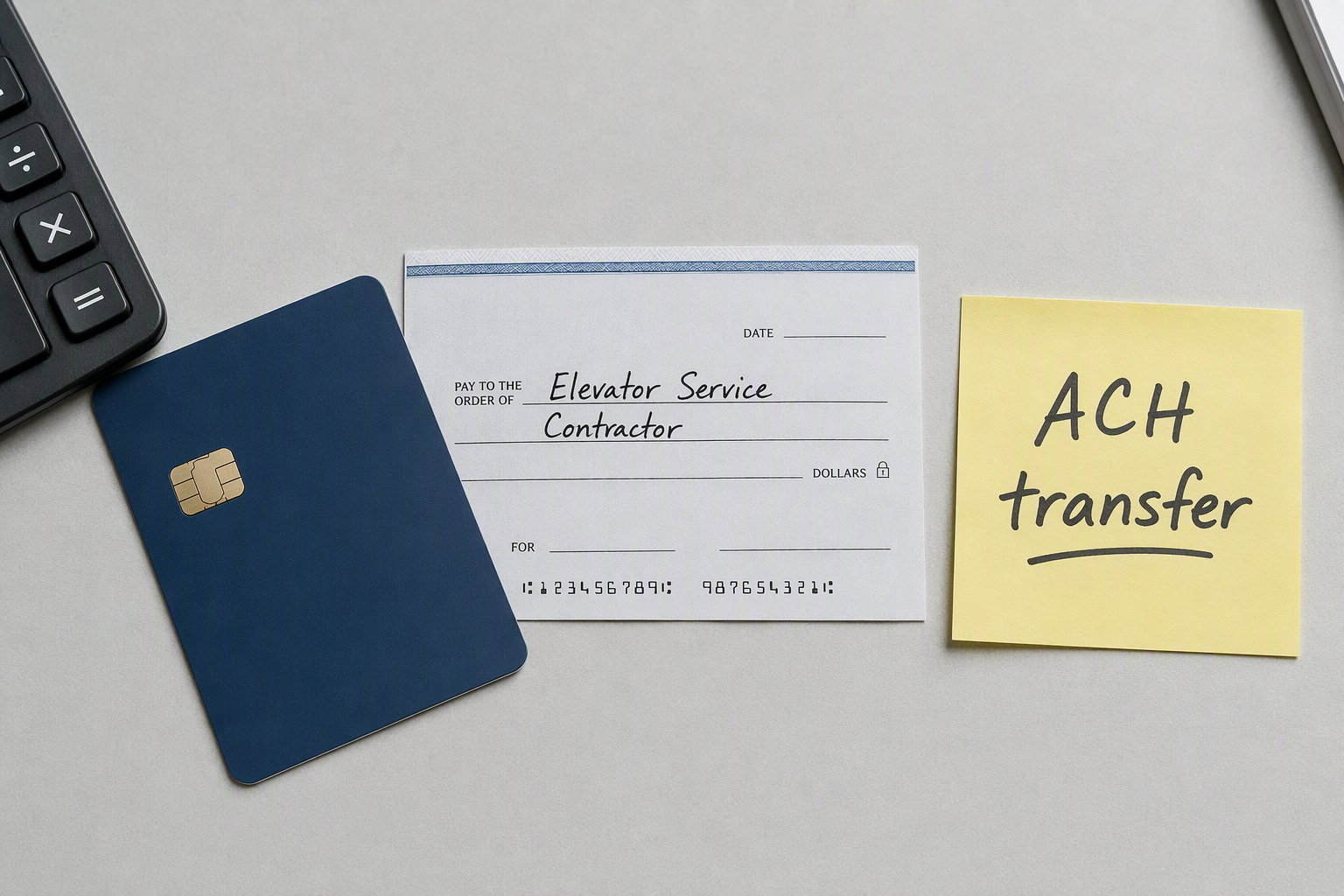
Yes, most elevator service companies pass credit card processing costs to the customer through a surcharge or convenience fee, though policies vary by provider.
When a business accepts a credit card payment, the card network and issuing bank charge the merchant a processing rate. Rather than absorb that cost, many service companies — including elevator contractors — add a corresponding fee to the invoice total. In California, this practice is legally permitted as long as the fee is disclosed before the transaction is completed. Building owners who pay large annual maintenance contracts or emergency repair invoices by credit card should factor this surcharge into their total cost of elevator ownership.
Fee amounts vary depending on the card type, the payment processor, and the contractor’s billing policy. Business credit cards and rewards cards generally carry higher interchange rates than standard consumer cards, which can affect the surcharge percentage passed to the customer.
What is a credit card surcharge, and how does it differ from a convenience fee?
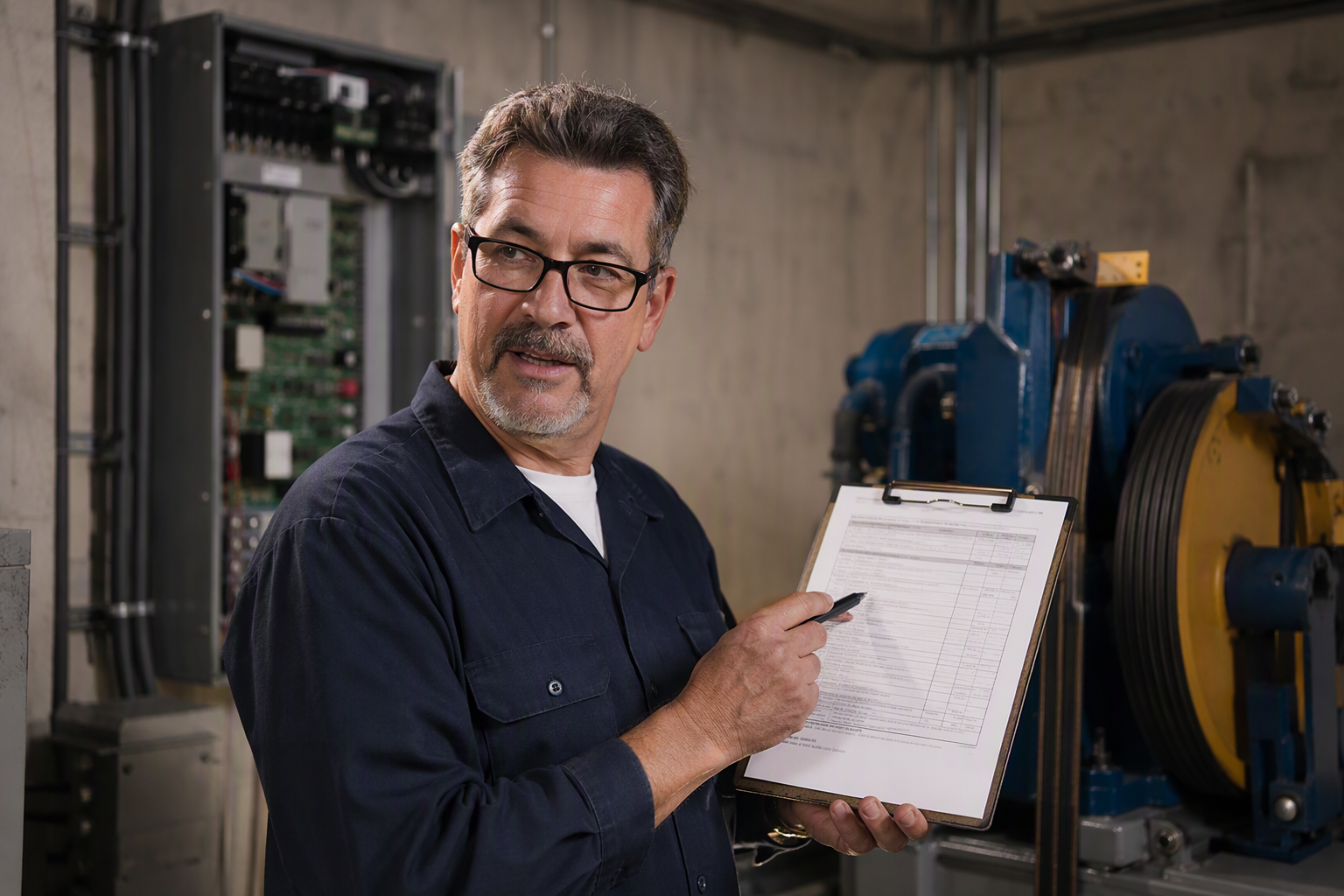
A credit card surcharge is a fee added specifically because the customer chose to pay by credit card, while a convenience fee is typically charged for using a particular payment channel — such as an online portal or automated phone system — regardless of the card type used.
In the elevator industry, the two terms are sometimes used interchangeably, but they have distinct legal and practical meanings. A surcharge offsets the merchant’s actual interchange cost and is generally capped at the merchant’s effective processing rate. A convenience fee is a flat or percentage charge for the privilege of using a non-standard payment method. Building managers reviewing elevator service agreements should look for explicit language defining which type of fee applies and how it is calculated.
California’s Unfair Business Practices Act (Business and Professions Code Section 17200) requires that surcharges be disclosed clearly before the transaction is completed. If an elevator contractor’s invoice or service agreement does not disclose a potential credit card fee upfront, that contractor may not be in compliance with state consumer-protection expectations.
How much is a typical credit card processing fee on an elevator service invoice?
Credit card processing fees in service industries typically range from around two percent to four percent of the transaction amount, though the exact rate depends on the card network, card type, and the contractor’s payment processor agreement.
For perspective, a mid-size elevator maintenance contract or a significant repair invoice can represent a substantial dollar amount. Even a modest processing fee applied to a five-figure repair bill adds a meaningful cost. Building owners managing multiple elevators across a portfolio — common in Long Beach high-rises or Los Angeles commercial towers — should evaluate whether paying by ACH transfer, check, or wire is more economical on a per-transaction basis.
| Payment Method | Typical Processing Cost to Merchant | Fee Usually Passed to Customer? | Processing Speed | Notes |
|---|---|---|---|---|
| Credit Card (Visa/Mastercard standard) | ~1.5% – 2.9% | Often yes (surcharge or convenience fee) | Immediate authorization | Rewards/business cards carry higher rates |
| Credit Card (Amex/rewards card) | ~2.5% – 3.5% | Often yes | Immediate authorization | Highest interchange; surcharge may be higher |
| ACH Bank Transfer | Flat fee or <1% | Rarely | 1–3 business days | Preferred by many elevator contractors for large invoices |
| Check (paper) | Minimal | No | Mailing + clearing time | Avoids all electronic fees; slower |
| Wire Transfer | Bank wire fee | Bank charges sender | Same day if sent early | Common for large or emergency repair invoices |
| Online Portal / Auto-pay (ACH) | Low to none | Rarely | Scheduled or recurring | Reduces administrative burden for maintenance contracts |
Note: The figures in this table represent general industry ranges for merchant processing costs and are not specific to any individual company’s negotiated rates. Actual fees depend on individual processor agreements.
Is it legal for elevator contractors in California to add a credit card surcharge?
Yes, credit card surcharges are legal in California as of 2026, following a federal court ruling that overturned California’s prior ban, provided the surcharge is clearly disclosed to the customer before the transaction is completed.
California previously prohibited merchants from imposing surcharges on credit card payments under Civil Code Section 1748.1, but that restriction was struck down by the Ninth Circuit Court of Appeals. Today, California merchants — including elevator service companies — may legally pass credit card processing costs to customers as a surcharge, provided that the total price, inclusive of the surcharge, is disclosed before the customer commits to payment. Building owners in Los Angeles, Long Beach, Signal Hill, and Orange County should read service agreements carefully and ask for the written surcharge disclosure before signing.
Are credit card fees ever included in elevator maintenance contract pricing?
Some elevator service contractors build an allowance for credit card processing costs into their contract pricing structure, effectively absorbing the fee rather than itemizing it separately on each invoice.
When evaluating competing elevator maintenance proposals, building managers should ask each bidder explicitly whether credit card payments are available and whether any surcharge applies. A contract that appears lower in base price but adds a three-percent surcharge on every invoice payment may cost more over a multi-year term than a contract with slightly higher base pricing and no payment surcharges. Request a sample invoice and a written statement of accepted payment methods and associated fees as part of any procurement process.
What payment methods do elevator service companies typically accept?
Most professional elevator contractors accept payment by check, ACH bank transfer, wire transfer, and credit card, with some also offering online billing portals that support automated recurring payments for maintenance contracts.
The availability of specific payment methods depends on the contractor’s billing system and processor setup. Larger, established elevator service companies typically offer the widest range of options. Building managers overseeing multiple properties — as is common across Orange County and the greater Los Angeles area — often benefit from online portals that consolidate invoices across locations into a single payment run. Facilities teams should confirm payment method availability and any associated fees before entering a service agreement.
Can building owners negotiate to have credit card fees waived?
In some cases, yes — building owners with high invoice volumes or long-term contracts may have negotiating leverage to request that a contractor absorb credit card processing fees or offer a discounted rate for preferred payment methods.
An elevator contractor that manages maintenance for an entire building portfolio has strong incentive to maintain a positive billing relationship. Offering to pay promptly by ACH in exchange for fee-free credit card processing — or simply switching to ACH to eliminate the fee entirely — is a straightforward option. Building managers should raise payment terms and fee structures during contract negotiation rather than after invoices begin arriving.
How do credit card fees apply to emergency elevator repair invoices specifically?
Emergency repair invoices often carry higher dollar amounts than routine maintenance billings, making credit card processing fees proportionally more significant on those transactions.
An elevator that fails inspection or goes out of service creates immediate pressure to authorize repairs quickly. In that environment, building owners may reach for a credit card out of convenience without considering the surcharge. For high-value emergency repairs, ACH or wire transfer can eliminate the processing cost entirely. Maintaining an established billing relationship with a reliable contractor — including agreed-upon payment terms — reduces the friction of payment decisions during urgent situations. Liftech Elevator works with building owners throughout Los Angeles, Long Beach, Signal Hill, and Orange County to establish clear billing arrangements before emergency situations arise.
Do credit card processing fees affect the cost of complying with California elevator inspection requirements?
Yes, indirectly — California requires annual elevator inspections and mandates that only a Certified Qualified Conveyance Company perform maintenance and repair work, so the invoices that accompany compliance activities are subject to the same payment fee structures as any other elevator service billing.
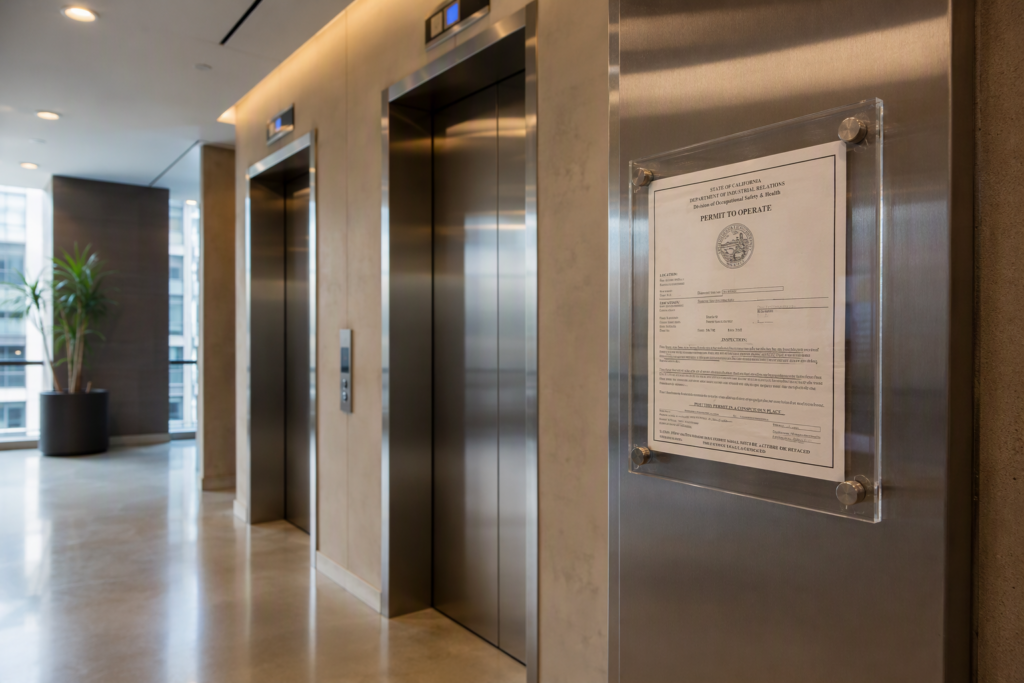
Under Cal/OSHA’s Elevator Unit, California Department of Industrial Relations, no elevator may operate in California without a valid current permit to operate. California Labor Code Sections 7300–7324.2 and the California Code of Regulations, Title 8, Elevator Safety Orders govern the inspection and permitting process. Building owners are responsible for arranging annual reinspections. The invoices generated by those required inspections, any corrective repairs, and permit-related service calls from the contractor are all subject to the contractor’s standard payment terms — including any credit card surcharges. Owners should plan their compliance budgets to account for payment method costs alongside the base cost of inspection and repair services.
What California elevator compliance requirements make ongoing invoicing necessary?
California law requires that every elevator be inspected at least once per year and that all maintenance, repair, alteration, and replacement work be performed by a Certified Competent Conveyance Mechanic employed by a Certified Qualified Conveyance Company — generating a steady stream of service invoices throughout the life of the equipment.
Under Cal/OSHA’s Elevator Safety Orders (California Code of Regulations, Title 8, Sections 3000–3146), building owners must maintain their elevators under a continuous compliance framework. A permit to operate is required before any elevator may be placed in service, and that permit must be posted conspicuously inside the elevator car. Cal/OSHA may issue a permit valid for up to two years — rather than the standard one year — when the elevator is covered by a full maintenance contract with a C-11 licensed elevator company, providing a potential administrative benefit to owners who invest in comprehensive service agreements.
Every service call, routine maintenance visit, modernization project, or code-required alteration produces an invoice. How those invoices are paid — and what payment fees apply — is therefore a recurring operational concern for building owners and property managers across California.
How does the ASME A17.1 Safety Code relate to the service work that generates invoices?
The ASME A17.1 Safety Code for Elevators and Escalators establishes the technical standards for elevator design, installation, maintenance, and testing that California’s Elevator Safety Orders incorporate — defining the scope of work that generates the service invoices building owners receive.
California’s adopted code edition is ASME A17.1/CSA B44, 2004 edition (Group IV Elevator Safety Orders), effective May 1, 2008 for installation contracts signed on or after that date. The scope of tests, inspections, and maintenance tasks defined by that code determines what a compliant elevator contractor must perform — and therefore what appears on service invoices. Building owners who understand that each line item on an elevator invoice corresponds to a code-required or manufacturer-required activity are better positioned to evaluate billing accurately, including any payment surcharges layered on top.
California has also proposed a Group V update to its Elevator Safety Orders that would incorporate portions of ASME A17.1-2019; the California Standards Board held a public hearing on that proposal on June 18, 2026, and no effective date has been posted as of this writing.
What questions should building owners ask about payment fees before signing an elevator service agreement?
Building owners should ask their elevator contractor to provide a written statement of all accepted payment methods, any associated fees or surcharges for each method, and where that fee disclosure appears in the service agreement before signing.
- Ask the contractor for a complete list of accepted payment methods (check, ACH, wire, credit card, online portal).
- Ask whether a credit card surcharge or convenience fee applies, and if so, request the exact percentage or flat-fee amount in writing.
- Ask whether the surcharge rate varies by card type (e.g., business cards vs. consumer cards, Visa vs. Amex).
- Ask whether the fee applies to all invoice types — routine maintenance, emergency repairs, permits, and modernization projects — or only certain categories.
- Ask whether the contractor offers a discount or preferred rate for prompt ACH payment in lieu of a credit card surcharge.
- Request a sample invoice that shows how a credit card fee would appear as a line item.
- Confirm that all payment fee terms are included in the written service agreement, not just communicated verbally.
- Ask whether the online billing portal, if one is offered, charges its own separate convenience fee on top of the payment method surcharge.
Are there any ADA requirements that affect elevator billing or payment accessibility?
The Americans with Disabilities Act does not regulate elevator service billing or payment processing fees, but ADA accessibility requirements for the elevators themselves create mandatory upgrade and maintenance obligations that generate invoices building owners must manage.
ADA Title III requires that places of public accommodation maintain accessible features — including elevators — in working order. When an accessible elevator is out of service for extended periods, owners may face complaints or compliance exposure. The repair and modernization invoices that result from ADA-driven upgrades or maintenance are subject to the same payment terms and potential credit card fees as any other elevator work. Building managers should treat ADA compliance maintenance as a line item in their facilities budget and clarify payment terms for those invoices as part of their service agreement.
How should property managers track and audit elevator service invoices and payment fees?
Property managers should maintain a dedicated elevator service invoice log that records the invoice date, service description, total amount, payment method used, any credit card processing fee charged, and the date payment was confirmed — reviewed at least quarterly.
A well-maintained invoice log serves multiple purposes: it supports budget forecasting, documents compliance with California’s annual inspection requirement, and provides an audit trail if a billing dispute arises. For portfolios covering multiple buildings — such as commercial properties spread across Long Beach and Orange County — a consolidated log by building and elevator ID helps identify patterns, including which payment methods are generating the most in surcharge costs. Some property management software platforms integrate directly with contractor billing portals and can automate this tracking.
Does paying elevator invoices by credit card offer any financial benefits that offset the processing fee?
Yes, credit card payment can offer float, cash-flow flexibility, rewards points, purchase protection, and simplified expense reporting — benefits that some building owners weigh against the processing fee cost when deciding how to pay elevator service invoices.
For buildings with tight cash-flow timing, paying a large elevator repair invoice by credit card and settling the card balance at the end of the billing cycle effectively extends payment terms by several weeks at no interest cost. Rewards programs on business credit cards can return a percentage of spending as cash back or points. Purchase protection and dispute resolution features can provide a degree of recourse if a billing error occurs. Whether these benefits outweigh a two-to-three-percent surcharge depends on the card’s rewards rate, the invoice amount, and the building owner’s specific financial situation. Many owners find that for recurring monthly maintenance invoices, ACH is more economical, while credit card payment may make more sense for larger, less frequent repair billings where the rewards value or float benefit is meaningful.
How do online billing portals used by elevator companies handle payment fee disclosure?
A compliant online billing portal should display the credit card processing fee or surcharge as a clearly visible line item before the customer confirms payment — giving the building owner an opportunity to select a lower-cost payment method if one is available.
California’s consumer-protection framework requires that surcharges be disclosed before the transaction is completed, and reputable elevator contractors structure their online portals accordingly. Building owners should verify that the portal shows the surcharge amount in dollars and as a percentage of the invoice total before the final confirmation screen. If a portal only discloses the fee in the terms-of-service agreement rather than at the point of payment, the owner may be agreeing to the charge without seeing it clearly. Liftech Elevator encourages building owners to review payment confirmation screens carefully and contact the billing department before completing any payment where the fee disclosure is unclear.
What happens if a credit card payment for an elevator invoice is disputed or charged back?
A chargeback on an elevator service invoice triggers a formal dispute process through the card network, can delay payment to the contractor, and may result in service disruption or contract disputes if the underlying billing disagreement is not resolved promptly.
Chargebacks are designed to protect consumers from fraud, but in business-to-business service transactions they can be a blunt instrument. Most elevator service agreements contain explicit language about billing disputes, requiring the owner to raise a dispute in writing within a defined period rather than initiating a card chargeback. Building managers should review their service agreement’s dispute resolution clause before initiating any card dispute. Resolving billing discrepancies directly with the contractor’s accounts receivable team is generally faster and less disruptive than a formal chargeback process, which can take weeks and may affect the contractor’s willingness to extend favorable payment terms in the future.
Do municipal elevator programs in cities like Los Angeles have their own fee structures that affect invoicing?
Yes, the City of Los Angeles runs its own elevator and conveyance inspection program through the Los Angeles Department of Building and Safety, and fees, permits, and compliance requirements associated with that local program are separate from the service invoices issued by private elevator contractors.
Building owners in Los Angeles should be aware that their elevator compliance obligations may involve both the City of Los Angeles, Department of Building and Safety program and Cal/OSHA’s statewide framework. Permit fees, inspection scheduling, and any associated administrative costs from the municipal program are typically paid directly to the city, not through the private contractor’s invoice. However, corrective repair work identified during a city inspection is billed by the private contractor and subject to that contractor’s payment terms — including any credit card surcharges. Owners managing properties in Los Angeles specifically should clarify with their contractor which invoices relate to city-required work and which to voluntary or owner-initiated service.
How can building owners in Signal Hill, Long Beach, Los Angeles, and Orange County minimize unnecessary payment fees on elevator invoices?
Building owners in these markets can minimize credit card processing fees by enrolling in ACH auto-pay for recurring maintenance invoices, negotiating payment terms upfront, and reserving credit card payment for situations where the float or rewards benefit clearly outweighs the surcharge cost.
Across Signal Hill, Long Beach, Los Angeles, and Orange County, building owners deal with a wide range of elevator service contractors and billing practices. Establishing a standardized payment workflow — ACH for routine monthly maintenance, wire for large repair projects, credit card only when a specific financial benefit justifies the surcharge — is a practical approach that many experienced property managers adopt. Liftech Elevator serves building owners throughout these markets and supports clear, transparent billing practices that help owners make informed payment decisions. Consulting with the billing team at any elevator service company before the first invoice arrives is the most effective way to avoid unexpected surcharge costs.
What should building owners look for in an elevator service company’s billing and payment practices overall?
Building owners should look for a contractor that provides itemized invoices, clearly discloses all payment fees before the transaction, offers multiple payment method options, and maintains transparent billing practices aligned with California’s consumer-protection requirements.
Transparent billing is a strong indicator of overall professionalism in an elevator service company. A contractor that itemizes work performed, references the specific maintenance tasks required under ASME A17.1 or California’s Elevator Safety Orders, discloses payment surcharges clearly, and responds promptly to billing questions is demonstrating the same attention to detail that should characterize its technical work. Companies operating as a Certified Qualified Conveyance Company under Cal/OSHA — employing Certified Competent Conveyance Mechanics holding current two-year certificates with required continuing education — are held to regulatory standards that extend to professional business conduct generally. Liftech Elevator serves commercial and residential building owners across Signal Hill, Long Beach, Los Angeles, and Orange County and maintains billing practices designed to support long-term client relationships built on transparency.
Contact Liftech Elevator for a free elevator assessment at 562-997-3639.
Need elevator service you can rely on? Liftech Elevator is ready to help.